Your Guide to Being a Local in Rome
The first time you order a cappuccino after 11 a.m. in Rome, the barista won’t say anything. He’ll just make it, hand it to you, and maybe let his eyebrows do the talking. Milk-based coffee is a morning drink here, full stop, and nobody is going to lecture a visitor about it — but you’ll notice, the way you notice when you’re wearing the wrong shoes to a party. That small unspoken rulebook is basically what this guide is about: not the Colosseum or the Trevi Fountain, which you already know you’re visiting, but the rhythm underneath them that makes Rome feel like a city people actually live in rather than a backdrop.
We’ve sent enough travelers to Rome on custom itineraries to know the ones who come back happiest aren’t the ones who saw the most sites. They’re the ones who found one bar counter, one market stall, one street they returned to twice. This is a guide to doing that on purpose.
Table of Contents
- Start your morning like a Roman
- Neighborhoods worth actually lingering in
- Eating where Romans eat, not where the menus have photos
- Getting around without looking like a target
- Where the evening actually happens
- Payment, tipping, and other quiet rules
- A mistake worth avoiding
- When to go if you want Rome at half-speed
- FAQs
Start your morning like a Roman
Romans drink their coffee standing up, at the bar, in under five minutes. You order at the register first (un caffè for an espresso, a cappuccino if it’s before noon and you don’t mind the look), take your receipt to the barista, and drink it right there rather than carrying it out. Sitting at a table usually costs two to three times more — that’s not a tourist tax, it’s just how table service is priced everywhere in Italy, and locals rarely pay it for a quick coffee.
Skip the cafés directly facing major monuments; the coffee is the same or worse and you’re paying for the view you’re not even sitting to enjoy. A neighborhood bar with a scuffed metal counter and a line of regulars is doing it right. If you want wifi and a place to actually sit and work for an hour, the café inside Chiostro del Bramante is a genuinely lovely spot to do it, even if it runs a bit pricier than a corner bar — the Renaissance cloister views make up for it.
Neighborhoods worth actually lingering in
Rome rewards slowing down in specific pockets rather than trying to cover every rione in a day.
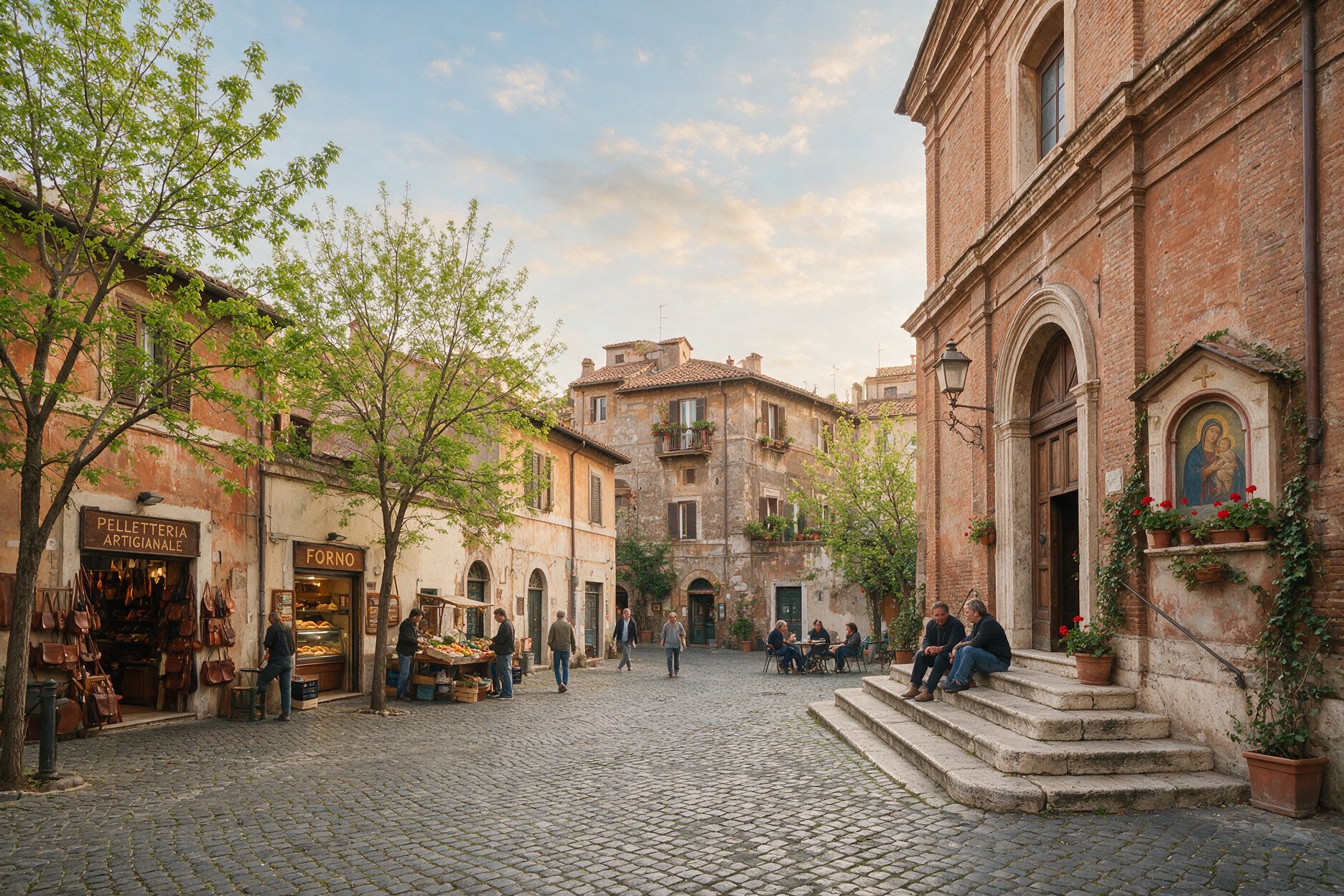
Monti, just north of the Colosseum, is where a lot of Romans in their twenties and thirties actually live. It’s quieter than its location suggests, with vintage shops, small wine bars, and church steps where people just sit and talk in the evening. It doesn’t have a single must-see attraction, which is exactly why it stays uncrowded.
Trastevere has a reputation problem now — the central lanes around Piazza Santa Maria get loud and touristy by early evening, full of group tours and pub-crawl signage. But walk two or three streets off that main drag and the neighborhood is still what people came for: laundry strung between buildings, old men playing cards outside a bar, a genuinely residential feel. Go for a late lunch on a weekday rather than Friday or Saturday night if you want the quieter version.
Testaccio is the one most visitors skip entirely, and that’s the point. It’s a working-class neighborhood built around its food market and its history as Rome’s old slaughterhouse district, which is exactly why some of the city’s best traditional Roman cooking — the offal-heavy dishes like coda alla vaccinara that made the neighborhood’s reputation — is still concentrated here rather than watered down for a tourist menu.
Eating where Romans eat, not where the menus have photos
A rule of thumb that’s served our travelers well: if a restaurant has a laminated menu with photos of the food, or a host outside actively waving you in, keep walking. The places locals actually use don’t need to sell themselves that hard.
The Testaccio Market (Mercato Testaccio) is the single best place in Rome to eat like a local without needing a reservation or Italian small talk. It’s a covered market with food stalls tucked among the produce vendors — you can piece together a full meal from three or four different counters for less than a sit-down lunch would cost, and you’ll be eating next to Roman grandmothers doing their weekly shop rather than other tourists.

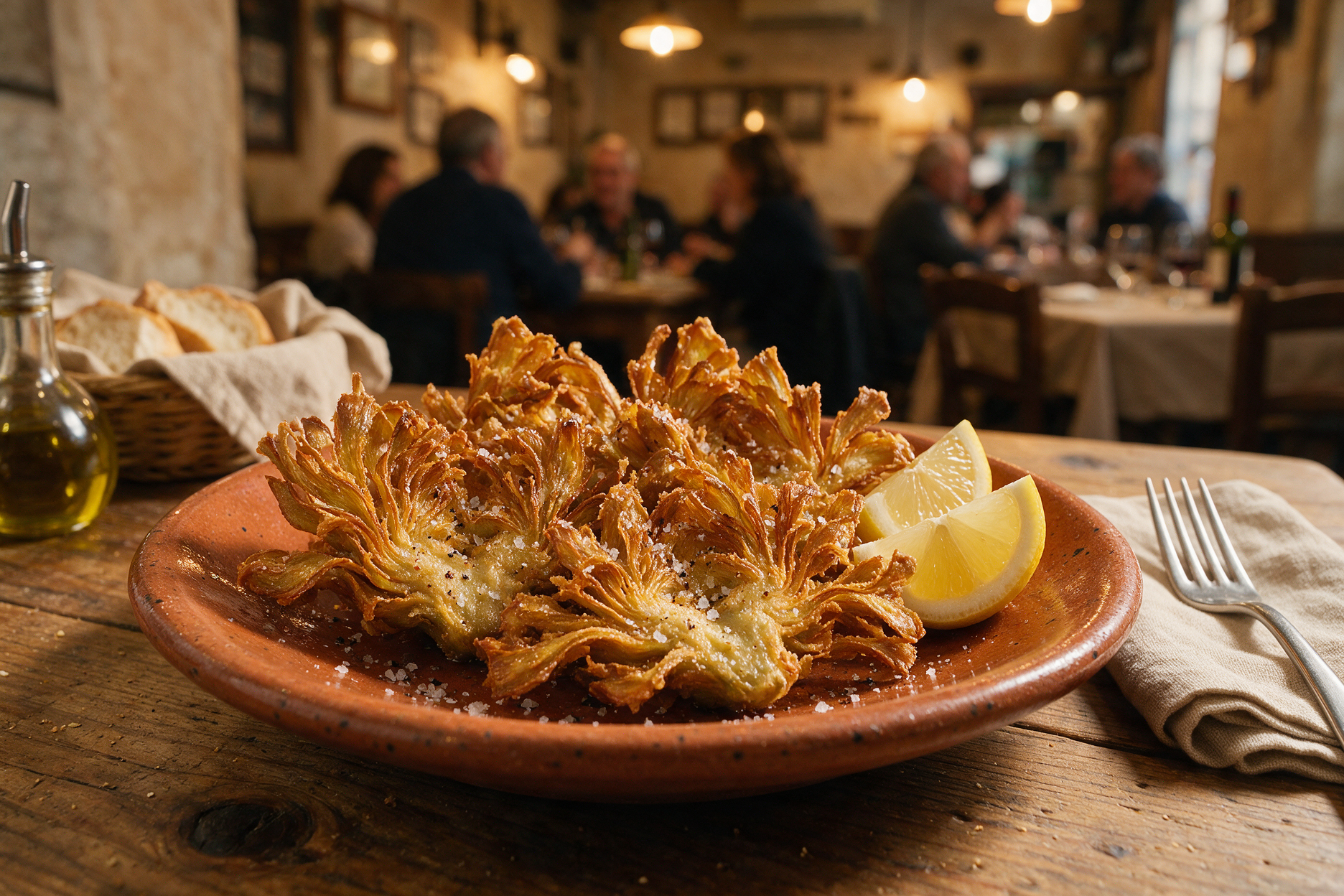
In the Jewish Quarter (Il Ghetto), the dish to seek out is carciofi alla giudia — whole artichokes flattened and deep-fried until the outer leaves are shatteringly crisp, a Roman Jewish specialty found almost nowhere outside this neighborhood. Nonna Betta is the name that comes up constantly, and the carciofi genuinely are excellent there — honest caveat, the rest of the menu is fine rather than memorable, so go specifically for that dish rather than expecting a knockout full meal. The kosher bakeries scattered through the same few streets are worth a wander even if you’re not buying anything; the smell alone is worth the detour.
An honest mistake to flag here: don’t schedule your one Roman meal at a restaurant you found because it was directly across from a major sight. Proximity to the Pantheon or the Trevi Fountain is inversely correlated with food quality in Rome, almost without exception.
Getting around without looking like a target
Rome is, honestly, a walking city first. The historic center is compact enough that a taxi often takes longer than legs would, once you account for one-way streets and pedestrian zones. When you do need transit, a single ATAC ticket (metro, bus, or tram) runs around €1.50 and covers 100 minutes with transfers; a 24-hour pass is about €7, a 48-hour around €12.50, and a weekly pass roughly €24. If you’re planning five or more trips in a single day, the day pass pays for itself.
The Roma Pass is worth considering if you’re also visiting paid attractions — it bundles 72 hours of transport with entry to one or two sights, starting around €58.50 — but skip it if your day is mostly walking and market-hopping, since you won’t use the transport allowance enough to justify it. Note that neither the Roma Pass nor standard transit tickets cover the airport train, which you’ll need to buy separately.
One quiet local habit worth adopting: buses in Rome can run behind schedule, especially in the historic center, so locals rarely stress about a bus running ten minutes late. If you’re on a tight connection, build in the buffer rather than watching the clock.
Where the evening actually happens
Romans eat dinner late — 8:30 or 9 p.m. is completely normal, and a restaurant that looks empty at 7:30 isn’t necessarily bad, it’s just early. The aperitivo hour, roughly 6:30 to 8:30 p.m., is when a lot of local social life actually happens: a drink, often with a small spread of snacks included in the price, at a bar rather than a sit-down dinner. Monti and Trastevere’s quieter side streets are both good for this.
For couples, a slow aperitivo followed by a walk with no destination — along the Tiber, or through Monti’s side streets after the shops close — tends to be the evening our honeymoon travelers remember best, more than any single restaurant. For solo travelers, sitting at a bar counter rather than a table is the easiest way to end up in conversation with a local; Italians are generally warm to someone traveling alone who makes a small effort in Italian.
Payment, tipping, and other quiet rules
Cards are widely accepted now, even at small trattorias and market stalls, though it’s still smart to carry €30–50 in cash for the rare card-minimum situation or a stall that’s cash-only. Tipping isn’t the American-style obligation — a euro or two rounded up, or leaving small change, reads as generous; you won’t be chased down for more.
A quirk worth knowing: many sit-down restaurants add a small “coperto” or cover charge per person, typically €1.50–3, which covers bread and table service. It’s standard practice, not a scam, and it’ll be on the menu if you look.
A mistake worth avoiding
Don’t try to see the historic center, the Vatican, and Testaccio or Trastevere all in one day on foot. It sounds doable on a map and turns into a slog in practice — Rome’s cobblestones are punishing on your feet after a few hours, and cramming neighborhoods together usually means you experience all of them at a rush rather than any of them properly. Pick one side of the city per day and let the pace slow down.
When to go if you want Rome at half-speed
Late September through October and April through early June are the sweet spots — warm enough to sit outside in the evening, cool enough to actually walk during the day, and noticeably calmer than the July–August crush when much of Rome’s own population decamps to the coast and many small family-run restaurants close for their own summer break. If your dates are flexible, this is genuinely the biggest lever you have for making the city feel less like a queue and more like a place.
Frequently Asked Questions
Is Rome safe for Indian travelers, including solo travelers?
Yes, Rome is generally safe by any reasonable standard, with the usual big-city caveats around pickpocketing on crowded buses, near major sights, and on public transit. Keep valuables in a zipped front pocket or a crossbody bag worn to the front, and you’ll be fine.
Do I need to know Italian to get around Rome?
No, but a handful of basic phrases — buongiorno, grazie, un caffè per favore — go a long way toward being treated warmly rather than as another tourist to process quickly. Most people in tourist-facing roles speak functional English.
How many days do I need to see Rome properly?
Four full days lets you cover the major sights without rushing and still leaves room for a slower neighborhood day like the one this guide describes. Three is workable if you’re efficient; anything less and you’re mostly seeing a highlight reel.
Is Rome expensive compared to the rest of Italy?
It’s on the pricier end for accommodation and headline restaurants, but everyday costs — a market lunch, a bar coffee, transit — stay reasonable if you eat and move the way locals do rather than sticking to areas immediately around major sights.
What’s the best way to avoid crowds at the major sights while still having a local-feeling trip?
Book timed entry tickets for the Colosseum and Vatican well ahead, visit them early morning, and spend afternoons in Monti or Testaccio instead of a second major monument. Mixing one big sight with one slow neighborhood per day tends to produce the best-reviewed itineraries we build.
Is tap water safe to drink in Rome?
Yes — and the small cast-iron drinking fountains (nasoni) scattered across the city run safe, cold water all day. Locals refill bottles from them constantly; there’s no need to buy bottled water everywhere.
Conclusion
Rome gives up its charm slowly and on its own schedule. The version of the city that shows up in five minutes at the Trevi Fountain is real, but it’s not the whole story — the fuller version is standing at a bar counter in Monti at 8 a.m., or piecing together lunch from three stalls at Testaccio Market, or watching a Roman evening unfold at the pace it’s always unfolded at, regardless of how many people are visiting that week.
Plan Your Rome Trip with Get Tripped
If you’d rather have someone else handle the logistics while you focus on finding your own Monti café, Get Tripped puts together custom Italy itineraries built around this kind of slower, neighborhood-first travel — alongside the sights you came for. Get in touch about a custom Rome or Italy itinerary, and we’ll build the trip around how you actually like to travel.