Beyond the Common Spots in Venice: A Local’s Guide
Every visitor to Venice ends up in the same forty square meters of Piazza San Marco at some point, shoulder to shoulder with a tour group listening to a guide hold up a colored umbrella. That’s fine — the basilica and the square earn the crowd. But Venice is made up of six sestieri, and San Marco is only one of them. Walk fifteen minutes in almost any direction and the crowds thin out fast, the laundry starts appearing between buildings again, and you start hearing Venetian dialect instead of a dozen different tour guide microphones.
This guide is about that other eighty percent of the city — the parts Venetians still use as an actual home, not a stage set. If you’ve already booked the gondola ride and the Doge’s Palace, this is where to spend the rest of your time.
Table of Contents
- Cannaregio: where people actually cook
- Dorsoduro: student energy and canal-side osterie
- Giudecca: the island most visitors never cross to
- Santa Croce and Castello: the quiet ends of the city
- Eating the Venetian way: cicchetti and bacari
- Getting around, the access fee, and other 2026 practicalities
- A mistake worth avoiding
- FAQs
Cannaregio: where people actually cook
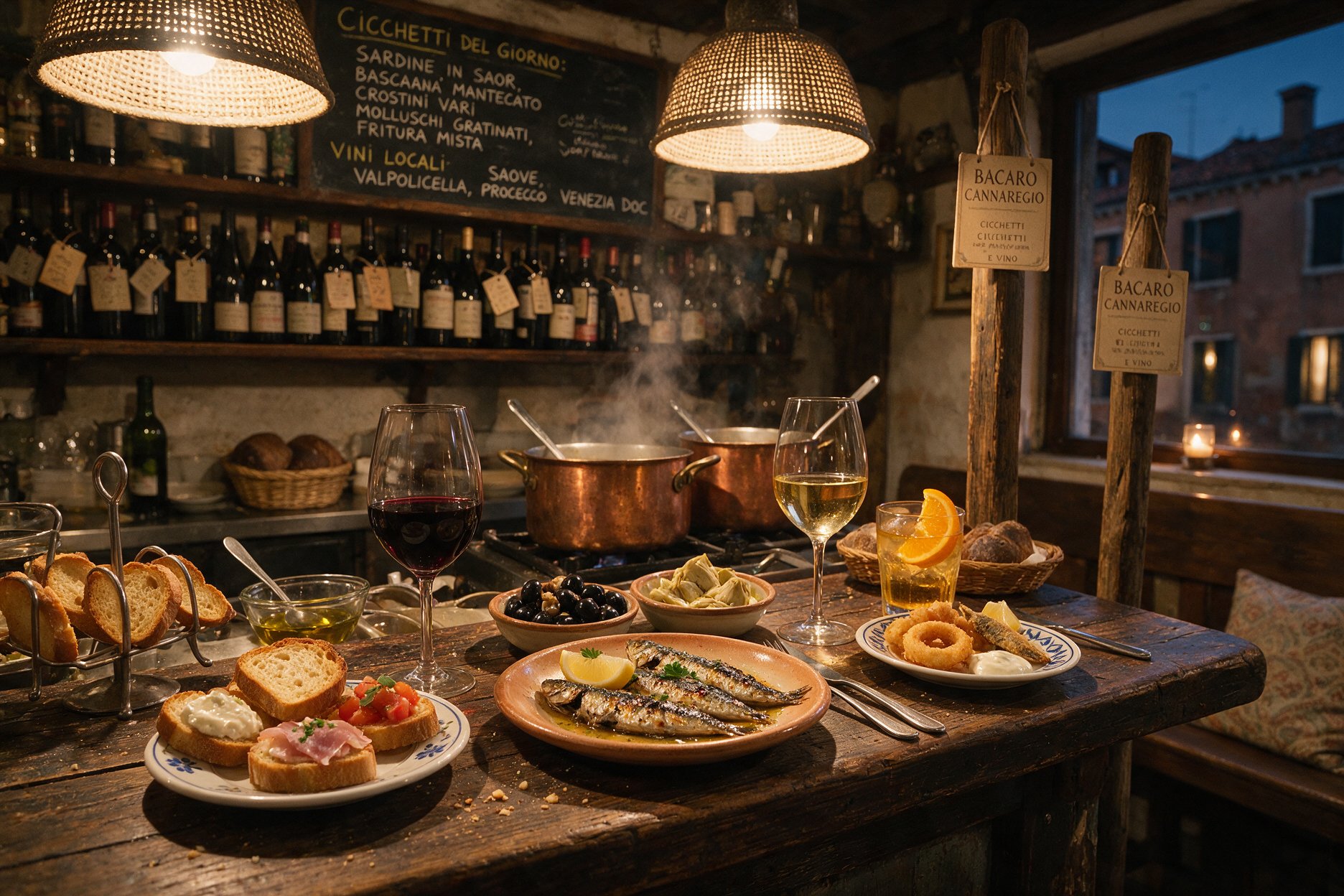
Cannaregio is the sestiere where Venice still functions as a working neighborhood rather than a backdrop — residents cook with their windows open, argue amiably in the street, and eat standing up at the counter of a bacaro rather than sitting for a formal dinner. Cantina Do Mori, one of the city’s oldest bacari, is worth seeking out here, and Al Timon is a good option for a canal-side spot to sit with a glass of wine and watch the boats go by rather than fight for a table.
The real move in Cannaregio is an evening cicchetti crawl along Salizada del Spezier, hopping between two or three bacari for small plates — sarde in saor (sweet and sour sardines), polpette (meatballs), and fried anchovies are the classics to look for. It’s the Venetian answer to tapas, and it’s both cheaper and more social than a single sit-down dinner.
Dorsoduro: student energy and canal-side osterie
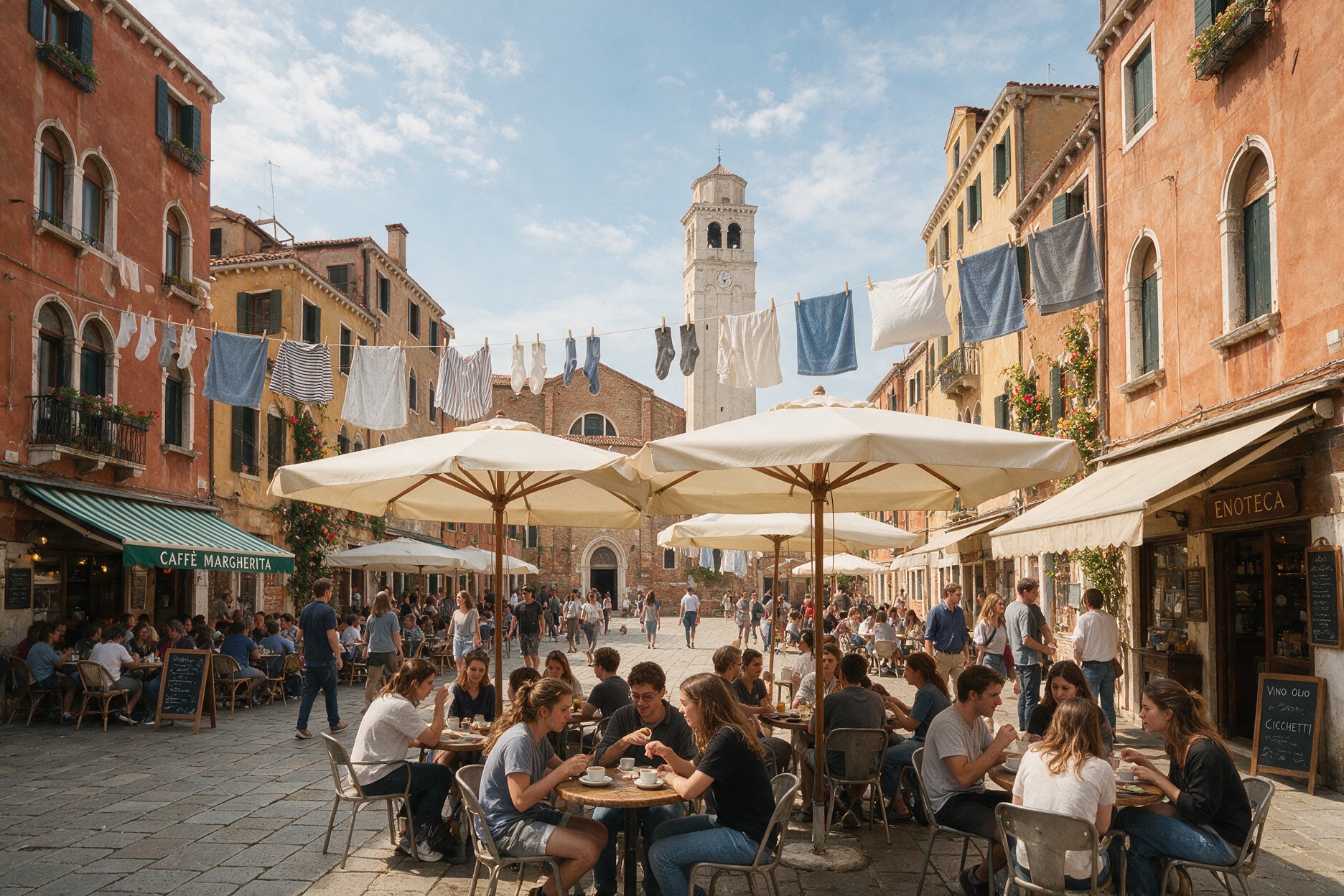
Dorsoduro is home to Ca’ Foscari University, and it shows — Campo Santa Margherita is the neighborhood’s real living room, ringed by bars where students and locals mix from late afternoon into the night. Caffè Rosso does an inexpensive spritz that’s popular with the local crowd, and Al Squero, an osteria with a view across the canal to a working gondola boatyard (a squero), serves generous, unfussy Venetian plates at fair prices.
Giudecca: the island most visitors never cross to
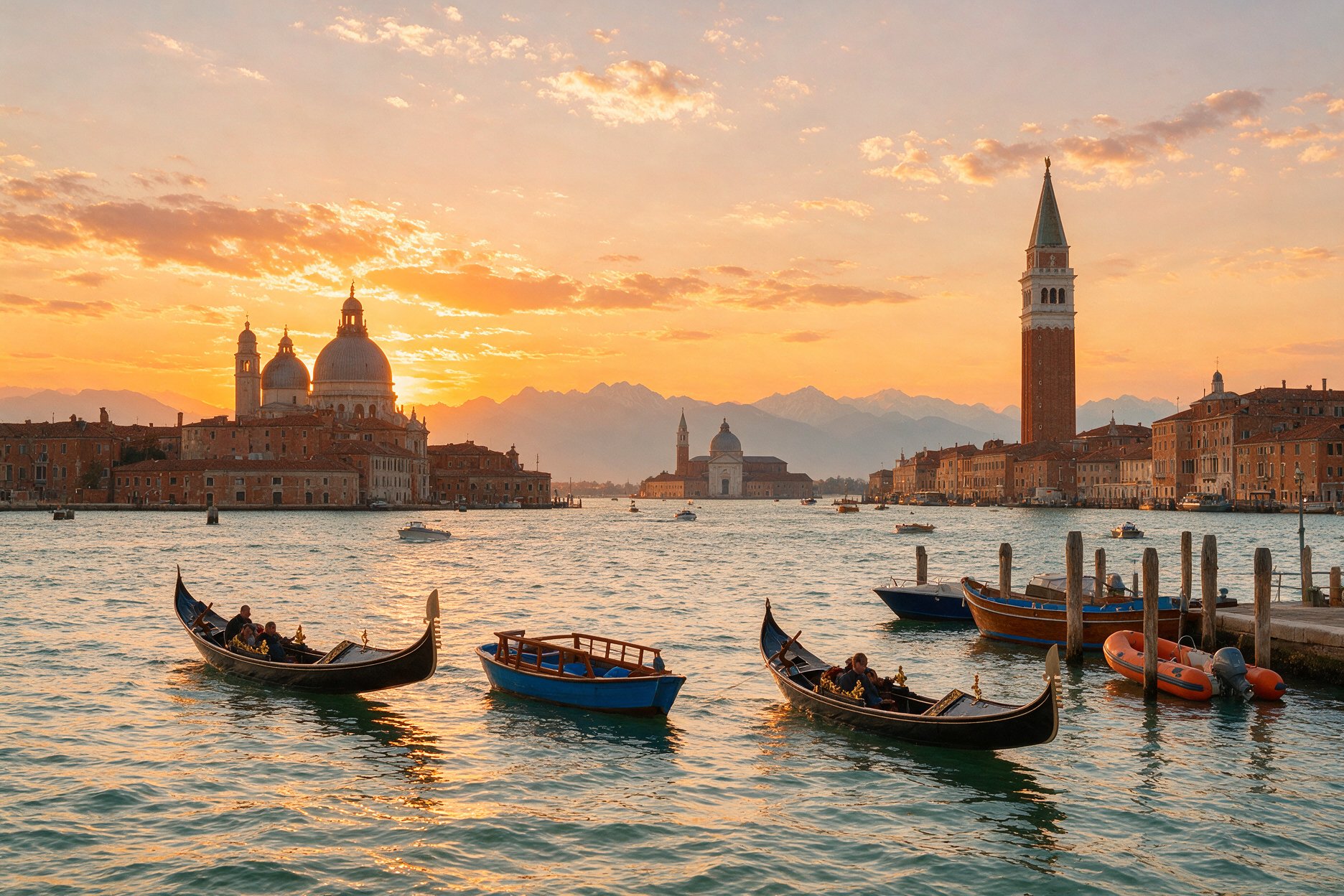
A short vaporetto ride from the Zattere waterfront takes you to Giudecca, a long, narrow island that most day-trippers never bother with — which is exactly why it has the best skyline view of Venice you’ll find anywhere. From the Giudecca waterfront, looking back across the lagoon, you get the whole postcard silhouette of domes and bell towers without a single other tourist in your photo.
For dinner, Altanella does simply prepared seafood in a quiet, unhurried setting, and La Palanca is worth a stop for a drink literally at the water’s edge. If you want the view with a cocktail in hand and don’t mind paying for it, the rooftop bar at the Hilton Molino Stucky has one of the best sunset vantage points in the city.
Santa Croce and Castello: the quiet ends of the city
Santa Croce, where the bus and train terminals sit, is treated by most visitors as a place to pass through rather than stay in — which means it’s also one of the few spots where you can watch ordinary Venetian life at close range. Bacareto da Lele here sells wine for around a euro a glass to a crowd that’s almost entirely local.
Castello, the largest sestiere, has Via Garibaldi, a rare wide, straight street in a city built on narrow winding ones, lined with everyday shops rather than souvenir stands. The Giardini della Biennale nearby offer a genuinely quiet green space to sit, something Venice is otherwise short on.
Eating the Venetian way: cicchetti and bacari
A bacaro isn’t quite a bar and isn’t quite a restaurant — it’s somewhere in between, built around standing at the counter, ordering a few cicchetti at a time, and moving on after one or two drinks rather than settling in for hours. This is genuinely how a lot of Venetians eat dinner, especially midweek, and it’s a far better value and a far more social way to eat than a formal sit-down meal near a major sight.
A smart-spending tip: cicchetti typically run €1.50–4 each, so a proper meal of five or six plates plus a couple of glasses of wine per person often comes in well under what a single main course would cost at a restaurant on the Grand Canal.
Getting around, the access fee, and other 2026 practicalities
Venice reintroduced its day-tripper access fee for 2026, and it’s worth planning around if you’re not staying overnight in the historic center. On specified peak dates — mainly weekends and holidays through spring and into July — day visitors aged 14 and up need to register and pay between 8:30 a.m. and 4 p.m.; booking at least four days ahead brings the fee down to €5, versus €10 for late registration. If you’re staying overnight in a hotel within Venice, you’re exempt from the fee itself but still need to register for a free QR code. Registration happens through the city’s official portal, or in person with cash at tobacco shops near the train station if you’d rather sort it on arrival. Anyone who can’t show proof faces a fine, so it’s worth the five minutes to register properly.
Within the city, walking and the vaporetto (the public waterbus) are your only real options — there are no cars or scooters in the historic center, which is itself part of the appeal. A single vaporetto ride is pricier than you’d expect for public transit, so if you’re island-hopping to Giudecca, Murano, or Burano more than once, a multi-day travel pass is usually the better value.
A mistake worth avoiding
Don’t book a hotel purely on proximity to San Marco. Rooms there are the most expensive in the city and put you at the center of the biggest crowds morning and night. A hotel in Cannaregio or Dorsoduro instead puts you a fifteen-minute walk from the main sights but returns you, every evening, to a neighborhood that still feels like somewhere people live — which, for most travelers, ends up mattering more to how the trip actually feels.
Who each neighborhood suits
For couples and honeymooners, Dorsoduro’s quieter canals and Giudecca’s sunset views tend to land better than the busier Cannaregio crawl — book a table at Altanella for a slow, unhurried dinner rather than the more social, standing-room bacaro experience. For solo travelers, Cannaregio’s cicchetti crawl is genuinely one of the easiest ways to end up in conversation; standing at a bacaro counter puts you shoulder to shoulder with other people doing the same thing, in a way a formal restaurant table doesn’t. Families tend to do well in Castello, where Via Garibaldi’s width and the Giardini della Biennale give kids room to move that the narrower tourist-center streets don’t allow. For luxury travelers, the Hilton Molino Stucky’s rooftop on Giudecca is worth the splurge for at least one evening — it’s the rare Venice view you can enjoy from a comfortable seat with a proper cocktail list.
A photography tip worth knowing: the light in Cannaregio’s narrower canals is best in the hour after sunrise, when it angles low between the buildings and catches the water at an almost golden color — a completely different look from the flatter midday light most visitors’ photos are taken in.
Frequently Asked Questions
Is the Venice access fee something Indian tourists need to worry about?
Yes, it applies to all day visitors regardless of nationality on the specified dates in 2026. Overnight hotel guests are exempt from the fee but still need the free registration. Check the current calendar before you travel, since exact dates shift year to year.
How many days should I spend in Venice?
Two full days covers the major sights comfortably; three lets you add a proper Cannaregio evening and a Giudecca afternoon without feeling rushed. Venice is small enough to over-plan and end up exhausted, so build in slack.
Is it worth staying overnight in Venice, or is a day trip from elsewhere enough?
Staying overnight is genuinely worth it. Venice empties out considerably after the last big tour buses and day-trip boats leave in the late afternoon, and the city after 7 p.m. is a completely different, much calmer experience than the same streets at midday.
Can I drink the tap water in Venice?
Yes, it’s safe, and there are public drinking fountains scattered through most neighborhoods, including a few genuinely old and pretty ones in Cannaregio and Castello worth refilling a bottle at.
What’s the best neighborhood to stay in for a first-time visitor who still wants some local flavor?
Dorsoduro is a strong middle ground — close enough to San Marco and the Accademia to walk in fifteen to twenty minutes, but with its own genuine neighborhood life around Campo Santa Margherita that doesn’t disappear when the day-trippers leave.
Are the gondola rides worth it, or is that money better spent elsewhere?
It’s a legitimate splurge if you want the specific experience, but it’s expensive for what it is. A vaporetto ride down the Grand Canal at sunset gives you a similar view of the city from the water for a fraction of the price, if the budget matters more to you than the ride itself.
What’s a fun fact about Venice most visitors don’t know?
Venice’s iconic wooden mooring poles — the striped ones you see lining the canals — are called “bricole,” and beneath the visible portion, they’re driven deep into the lagoon floor on foundations of wooden piles that have supported the city’s buildings for over a thousand years, largely preserved by the oxygen-free mud they’re sunk into rather than rotting away.
Is Venice suitable for a family trip with kids?
Yes, with a bit of planning — the flat, car-free streets are actually easier for kids to navigate than most Italian cities, and Castello’s wider Via Garibaldi and nearby gardens give them room to run that the narrow tourist-center alleys don’t. Just budget more time than you think for slower family pacing, since Venice’s charm is largely in wandering rather than ticking off sights.
Conclusion
The Venice most visitors photograph is real, and it’s worth photographing. But the Venice that’s actually still lived in — the one with laundry over the canals in Cannaregio, students arguing about football in Campo Santa Margherita, old men drinking euro glasses of wine in Santa Croce — is only a short walk away from it, in almost every direction, and it’s the version that tends to stay with travelers longest.
Plan Your Venice Trip with Get Tripped
Get Tripped builds custom Italy itineraries that balance the essential Venice sights with time in the neighborhoods that actually feel like Venice. Talk to us about a custom Venice or Italy itinerary, and we’ll help you plan around the 2026 access fee dates too, so nothing catches you off guard on arrival.