Seven nights sounds tight for a country with six iconic cities on Get Tripped’s own Japan map. It is. You cannot do Tokyo, Osaka, Kyoto, Hiroshima, Nara and Sapporo justice in eight days without spending half of it on trains and the other half jet-lagged in the wrong hotel lobby. What you can do — and what most first-time couples and families booking Japan tour packages from India actually ask for — is one clean, realistic loop that hits the country’s best-known sights without the backtracking. This is that itinerary: Tokyo, a night in Hakone, Kyoto, a day trip to Nara, and a proper finish in Osaka. It’s the route we build most often for honeymooners and families who want their first Japan trip to feel unhurried rather than checked off a list.
Table of Contents
- Why this route (and not all six cities)
- Best time to visit for this itinerary
- Day-by-day: 7 nights, 8 days
- Getting between cities: shinkansen, passes, and what actually saves money
- Where to stay in each city
- What this trip actually costs
- Visa for Indian travellers
- How to extend or shorten this itinerary
- Mistakes people make planning this route
- FAQs
Why this route (and not all six cities)
Get Tripped’s Japan page lists six signature cities — Tokyo, Osaka, Kyoto, Hiroshima, Nara and Sapporo — and people planning their first trip often ask if they can string all six together in one week. You can’t, not comfortably. Sapporo alone is a 90-minute flight from Tokyo in the opposite direction of everything else, and Hiroshima adds a further two hours each way on top of the Kyoto-Osaka loop. Cramming all six in means four or five hours a day on transit, which is exactly the kind of trip Get Tripped doesn’t build.
What actually works geographically for 7 nights is the classic first-timer loop: Tokyo, a detour into the mountains at Hakone, then Kyoto with Nara as a half-day add-on, finishing in Osaka. It’s sometimes called the Golden Route for a reason — the whole loop sits on a single shinkansen line, so you’re never doubling back. If Hiroshima or Sapporo are non-negotiable for you, they deserve their own trip, or this itinerary stretched to 11-12 nights (more on that further down).
Best time to visit for this itinerary
This route works nearly year-round, but the shoulder seasons make it noticeably better. Late March through early April is cherry blossom season — Tokyo’s blooms typically open around March 19-20 and reach full bloom by end of March, with Kyoto about a week behind. It’s stunning, but it’s also the single most crowded and most expensive fortnight in Japan; book hotels 4-5 months out if you’re set on a Japan cherry blossom tour timed for sakura. Late October through late November brings the autumn foliage swing through Kyoto’s temples and the Hakone hillsides, with reds peaking in mid-to-late November — arguably the best light for photos on this entire route, and slightly calmer than spring.
Summer (June-August) means Kyoto humidity that will test anyone not used to it, plus typhoon risk in September. Winter (December-February) is genuinely underrated for this loop — clear skies, thinner crowds at Fushimi Inari, and a real shot at seeing Mount Fuji from Hakone without haze, though it’s cold enough that the outdoor onsen at your ryokan stops feeling optional and starts feeling essential.
Day-by-day: 7 nights, 8 days
Day 1 — Arrive Tokyo
Land at Narita or Haneda, and budget the better part of the afternoon for immigration, luggage delivery arrangements (takkyubin, if you’re sending bags ahead to Kyoto later), and the ride into the city — Haneda is roughly 30-45 minutes to central Tokyo by monorail or Keikyu line, Narita closer to 60-90 minutes by Narita Express. Check into a hotel in Shinjuku or Shibuya, drop your bags, and don’t try to pack in a full sightseeing day on jet lag. A walk through Omoide Yokocho’s lantern-lit alleys near Shinjuku Station for yakitori and a beer is the right amount of Tokyo for day one.
Day 2 — Tokyo, full day
Start early at Senso-ji in Asakusa before the tour groups arrive — the temple grounds open at 6am even though Nakamise shopping street doesn’t get going until 9. From there, head to the Imperial Palace East Gardens or, if you booked tickets a month ahead (they release on a rolling window and sell out fast), teamLab Planets or teamLab Borderless. Spend the afternoon in Shibuya — yes, the crossing, but also Shibuya Sky’s observation deck at golden hour, which is a genuinely different view of the city than the more famous Skytree. Dinner in Shinjuku’s Golden Gai if you want the tiny-bar crawl experience, or a proper sushi omakase if this is the honeymoon splurge night.
Day 3 — Tokyo to Hakone
Check out and take the Odakyu Romancecar direct from Shinjuku to Hakone-Yumoto — about 85 minutes, no transfers, reserved seating, and the front-row seats on some services face forward through a glass nose cone (book these early if you have kids who’ll love it). Spend the afternoon on the Hakone Open-Air Museum’s sculpture grounds and the Owakudani ropeway, where sulphur vents rise off the volcanic valley and the local specialty is a black egg boiled in the hot springs — tradition says eating one adds seven years to your life. Check into a ryokan in Gora or Sengokuhara with a private or semi-private onsen; this is the one night on the itinerary worth spending on a proper kaiseki dinner served in your room.
Day 4 — Hakone to Kyoto
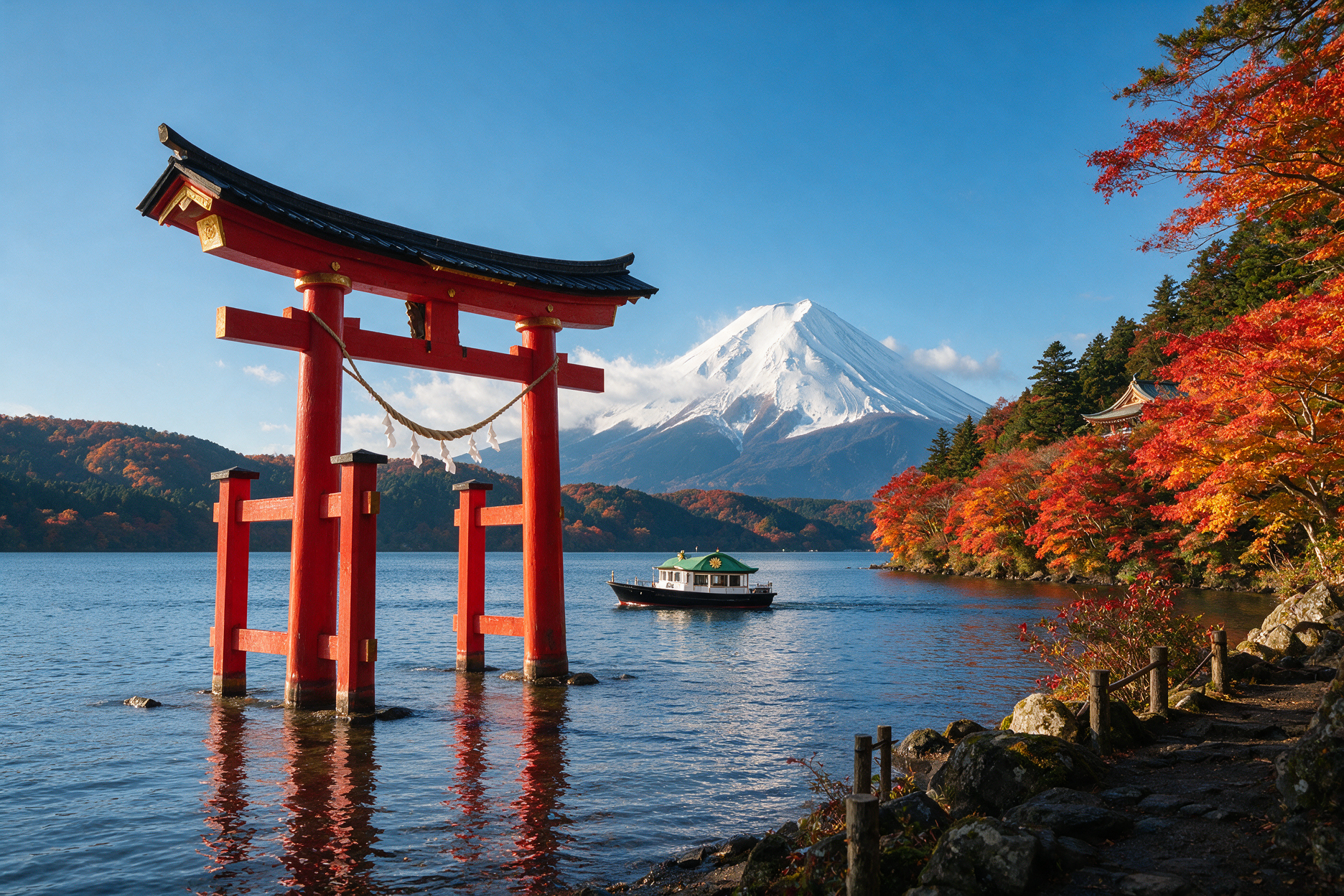
Morning cruise on Lake Ashi past the red torii gate of Hakone Shrine standing in the water — on a clear day Mount Fuji sits directly behind it, though “clear day” is doing a lot of work in that sentence; Fuji is visible maybe 40-50% of days depending on season. From Hakone, head to Odawara Station and pick up the Tokaido Shinkansen directly to Kyoto — no need to backtrack into Tokyo, since Odawara sits right on the line. The ride is roughly 2 hours on a Hikari service. Check into your Kyoto hotel by evening and take a slow walk through Gion and along the Pontocho alley — this is when you’re most likely to spot a geiko or maiko heading to an appointment, generally between 5:30 and 6:30pm.
Day 5 — Kyoto, full day
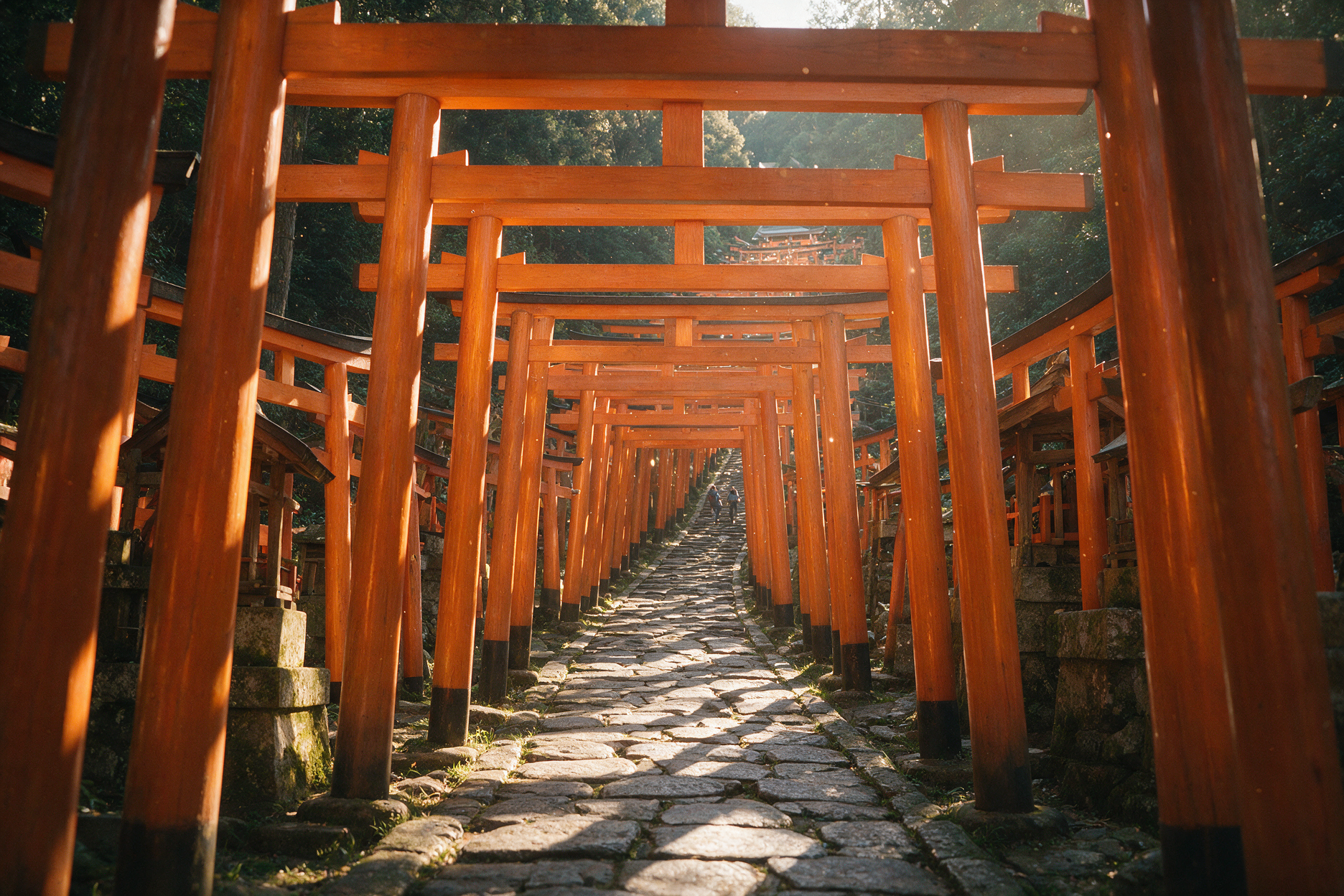
This is the day everyone photographs before they even land. Get to Fushimi Inari Taisha by 7am — it’s free, open 24 hours, and the senbon torii gate tunnel is unrecognisable at 7am versus 11am, when it’s shoulder-to-shoulder. From there, Kiyomizu-dera and the preserved streets of Higashiyama (Sannenzaka and Ninenzaka) make a natural late-morning stop. Spend the afternoon in Arashiyama — the bamboo grove is genuinely worth it despite being one of the most photographed spots in Japan, but go right at opening or skip straight to Tenryu-ji’s garden, which is quieter and arguably prettier. Evening at Nishiki Market for a grazing dinner — it’s touristy, but the tako tamago (octopus stuffed with a quail egg) stall does actually good work.
Day 6 — Nara day trip, then on to Osaka
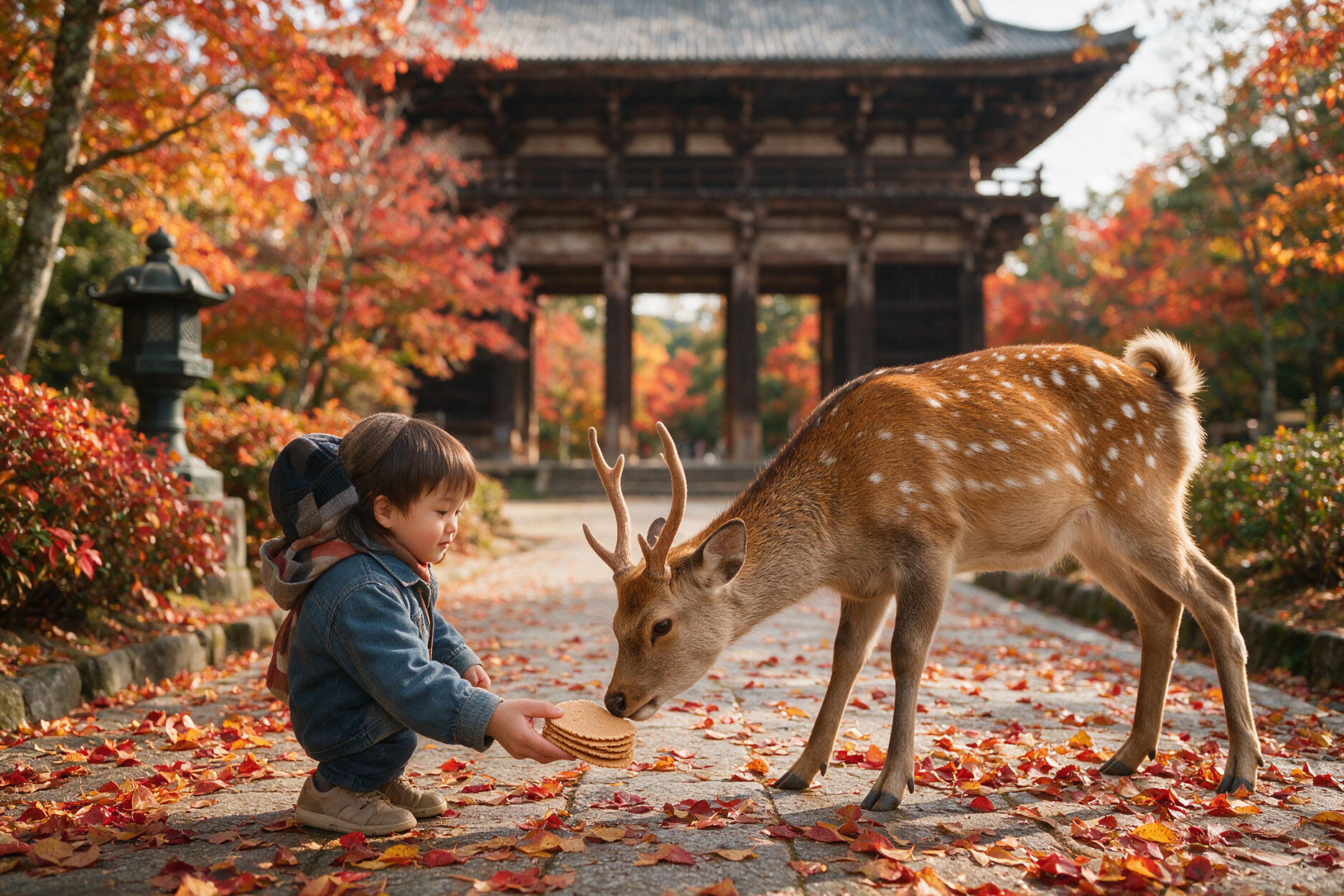
Nara is about 45 minutes from Kyoto Station on the JR Nara Line rapid train, or a similar duration via the Kintetsu line with a change at times. Todaiji Temple houses a 15-metre bronze Buddha inside the largest wooden building in the world, and the park outside is home to over a thousand semi-wild sika deer that bow for shika senbei crackers sold by vendors at the entrance — bow back and they’ll usually bow again, which is either adorable or a well-trained transaction depending on your mood that day. One honest warning: deer bite, nip, and headbutt when they think you’re hiding a cracker, so don’t wave the packet around before you’re ready to hand it over. By early afternoon, head back to Kyoto, collect your bags, and take a short shinkansen or JR Special Rapid service on to Osaka — roughly 15-30 minutes depending on the train. Check into your Osaka hotel and spend the evening in Dotonbori under the Glico Running Man sign, working through a proper street-food crawl: takoyaki, okonomiyaki, and kushikatsu.
Day 7 — Osaka, full day
Osaka Castle in the morning — the current structure is a 1931 concrete reconstruction rather than the 16th-century original, which burned and was rebuilt more than once, but the museum inside and the park grounds are worth the visit regardless. Kuromon Ichiba Market for lunch (fresh uni and wagyu skewers eaten standing up), then Shinsaibashi for shopping if that’s on the agenda. Cap the evening at the Umeda Sky Building’s Floating Garden Observatory for sunset over the city, then back to Dotonbori or Namba for a final dinner — this is a good night for conveyor-belt sushi or a proper teppanyaki if you want to end on something more composed.
Day 8 — Departure
Fly out of Kansai International Airport (KIX), which is about 45-70 minutes from central Osaka by the JR Haruka express or the Nankai line. If your flight is in the afternoon or evening, a half-day at the Osaka Aquarium Kaiyukan or one more market visit fits comfortably. Booking your India flight into Tokyo and out of Osaka (an open-jaw ticket) rather than flying in and out of the same city saves you a full day of backtracking — it’s a detail a good travel agency in Mumbai or Delhi will set up for you automatically, but it’s worth asking about specifically if you’re booking flights yourself.
Getting between cities: shinkansen, passes, and what actually saves money
This entire route runs along the Tokaido Shinkansen line, so once you’re past the Tokyo-Hakone leg, every intercity hop is a single bullet train with no transfers. A one-way Tokyo-to-Kyoto ride on the fastest Nozomi service takes roughly 2 hours 10-15 minutes; note that the Nozomi and Mizuho services are not covered by the Japan Rail Pass, only the slightly slower Hikari and Kodama trains are, so factor that in before you assume the pass covers everything.
On JR Pass math: the standard 7-day ordinary pass runs around ¥50,000 if bought directly through the official JR website, though prices through third-party travel agencies have crept up since the 2023 price hike. For this specific 7-night itinerary — one Hakone leg, one Kyoto leg, one short Osaka hop — the point-to-point ticket cost usually comes out close to or even under the pass price once you exclude Nozomi surcharges, so run the numbers for your exact dates rather than assuming the pass is automatically the better deal. Point-to-point reserved tickets can be booked online in advance through the JR East/West sites or picked up at station counters; for two or more people we usually recommend reserved seats over unreserved, since Golden Week and cherry blossom season unreserved cars fill up fast.
Within each city, IC cards (Suica or Pasmo, both now available as digital wallet cards on iPhone and increasingly on Android) cover subways, buses, and convenience store purchases everywhere — skip the paper ticket machines entirely if you can. For related day-trip planning, our guide to the Mumbai-Tokyo direct flight route covers how to time your arrival with this exact itinerary in mind.
Where to stay in each city
Tokyo: Shinjuku puts you near the Romancecar terminal for the Hakone leg and within walking distance of nightlife — think Park Hyatt Tokyo for a splurge or Hotel Gracery Shinjuku for solid mid-range comfort with a Godzilla head on the building, which the kids will appreciate more than you expect. Ginza is the quieter, more polished alternative if you’d rather be near department stores and Michelin-starred sushi counters than izakaya alleys.
Hakone: Stay in Gora or Sengokuhara specifically for ryokans with private onsen — Gora Kadan is the well-known luxury choice, and there are strong mid-range ryokans in the same area running a fraction of the price with equally good views of the hills.
Kyoto: Higashiyama or the area immediately around Gion puts you within walking distance of the evening lantern-lit streets and a short taxi from Fushimi Inari. The Ritz-Carlton Kyoto sits right on the Kamo River for a luxury stay; Mitsui Garden Hotel Kyoto Sanjo is a comfortable, well-located mid-range option that regularly comes up in family bookings.
Osaka: Namba or Umeda both work well — Namba puts you inside a 10-minute walk of Dotonbori, while Umeda is quieter and closer to the JR lines out to Kansai Airport. Conrad Osaka in Nakanoshima is the standout luxury pick with skyline views; Cross Hotel Osaka is a strong mid-range choice right in the Dotonbori action.
What this trip actually costs
Japan’s reputation for being expensive is only partly deserved — accommodation and dining flex a long way depending on what you book, and the yen’s weaker run against the rupee lately (roughly ₹0.60 to the yen at the time of writing, though it fluctuates) has made mid-range and even some luxury stays more accessible than they were five years ago. For this route, a realistic mid-range per-day budget for two — comfortable 4-star hotels, sit-down meals, shinkansen tickets, and entry fees — runs approximately ₹18,000-25,000 per day, or roughly ₹1.3-1.8 lakh total excluding international flights. Push into luxury ryokans, Michelin-listed dinners, and five-star city hotels and that climbs to ₹35,000-50,000+ per day. This isn’t a budget-backpacking route — it’s built around comfortable stays and no compromise on the Hakone ryokan night, which is genuinely one of the trip’s highlights.
Flights from India are typically the single biggest line item — a Mumbai or Delhi to Tokyo return currently runs from roughly ₹45,000-70,000 in economy depending on season and how far ahead you book, with airlines including Air India and ANA operating the route (Air India has added direct Mumbai-Tokyo service, cutting out a layover that used to add 4-6 hours each way).
Visa for Indian travellers
Indian passport holders need a visa for Japan — there’s no visa-free or visa-on-arrival option, but the process is straightforward if you apply through the correct channel. Applications from India go through VFS Global, either for the traditional visa sticker or Japan’s eVisa, which has been available for tourist applications since April 2024. You’ll need your passport (with at least two blank pages), a passport photo, a completed application form, proof of confirmed flights and hotel bookings, travel insurance, and financial proof — typically two years of ITRs or six months of salary slips. Processing officially takes a minimum of five working days, though well-documented applications sometimes clear faster. The visa itself is valid for three months from issue and allows a single stay of up to 90 days for tourism — no extensions, so plan your dates before you apply. Fees are modest (in the few-hundred-rupee range for the visa itself, plus a VFS service charge), but double-check current rates before applying since visa fees are reviewed periodically.
How to extend or shorten this itinerary
With 10-12 nights instead of 7, the natural add-ons are a two-night Hiroshima and Miyajima detour from Kyoto (about 1.5-2 hours each way by shinkansen, and the floating torii gate at Miyajima is worth the trip alone), or an extra Tokyo night for a Kamakura and Enoshima day trip — an easy half-day loop from Shinjuku if you want a coastal, temple-and-beach contrast. Sapporo doesn’t fit this loop at all; it needs its own 3-4 night add-on with a domestic flight, best as a separate winter trip or tacked onto a 12+ night itinerary.
Short on time and only have 5 nights? Drop the Hakone overnight and do it as a long day trip from Tokyo instead (it’s tight but doable), or skip Nara and spend that extra day in Kyoto instead — Nara is a wonderful half-day, but it’s the first thing to cut if you’re genuinely pressed. We cover a longer version of this same corridor, including where autumn foliage timing changes the plan, in our Japan autumn 2026 travel guide, and our piece on autumn foliage spots beyond Kyoto is worth a read if you’re building a longer version of this trip around November colours.
Mistakes people make planning this route
The most common one: trying to fit Hiroshima or Sapporo into this exact 7-night frame “since we’re already there.” Resist it — it turns two relaxed city stays into transit days. Second: booking the Hakone ryokan for the wrong night of the week. Weekend ryokan rates in Hakone run noticeably higher than weekdays since it’s a popular Tokyo weekend escape, so if your dates are flexible, shift the Hakone night to a Tuesday or Wednesday. Third: skipping seat reservations on the shinkansen during peak season and assuming you’ll just find seats in the unreserved cars — during Golden Week (late April-early May) and peak cherry blossom or autumn weeks, unreserved cars can mean standing for two hours. Reserve ahead; it costs nothing extra on most routes and takes the anxiety out of travel days.
Frequently Asked Questions
Is 7 nights enough for Japan?
It’s enough for one well-paced loop covering 3-4 cities — Tokyo, Hakone, Kyoto and Osaka, as in this itinerary — but not enough to also add Hiroshima or Sapporo without turning the trip into a series of transit days. For a first visit, this route gives a genuine mix of modern city, mountain onsen, historic temples, and food culture without feeling rushed.
Can I do Tokyo, Kyoto, and Osaka without Hakone?
Yes — if the mountain/onsen experience doesn’t interest you, swap the Hakone night for an extra night in Tokyo or Kyoto. But Hakone is genuinely one of the most-requested additions once people learn a proper ryokan stay with a private onsen and kaiseki dinner is only 85 minutes from Shinjuku, so we’d encourage at least considering it.
Should I book a JR Pass for this itinerary?
Run the numbers for your specific dates before deciding. This route only involves three intercity shinkansen legs plus a short Kyoto-Osaka hop, and since the fastest Nozomi trains aren’t covered by the pass, point-to-point tickets sometimes work out similarly priced or cheaper. The pass makes more sense on longer itineraries with more train legs.
What’s the best time to visit for this specific route?
Late March to early April for cherry blossoms, or early-to-mid November for autumn colour, are the two standout windows — both look spectacular in Hakone and Kyoto specifically. Both are also the most crowded and most expensive weeks of the year, so book accommodation 4-5 months ahead. Winter (December-February) is a quieter, often overlooked alternative with clearer Mount Fuji views from Hakone.
Do I need to speak Japanese to manage this itinerary?
No. Station signage, shinkansen announcements, and most restaurant menus in these cities have English alongside Japanese, and IC card ticket machines have an English toggle. Learning a handful of polite phrases goes a long way, but it’s not a prerequisite for this route.
Is Nara worth a full day or just a half day?
A half day is enough for Todaiji and the deer park, which is the itinerary built above. If you want to add Kasuga Taisha’s lantern-lined forest path and Nara’s old merchant quarter (Naramachi) at a slower pace, it stretches comfortably into a relaxed full day — but most first-time visitors find the half-day version, paired with an Osaka arrival that evening, hits the right pace.
What’s the biggest visa mistake Indian travellers make?
Applying with incomplete financial documentation. Japan’s tourist visa process wants clear proof of funds (ITRs or salary slips) and confirmed bookings, and incomplete paperwork is the most common cause of delay — not the country of origin or the destination itself. Apply through VFS Global with every document checklist item complete, and build in at least 2-3 weeks of buffer before your flight dates.
Can this itinerary work for a family with young kids?
Yes, with light adjustments — build in slower mornings, prioritise the Odakyu Romancecar’s glass-nose front seats for Hakone (a genuine hit with kids), and consider trimming one Kyoto temple stop in favour of downtime. The deer park in Nara and the teamLab digital art museums in Tokyo tend to be the two biggest hits with children on this exact route.
Final Thoughts
This 7-night, 8-day loop isn’t the only way to see Japan, but it’s the one that respects both the geography and the pace most first-time travellers actually want — enough time in each place to not feel rushed, without the multi-city relay-race some itineraries turn into. If you’d rather not manage shinkansen bookings, ryokan reservations during peak season, and visa paperwork yourself, that’s exactly the kind of custom Japan itinerary our team builds every week for travellers from Mumbai, Delhi, Bengaluru and beyond.
Ready to book this exact route, or want it adjusted for your dates and group? Get in touch with Get Tripped’s Japan specialists for a custom itinerary, honeymoon-specific upgrades, or a version that adds Hiroshima or extends into a longer trip.