Ask anyone who’s actually eaten their way across Japan what surprised them most, and it’s rarely sushi. It’s the ¥600 bowl of miso ramen in Sapporo that ruins ramen back home, or the seven-minute wait at a Kyoto tofu restaurant where the tofu is still bubbling in its own pot at the table. Japan’s food scene doesn’t split neatly into “street food” and “fine dining” the way a lot of countries do — a stall in Osaka can be more technically serious than a hotel restaurant, and a department store basement in Tokyo can out-dazzle a five-star buffet. If you’re comparing Japan tour packages from India and picking cities by temples and neon skylines alone, you’re planning around the wrong axis. Food is the throughline that actually connects Tokyo, Osaka, Kyoto, Hiroshima, Nara and Sapporo — and it changes completely from one to the next.
This isn’t a “top 10 foods to try” listicle. It’s a city-by-city trail — what to eat, where, what it costs in 2026, and the one mistake that trips up almost every first-timer at a ramen counter. We’ve built it around Get Tripped’s own Japan destination page and the six signature cities our custom Japan itineraries are built around, so you can drop any of this straight into your own trip planning.
Table of Contents
- Why the Food Should Shape Your Route, Not Just the Temples
- Tokyo — Depachika Halls, Sushi Counters, and 2am Ramen
- Osaka — Takoyaki, Okonomiyaki, and “Kuidaore” Culture
- Kyoto — Kaiseki, Tofu, and Matcha Done Properly
- Hiroshima — A Completely Different Okonomiyaki, Plus the Best Oysters in Japan
- Nara — What to Eat Once You’ve Fed the Deer
- Sapporo — Miso Ramen, Soup Curry, and Hokkaido’s Seafood
- Kissaten: Japan’s Slow-Coffee Culture
- Ice Cream, Konbini Sweets, and Other Detours Worth Making
- The One Mistake Everyone Makes at a Ramen Shop
- Best Time to Visit Japan for Food
- How Many Days Do You Need for a Proper Food Trail
- Cash, Tipping, Reservations and Other Practical Notes
- FAQs
Why the Food Should Shape Your Route, Not Just the Temples
Most Japan vacation packages get built around a fixed loop — Tokyo in, Kyoto for temples, Osaka for a night, flight out. That works for sightseeing, but it’s a mediocre way to eat, since it treats Osaka as a stopover instead of the reason to go to Kansai at all.
Each of the six cities on Get Tripped’s Japan map has a genuinely distinct food identity. Tokyo is refinement and range. Osaka is theatre and generosity — locals call their own eating culture kuidaore, roughly “eat until you drop.” Kyoto is restraint, built around tofu, dashi and the seasons. Hiroshima and Osaka both claim okonomiyaki and will argue about it happily, but they’re not the same dish. Nara has three or four things it does that nowhere else does well. Sapporo runs on miso, butter and whatever came off a boat that morning. A custom Japan itinerary that gives each city even one properly chosen meal is worth more than a packed sightseeing schedule with mediocre food filled in around it.
Tokyo — Depachika Halls, Sushi Counters, and 2am Ramen
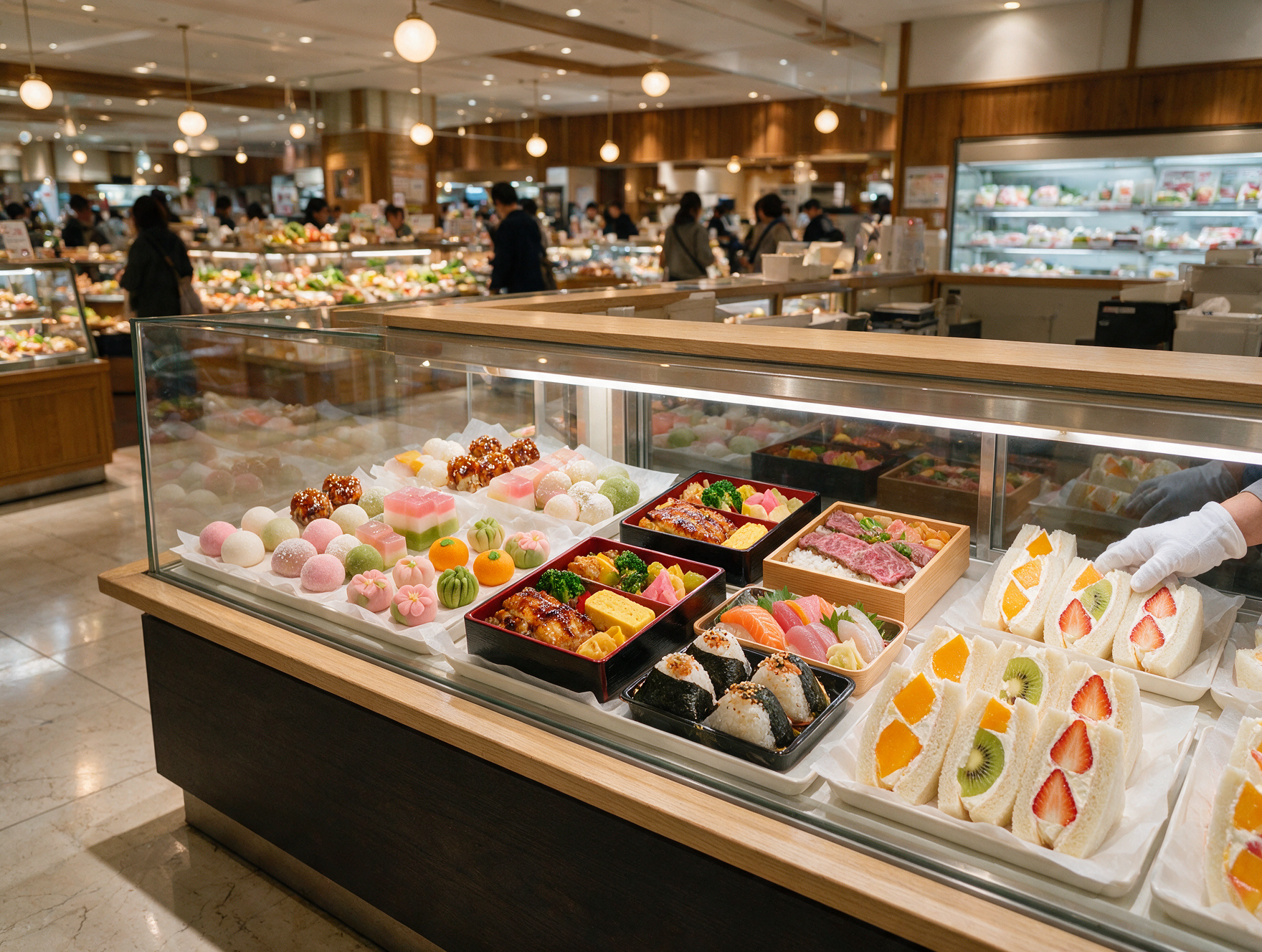
Skip the tourist sushi conveyor belts on your first night and go underground instead — literally. The basement floor of any major Tokyo department store, known as depachika, is one of the best places in the world to understand Japanese food culture in forty-five minutes. Isetan Shinjuku’s food hall runs over 150 vendors under one roof — wagashi confectioners, bento counters plating rice by hand, fruit sandwiches built around a single perfect strawberry. Nihombashi Mitsukoshi leans into heritage regional specialties; Ginza Mitsukoshi is quieter and more precise, better for pastries than street energy. Daimaru at Tokyo Station is built for travellers grabbing a bento before a shinkansen.
The genuinely useful local tip: prepared-food counters start marking down bento and sozai (deli sides) an hour or two before closing — look for a small red discount tag, or just ask “waribiki arimasu ka?” (“is there a discount?”). It’s not a budget hack so much as how regulars shop. Do one walk-through with empty hands first, decide what’s actually worth it, then buy — don’t graze on free samples without an intention to purchase; it reads as rude rather than resourceful.
Beyond depachika, Tokyo’s range is the real story: an omakase sushi counter in Ginza where the chef won’t let you dip nigiri in soy sauce yourself, ramen shops in Shinjuku doing brisk business at 2am, and Tsukiji Outer Market’s stalls for a tamagoyaki skewer or fresh uni on the walk. If you’re arriving via the new nonstop connection from India, our Mumbai-Tokyo direct flight guide is worth a read before you land jet-lagged and hungry at Narita.
Osaka — Takoyaki, Okonomiyaki, and “Kuidaore” Culture
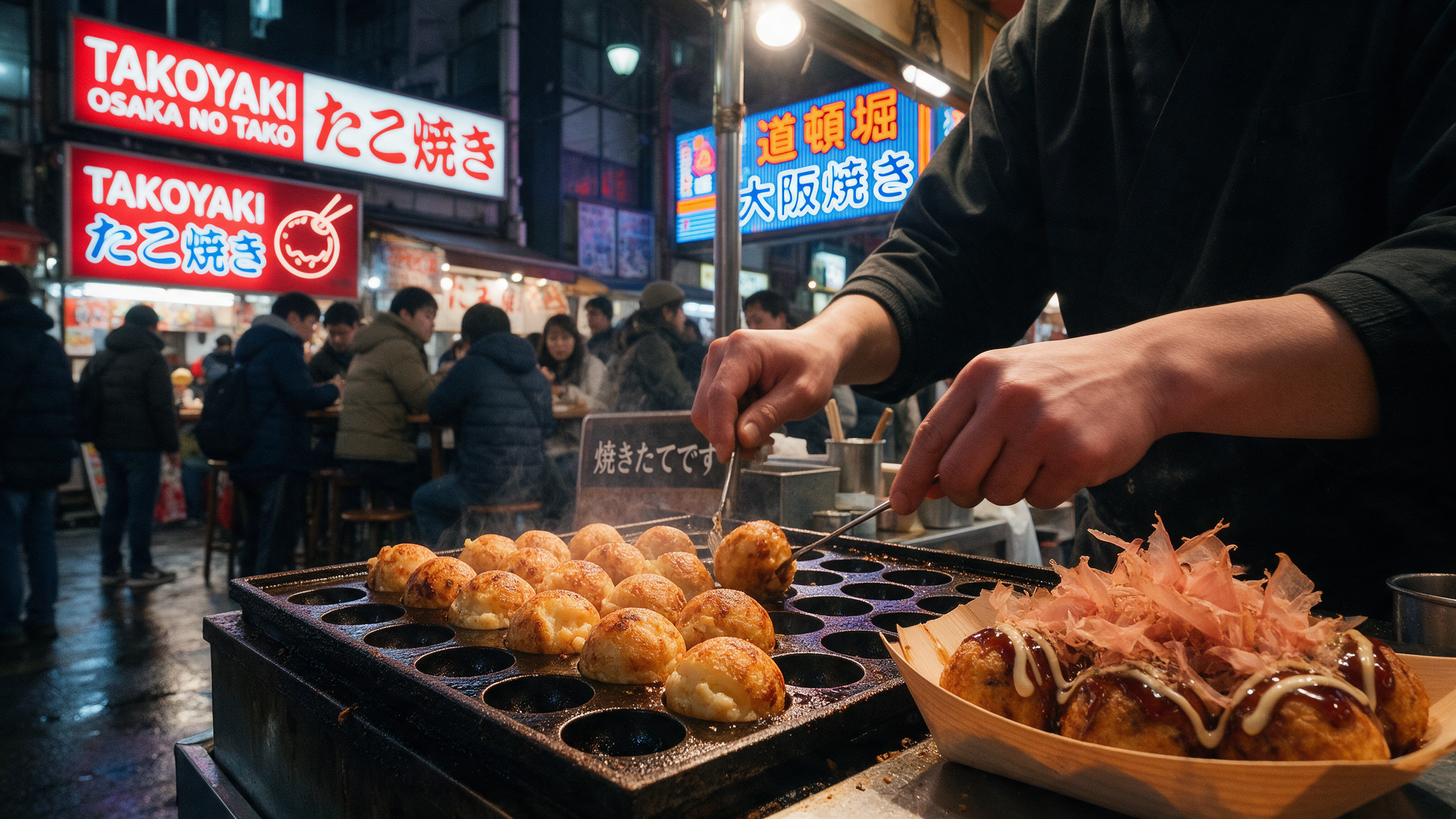
Osaka doesn’t do subtle. Dotonbori at 8pm is neon, noise, and the smell of grilling batter from every direction, and it’s genuinely fun rather than just a photo backdrop. Takoyaki — octopus dumplings cooked in a half-sphere griddle — is the city’s calling card. Akaoni, a minute from Namba Station, gets Michelin Bib Gourmand-level attention for a reason: the shell is thin and crisp, the inside is closer to a savoury custard than the gummy version you’ll find at tourist-trap carts, and eight pieces run about ¥720. Order the classic version before the “melty cheese” variation — it’s a better baseline for judging every other stall you pass.
Osaka also invented okonomiyaki as most of Japan knows it: cabbage, batter, pork and egg mixed together before it hits the griddle, unlike Hiroshima’s layered version (more on that below). Add kushikatsu — skewered, breaded, deep-fried everything, dipped once only in the shared sauce, since double-dipping is a real faux pas here — and Kuromon Ichiba Market for a wander with fresh oysters, wagyu skewers, and seasonal fruit. This is not a cheap-eats city dressed up as an attraction; a good izakaya dinner for two with drinks comfortably runs ¥6,000–¥10,000, and it’s worth every yen.
Kyoto — Kaiseki, Tofu, and Matcha Done Properly
Kyoto’s food culture is the opposite temperature of Osaka’s — quiet, seasonal, and built around dashi rather than sauce. Kaiseki, the multi-course tasting format that Kyoto essentially perfected, isn’t just fine dining theatre; it’s a genuine record of what’s in season, plated with more restraint than drama. If you only do one splurge meal in Japan, this is the city to do it in.
Kyoto is also Japan’s tofu capital, and yudofu — tofu gently simmered in a kombu broth at your table — is the dish to order near the temple district of Nanzen-ji, where several ryotei restaurants have served little else for generations. It sounds plain on paper and tastes like nothing you’ll get from a supermarket block; the texture is the whole point. For something sweeter, head to Uji, twenty minutes south by train, which grows some of the country’s most respected matcha and turns it into everything from parfaits to a full matcha kaiseki experience at restaurants like Tatsumiya — worth the detour even if you’re only in Kyoto for two days. Our autumn foliage guide beyond Kyoto covers a few quieter spots nearby if you’re travelling in that season.
Hiroshima — A Completely Different Okonomiyaki, Plus the Best Oysters in Japan
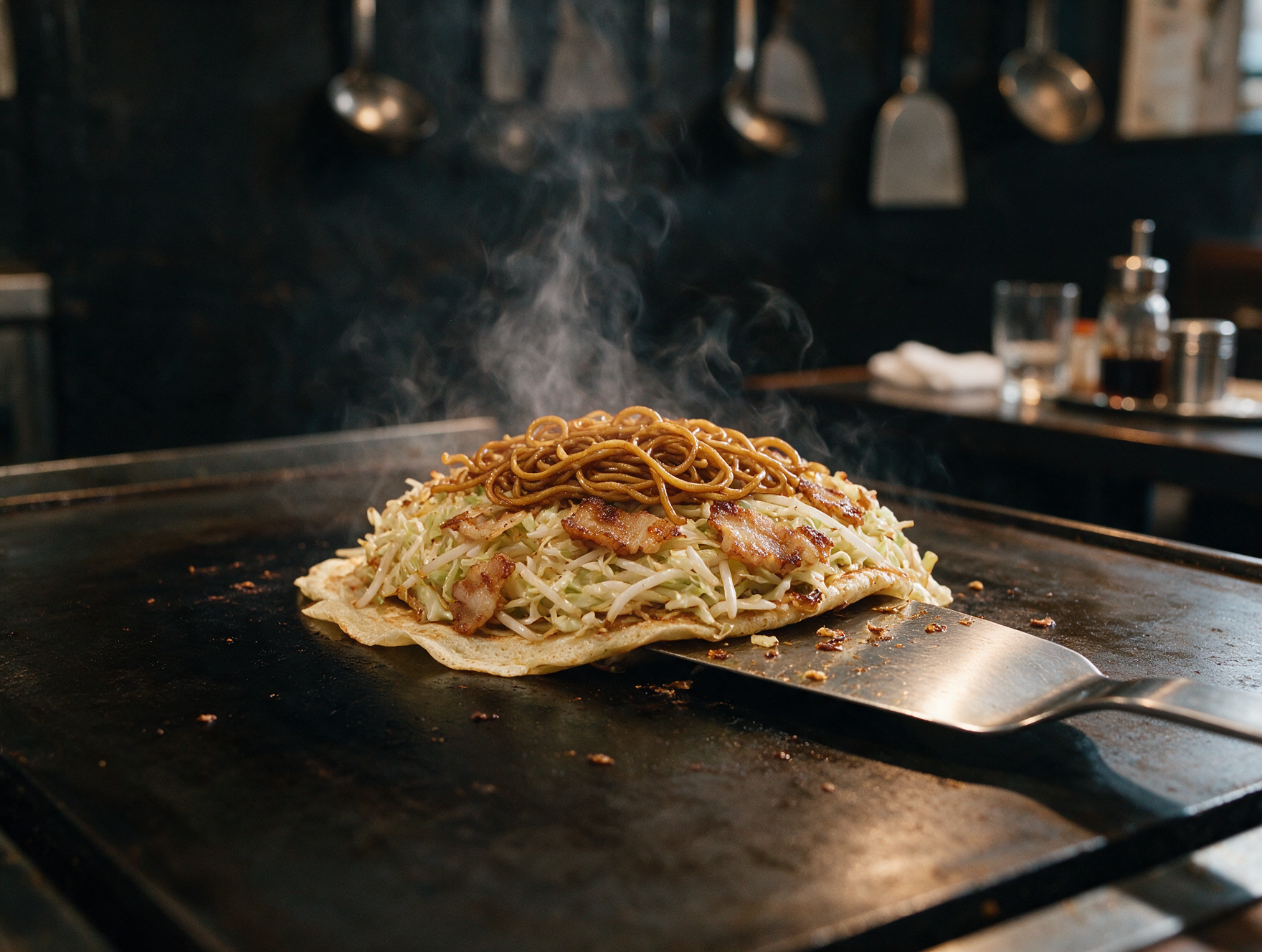
Here’s the honest opinion: Hiroshima’s okonomiyaki is better than Osaka’s, and it’s not close. That’s a controversial thing to say to an Osakan, but the two dishes aren’t really competing — Osaka mixes, Hiroshima layers. A Hiroshima okonomiyaki builds a thin crepe base, then cabbage, pork belly, a full portion of yakisoba noodles, and a fried egg, stacked and pressed on the griddle over ten to fifteen minutes rather than folded together in two. The result has actual textural contrast — crisp base, soft cabbage, chewy noodle — instead of one uniform bite. JNTO’s own writeup calls it a friendly rivalry, but go taste it yourself before picking a side.
Okonomimura, a three-floor building in the Shintenchi district packing in roughly 25 independent okonomiyaki stalls, is the obvious place to start — loud, smoky, and unmistakably Hiroshima. For a calmer version, Okonomiyaki Kissui is the local’s answer to the tourist crowds. Expect ¥900–¥1,500 for a standard pork-and-noodle plate.
Then there are the oysters. Hiroshima Prefecture produces roughly 60% of Japan’s farmed oysters, and the season runs October through April — summer oysters exist but are noticeably smaller and less briny. The shacks along Miyajima’s Omotesando street grill them to order for ¥200–400 a shell, right by Itsukushima Shrine’s floating torii gate. For something more composed, Kanawa, a floating restaurant near Peace Memorial Park, runs a full oyster kaiseki course from roughly ¥8,000. And don’t leave without anago meshi — grilled conger eel over rice — from Ueno, operating near Miyajimaguchi Station since 1901; boxes sell out by mid-morning most days, so aim to arrive before 10am.
Nara — What to Eat Once You’ve Fed the Deer
Nara gets treated as a half-day deer-park detour from Kyoto or Osaka, which undersells its food scene badly. Kakinoha-zushi — pressed mackerel or salmon sushi wrapped in a persimmon leaf — is Nara’s signature dish, born inland where fresh fish once had to travel days from the coast; the leaf wrapping was originally practical preservation, and it’s now the flavour. It’s sold all over Naramachi, the old merchant quarter, and travels well if you want to picnic near Nara Park (just not near the deer — they will try to eat your lunch, and they’re bolder about it than you’d expect).
Pair it with narazuke, vegetables pickled in sake lees for months — pungent, boozy, not for everyone, and worth trying once to decide which camp you’re in. Naramachi’s narrow lanes also hold small, family-run restaurants serving somen noodles and Nara-zuke-glazed dishes that don’t show up on most tourist itineraries — worth a slow wander rather than a single Google Maps pin.
Sapporo — Miso Ramen, Soup Curry, and Hokkaido’s Seafood
Sapporo is where miso ramen was invented, and the city takes it seriously enough to have genuine, debated house styles rather than one “best bowl.” Sumire is known for a layer of rendered lard sitting on top of the soup that keeps it scalding hot to the last spoonful. Ramen Shingen simmers pork bone and seafood together for a rounder, less aggressively salty broth. Menya Saimi runs a whiter, more delicate miso base. None of them are wrong — order two bowls across two days if you can and you’ll start noticing the differences yourself.
Sapporo also invented soup curry, a genuinely different animal from Indian curry despite the name — a thin, intensely spiced broth over rice with a whole chicken leg or vegetables, developed locally rather than imported. Menya Suzuran fuses it with the city’s ramen culture, running until 4am near Susukino for late-night eaters.
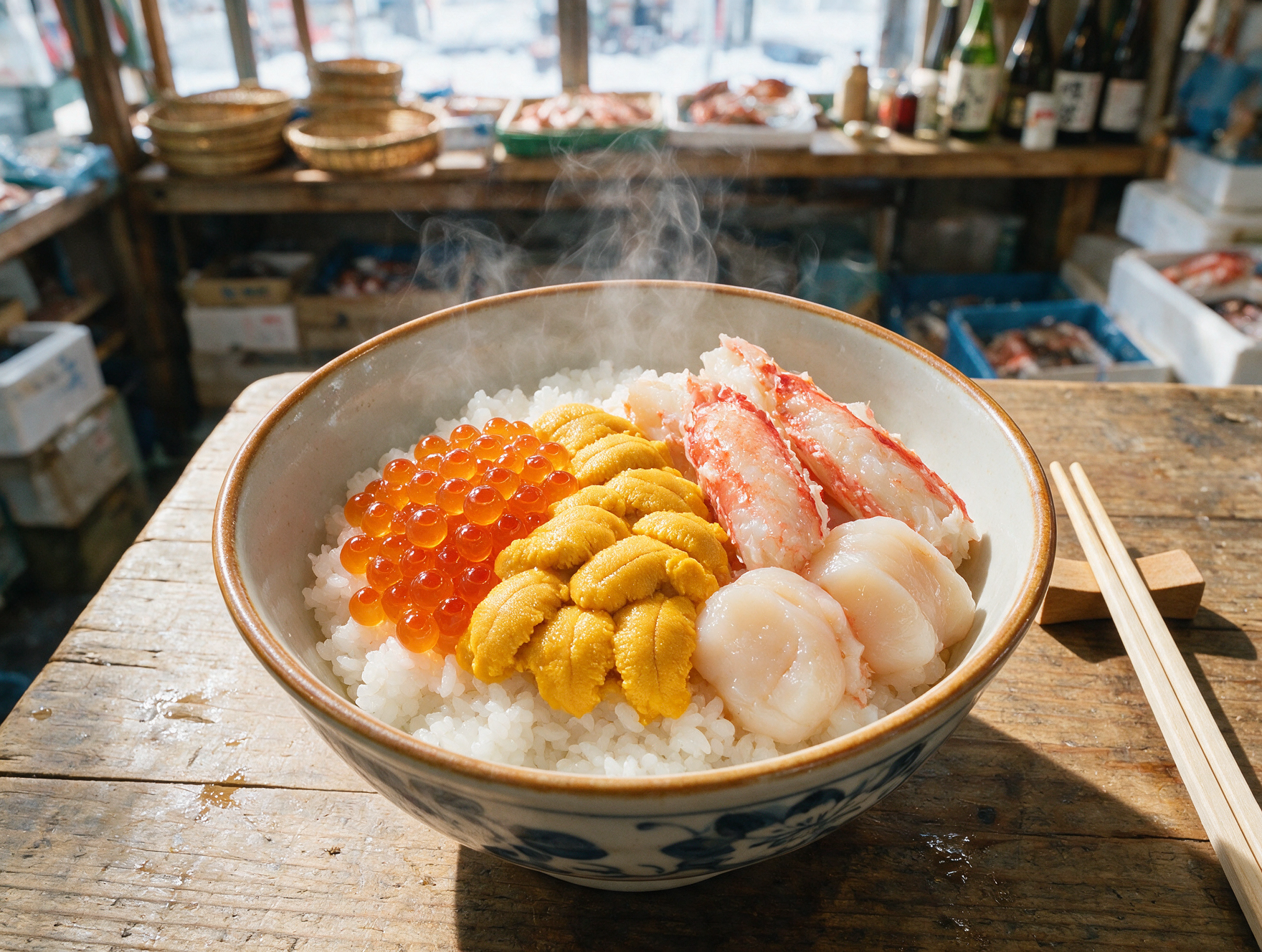
Then there’s Nijo Market, five minutes from Odori or Susukino station, for Hokkaido’s actual seafood: hairy crab, king crab, sea urchin so fresh it barely needs anything on it, and salmon roe that regulars compare favourably to imported varieties. Go by 8 or 9am for the best selection and thinner crowds. A kaisendon (seafood rice bowl) at a stall like Oiso or Daiichi Kaisenmaru runs ¥2,300–¥3,300, and a full crab experience can run well past ¥10,000 — this is a splurge city for seafood, not a budget one, and it’s worth planning for rather than treating as an afterthought before a flight home.
Kissaten: Japan’s Slow-Coffee Culture
Somewhere between a café and a time capsule sits the kissaten — Japan’s old-school, Showa-era coffee house, and a genuinely different experience from the third-wave espresso bars that have opened in every city over the past decade. A proper kissaten pours filter coffee slowly, sometimes through a siphon, in a dim wood-panelled room that hasn’t changed its menu or its jazz playlist since the 1970s. JNTO’s own guide to kissaten culture is worth a skim before you go, because half the appeal is knowing what you’re looking at — a battered leather booth and a menu with a “coffee jelly” dessert are good signs you’ve found a real one, not a themed reproduction.
Kyoto has some of the country’s best-preserved examples tucked into backstreets near Teramachi; Tokyo’s are scattered across older neighbourhoods like Yanaka and parts of Shinjuku that missed the redevelopment wave. This is one of the few genuinely relaxing stops on a food trail that otherwise moves fast — budget thirty unhurried minutes, not a quick photo and exit.
Ice Cream, Konbini Sweets, and Other Detours Worth Making
Japan’s dessert culture rewards wandering off-list. Hokkaido milk soft-serve — genuinely richer than soft-serve anywhere else, because Hokkaido’s dairy herds and cooler climate produce noticeably higher-fat milk — is worth seeking out specifically in Sapporo rather than settling for a Tokyo imitation. Uji, near Kyoto, does the same thing for matcha soft-serve that everywhere else attempts and rarely matches. In autumn, seasonal flavours built around chestnut and sweet potato show up on menus for a few weeks only, so ask what’s currently in season rather than defaulting to the safe choice.
Don’t dismiss convenience store desserts either — Japanese konbini (7-Eleven, Lawson, FamilyMart) run genuinely serious in-house pastry programmes, and a Lawson premium roll cake or a seasonal 7-Eleven matcha tiramisu is not a fallback option, it’s a legitimate stop on its own. More on that below.
The One Mistake Everyone Makes at a Ramen Shop
Here’s the mistake nearly every first-timer makes, usually standing confused at a shop entrance while a queue builds behind them: many ramen shops, especially smaller ones in Tokyo and Sapporo, don’t take your order at a table at all. There’s a ticket vending machine just inside the door — you choose and pay for your bowl there first, hand the ticket to staff, then sit down. Card acceptance on these machines is inconsistent even in 2026, so carry cash specifically for this; a surprising number of the best ramen counters in the country still don’t take cards at all, ticket machine or not. If the machine’s all in Japanese, most now have a small button to switch to English, but don’t count on it everywhere — a rough idea of the kanji for pork (豚), soy sauce (醤油) and miso (味噌) goes a long way.
The second, related mistake: skipping convenience-store food entirely because it feels like giving up on “real” Japanese eating. A 7-Eleven egg salad sando or onigiri is a legitimately well-made, fresh option between proper meals — not a compromise. The myth only holds true if you try to build a whole trip around konbini food; it’s a great supplement, not a replacement for the restaurants above.
Best Time to Visit Japan for Food
The best time to visit Japan for food depends more on what you want to eat than what you want to see. Oyster season in Hiroshima runs October through April, which lines up neatly with autumn foliage season (September to November) if you’re already planning a trip around the colours — our Japan autumn 2026 travel guide covers that timing in more detail. Cherry blossom season, typically late March into early April depending on the year and city, brings hanami bento culture into full swing — seasonal sakura-shaped wagashi and pink-hued sweets that only exist for about three weeks. If you’re building a trip around Japan cherry blossom tour packages, factor in that restaurant reservations get noticeably tighter in the weeks either side of peak bloom, so book ahead rather than assuming you’ll walk into a good kaiseki spot same-day.
Summer (June–August) is the weakest food season — Hiroshima’s oysters are out, and Kyoto’s humidity makes a multi-course kaiseki dinner feel like a lot. Winter in Sapporo, by contrast, is when its food culture peaks — hot ramen and soup curry make far more sense at minus five degrees than in July.
How Many Days Do You Need for a Proper Food Trail
A rushed Japan 10 days travel itinerary can still cover all six cities, but it leaves almost no slack for food discovery — you’ll eat well by luck rather than by plan. We’d suggest weighting it roughly: 3 nights Tokyo, 2 Kyoto, 2 Osaka (it deserves at least this, not a half-day add-on), 1 Hiroshima with Miyajima as a same-day extension, half a day in Nara from Kyoto or Osaka, and 2 nights Sapporo if Hokkaido is on the route at all. That’s closer to 11–12 days done properly, or 8–9 if you’re willing to drop Sapporo and focus the trip on Honshu. Either way, build in at least one evening per city with no reservation and no plan — some of the best meals on a Japan trip happen because you walked past a queue of locals and joined it.
Cash, Tipping, Reservations and Other Practical Notes
Tipping isn’t practised in Japan — leaving money on the table causes confusion, not gratitude, and staff may chase you down to return it. Card acceptance has grown, but plenty of the best small restaurants and market stalls are still cash-only, so keep yen on hand rather than assuming every place takes cards. For kaiseki, sushi omakase, and anything with fewer than a dozen seats, reserve ahead — same-day walk-ins are increasingly turned away in Kyoto and Tokyo’s better spots, sometimes weeks in advance for the smallest counters.
As for visas: Indian passport holders do need a visa for Japan — it isn’t visa-free travel as of 2026. Applications go through the Embassy of Japan in India or VFS Global centres, and Japan now also offers an e-visa route for eligible applicants. Build this into your planning timeline alongside your restaurant reservations — both need lead time.
FAQs
What’s the biggest food mistake first-time visitors make in Japan?
Not realising that many ramen shops use a ticket vending machine at the entrance instead of table service — you order and pay there first, before sitting down — and that a lot of these machines and shops are cash-only.
Do I need to carry cash for food in Japan in 2026?
Yes, at least some. Card and contactless acceptance has grown, but many of the best ramen shops, small restaurants and market stalls — especially outside major hotels and chain restaurants — still only take cash.
Is convenience store (konbini) food in Japan actually good?
Genuinely, yes. Onigiri, sandwiches and seasonal desserts from 7-Eleven, Lawson and FamilyMart are freshly made and well executed. It’s a great supplement between proper meals, not a replacement for the restaurants and markets on this list.
Do you need to tip at restaurants in Japan?
No. Tipping isn’t part of Japanese service culture, and attempting to leave a tip can cause more confusion than appreciation — the service charge, where one applies, is already built into the price.
What’s the actual difference between Osaka and Hiroshima okonomiyaki?
Osaka mixes all the ingredients — cabbage, batter, pork, egg — together before cooking. Hiroshima builds it in distinct layers with a full portion of yakisoba noodles pressed in, giving it more textural contrast. Both are excellent; they’re different dishes wearing the same name.
How many days should I plan for a Japan food trail across all six cities?
Realistically 10-12 days to give Osaka, Hiroshima and Nara proper time alongside Tokyo and Kyoto, or 8-9 days if you drop Sapporo and focus on Honshu.
When is the best time to visit Japan for food specifically?
Late September through April covers Hiroshima’s oyster season and autumn foliage together; late March to early April adds cherry blossom-season sweets; winter is when Sapporo’s ramen and soup curry culture is at its best. Summer (June-August) is the weakest food season, mainly because oysters are out of season and Kyoto’s humidity makes heavy meals less appealing.
Do Indian travellers need a visa for a Japan trip in 2026?
Yes — Japan is not visa-free for Indian passport holders. Apply through the Embassy of Japan in India or VFS Global, with an e-visa option available for eligible applicants; build in processing time alongside restaurant reservations.
The Bottom Line
A Japan trip built only around temples and skylines will still be a good trip. One that treats Tokyo’s depachika halls, Osaka’s takoyaki stalls, Kyoto’s tofu restaurants, Hiroshima’s layered okonomiyaki, Nara’s kakinoha-zushi and Sapporo’s miso ramen as destinations in their own right is a considerably better one — and it’s not really more expensive, just differently planned. The food is already there in every one of Get Tripped’s six signature Japan cities. Most itineraries just don’t budget the time to find it properly.
If you’d rather not build this route yourself meal by meal, that’s exactly what a custom Japan itinerary from Get Tripped is for — we build the food stops into the route alongside the sights, not as an afterthought squeezed in between. Get in touch for a Tokyo and Kyoto tour package built around where to eat as much as what to see, or browse our full Japan destination page to start planning. As a Japan travel agency working with travellers across Mumbai and the rest of India, we’ll help you book Japan holidays that get the food right from the first night to the last.