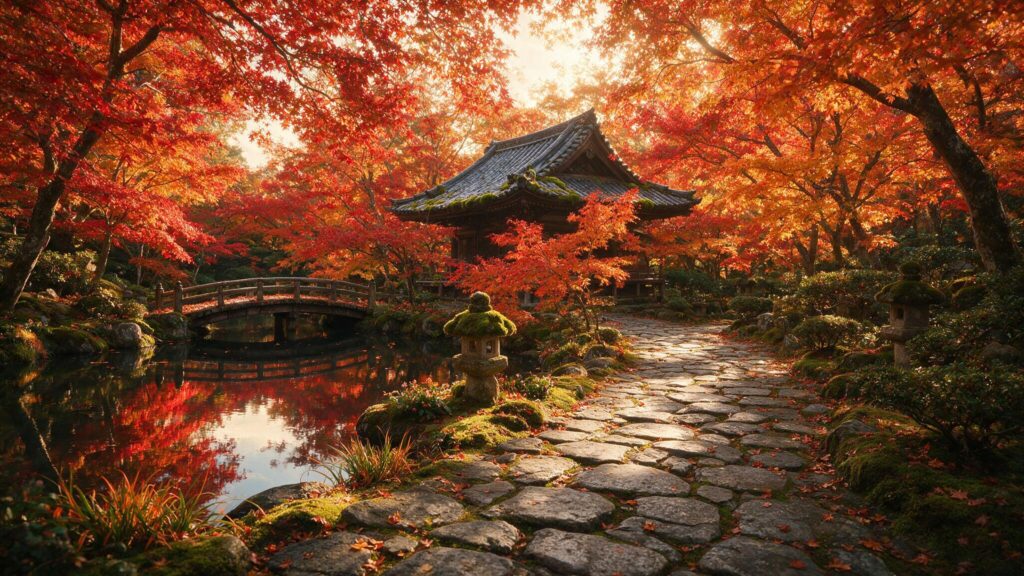
There’s a particular week in Kyoto — usually somewhere around the third week of November — when the maples along the Philosopher’s Path go from green-with-a-blush to full, unreasonable red almost overnight, and every ryokan within walking distance of Eikando temple has been booked out since June. That’s the week everyone’s Instagram feed is chasing. It’s also the week you’ll be sharing a viewing platform with three tour buses’ worth of people holding phones over their heads. Autumn in Japan rewards planning, not spontaneity — and this year, there are two good reasons to actually do that planning early.
First, the koyo (autumn foliage) season is, as it always is, spectacular and short-lived, moving south across the country over about ten weeks. Second, Air India now flies Mumbai to Tokyo Haneda nonstop — a genuinely useful change for anyone who’s previously routed through Singapore, Bangkok, or Hong Kong just to get to Japan. Add in that Diwali 2026 falls on a Sunday, giving a natural long weekend right in the middle of peak Kanto foliage, and this is a better-timed year than most to finally book the trip.
This guide covers when to go, how to get there, what it costs, the visa process, and the kind of practical detail — where to stay, what to eat, what to skip — that actually changes how the trip feels once you land.
Table of Contents
- Why Autumn Is the Season to See Japan
- 2026 Foliage Forecast by Region
- Why 2026 Is a Genuinely Good Year to Book
- How Many Days You Need (and a Sample 12-Day Route)
- Getting There From India
- Visa Requirements for Indian Passport Holders
- Getting Around Once You’re There
- Where to Stay
- What to Eat in Autumn
- What It Actually Costs
- Cash, Cards, and Getting Online
- A Few Things Worth Knowing Before You Go
- The Spot Most People Skip
- One Mistake to Avoid
- Who This Trip Is Really For
- FAQs
Why Autumn Is the Season to See Japan
Spring gets the marketing budget — cherry blossoms are Japan’s most exported image — but autumn is arguably the better trip. The weather is more forgiving (mid-teens to low 20s°C in most of the country through October and November, versus the humidity of a Japanese summer), the light is better for photography, and the food calendar tilts toward chestnuts, persimmons, matsutake mushrooms, and saury — genuinely one of the best eating seasons in the country. Crowds are real but more spread out than the two-week cherry blossom window, since koyo unfolds gradually from Hokkaido down to Kyushu instead of peaking everywhere at once.
2026 Foliage Forecast by Region
Foliage timing shifts a little every year depending on how cold the autumn runs, so treat these as planning windows rather than fixed dates — but they’re a reliable starting point for booking flights and hotels now.
| Region | Expected Peak, 2026 |
|---|---|
| Hokkaido | Late September – early October |
| Tohoku & Japanese Alps/Nagano | Early – mid October |
| Tokyo & Kanto (incl. Nikko, Hakone) | Late October – mid November |
| Chubu (incl. Kawaguchiko/Mt Fuji area) | Early – mid November |
| Kyoto & Kansai | Mid November – early December |
| Chugoku & Shikoku | Mid – late November |
| Kyushu | Mid November – early December |
If you can only pick one region, Kyoto in late November is the classic, deservedly. If you want to see it unfold, a route that moves roughly north-to-south with the season — Tokyo/Hakone into early-mid November, then down to Kyoto and Nara for late November — lets you catch color in more than one place instead of chasing a single peak.
Why 2026 Is a Genuinely Good Year to Book
Two things line up this year that don’t every year. Air India launched a nonstop Mumbai–Tokyo Haneda route in June 2026, cutting out the layover most Indian travelers previously routed through — and Haneda itself is a real advantage, since it’s far closer to central Tokyo than Narita, saving close to an hour each way on arrival and departure. Second, Diwali 2026 falls on Sunday, November 8, with the broader festival period running Friday November 6 through Tuesday November 10 — which, depending on how your employer treats the surrounding days, can turn into a genuine long weekend that sits right inside peak Kanto foliage season. It’s not a coincidence worth overthinking, but it is worth booking around if your leave calendar allows it.
How Many Days You Need (and a Sample 12-Day Route)
Ten days is workable if you’re focused on Tokyo and Kyoto only; twelve to fourteen lets you add Hakone or the Fuji Five Lakes without feeling rushed. Fewer than nine days means you’ll spend a disproportionate amount of the trip on trains and check-ins rather than actually being anywhere.
A route we’d suggest for a first autumn trip:
- Days 1–4: Tokyo. Shinjuku Gyoen and Rikugien Garden for foliage inside the city, a day trip to Nikko or Kamakura, and enough slack to just walk Yanaka or Shimokitazawa without an agenda.
- Days 5–6: Hakone or the Fuji Five Lakes. Ryokan with an onsen, Mt Fuji views if the weather cooperates, and — if your dates land in November — the Kawaguchiko Autumn Leaves Festival (see below).
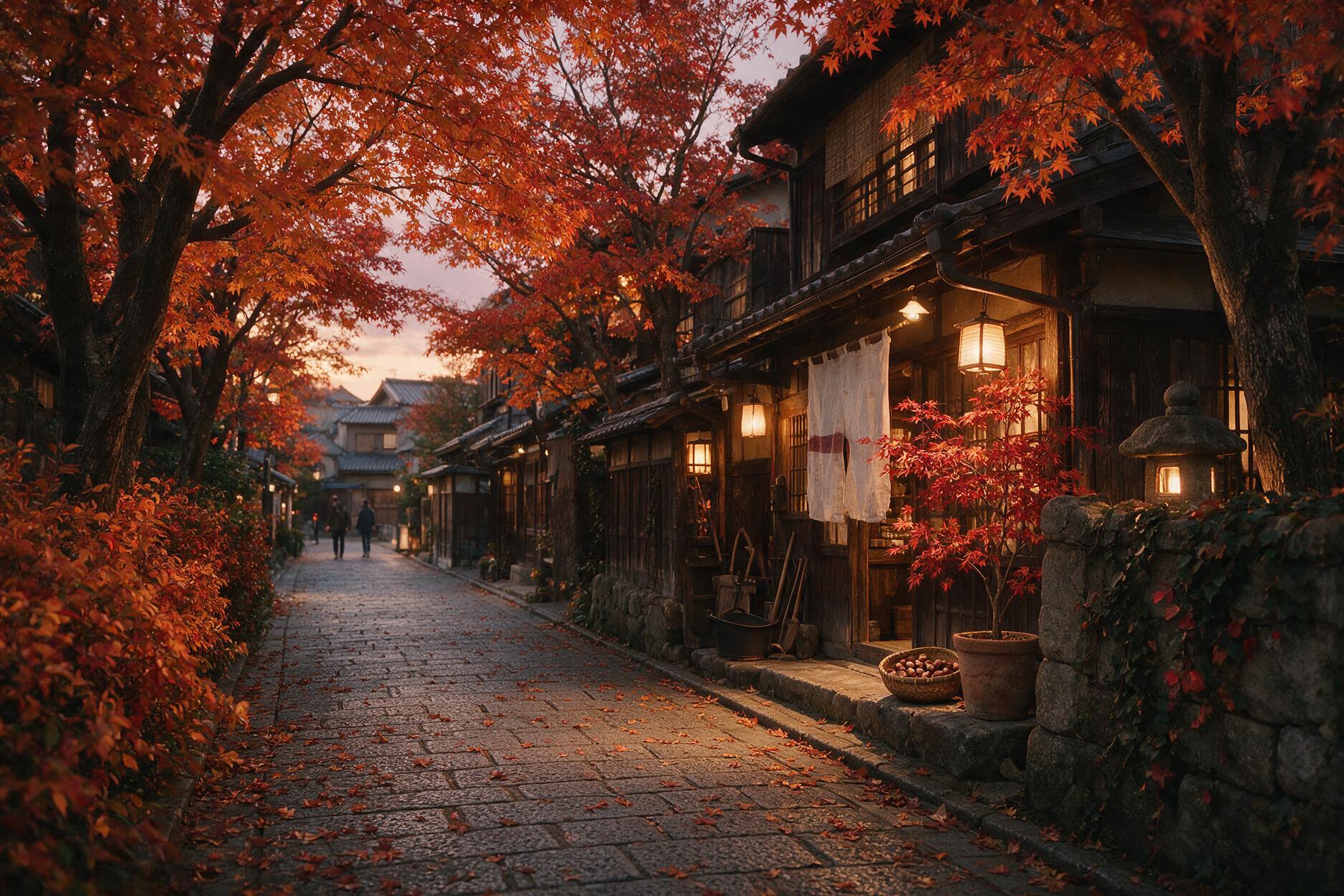
- Days 7–9: Kyoto. Arashiyama at opening time (7:30–8am, before the buses arrive), Eikando and Tofukuji for the maples, and at least one evening just wandering Gion respectfully rather than photographing it (more on that shortly).
- Day 10: Nara. An easy half-day trip from Kyoto for the deer park and Todaiji, doable without an overnight.
- Days 11–12: Osaka. Dotonbori for the food scene and a more relaxed close to the trip before flying out, most likely via Kansai International.
Getting There From India
The Air India Mumbai–Tokyo Haneda nonstop, launched June 2026, is the most direct option currently available and worth checking first if you’re flying from Mumbai. From Delhi, Bangalore, and other major cities, you’re generally still routing through a one-stop connection — Air India via Delhi, or one-stops through Singapore, Bangkok, or Hong Kong on Singapore Airlines, Thai Airways, or Cathay Pacific, all of which run reliable connections and can occasionally undercut the direct fare. Economy round-trip fares fluctuate quite a bit by season and how far ahead you book, so treat any number you see online as a starting point rather than a quote — check a couple of weeks before you’d actually book to get a real read, since November fares move fast once foliage forecasts firm up in September.
Visa Requirements for Indian Passport Holders
Indian passport holders need a visa for any visit to Japan — there’s no visa-on-arrival and, as of 2026, no tourist e-visa yet (Japan has one under study, but with no confirmed timeline). Applications go through VFS Global centers, not directly online, and biometrics are required for applicants aged 16 and up.
For a standard leisure trip, you’ll want the single-entry tourist visa (valid for a 15–30 day stay, 3-month validity from issue). A multiple-entry tourist visa is also available for frequent travelers, valid 3–5 years for stays up to 90 days per visit — worth considering if Japan is going to be a repeat destination for you.
Core documents: passport valid 6+ months beyond your travel dates, a completed application form, a passport photo, a detailed day-by-day itinerary with hotel and transport bookings, confirmed round-trip flights, 3–6 months of bank statements (stamped within the last week), income tax returns for the past 2–3 years, an employment NOC, and a cover letter explaining your travel purpose and ties to India.
Consular and service fees run roughly ₹2,850 all-in for the single-entry visa and around ₹4,500 for the multi-entry version — non-refundable regardless of outcome, so get the paperwork right the first time. Standard processing is 5–10 working days, but apply 4–6 weeks ahead, and 8–10 weeks ahead if you’re traveling in the autumn window, since that’s peak processing season alongside cherry blossom applicants.
Planning to skip the paperwork? Get Tripped’s Japan visa assistance service handles documentation end to end — get in touch for details.
Getting Around Once You’re There
The Japan Rail Pass isn’t the automatic purchase it used to be. Since the 2023 price increase, a 7-day ordinary pass runs around ¥50,000 (rising to ¥53,000 for overseas purchases from October 1, 2026) — and for the classic Tokyo–Kyoto–Osaka route alone, individual shinkansen tickets often work out cheaper. A Tokyo–Kyoto round trip on individual tickets, for instance, can run roughly ¥22,000 less than the cost of the pass. The pass earns its price back if you’re stringing together more distant stops — say Tokyo, Kyoto, Hiroshima, and onward — where ticket costs stack up past the pass price. Run your specific route through a JR Pass calculator before you buy rather than assuming it’s worth it by default.
For city transit, a Suica or Pasmo IC card (or the digital version on Apple/Google Pay if your phone supports it) covers trains, subways, buses, and even convenience store purchases across most of the country — get one at the airport on arrival and top it up as you go.
Where to Stay
Tokyo: Shinjuku and Shibuya for convenience and nightlife, Ginza for a quieter luxury base, or Yanaka/Nezu if you want an old-Tokyo neighborhood feel with easy subway access to everywhere else. Kyoto: staying inside a traditional ryokan for at least one or two nights — ideally with a private onsen if you’re traveling as a couple — is worth the splurge even if the rest of your trip is hotel-based; it’s a different way of experiencing the city than checking Kyoto sights off a list from a business hotel. Book both Tokyo and Kyoto accommodation as early as you can — properties near the main foliage spots in Kyoto in particular sell out for late November months in advance.
What to Eat in Autumn
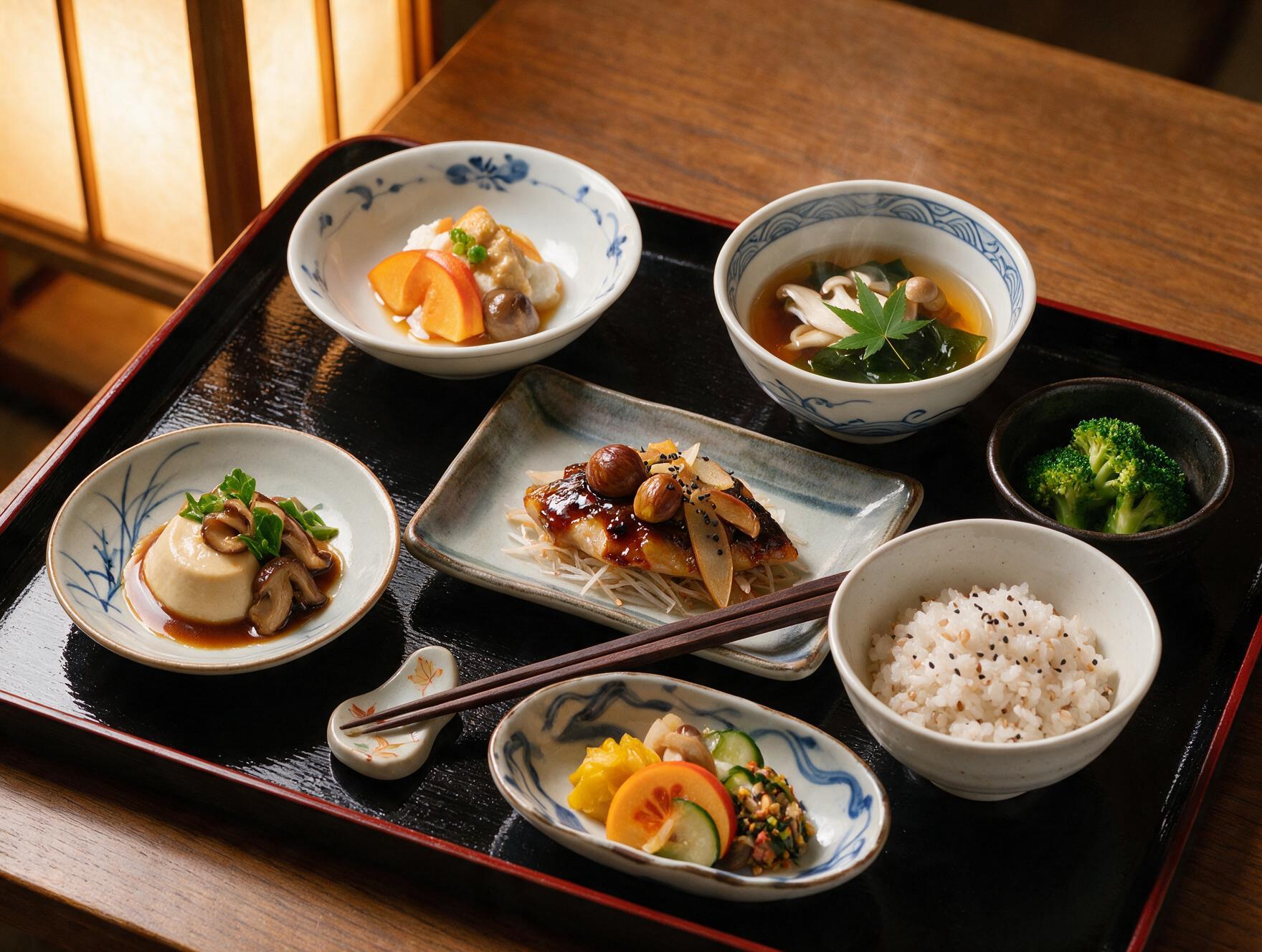
Autumn in Japan has its own menu, and it’s worth building meals around it rather than defaulting to sushi every night. Kuri (chestnut) desserts, kaki (persimmon), matsutake mushroom dishes — often served simply, in a clear dashi broth, to let the mushroom’s smell come through — and sanma (Pacific saury), usually grilled whole with just salt and a squeeze of citrus, all show up on seasonal menus through October and November. A kaiseki dinner at a Kyoto ryokan is the fullest expression of this — multiple small, precisely seasonal courses — and worth booking ahead since good ones fill up. For vegetarian travelers, Kyoto’s Buddhist temple cuisine (shojin ryori) is genuinely excellent and one of the few places in Japan where a fully vegetarian, often vegan, multi-course meal is the default rather than a workaround — Shigetsu at Tenryuji temple in Arashiyama is worth planning a lunch around.
What It Actually Costs
Rough daily spend, per person, excluding flights and visa fees: a comfortable mid-range trip runs approximately ₹12,000–18,000/day (hotel, meals, local transport, some paid attractions), and a trip built around ryokans, kaiseki dinners, and private guides can run ₹30,000/day and up. Flights, as noted, vary widely by season and booking window; budget for the visa fee (~₹2,850–4,500) and factor in that late-November Kyoto hotel rates run noticeably higher than the shoulder season either side of it.
Cash, Cards, and Getting Online
Japan has moved further toward cards and contactless in the last few years, but it’s still not a fully cashless country — smaller restaurants, temple entry fees, and some rural areas still expect cash, so carry some yen even if you’re planning to use a card for most things. An eSIM (Airalo and similar providers both cover Japan) is the easiest way to get online from the moment you land, without hunting for a pocket wifi counter at the airport.
A Few Things Worth Knowing Before You Go
Kyoto’s Gion district — the geisha (geiko) quarter — introduced restrictions on private, non-public streets after years of tourists chasing and photographing geiko and maiko on their way to appointments; walking into those private lanes or photographing residents there can now carry a fine. It’s easy to avoid: stick to the main public streets, and if you do see a geiko or maiko, the polite move is to not photograph them at all rather than get the “candid” shot from a distance. Separately, littering, eating while walking in some neighborhoods, and loud phone calls on trains are all minor etiquette points that Japanese hosts notice more than they’ll ever say out loud.
The Spot Most People Skip
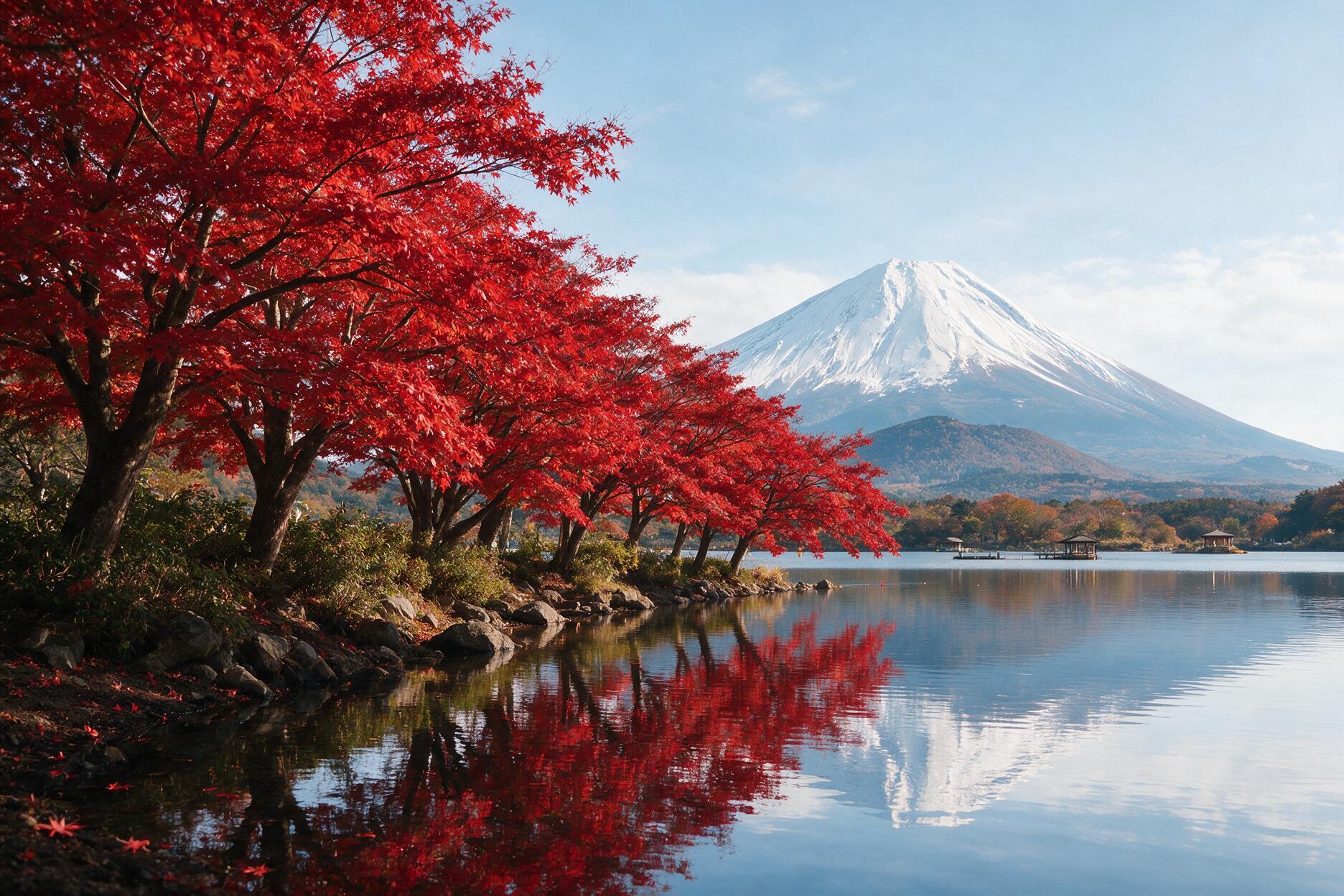
Everyone plans for Kyoto. Fewer people plan for Kawaguchiko, one of the Fuji Five Lakes, where the Momiji Corridor lines the lakeshore with maples that turn red against a backdrop of Mt Fuji itself — a combination you genuinely can’t get in either Tokyo or Kyoto. The Kawaguchiko Autumn Leaves Festival runs through November, with evening illuminations lighting the trees until around 9:30pm. It’s about two hours from Shinjuku by direct bus, easy enough as a two-night detour on the way between Tokyo and Kyoto, and it’s noticeably calmer than Arashiyama in peak week.
One Mistake to Avoid
The single most common mistake we see: booking flights and a rough itinerary, but leaving Kyoto accommodation for “closer to the date” because the trip is still months away. By the time foliage forecasts firm up in September, the well-located ryokans and hotels near Higashiyama and Arashiyama are already gone for late November, leaving you either paying a steep premium or staying somewhere that adds 45 minutes of transit to every day of sightseeing. Book Kyoto first, then build the rest of the itinerary around it.
Who This Trip Is Really For
Couples get one of the more romantic settings in Asia if you build in at least one ryokan night with a private onsen — Hakone and Kyoto both do this well. Families should weight the itinerary toward Tokyo and Nara (the deer park is an easy win with kids) and go easier on temple-hopping in Kyoto, which reads as repetitive to younger travelers after the second or third stop. Solo travelers will find Japan is one of the easiest solo destinations anywhere — safe at night, easy public transport, and a genuine culture of leaving people alone if they want to be left alone. Luxury travelers should look at a private guide for at least the Kyoto leg; a good local guide gets you into gardens and neighborhoods at the right hour and explains what you’re actually looking at, which changes the trip more than a fractionally nicer hotel room would.
FAQs
Is autumn or spring better to visit Japan?
Both are excellent for different reasons — spring for cherry blossoms, autumn for foliage, food, and generally more comfortable temperatures. Autumn also spreads its peak over roughly ten weeks region by region, versus spring’s shorter, more concentrated bloom window, which can make it a little easier to plan around.
How far in advance should I book Kyoto hotels for November?
As early as you can, ideally 6+ months ahead for well-located properties near the main foliage spots. Late-November Kyoto is the single most in-demand window in the country.
Do I need a visa to visit Japan from India?
Yes. There’s no visa-on-arrival or e-visa currently available for Indian passport holders; applications go through VFS Global and require an in-person biometrics appointment.
Is the Japan Rail Pass worth it for a Tokyo-Kyoto-Osaka trip?
Often not, since the 2023 price increase. For that specific route, individual shinkansen tickets can come out cheaper than the pass. It’s more worthwhile if your route covers more distant cities.
What’s the best single foliage spot if I only have one day for it?
Arashiyama in Kyoto if you go right at opening time before the crowds arrive; Kawaguchiko if you want Mt Fuji in the frame and a calmer pace.
Is Japan expensive for Indian travelers right now?
It’s more accessible than it was a few years ago thanks to a weaker yen, though prices for accommodation in peak foliage weeks run higher regardless of exchange rate. A comfortable mid-range trip is achievable without going luxury-tier.
Can I get by with English in Japan?
In Tokyo, Kyoto, and Osaka, yes, reasonably well — signage, train announcements, and most tourist-facing staff handle English fine. In smaller towns like Kawaguchiko, it thins out, though translation apps close most gaps.
Is it safe to travel around Japan solo, including at night?
Yes, Japan is consistently one of the safer countries for solo travel, including for women traveling alone. Standard city precautions still apply, but it’s not a place that requires unusual caution.
Japan in Autumn, Timed Right
Japan in autumn doesn’t need much convincing — the harder part is timing it well enough that you’re not stuck outside a fully booked ryokan in late October wondering where everyone else already made a reservation. This year, a direct flight from Mumbai and a Diwali weekend that happens to land inside peak Kanto foliage make the logistics easier than usual. The rest is just picking your route and booking Kyoto first.
If you’d rather hand off the visa paperwork, the ryokan bookings, and the itinerary planning to someone who’s built this trip before, Get Tripped puts together custom Japan autumn itineraries for couples, families, and solo travelers — including the kaiseki reservations and private guides that are hardest to sort out on your own. Get in touch and we’ll build a route around your dates and your foliage window.