Our guests have landed in Sapporo in January wearing the same down jacket that kept them warm in Tokyo the week before — and gone straight from the airport to a convenience store for thermal leggings. Hokkaido cold is not Honshu cold. That’s the first thing to understand about packing for Japan: the country is long enough, and its seasons distinct enough, that “what to pack for Japan” doesn’t have one answer. It has at least four, and a fifth if your itinerary includes Sapporo in winter.
This guide breaks the packing list down by season — spring cherry blossoms, summer humidity, autumn foliage, and winter snow — plus the layering strategy, footwear rules, and practical extras (cash, eSIMs, plug adapters) that come up on nearly every custom Japan itinerary we build for our guests travelling from India. If you’re still deciding when to go, this doubles as a season-by-season look at the best time to visit Japan, since what you’ll be wearing and what you’ll be doing tend to be the same decision.
Table of Contents
- Why Japan’s Packing List Changes by City, Not Just Season
- Spring in Japan: Cherry Blossom Season Packing (March–May)
- Summer in Japan: Hot, Humid, and What Actually Works (June–August)
- Autumn in Japan: Foliage Season Packing (September–November)
- Winter in Japan: Mild Honshu vs. Extreme Sapporo (December–February)
- The Layering Strategy That Works Year-Round
- Footwear: Why Slip-On Shoes Matter More in Japan Than Anywhere Else
- Practical Packing: eSIM, Cash vs. IC Card, and Plug Adapters
- Packing for Day Trips: Kamakura, Enoshima, and the Shonan Coast
- A Sample 10-Day Japan Packing Checklist
- FAQs
Why Japan’s Packing List Changes by City, Not Just Season
Japan runs nearly 3,000 kilometres north to south, and its six signature cities sit at very different latitudes. Tokyo, Osaka, Kyoto, Hiroshima, and Nara cluster along the Honshu mainland and share a broadly similar climate — hot, humid summers and cool, manageable winters. Sapporo, up in Hokkaido, is a different climate zone entirely. In January, while Kyoto might sit at a crisp 4-9°C, Sapporo is running -8°C to -1°C with knee-deep snowbanks on the sidewalks. If your Japan itinerary covers both, your suitcase needs to cover both too.
This matters more than most first-time travellers expect, because the instinct is to pack for “Japan” as a single destination. We’ve had guests on 10-day trips who packed brilliantly for Tokyo and Kyoto and then froze for two days in Sapporo, or overpacked wool layers for a Hiroshima-Nara loop that never dropped below 12°C. Check the specific cities on your route before you pack, not just the month.
Spring in Japan: Cherry Blossom Season Packing (March–May)
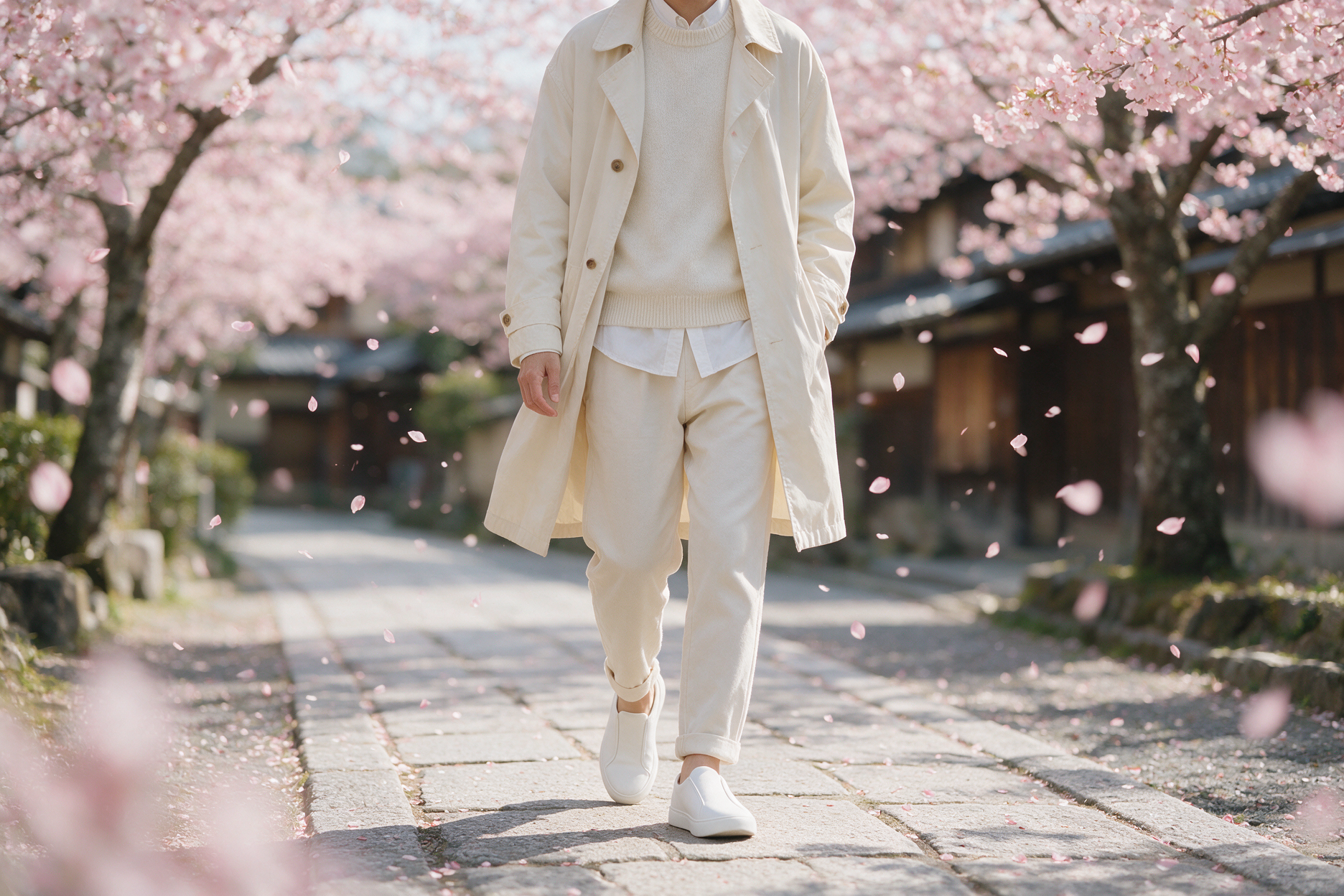
Spring is Japan’s most photographed season and, unsurprisingly, its most booked — Japan cherry blossom tour packages and honeymoon itineraries both spike hard in this window. Bloom timing varies by city and by year, but as a rule of thumb, Hiroshima, Kyoto, and Tokyo tend to hit peak bloom in the last week of March through the first week of April, Osaka a few days behind that, and Sapporo three to four weeks later, typically in the last week of April. The Japan Meteorological Corporation and sites like Japan Guide’s sakura forecast publish updated bloom predictions each year, and it’s worth checking them roughly a month out rather than locking dates a year in advance.
Early March still runs cold — Tokyo mornings can sit around 5°C — while by late April, afternoons climb into the low-to-mid 20s°C. The honest packing answer for spring is: layers, because you’ll experience an 8-10°C swing within a single day.
- A packable, wind-resistant jacket (a trench-style coat photographs well under the blossoms and does the job)
- A couple of light sweaters or a fine merino layer for cold mornings
- Breathable trousers or midi dresses — March evenings still need tights or leggings underneath
- A compact umbrella; early spring showers are common
- Comfortable, closed walking shoes — hanami (blossom viewing) means a lot of standing and slow walking through parks
A mistake to avoid: packing only for “spring warmth” because the photos you’ve seen online are all sunlit and blooming. Early April mornings in Kyoto can still dip into single digits, and the wind along the Philosopher’s Path or the Kamo River is sharper than it looks in pictures.
Summer in Japan: Hot, Humid, and What Actually Works (June–August)
Summer in Japan is genuinely tough weather, and no packing list fixes that entirely — it just makes it bearable. Tokyo runs 23-31°C through July and August, but the number that matters more than temperature is humidity, which regularly sits above 70%. Early-to-mid June brings the rainy season (tsuyu) across most of Honshu, and from August into early October, typhoon activity picks up, particularly affecting Tokyo, Osaka, and coastal areas — worth checking forecasts in the days before you travel rather than assuming clear skies.
- Moisture-wicking, quick-dry fabrics over cotton — cotton stays wet against your skin all day in this humidity
- Loose, breathable linen or linen-blend shirts and trousers, which read as put-together rather than “backpacker,” a distinction that matters if your itinerary includes upscale restaurants or ryokan stays
- A wide-brim hat or cap and proper sunscreen — Japanese pharmacies stock excellent, lightweight sunscreen if you run out
- A compact travel fan or a small battery-powered neck fan — you’ll see locals carrying these everywhere, and it’s not a novelty item, it’s a genuine coping tool
- A slim rain jacket or folding umbrella for sudden downpours
- One smart-casual outfit that isn’t shorts and a T-shirt, for nicer dinners or temple visits where very casual wear feels out of place
A mistake to avoid: over-relying on air conditioning. Japanese trains, malls, and hotels are well air-conditioned, but you’ll still be walking outdoors between them, often on stone or concrete that radiates heat. Pack for the walk, not the indoor stretch.
Autumn in Japan: Foliage Season Packing (September–November)
Autumn in Japan, from September through November, is the season most people underestimate when packing, because it covers three genuinely different weather windows in one label. September is still warm and can carry leftover typhoon risk. October cools noticeably, especially in the evenings. By mid-to-late November, Kyoto and Tokyo are firmly into jacket weather, with Sapporo’s koyo (autumn colour) season finishing weeks earlier than Honshu’s, usually peaking in mid-to-late October versus late November for Kyoto. We’ve covered the foliage timing and lesser-known viewing spots in detail in our guide to Japan’s autumn foliage beyond Kyoto, so we’ll keep this to the packing side.
- A mid-weight jacket for October and November — a wool-blend coat or a quilted jacket both work
- Layerable knitwear you can add or shed through the day
- Closed shoes with decent grip; temple grounds and forest trails get slippery with fallen leaves
- A light scarf, useful for both warmth and as a quick layer for shrine visits where shoulders should be covered
- Thin gloves if you’re travelling into late November
If you’re flying in from India for this stretch, our Mumbai-Tokyo direct flight guide and broader autumn Japan travel guide cover routing and itinerary planning for this exact window.
Winter in Japan: Mild Honshu vs. Extreme Sapporo (December–February)
This is where the “one packing list for Japan” idea breaks down completely. In Tokyo, Kyoto, Osaka, Hiroshima, and Nara, winter is cold but manageable — daytime highs around 9-12°C, nights dropping to 2-5°C, with clear skies more often than not and only occasional light snow in Kyoto. A wool coat, layers underneath, and a scarf will get you through comfortably.
Sapporo is a different trip. December through February, Sapporo sits at roughly -5°C to 1°C in the day and can drop to -8°C or colder at night, with snow falling most days from November through March. Hokkaido gets around 4.8 metres of snowfall a year on average, and Sapporo’s streets are genuinely snow-packed for the whole season — this is also exactly why the Sapporo Snow Festival exists, drawing millions to see enormous ice and snow sculptures each February (the 2027 edition runs February 4-11).
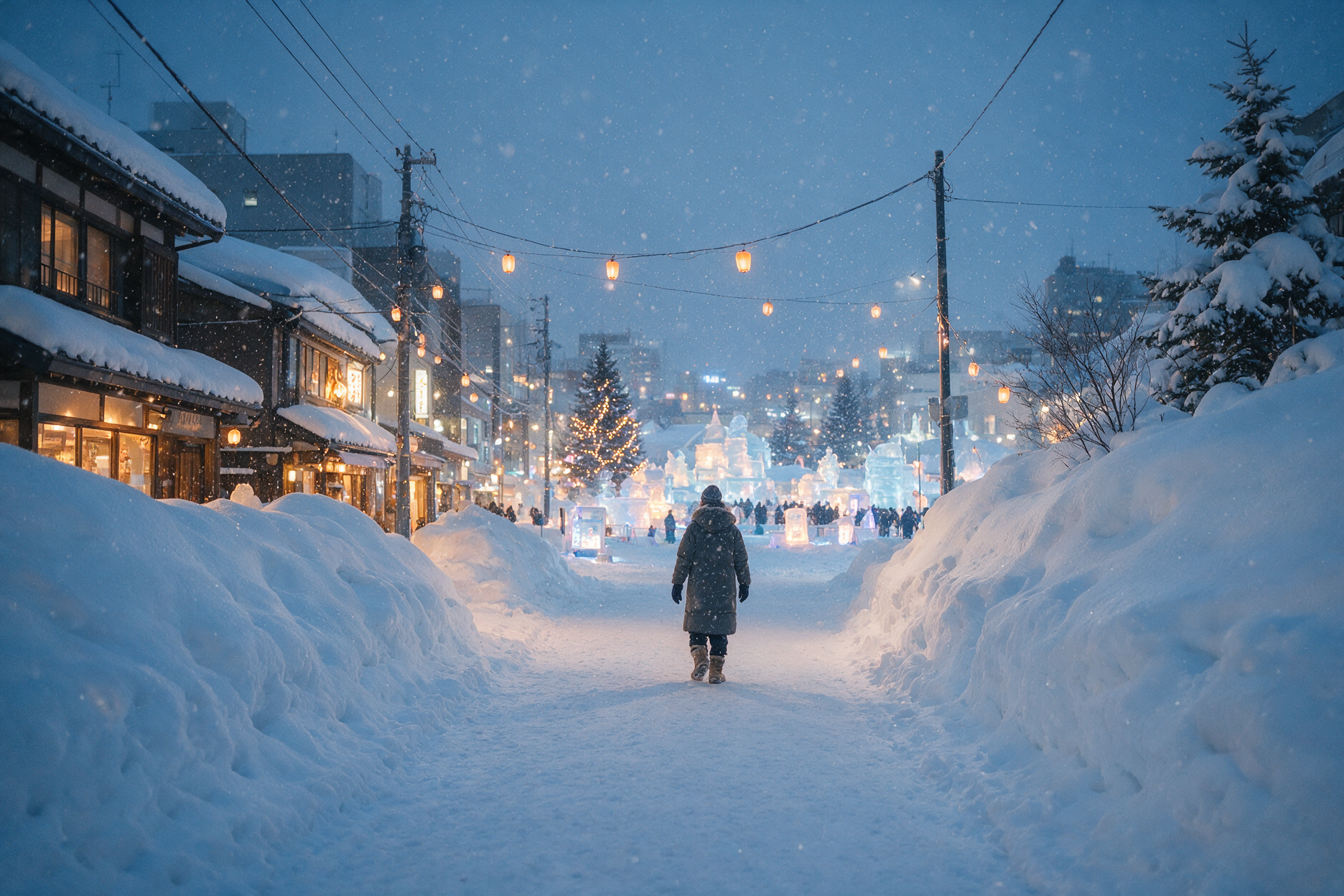
If Sapporo is on your route in winter, pack for it specifically:
- A genuine cold-weather down jacket rated for sub-zero temperatures, not a city-style puffer
- Thermal base layers, top and bottom — this is non-negotiable, not optional comfort
- Waterproof, insulated snow boots with real tread; city sneakers will have you sliding on packed ice within an hour
- A warm hat covering your ears, insulated gloves, and a thick scarf or neck gaiter
- Wool socks — pack more pairs than you think you need, since wet feet in sub-zero weather ruin a day fast
- Hand warmers (kairo), sold everywhere in Japanese convenience stores and genuinely useful
A mistake to avoid: assuming your Tokyo winter coat will do for Sapporo, or the reverse — over-packing Hokkaido-grade thermals for a Kyoto-Osaka-only trip, where you’ll just end up sweating on the trains. Match the gear to the specific cities, not the season label.
The Layering Strategy That Works Year-Round
Across every season, the same three-layer logic holds, just with different weights:
- Base layer: moisture-wicking in summer, thermal in winter — this sits against your skin and does the temperature regulation work
- Mid layer: a light sweater, fleece, or shirt you can add or remove as indoor heating and outdoor temperature shift through the day
- Outer layer: a jacket matched to the season — packable and wind-resistant in spring and autumn, genuinely insulated in winter, minimal or skipped in summer
The reason this matters more in Japan than in a lot of destinations is the indoor-outdoor swing. Japanese buildings run their heating and air conditioning aggressively — a restaurant in December can be uncomfortably warm, and the street outside genuinely cold. You’ll be adding and removing layers multiple times a day, so build your outfits around pieces that come off easily rather than one heavy all-in-one coat.
Footwear: Why Slip-On Shoes Matter More in Japan Than Anywhere Else
You will take your shoes off more times in a single day in Japan than anywhere else you’ve likely travelled — at temples and shrines with interior halls, at traditional restaurants and izakaya with tatami seating, at ryokan, and at some historic homes and museums. Lace-up shoes turn every one of these moments into a two-minute production. Slip-on sneakers, loafers, or slip-on boots (yes, they exist for winter) save real time and frustration across a multi-day itinerary.
The other reason footwear deserves its own section: Japan is a walking country. A single day covering a temple complex, a train transfer, and an evening food district can easily add up to 15,000-20,000 steps. Cushioned, broken-in shoes matter more than stylish ones here — pack shoes you’ve already worn a few times, not ones straight out of the box.
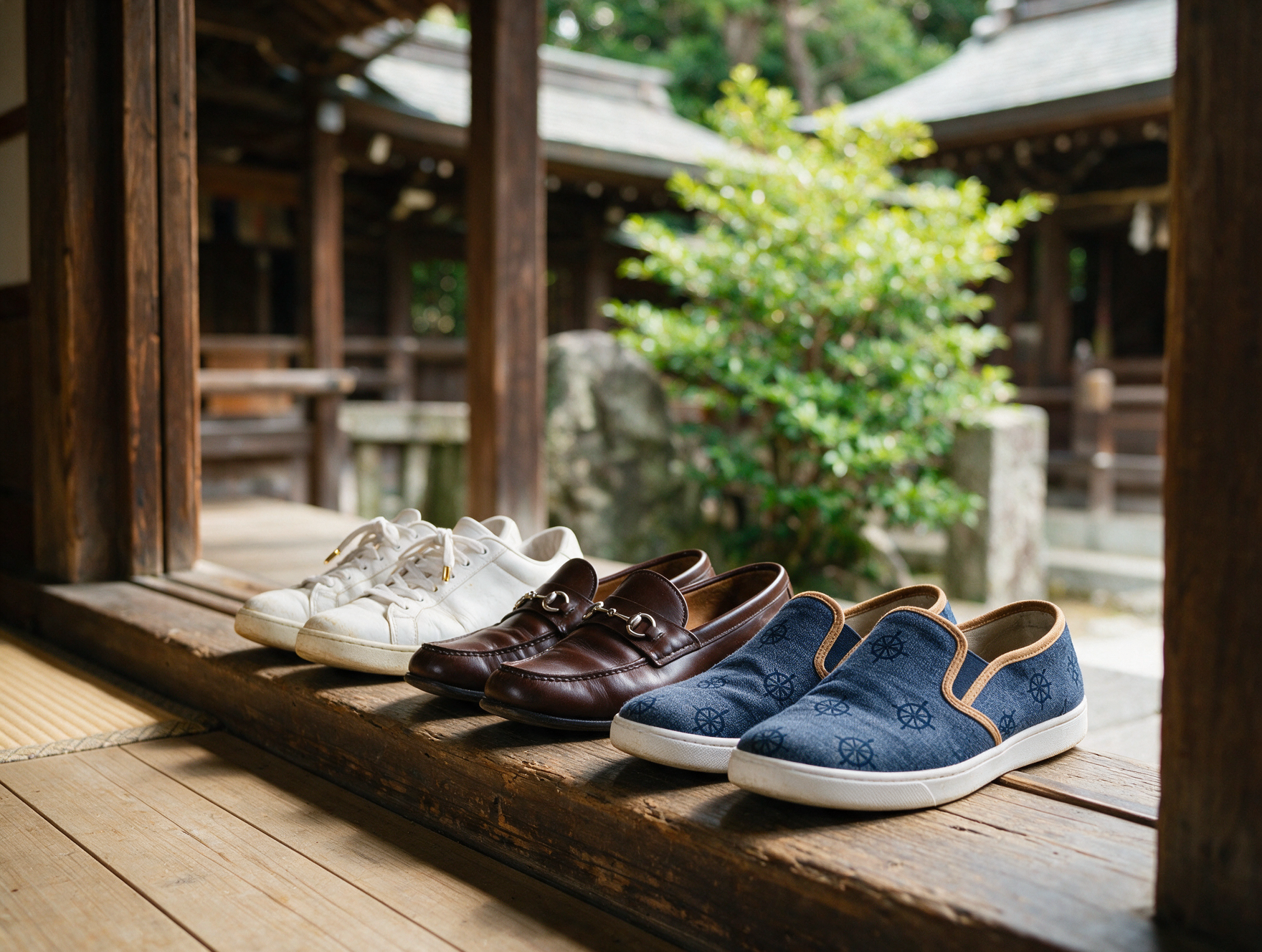
Local tip: carry a pair of clean, presentable socks with no holes at all times — you’ll be showing them off more often than you’d expect, and a sock with a hole in it at a formal ryokan dinner is a genuinely awkward moment we’ve heard about more than once.
Practical Packing: eSIM, Cash vs. IC Card, and Plug Adapters
Beyond clothing, a handful of practical items come up on nearly every trip we plan:
Connectivity: Japan eSIMs have made pocket wifi devices less essential than they were a few years ago — most Indian travellers now land, activate a pre-purchased Japan eSIM, and skip the rental counter entirely. If your phone doesn’t support eSIM, a pocket wifi device rented in advance (pickup at the airport) is still a solid backup, and it’s shareable across a family or group, which an eSIM isn’t.
Cash vs. IC card: This surprises a lot of first-time visitors. Japan has excellent contactless IC cards — Suica being the best known — that work on trains, buses, and convenience store purchases with a tap. But despite that, Japan is still a genuinely cash-heavy country. Many smaller restaurants, older ryokan, local markets, and some temples for entry fees or omamori (charms) take cash only. Carry a reasonable amount of yen at all times, and don’t assume card or IC-card acceptance everywhere, especially outside the biggest cities.
Plug adapters and voltage: Japan uses Type A and Type B plugs (the same flat two-pin style as North America) running at 100V — noticeably lower than India’s 230V. Most modern electronics (phone chargers, laptop chargers) are dual-voltage and will handle 100V fine; check the fine print on the adapter itself before you assume so. A universal travel adapter with the Type A pin configuration is essential; a voltage converter is only necessary for single-voltage, high-wattage appliances like hair straighteners.
Visa paperwork: pack physical printouts of your visa approval, hotel bookings, and flight itinerary even if everything is also saved on your phone — Japanese immigration and some hotel check-ins still ask for paper copies. If you haven’t sorted your visa yet, Indian applicants currently apply through VFS Global rather than Japan’s direct eVisa portal, and requirements shift periodically, so verify current rules for Japan visa for Indians before your trip rather than relying on last year’s checklist.
Packing for Day Trips: Kamakura, Enoshima, and the Shonan Coast
If your Tokyo leg includes a Kamakura and Enoshima day trip — a popular add-on, usually done from Shinjuku or Tokyo Station in about an hour by train — pack lighter than your city-day bag. A small daypack, comfortable walking shoes (Kamakura’s Daibutsu and temple trails involve some uphill walking), and a light layer for the coastal breeze around Enoshima Island cover it. If you’re visiting between late spring and early autumn, a swimsuit is worth packing too — Enoshima’s beaches get genuine local use in summer. One underrated stretch of this trip is the Shonan Monorail, a suspended monorail that hangs from its track rather than sitting on it, running between Ofuna and Enoshima — a fun, slightly disorienting ride that most first-time visitors don’t know exists until they’re already there.
A Sample 10-Day Japan Packing Checklist
For a typical 10-day Japan itinerary spanning two or three of the signature cities (say, Tokyo, Kyoto, and Osaka, or Tokyo through to Hiroshima and Nara), here’s a baseline packing list to adjust by season using the sections above:
- 4-5 tops, mixed with 1-2 layering pieces (sweater/fleece, season-dependent)
- 2-3 bottoms that mix and match easily
- 1 outer layer matched to season (rain jacket, coat, or down jacket)
- 1 pair broken-in slip-on walking shoes, 1 pair backup/dressier shoes
- 7-10 pairs of socks and underwear (laundromats are widely available if you’d rather pack less)
- Sleepwear, swimwear if relevant to your season
- Compact umbrella
- Toiletries in TSA-compliant sizes, plus any prescription medication in original packaging with a doctor’s note
- Universal travel adapter (Type A/B), portable power bank
- eSIM activated or pocket wifi device reserved
- Physical copies of visa, hotel bookings, and flight tickets
- A modest amount of Japanese yen in cash, plus your IC card once purchased on arrival
- A daypack for day trips and temple visits
If building your own itinerary feels like more coordination than you want to take on, our Japan tour packages from India and custom Japan itinerary service handle the city sequencing, seasonal timing, and logistics — you just handle the suitcase.
FAQs
What is the best time to visit Japan for first-time travellers?
Spring (late March to early April) and autumn (October to mid-November) are the most popular windows, thanks to cherry blossoms and foliage respectively, plus comfortable walking temperatures. Both are also the busiest and priciest, so if you’re flexible, late April to mid-May offers milder weather with lighter crowds.
Do I need different clothes for Tokyo and Sapporo in winter?
Yes, significantly. Tokyo winters are cool but manageable with a regular wool coat, while Sapporo needs genuine cold-weather gear — a down jacket, thermal base layers, insulated snow boots, and warm accessories. Treat them as two different winter trips.
Is Japan a cash-only country?
No, but it’s more cash-reliant than many visitors expect. IC cards like Suica cover most transport and convenience stores, and major hotels and restaurants take cards. Smaller local restaurants, markets, older ryokan, and some temple fees are cash-only, so always carry yen.
Do I need a voltage converter for Japan?
Usually not for phones and laptops, since most modern chargers handle 100-240V automatically. You will need a plug adapter for Japan’s Type A/B sockets, and a voltage converter only for single-voltage, high-wattage devices like hair straighteners or curling irons.
Should I bring a pocket wifi device or use an eSIM in Japan?
An eSIM is simpler for solo travellers or couples with eSIM-compatible phones — activate before landing and you’re online immediately. A pocket wifi device makes more sense for families or groups sharing one connection, or if your phone doesn’t support eSIM.
Why do I need slip-on shoes specifically for Japan?
Because you’ll remove your shoes far more often than in most destinations — at temples, traditional restaurants, ryokan, and some museums. Lace-up shoes make each of these moments slower and more awkward; slip-ons handle it in seconds.
What should I pack for a Japan honeymoon trip?
The seasonal basics above, plus at least one or two smarter outfits for kaiseki dinners or ryokan stays, and comfortable-but-presentable shoes since ryokan almost always require you to remove your shoes at the entrance. Spring and autumn are the most popular seasons for Japan honeymoon packages from India, largely for the scenery.
How much luggage should I bring for a 10-day Japan trip?
Pack lighter than you think. Japan’s train stations involve stairs, platform walking, and tight storage on bullet trains, and many hotel rooms — especially in central Tokyo and Kyoto — are compact. A carry-on plus one mid-size checked bag per person is usually enough for 10 days, especially with laundromats widely available.
Get the Packing Right, and Japan Handles the Rest
Japan’s tourism board likes to call the country “endless discovery,” and once your suitcase actually matches the season and the cities on your route, that’s a fair description of what the trip starts to feel like — less time managing discomfort, more time actually looking around. The clothes matter less for how they look in photos and more for how little you have to think about them once you’re there: the right jacket means you stop checking the weather app, the right shoes mean temple visits stop feeling like a chore, and a little cash in your pocket means a meal at a cash-only local spot is never off the table.
If you’d rather have the city order, hotel picks, and seasonal timing worked out for you, that’s exactly what our Japan tour packages from India are built for — including Tokyo and Kyoto combinations, family holiday itineraries, and fully custom routes. Book your Japan holiday with Get Tripped and we’ll match the itinerary to the season you’re travelling in, so the packing list above is the hardest part of the planning left to you.