The Queue at Tofuku-ji Was Forty Minutes Long. We Left.
A friend who lived in Kyoto for three years told me something that stuck: locals stop going near the famous maple temples entirely by mid-November, and pick up the habit again once the tour buses thin out in December. That’s a strange thing to learn about a city whose autumn colours are one of the most photographed sights in the world — the postcard spots are so crowded that the people who live there have quietly opted out. This piece isn’t about skipping Kyoto’s momiji season. It’s about seeing it the way locals still do: a short drive or train ride from the famous names, at temples and valleys that get the same fire-red maples with a tenth of the crowd.
In This Guide
- 2026’s foliage timing, and why it’s later than usual
- Kyoto’s quiet alternative: the Northern Higashiyama trail
- A day trip to Hasedera, Nara’s least-visited great temple
- Nakagawa Town: a riverside onsen valley near Tokyo
- Naruko Gorge: Tohoku’s onsen-town gorge
- Iya Valley: Japan’s vine-bridge hidden valley
- Visa, flights, and getting around
- Where to stay
- What it costs
- A mistake worth avoiding
- FAQs
2026’s Foliage Timing, and Why It’s Later Than Usual
Worth knowing before you plan around any specific date: the Japan Meteorological Agency has forecast above-normal temperatures through much of 2026, which is pushing this year’s koyo front three to five days later than the historical average across most regions. Kyoto and Nara are projected to peak from around 25 November into early December, versus the more typical mid-to-late November window. Tokyo and Nikko’s alpine zones colour earlier, from early October through the Nikko area’s main event in early-to-mid November, while Tohoku (where two of the spots below sit) typically peaks late September through mid-October. If you’re booking around a specific date, treat the mid-window — roughly 20 October to 5 November nationally, later for Kyoto specifically — as your safest bet, and check updated regional forecasts again in September once actual autumn temperatures start coming in.
Kyoto’s Quiet Alternative: The Northern Higashiyama Trail
If you’re already building a Kyoto trip around the famous Arashiyama bamboo grove or Tofuku-ji’s maple valley, add this instead of fighting the crowds at either: a walking loop through Northern Higashiyama, on the hillside above the more famous Southern Higashiyama temples everyone already knows.
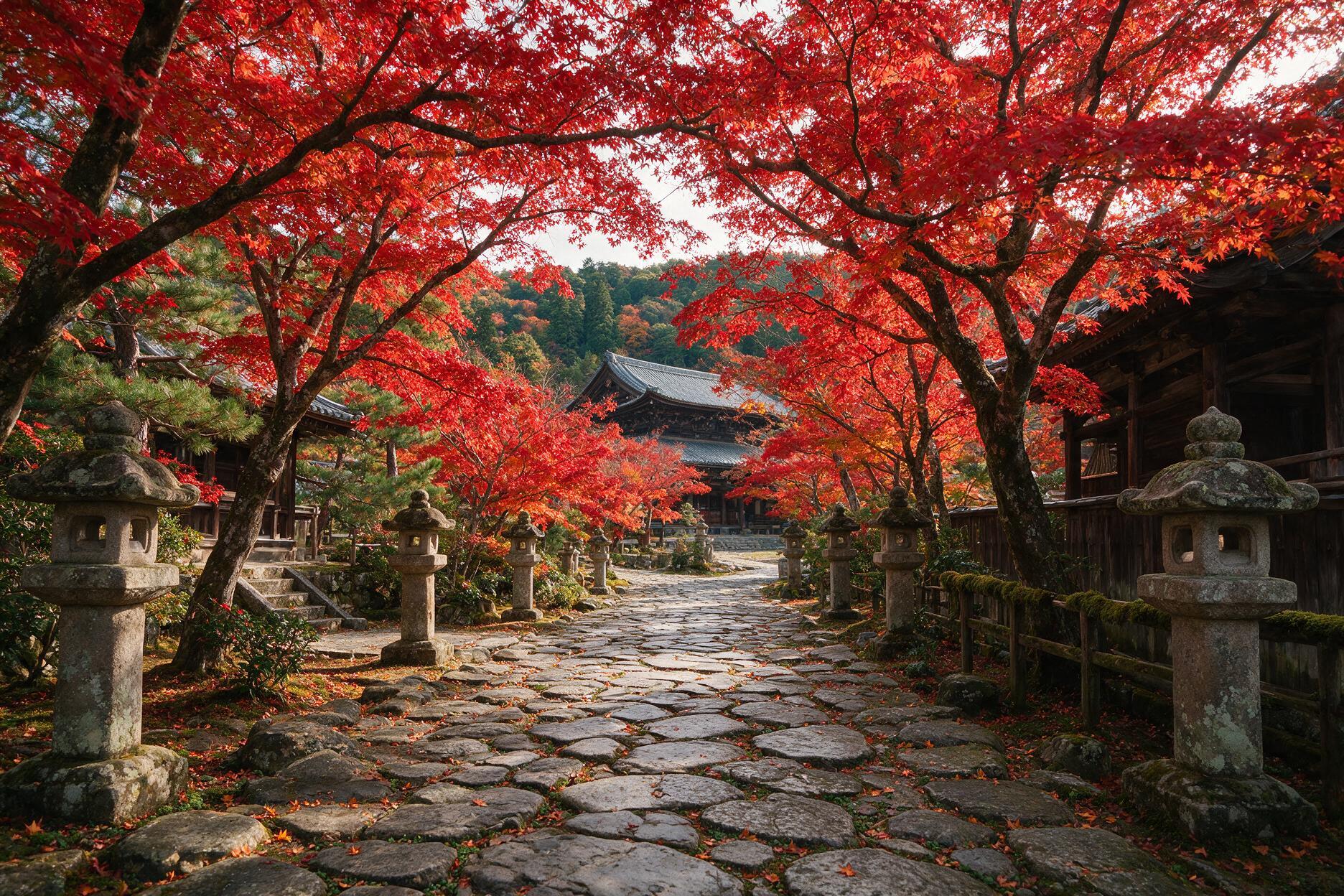
Start at Shinyo-do Temple on Yoshida-yama hill — its main hall is ringed with mature maples that colour a deep crimson, and on a weekday afternoon you’ll likely have long stretches of the grounds to yourself. From there, walk to Honen-in, whose thatched-roof gate framed by red maple leaves is one of the more quietly photographed scenes in the city, precisely because almost nobody photographs it. Manshu-in, a little further on, is genuinely hard to find without a map or a taxi, which is exactly why its stone-and-moss garden stays peaceful even in peak week. Round out the loop with Enko-ji and Shisen-do, two temples close enough together to visit back to back, the latter built around a stone garden of clipped green bushes set against deep red foliage — a completely different visual language from the crowded maple-tunnel shots everyone associates with Kyoto.
The whole loop covers about 5 kilometres and comfortably fills a morning. Go on a weekday if you can, and start early — by early afternoon, even these quieter temples start filling with people who’ve read the same “off the beaten path” advice, which is the honest paradox of writing about hidden gems at all.
A Day Trip to Hasedera, Nara’s Least-Visited Great Temple
Most Nara day trips stop at the deer park and Todai-ji and call it done. Hasedera, about 40 minutes further by train in Sakurai, gets a fraction of those visitors despite being genuinely one of the region’s great temples — a five-story pagoda framed by maples, reached via a long, covered wooden stairway lined with peony beds that turn the approach itself into part of the experience. Because it’s out of the standard Nara loop, you can spend an unhurried hour here without the shoulder-to-shoulder pacing that Todai-ji demands in season. Pair it with Nara Park in the morning and Hasedera in the afternoon, and you’ve turned a fairly standard day trip into one with real breathing room in it.
Nakagawa Town: A Riverside Onsen Valley Near Tokyo
If your trip is Tokyo-based and Nikko feels too crowded during peak koyo week (it will be — Irohazaka’s winding road alone can back up two to three hours on a good-weather weekend), Nakagawa Town in Tochigi’s Nasu district is the quieter version of the same idea: a river valley lined with maples, dotted with riverside onsen where you can soak outdoors with the autumn colour reflected in the water. It’s a genuinely local retreat rather than a coach-tour stop, which means fewer facilities built for mass tourism but a much better shot at the kind of silence that makes an onsen actually feel restorative.
Naruko Gorge: Tohoku’s Onsen-Town Gorge
For travellers willing to go further north for something genuinely different, Naruko Gorge in Miyagi Prefecture pairs a dramatic river gorge with an old onsen town built right into it — you can walk the gorge-side trail in the afternoon and be soaking in a hot spring bath by early evening, colour still visible from the water in the right spot. Tohoku’s foliage typically peaks earlier than Kyoto’s, generally late September into mid-October, which also makes it a smart way to extend a Japan autumn trip: catch Tohoku early in your visit, then work south toward Kyoto and Nara as the season follows you down the country. It’s a two-and-a-half to three-hour journey from Tokyo by shinkansen and local train, comfortably doable as a two-night detour rather than a full expedition.
Iya Valley: Japan’s Vine-Bridge Hidden Valley
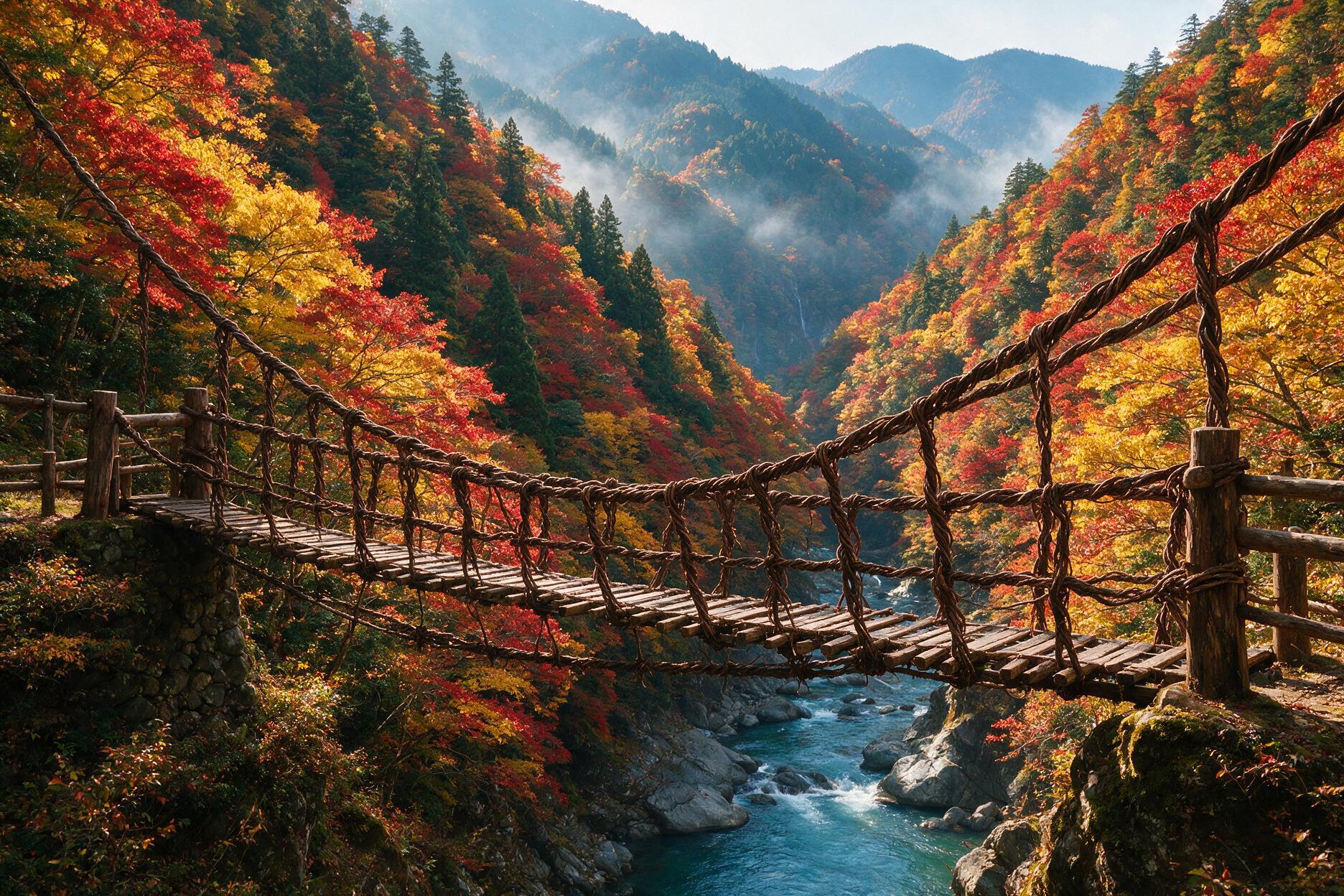
This is the furthest-flung pick here, and worth it only if your itinerary has room for a genuine detour. Iya Valley in Tokushima Prefecture is counted among Japan’s three great “hidden valleys” — a steep, remote gorge landscape where villages were historically reachable only by vine suspension bridges, a handful of which are still maintained and crossable today, swaying over the river below with the valley walls lit up in autumn colour. It’s dramatic in a way that flatter, more manicured Kyoto gardens simply aren’t, and it sees a fraction of the international visitors that Shikoku’s more famous pilgrimage trail gets. It’s not a place to add on a whim — factor a full extra day or two into your itinerary and ideally arrange a private car, since public transport through the valley is sparse.
Visa, Flights, and Getting Around
Indian passport holders can apply for either a single-entry tourist e-visa (digital, displayed on your phone at the airport, faster to process but non-extendable) or a traditional paper sticker visa, which supports multiple entries and can be extended once you’re in Japan. Standard processing runs 5-10 working days, though peak seasons can push that to 14; apply three to four weeks ahead to be safe. You’ll need a passport valid 6+ months, a detailed day-by-day itinerary with hotel addresses, confirmed return flights, and financial documentation including 6 months of bank statements and 3 years of ITRs. One 2026-specific change worth flagging: several Indian visa application centres, including Mumbai, moved to mandatory appointments (no walk-ins) earlier this year, so build appointment availability into your planning timeline rather than assuming a same-week slot.
On flights: Air India runs a direct Mumbai-Tokyo service, which is the most convenient option if you’re departing from Western India; travellers from Delhi and elsewhere generally connect via Mumbai, Delhi’s own long-haul options, or a Gulf hub. Once in Japan, the JR Pass remains the best value if you’re covering multiple regions like Tohoku, Kanto, and Kansai in one trip — but if you’re buying it through an overseas agency for this year’s trip, do it before 1 October 2026, when a price increase is expected to take effect.
Where to Stay
For the Kyoto and Nara legs, a mid-range to upscale ryokan in the Higashiyama or Gion area puts you within easy reach of both the famous sights and the quieter alternatives above. In Naruko and Nakagawa, staying in a proper onsen ryokan (rather than a standard hotel) is genuinely part of the experience, not an optional upgrade — look for one with a private or semi-private outdoor bath if you’re travelling as a couple. Book any of these well ahead: the guidance from Kyoto specialists this year has been blunt about premium ryokan reaching full occupancy for peak koyo dates as early as August, months before the leaves actually turn.
What It Costs
A comfortable mid-range trip through these regions runs roughly ¥25,000-40,000 (₹11,500-18,500) per person per day covering good ryokan stays, meals, and regional trains; layer in a private guide for a day in Kyoto’s back streets or a chauffeured day through Iya Valley and that climbs meaningfully, but it buys you both convenience and access that public transport alone won’t. A 7-day JR Pass currently runs around ¥50,000 (₹23,000) if bought before the October price rise, and is worth it the moment your itinerary includes Tohoku and Kansai in the same trip.
A Mistake Worth Avoiding
Don’t build your entire itinerary around a single predicted peak date. Foliage forecasts are directional, not precise — this year’s are already running 3-5 days later than average, and that number can still shift again once real September and October temperatures come in. Build in a flexible middle few days rather than flying in for one specific “perfect” date, and treat any early-booked accommodation as a placeholder you can still adjust once closer-in forecasts firm up in September and October.
Frequently Asked Questions
When is the best time to see autumn foliage in Japan in 2026?
Nationally, the safest window is roughly 20 October to 5 November, though Kyoto and Nara are projected to peak later this year, from around 25 November into early December, due to a warmer-than-average summer delaying the koyo front by several days.
Are these hidden-gem spots actually crowd-free?
Relatively, not absolutely — nowhere with this scenery stays secret forever. But all of the spots above see a fraction of the visitors that Arashiyama, Kiyomizu-dera, or central Nikko do during peak week, which is the honest, realistic version of “hidden.”
Do I need a car to visit these places?
Kyoto’s Northern Higashiyama trail and Hasedera are reachable by public transport and taxi. Nakagawa Town and Naruko Gorge are accessible by train with some local transfers. Iya Valley is the one that genuinely benefits from a private car or driver, given sparse public transport through the gorge.
Should I buy the JR Pass for a trip focused on these regions?
If you’re covering Tohoku, Kanto, and Kansai in one trip, yes — it’s generally the better value. If you’re staying within one region (say, just Kyoto and Nara), regional passes or individual tickets often work out cheaper.
Is Iya Valley worth the extra travel time?
Only if you have the extra day or two to give it properly. It’s dramatically different scenery from the temple gardens of Kyoto and Nara, but it’s a genuine detour, not a quick add-on.
What visa do I need as an Indian passport holder?
A single-entry tourist e-visa for a straightforward trip, or a paper sticker visa if you want multiple-entry flexibility or the option to extend your stay once in Japan. Standard processing is 5-10 working days.
Before You Book
The famous names earn their fame — Arashiyama and Kiyomizu-dera are genuinely beautiful, crowds included. But if you’ve already done the postcard version of Japan’s autumn, or you’d simply rather spend your one trip somewhere you’re not shuffling along in a queue, the quieter routes above get you the same fire-red maples with room to actually stand and look at them. Get Tripped’s Japan specialists can build an itinerary that mixes the icons with these detours, timed against this year’s later foliage forecast rather than last year’s dates.