Fushimi Inari’s ten thousand torii gates cost nothing to walk through. Neither does standing on the shore at Miyajima watching the tide pull back from Itsukushima Shrine’s floating torii, or sitting on a bench in Nara Park while a sika deer bows its head at you for a cracker you haven’t even bought yet. Japan’s biggest sights are, more often than not, free to look at. The fee kicks in when you want to go inside something.
That distinction matters when you’re planning a trip that already includes a good hotel in Gion, a private guide in Hiroshima, and a bullet train pass that isn’t the cheapest option but is the most comfortable one. Free doesn’t mean the trip is being done cheaply — it means whoever built your itinerary knew which mornings to leave open for a shrine that doesn’t charge admission, and which afternoons are worth paying for. This guide runs through the genuinely free (and near-free) experiences across Japan’s six signature cities — Tokyo, Kyoto, Osaka, Hiroshima, Nara, and Sapporo — organized so you can drop them straight into a Japan itinerary without derailing the parts you’re already paying good money for.
A quick note on framing: this isn’t a backpacker’s guide to seeing Japan on nothing. It’s a working list of what a well-planned trip should already be building around — the kind of thing a good Japan tour package from India bakes into the schedule rather than treats as an afterthought.
Table of Contents
- Why “free” still belongs in a premium Japan itinerary
- Tokyo: free shrines, skyline views, and neighborhoods worth wandering
- Kyoto: the shrines and streets that don’t charge admission
- Osaka: castle grounds, markets, and a skyline view for free
- Hiroshima and Miyajima: the free memorials, and the one fee worth paying
- Nara: deer, temple grounds, and the fee that catches people off guard
- Sapporo: parks, a clock tower, and a seasonal free view
- Free festivals and seasonal moments worth building a day around
- A mistake to avoid (and a tip that isn’t in the top-10 lists)
- FAQs
Why “free” still belongs in a premium Japan itinerary
Japan’s temple and shrine economy runs on a simple split: the outer grounds — the gates, the walking paths, the main hall where you toss a coin and clap twice — are usually free. It’s the inner buildings, the treasure halls, the gardens with a name and a gate attendant, that charge. Once you know this, you stop thinking of “free things to do” as the budget section of a trip and start seeing it as just… how Japan works. A well-planned Japan trip already has this baked in — a morning at a free shrine before the tour buses arrive, followed by a paid, guided visit to the one temple in the city actually worth the ticket.
This also matters for pacing. Anyone building a custom Japan itinerary for a 10-day trip knows the paid attractions (castles, museums, teamLab-style digital art spaces) need booked time slots and cost real money per person. The free stops are what you slot in around them — a 20-minute walk through a market, a free observation deck at sunset, a park bench with a good view — without touching the budget or the schedule.
Tokyo: free shrines, skyline views, and neighborhoods worth wandering
Meiji Jingu Shrine — The shrine itself, tucked inside a 170-acre forest that was hand-planted with 100,000 trees donated from across Japan in 1920, is completely free to enter, sunrise to sunset (hours shift monthly — roughly 6:40am–4:20pm in January, stretching to 5am–6:30pm in June). The only two things you pay for are the Inner Garden (¥500) and the small museum (¥1,000). Most people don’t bother with either and the shrine still delivers — the walk in from the Harajuku entrance, through the huge wooden torii, is quiet enough that you forget you’re two minutes from the chaos of Takeshita Street.
Senso-ji Temple, Asakusa — Tokyo’s oldest temple, free to enter, and open around the clock at the outer gates even though the main hall keeps set hours (roughly 6am–5pm). Nakamise-dori, the shopping street leading up to it, costs nothing to walk even if you don’t buy the senbei or the folding fans. Go before 8am if you want the photo without three tour groups in it — by 10am it’s shoulder to shoulder.
Tokyo Metropolitan Government Building observation decks — Two free 45th-floor decks in Shinjuku, roughly 202 metres up, with a view that rivals Tokyo Skytree’s paid deck on a clear day. The North deck closes the 2nd and 4th Monday of the month, the South deck the 1st and 3rd Tuesday — check the day of the week before you build it into your schedule, because showing up on the wrong Monday is a genuinely common mistake.
Shibuya Crossing and Shimokitazawa — The crossing itself is a free spectacle (and the Starbucks overlooking it, while not free, is the cheapest “ticket” to a good photo). Shimokitazawa, a few stops further out, is a neighbourhood of vintage shops and narrow lanes that costs nothing to wander for an afternoon — it’s the kind of stop a rushed itinerary skips and a well-paced one doesn’t.
Kyoto: the shrines and streets that don’t charge admission
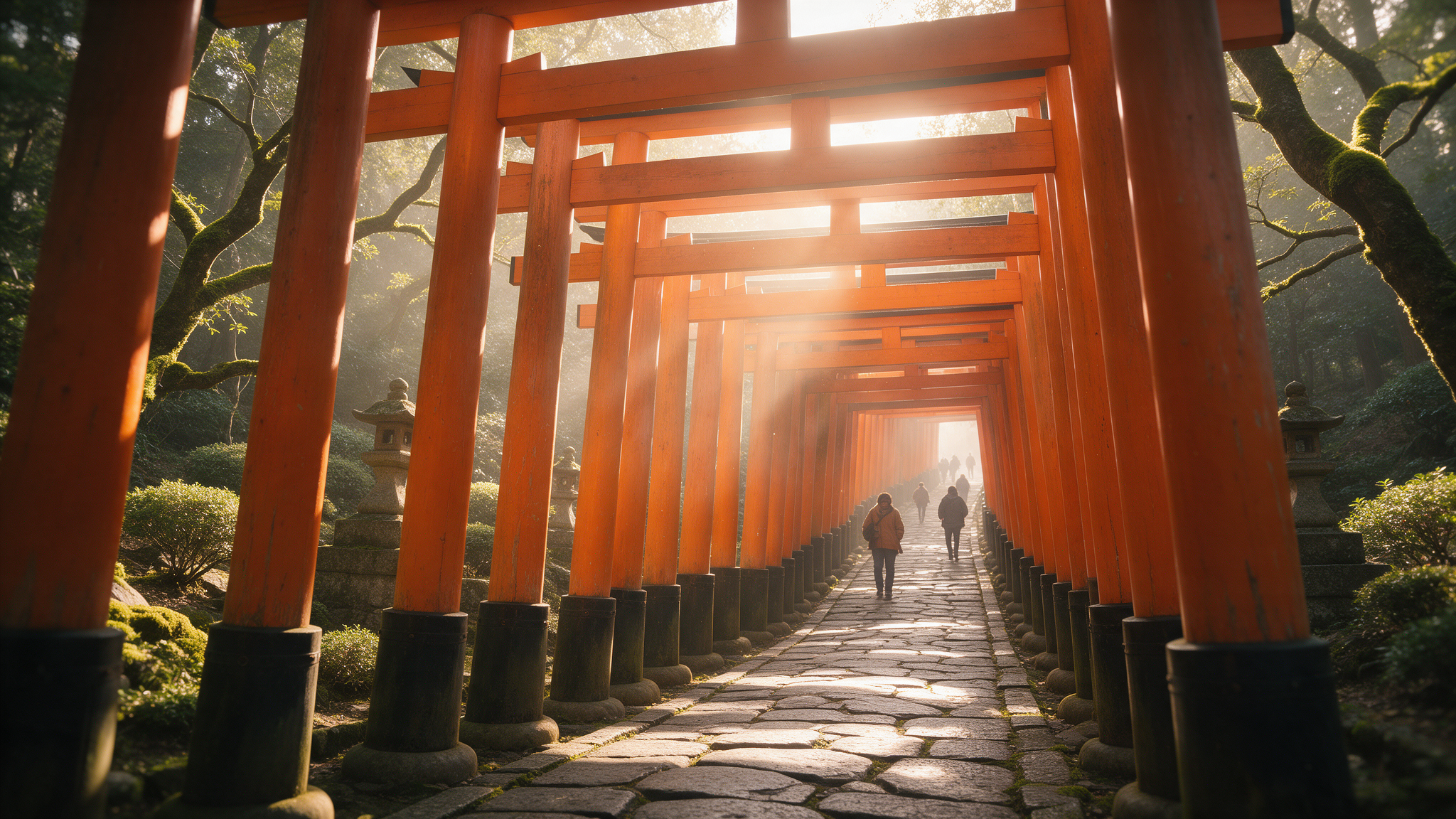
Fushimi Inari Taisha — The most famous free attraction in the country. No entrance fee, no closing time — the shrine and its torii-gate trails up Mount Inari are open 24/7. The catch is that “free” plus “famous” equals crowded: arrive by 7am or after 5pm if you want the tunnel of gates without a queue of people taking the same photo you are. The hike to the summit and back takes 2-3 hours if you go the whole way, but even the first 20 minutes — past Senbon Torii, the “thousand gates” — is worth the detour.
Nishiki Market — Kyoto’s “kitchen,” a five-block covered arcade of 100-plus stalls. Walking it costs nothing; you’re only paying if something smells too good to pass up (and something usually will). It gets genuinely packed by midday, so an early visit works better if you actually want to look at the stalls rather than shuffle past them.
Gion and the Philosopher’s Path — Gion’s old wooden streets are free to walk at any hour, and dusk is when you’re most likely to spot a geiko or maiko heading to an appointment (do not chase or photograph them up close — Kyoto has fined tourists for this in parts of Gion, and it’s simply bad manners). The Philosopher’s Path, a stone walkway along a canal near Ginkaku-ji, is free and especially worth it during cherry blossom season or autumn foliage — see our guide to autumn foliage spots beyond the obvious ones for less crowded alternatives nearby.
What’s not free: Kinkaku-ji (the Golden Pavilion), Kiyomizu-dera’s main hall, and Nijo Castle all charge admission (typically ¥400–¥600), and they’re worth paying for — just don’t expect the “big three” postcard shots to be free the way Fushimi Inari is.
Osaka: castle grounds, markets, and a skyline view for free
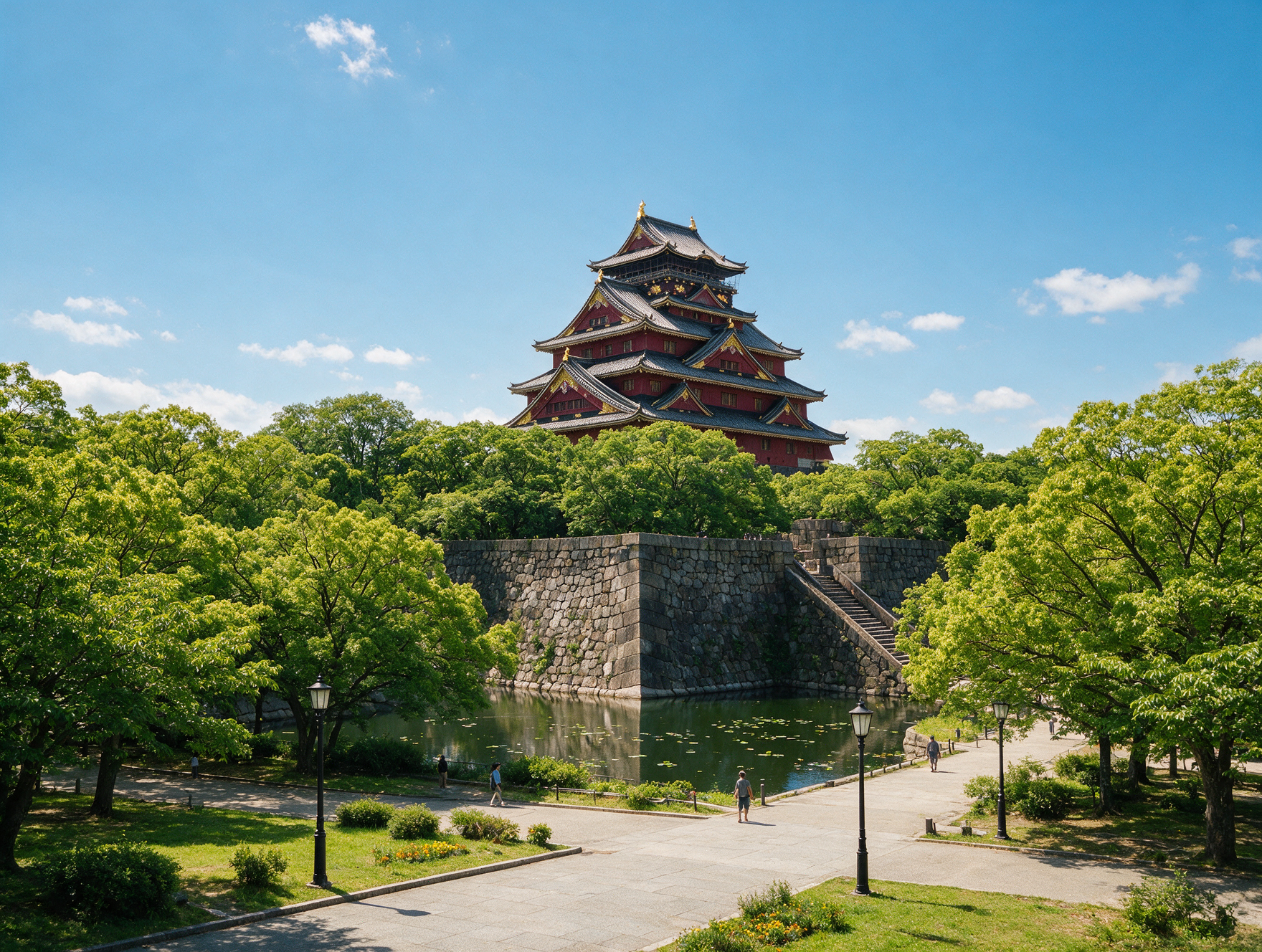
Osaka Castle Park — The park surrounding the castle is open 24 hours and free to walk, with the moat, the stone walls, and photogenic angles of the tower itself all included. It’s only the tower — now a museum inside — that charges (¥1,200 for adults). In cherry blossom season, the park’s Nishinomaru Garden section does charge a small separate fee, but the main grounds stay free and are arguably the better vantage point anyway.
Umeda Sky Building’s ground-level features and Dotonbori — The Umeda Sky Building’s rooftop observatory is paid, but its base area and surrounding Kids’ Plaza are free to explore. Dotonbori, the canal-side strip with the Glico running man sign, costs nothing to walk — the cost only shows up if you sit down at one of the takoyaki or okonomiyaki counters, which, to be fair, you should.
Osaka Museum of History and free museum days — Several Osaka museums run free-entry days tied to specific dates (often around International Museum Day in May or city anniversaries) — these shift year to year, so it’s worth checking the specific museum’s website close to your travel dates rather than assuming a fixed calendar date.
Hiroshima and Miyajima: the free memorials, and the one fee worth paying
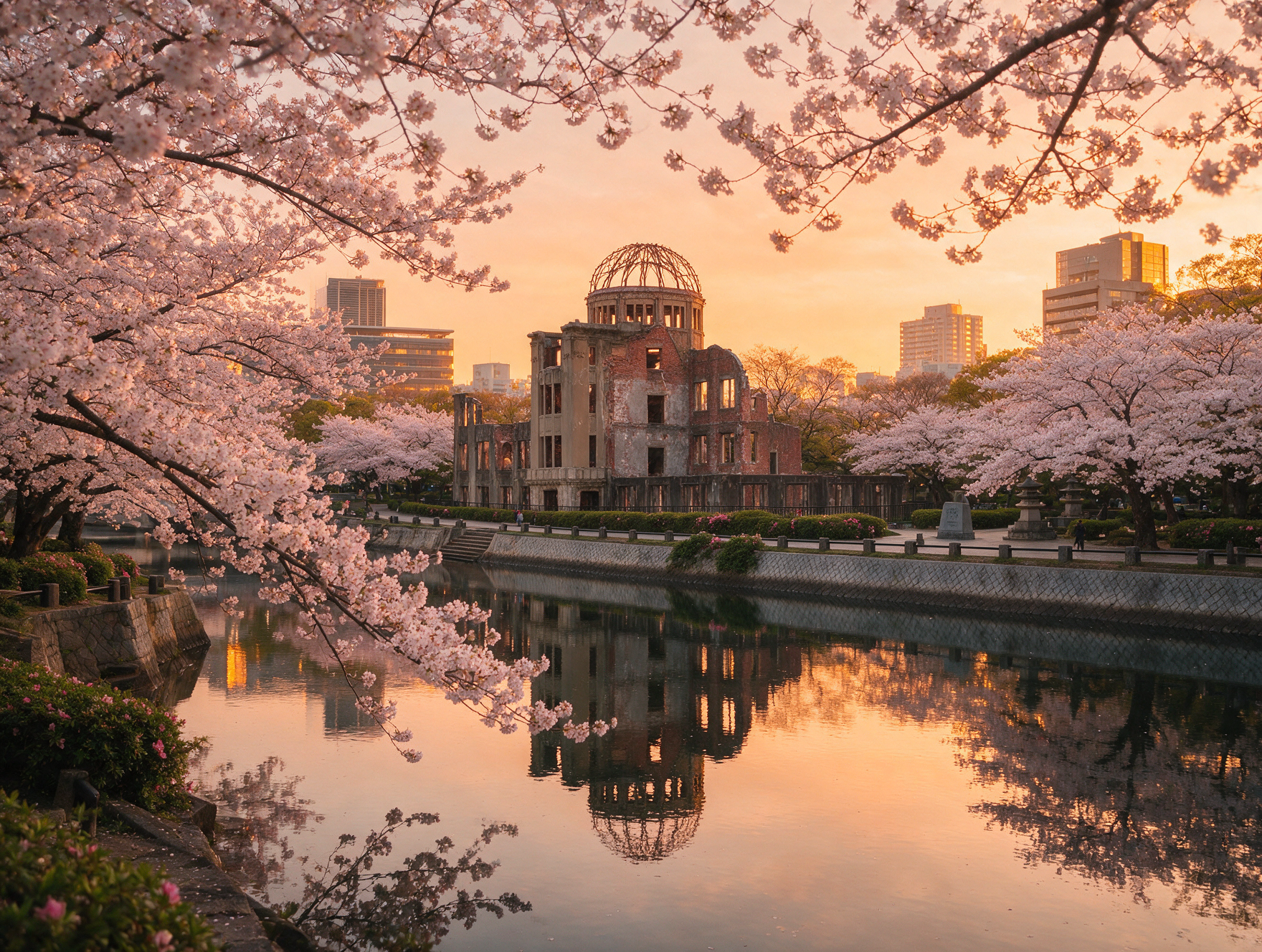
Hiroshima Peace Memorial Park — The park itself, along with the Atomic Bomb Dome, the Children’s Peace Monument, the Cenotaph, and the Flame of Peace, are all free and open at all times. This is the one section of this guide where “free” isn’t really the point — it’s simply how the site is meant to be experienced, at your own pace, without a ticket window between you and it.
Hiroshima Peace Memorial Museum — At ¥200 for adults, this is the cheapest “paid” attraction in this entire guide, and one of the very few we’d tell you not to skip. It’s not expensive because it doesn’t need to be — the museum isn’t run for revenue. Budget an hour, minimum.
Itsukushima Shrine, Miyajima — The floating torii gate itself is visible, and photographable, from the shoreline for free, especially striking at low tide when you can walk out near its base. Entering the shrine’s raised wooden walkways costs ¥300 for adults, which is worth paying once you’re there, but the iconic view — the one on every postcard — doesn’t require a ticket. Miyajima is a ferry ride from Hiroshima, and pairs naturally with a Peace Park morning and a Miyajima afternoon.
Nara: deer, temple grounds, and the fee that catches people off guard
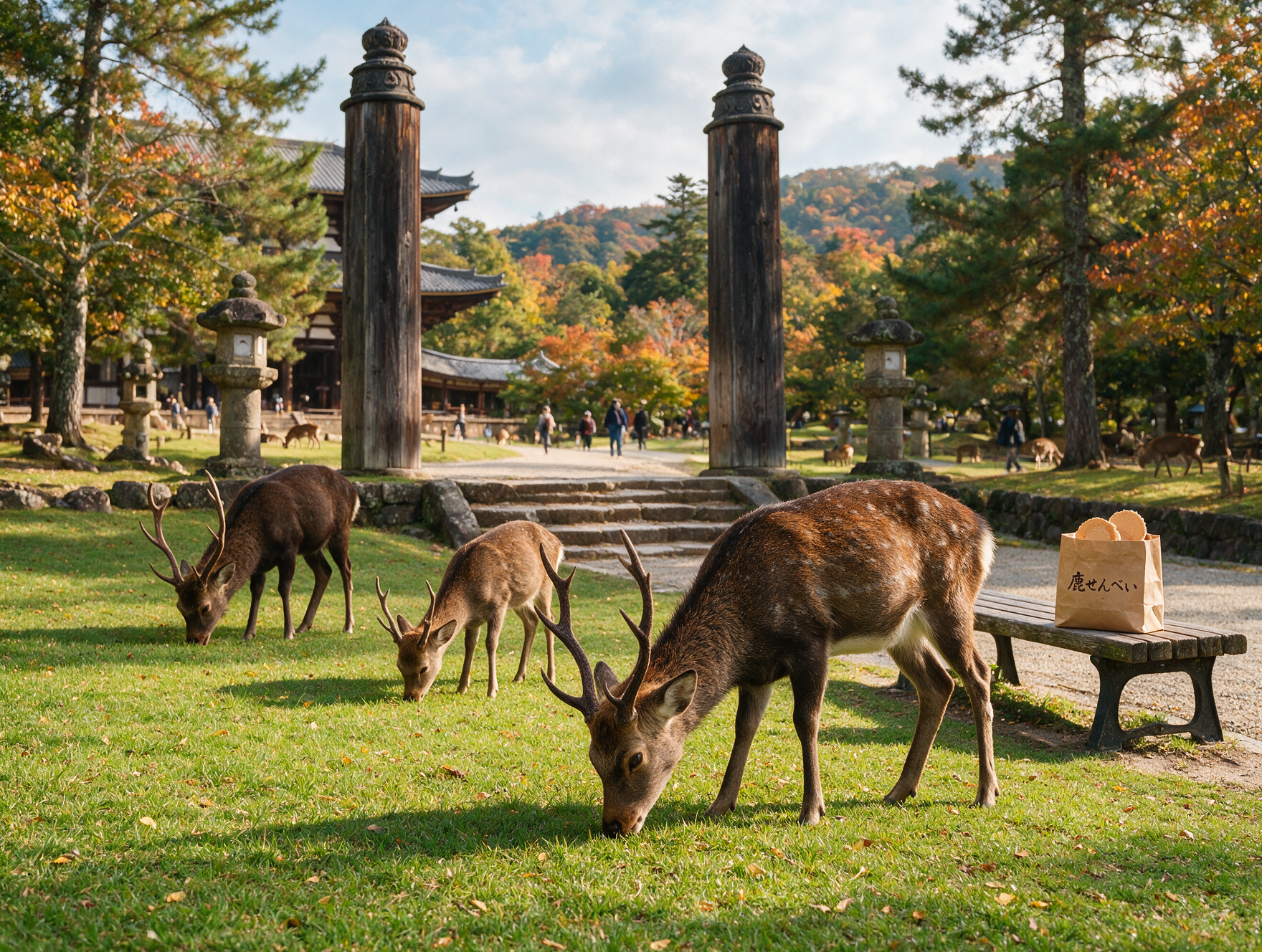
Nara Park — Free to enter, home to over 1,000 wild sika deer that roam loose across the park and will bow (genuinely — it’s a learned behaviour tied to feeding, not affection) if you hold up a shika senbei cracker. The crackers themselves cost about ¥200 for a stack from one of the park’s vendors — not the park, just the snack.
Todaiji Temple grounds vs. the Great Buddha Hall — Here’s the fee people don’t expect: walking up to Todaiji’s Nandaimon Gate and around the temple’s outer grounds is free, but seeing the Great Buddha itself means going inside the Daibutsuden hall, which costs ¥800 for adults. It’s worth paying — the bronze Buddha is 15 metres tall and the hall around it is the largest wooden building in the world — but don’t assume “free park, free temple.” They’re two different tickets.
Kasuga Taisha — The outer shrine grounds, including the thousand-plus stone and bronze lanterns lining the approach path, are free to walk. The inner sanctuary (where the lanterns are lit for special evenings) charges roughly ¥500. Most visitors are perfectly happy with the free approach walk alone — it’s one of the most atmospheric short walks in the whole Kansai region, especially in early morning fog.
Sapporo: parks, a clock tower, and a seasonal free view
Odori Park — A 1.5km green strip running through the middle of the city, free at all hours, and the stage for most of Sapporo’s big seasonal events, including the Snow Festival in February. Walking its length, fountain to fountain, is a genuinely pleasant way to spend an hour regardless of season.
Sapporo Clock Tower — One of Japan’s oldest Western-style buildings; the exterior (which is, honestly, the photo everyone takes) is free to view any time. Going inside to the small museum costs a modest fee (around ¥200), which most people skip without missing much.
Sapporo City Hall observation deck — A free rooftop deck with views over Odori Park and the clock tower — but it’s a seasonal, weekday-only feature (late April through October, 9:30am–4:30pm, closed weekends and holidays, and shut entirely over winter). If you’re visiting for the Snow Festival, this specific deck won’t be open — plan the skyline photo from ground level instead.
Former Hokkaido Government Building — Nicknamed the “Red Brick” building, its grounds and gardens are free to walk, and it’s a five-minute walk from the Clock Tower, so the two pair naturally into one short loop.
Free festivals and seasonal moments worth building a day around
Some of Japan’s best free experiences aren’t places, they’re timing. Cherry blossom viewing (hanami) in parks across every city is free — you’re paying, at most, for a blue tarp and some convenience-store snacks if you want to picnic under the trees. Autumn foliage viewing works the same way in November. Local matsuri (festivals) — smaller neighbourhood ones especially — are usually free to attend, with food stalls charging separately. If your trip lines up with late March to early April or with September through November, it’s worth asking whoever is building your Japan itinerary whether a specific park or festival date should shape the route — this is exactly the kind of local timing a fixed, generic itinerary usually misses.
A mistake to avoid, and a tip that isn’t on the top-10 lists
The mistake: assuming “free to enter” means “free to see everything.” Nara Park and Todaiji is the classic trap — people budget zero yen and zero minutes for what turns out to be an ¥800 ticket and a 45-minute queue in peak season. Build a small buffer of cash and time into any “free” stop that sits next to a famous paid one.
The tip: most train stations across these six cities have a small, free tourist information counter (not the tour-desk kind that sells tickets — the city-run kind) stocked with paper maps marked with which local shrines are free and which charge, plus which public bathrooms and rest areas are nearby. It’s a five-minute stop that saves you Googling “is X free” on patchy hotel wifi later. Pair it with a local eSIM sorted before you land — trying to set up data while standing outside a shrine gate is a small but avoidable annoyance.
Frequently Asked Questions
Are Japan’s temples and shrines really free to enter?
Most outer grounds are, yes — the approach paths, main halls, and gates at places like Fushimi Inari, Senso-ji, and Meiji Jingu don’t charge admission. It’s specific inner buildings, gardens, or treasure halls (like Todaiji’s Great Buddha Hall or Meiji Jingu’s Inner Garden) that charge a separate fee, usually ¥300–¥800.
What’s the best time of year to see these free spots without huge crowds?
Early morning (before 8am) beats season for most of these — Fushimi Inari and Senso-ji are dramatically quieter at dawn year-round. Seasonally, late spring (outside peak cherry blossom weeks) and early autumn before the foliage peak tend to be calmer than the late-March to early-April and November peaks.
Do I need a guide to see the free attractions, or can I do them independently?
You can absolutely walk most of these on your own — Nara Park, Fushimi Inari, and Odori Park need no guide at all. Where a guide earns their fee is context: knowing which of Gion’s side streets are respectful to photograph, or timing Miyajima’s tide for the floating torii. Most of our Japan packages build a private guide into the paid-attraction days and leave the free mornings open for you to wander at your own pace.
Is Nara Park free, and do I have to pay to feed the deer?
The park is free to enter and walk. Feeding the deer isn’t required, but if you want to, the official shika senbei crackers sold by park vendors cost around ¥200 for a small stack — anything else (bread, snacks from your bag) isn’t recommended, since it isn’t good for the deer.
What documents do Indian travellers need for a Japan trip in 2026?
Indian passport holders need a visa for tourism, and Japan has been expanding e-visa access for eligible applicants alongside the standard embassy/VFS process — requirements and processing times can shift, so it’s worth confirming current Japan visa rules via the Ministry of Foreign Affairs or through your travel agent closer to your travel dates rather than relying on older information.
How many days do I need to cover both free and paid attractions properly?
For the six signature cities in this guide, 10-12 days gives you enough room to pair a free morning with a paid afternoon in each city without rushing. Shorter trips (7-8 days) usually mean picking 3-4 cities and being more deliberate about which free stops make the cut.
Are these free spots suitable for a honeymoon or a family trip with kids?
Yes, on both counts. Nara Park and Odori Park work well with children — open space, no ticket lines, no rigid schedule. For a honeymoon, the quieter early-morning versions of Fushimi Inari, the Philosopher’s Path, and the Miyajima shoreline tend to land better than the crowded midday versions, which is worth flagging when you’re booking a Japan honeymoon package so mornings get planned around it.
Does “free” mean these are budget destinations to add to a trip?
Not really — think of them as the connective tissue of a well-planned itinerary rather than a way to cut cost. A trip built around Get Tripped’s Japan packages still includes proper hotels, private transfers, and guided time at the attractions worth paying for; these free stops are simply the mornings and gaps that get filled with something genuinely worthwhile instead of left empty.
Bringing it together
None of this replaces a proper itinerary — it just fills in the parts a rushed one skips. The best Japan trips we’ve built have a rhythm to them: a free shrine or park before the crowds, a paid attraction with a guide once the city wakes up, and enough breathing room in between to actually notice where you are. Whether you’re looking at Japan vacation packages for a first-time trip, comparing Tokyo and Kyoto tour packages for a shorter run, or building a longer custom Japan itinerary across all six cities, the free experiences above are worth naming specifically when you brief your travel planner — not left to chance.
Ready to build a Japan itinerary that gets the free mornings right and the paid afternoons even better? Talk to Get Tripped about a custom Japan trip, and we’ll work these stops into a route built around your dates, your pace, and the cities you actually want more time in.