The train from Kyoto rolls into Hiroshima a little after breakfast, and for the first few seconds you’d never guess what happened here. It’s an ordinary platform — vending machines humming, a convenience store, commuters checking their phones. Then you walk out toward the river, and the city starts to tell you something else entirely.
Hiroshima is one of the more moving places to visit in Japan, and not despite its history — because of how openly it carries it. The day here moves in two distinct registers: a hushed, necessary morning at the Peace Memorial, and a loud, happy evening at a grill table in Okonomimura, Hiroshima’s okonomiyaki village. Both are real. Neither cancels the other out. If you’re mapping a custom Japan itinerary that includes Hiroshima, this is roughly how one day here actually unfolds, hour by hour, with the honest trade-offs included.
Quick Jump
- Getting to Hiroshima: the shinkansen math
- Visa for Indian travellers in 2026
- Best time to visit Hiroshima
- Morning: Peace Memorial Park and Museum
- Midday: Hondori Arcade and lunch
- Afternoon: the river, the Dome, and the rebuilt city
- Evening: Okonomimura and dinner
- Should you add Miyajima to the same day?
- Who this day suits
- What it costs
- FAQs
Getting to Hiroshima: the shinkansen math
Hiroshima works as a day trip from Osaka or Kyoto, but only if you take the right train. The Nozomi shinkansen covers Osaka (Shin-Osaka) to Hiroshima in about 1 hour 20 minutes; Kyoto adds another 15-20 minutes on top of that. The Hikari and Sakura services are a touch slower, closer to 1 hour 30-40 minutes, but run on the Japan Rail Pass if you’re using one (Nozomi doesn’t, with a narrow exception for certain passes).
Do the arithmetic honestly: that’s roughly 2.5-3 hours of train time round trip. Leave by the 7-8am train and you land in Hiroshima with a genuinely full day — enough for the Peace Memorial, lunch, the Dome, and dinner at Okonomimura without sprinting between stops. Our Japan public transit guide breaks down rail passes and reservation quirks if this is your first time navigating JR lines.
If you’re coming from Tokyo, it’s closer to 4 hours one-way on the Nozomi, which tips the scales toward an overnight rather than a day trip — a tired day of sightseeing on top of 8 hours of train isn’t worth it, and Hiroshima deserves more than a glance.
Visa for Indian travellers in 2026
If you’re searching “Japan visa for Indians 2026,” here’s the current picture: Indian passport holders still need a visa for tourism, applied for through VFS Global, and — helpfully — no prior appointment is required to submit one. Japan abolished the transit visa category, so even a layover technically needs the tourist visa if you plan to step outside the airport. Processing time varies with application volume, so build in a buffer rather than applying the week before you fly; the Embassy’s own guidance is blunt about this. Japan also rolled out an eVisa option for Indian applicants from April 2024, which is worth checking against your travel dates since it can simplify the paperwork considerably. For the full document checklist, our Japan visa guide for Indian travellers walks through what to have ready, and the Embassy of Japan in India’s visa page is the source to check for anything that’s changed since.
Best time to visit Hiroshima
Skip June and July if you can — that’s peak rainy season, with 225-280mm of rain most months, and it turns an outdoor-heavy day like this one into an exercise in umbrella management. August brings intense heat (averaging around 29°C) and real typhoon risk. The two windows that work best are mid-April to mid-May, when cherry blossoms are winding down elsewhere in Japan but the weather is mild and dry, and late October to mid-November, when the autumn light over the river is honestly the prettiest it gets all year. December through February is cool and crisp (averaging 6-7°C) — bring a proper coat, not a travel-cute scarf, because the wind off the Seto Inland Sea has a bite to it. If you’re planning what to pack for either window, our Japan packing guide by season covers it layer by layer.
Morning: Peace Memorial Park and Museum
This section is going to read differently from the rest of this post, on purpose.
Peace Memorial Park sits where Hiroshima’s busiest downtown district stood before August 6, 1945. Today it’s open lawns, slow-moving water, and a handful of monuments that ask you to stop and be quiet for a minute, not photograph everything in sight. Go early — the park opens before most people are awake, and an early start means fewer tour groups and more room to actually absorb where you’re standing.
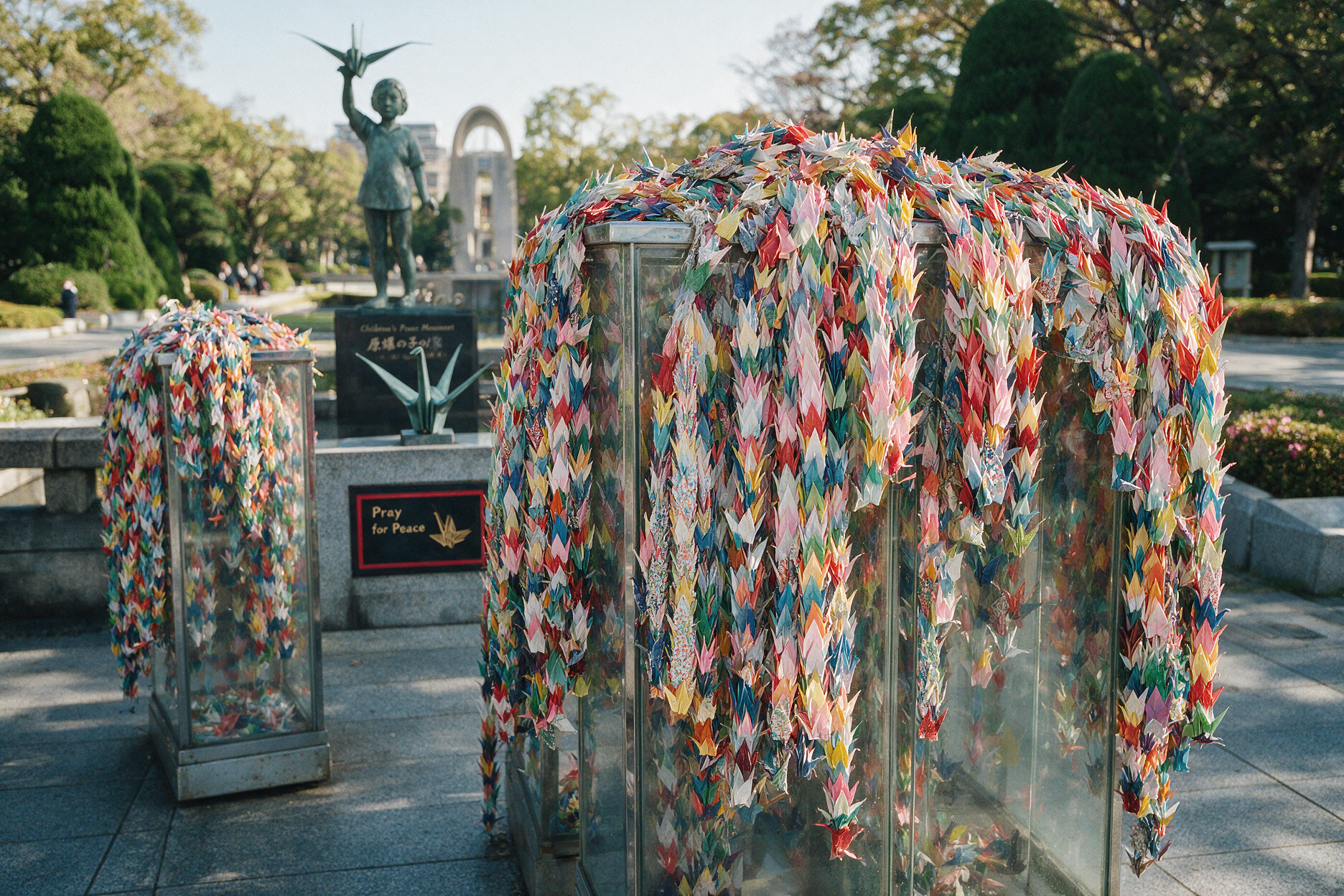
Start at the Children’s Peace Monument, where thousands of folded paper cranes arrive year-round from schoolchildren across Japan and the world, sent in memory of Sadako Sasaki, a girl who folded cranes while dying of leukaemia caused by radiation exposure. The cranes are replaced constantly; what you see was likely folded within the last few weeks. It’s a small, concrete detail that makes the memorial feel less like history and more like an ongoing conversation.
From there, walk to the Cenotaph and the Flame of Peace, then into the Hiroshima Peace Memorial Museum itself. Give it a genuine two hours, not the 40 minutes a rushed itinerary allots. The museum’s permanent exhibition is laid out to move chronologically — the city before, the bombing itself, and the decades of recovery and advocacy that followed — and it includes artefacts that are difficult to look at: a child’s tricycle, a school uniform, photographs of the aftermath. That difficulty is the point. This isn’t a place to perform enthusiasm.
Practical details: the museum charges a token ¥200 for adults (¥100 for seniors and high schoolers, free under junior high age) — deliberately kept low so cost is never the barrier to visiting. Hours run roughly 7:30am-7pm March through November, shorter in winter, with the museum closed for a short stretch around New Year. Check the museum’s official hours and ticketing page before you go, since these shift seasonally. The A-Bomb Dome itself — the skeletal remains of the former Industrial Promotion Hall, left standing deliberately as the city rebuilt around it — is a short walk north along the river, and was inscribed as a UNESCO World Heritage Site in 1996; you can read the official UNESCO listing for the full case made for its preservation.
A note on photography, since it comes up: take pictures of the Dome and the park’s open spaces freely — that’s expected, even encouraged, since the sites exist partly to be seen and remembered. Inside the museum and at the Cenotaph, though, put the phone away for selfies and treat it the way you would a war memorial anywhere else in the world, because that’s exactly what it is. Nobody will stop you from taking a cheerful photo at the Cenotaph. You’ll just regret it later.
One honest caveat: the museum’s content is intense, and some of it is genuinely hard for younger children. Families often split the visit — one parent takes kids through the lighter outdoor monuments while the other spends time in the exhibition — rather than forcing an 8-year-old through the full museum. There’s no wrong way to handle this; use your judgment on your own kids.
Midday: Hondori Arcade and lunch
The tone shift from the park to Hondori is abrupt, and that’s fine — it’s the same shift the city itself made over eighty years. Hondori is a 500-metre covered shopping arcade a short walk from the park, lined with everything from Starbucks and Uniqlo to small independent shops that have been there for decades. It’s where Hiroshima actually does its Tuesday-afternoon shopping, not just its tourism.
Grab lunch here rather than saving your appetite for dinner. A bowl of tsukemen or a quick donburi at one of the arcade’s casual counters runs ¥900-1,400 and gets you back on your feet fast. If you’re travelling vegetarian or vegan, Hiroshima is trickier than Tokyo or Kyoto for plant-based options — our Japan vegetarian and vegan food guide has specific phrases and chains that make ordering easier here.
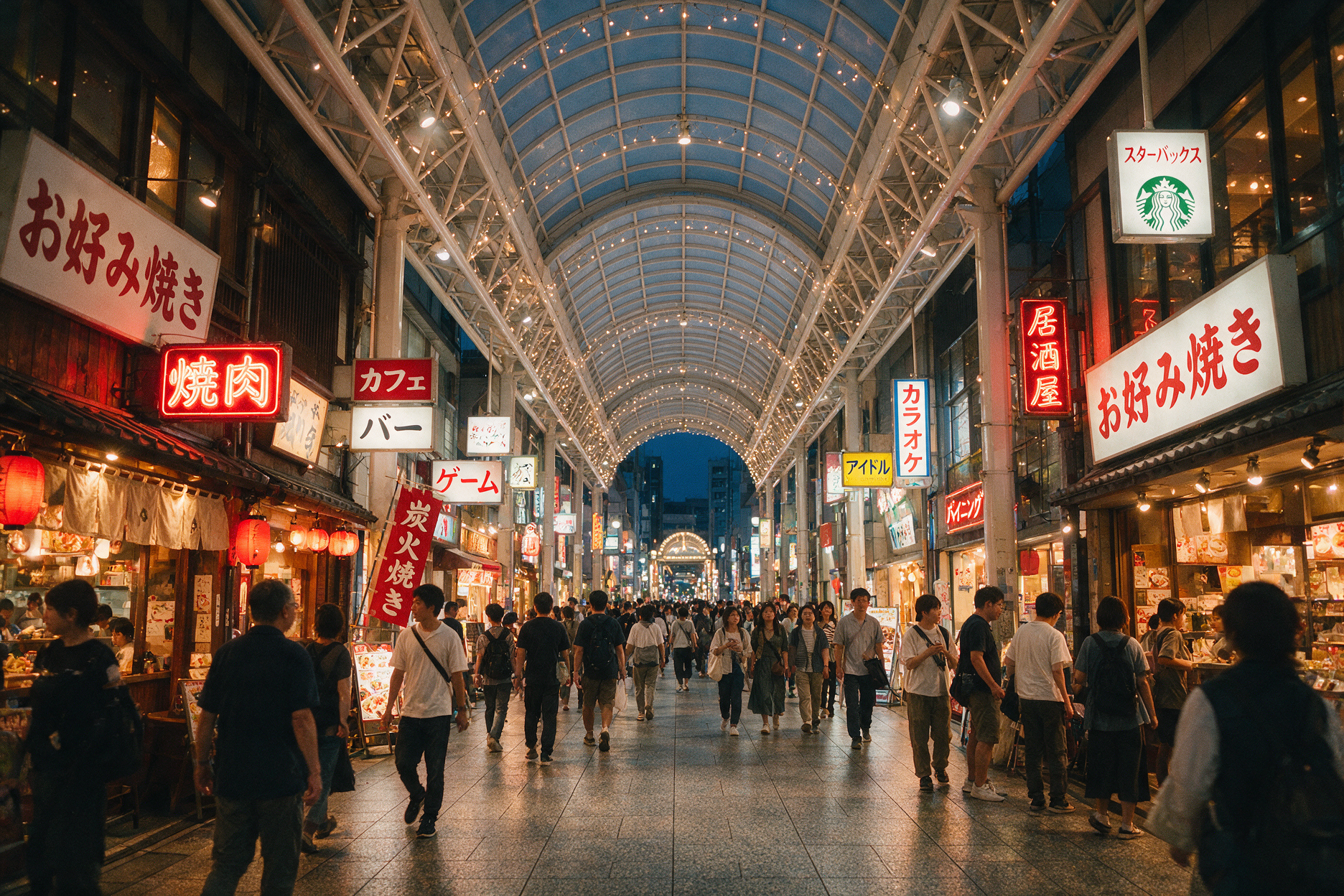
A smart-spending tip, not a doing-it-cheap one: skip the arcade’s tourist-facing souvenir shops near the main entrance and walk two-thirds of the way down, where prices on the same magnets and snacks drop noticeably because the shops there are competing with each other for local foot traffic, not first-time visitors fresh off a tour bus.
Afternoon: the river, the Dome, and the rebuilt city
Spend the early afternoon walking the Motoyasu River path with the A-Bomb Dome across the water — this is the single best vantage point for photographing it, especially if you time it for the golden hour light that catches the exposed steel frame around 4-5pm depending on season. Bring a longer lens if you have one; the view across the river, rather than standing directly at the fence, tends to produce the more respectful and more striking frame anyway.
A mistake to avoid here: don’t rush this stretch to squeeze in extra stops. The riverside walk is short — maybe 20 minutes end to end — but it’s where the morning’s weight and the evening’s energy actually meet, and most visitors who skip it say later they wish they hadn’t.
Fun fact worth knowing before you go: Hiroshima’s population had fully recovered to its pre-war size within about a decade, and the modern city — population over a million now — is one of the most walkable mid-sized cities in Japan, largely rebuilt on a grid that makes getting around on foot or by the old-school streetcar system refreshingly simple. The Hiroden streetcars, some of them genuinely vintage rolling stock, are still the easiest way to connect the park, the station, and downtown.
Evening: Okonomimura and dinner
By early evening, Hiroshima’s other personality takes over, and it’s a good one. Okonomimura is a three-storey building a few minutes from Hondori packed with around two dozen tiny okonomiyaki counters, each with its own griddle and its own regulars. Pick any stall with a queue of locals rather than the one with the English menu taped to the door — both will serve you fine, but the local favourites tend to have better dashi.
Here’s the genuine local food detail worth knowing: Hiroshima-style okonomiyaki is not a thicker Osaka pancake with extra toppings — it’s an entirely different construction. Osaka mixes everything into a batter and cooks it as one disc. Hiroshima layers it: a thin crepe-like batter base, then cabbage, then a generous tangle of yakisoba noodles, then a fried egg, stacked and pressed on the griddle rather than folded together. Ask for it with soba noodles (the more traditional choice) rather than udon if you want the classic version. A plate runs ¥800-1,300 with a drink, open daily roughly 11am-10pm, and it’s still exactly the kind of place that resists the polish of becoming a “destination” restaurant — it’s just a village of grills, which is the appeal.
A hidden gem worth seeking out beyond Okonomimura itself: a handful of okonomiyaki spots along the smaller side streets just north of Hondori serve the same dish for slightly less and with noticeably shorter waits, since most tour itineraries only mention Okonomimura by name. Our Japan food trail guide covers more regional dishes worth building a trip around.
Should you add Miyajima to the same day?
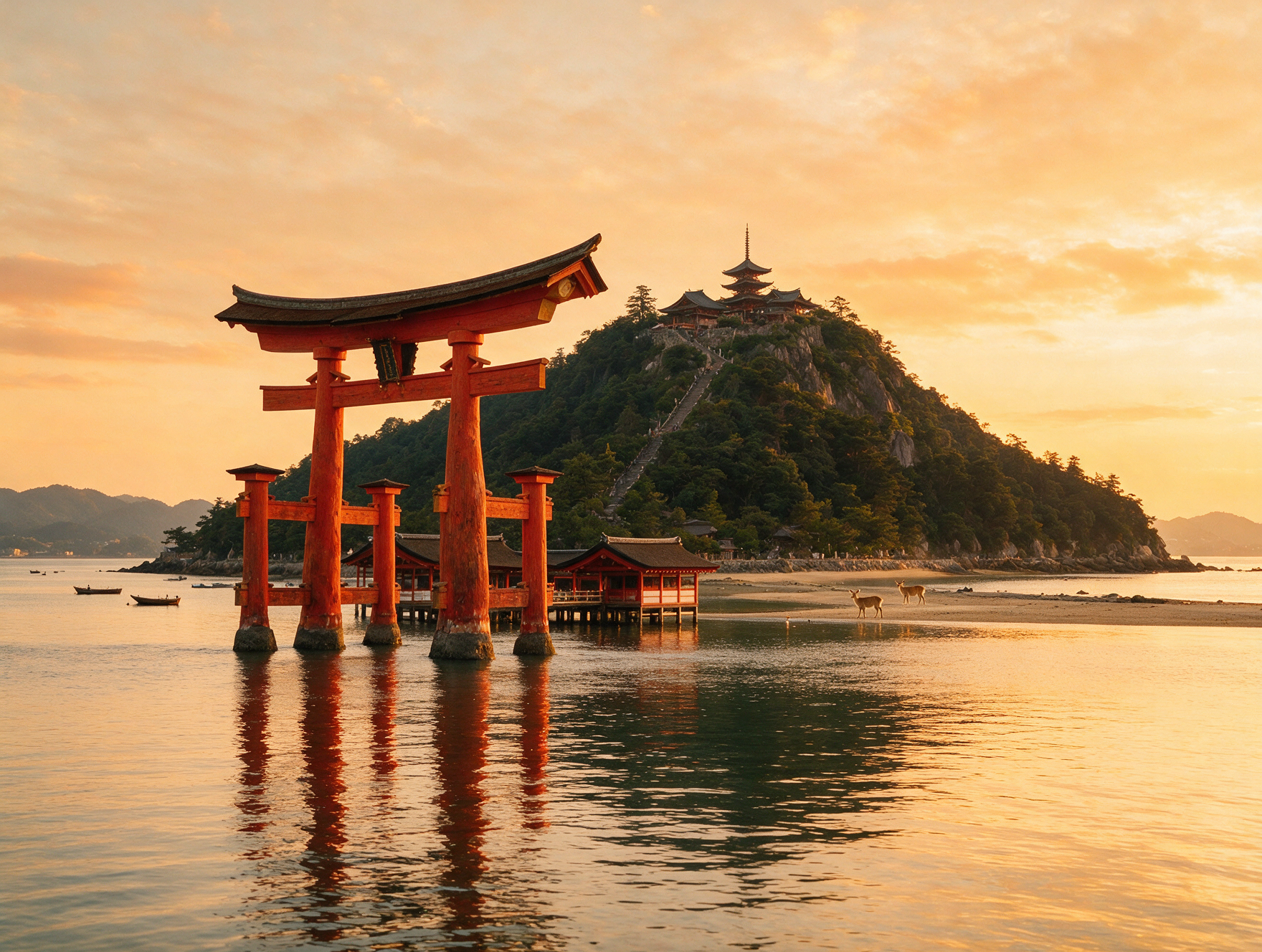
Honestly — probably not, if you’re already doing the full Peace Memorial morning. Miyajima, with its floating torii gate at Itsukushima Shrine (the scaffolding that covered it during restoration work came down back in 2022, so it’s fully visible again), is a 10-minute ferry ride from Miyajimaguchi, itself about 25-30 minutes from central Hiroshima by JR line or tram. Getting there, seeing the shrine properly, and getting back comfortably eats another 3-4 hours, and tide timing matters — the gate “floats” only at high tide, so you’d need to check tide tables and build your day around them, not the other way round.
Stacking both into one day is technically possible if you start at dawn and move fast, but it turns a day that’s meant to have room for reflection into a checklist sprint, and the Peace Memorial in particular doesn’t reward being rushed. If Miyajima genuinely matters to you — and it should, the deer and the shrine are worth it — give it its own half-day, ideally the next morning before you move on, rather than bolting it onto this one. Our Japan 7 nights 8 days itinerary shows how Hiroshima and Miyajima sit comfortably as a two-day block within a longer custom Japan itinerary.
Who this day suits
This is a strong day for families with school-age and older children — the educational weight of the Peace Memorial is exactly the kind of history that sticks with kids more than any theme park, provided you pace the museum visit to their attention span. It also works well for solo travellers who want a day that’s contemplative in the morning and sociable by dinner — grill-side seating at Okonomimura makes it easy to strike up conversation with the stall owner or the couple next to you. Couples tend to appreciate the river walk and the golden-hour view of the Dome as a genuine, unforced moment rather than a staged photo op. For travellers building a more indulgent trip, Hiroshima pairs naturally with a night at a ryokan on Miyajima or a stay at one of Hiroshima’s riverside hotels with Dome views — worth asking about when you’re booking Japan vacation packages rather than defaulting to a generic city-centre hotel.
What it costs
For a rough sense of Japan trip cost from India as it applies to this one day: shinkansen round trip from Osaka runs approximately ¥10,000-11,000 per person (book via the JR app or a ticket counter — reserved seats are worth the small extra fee during peak season). Museum entry is a nominal ¥200. Lunch and dinner together land around ¥2,500-3,500 per person if you’re eating well without going upscale. All in, excluding your base hotel cost for the trip, a comfortable day in Hiroshima runs roughly ¥14,000-16,000 (about ₹7,500-8,500) per person — reasonable by Japan standards, and genuinely good value for what the day delivers. If you’d rather not puzzle through rail bookings and museum reservation windows yourself, this is exactly the kind of day Get Tripped builds into a custom Japan itinerary, with timings, tickets, and transfers handled in advance.
FAQs
Is one day really enough to see Hiroshima properly?
Enough to do the Peace Memorial, Hondori, and Okonomimura without rushing — yes. Enough to also fit Miyajima — not really, as covered above. If you have a second day to spare, take it.
Is the Peace Memorial Museum appropriate for children?
It’s educational and important, but some exhibits are graphic and genuinely upsetting. Many families split the visit by age, or do a shorter pass through with younger kids and let older teens linger longer.
Do I need to book A-Bomb Dome or Peace Park tickets in advance?
The park and the Dome are free, open-air, and need no booking. Only the museum charges admission, and while walk-in tickets are usually fine, booking online ahead avoids a queue during peak season (spring and autumn weekends especially).
What’s the best way to get from Hiroshima Station to Peace Memorial Park?
Take the Hiroden streetcar (lines 2 or 6) to Genbaku Dome-mae stop — about 17 minutes total door to door, and a fun ride in its own right on the older rolling stock.
Is Hiroshima safe to visit, and is it walkable?
Yes to both. Hiroshima is calm, well-signed in English at major sites, and genuinely one of the easier Japanese cities to navigate on foot or by streetcar.
Can vegetarians eat okonomiyaki?
Standard Hiroshima-style okonomiyaki includes pork and often seafood, but several Okonomimura stalls will make a vegetable-only version on request — ask before ordering, and check our vegetarian food guide linked above for phrasing that helps.
Do Indian travellers need a visa for just a day trip to Hiroshima within a longer Japan trip?
Yes — the visa covers your whole stay in Japan, not individual cities, so there’s nothing extra needed for a Hiroshima day trip once your Japan tourist visa is sorted for the trip overall.
Worth the quiet, and worth the noise after
Hiroshima asks something of you that a lot of destinations don’t: to sit with something difficult before the day lightens. That’s not a flaw in the itinerary — it’s the itinerary working as intended. The morning at the Peace Memorial stays with you. The evening at Okonomimura, elbow to elbow with locals over a griddle, is the city’s own answer to that morning, and it’s a genuinely warm one.
Whatever else is on your list of places to visit in Japan, give Hiroshima one unhurried day rather than a rushed half-day between two other cities. It’s one of the destinations where Japan travel feels like endless discovery — of history, yes, but also of how a city chooses to live afterward.
Ready to build this into a full trip? Get Tripped is a Japan travel agency in Mumbai that puts together custom Japan itineraries for exactly this kind of day — including seamless Japan tour packages from India with flights, rail bookings, and visa support handled end to end. Planning a focused Japan 10 days travel itinerary, or just want to book Japan holidays around Hiroshima and Kyoto? Get in touch with our team and we’ll start mapping it out. Explore our full Japan destination page for more on where this day fits into a longer trip, and see what else there is to do without spending a yen in our guide to free things to do in Japan.