The postcard version of Fushimi Inari shows one person, maybe two, walking alone through a tunnel of vermillion gates that seems to go on forever. The 9am reality is a scrum of selfie sticks and tour groups stalled at the same bend in the path, everyone waiting for the same five-second gap to get the same shot. Kyoto does this to people. It photographs like the quietest city in Japan and behaves, at its ten most famous addresses, like the busiest.
That’s not a reason to skip it. Kyoto earns its reputation — the temples are real, the gardens are real, the city really does still feel like old Japan in places. It’s just that “places” is the operative word, and most visitors never get past the five spots that show up on every places to visit in Japan list. This guide is for the ones who want the rest of it: the upper half of Mount Inari once the buses turn back, the moss gardens a ten-minute walk from the crowd, the backstreet where locals actually eat. We’ll also get into timing, since best time to visit Japan and “least crowded time to visit Kyoto” are usually two different answers — and the honest one isn’t always cherry blossom season.
In This Guide
- Fushimi Inari: why the first ten minutes are the worst ten minutes
- Arashiyama without the bamboo-grove crowd: Jojakko-ji and Gio-ji
- Gion in 2026: what changed, and the photo you shouldn’t try to take
- Nishiki Market’s quieter twin: Teramachi and Shinkyogoku
- A hidden gem almost nobody puts on a list
- Best time to visit Kyoto if dodging crowds matters more than dodging rain
- Where to stay: ryokan for couples, family-friendly bases, and honest budgeting
- Getting around, and the Japan visa process for Indians in 2026
- A mistake worth avoiding, and a fact worth knowing
- FAQs
Fushimi Inari: Why the First Ten Minutes Are the Worst Ten Minutes
Fushimi Inari-Taisha has no entry fee and never closes — it’s open 24 hours, which almost nobody uses to their advantage. Everyone arrives between 9am and 2pm, funnels through the same lower gates, and leaves convinced they’ve “done” Fushimi Inari after twenty minutes near the entrance. They haven’t. That lower stretch, the one every Japan tour packages from India brochure photographs, is maybe a tenth of the shrine.
Keep climbing. Past the Okuno-in prayer hall, the crowd thins with almost mathematical consistency — fewer people with every switchback, because most day-trippers turn around once they’ve got their photo. By the upper loop, you’ll likely have long stretches of torii-lined path to yourself, and the view back over Kyoto from partway up is better than anything at the base. The full climb to the summit and back takes roughly two to three hours; even forty minutes up is enough to leave the worst of it behind.
Two more adjustments make a real difference. First, go at sunrise — the shrine’s open all night, and arriving by 6:30am means you’ll share the lower gates with a handful of photographers instead of four tour buses. Second, if you’re on the upper loop mid-morning anyway, walk it counter-clockwise. Most visitors instinctively go clockwise, so reversing the direction means you’re moving against the flow of every group tour instead of queuing behind it.
Arashiyama Without the Bamboo-Grove Crowd
Arashiyama’s bamboo grove is maybe 400 metres of path, and on any given afternoon it holds more phones than bamboo stalks. It’s genuinely pretty — worth the walk-through — but budget five minutes there, not the hour people expect, and spend the rest of your morning at two temples a short walk away that most tour buses skip entirely.
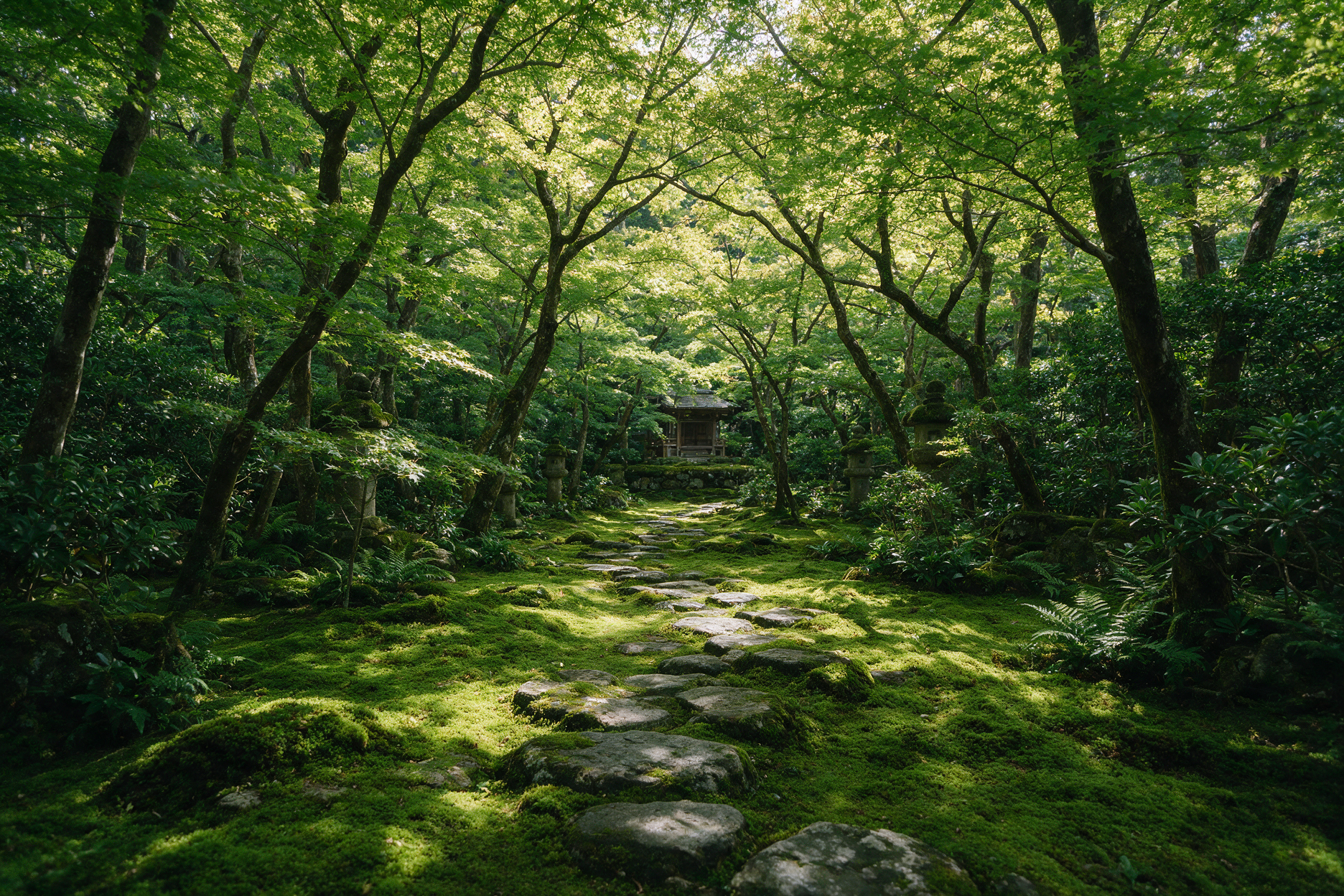
Gio-ji is a small, thatched-roof temple built around a moss garden carpeted in seventeen different species of moss — you can’t walk on it, only around it, which is exactly why it still looks untouched. Entry is a modest ¥300 (students ¥100), open 9am to 5pm, and because it’s tucked into residential Arashiyama rather than on the main tourist drag, it rarely sees more than a handful of visitors at once.
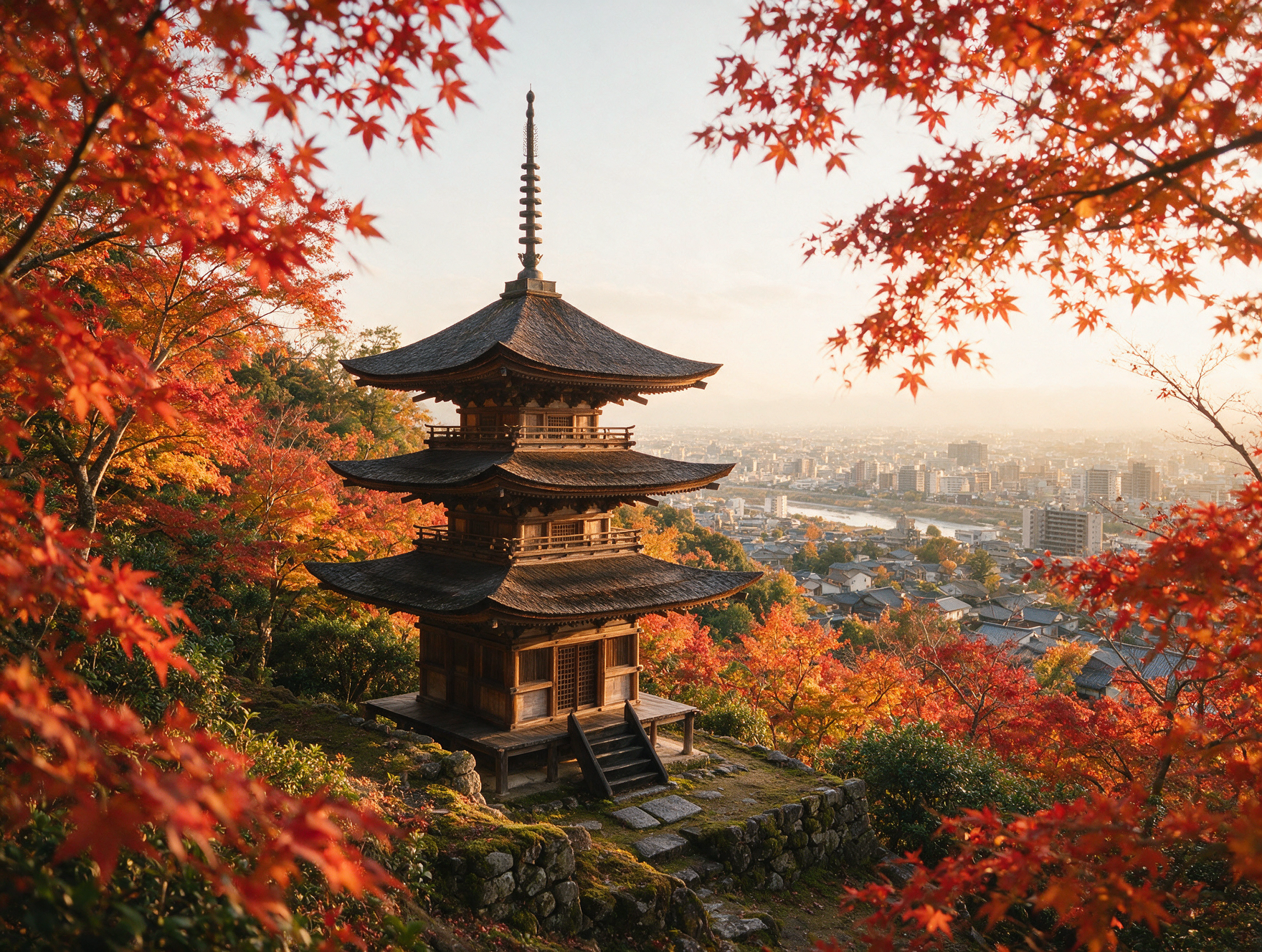
Ten minutes further is Jojakko-ji, where a short uphill walk through forest leads to a two-storey Tahoto pagoda with an honestly unobstructed view over Kyoto — no ticket queue, no crowd control rope, just a bench and the city laid out below. Entry runs about ¥500, 9am to 5pm (last entry 4:30pm). It’s quiet nearly year-round; the one exception is peak autumn foliage, when word has clearly gotten around.
Gion in 2026: What Changed, and the Photo You Shouldn’t Try to Take
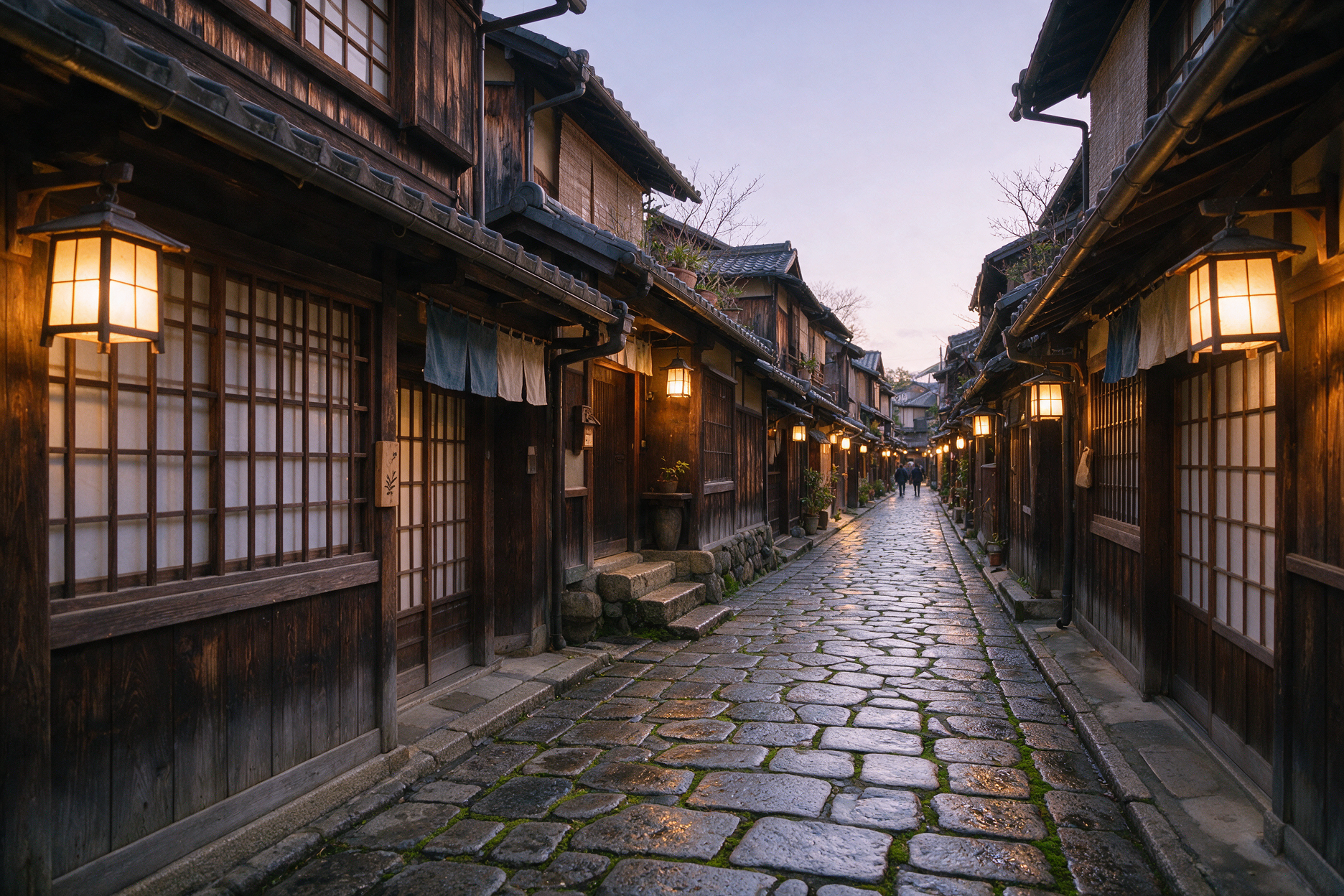
Gion is still one of the best places in Japan to see a genuinely preserved streetscape of wooden teahouses and lantern-lit lanes — it’s just no longer a free-for-all for photographers. Since April 2024, Kyoto City has closed several private alleys in the geisha district to tourists entirely, after years of visitors blocking doorways and chasing maiko and geiko for close-up photos on their way to work. Multilingual signs now mark the closed lanes, and stepping past one carries a ¥10,000 fine. Photographing a maiko or geiko without consent, or on private property, has technically been restricted since 2019, but enforcement visibly tightened once the alley closures went in.
None of this makes Gion worth skipping — it makes it worth visiting differently. Walk Hanamikoji Street in the early evening, when the main thoroughfare is open to everyone and the light through the lanterns is worth more than a maiko photo anyway. If you do spot a maiko or geiko, the respectful move is the same one you’d want extended to you: don’t block her path, don’t put a camera in her face, and keep your distance on the public street. A city still living alongside its own history isn’t a photo opportunity on demand.
Nishiki Market’s Quieter Twin: Teramachi and Shinkyogoku
Nishiki Market earns the nickname “Kyoto’s Kitchen” and the crowds that come with a food market every guidebook names. It’s genuinely worth a visit for the pickle shops and knife stores, but go early — by midday it’s a single-file shuffle of people holding skewers.
The better move is to treat Nishiki as a twenty-minute appetiser, then walk one block over into Teramachi and Shinkyogoku, the two covered shopping arcades running roughly parallel to it. Same backstreet energy — small shops, old bookstores, a snack counter with a line of regulars rather than tourists — with a fraction of the foot traffic, because almost nobody walking out of Nishiki bothers to turn the corner.
A Hidden Gem Almost Nobody Puts on a List
A few minutes’ walk from Nijo Castle sits Mikane Shrine, a shrine small enough to miss if you’re not looking for it, dedicated to prosperity and built around Japan’s rare gold-coloured torii gate — most are vermillion, so this one stands out even in photos. It’s popular with Kyoto locals buying lottery tickets, not with tour groups, and visiting after 5pm, once the castle crowds have cleared out, gets you the gate almost to yourself. It’s not going to anchor a day trip on its own, but it’s a genuinely worthwhile ten minutes if you’re already near Nijo Castle and want one stop that isn’t on every top-ten list.
Best Time to Visit Kyoto, If Dodging Crowds Matters More Than Dodging Rain
Here’s the honest version, because every Japan cherry blossom tour packages listing will tell you spring is the best time to visit Japan, and it’s true — and also the single most crowded window in the Kyoto calendar. The 2026 forecast puts Kyoto’s cherry blossoms flowering around March 23 and reaching full bloom by March 30, a few days earlier than the historical average. That means the whole of late March into the first week of April is peak season: hanami crowds at every park, every well-known temple booked out, hotel rates climbing across the board. Go for it if cherry blossoms are the whole point of the trip — just book your Japan 10 days travel itinerary and hotels months out, and expect company everywhere you go.
Autumn in Japan, September to November, is the other headline season, and it’s where the national picture and the Kyoto picture genuinely diverge. Tokyo and the alpine north colour up through October and into mid-November, but Kyoto runs later — the 2026 forecast has the city’s maples peaking around December 11, roughly six days behind average, with good colour expected to hold from around December 8 through 21. If you’re building a trip around autumn leaves specifically in Kyoto, plan for early-to-mid December, not the September–November window that fits the rest of the country.
The genuinely honest recommendation, if avoiding crowds outranks catching peak bloom or peak colour, is Kyoto’s shoulder season: late January through February, or early June just before the rainy season sets in. You lose the cherry blossoms and the maple-red hillsides, but you gain shrines and gardens that look the way they do in the photos nobody else managed to take — because nobody else was there. January mornings are cold and clear, which is its own kind of beautiful at Fushimi Inari’s upper gates.
Where to Stay: Ryokan for Couples, and What Actually Works for Families
Kyoto is one of the strongest honeymoon destinations in Japan, and a proper ryokan stay is a big part of why. Look at the Southern Higashiyama or Arashiyama areas for a traditional inn with tatami floors, a kaiseki dinner served course by course, and often a private onsen bath in the room — it’s a genuinely different pace of travel than a hotel, and worth building a night or two around even on a tighter itinerary. Couples planning this as part of a Japan honeymoon packages from India trip should book the ryokan night early; the good ones, especially with private baths, sell out months ahead for spring and the December foliage window.
Families generally do better based in central Kyoto — Karasuma or near Kyoto Station — for the shorter taxi rides to temples and easy train access out to Nara or Osaka for a day trip. Luxury seekers increasingly split a trip between a modern five-star in central Kyoto and one ryokan night for contrast; it’s a smart way to get the traditional experience without giving up reliable air-conditioning and a proper gym for the rest of the stay.
Getting Around, the Visa Process, and What It Actually Costs
Kyoto’s bus network is famously overloaded with tourists dragging suitcases onto routes locals need to get to work, which is partly why the city has pushed visitors toward the subway and the Keihan and Hankyu train lines for anything crossing town. A loaded IC card (Icoca) covers buses, subways, and most regional trains with a tap, and it’s the one transit tip worth actually following: skip the all-day bus pass unless you’re doing a specific temple-hopping day, and default to rail wherever a line exists.
Japan visa for Indians 2026: Indian passport holders still need a visa for Japan — there’s no visa-free entry or traditional e-visa waiver yet. What has changed is the format: applications now go through VFS Japan centres and the approved visa is issued as an e-visa document rather than a stamp in your passport, though the paperwork itself hasn’t gotten lighter. You’ll need a confirmed itinerary, hotel bookings, three months of bank statements, and your last income tax return (three years of ITRs if you’re applying for a multiple-entry visa). Processing through VFS typically takes three to four working days, and the visa fee itself is a modest INR 550 plus VFS’s service charge — it’s the documentation, not the cost, that trips people up. Build in at least two to three weeks before departure to get the paperwork together without a last-minute scramble.
Japan trip cost from India for a Kyoto-inclusive trip varies a lot by season and style, but as a rough mid-range benchmark, expect ₹8,000–₹15,000 per person per day covering a comfortable hotel, meals, and local transport, climbing well past that with a ryokan night, bullet train legs, or a five-star stay layered in. Flights from major Indian cities to Osaka or Tokyo are the other big line item, and they move with the season — book early for the March–April and December windows, when fares climb alongside demand.
A Mistake Worth Avoiding, and a Fact Worth Knowing
The mistake: showing up to Fushimi Inari at 10am expecting the quiet postcard shot. It’s the single most common letdown reported by first-time visitors, and it’s entirely avoidable — the shrine is open all night specifically because nobody’s gating it, so there’s no reason to arrive in the exact three-hour window when every tour bus in the city has the same idea.
The fact: Fushimi Inari’s famous gates aren’t a fixed historic set — there are more than 10,000 of them, and new ones are still being donated and installed today by individuals and businesses hoping for good fortune, each one inscribed with the donor’s name and the date. The tradition is centuries old, but the forest of gates you’re walking through is, in a real sense, still being built.
FAQs
Is Kyoto worth visiting if I only have two days in Japan?
Yes, but go in with a plan — two days is enough for one or two temple areas done properly (say, Fushimi Inari plus Gion or Arashiyama) rather than trying to rush all three. A custom Japan itinerary built around your actual interests gets more out of a short stay than a fixed checklist does.
What’s the least crowded time to visit Fushimi Inari?
Sunrise to around 7:30am, or after 4pm once the tour groups clear out. Since it’s open 24 hours with no entry fee, there’s genuinely no reason to go during the 9am–2pm rush unless that’s the only slot you have.
Do I need a visa to visit Japan as an Indian citizen in 2026?
Yes. Japan doesn’t currently offer visa-free entry or an e-visa waiver for Indian passport holders — you’ll apply through VFS Japan with a confirmed itinerary, hotel bookings, and financial documents, and receive an e-visa document rather than a passport stamp.
Is the Arashiyama bamboo grove worth visiting at all?
Briefly, yes — it’s a genuinely striking five minutes of walking. Just don’t plan an hour around it; spend the rest of that morning at Gio-ji and Jojakko-ji instead.
Can I take photos of geisha in Gion?
You can photograph the streets and teahouses freely. Photographing a maiko or geiko without consent, or entering the private alleys closed to tourists since April 2024, isn’t allowed and carries a ¥10,000 fine for the alley restriction specifically.
Is spring or autumn better for a Kyoto trip?
Both are beautiful and both are crowded — spring (late March into early April) for cherry blossoms, and early-to-mid December for Kyoto’s maple colour, which runs later than the rest of the country. If dodging crowds matters more than catching peak colour, aim for late January–February or early June instead.
How many days should I plan for Kyoto specifically?
Three full days lets you cover the major sites and at least a couple of the quieter alternatives in this guide without rushing. Pair it with Tokyo and Osaka for a fuller trip — our guide to Japan’s autumn hidden gems beyond Kyoto covers where to go next if you’ve got extra days in the season.
Is Kyoto expensive compared to the rest of Japan?
It runs slightly above the national average for accommodation, especially near the main temple districts, but mid-range travel in Kyoto is still very manageable against most Tokyo and Kyoto tour packages benchmarks — the ryokan nights are where costs genuinely jump, by design.
Kyoto’s overtouristed reputation is earned at exactly five addresses, and avoidable almost everywhere else. Climb a little higher at Fushimi Inari, walk ten minutes past the bamboo grove, turn one corner off Nishiki Market, and the city that locals keep saying “still feels like old Japan” is suddenly the one you’re actually standing in. The historic core of Kyoto, Uji, and Otsu carries UNESCO World Heritage status for good reason — there’s enough here that a handful of crowded landmarks were never the whole story.
If you’d rather not build this itinerary solo, Get Tripped puts together custom Japan itineraries — and full Japan tour packages from India, including Japan honeymoon packages from India for couples wanting a ryokan night done right — that get you past the obvious five spots from day one. Explore our Japan destination page or get in touch to start planning your trip.