5 Hidden Gems of Nara to Explore Beyond the Deer Park
Here’s the thing nobody tells you before a Nara day trip: you will spend roughly ninety minutes with the deer, take forty photos of the Great Buddha, and then stand around wondering what else there is to do with the four hours you budgeted. Most people don’t find out, because most people treat Nara as a half-day errand squeezed between Kyoto’s temples and Osaka’s food stalls — in, bow at a deer, out. That’s a shame, because Nara was Japan’s first permanent capital, it’s sitting on a UNESCO World Heritage listing with eight separate components, and almost none of what makes it genuinely interesting is in the brochure photo everyone’s seen.
This guide is for the traveler planning Japan tour packages from India who wants Nara to be more than a selfie stop on the way to somewhere else. We’ll cover the deer park properly first — including the safety note that actually matters — then walk through five quieter corners of the city that reward the slightly longer visit: two gardens most tour groups skip entirely, an old merchant quarter where the backstreets matter more than any single attraction, a lantern-lined approach that’s prettier than the shrine it leads to, and a hike up a grass mountain that most visitors don’t realize is open to the public and free.
Table of Contents
- Nara Park and Todai-ji: The Part Everyone Sees (And the Safety Note Worth Reading)
- 1. Yoshikien Garden — Nara’s Free Garden Nobody Queues For
- 2. Isuien Garden — The Borrowed-Scenery Garden Next Door
- 3. Naramachi — The Old Merchant Quarter
- 4. Kasuga Taisha’s Lantern Path — Better Than the Shrine Itself
- 5. Mount Wakakusa — The Hike With the City’s Best View
- Getting to Nara from Kyoto or Osaka
- Best Time to Visit Nara
- What to Eat in Nara
- Japan Visa for Indians in 2026
- FAQs
Nara Park and Todai-ji: The Part Everyone Sees (And the Safety Note Worth Reading)
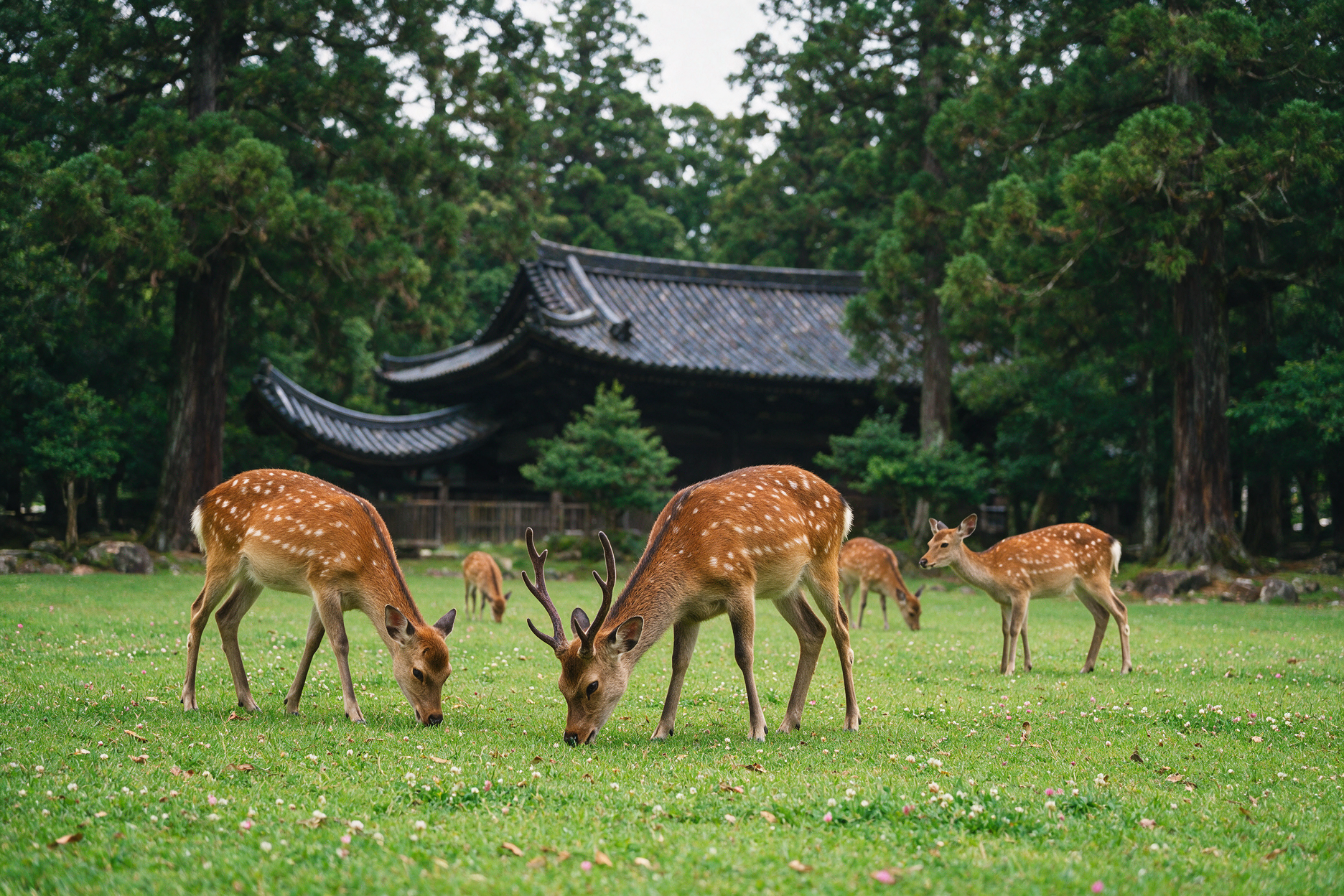
You should still do this part. Nara Park is genuinely one of the better free-roaming animal encounters in the world — over a thousand sika deer wander the park and the streets around it, a population descended from deer considered messengers of the gods at Kasuga Taisha since the 8th century. Todai-ji’s Great Buddha Hall, a few minutes’ walk in, houses a 15-metre bronze Buddha that’s one of the largest in Japan, and the hall itself is one of the largest wooden structures on earth. It earns the crowds.
But the crowds are exactly the problem, and so, increasingly, are the deer. News reports over the past few years have put the number of visitors bitten, headbutted, or knocked over by deer at several hundred a year — not dangerous in the sense of serious injury, but enough that Nara’s tourism authorities have stepped up signage and messaging around it. Most incidents trace back to the same handful of mistakes: waving a cracker instead of holding it flat, teasing a deer by pulling the food back, or not noticing a deer has run out of patience and started following a child. Males get genuinely territorial during rutting season in autumn (roughly September–October) and does get protective of fawns in late spring. Buy the official shika senbei crackers (about ¥200 a pack, sold by park vendors — not the convenience-store snacks tourists sometimes try to sneak in, which the deer dislike and can react to badly), offer them flat-palmed, and don’t run. If you’ve got small children, keep them within arm’s reach near the deer — this is the one honest caveat in an otherwise brilliant family activity, not a reason to skip it.
Mistake to avoid: showing up at noon. Tour buses from Kyoto and Osaka cluster between 10am and 2pm, and the park’s entrance paths get genuinely congested. Arrive before 9am and you’ll have the deer, and Todai-ji’s approach, mostly to yourself.
1. Yoshikien Garden — Nara’s Free Garden Nobody Queues For
Tucked a five-minute walk from Nara Park’s southern edge, Yoshikien is a traditional Japanese garden split into three distinct sections — a pond garden, a moss garden, and a tea-ceremony garden — and it costs nothing to enter. Hours run 9am to 5pm (last entry 4:30pm). Because it sits just behind the far more famous Isuien, most people walk past the entrance without realizing it’s there, which is precisely why it’s worth the detour: on a weekday morning you can have the moss garden to yourself for ten minutes at a stretch, something that’s close to impossible anywhere else in central Nara.
Photography tip: the moss garden’s dappled light works best between about 10 and 11am, once direct sun has cleared the eastern tree line but before the midday flatness sets in. Bring a lens hood — the light through the maples creates enough flare to wash out a phone camera if you shoot straight into it.
2. Isuien Garden — The Borrowed-Scenery Garden Next Door
Isuien, right beside Yoshikien, is Nara’s best example of shakkei — “borrowed scenery,” where the garden’s design deliberately frames a distant view (here, Todai-ji’s Nandaimon Gate and the hills beyond) so it reads as part of the composition. It’s a paid garden — ¥1,200 for adults, ¥500 for students, open 9:30am to 4:30pm, closed Tuesdays (though it stays open daily through April, May, October and November) — and payment is cash only, which catches people out. Carry some yen; there’s no card reader at the gate.
Honest opinion: Isuien is worth the ¥1,200, but go for the borrowed-scenery view specifically rather than expecting it to beat Kyoto’s big-name gardens on pure design. Where it wins is quiet — even in high season, a garden this close to the deer park rarely gets more than a handful of other visitors at once, because most people don’t know it’s there or assume (wrongly) that it’s the same as Yoshikien next door.
3. Naramachi — The Old Merchant Quarter
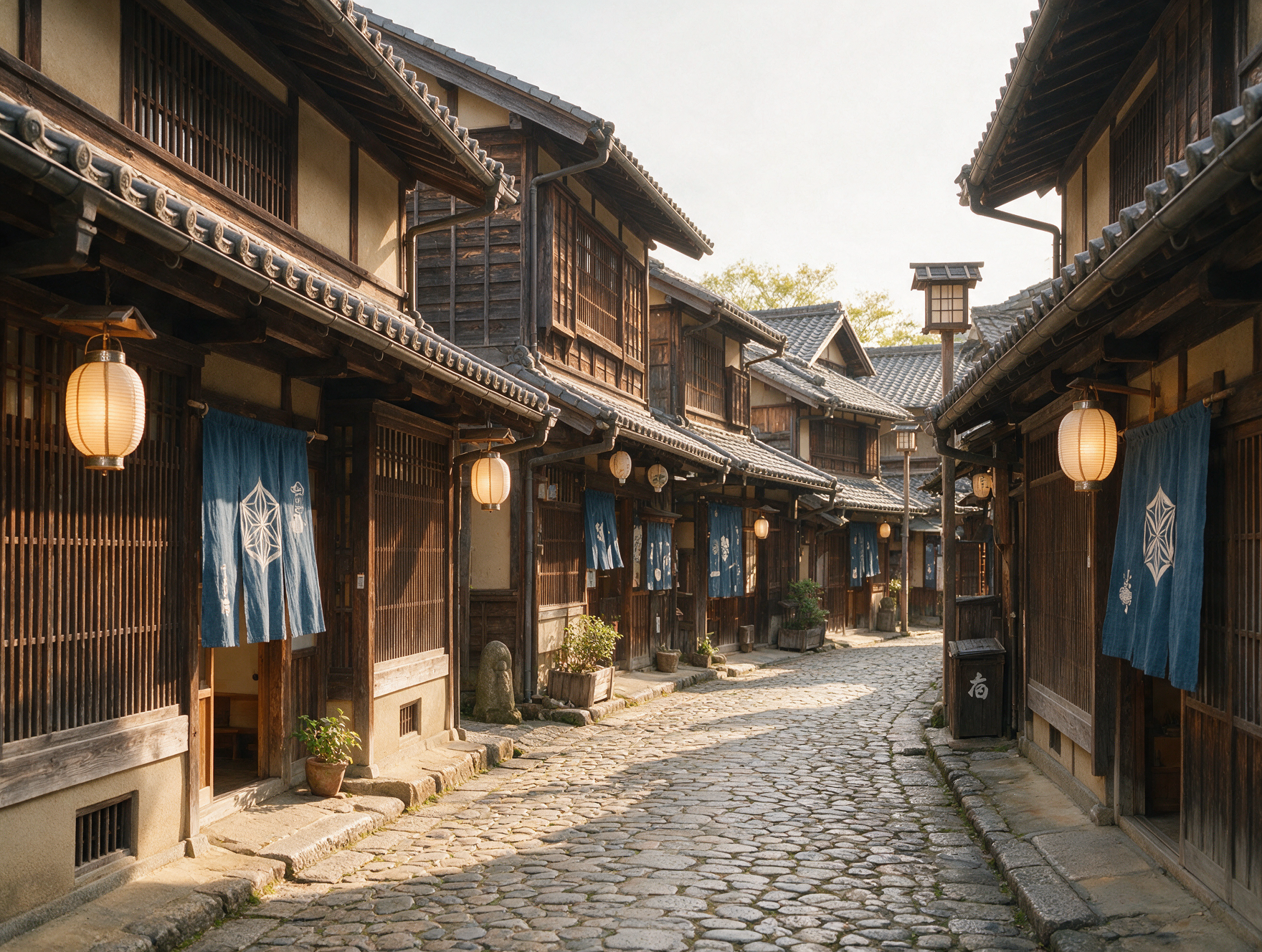
Naramachi is the former merchant district south of Nara Park, a tangle of narrow lanes lined with Edo- and Meiji-era wooden machiya townhouses, many now converted into small cafés, pottery shops, and sake tasting rooms rather than preserved as a museum piece. It’s a 10-15 minute walk from Nara Park, and the point isn’t any single sight — it’s wandering without a map for an hour. The Japan National Tourism Organization’s own listing for Naramachi makes the same point: this is a neighbourhood meant for aimless walking, not a checklist.
Local tip that doesn’t make the top-10 lists: look for the small migawari-zaru (substitute monkey) charms — little red cloth monkey dolls — hanging outside house entrances in Naramachi. They’re a local superstition meant to take on bad luck on a household’s behalf, and spotting how many different houses still hang them is a better way to actually look at the architecture than photographing the main street. Couples and solo travelers both tend to like Naramachi more than Nara Park, precisely because it rewards slow, unstructured time rather than a single big “sight.”
4. Kasuga Taisha’s Lantern Path — Better Than the Shrine Itself
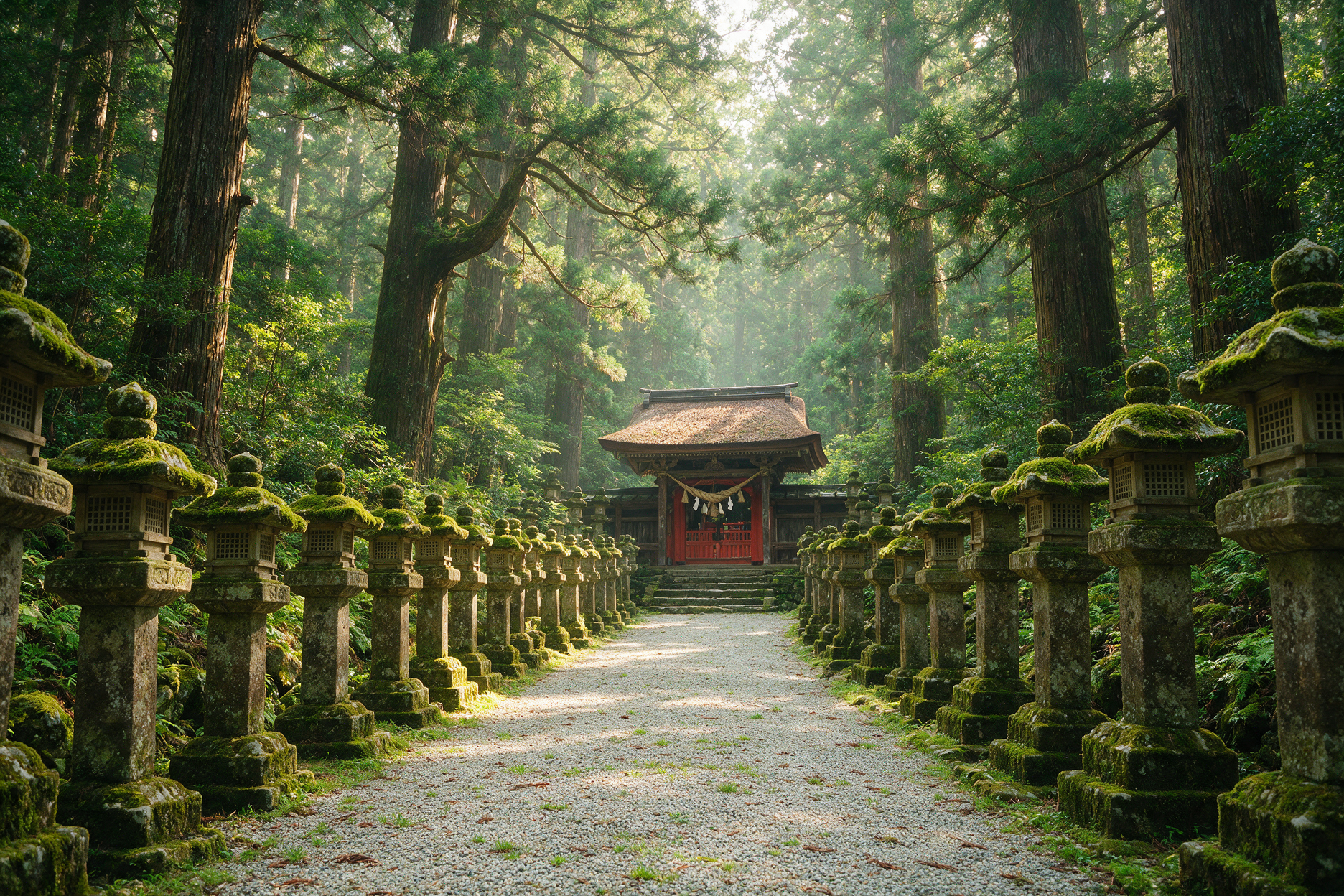
Kasuga Taisha, Nara’s great Shinto shrine and one of the eight components of the UNESCO listing, is famous for roughly 3,000 stone and bronze lanterns donated by worshippers over the centuries — but the shrine’s inner sanctuary (¥700, 9am–4pm, occasionally closed for ceremonies) isn’t actually the highlight. The approach is. The forested path leading up to Kasuga Taisha is lined on both sides with moss-covered stone lanterns under a canopy of cedar, and walking it in early morning light — before the shrine itself opens for the day’s crowds — is one of the most atmospheric fifteen minutes you’ll spend in Nara.
Fun fact: all of those lanterns are lit simultaneously only twice a year, during the Setsubun Mantoro festival in early February and the Obon Mantoro in mid-August. If your dates line up, it’s worth planning around; if they don’t, the unlit lanterns in daylight — moss-covered, slightly irregular, clearly centuries old rather than restored to a uniform shine — are arguably more interesting anyway.
5. Mount Wakakusa — The Hike With the City’s Best View
Mount Wakakusa (Wakakusayama) is a 342-metre grassy hill directly behind Nara Park that most day-trippers never notice, largely because it isn’t visible from the park’s main paths. It’s a genuine, if gentle, hike — about 20-30 minutes up a mowed grass slope — and the summit gives you a clear view back over Nara Park’s treetops, Todai-ji’s roofline, and on a clear day, the city spreading out toward Osaka. There’s a small entry fee in season (typically a few hundred yen) and it’s closed in winter outside of festival dates.
Smart-spending tip: this is the single best-value “experience” in Nara. For a fraction of what a paid viewpoint or observation deck costs elsewhere in Japan, you get a genuinely good view and a bit of exercise, with none of the queueing that comes with the deer park at midday.
If you can time a visit around it, Wakakusayama hosts Yamayaki — the mountain-burning festival — on the fourth Saturday of January each year (the next edition falls on 23 January 2027). The entire grass slope is deliberately set alight after dark, a tradition tracing back roughly 250 years to a territorial dispute between temples, and it’s genuinely spectacular rather than a tourist gimmick — locals turn out for it as much as visitors do.
Getting to Nara from Kyoto or Osaka
Nara works as a day trip from either city, but the two train options matter for your schedule, not just your budget — and this is one of those details our Japan public transit guide covers in more depth across the whole country.
From Kyoto: the JR Nara Line’s Miyakoji Rapid service takes 45-50 minutes for ¥720. The Kintetsu Kyoto Line’s ordinary express runs 45-55 minutes for ¥760 (sometimes with a change at Yamato-Saidaiji), while its Limited Express does it in 40-42 minutes for roughly ¥1,280 all-in, with reserved seating.
From Osaka: the JR Yamatoji Line’s Rapid Service from Osaka Station takes about 50 minutes for ¥840. The Kintetsu Nara Line from Osaka Namba is faster — 39-40 minutes on the Rapid Express for ¥680, or about 34 minutes on the Limited Express for upwards of ¥1,200.
Transit tip: whichever city you’re coming from, take Kintetsu over JR if you’re not using a JR Pass that day. Kintetsu Nara Station sits roughly 8 minutes’ walk from Nara Park; JR Nara Station is closer to 20 minutes away, which eats into the time you actually have on the ground.
On timing: give yourself 5-6 hours minimum to do Nara Park, Todai-ji, and two of the five hidden gems above properly — 7-8 hours if you want all five without rushing. If you’re building a longer custom Japan itinerary around Kyoto and Osaka, Nara slots in cleanly as a full day rather than a rushed half-day add-on, and it’s a better use of a travel day than most people assume.
Best Time to Visit Nara
Nara is a year-round destination, but autumn — September to November — is arguably the best window: the humidity of summer has broken, the deer are more active (if occasionally more territorial, as noted above), and by early-to-mid November the maples across Nara Park, Yoshikien, and Isuien turn genuinely spectacular shades of red and gold. It’s also, unsurprisingly, the most crowded stretch, so lean into the early-morning strategy above rather than fighting the midday peak.
Spring (late March to April) brings cherry blossoms through Nara Park and along the approach to Yoshino, about an hour south, and winter is quiet and cold but rewards visitors with near-empty gardens and, if your dates allow, Yamayaki in late January. Summer is hot and humid enough that it’s genuinely the least comfortable season for walking between sights, Nara Park included.
What to Eat in Nara
Skip the generic ramen chains near the station and look for food that’s actually from Nara. Kakinoha-zushi — bite-sized pressed sushi (usually mackerel or salmon) wrapped in persimmon leaves, originally a preservation technique from a landlocked prefecture without easy access to fresh fish — is the one dish worth seeking out specifically, sold in boxes at shops around Naramachi and near the station, and it travels well if you want to picnic in one of the gardens above. Chagayu, a savoury green-tea rice porridge, is the traditional local breakfast; a few older restaurants in Naramachi still serve it. And if you want a sit-down meal, Nara is also one of the recognised birthplaces of Japanese sake brewing, with a small cluster of breweries still operating in and around the old town offering tastings. For more on eating well across the country, our Japan food trail guide and our vegetarian and vegan food guide are both worth a read before you go — Nara’s temple-town history means there are more shojin ryori (Buddhist vegetarian) options than you’d expect for a small city.
Japan Visa for Indians in 2026
Indian passport holders still need a visa for Japan — there’s no visa-free or visa-on-arrival route — but the process has gotten easier. Japan introduced an eVisa system for Indian applicants in April 2024, alongside the existing paper application through VFS Global, and as of July 2026 the visa fee itself is a flat ₹500 for a single or multiple-entry tourist visa (VFS service charges apply on top). Applications can be submitted up to three months before travel, and the embassy is explicit that processing can’t be expedited for individual applicants, so build the buffer into your planning rather than applying at the last minute. Our dedicated Japan visa guide for Indian travellers walks through the document checklist in full, and for official confirmation, the Embassy of Japan in India’s visa page is the source to check before you apply, since requirements can shift.
On cost more broadly: Japan trip cost from India varies hugely by season and pace, but Nara itself is one of the cheaper line items on a Japan trip — most of what’s worth doing here (the deer park, Yoshikien, Naramachi’s streets, the Kasuga Taisha approach) is free or a few hundred yen. If you’re weighing where to spend on a custom Japan itinerary, Nara is a day where you can comfortably trade down on “paid attractions” and still leave with the strongest memories of the trip.
FAQs
Is Nara worth visiting if I only have one day in the Kyoto-Osaka area?
Yes, but go in with a plan rather than treating it as a filler stop. A half-day gets you the deer park and Todai-ji; a full day gets you one or two of the five spots above as well, and that’s the version of Nara worth the train fare.
Do I need to book tickets for Nara Park or the deer in advance?
No — Nara Park itself is free and open, with no entry booking required. Todai-ji’s Great Buddha Hall (around ¥600) and the paid gardens mentioned above are pay-on-entry, no reservation needed except during major festival dates.
Are Nara’s deer actually dangerous?
Mostly no, with the caveat that “mostly” matters here. They can bite, headbutt, or nip at clothing, especially if teased or if they sense food being withheld. Most incidents are minor — a scratch, a startled fall — but it’s worth supervising children closely and never waving food at a deer rather than holding it flat.
How many days should I spend in Nara?
One full day covers the essentials plus two or three hidden gems comfortably. Nara also works well as an overnight if you want to see Kasuga Taisha’s lantern path at dawn without an early train from Kyoto or Osaka.
Is Nara included in most Tokyo and Kyoto tour packages?
It’s often offered as an optional day trip or add-on rather than a standard stop, which is part of why it gets rushed. If you’re booking a custom Japan itinerary, it’s worth explicitly asking for a full (not half) day in Nara.
What’s the best time of year for photography in Nara?
Early-to-mid November for autumn colour in the gardens, or late March to early April for cherry blossoms in Nara Park. Early morning light, before 9am, beats golden hour here simply because the crowds haven’t arrived yet.
Is Nara suitable for a family trip with young kids?
Very much so — it’s one of the better family activities in Japan precisely because kids tend to love the deer. Just keep younger children within reach around the animals and skip the busiest midday hours.
Nara Earns More Than a Half-Day
The deer and the Great Buddha will always be Nara’s headline act, and they should be — they’re genuinely worth seeing. But the city’s quieter half, the gardens nobody queues for, the backstreets with the monkey charms, the lantern path that outshines the shrine at its end, is where Nara stops feeling like a stop on someone else’s itinerary and starts feeling like a place you actually visited. Build in the extra few hours. It’s the cheapest upgrade you’ll make on the whole trip.
If you’re putting together Japan tour packages from India and want Nara treated as more than a box to tick between Kyoto and Osaka, Get Tripped can build it into a custom Japan itinerary around your dates, pace, and interests — whether that’s a tightly planned 10-day Japan travel itinerary or a slower family holiday package built around Nara, Kyoto, and Tokyo. Get in touch and we’ll plan it properly, hidden gems included.