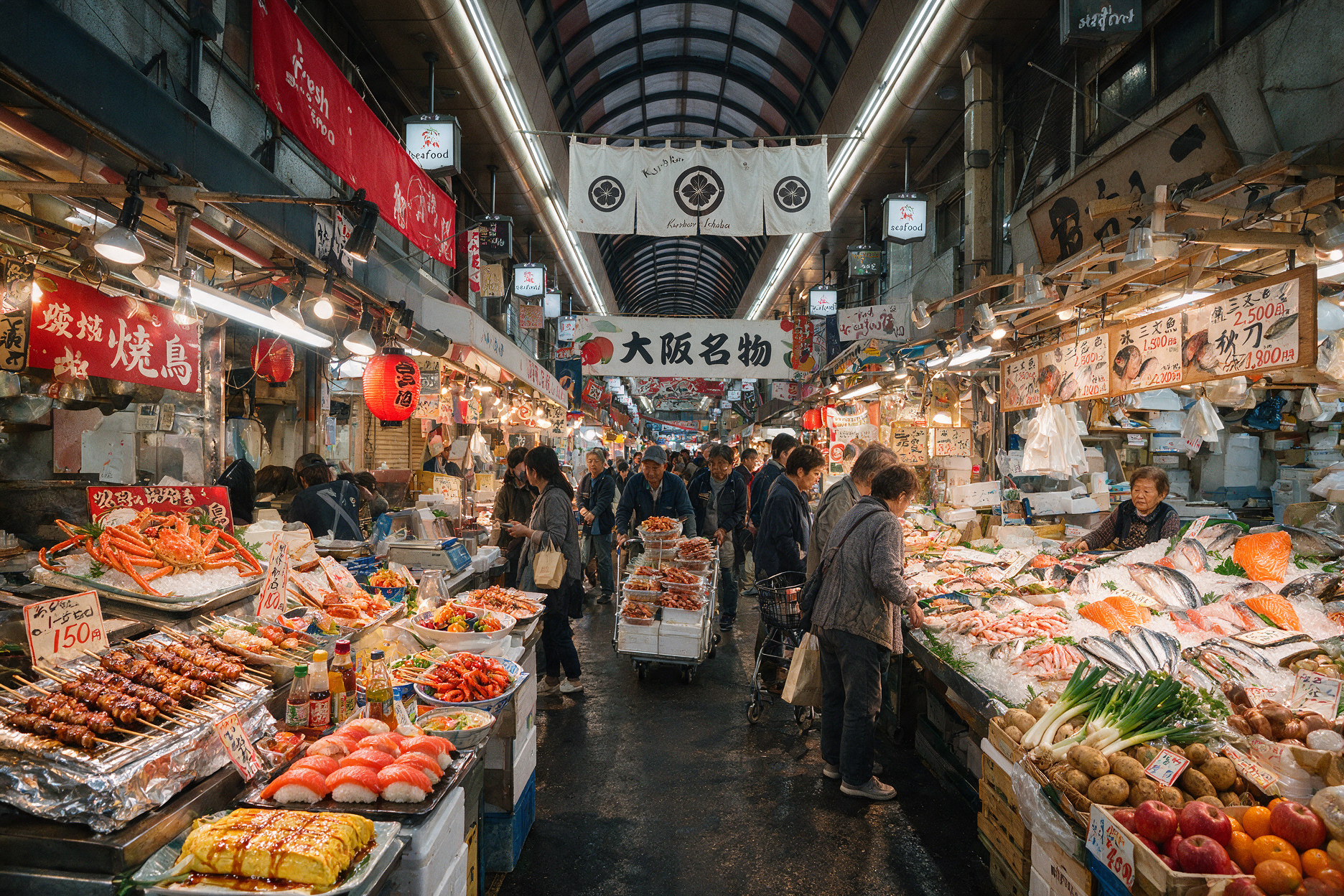
At 8:05am the gong at Kuromon Ichiba Market has barely stopped ringing and three Osaka grandmothers already have their eyes on the same tray of pickled cucumbers, elbowing past a cluster of tourists still deciding whether the ¥500 fried shrimp skewer is worth it. Nobody in sun hats is fighting for the pickles. That’s the tell. The locals know where the real food is, and it isn’t always the stall with the longest line.
Osaka doesn’t try to be Kyoto’s quiet temple cousin or Tokyo’s polished older sibling. It’s the loud, warm, slightly chaotic one that talks with its hands and judges you by what you just ate. There’s even a word for it — kuidaore, roughly “eat yourself bankrupt” — and once you’ve walked past your fourth takoyaki stand in twenty minutes, you’ll understand why it stuck. If you’re building a custom Japan itinerary or comparing Japan tour packages from India, Osaka is the city that rewards slowing down and eating like you live there, not the city you rush through between Kyoto’s shrines and Tokyo’s neon. This guide walks through what that actually looks like — market mornings, where locals eat versus where tourists get steered, getting around without overpaying, and the neighborhood most visitors skip entirely.
Table of Contents
- What “Kuidaore” Actually Means
- Morning Like a Local: Kuromon Ichiba Market Before the Tour Buses
- Eating in Dotonbori Without Falling for the Tourist Setup
- Getting Around: ICOCA Cards, the Metro, and the Osaka Amazing Pass Math
- Shinsekai and Janjan Yokocho: The Neighborhood Worth Wandering
- Osaka Castle Without Standing in Line for 45 Minutes
- Evening Osaka: Standing Bars, Izakaya, and How Not to Look Lost
- Best Time to Visit, How Many Days, and What It Costs from India
- Japan Visa for Indians in 2026
- FAQs
What “Kuidaore” Actually Means (And Why Osaka Eats Like This)
Osaka calls itself Japan’s kitchen, and it’s not marketing. Historically the city was the country’s rice and produce trading hub, which meant whoever controlled Osaka controlled what everyone else in Japan ate. Merchants built their status on hosting good meals rather than on rank or title, and that habit never really left. People here still greet each other with “mokari ma akka?” — roughly “are you making money?” — instead of Tokyo’s more formal pleasantries.
The dialect helps explain the mood too. Kansai-ben, the regional dialect spoken across Osaka, is quicker, more clipped, and leans harder into humor than the standard Japanese you’ll hear in Tokyo. Osaka produces most of Japan’s professional comedians for a reason; strangers here will joke with you at a ramen counter in a way that would feel unusually forward in Tokyo. It’s not rudeness. It’s just the local register, and once you clock it, the city feels a lot less formal than the rest of Japan.
Fun fact worth knowing before you go: the mechanical drum-playing clown doll outside a restaurant on Dotonbori — Kuidaore Taro — has been banging his little drum since 1950. The original restaurant he was named for closed in 2008, but Osaka kept the doll. He’s become the unofficial mascot of the whole kuidaore idea: eat first, worry about the budget later.
Morning Like a Local: Kuromon Ichiba Market Before the Tour Buses
Kuromon Ichiba Market opens at 8am with a gong, and the honest advice from vendors themselves is to show up before the rush — ideally before 9am on a normal day, before 8am if you’re there during a New Year sale period. By 10:30, the narrow covered alley is shoulder to shoulder with tour groups and the character of the place changes completely.
Here’s the part worth knowing: locals and tourists are often buying from entirely different stalls. Residents still come here for everyday staples — oden (simmered hot-pot ingredients) from places like Ishibashi Shokuhin, where you point at what you want for around ¥130 a piece, or pickled vegetables from century-old shops like Iseya Shoten, which has been fermenting cucumbers and cabbage since 1897. Nobody’s filming that for social media, which is exactly why it’s worth doing.
The stalls built for visitors are the ones with the queues: grilled wagyu skewers running ¥1,500 to ¥4,800, whole king crab legs priced from around ¥45,000, uni rice bowls, and the one-coin fried shrimp that specifically exists to catch a tourist’s eye mid-walk. None of this is a scam — the wagyu is genuinely good — but if you only eat the premium skewers, you’ve basically had the Kuromon equivalent of airport food. Mix in the ¥130 oden and you get a much better read on what the market is actually for.
A smart-spending habit here: budget most of your market spend on the ¥300–800 range items and treat one or two splurge bites (the wagyu, maybe the uni) as the exception, not the plan. You’ll eat better and spend less overall than someone grazing exclusively on premium skewers.
Eating in Dotonbori Without Falling for the Tourist Setup
Dotonbori is where every Osaka trip photo gets taken — the canal, the oversized crab signage, the Glico running man lit up over the bridge. It’s worth the one visit for the spectacle. It is not where a local eats dinner on a Tuesday, and it’s not where you should linger after dark without knowing what you’re walking into.
The honest caveat: Dotonbori’s main strip is also where Osaka’s cabaret-bar touts work the crowd, particularly after sundown. The pattern is consistent enough that local guides warn about it directly — a friendly tout invites you into a bar, and the bill arrives at ¥50,000-plus with cover charges and “service” fees buried in small print you weren’t shown beforehand. If someone approaches you on the street offering a good deal on drinks, that’s the moment to say no and keep walking, not the moment to be polite about it.
The food itself is genuinely good, you just have to know where to point. Takoyaki (battered octopus balls) and okonomiyaki (savory cabbage pancake) are the two dishes to actually eat here, and the trick locals use is simple: walk two minutes off the main canal-front strip. Restaurants directly facing the water and the big signage charge a premium for the view; the same dish from a shop one street back, with a line of actual Japanese customers rather than a photo queue, is usually better and 20–30% cheaper.
Two minutes southeast of the canal is Hozenji Yokocho, a narrow stone-paved lane lined with over 60 small restaurants, yakitori counters, and standing bars, built around a small temple with a moss-covered Fudo Myoo statue that locals still pour water over for luck. It’s close enough to Dotonbori to reach on foot in five minutes but feels like a different, quieter city. For a deeper dive into what to eat across the whole trip, our Japan food trail guide covers the rest of the country too, and if you’re traveling vegetarian or vegan, our vegetarian and vegan Japan food guide has Osaka-relevant options since several Dotonbori stalls can adapt dishes on request.
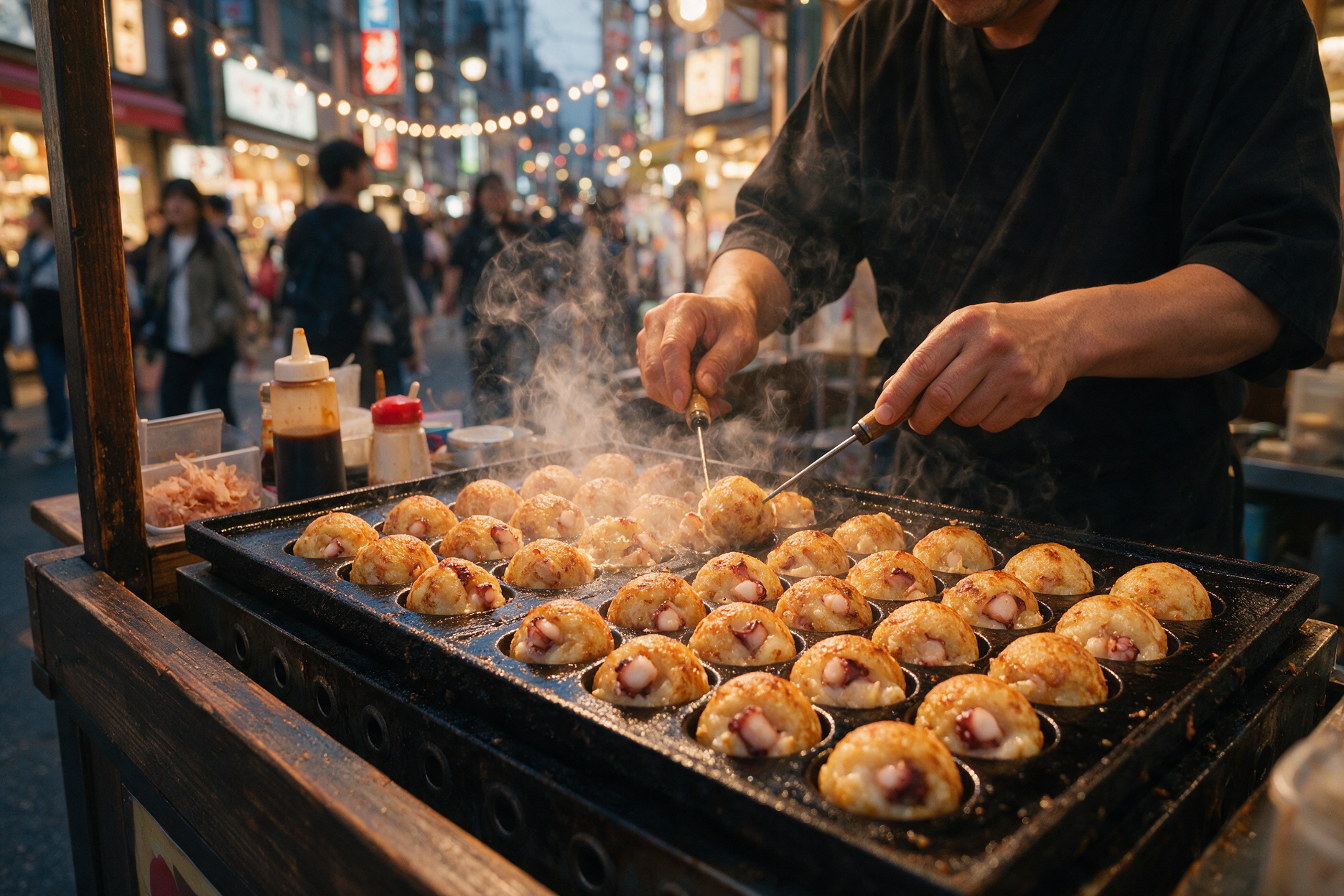
Mistake to avoid: don’t assume the restaurants with the biggest illuminated signage are the best ones. In Osaka, the louder the storefront, the more it’s usually built for a one-time tourist visit rather than repeat local business. Also keep small bills and coins handy — a few shops in the busiest tourist pockets have been known to count change quickly enough that it’s worth glancing at what you’re handed back.
Getting Around: ICOCA Cards, the Metro, and the Osaka Amazing Pass Math
Locals tap an ICOCA IC card on the Osaka Metro, JR, and buses and never think about it again — you can get one at any station and top it up as you go. For visitors trying to decide between passes, the math actually matters.
The Osaka Amazing Pass runs about ¥3,500 for one day or ¥5,000 for two days, and it bundles unlimited subway and bus travel with free entry to more than 40 attractions, including Osaka Castle (¥1,200 value), Tsutenkaku Tower, and a Dotonbori river cruise. The catch: it does not cover Universal Studios Japan or the Osaka Aquarium, which trips up a lot of first-time visitors who buy it assuming it does.
Transit tip: a plain Osaka Metro one-day pass (the Enjoy Eco Card) costs around ¥820 on weekdays and ¥620 on weekends, with no attraction entries included. Here’s the actual rule of thumb: if you’re hitting two or more paid attractions in a day — say, Osaka Castle plus Tsutenkaku Tower — the Amazing Pass pays for itself and then some. If you’re mostly wandering markets and eating your way through neighborhoods with maybe one paid stop, the plain transit pass is cheaper and you’re not carrying a card you’re not using. For the full rundown on IC cards, rail passes, and how it all connects beyond Osaka, our Japan transit guide covers the national picture, and Osaka Metro’s official site has live route planning if you want to map a day out in advance.
Shinsekai and Janjan Yokocho: The Neighborhood Worth Wandering
Most visitors make it to Dotonbori and stop there. Shinsekai, a 15-minute subway ride south, is the neighborhood that actually feels like old Osaka — a retro, slightly worn-at-the-edges district built in 1912 around Tsutenkaku Tower, with a kushikatsu culture (deep-fried skewers dipped in a shared communal sauce) that comes with one hard rule: no double-dipping. Dip once, eat, and if you want more sauce, use the cabbage provided as a scoop instead of your half-eaten skewer. Get this wrong and the shopkeeper will absolutely tell you.
Hidden gem, genuinely: tucked just off Shinsekai’s main strip is Janjan Yokocho, a narrow covered alley that most top-10 lists skip entirely in favor of Tsutenkaku Tower photos. It’s a time capsule of postwar Osaka — standing bars, an old-school shogi parlor, retro game arcades, and some of the cheapest, most honest eating in the city. Shops here cater to locals playing shogi over a beer, not to camera crews. Spend twenty minutes walking its length and you’ll have a better sense of old Osaka than an hour in Dotonbori gives you.
Photography tip: Shinsekai’s neon signage looks best at blue hour, about 20 minutes after sunset, when there’s still enough ambient light in the sky to balance the glowing signs instead of blowing them out. For Dotonbori’s famous Glico sign, skip the street-level selfie spot everyone’s fighting over and shoot from the Ebisu Bridge instead — you get the sign, its reflection on the canal, and fewer people’s shoulders in frame.
Osaka Castle Without Standing in Line for 45 Minutes
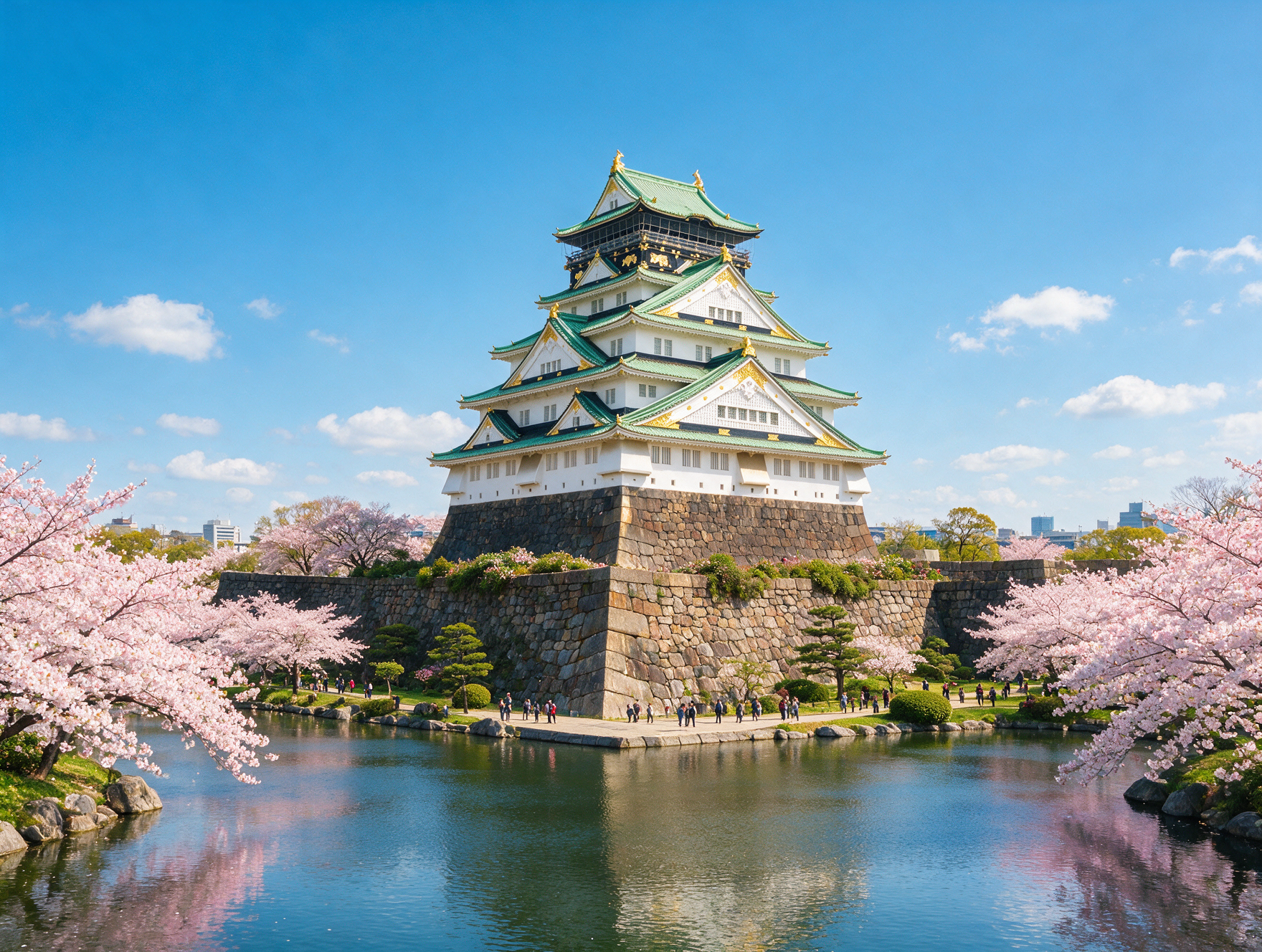
Osaka Castle’s main keep now costs ¥1,200 for adults, after a scheduled increase from the previous ¥600 price, and it’s open daily from 9am to 5pm with last entry at 4:30pm (closed December 28 to January 1). The building itself is a 1931 concrete reconstruction rather than the 16th-century original — which disappoints some visitors who expect centuries-old timber, but the museum inside does a genuinely good job covering the castle’s turbulent history, and the top-floor observation deck earns the climb.
Crowd timing is the real issue here, not the fee. During cherry blossom season in April and autumn foliage in November, elevator wait times can stretch past 45 minutes. Go right at opening, between 9 and 10:30am, before tour groups arrive, or come back in the 2 to 4:30pm window once the morning rush has cleared. Avoid the walk entirely in August if you can — it’s a 1.5 to 2 km walk from the nearest stations through open parkland with very little shade, and Osaka summer humidity is not polite about it.
Evening Osaka: Standing Bars, Izakaya, and How Not to Look Lost
Once the sun’s down, Osaka’s evening culture runs through small izakaya and tachinomi (standing bars), and the etiquette is simpler than it looks. You’ll usually get a small snack automatically with your first drink order (otsukeru) — it’s not optional and it’s not free, so don’t be thrown when it shows up unordered on the bill. Order as you go rather than all at once, and don’t expect to linger for hours the way you might at a Western bar; smaller counters turn tables, politely but firmly.
Juso Shonben Yokocho, one stop from Umeda on the Hankyu line, is the unfiltered version of this experience — cheap beer, lantern light, and a nickname that translates, bluntly, to “Piss Alley,” earned from decades as an unglamorous after-work drinking strip rather than a tourist stop. It’s not polished, and that’s the point.
For solo travelers: standing bars and counter-seat ramen shops are genuinely easier solo than in most cities — nobody blinks at one person eating alone, and counter seating means you’re never given an awkward table built for two.
For couples: Hozenji Yokocho after dark, lanterns lit and foot traffic thinner than Dotonbori, is the better evening wander. It’s romantic in the way a quiet old street is, not in the way a curated “romantic spot” on a map is.
Best Time to Visit, How Many Days, and What It Costs from India
If you’re weighing the best time to visit Japan generally, Osaka follows the same broad pattern as the rest of the country: late March to early April for cherry blossoms, October to November for autumn color, and both come with the heaviest crowds and the highest hotel rates. May and early June, and late September through early October, give you decent weather with noticeably thinner crowds and better room availability. July and August bring real heat and humidity — expect 30°C-plus days that make long outdoor walks, including the one to Osaka Castle, genuinely uncomfortable. December through February is cold but dry, and if you don’t mind a coat, it’s some of the cheapest airfare and accommodation pricing of the year.
Two full days is the realistic minimum to cover Kuromon Market, Dotonbori, Shinsekai, and Osaka Castle without rushing every stop. Three days lets you add a half-day trip toward Nara or Kyoto, both under an hour away by train, which is why most custom Japan itinerary plans built around Osaka treat it as a base for the wider Kansai region rather than a standalone stop. If you’re building out a longer trip, our 7 nights, 8 days Japan itinerary shows how Osaka slots into a wider loop, our seasonal Japan packing guide is worth checking before you pack for the humidity or the cold, and our guide to free things to do in Japan has budget-friendly stops to pair with Osaka’s paid attractions. The Japan National Tourism Organization and Osaka’s official tourism site are both solid for checking current hours and seasonal events before you go.
On what a Japan trip costs from India: Osaka sits in the mid-range to comfortable-luxury band depending on hotel choice, with daily food, transit, and attraction spend modest compared to flights and hotel nights. Costs shift with season and exchange rates enough that we’d rather talk you through real current numbers than print a figure that’s stale in three months — a conversation worth having with a Japan travel agency in Mumbai before you book.
For families: Kuromon Market’s mix of quick, bite-sized options is far easier with kids than a sit-down restaurant, and the Osaka Amazing Pass’s bundled attractions (Castle, Tsutenkaku, aquarium-adjacent sights) make for an easy day without constantly paying per stop. Japan family holiday packages built around Osaka tend to lean on exactly this — short walking distances, food variety, and an easy metro system.
For luxury seekers: Osaka’s high end shows up in omakase counters and private early-access castle visits rather than flashy resorts — it’s a city where the luxury is in the quality of a six-seat sushi counter, not the size of the lobby.
Japan Visa for Indians in 2026
Indian passport holders still need a visa for Japan — there’s no visa-free or visa-on-arrival entry. As of the Embassy of Japan’s current published rate, the visa fee is 500 INR plus a separate VFS Global service fee, down from the earlier flat ₹1,300-ish figure some older guides still quote, so don’t go by a number you saw a year or two back. Applications go through VFS Global with no advance appointment needed, and the embassy accepts applications from three months before your travel date. Japan’s e-visa system for Indian applicants, available through select consulates for single-entry tourist visas via JATA-registered travel agencies, has also been running since April 2024 and is generally the faster of the two routes.
You’ll typically need a passport valid well beyond your stay, a completed application form, a recent photograph, a day-by-day itinerary, flight and hotel reservations, and financial documentation. Transit visas have been abolished entirely, so even a layover inside Japan needs the full tourist visa sorted in advance. Apply 6 to 8 weeks ahead if you can — it removes almost all of the stress, and if you’d rather not manage the paperwork solo, that’s exactly what a Japan travel agency in Mumbai handles as part of booking Japan holidays.
For the full step-by-step, our Japan visa guide for Indian travelers goes deeper into documentation specifics, and the Embassy of Japan in India’s official visa page is the source to double-check before you apply, since requirements do shift.
FAQs
Do I need a visa to visit Osaka from India?
Yes. There’s no visa-free entry for Indian passport holders anywhere in Japan, Osaka included. You’ll apply through VFS Global or Japan’s e-visa system for tourist single-entry visas, ideally 6–8 weeks before travel.
How many days should I spend in Osaka?
Two full days covers the essentials — Kuromon Market, Dotonbori, Shinsekai, and Osaka Castle. Three days lets you add a day trip to Nara or Kyoto, both under an hour away.
Is Osaka cheaper than Tokyo?
Generally, yes, particularly for food and mid-range hotels, though it depends heavily on season and how you’re traveling. Street food and market eating in Osaka stretches money further than Tokyo’s equivalent dining scene.
What’s the best time to visit Osaka?
Late March to early April (cherry blossoms) and October to November (autumn color) have the best weather but the biggest crowds and highest prices. May, early June, and late September into early October offer a quieter, more comfortable middle ground.
Is Dotonbori worth visiting, or is it just a tourist trap?
It’s worth the one visit for the photo and the atmosphere, and the food can be genuinely good if you walk a street back from the canal. Just don’t make it your only food stop in Osaka, and be wary of anyone approaching you with a “great deal” after dark.
Can I get by without speaking Japanese in Osaka?
Mostly, yes — menus often have pictures, staff in tourist-heavy areas usually know enough English for ordering, and pointing works fine at market stalls. A translation app covers the rest.
Is the Osaka Amazing Pass worth buying?
Only if you’re visiting two or more paid attractions in a day. It covers transit plus entry to Osaka Castle, Tsutenkaku Tower, and 40-plus other spots, but not Universal Studios Japan or the aquarium. If you’re mostly eating and wandering, a plain metro day pass is cheaper.
What’s one thing in Osaka most tourists completely miss?
Janjan Yokocho in Shinsekai — a narrow, unpolished alley of standing bars and arcades that almost never makes top-10 lists, a short walk from the much more photographed Tsutenkaku Tower.
Osaka Rewards the People Who Slow Down
The version of Osaka worth having isn’t the one you see from a tour bus window between Dotonbori’s photo spot and the next stop on a checklist. It’s the one where you show up at the market before it gets busy, eat where the queue is locals rather than cameras, and wander one street past the loudest signage to find the quieter, better version of the same dish. None of that takes extra money. It mostly just takes going a little earlier and walking a little further than the crowd does.
If you’re mapping Osaka into a wider trip — Kyoto’s temples, Tokyo’s pace, a Shinkansen run between them — that’s the kind of custom Japan itinerary we build at Get Tripped: Japan tour packages from India that match how you actually want to travel, whether that’s a tightly scheduled 10-day loop or something slower. There’s endless discovery across Japan once you get past the checklist version of it, and Osaka is one of the best places to start.
Ready to book Japan holidays? Get in touch with our team to put together a custom Japan itinerary built around how you actually want to travel — and explore more of what we’ve covered on our Japan destination page.