Somewhere around 11:40pm on a Friday, the pedestrian scramble at Shibuya Crossing fills up for roughly the two-hundredth time that day, and nobody in the crowd looks tired of it. Office workers still in their ties stand shoulder to shoulder with backpackers, a group of university students in matching neon windbreakers films a TikTok, and the crossing lights change every ninety seconds like clockwork. This is the Tokyo most Japan tour packages from India don’t really prepare you for — the one that starts after dinner.
Tokyo’s nightlife reputation isn’t marketing. Shibuya, Shinjuku, Golden Gai, Roppongi — these names show up on real traveler itineraries, not just influencer reels, because the bars, alleys and rooftop lounges behind them have been operating for decades and, in Golden Gai’s case, since the 1950s. This guide is built from on-the-ground research into what’s actually open right now, what things cost in 2026, and what you genuinely need to know before you go — last trains, visa rules for Indian passport holders, and one or two things we’d tell a friend to skip. If you’re mapping out Tokyo and Kyoto tour packages or want a custom Japan itinerary that includes a proper night out, this is the honest version.
Table of Contents
- 1. Shibuya — Nonbei Yokocho and the Crossing Bars
- 2. Shinjuku & Kabukicho — Golden Gai’s Tiny Bars
- 3. Roppongi — International Crowd, Real Caution
- 4. Shimokitazawa — The Hidden Gem
- 5. A Proper Night Out: Tokyo’s Rooftop Skybars
- Getting Between Venues at Night
- What a Night Out Actually Costs
- Etiquette, Dress Code and What to Skip
- Safety Notes (Read This One)
- Best Time to Visit, and the Nightlife Angle
- Japan Visa for Indians in 2026
- FAQs
1. Shibuya — Nonbei Yokocho and the Crossing Bars
Shibuya is where most people start, and there’s a good reason: it’s loud, it’s visual, and it photographs well. The scramble crossing itself is free entertainment — stand on the Starbucks’ second floor with a coffee and you’ll get the view without paying a rooftop’s cover charge. But the actual party spots are a five-minute walk from the chaos.
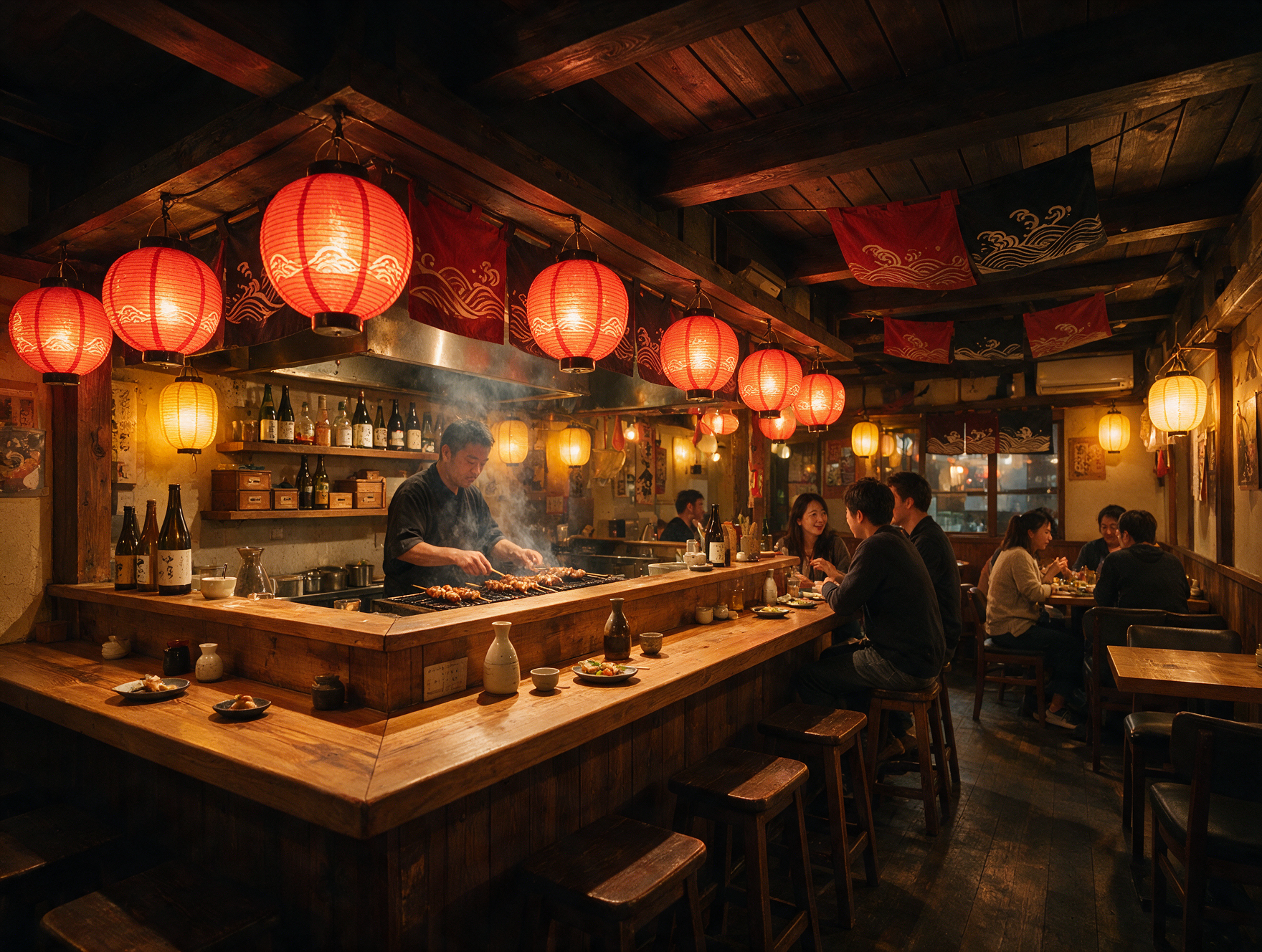
Nonbei Yokocho — “Drunkard’s Alley” — sits tucked behind Shibuya Station, a cluster of maybe 40 tiny bars under the train tracks that survived the area’s redevelopment. Each bar seats somewhere between four and ten people, which means you’re drinking shoulder-to-shoulder with whoever else walked in. It’s less polished than Golden Gai and gets fewer tour groups, which is exactly the appeal. Expect to pay 600–1,200 yen for a highball or beer, and check for a seating charge (otoshi) before you sit down — it’s usually posted near the door, and it’s bad form to ask after you’ve already ordered.
If you want something bigger and louder, the clubs around Shibuya’s Center Gai strip run until the early morning on weekends, with cover charges typically between 2,000 and 3,500 yen, often including one drink. Dress code is casual — sneakers are fine almost everywhere in Shibuya, which isn’t true everywhere else on this list.
2. Shinjuku & Kabukicho — Golden Gai’s Tiny Bars
Golden Gai is the one everyone’s heard of, and it mostly lives up to it. Picture six narrow alleys, barely wide enough for two people to pass, lined with over 200 bars stacked on top of each other — some with four barstools total. It started as a black-market district after the war and somehow never got bulldozed, even though the land underneath it is now some of the most expensive real estate in the city. That’s the fun fact worth knowing before you go: you’re drinking in a place that, by every normal rule of Tokyo real estate, shouldn’t still exist.
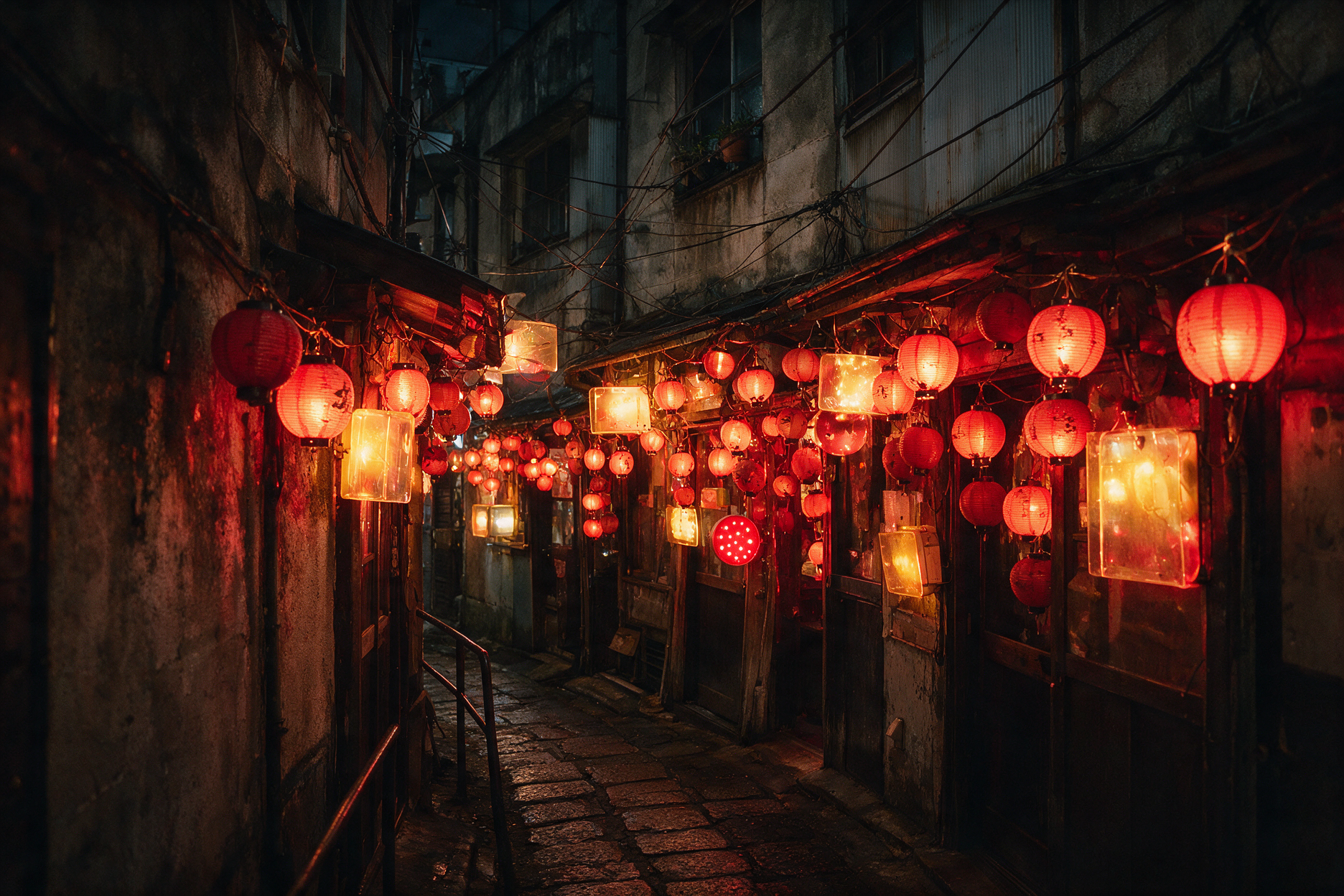
A few names worth knowing: Champion pours “one coin” drinks at 500 yen and leans into retro karaoke energy; Ace’s keeps a quieter, whisky-bar feel with drinks averaging around 1,000 yen; Orange Prince stays open until 5am if your night’s running long. Most bars open around 9pm (a handful from 5:30pm), charge no cover, and some — not all — post a “sleeping charge” of roughly 7,000–8,000 yen if you pass out at the bar, which is a fair warning and not really a scam. Cash is king here; plenty of these places don’t take cards. Look for a handwritten English menu taped to the door — that’s usually the signal a bar welcomes visitors who don’t speak Japanese, while an unmarked door might mean “regulars only.”
Two minutes away, Omoide Yokocho (“Memory Lane,” though older guides still call it by its much less polite nickname) is the yakitori-and-standing-bar alley to hit before or between drinks — smoke, charcoal, and skewers for 150–300 yen each. It’s less about getting drunk and more about the whole scene: old men on stools, a grill two feet from your face, a train rattling overhead every few minutes.
A mistake to avoid: a lot of older Tokyo nightlife posts still recommend the Robot Restaurant in Kabukicho as a can’t-miss stop. It closed during the pandemic and, as of this year, it hasn’t reopened — if you see it on a top-10 list without a recent date, that list hasn’t been updated in a while. Kabukicho itself is still worth a walk for the sheer visual overload of neon and signage, just don’t build your night around a venue that no longer exists.
3. Roppongi — International Crowd, Real Caution
Roppongi is Tokyo’s most foreigner-heavy nightlife district, which cuts both ways. The clubs here (several open past 5am) play more international music, staff speak more English, and it’s genuinely the easiest area to walk into somewhere without a local friend showing you the ropes. It’s also the district that comes up most often in safety warnings, and we’d be doing you a disservice not to say that plainly.
The U.S. Embassy in Tokyo has repeated a warning, most recently reiterated for 2025–2026, about drink-spiking and robbery cases concentrated in Roppongi and Kabukicho, usually linked to touts who approach tourists on the street and walk them into a bar with an inflated, undisclosed bill — or worse. The advice is simple and worth actually following: don’t go into a bar because someone on the street invited you, don’t accept a “free” drink from a stranger, and don’t carry more cash or cards than you need for the night. None of this means skip Roppongi — hundreds of thousands of travelers go through it safely every month — it means walk in with eyes open and stick with people you came with.
Worth it despite the caveat: Roppongi is genuinely the best area for a mixed group of friends with different tastes — EDM club, quiet whisky bar, late-night ramen, all within a ten-minute walk of each other.
4. Shimokitazawa — The Hidden Gem
This is the one that doesn’t make most top-10 lists, and it should. Shimokitazawa (locals just say “Shimokita”) is a ten-minute train ride from Shibuya but feels like a different city — fewer tour groups, more secondhand record shops, and a bar scene built around basements and backrooms rather than neon.
Teppen is a standing sake bar with a genuinely serious regional-sake list and light bar snacks, open until midnight and comfortable for someone drinking alone. Mother is a candlelit, slightly worn-in jazz bar upstairs above the main strip, the kind of place where the bartender will talk you through a whisky if you ask. If you’re into vinyl, a soul-and-funk record bar in the neighborhood runs DJ nights off actual pressings rather than a laptop — ask any Shimokita local and they’ll point you to it. The whole area is best after 6pm, when the vintage shops start closing and the bars take over.
This is the local tip we’d actually give a friend: do Shibuya or Golden Gai first for the energy, then take the ten-minute hop to Shimokitazawa afterward for something quieter and far less touristy to close the night.
5. A Proper Night Out: Tokyo’s Rooftop Skybars
Not every night in Tokyo needs to involve a standing bar and a crowd. For couples — honeymooners especially — or anyone who wants one upscale evening between the alley-hopping, Tokyo’s skybars deliver without the queue culture of a club.
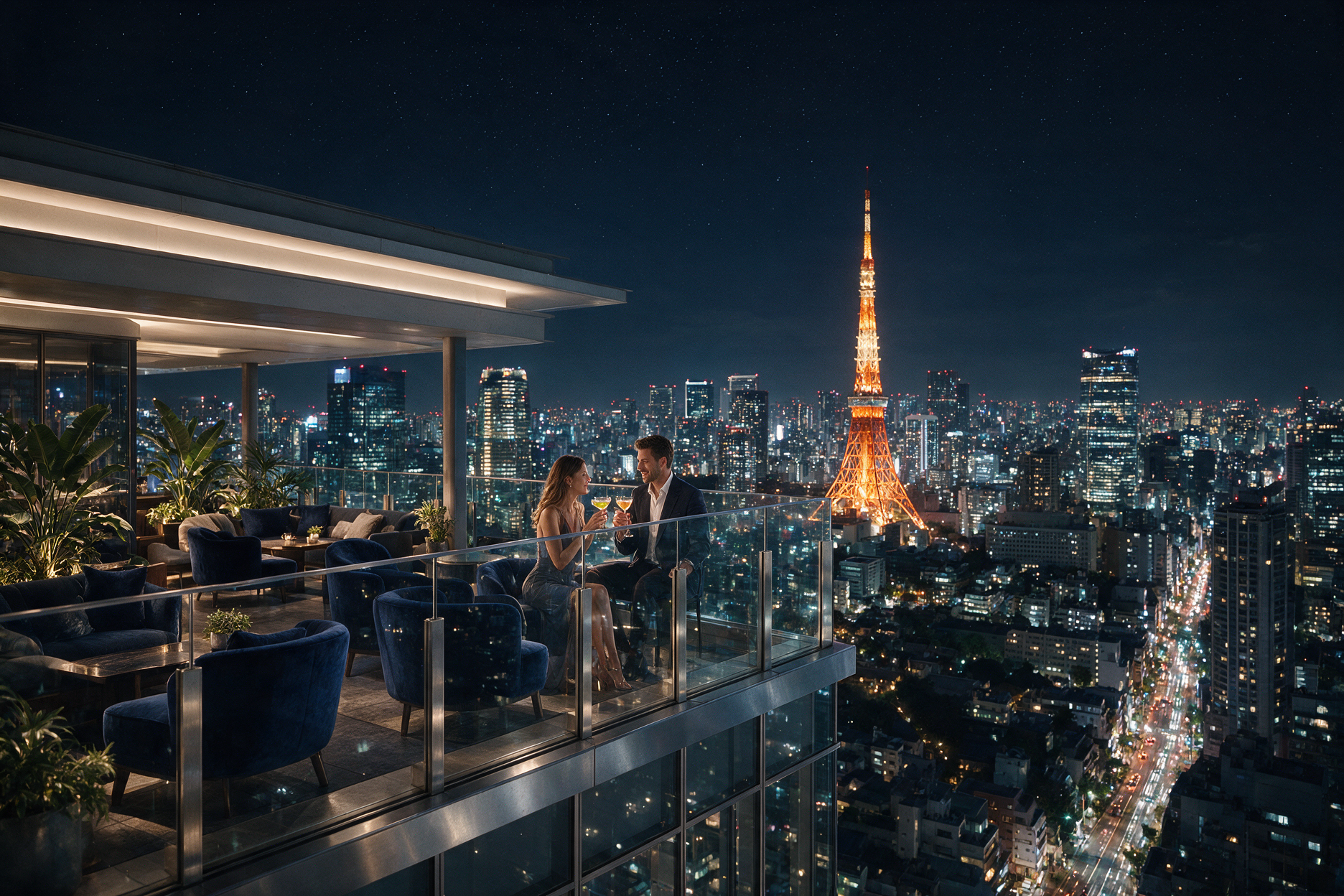
The Roof, at the top of Shibuya Scramble Square, sits roughly 230 metres above the exact crossing you were standing in earlier and runs seasonally (roughly eight months a year, so check availability before you plan the night around it). It’s reservation-only, serves a ticketed drink package — think a glass of champagne or a bottled cocktail collab with a local brewery — and on a clear evening you can pick out Tokyo Tower, Tokyo Skytree, and on the right day, Mount Fuji on the horizon. Go before sunset if you can; you get the daylight skyline and the lights coming on without a second trip.
Photography tip: skybars and Shibuya Sky’s open-air deck are the best legal, unobstructed wide shots of the city you’ll get without a drone. Golden Gai, on the other hand, is the opposite — many bars explicitly ban photography inside, and even in the alleys themselves, be quick and be respectful of other people’s faces in frame. The best Golden Gai photos are taken at dusk, right as the lanterns switch on but before it’s packed enough that you’re in everyone’s way.
Getting Between Venues at Night
Tokyo’s trains are the backbone of the city, and they stop running — this trips up more first-timers than almost anything else on this list. There’s no single “last train” time citywide; it depends on your line, station, and direction, and it can be anywhere from around 12:15am to just past 1am. Don’t assume — check your specific route on a transit app (Yahoo! Transit or Google Maps both work well) before you start the night, not after your third drink.
If you miss it, you’ve got four realistic options: a taxi (base fare around ¥500 for the first kilometre, then roughly ¥100 per 232 metres, plus a 20% late-night surcharge between 10pm and 5am — a Shibuya-to-Shinjuku ride can run 3,000–4,000 yen with the surcharge), an internet café or manga café with overnight booths, a karaoke place with a late-night free-time rate (often with a minimum drink order), or a capsule hotel if you book ahead and confirm they can check you in at 2am. None of these are emergencies — they’re normal parts of a Tokyo night out — but knowing the options before you need them saves a lot of 1am stress.
Transit tip: load a Suica or Pasmo IC card onto your phone or buy a physical card at the airport — tapping through gantries is faster than fumbling for a paper ticket when you’re trying to catch a train with six minutes to spare. If your trip is also taking you out of the city, our guide to getting around Japan covers the JR Pass math and regional trains in more depth.
What a Night Out Actually Costs
Tokyo nightlife isn’t cheap, but it isn’t the eye-watering experience some travelers expect, if you know where the hidden charges sit. Rough per-person budgets: a casual evening in Shimokitazawa or Nonbei Yokocho runs 3,000–5,000 yen; a Golden Gai crawl across two or three bars lands around 4,000–7,000 yen with seating charges factored in; a club night in Roppongi or Shibuya with cover and a few rounds is closer to 6,000–10,000 yen; and a skybar evening for two runs 8,000–15,000 yen per person. None of that counts the taxi home if you miss the last train.
Smart-spending tip, not a cheap-out tip: if you’re bar-hopping with a group of four or more, ask an izakaya about a nomihodai (all-you-can-drink) set for a fixed 90 or 120 minutes rather than ordering round by round — it’s usually better value the moment your group orders more than two rounds each, and it removes the awkward “whose turn to pay” math. It’s a value play, not a budget one; you’re still getting the same drinks, just at a flat, known price.
If you’re pricing out the whole trip rather than just the nights out, Japan trip cost from India varies hugely by season and hotel tier, but nightlife itself is rarely the line item that blows a budget — flights and accommodation usually are.
Etiquette, Dress Code and What to Skip
Dress codes in Tokyo nightlife are more about tier than strictness. Golden Gai, Nonbei Yokocho, and Shimokitazawa are genuinely come-as-you-are — jeans and sneakers are the uniform. Roppongi’s bigger clubs sometimes turn away flip-flops or athletic shorts after a certain hour. Rooftop skybars and hotel lounges lean smart-casual — a collared shirt and real shoes will get you in anywhere; shorts and sandals might not.
A few etiquette notes that matter more in tiny bars than big clubs: don’t sit down before checking if there’s a seating or cover charge, don’t take photos inside without asking, keep your voice down in alleys like Golden Gai where bars are separated by thin walls, and tip isn’t expected or even really understood — rounding up or leaving exact change is normal. If a bar’s door sign says “members only” or similar in Japanese with no English, that’s a cue to try the next one rather than push it.
Safety Notes (Read This One)
Japan remains one of the safest countries in the world for travelers, including at night, and that’s not a brand talking point — it’s reflected in how comfortable solo female travelers in particular report feeling walking around Tokyo after dark, which isn’t true of most major cities this size. That said, the specific drink-spiking and tout warnings for Roppongi and Kabukicho mentioned earlier are real, current, and worth repeating as a standalone note rather than burying it in the venue sections: avoid entering a bar because a stranger on the street invited you in, decline unsolicited “free” drinks, and keep your group together on the walk back, especially past 1am when the crowds thin out and the touts are more persistent. If something does go wrong, Japanese police (110) respond quickly and English support lines exist at most major police boxes (koban) in nightlife districts.
Best Time to Visit, and the Nightlife Angle
Best time to visit Japan overall is spring (late March–April, for cherry blossoms) or autumn (late October–November, for foliage) — mild weather, comfortable for alley-hopping without freezing or sweating through your shirt. Summer nights run humid above 30°C; January is cold and dry but clearer, which means better odds of a Mount Fuji sighting from a rooftop skybar. If your trip covers places to visit in Japan beyond Tokyo, pair nightlife-heavy city nights with a quieter daytime circuit — our 7 nights, 8 days itinerary guide is built around exactly that rhythm.
Travelers often base themselves in Shinjuku for the nightlife and realize the next morning that a day trip is easy from there — a Shinjuku to Kamakura travel itinerary is a popular pairing, swapping neon for temple grounds and the coast in under an hour by train. Pair it with nearby Enoshima and you’ve got a solid Kamakura and Enoshima day trip, including a ride on the quirky Shonan monorail that hangs suspended from its track above the road — it’s a genuinely odd bit of engineering worth the detour on its own.
Japan Visa for Indians in 2026
Indian passport holders still need a visa to enter Japan for tourism — this hasn’t changed for 2026, despite the occasional forum post suggesting otherwise. You have two routes: the traditional sticker visa through VFS Global, or Japan’s eVisa system, introduced in 2024 for short-term tourism, which is faster for most straightforward leisure trips. Either way, it’s a single-entry tourist visa good for a stay of up to 90 days, valid for three months from the date it’s issued, and it doesn’t permit paid work.
Documents typically required: a passport with at least two blank pages, your biodata page photocopy, a completed application form with a passport photo, flight and accommodation details, and financial proof (recent income tax returns or salary slips). Processing takes a minimum of five working days, though well-documented applications have reportedly cleared faster. Current fees sit around ₹450–500 for the visa itself plus an ₹800 VFS service fee, though Japan has signaled its first visa fee revision since 1978 may land sometime in 2026, so double-check the latest number before you apply. For the authoritative, current requirements, start with the Japanese Consulate’s visa page for Indian nationals rather than a travel blog’s summary of it — ours included. We’ve also got a dedicated Japan visa guide for Indian travelers that walks through the paperwork step by step.
FAQs
Is it safe to go bar-hopping alone in Tokyo as a woman?
Generally, yes — Tokyo is one of the more comfortable major cities in the world for solo travelers after dark. The caveats above about Roppongi and Kabukicho touts apply regardless of gender; stick to well-lit main streets between venues and you’re fine.
Do I really need a visa to visit Japan from India in 2026?
Yes. There’s no visa-free or visa-on-arrival access for Indian passport holders as of 2026 — you’ll need either the eVisa or a VFS Global application before you fly.
What time do bars close in Tokyo?
It varies hugely — some Golden Gai bars shut by 2am, others like Orange Prince run to 5am, and clubs in Roppongi and Shibuya often go until the first trains start again around 5am. Check the specific venue rather than assuming.
Is Golden Gai a tourist trap?
Some bars lean touristy with English menus and higher prices, but plenty are still genuinely local. The “sleeping charge” some bars post isn’t a scam — it’s a flat fee for falling asleep at the bar, clearly posted on the door.
Is the Robot Restaurant still open?
No — it closed during the pandemic and hasn’t reopened as of 2026. Skip any list that still recommends it without a recent update.
What should I wear to go out in Tokyo?
Casual works for Golden Gai, Nonbei Yokocho and Shimokitazawa. Smart-casual (collared shirt, real shoes) is safer for Roppongi’s bigger clubs and any rooftop skybar.
What happens if I miss the last train?
Taxi, a 24-hour internet café, a late-night karaoke booth, or a pre-booked capsule hotel — all normal, all used by locals too. Budget roughly 3,000–4,000 yen for a cross-city taxi with the late-night surcharge.
How many days should I plan for Tokyo nightlife plus sightseeing?
Three to four nights in Tokyo is enough to cover these five spots without rushing, leaving daytime free for temples, markets and museums — most full Japan trips from India build this in as part of a wider 10 days travel itinerary covering Kyoto and Osaka too.
The Honest Takeaway
Tokyo’s nightlife earns its reputation because it’s specific — a 200-bar alley that shouldn’t exist, a skybar 230 metres above the crossing you walked through at street level, a quiet jazz bar in a neighborhood most tour groups skip entirely. Pick two or three of these five, pace yourself, check your last train before your third drink, and you’ll have a night that’s a lot more interesting than “we went to a club.” That’s the whole philosophy behind endless discovery Japan travel — the country rewards curiosity whether it’s 9am at a temple or 1am in an alley with four barstools.
Planning the rest of the trip around it? Get Tripped builds custom Japan itineraries — Tokyo and Kyoto tour packages, standalone city breaks, or a full Japan vacation package with the nightlife, the shrines, and the food trail mapped out together. Searching for a Japan travel agency in Mumbai, Delhi, Bangalore or anywhere else in India, our team plans it the same way either way: properly, and with the details that actually matter checked. Browse our Japan destination page or get in touch to book Japan holidays built around what you actually want out of the trip.
For the rest of your Tokyo planning, our related guides cover Japan’s food trail, a dedicated vegetarian and vegan food guide, what to pack by season in our Japan packing guide, and — for the daytime hours between nights out — our list of free things to do in Japan. For official, up-to-date travel information straight from the source, the Japan National Tourism Organization and Tokyo Metro’s official site are both worth bookmarking before you go.