Seven nights in Kenya sounds generous until you start laying a map in front of you and realise the Maasai Mara, Amboseli, and Lake Nakuru aren’t exactly neighbours. This Kenya 7 days travel itinerary is the one we actually build for clients at Get Tripped when they want the real safari trio — not a compressed, exhausting version of it. We’ve sat with the drive times, the flight schedules out of Nairobi’s Wilson Airport, and the current park fees so the plan below is something you could hand to a driver-guide tomorrow and it would work, not just read well.
If you’ve been comparing Kenya tour packages from India, searching for Kenya safari packages from India, or specifically Masai Mara tour packages, and keep seeing itineraries that casually bolt a beach extension onto the same seven nights, we’ll explain why we don’t do that below. Short version: Amboseli to the Mara by road is a nine-hour slog through Nairobi traffic, and nobody enjoys game drives on no sleep.
In This Guide
- Why we route this trip Nairobi → Lake Nakuru → Maasai Mara → Amboseli, and not some other order
- The full day-by-day plan, with real drive and flight times
- Where to stay at each stop, mid-range and luxury
- What this actually costs in USD and INR
- How to adapt it — add Diani Beach, swap in Mount Kenya, go family-friendly or honeymoon-quiet
- Straight answers to the questions people actually ask us before booking
Why This Route, and Not a Beach Add-On
Get Tripped’s own Kenya destination page lists six signature places, and the obvious temptation is to try to hit all six in one trip: Nairobi, the Mara, Amboseli, Lake Nakuru, Diani Beach, and Mount Kenya. In seven nights, that’s not an itinerary, that’s a greatest-hits tour of airport lounges.
We checked the actual logistics. Amboseli to the Maasai Mara by road is roughly 494 km and over nine hours in normal traffic, almost all of it funnelled back through Nairobi anyway. There’s no sensible direct flight pairing either. So any 7N/8D plan that tries to do Mara, Amboseli, and Diani Beach is either lying about the driving or cutting every stop down to one rushed night.
What does work in eight days is Nairobi as your bookend city, Lake Nakuru as a genuinely worthwhile two-night stop on the way to the Mara (not just a drive-through), two full nights in the Mara itself for at least four proper game drives, and a final two nights in Amboseli for the Kilimanjaro backdrop and the elephant herds. That’s four distinct Kenyan landscapes without a single day lost purely to travel fatigue. If you want Diani Beach or Mount Kenya too, we’ll tell you exactly how to bolt them on further down — just not inside this particular seven nights.
Kenya 7 Nights, 8 Days Itinerary: Day by Day
Day 1: Arrive Nairobi
Most flights from India land into Jomo Kenyatta International Airport (JKIA) in the late morning or early afternoon — Kenya Airways runs this route direct from Mumbai, which is the easiest way in. Clear immigration, get your eTA sorted before you fly (more on that in the FAQs), and head to your hotel.
Don’t plan a game drive today. For things to do in Nairobi on an arrival afternoon, stick to two options: the Giraffe Centre, where Rothschild’s giraffes will happily eat a pellet out of your flat palm, or the Sheldrick Wildlife Trust’s elephant orphanage if you time the 11am feeding viewing (check it’s still running that slot before you go, hours shift). Stay at the Nairobi Serena Hotel for comfortable mid-range, or Hemingways Nairobi in Karen if you want a genuinely luxury opener to the trip. Overnight Nairobi.
Day 2: Nairobi to Lake Nakuru National Park
Up early and on the road by 7:30am. The drive to Lake Nakuru is about 160 km and takes roughly 2.5 to 3 hours, dropping down the Rift Valley escarpment with Mount Longonot visible off to your left on a clear morning.
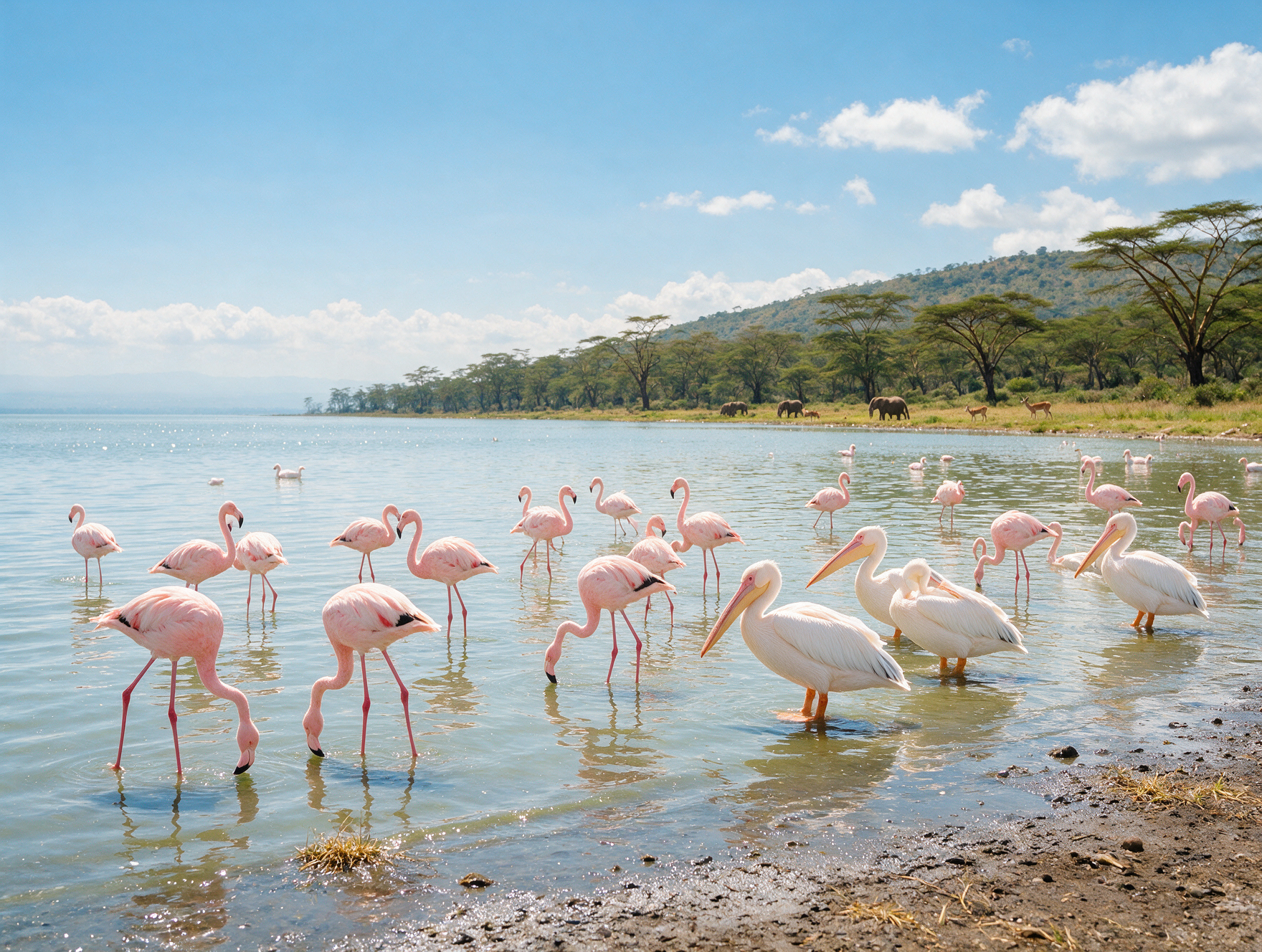
Lake Nakuru is the one most itineraries undersell. Yes, it’s the rhino sanctuary — both black and white rhino, inside a fenced park, which means better odds of a sighting than almost anywhere else in Kenya. But it’s also genuinely one of the better photography stops on this whole trip, with the lake’s shoreline occasionally pink with flamingos depending on water levels that year (they move between Nakuru and nearby Lake Bogoria depending on algae conditions, so don’t go in expecting a guaranteed wall of pink — ask your lodge what the lake looked like that week).
Arrive by early afternoon, check in, and head straight into an afternoon game drive. Stay at Sarova Lion Hill Game Lodge, perched on the hillside inside the park with views down over the lake, or the more budget-conscious Lake Nakuru Lodge. Overnight Lake Nakuru.
Day 3: Lake Nakuru to Maasai Mara National Reserve
One more short game drive at dawn if your lodge allows an early gate entry, then the longer haul to the Mara: about 260 km and 4 to 5 hours, mostly via Narok town. The Narok–Sekenani stretch has been resurfaced in recent years, which has cut meaningful time off this leg compared to a decade ago, but Narok itself is also your last reliable ATM and fuel stop, so use it.
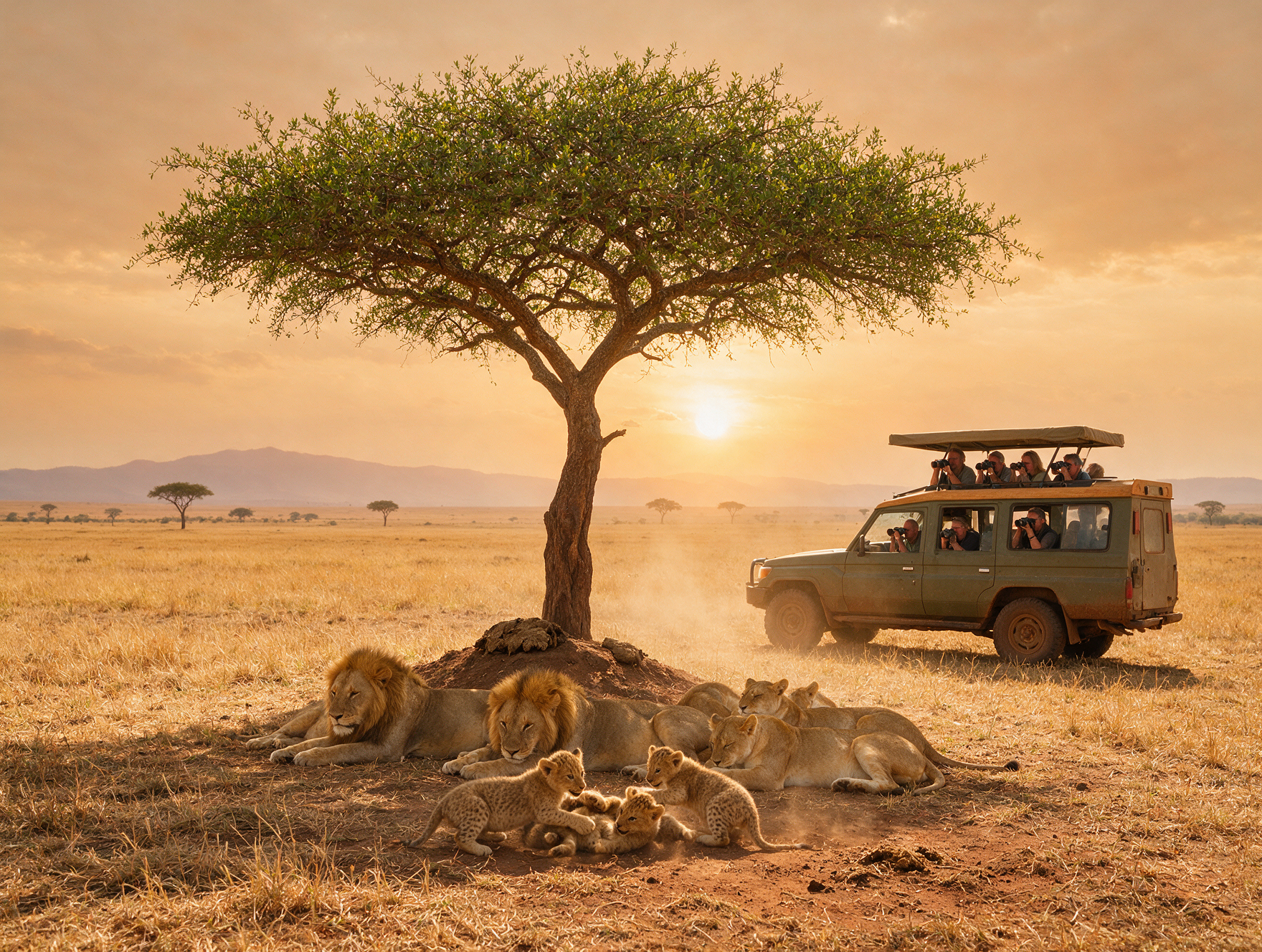
You’ll reach your camp by mid-afternoon, with just enough daylight left for a short evening game drive before sundown. This is also when it clicks that you’re in proper Big Five country — the light changes, the bush smells different, and your driver-guide will almost certainly spot something within the first twenty minutes. Stay at Mara Serena Safari Lodge, built on a hill with a 360-degree view that’s hard to beat for the price, or Angama Mara if you want one of the most photographed views in East Africa from your room. Overnight Maasai Mara (night 1 of 2).
Day 4: Full Day in the Maasai Mara
This is the day the whole trip is built around. Two full game drives — early morning and late afternoon — with a midday break back at camp when the heat flattens animal activity anyway. If you’re asking about Great Migration Kenya best time, late July through October is the window to target, and this is when you have a real shot at a Mara River crossing, though no operator can promise one; the wildebeest move on their own schedule, not a tour itinerary’s.
Honest opinion: skip the hot-air balloon safari unless budget genuinely isn’t a factor. It’s beautiful, but at $450–550 per person for 45 minutes, a second proper game drive with your guide usually finds you more wildlife for a fraction of the cost. Overnight Maasai Mara (night 2 of 2).
Day 5: Maasai Mara to Amboseli National Park
This is the one travel day on the whole trip, so we’re upfront about it. A direct road transfer from the Mara to Amboseli runs over nine hours through Nairobi, which is a wasted day. Instead, take an early morning game drive, then fly from the Mara’s airstrip back to Nairobi (Safarilink and AirKenya both run this route, roughly 45 minutes to an hour in the air), and continue by road to Amboseli, which is about 240 km and 4 hours from Nairobi via Namanga Road.
It’s a full day of moving, no question. If your group would rather split it, an easy adaptation is an overnight in Nairobi between the flight and the Amboseli drive — we cover that trade-off in the adapt-the-itinerary section below. Stay at Ol Tukai Lodge, inside the park with unobstructed Kilimanjaro views on a clear morning, or Tortilis Camp for a more private, tented luxury base just outside the park boundary. Overnight Amboseli (night 1 of 2).
Day 6: Full Day in Amboseli National Park
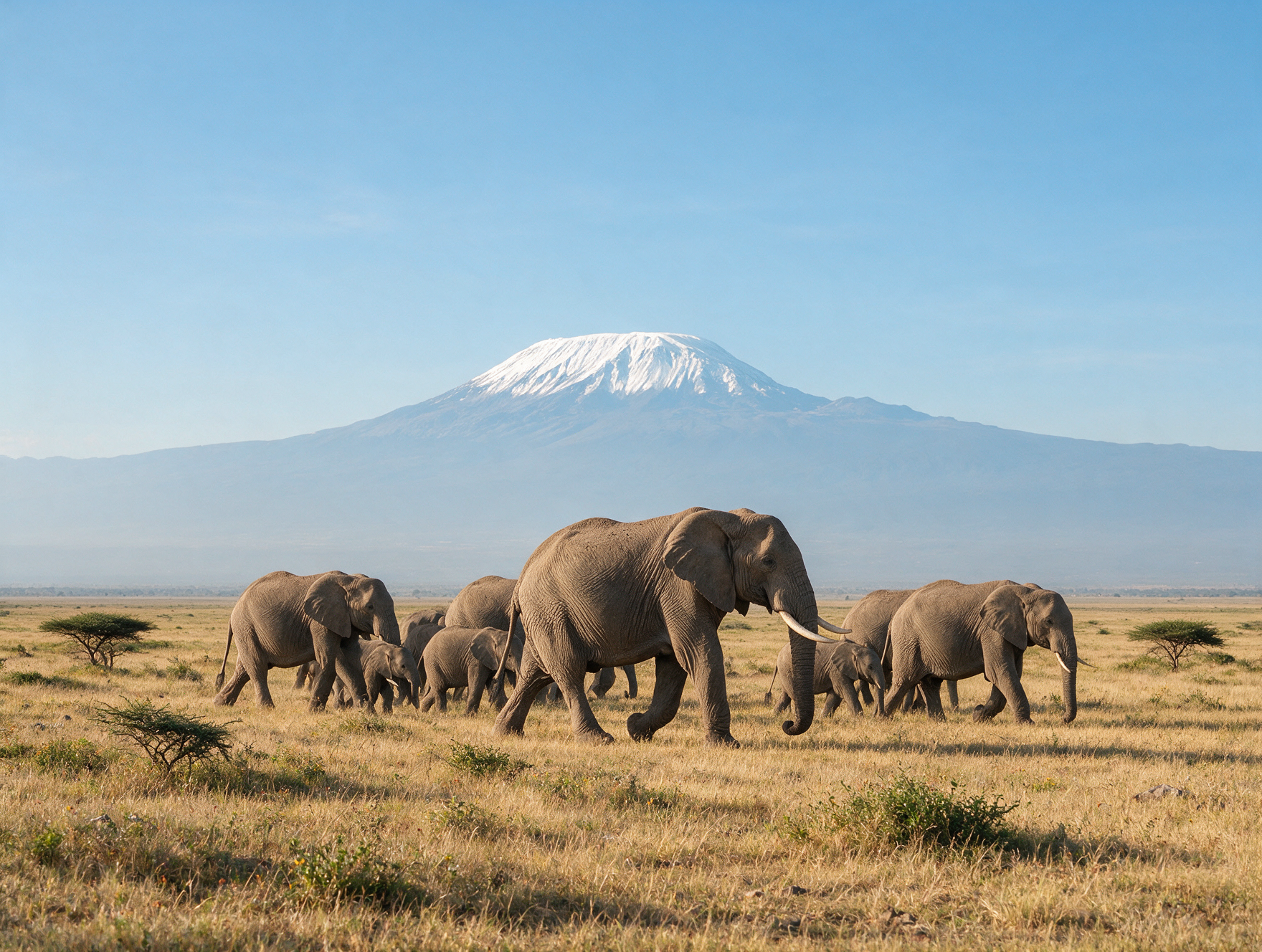
Amboseli’s whole personality is the contrast: flat, dusty savannah with Africa’s tallest mountain floating above it, snowcap and all, usually clearest before 9am before cloud builds up around Kilimanjaro’s peak. Plan your first game drive early for exactly that reason — this is also the single best photography window of the entire trip. Shoot with the mountain behind the elephant herds in the low gold light around 6:30–7:30am, and skip trying for the same shot past mid-morning once the cloud rolls in.
Amboseli is also where Kenya’s famous “big tuskers” live — a small, genetically distinct population of elephants whose tusks grow long enough to occasionally scrape the ground, a trait almost wiped out elsewhere in Africa by decades of poaching pressure on exactly those animals. Seeing one is luck, but the population here is better protected than almost anywhere else on the continent. Overnight Amboseli (night 2 of 2).
Day 7: Amboseli to Nairobi
A final early game drive, then the 4-hour drive back to Nairobi. You’ll arrive by mid-afternoon with time for the Maasai Market if it’s running that day (it rotates locations through the week), or just a proper sit-down dinner before your flight home. Overnight Nairobi.
Day 8: Departure
Transfer to JKIA for your flight home. If your flight’s in the evening, a half-day at the Nairobi National Museum or the Karen Blixen Museum is a good, low-effort way to use the extra hours without starting a new activity you’ll have to cut short.
What This Trip Actually Costs
Land costs on a mid-range to luxury Kenya trip run on daily per-person rates, not flat packages, which is why two quotes for “the same” itinerary can look wildly different. Based on current 2026 rates:
- Mid-range (comfortable lodges, shared 4×4 game drives, full board): roughly $300–450 per person per day, which puts this 7-night itinerary around $2,800–4,200 per person land-only — approximately ₹2,45,000–3,70,000 at current exchange rates.
- Luxury (premium camps, private vehicle and guide, smaller properties): roughly $600–1,000+ per person per day, putting the same seven nights at $5,500–8,500+ per person — roughly ₹4,85,000–7,50,000+. This is the bracket most luxury Kenya safari packages actually sit in once you add internal flights and private-vehicle supplements.
On top of land costs, budget for: round-trip international airfare from Mumbai or Delhi to Nairobi (Kenya Airways flies this route directly; economy fares typically run $500–750 depending on season), the Kenya eTA (around $30 per person), the Mara-to-Nairobi domestic flight (roughly $180–240 one way per person), and guide gratuities (a common local norm is $15–25 per person per day).
Park fees are usually already folded into your quoted land cost, but it’s worth knowing what you’re paying for: Lake Nakuru and Amboseli both charge foreign non-residents around $90 per adult per day under Kenya Wildlife Service rates, while the Maasai Mara (run separately by Narok County, not KWS) charges $100 per adult per day in the January–June low season, rising to $200 per day from July through December — which is exactly why a Mara-heavy trip costs noticeably more if you travel during migration season.
One mistake we see often: travellers compare a quoted price against a generic “Kenya safari cost from India” number they found online without checking whether park fees, internal flights, and gratuities were actually included. Always ask what’s excluded, not just what’s included.
How to Adapt This Itinerary
This 7N/8D plan is a strong default, not the only option. A few ways we commonly adjust it for clients:
- Add Diani Beach: If you can stretch to 10–11 nights, tack three nights onto the end at Diani. Fly Nairobi to Mombasa (around 1 hour, multiple daily flights) rather than attempting it by road. This is the version we build most often for Kenya honeymoon packages from India — safari first, beach decompression after.
- Swap Amboseli for Mount Kenya: If you’d rather hike than do a second big-game park, replace Amboseli with 2–3 nights near Mount Kenya National Park. It’s a very different trip — forested slopes and highland lodges rather than open savannah — and suits travellers who’ve already done a classic safari before.
- Drop Lake Nakuru, add a day to the Mara: If rhino sightings aren’t a priority for your group, cutting Nakuru and flying Nairobi–Mara directly frees up a full extra day inside the Mara — useful during the July–October migration window when more drive time genuinely pays off.
- Families: Good Kenya family holiday packages request lodges with family tents or interconnecting rooms (Mara Serena and Ol Tukai both offer these) and build in a lighter midday break on game drive days — young kids tend to flag faster than adults expect on the Nakuru-to-Mara driving day specifically.
- Kenya and Tanzania combined: The Mara sits right on the Serengeti border, and some travellers ask about Kenya and Tanzania tour packages that cross between the two. It’s possible, but it adds a border crossing and usually another 3–4 days minimum — worth a separate conversation rather than squeezing into this itinerary.
Frequently Asked Questions
Is 7 nights enough for a Kenya safari?
Yes, for this specific route. Seven nights covering Nairobi, Lake Nakuru, the Maasai Mara, and Amboseli gives you two full game-drive days in the Mara and two in Amboseli, which is enough to see the signature wildlife of each without feeling rushed. It’s not enough to responsibly add a beach extension in the same seven nights — that needs extra days, not a shorter stay elsewhere.
What is the best time to visit Kenya for this itinerary?
The dry seasons — June to October and January to February — give you the easiest roads, the clearest Kilimanjaro views from Amboseli, and the best general wildlife visibility since animals cluster near water sources. July through October also overlaps with the Great Migration in the Mara, though that’s also when Mara park fees roughly double and lodges get booked up months out. The green season (March to May) is quieter and cheaper, with dramatically lush scenery, but some roads get genuinely difficult after heavy rain.
Is Kenya safe for Indian tourists?
Nairobi and the safari circuit covered in this itinerary are well-established tourist routes with no particular issues specific to Indian travellers — Kenya has a sizeable Indian-origin population and a long-standing trade relationship with India, so you’re not an unusual visitor there. Standard city precautions apply in Nairobi after dark, same as any major capital, and lodges inside the parks are fenced and staffed. We’d always recommend travelling with a vetted local operator and driver-guide rather than self-driving the park roads, which get genuinely tricky without local knowledge.
Do I need a visa or eTA for Kenya as an Indian citizen?
Kenya requires an electronic travel authorisation (eTA) for all visitors, applied for online before departure, which has replaced the older visa-on-arrival and e-visa systems. Apply well ahead of your trip rather than at the airport, and double-check the current process through Kenya’s official diplomatic visa guidance before you fly, since entry requirements have changed more than once in recent years.
Can I combine the Mara, Amboseli, and Diani Beach in one trip?
Not comfortably in seven nights — see the routing explanation earlier in this guide. If the beach matters to you, plan for 10–11 nights total so the Mara and Amboseli legs aren’t rushed to make room for it.
What should I pack for a Kenya safari in October?
Early mornings in open vehicles are genuinely cold, especially in the Mara and at Lake Nakuru’s altitude, so a proper layer for 6am game drives matters more than most people expect. We cover full seasonal packing lists in a separate guide, but as a baseline: neutral-coloured clothing, a warm layer for dawn drives, sun protection for midday, and a dust-resistant bag for camera gear.
How much does a Kenya safari cost from India, all in?
For this exact itinerary, expect roughly $3,500–5,500 per person all-in for a well-run mid-range trip (including international flights from India), or $6,500–10,000+ per person for a luxury version. Couples and families should ask for a tailored quote, since group size changes vehicle and camp pricing significantly.
The Honest Takeaway
The best Kenya trips we build aren’t the ones that try to touch every famous name on the map. They’re the ones that respect how far apart those places actually are and build the days around that reality. Nairobi, Lake Nakuru, the Maasai Mara, and Amboseli in seven nights gives you rhinos, flamingos, lions, and elephants under Kilimanjaro without a single day lost to a drive that should’ve been a flight, or a flight that should’ve been a rest day.
If you want this exact plan adjusted for your dates, your budget, or your group — swap in Diani, shift the migration timing, add a honeymoon night at Angama — that’s exactly what a custom Kenya safari itinerary from Get Tripped is for. Whether you’re reaching out as a Kenya travel agency in Mumbai client or from anywhere else in India, you can book Kenya safari holidays with us built around park fee seasons, flight schedules, and lodge availability as they stand today, not a template from three years ago. Get in touch and we’ll have a draft route back to you within a couple of days.