Most people who come to Diani Beach have just finished a safari. They’ve had five days of early mornings and game drives, and they want to do absolutely nothing for three days except lie down near water. Diani is good at that. But the beach town has more character than a resort stay reveals — a fishing village community just behind the main hotel strip, a reef snorkelling culture that most guests never touch, and a weekday rhythm very different from the weekend when the Nairobi crowd arrives. This is a guide to settling into Diani like someone who knows it, rather than checking out of the beach as soon as checkout time comes.
Table of Contents
- Morning: The Reef at Low Tide
- Where Locals Actually Eat
- Reading the Beach Culture
- Ukunda Town: Behind the Hotel Strip
- Kite Surfing and Water Sports
- Diani’s Colobus Monkeys
- Day Trips Worth Taking
- Evening: Sunset Dhow to Bar to Dinner
- Getting to Diani from India
- Frequently Asked Questions
Morning: The Reef at Low Tide
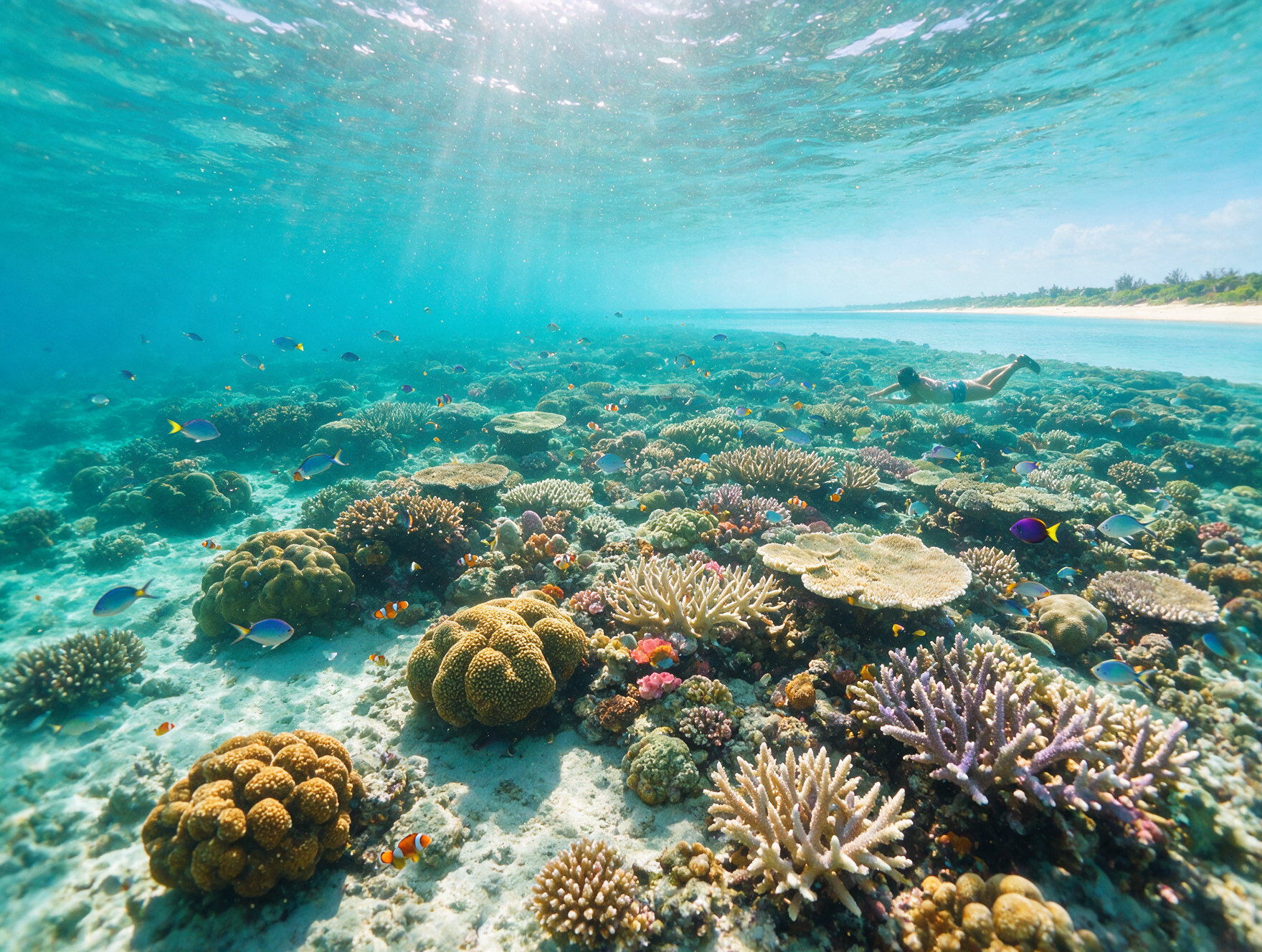
Diani Beach sits behind a barrier reef that keeps the Indian Ocean’s swell out and the water calm and warm (averaging 27–28°C year-round). The reef itself is a 15–20 minute boat ride from the shore; most hotels can arrange snorkelling trips, and several dive operators along the beach strip offer PADI-certified scuba courses and dives for certified divers.
The lesser-known option is the reef flat at low tide. When the tide is out — typically exposing the flat for 2–3 hours around the low tide mark — you can wade knee to waist-deep over the reef platform and see marine life without the boat trip: sea urchins, starfish, small reef fish, and occasionally octopus in the crevices. The sea glass and coral rubble under your feet is uncomfortable without water shoes; wear them.
Low tide times shift daily — check a tide chart (or ask your hotel reception) and plan your morning accordingly. A low tide at 7–9 AM is ideal: the light is good for underwater viewing, the heat hasn’t built yet, and the beach is almost empty. Avoid the reef flat at high tide — currents increase and the water depth makes it impractical.
Dive operators worth using: Diani Beach Divers and Scuba Do Kenya are the two most established, both with clean equipment and experienced guides who know the site conditions well. Single dives USD 60–80, PADI Open Water course around USD 350–400.
Where Locals Actually Eat
The hotel restaurants and the beach bars along Diani Beach Road serve the usual range of grilled prawns, pizza, and pasta for tourist prices. They’re fine. But behind the main road, in Ukunda and along the side tracks leading toward the village areas, is where Diani’s actual food culture lives.
Ali Barbour’s Cave Restaurant — a restaurant literally inside a coral cave, about 5 km south of the main hotel strip. The setting is a 165,000-year-old coral cave; the ceiling is natural rock, the walls drip with stalactites (some sections), and the seafood is serious. Grilled Swahili-spiced lobster, whole fish from the morning catch. Reserve in advance — it fills up despite limited marketing. Expect KES 3,000–6,000 (₹1,900–₹3,800) per head for food and drink.
Forty Thieves Beach Bar — the original Diani beach institution, open since 1971, with a sand floor, cold Tusker beer, and a kitchen that does wood-fired pizza and grilled fish without pretension. The crowd on weekday afternoons is a mix of expats, Kenyan regulars, and travelers who’ve found their way there. No reservation needed; just show up around 5 PM for sundown drinks and stay for dinner.
Uhuru Gardens Hotel in Ukunda — a completely unpretentious lunch spot that serves Swahili coastal food: pilau (spiced rice cooked with meat or fish), mchuzi wa samaki (fish curry with coconut), and the best biriani on the coast. KES 500–1,000 (₹320–₹640) per person. Cash only, and they run out of things by 2 PM.
Reading the Beach Culture
Diani Beach is one of Kenya’s most popular domestic tourism destinations — Nairobi families, Kenyan weddings, school groups, and a large European expat community from Mombasa all mix here. The weekday beach has a quiet, neighbourhood feel; the weekend, particularly from Friday afternoon through Sunday, transforms into something louder and more festive.
Beach hawkers are present on the tourist-facing stretch. They’re persistent and multilingual, and if you don’t want their goods (carved wooden animals, sarongs, snorkelling trips), the best response is a brief “asante, hapana” (thank you, no) and continuing to walk. Engaging in conversation without intention to buy is understood as negotiation and will take thirty minutes. If you do want to buy something, walk past, let the initial enthusiasm settle, and come back — the prices given to people who seem disinterested are substantially better than opening prices.
The beach between Leopard Beach Resort and Baobab Beach Resort in the middle section of Diani is the most organised and safest stretch. Beaches north of the main hotel zone toward Tiwi can be more isolated and are best avoided for solitary walks; go with company or stick to the main Diani stretch.
Ukunda Town: Behind the Hotel Strip
Ukunda is the residential town behind the beach strip, a 5-minute drive inland from most hotels. It has a large covered market with fresh produce (the mango and passion fruit here are extraordinary, and considerably cheaper than anywhere that caters to tourists), a Nakumatt-anchored mall, and several pharmacies and hardware shops. It’s not a tourist destination but it’s where Diani’s residents live and shop.
Worth visiting: the Ukunda market on Saturday mornings is the largest weekly market on the south coast. A mix of Swahili, Digo, and Mijikenda produce sellers, dried fish, fabric, and second-hand clothing. Busy, hot, and not staged for visitors — which makes it more interesting than the beach craft stalls. A tuk-tuk from the main beach hotels to Ukunda market and back costs around KES 300–500 (₹190–₹320) round trip; negotiate before you get in.
Kite Surfing and Water Sports
Diani is one of Kenya’s best kite surfing locations, with reliable southeast trade winds between June and September creating consistent 15–25 knot conditions. The flat water behind the reef is ideal for beginners; the more exposed beach sections near the Galu Beach area, south of the main hotel strip, see stronger conditions suited to experienced kiters.
Kite surfing school: H2O Extreme at Galu Beach has been operating here for years and has a good safety record. A 6-hour beginner course (spread over 2–3 sessions) runs approximately USD 300–350 including equipment. For complete beginners who’ve never done any board sport, the learning curve is real — don’t expect to be riding waves after a day. Most people who come for a kite lesson end up wanting to return for a full course.
Other water sport options along Diani: glass-bottomed boat tours of the reef (KES 2,500–4,000 per person, 2 hours), stand-up paddleboarding rental (KES 1,500/hour from beach vendors), and dolphin watching boat trips (Kisite-Mpunguti Marine Park is a 1-hour drive south and is the best site).
Diani’s Colobus Monkeys
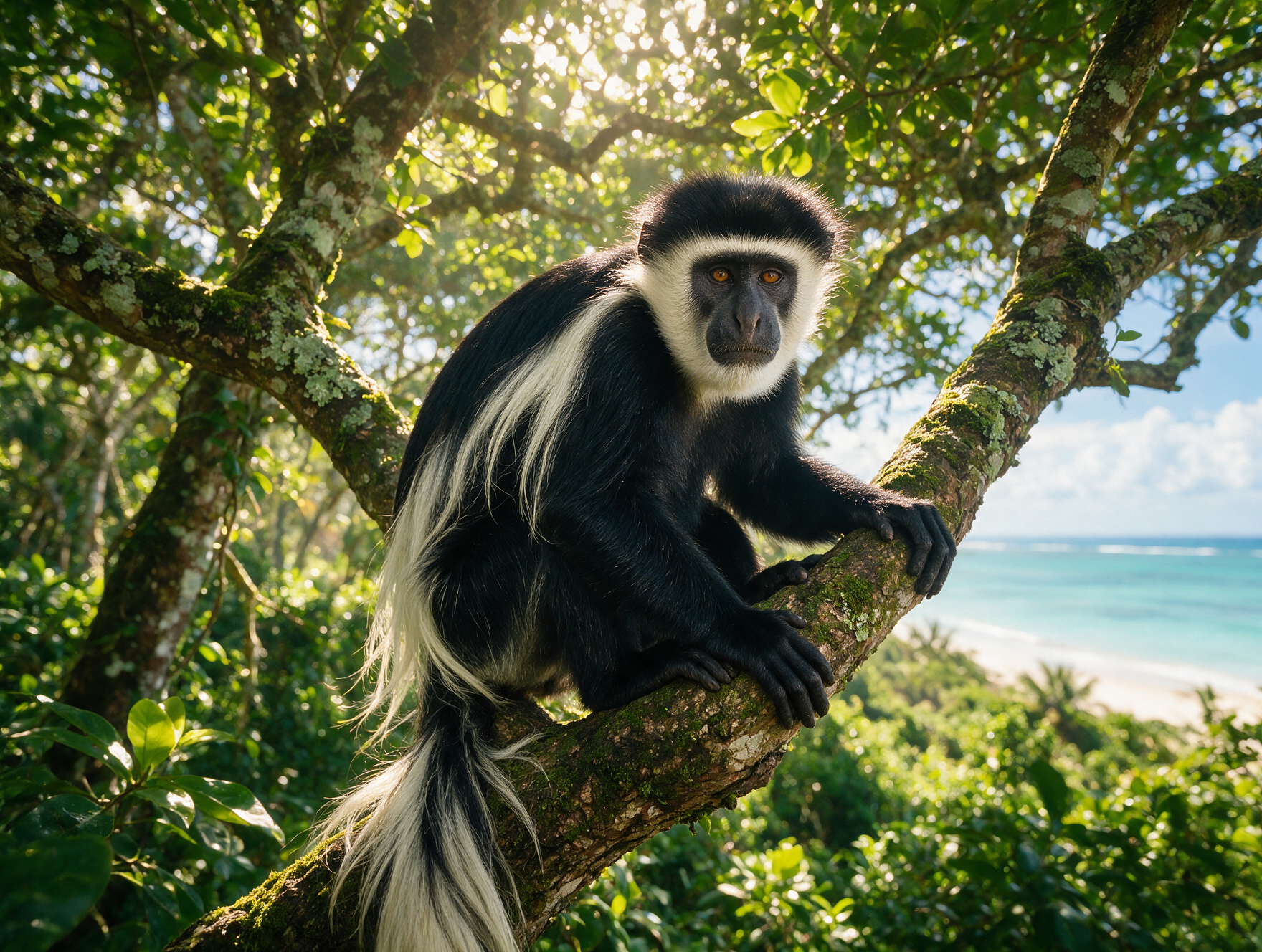
Diani is the only place on Kenya’s coast where Angola Colobus monkeys (black-and-white, with long silky tails) still survive in numbers. They live in the coastal forest fragments between the hotels, and the Colobus Conservation organisation, based on the main Diani road, runs daily visitor tours of their rehabilitation facilities (KES 1,500–2,000, about 1 hour) and has installed rope bridges over the Diani Beach Road to allow safe monkey crossing — colobus fatalities from road traffic were significant before the bridges went up.
You don’t need to visit the centre to see the monkeys: if you’re staying at any of the larger hotels that have maintained coastal forest in their grounds (Baobab Beach Resort, Leopard Beach, Diani Reef), colobus groups are regularly visible from room balconies and garden areas, particularly in the early morning and late afternoon. They’re completely habituated to the hotels — they’ve been living alongside this strip longer than most of the hotels have existed.
Day Trips Worth Taking
Kisite-Mpunguti Marine Park (1 hour south by road, then a 30-minute dhow trip): Kenya’s best snorkelling site, a marine conservation area around a small island. Spinner dolphins are reliably present — the tour boats slow the engines in their vicinity rather than pursuing them, which means occasional close encounters of dolphins approaching the boat. Coral and reef fish are in good condition by coastal Kenya standards. Full-day excursion USD 80–120 per person including boat, snorkel gear, and lunch. Book through your hotel or any of the established operators on the main beach road.
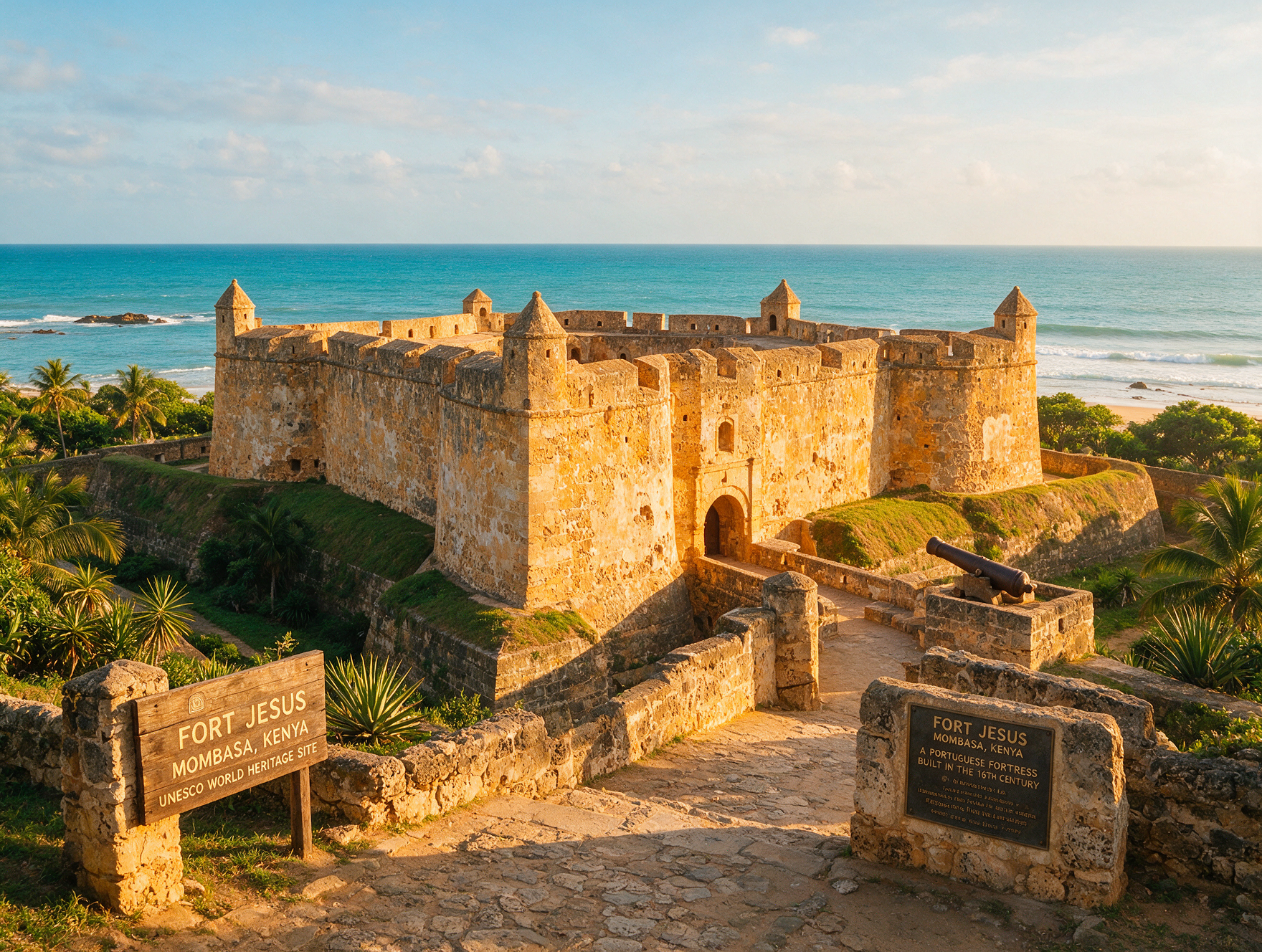
Mombasa half-day (Fort Jesus): Mombasa is 30 km north via a ferry crossing (vehicles queue; arrive early to avoid long waits, or take a tuk-tuk to the ferry terminal and a taxi on the other side). Fort Jesus, the Portuguese fortification from 1593 that became an Omani stronghold and is now a UNESCO World Heritage Site, is genuinely excellent — well-restored, with a small but serious museum tracing four centuries of coastal Kenyan history. Entry KES 1,200 (₹760) for adults. The Old Town immediately outside the fort has Swahili architecture worth 30–45 minutes of walking: narrow lanes, carved wooden doors, and a couple of good cafés.
Evening: Sunset Dhow to Bar to Dinner
The classic Diani evening is a sunset dhow cruise departing around 5 PM — traditional wooden sailing boats that run 1–1.5 hour cruises along the coast with drinks included. The fleet operates from the beach opposite Forty Thieves and a few other points. Prices around KES 2,500–4,000 per person; the sailings with actual dhow sailing (rather than motor-assist) are more atmospheric but weather-dependent. Most evenings are calm enough for full sail.
After the dhow, Forty Thieves for a drink, then Ali Barbour’s or one of the hotels’ beachfront restaurants for dinner. This sequence takes you from 5 PM to around 9 PM with minimal transportation — the beach bars are a 10-minute walk from each other.
A note on security after dark: the beach at Diani is safe enough in the early evening with other people around, less so after 10 PM in isolated stretches. Stick to the lit hotel areas and bars; take a tuk-tuk home rather than walking if you’re returning after 9:30 PM.
Getting to Diani Beach from India
Fly to Nairobi (from Mumbai, Delhi, or via Dubai/Abu Dhabi with Emirates or Etihad) and connect to Ukunda/Diani Beach Airport on a domestic Safarilink or AirKenya flight (45 minutes, USD 130–180 one way). Alternatively, fly into Mombasa’s Moi International Airport and take a taxi or arranged transfer south to Diani (about 1 hour 15 minutes including the ferry crossing).
Diani pairs naturally with a Kenya safari circuit: most luxury Kenya packages conclude with 2–3 nights at the coast after Amboseli and Maasai Mara. If you’re doing the classic Kenya Kenya safari from India, the beach finish is genuinely restorative after days of 5:30 AM game drives.
Kenya eTA: USD 50 per adult, apply online at evisa.go.ke, 3–5 working days processing. The eTA covers the whole country — one application covers both safari and beach.
Frequently Asked Questions
Is Diani Beach safe for Indian tourists?
Yes, with the usual common sense — no solo walking on isolated beaches after dark, use taxis/tuk-tuks over walking on the main road at night, keep valuables at the hotel rather than on the beach. The main Diani hotel strip is genuinely well-managed and safe.
What is the best time to visit Diani Beach?
October to March is warm and dry, with sea temperatures in the high 20s and generally calm ocean conditions. June–August is kite surfing season (consistent trade winds) but can be cooler (low 20s). April–May (long rains) is the one period to avoid — heavy rain, some flooding on roads, limited resort activities.
Is there vegetarian food at Diani Beach for Indian travelers?
More than you might expect. Swahili cuisine has strong vegetarian options: coconut rice dishes, cassava curries, and vegetable biriani are widely available. Several hotels cater specifically to Indian dietary preferences. Ukunda’s market restaurants are your best bet for genuinely good vegetarian coastal cooking at local prices.
Can I combine Diani Beach with a Kenya safari in one trip?
Absolutely — this is the standard Kenya holiday structure. A week-long trip might be structured as: Nairobi (1 night) → Amboseli (2 nights) → Maasai Mara (3 nights) → Diani (3 nights). Twelve nights total gives you more depth in each location.
How much should I budget per day at Diani Beach?
Mid-range (USD 150–300/day including accommodation, meals at beach restaurants, a daily activity): comfortable, covers you at decent resorts with seafood dinners. Luxury (USD 400+/day): Alfajiri Villas or similar boutique properties, private beach, chef-cooked meals, private transfers. Street food and Ukunda market: a full day’s eating for KES 1,500–2,000 (₹950–₹1,270) per person.
Conclusion
Diani works well as a beach destination precisely because it hasn’t been fully packaged — there’s still a real town behind the hotel strip, a fishing culture on the reef, a colobus-monkey forest between the bungalows, and a food scene that rewards leaving the resort. Three days is enough to get past the sunbed-and-poolside routine and find the version of the place where you’d actually want to spend a week. Most people leave wishing they’d had another day.
For Kenya holiday packages from India that combine the safari with the coast properly, Get Tripped builds custom itineraries that sequence the camps and the beach timing to avoid the April-May rain and make the most of the best wildlife windows. Get in touch for a no-obligation chat about what works for your dates.