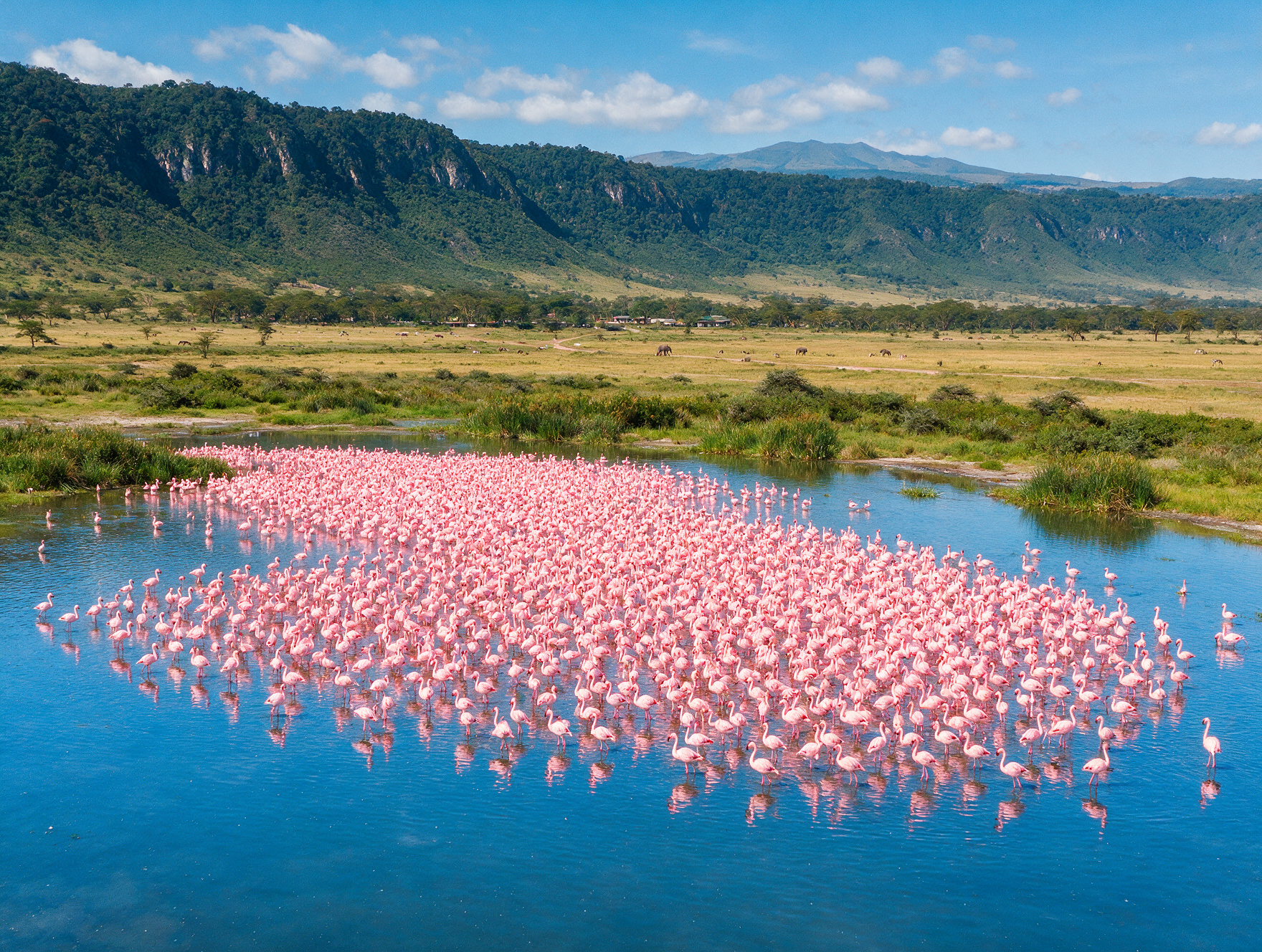
Lake Nakuru’s fame rests almost entirely on flamingos — the alkaline lake used to turn pink when up to two million birds crowded its shores, and those images became some of Kenya’s most recognisable. The reality today is different: changing lake levels and algae cycles have reduced the flamingo population significantly since the 1990s, and many visitors arrive expecting the wall of pink and find a beautiful but more subdued lake. What they miss, because they’re focused on what’s not there, is what Lake Nakuru National Park is actually exceptional for: the densest rhino population in Kenya, lions that have somehow learned to climb trees, and a lake ecosystem that’s worth understanding on its own terms rather than against a thirty-year-old photograph.
Table of Contents
- The Real Draw: Rhinos at Lake Nakuru
- Tree-Climbing Lions
- Baboon Cliff and the Escarpment Loop
- The Southern Lake Shore (Most Vehicles Skip It)
- Makalia Falls
- Night Drives from the Park Perimeter
- Getting to Lake Nakuru
- Where to Stay
- Frequently Asked Questions
The Real Draw: Rhinos at Lake Nakuru
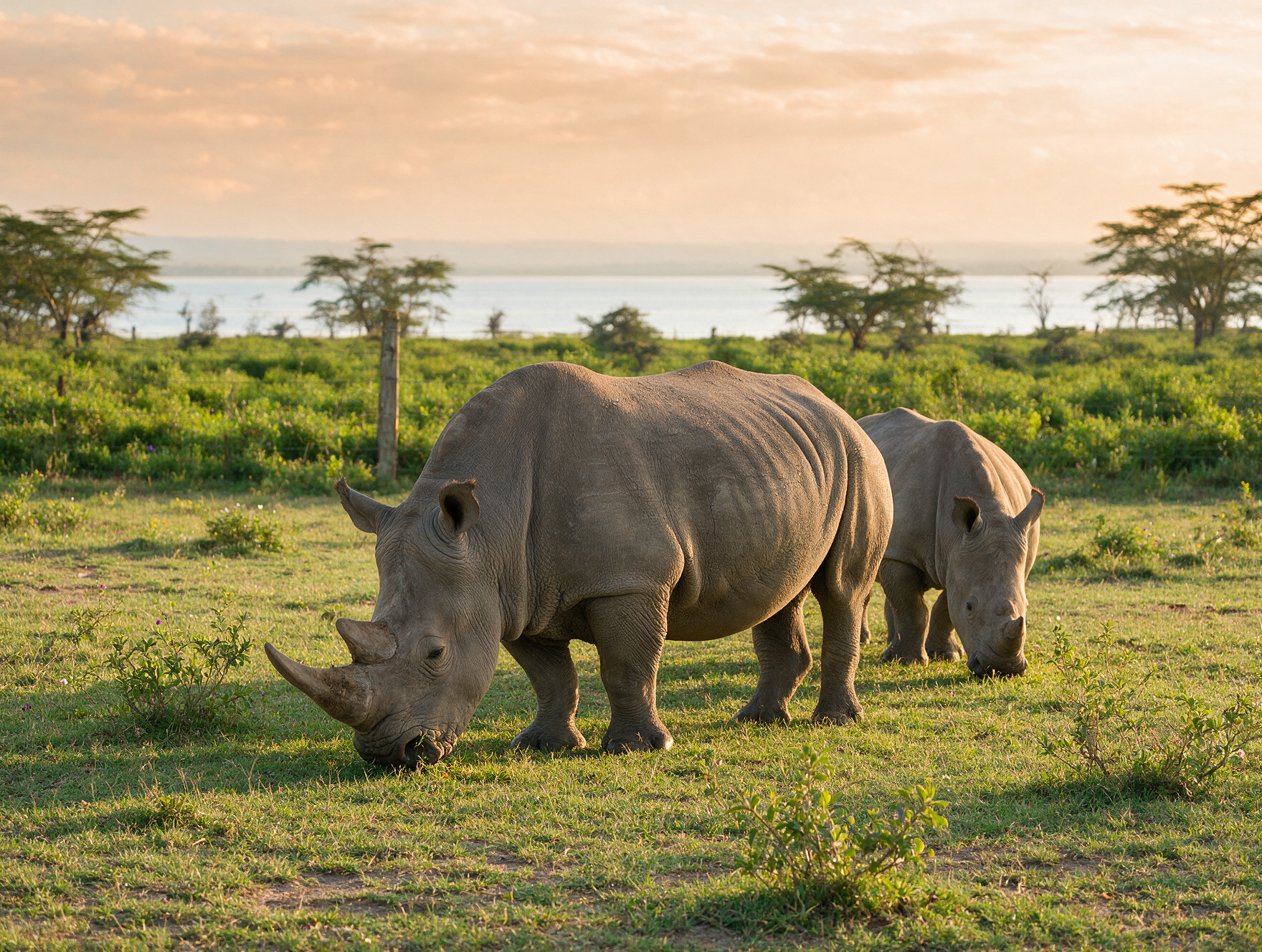
Lake Nakuru is a fenced sanctuary — the entire park is enclosed, which was controversial when completed in 1999 but has had a clear conservation outcome: it’s now one of the best places in Kenya to see both black and white rhinos.
The black rhino population here is part of Kenya Wildlife Service’s ongoing effort to recover a species that was nearly wiped out in Kenya during the 1970s and 80s. Black rhinos are browser not grazers, smaller than whites, and notably more aggressive — solitary animals that will charge without much warning if surprised. White rhinos are larger, calmer, and frequently found in groups; the females and subadults sometimes form small temporary groups, and vehicle approaches that would alarm a black rhino leave them untroubled.
The difference in disposition is visible and genuine — if your guide drives slowly toward an animal and it starts to turn and track the vehicle, that’s a black rhino and you back up. White rhinos are the ones that walk slowly past the front of the Land Cruiser while you hold your breath.
Lake Nakuru typically has 60–70 rhinos (both species combined) as of recent KWS counts — the highest density in any Kenya park. The Olmoti area in the northern section and the Nderit area near the southern lake shore are the most reliable zones; your guide will know current patterns. Rhino tracking with a ranger (a 2–3 hour guided walk within the sanctuary) is sometimes available through Sarova Lion Hill Game Lodge — ask at booking, availability is limited.
Tree-Climbing Lions
Nakuru’s lions have been documented climbing acacia trees since at least the 1970s, and the behaviour, while not unique (Lake Manyara in Tanzania is more famous for it), is reliably observed here. The standard explanation is that trees provide a cooling vantage point above the heat radiating from the ground, and possibly a clearer view for spotting prey. The lions don’t climb as dramatically as leopards — they drape themselves over branches rather than moving with feline precision — but seeing a 150-kg lion 5 metres off the ground in a fig tree is an image that doesn’t fit any mental template.
The fever tree woodland on the western lake shore (around the Hippo Pool area and northward) is the most likely zone for tree-climbing behaviour. It doesn’t happen every day, and guides who park at the established viewpoints and don’t probe the forest interior miss it entirely. Ask your guide specifically to look for tree lions rather than assuming they’ll prioritise it — some guides treat the rhino as the main attraction (which it is) and don’t search the canopy actively.
Baboon Cliff and the Escarpment Loop
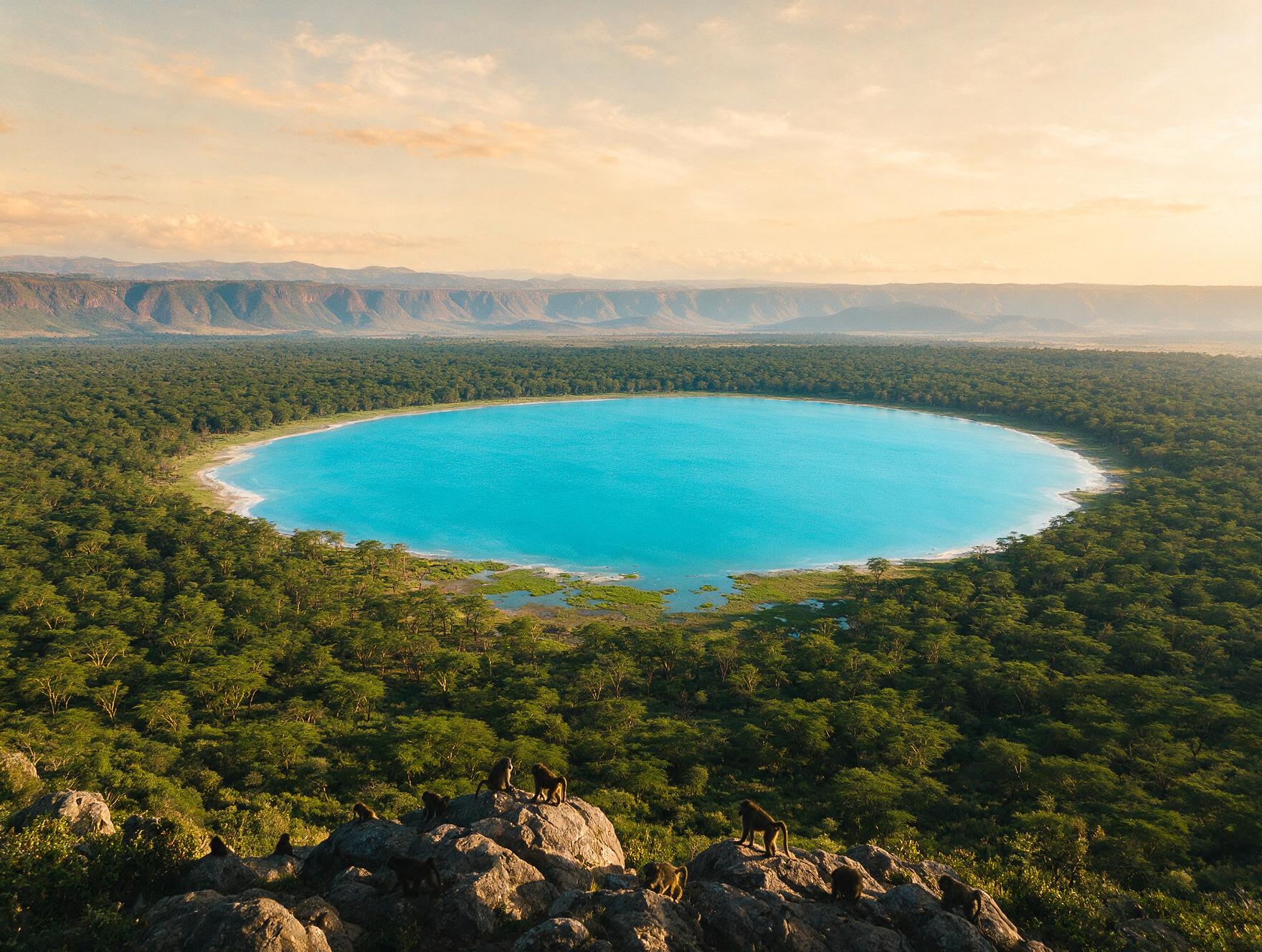
Most visitors to Lake Nakuru do one circuit of the lake shore and return to camp. The escarpment road, which climbs the eastern edge of the Rift Valley wall and gives you a bird’s-eye view of the lake, is bypassed by probably 70% of safari vehicles because it takes an extra 45 minutes and isn’t signposted dramatically.
Baboon Cliff, the main viewpoint on the escarpment road, gives you the lake’s full oval shape from above, the flamingo congregation (if present) as a pale pink smear on the water, the fever tree forest on the western shore, and — on a clear day — the Rift Valley floor stretching to the south. The yellow baboon troop that lives near the viewpoint is enormous and thoroughly habituated to visitors; they’ll approach the vehicles with opportunistic confidence, so keep windows up and food items invisible (a baboon reaching through a half-open window for your lunch bag is funnier in retrospect than it is at the time).
Continue past Baboon Cliff along the escarpment loop and you’ll find waterbuck, eland, and buffalo grazing on the forest edge. The road is rougher than the lake-shore circuit, which keeps vehicle numbers down substantially. You may find you’re the only vehicle in this section for an extended period — which, in a park that can get crowded around the popular rhino zones, is worth something.
The Southern Lake Shore (Most Vehicles Skip It)
The access road to the park’s southern section, toward Makalia Falls and the Laikipia fence line, sees a fraction of the traffic of the northern lake-shore circuit. The reason is mostly logistical — it’s farther from the main gate and the two large lodges (Sarova Lion Hill and Lake Nakuru Lodge) — and also partly because the southern shore has fewer dramatic flamingo concentrations even when the lake is at good levels.
What the southern shore has is quiet. The pelican colony that roosts on the exposed mudflats south of the lodge zone is large and active year-round, regardless of flamingo numbers — Great White Pelicans in their hundreds, with Yellow-billed Storks and various heron species alongside them. The buffalo population tends to concentrate in the woodland south of the lake in the dry season, and the area around Makalia River inlet is good for waterbuck and Thomson’s gazelle.
The bird count in this section, with a guide who knows birds (not all safari guides do — ask about their bird knowledge when booking), can reach 40–50 species in a three-hour morning drive. Lake Nakuru’s bird list totals over 400 species.
Makalia Falls
Makalia Falls is a small waterfall at the park’s southern end where the Makalia River drops into the lake basin. It’s not dramatic — maybe 10–15 metres — but it’s a completely different landscape from the open lake shore: dense riverine forest, shade, and the sound of running water. In a park that can feel exposed and dry at midday, the falls area is a relief, and the birdlife in the riverside forest is completely different from the lake zone — olive sunbirds, African paradise flycatchers, and various warblers that you won’t find at the lake shore.
The falls are accessible by vehicle to within 200 metres; there’s a short walking path to the fall base that can be done with your driver-guide. Not a long stop — 30–45 minutes — but worth planning into the southern loop.
Night Drives from the Park Perimeter
Night drives inside Lake Nakuru National Park are not permitted under KWS regulations (same as most Kenyan parks). However, the land immediately outside the park’s eastern boundary, toward the town of Nakuru and particularly south toward the private Elsamere Conservation Centre on Lake Naivasha (about 60 km south), offers some alternative evening wildlife options through lodges that have arrangements with private land owners.
More practically: Nakuru town itself is worth an hour’s visit for the Nakuru War Memorial Museum (small but well-curated, and free) and the fresh produce market on Kenyatta Avenue, which is one of the largest in the Rift Valley. The drive back to camp through the escarpment road after a visit to town, arriving around sunset, occasionally produces good roadside wildlife — waterbuck and impala cross the road, and in the forest section near the park’s east gate, olive baboon troops are reliably present at dusk.
Getting to Lake Nakuru from India
Nakuru is 160 km northwest of Nairobi — 2.5–3 hours by road via the Nairobi-Nakuru highway, which traverses the dramatic escarpment section of the Great Rift Valley. This road offers some of the best scenic driving in Kenya — if your transfer driver can stop at a viewpoint (Longonot Crater viewpoint or the Naivasha escarpment) on the way, take it.
Light aircraft to Nakuru Airstrip are available from Nairobi Wilson Airport on charter; regular scheduled service is less frequent than to the Mara or Amboseli. Most travelers drive. The road from Nakuru to Maasai Mara (via the Mara Narok road) is another 4–5 hours, making Nakuru a logical midpoint on a Nairobi–Nakuru–Mara circuit.
Kenya eTA: USD 50 per adult, apply at evisa.go.ke. Park entry: USD 75 per adult per day at Lake Nakuru (lower than Maasai Mara). Multi-day park combinations with KWS passes can reduce costs.
Where to Stay Near Lake Nakuru
Sarova Lion Hill Game Lodge: Best mid-range option, perched on the escarpment above the park with lake views, infinity pool, and solid food. Rates USD 250–400 per person half-board.
Lake Nakuru Lodge: Older property, more affordable (USD 150–250 per person), inside the park boundary, which means early access to game drives. Rooms are dated by premium lodge standards but the location compensates.
Flamingo Hill Tented Camp: Smaller tented property on the escarpment, better for travelers who want a more intimate feel than the large lodges. Good food, attentive service, limited rooms — book ahead.
Frequently Asked Questions
Are there still flamingos at Lake Nakuru?
Yes, but in far smaller numbers than the historical peak of one to two million birds. Current populations fluctuate seasonally between 20,000 and 200,000 depending on water levels and algae (Spirulina) availability. The lake ecology is still functioning — just smaller-scale than the iconic images from the 1990s. Lesser Flamingo and Greater Flamingo are both present.
Is Lake Nakuru good for families with children?
Very good. The fenced park means less anxiety about children leaning out of vehicles in lion country. The rhino and flamingo encounters are accessible and exciting for younger travelers. The park is compact enough that drives don’t require very long hours in the vehicle.
How many days should I spend at Lake Nakuru?
Two nights is sufficient to cover the main circuits and the escarpment. Three nights if you want to include the rhino tracking walk (if available) and spend real time on the southern shore. It pairs well in a circuit with Maasai Mara (4 nights) and Nairobi (1–2 nights).
What is the best time to visit Lake Nakuru National Park?
June–September and January–February. The dry seasons keep the vegetation open, making wildlife easier to spot, and water levels in the lake drop slightly, concentrating the flamingos on the remaining shallow areas. The short rains (October–November) can improve the flamingo count if the lake level rises and algae blooms — a good run of rains is sometimes followed by a flamingo influx within a few weeks.
What Kenya safari packages from India typically include Nakuru?
Lake Nakuru features in multi-park Kenya itineraries as a 2-night stop, usually combined with Nairobi, the Mara, and either Amboseli or the coast. It’s sometimes dropped from shorter 7-day itineraries in favour of spending more nights in the Mara, which is valid — if you can only do one park, the Mara is the priority.
Conclusion
Lake Nakuru rewards the traveler who goes looking for what’s there rather than mourning what isn’t. The rhino sanctuary, the tree-climbing lions, the escarpment drives, the southern loop’s quiet birdlife — these are all real, and all largely free of the crowds that the flamingo viewpoints used to generate. It’s a smaller, more manageable park than Maasai Mara, which makes it a good starting point for first-time Kenya visitors who might find the Mara’s scale overwhelming.
For help building a Kenya trip from India that makes the most of the country’s different park ecosystems, Get Tripped can handle the logistics. We know which camps genuinely have good rhino guides and which ones are just telling you they do.