The first thing anyone hands you in Kenya is a cup of chai, not coffee. That caught me off guard on my first trip, because Kenya grows some of the best coffee on the planet and the people pouring it, more often than not, are drinking tea boiled with milk and a fist of ginger. That one contradiction tells you most of what you need to know about a Kenya food trail: the obvious story and the real story are rarely the same thing, and the good stuff is usually one layer under what the guidebooks mention. This guide walks through what and where to eat across Kenya’s six signature destinations — a real city with a real restaurant scene, four safari parks where dining means something different, and a coastline that eats like the Swahili Coast it belongs to.
If you’re mapping out Kenya tour packages from India, food is not a side note to the safari. It’s a parallel trip happening at the same time — grilled meat on a Friday night in Westlands, a folding table set up on a riverbank at sunrise, a plate of coconut-stewed octopus with your toes in the sand at Diani.
In This Guide
- Nairobi — restaurants, coffee culture, and nightlife food
- Maasai Mara National Reserve — bush breakfasts, sundowners, camp dining
- Amboseli National Park — lodge dining with Kilimanjaro on the horizon
- Lake Nakuru National Park — lakeside lodge meals and flamingo views
- Diani Beach — seafood, Swahili coastal cuisine, and cave restaurants
- Mount Kenya National Park — highland produce and waterhole dining
- Food safety notes for Indian travelers
- FAQs
Nairobi: Africa’s Wildlife Capital Has a Real Restaurant Scene
People fly into Nairobi thinking of it purely as a stopover before the bush. That’s a mistake. Nairobi has one of the more interesting dining scenes in East Africa right now, and it’s worth building at least one full evening around it if you’re putting together a list of things to do in Nairobi beyond the obvious wildlife stops.
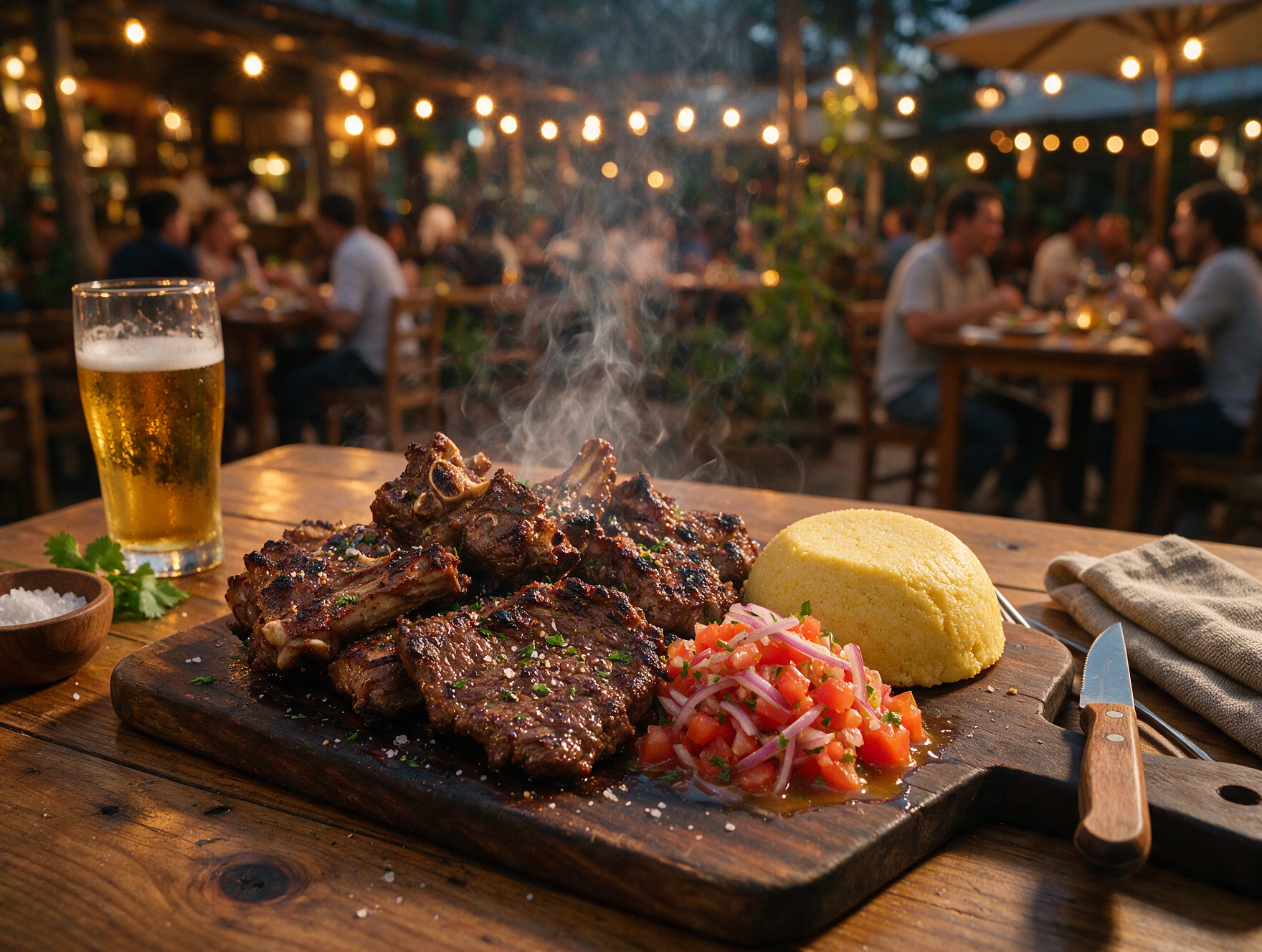
Start with nyama choma, which translates loosely to “roasted meat” and functions socially the way a tandoori mixed grill does back home — something you order in quantity, for a table, with your hands. Goat and beef are the default; it comes off the grill smoky, slightly charred at the edges, served on a wooden board with kachumbari (a sharp tomato-onion salad) and ugali, the stiff maize-flour staple that Kenyans use the way we use rice or roti, tearing off a piece to scoop up stew or sukuma wiki — braised collard greens that taste better than they sound, cooked down with onion and tomato until they’re almost sweet.
Nairobi’s most famous nyama choma address is Carnivore, where servers carry skewers of meat tableside until you flag down a little white flag to signal surrender. It’s a genuine institution, and I wouldn’t tell anyone to skip it outright — but go in knowing it’s built for tour groups now, the price has crept up past what the experience justifies, and the meat quality swings with how busy the night is. For the same idea done better and cheaper, Mama Oliech in Hurlingham is where locals actually take you: plastic chairs, no décor, and a fried whole tilapia with ugali that beats anything on Carnivore’s menu. That’s the kind of place a guidebook skips.
For a proper dinner out, Westlands, Lavington, and Karen are where it’s happening. Kalamata in Lavington does wood-fired pizzas and grilled seafood in a courtyard strung with fairy lights — good for a couple’s evening that doesn’t feel like a safari lodge buffet. Mythos Taverna in Westlands runs genuinely good Greek food, not a fusion gesture at it. The Other Room, also in Lavington, leans farm-to-table with produce sourced from the same highland regions that grow the coffee, which is a nice full-circle thing to notice once you’ve had both. If you want something with a view and a cocktail list, Dijo’s rooftop in Parklands does French bistro plates with the Nairobi skyline behind you.
Now, the coffee — this is where that earlier contradiction gets interesting. Kenya grows it in the highlands around Mount Kenya and the Aberdares — Nyeri, Kirinyaga, Kiambu, Murang’a, Embu — at 1,400 to 2,000 metres, where cool nights slow the cherries down and build the acidity and fruit Kenyan AA coffee is known for: blackcurrant, red berry, occasionally something close to tomato sweetness. It’s washed, not natural-processed, part of why it tastes cleaner and brighter than, say, an Ethiopian natural. AA grading is about bean size, not quality — a smaller AB lot can easily out-taste an average AA, though AA still fetches the premium at auction because size is what buyers see first.
Here’s the fun fact worth repeating at dinner: for decades, most of the best Kenyan coffee was grown for export, and the domestic market drank tea instead, partly a hangover from colonial-era plantation economics that routed the premium beans straight to European auction houses. That’s loosening up now — Nairobi’s specialty coffee scene (Artcaffe and Java House are the two big homegrown chains, practically on every corner) has grown fast over the last decade, and more of the country’s own AA-grade beans are staying home. Order a Kenyan AA pour-over anywhere with a proper espresso machine and you’re drinking something that, twenty years ago, you’d have had to leave the country to taste.
Street food worth trying in the evenings around the CBD: mandazi, a lightly sweet, cardamom-scented fried dough that’s Kenya’s answer to a doughnut, best eaten hot off the stall with chai; and samosas, which arrived with Indian traders generations ago and are now thoroughly Kenyan, usually beef or vegetable, fried hard and crisp.
Maasai Mara National Reserve: Dining Built Around the Light
There’s no restaurant scene in the Mara because there’s no town — the food here is entirely about the camp or lodge you’re staying at, and the rhythm of the day shapes when and how you eat. This is where the bush breakfast tradition does its best work. After an early game drive, the camp crew drives out ahead and sets up a table at a riverbank or on a kopje with a view, and you arrive to find a chef cracking eggs to order over a gas burner, a spread of toast, fresh fruit, and yoghurt, and a thermos of properly brewed Kenyan coffee that tastes better outdoors than it has any right to. Some of the higher-end camps run a champagne version with smoked salmon, which is a nice touch for a honeymoon morning if that’s the trip you’re on.
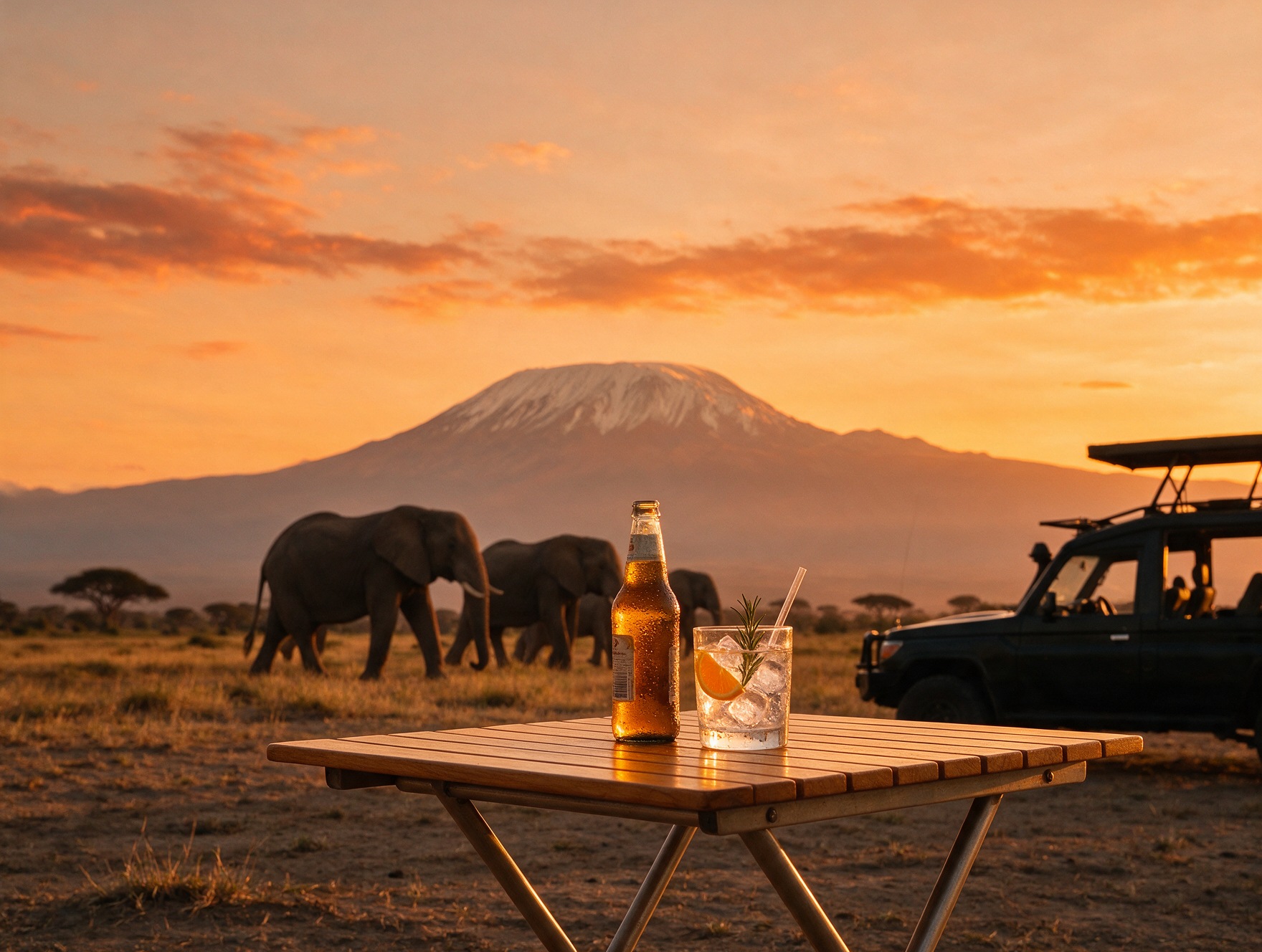
Evenings belong to the sundowner. The vehicle stops at a scenic spot as the light goes gold, the crew unfolds a table and a cooler, and you get a choice of a cold Tusker (Kenya’s default lager, slightly bitter, always served cold), a gin and tonic, or a ginger juice if you’re skipping alcohol. It’s a small ritual but it’s done properly almost everywhere, and it’s genuinely one of the better moments of a Kenya trip — not because the drink is special, but because you’re standing in the middle of the Mara doing nothing but watching the sky change color.
Dinner back at camp is usually a three-course set menu, often outdoors under string lights or a fire pit, heavier on soups, grilled meats, and stews than on local street food — camps cook to a broadly continental template with Kenyan touches rather than full nyama choma spreads, mostly because of logistics. Properties like Mara Serena run this well, with the dining room itself positioned to catch the view. One honest caveat: dining quality varies a lot more by camp tier here than in Nairobi restaurants, so if you’re booking mid-range, don’t expect Westlands-level plating — expect good, hearty, reliably fresh food instead.
Amboseli National Park: Dinner With Kilimanjaro on the Horizon
Amboseli’s whole personality is the mountain. Kilimanjaro sits across the Tanzanian border and on a clear morning or evening it dominates every photo, which means lodges here build their dining spaces and sundowner spots specifically around that view rather than around the wildlife directly outside.
The sundowner tradition holds here too, but the better version of it in Amboseli is timed for sunrise rather than sunset — Kilimanjaro is far more likely to be cloud-free early, and a handful of camps will do a bush breakfast angled so the snow cap is visible while you eat. Evenings get cooler than you’d expect this close to the equator, so dinner menus lean into that: a pepper soup or a vegetable broth to start is common before the main grill course, which is a small detail I appreciate because it’s clearly built for the actual climate rather than a generic safari-menu template. Lodges like Amboseli Serena and Amboseli Sopa run buffet dinners with a decent spread of continental dishes alongside Kenyan staples, and the better ones will do a bush dinner out near the swamp edge on request, with lanterns and a private setup, which is worth asking about if you’re traveling as a couple.
A mistake to avoid here: don’t assume every lodge sundowner spot has the mountain view advertised in the marketing photos — cloud cover rolls in fast on Kilimanjaro, and some lower-lying camps simply don’t have the sightline the famous luxury properties do. Ask your operator which lodges actually have unobstructed Kilimanjaro views before booking if that’s the photo you’re chasing.
Lake Nakuru National Park: Lakeside Dining and a Rhino Sanctuary Next Door
Lake Nakuru gets less food-trail attention than the Mara or Amboseli, mostly because it’s a shorter stop on most itineraries, but the dining here has its own charm. Sarova Lion Hill Game Lodge, perched on the hill it’s named for, runs a dining room and terrace with views down toward the lake — on a good day you’ll catch a wash of pink in the distance if the flamingos are still working the shoreline (their numbers shift year to year depending on water levels, so it’s not guaranteed, but when they’re there it’s a genuinely striking thing to eat breakfast in front of).
Meals here follow the standard lodge buffet format: a soup and salad spread, grilled meats and a vegetarian curry option, sides of rice, chapati, and ugali, and a dessert table that leans heavily on tropical fruit — pineapple, watermelon, passion fruit. It’s not a destination for culinary adventure the way Diani or Nairobi are, but it’s dependable, and the setting does more work than the menu does. Nakuru is also one of the better stops for a family itinerary precisely because the food is familiar and unfussy — kids who’ve been wary of nyama choma all week tend to relax here.
Diani Beach: Where Kenya’s Food Trail Actually Gets Coastal
Diani is the one place on this list with a genuine, varied food scene outside a lodge dining room, and it tastes completely different from everywhere else in Kenya because it’s Swahili Coast cooking — built on coconut, tamarind, and centuries of trade with India, Oman, and Persia, which is why a plate here can feel oddly familiar to an Indian palate in the best way.
The dish to order first is pilau, a spiced, slow-cooked rice dish with cardamom, cloves, and cinnamon that’s a clear cousin of biryani, usually served with beef, goat, or fish. Coconut shows up everywhere — fish or octopus simmered in coconut milk with curry leaves and chili, often called samaki wa nazi, is the coastal dish I’d put at the top of anyone’s list. Grilled whole fish (usually red snapper or kingfish) comes with a side of ugali or chapati and a squeeze of lime, and it’s the kind of meal that tastes better the closer you are to the water it came out of.
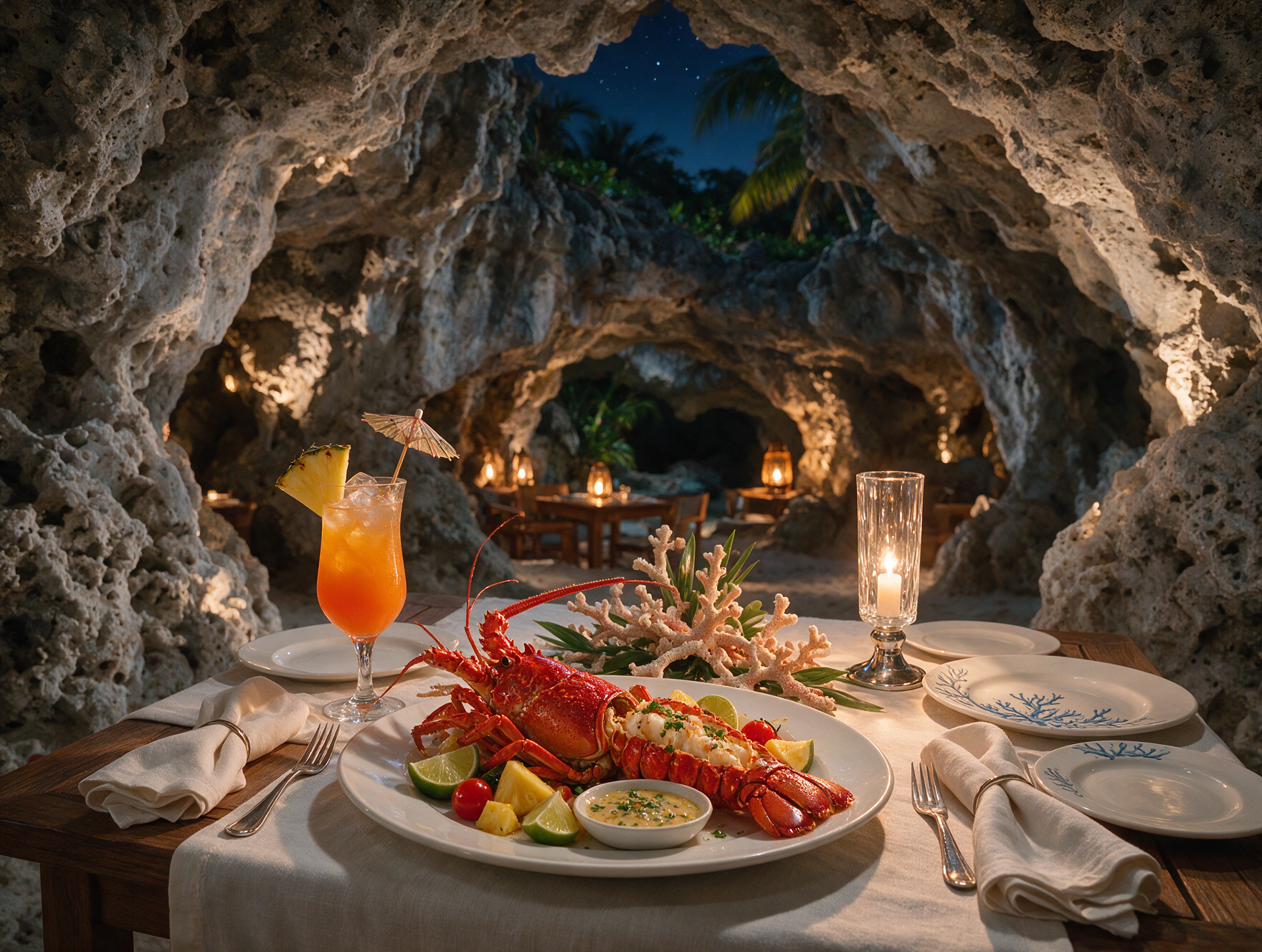
For where to eat it: Ali Barbour’s Cave Restaurant is Diani’s genuine novelty and it’s not just a gimmick — the dining room sits 33 feet underground inside a coral cave estimated at well over 100,000 years old, open to the sky through a natural gap overhead, lit by candlelight at night. Seafood is the specialty, and having a grilled lobster by candlelight inside a cave that predates recorded history is as close to a genuine “nowhere else on earth” meal as this trip gets — a strong pick for a honeymoon dinner. For something more relaxed, Nomad Beach Bar & Restaurant right on the sand does good grilled catch-of-the-day and a sunset happy hour that doesn’t require a reservation or a dress code.
The hidden gem here isn’t a restaurant at all — it’s the small beachfront stalls and family-run Swahili kitchens set slightly back from the main tourist strip, where you’ll find mkate wa sinia (a dense, slightly sweet coconut tray bread, a bit like a steamed cake) and freshly cut mango or coconut sold straight off a cart. It’s a step down in polish from a sit-down restaurant and a step up in flavor.
A mistake worth flagging: don’t order lobster or prawns at a tourist-facing restaurant without asking if it’s the day’s catch. Diani’s good seafood spots cook what came in that morning; the mediocre ones serve frozen stock at premium prices, and you genuinely can’t tell from the menu which kind you’re in — ask, and if the answer is vague, that’s your answer.
Mount Kenya National Park: Highland Cooking and a Floodlit Waterhole
Mount Kenya’s food story is about altitude and cold. The forest around the mountain sits at roughly 2,000 metres, cool and often misty, and the cooking here adjusts accordingly — heartier, warmer dishes, and genuinely good produce, since this highland belt grows a lot of Kenya’s vegetables and is one of the country’s trout-farming regions, trout being an unusual but well-established crop in the cold mountain streams nearby.
Serena Mountain Lodge is the signature property here, built as a three-storey cedar structure on stilts overlooking a permanent floodlit waterhole and salt lick. Dinner happens on the upper level with Mount Kenya’s summit in view if the clouds cooperate, and the buffet mixes African staples with continental dishes, including, on a good night, trout from the surrounding streams. The real draw, though, is timing — the kitchen and the lodge both work around the waterhole’s rhythms, because elephant, buffalo, and the occasional leopard drift in to drink after dark, visible from your table or your room’s private balcony. It’s one of the few places on earth where dinner and wildlife-watching are genuinely the same activity, not a sequence of two.
Days get cold enough in the evenings here that a hot bowl of mboga (a mixed vegetable stew) or a thick lentil soup actually makes sense as a starter, in a way it wouldn’t at the coast. If you’re traveling with family and someone’s tired of grilled meat by day five, Mount Kenya’s vegetable-forward menus are an easy reset.
Food Safety and Water: What Indian Travelers Should Know
Kenya is generally straightforward for Indian travelers used to being careful with food abroad, but a few habits are worth carrying over from any international trip. Stick to bottled or filtered water throughout — it’s what every lodge and most restaurants will hand you automatically, and it’s cheap and widely available. Avoid ice in very casual roadside spots if you’re unsure of the water source behind it; established restaurants and all lodges use filtered or treated ice, so this is really only a concern at the most informal stalls.
Street food — mandazi, samosas, roasted maize, nyama choma from a busy stall — is generally safe if it’s cooked fresh and served hot in front of you, which is the same rule that works across most of the world: high turnover and visible heat are good signs, food that’s been sitting out is not. Raw salads and cut fruit from informal vendors are the one category worth being more cautious with, since washing water quality is harder to verify; at lodges and proper restaurants this isn’t an issue.
Seafood at the coast is best eaten at places with a steady flow of customers rather than empty tourist-trap restaurants, for the freshness reason mentioned above as much as for safety. And if anyone in your group has a sensitive stomach, it’s worth easing into spice and oil levels for the first day or two rather than going straight for a full nyama choma spread on arrival night.
Frequently Asked Questions
Is Kenyan food spicy?
Not particularly, by Indian standards. Most Kenyan cooking is mild to medium — built on tomato, onion, and coriander bases rather than chili heat. The coastal Swahili dishes around Diani Beach, with their coconut and curry-leaf influence, come closest to something an Indian palate would recognize as properly spiced, but even those are gentler than a typical home-cooked Indian curry.
What is considered the national dish of Kenya?
There’s no single official answer, but ugali with nyama choma and sukuma wiki is the closest thing to a universal Kenyan plate — you’ll find some version of it from a Nairobi backyard to a safari lodge buffet.
Can vegetarians eat well in Kenya?
Yes, more easily than you’d expect. Sukuma wiki, lentil stews, bean dishes (githeri), and vegetable curries are everyday Kenyan food, not a special request, and every lodge on a standard safari circuit builds a vegetarian option into its buffet as a matter of course. Flag it when booking so camps in more remote areas like the Mara can plan ingredients ahead.
Is tap water safe to drink in Kenya?
No — stick to bottled or filtered water, which is standard practice across the country and provided automatically at lodges, hotels, and most restaurants.
What exactly is nyama choma?
Grilled meat, usually goat or beef, cooked over charcoal and served in large shareable portions with kachumbari and ugali. It’s as much a social occasion as a dish — order it for the table, not for yourself.
Why is Kenyan coffee famous if Kenyans mostly drink tea?
Kenya’s volcanic highland soil and high altitude produce some of the most sought-after coffee in the world — bright, fruity, often with a distinct blackcurrant note. Historically, almost all of the best-grade beans were grown for export rather than local consumption, a pattern dating back to the colonial plantation economy, so tea became the everyday drink instead. That’s shifting as home-grown coffee chains and a domestic specialty scene grow, but the habit runs deep.
What should I expect to eat on a Maasai Mara or Amboseli safari?
A bush breakfast after the morning game drive (eggs to order, fruit, pastries, coffee), a sundowner with drinks and snacks at sunset, and a set-menu dinner back at the lodge that’s broadly continental with Kenyan touches. Don’t expect urban restaurant variety — the experience is about the setting as much as the plate.
Is it safe to eat seafood in Diani Beach?
Generally yes, especially at busy, established restaurants that source same-day catch. Choose places with visible turnover rather than empty tourist-strip restaurants, and when in doubt, ask whether the fish is fresh or frozen before you order.
The Last Word
Kenya’s food trail isn’t one unified cuisine the way a trip through, say, Vietnam might be — it’s six genuinely different eating experiences stitched together by distance and a safari itinerary. Nairobi earns a proper night out. The parks ask you to slow down and let the setting do half the work a plate normally does. And Diani, if you give it the time, will quietly become the best eating of the whole trip. The best time to visit Kenya for food specifically tracks the same windows as the best time for wildlife — the June-to-October and January-to-February dry stretches, when lodges are fully staffed and coastal seafood supply is steadiest — so the two plans line up more neatly than most travelers expect.
If you’re building an itinerary that actually earns a mention in a food guide — not just ticking off parks — plan it with people who’ve mapped the eating alongside the game drives. Get Tripped’s Kenya safari packages are built around that kind of pacing: real time in the Mara and Amboseli to enjoy a sundowner instead of rushing it, and a coastal stretch in Diani that isn’t an afterthought tacked onto the end. A honeymoon itinerary gets the cave dinner and the private bush breakfast; a family trip gets Nakuru’s easy, unfussy buffets built in on purpose; a fully luxury Kenya safari gets private dining at every stop. Talk to a Kenya travel agency in Mumbai, or wherever you’re based, that treats food as part of the plan rather than an afterthought. Get in touch with Get Tripped to start building yours.