Everyone goes to the Mara for the Great Migration. The wildebeest crossings, the crocodile-filled Mara River, the lion prides lounging in golden grass — that’s what fills the brochures, and it’s all real. But the Maasai Mara is also a place that rewards slower looking: a marsh ecosystem that most vehicles skip entirely, a conservancy just outside the reserve boundary where you can walk among the wildlife, a Maasai community that has been managing this land for generations and will show you how it actually works if you ask. This guide is for the traveler who’s already heard about the Great Migration and wants to know what else the Mara is keeping.
Table of Contents
- 1. Night Drives in the Mara North Conservancy
- 2. The Mara Triangle’s Marsh System
- 3. Hot Air Balloon at Dawn
- 4. Guided Bush Walk with a Maasai Ranger
- 5. A Real Maasai Village Visit (Not the Tourist Version)
- The Great Migration: Timing It Right
- Logistics from India
- Frequently Asked Questions
1. Night Drives in the Mara North Conservancy
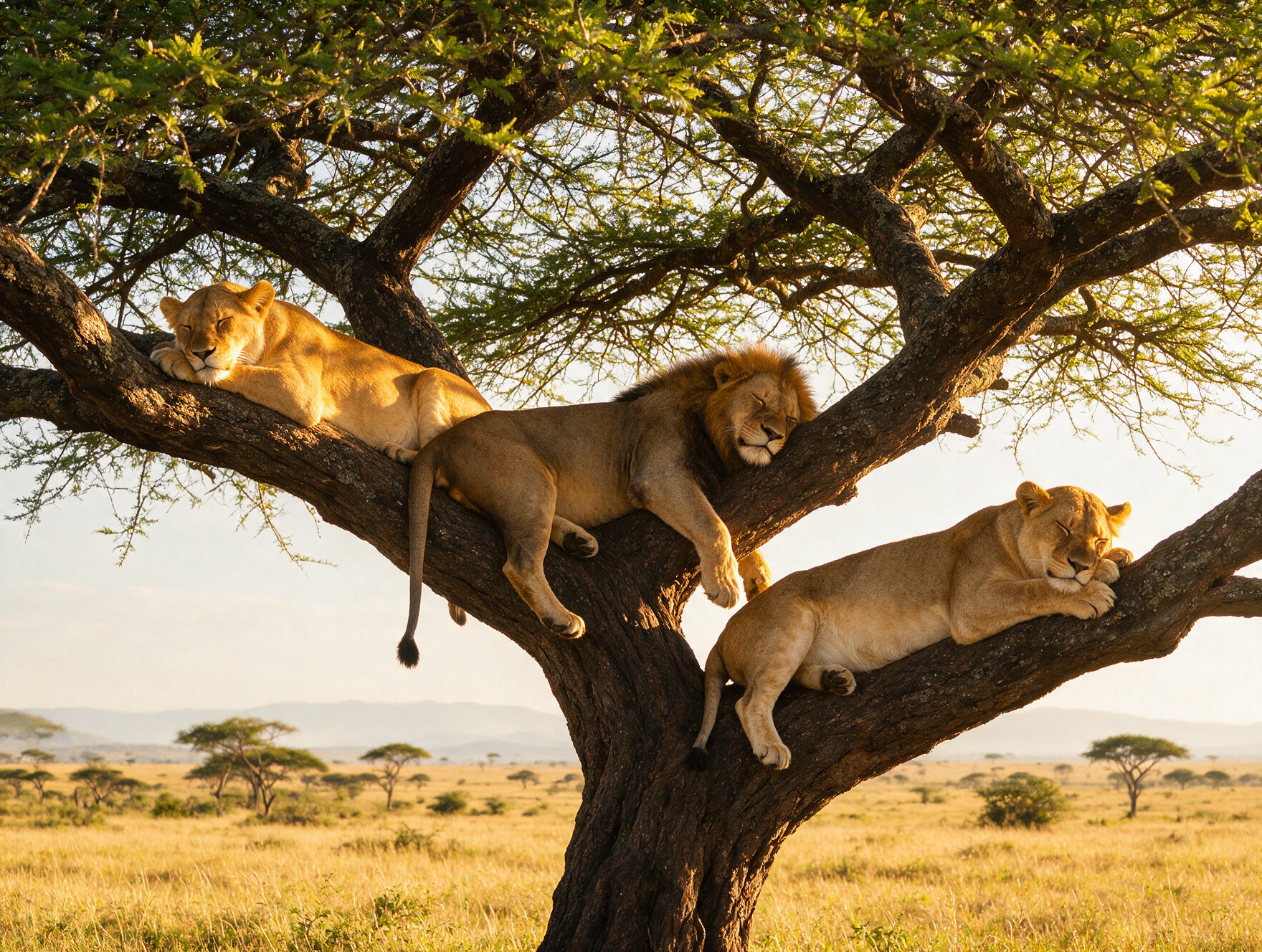
The Maasai Mara National Reserve doesn’t allow night drives — it’s a park rule. But the private conservancies surrounding the reserve (Mara North, Mara Naboisho, Olare Motorogi, Ol Kinyei) operate under different rules and offer something the park can’t: what happens to the savannah after dark.
In the conservancies, a guide with a spotlight takes you out from around 7 PM. The wildlife changes completely. Leopards, which spend most of the day invisible up in trees, descend and hunt. Hyenas start their rounds. Genets — small spotted cats that most visitors never see — move along the ground. Elephant herds graze calmly without the pressure of daytime vehicles. You might find lions on a kill, which, while confronting, is the most honest view of how an ecosystem actually functions.
Staying at a conservancy camp (Kicheche Mara, Governors’ Il Moran, Asilia’s Ol Pejeta in the Mara) rather than a camp inside the reserve is the unlock here. The conservancy fee is additional — typically USD 80–150 per person per night on top of accommodation — but it keeps vehicle density low (most conservancies limit the number of camps they permit) and enables experiences the main park simply doesn’t.
2. The Mara Triangle’s Marsh and Wetland System
The Mara Triangle, which sits on the western side of the Mara River and is administered separately from the main reserve by the Mara Conservancy, is notably less visited than the eastern sector. The road access is slightly harder (river crossings at certain times of year), which keeps the vehicle count down substantially.
The Triangle’s marsh systems — particularly the Musiara Marsh area near the Mara River — support resident hippos, water birds in extraordinary variety (African fish eagles, saddle-billed storks, yellow-billed kites), and year-round big-cat activity. The olive baboon troops here are enormous, up to 150 individuals, which sounds mundane until you watch them interact for twenty minutes and realize how much primate behaviour you recognize.
Most game drives launched from the eastern camps don’t cross into the Triangle without specific request. Ask your guide to cross at Serena Crossing (operational October–June) and spend a morning or afternoon on the western bank. The drive from most eastern camps takes about 45 minutes to reach the crossing, which feels like a long time but the landscape en route is good.
3. Hot Air Balloon at Dawn — and What to Do with the Rest of That Morning
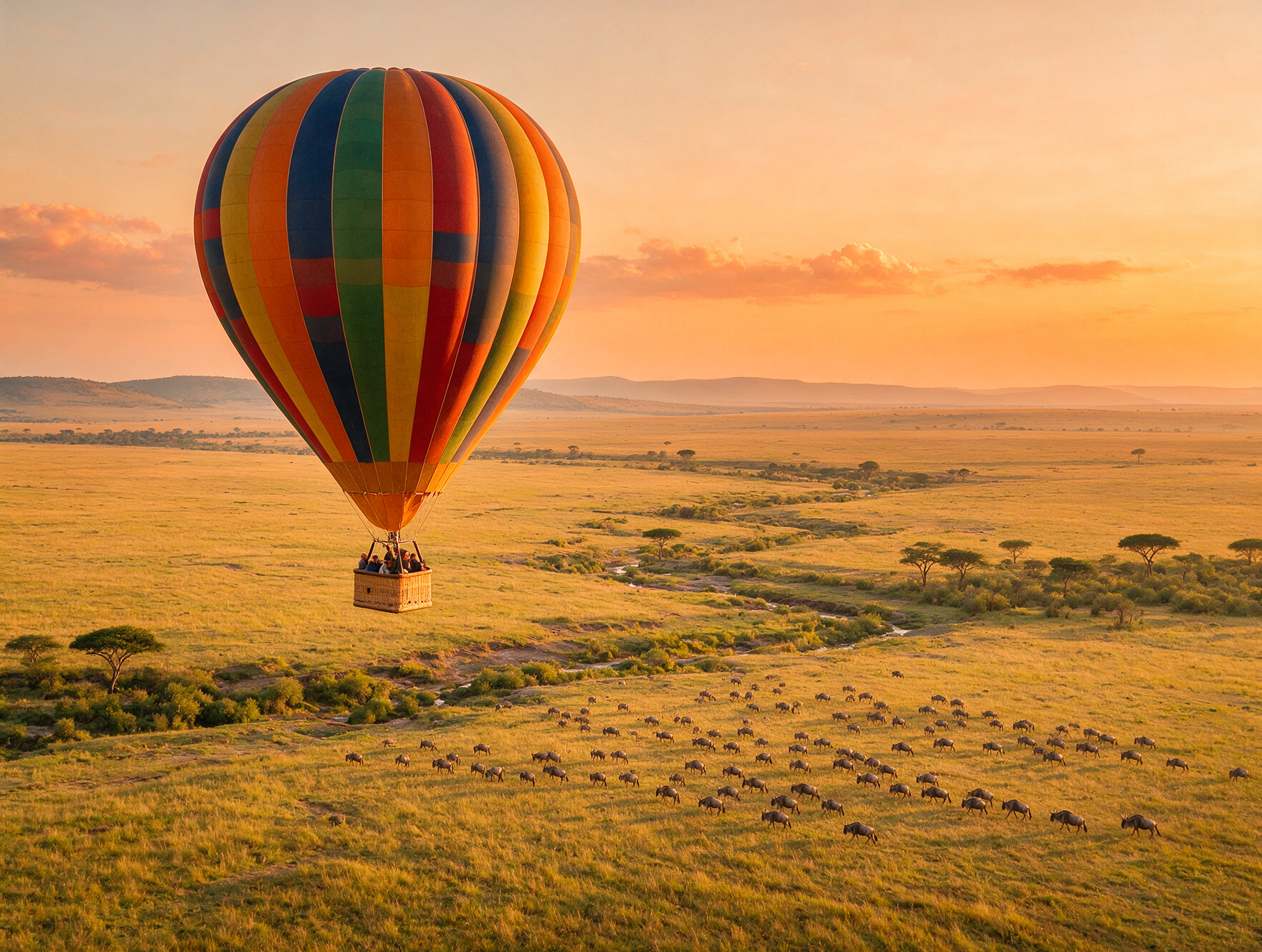
This one isn’t exactly hidden — balloon rides over the Mara are well known and well-trafficked. But the specific approach to the morning matters, because most travelers do the balloon, land for the champagne breakfast in the bush (always a bit of theatre, always enjoyable), and then return to camp. That’s a mistake.
The Mara River crossings happen most frequently in the early morning, often before 9 AM. If you’re landing around 8:30 AM from the balloon and you’re flying with operators that land near the river (Governors’ Balloon Safaris has this dialed in), you can transition directly from landing into a river-crossing vigil. The same guide who organized your balloon pickup can usually hold position near an active crossing point while the wildebeest commit. Having already seen the landscape from the air — where the herds cluster, where the river bends — makes watching the crossing from the ground feel three-dimensional in a way it doesn’t if you’ve only ever been at ground level.
Balloon costs run approximately USD 450–550 per person; book directly with Governors’ Balloon Safaris or through your lodge. Don’t go with unlicensed operators — Kenya Civil Aviation Authority licensing matters here.
4. Guided Bush Walk with a Maasai Ranger
A game drive keeps you inside a vehicle. A guided walk changes the scale of everything: suddenly you’re in the grass at buffalo height, and the tracks, dung, and broken branches that the vehicle drives past become a readable text of what moved through the night.
Walks are available in the conservancies and on some private conservancy land adjacent to the reserve. Typically 2–3 hours, departing before sunrise (around 6 AM) to avoid midday heat and coincide with the most active wildlife period. Your armed ranger and guide lead; you follow in single file, in silence when the guide signals, stopping frequently to read sign.
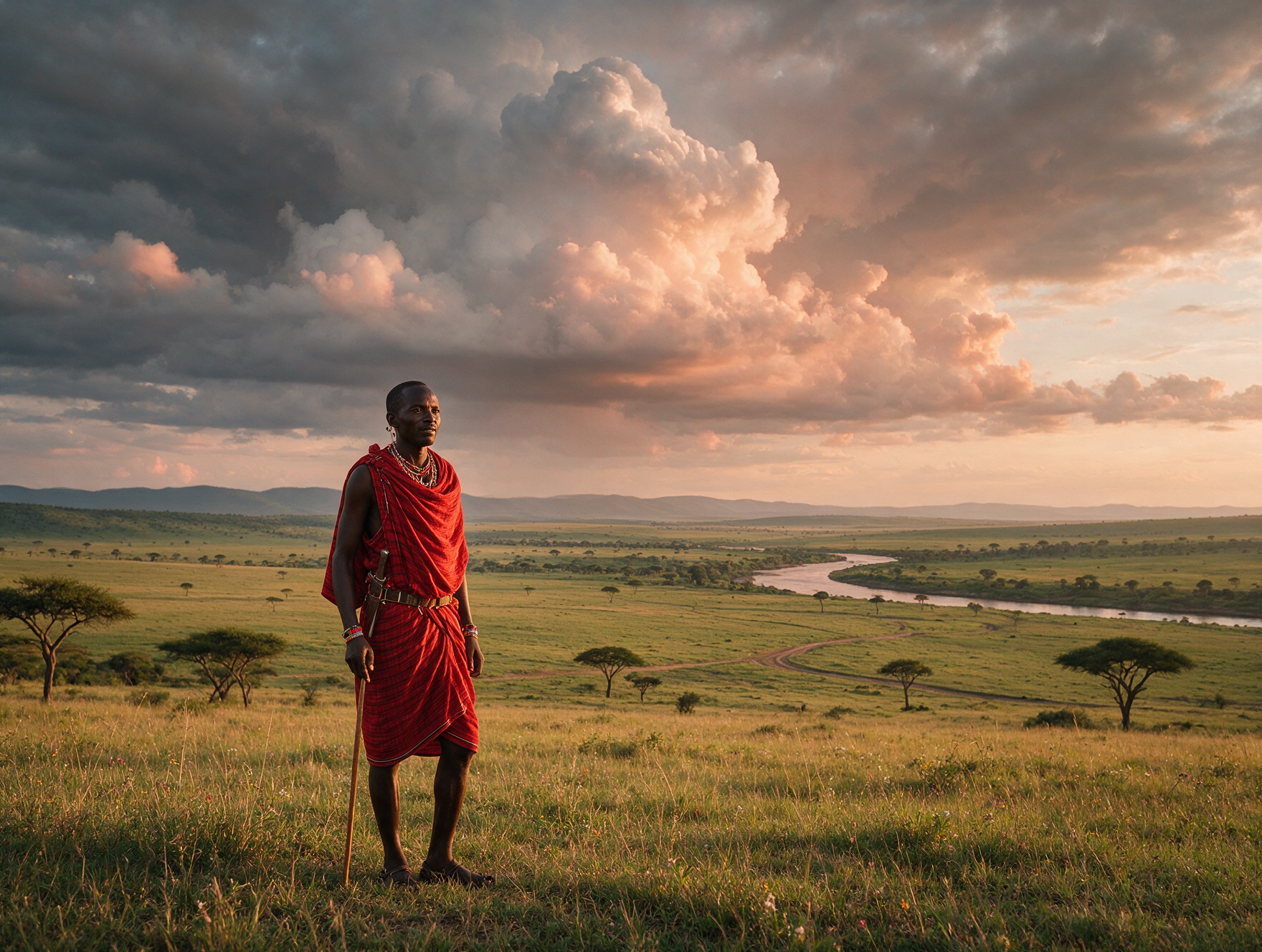
The Maasai rangers who lead these walks have grown up reading this landscape. The walk isn’t about seeing the Big Five — that’s not what a walk is for, and any operator promising big-cat encounters on foot is either lying or operating dangerously. It’s about understanding the ecology at the level you can only access when you’re not inside a machine. You’ll see things that matter: how termite mounds create micro-habitats, how lion urine marks territory, how the grass has been grazed differently on two sides of a drainage line. It sounds technical written out, but in practice it feels like waking up inside a place rather than observing it from outside.
Camp operators to ask: Kicheche Mara in Mara North Conservancy and Mahali Mzuri (Richard Branson’s camp) in Mara North are both consistently well-reviewed for walk quality.
5. A Real Maasai Village Visit (Not the Tourist Version)
Every camp in and around the Mara offers a “cultural village visit.” Most of them involve driving to a manyatta (Maasai homestead), being greeted by singing and jumping warriors in full regalia, and being shown into a dark hut for tea before the handicraft stall opens. It’s not dishonest exactly — all of that does happen in real Maasai life — but it’s compressed and performed in a way that obscures as much as it reveals.
The better approach takes more planning. Several conservancies — particularly in Naboisho and Mara North, which were created as partnerships between Maasai land owners and conservation interests — offer visits to working family compounds (distinct from ceremonial manyattas) where families live year-round. Your guide, often Maasai himself, will take you to a homestead where women are making beadwork for sale (not a curated demo), where children are actually doing homework or playing, and where elders will talk through a translator about the land, the livestock, and the pressures of conservancy coexistence with wildlife.
The conversation about coexistence is particularly valuable: Maasai herders lose livestock to lion and leopard, the compensation schemes work imperfectly, and the community’s financial stakes in tourism (through conservancy fees paid to landowners) are both the reason the wildlife survives here and a source of ongoing negotiation. You leave with a more complicated and more interesting view of conservation than any brochure offers.
Ask your lodge before booking — this kind of visit requires a guide with genuine community relationships and can’t be improvised on arrival.
The Great Migration: Timing It Right from India
The phrase “Kenya safari” and “Great Migration” are used almost interchangeably in Indian tour packages, but the timing details matter and most packages gloss over them.
The wildebeest migration is a year-round cycle (the herd is always moving somewhere in the Serengeti-Mara ecosystem), but the Mara River crossings — the dramatic, crocodile-filled spectacle you’ve seen in documentaries — happen primarily between July and October. Within that window, August and September typically see the highest crossing frequency, though this varies year to year based on rainfall patterns that no one can precisely predict.
The crossing is not a scheduled event. Herds mass on the southern bank of the river, hesitate for hours or days, and then a lead animal commits — or doesn’t. You might wait four hours at a crossing point and see nothing. You might arrive and find 5,000 wildebeest already mid-river. The uncertainty is part of the experience, not a problem to solve.
For Indian travelers booking Kenya tour packages from India, July–October is the premium window for Mara. December–March is calving season in Tanzania’s Serengeti (the migration’s southern phase) and is a good time for Amboseli and Samburu if you want wildlife without the August crowds and premium pricing.
Getting to Maasai Mara from India
Most direct options fly Mumbai or Delhi to Nairobi (Ethiopian, Kenya Airways, Emirates via Dubai, IndiGo code-shares). From Nairobi, the Mara is either a 5–6 hour drive (Nairobi–Narok–Mara gate) or a 45-minute flight on a light aircraft to one of the airstrips inside the reserve or conservancies — Keekorok, Mara Serena, or the various conservancy strips. The flight is worth the cost (USD 200–350 one way on SafariLink or AirKenya) on a tight itinerary; the drive, while long, takes you through the Rift Valley and Maasai towns that give useful context.
Kenya eTA: Required for Indian passport holders. Apply at evisa.go.ke, costs USD 50 per adult, processing 3–5 working days. Get it before you leave India — don’t gamble on airport processing.
Frequently Asked Questions
What is the best time to visit Maasai Mara from India?
July to October for the Great Migration river crossings. July–August for the highest crossing frequency if that’s the priority, though pricing and demand peak in August. June and November are shoulder months with good wildlife and lower prices.
How many days should I spend in Maasai Mara?
Three nights minimum to have a reasonable chance at a river crossing (you need flexibility to wait at the river over multiple morning drives). Four to five nights is better if the Migration is your primary reason for going. A two-night stay often doesn’t give the weather and timing the space to cooperate.
Can I visit Maasai Mara in a shared vehicle?
Yes, many camps offer shared game drives at lower cost. Private vehicles (USD 200–400 extra per day) are worth it if you want to stay at a specific site (like a crossing) for as long as you want, rather than accommodating the preferences of other guests.
Is Maasai Mara good for bird watchers?
Extremely. Over 560 bird species have been recorded. The marsh areas, in particular, are exceptional for raptors and waders. If you have a birding interest even a casual one, mention it to your guide — most experienced Mara guides have strong bird knowledge and will point out species they’d otherwise bypass.
Is the Maasai Mara safe for Indian tourists?
Yes, with the standard precautions. The camps and conservancies operate with solid security. The main practical risk is wildlife-related (not approaching animals on foot outside guided contexts), which guides manage. The area around Narok town on the drive in can involve opportunistic police checks — carry your passport and have the vehicle permit documentation visible.
Conclusion
The Maasai Mara is one of those places where even the standard version is extraordinary, which makes it easy to leave without having reached any of the second layer. The conservancies give you the nocturnal Mara. The marsh gives you the birdlife and the solitude. A Maasai-led walk gives you the land at its actual scale. And a genuine community conversation gives you the politics underneath the wildlife, which turns out to be the most interesting story in the place.
If you’re putting together a Kenya safari from India, Get Tripped can help build an itinerary that combines the Mara with Amboseli and the coast — get in touch, and we’ll sort the timing, the camp quality, and the logistics so you’re not guessing on any of it.