Most people treat Nairobi as a stopover — two nights before flying out to the Mara, a quick hotel breakfast, and then straight to the airport. That’s a mistake. This city genuinely rewards a full day on its own terms: wildlife before breakfast, a market lunch where you can bargain for Maasai beadwork, and sundowners on a rooftop with the city skyline framing the horizon. It’s messy and energetic and a little chaotic, and that’s exactly why it works.
This hour-by-hour guide is for the traveler who has one full day in Nairobi — either as a deliberate city stop on a Kenya safari itinerary or because your flight connections left you a full free day. Either way, here’s how to spend it well, as part of a broader Kenya trip from India.
Table of Contents
- 7:00 AM – Morning: Elephants and Giraffes Before the Heat
- 11:00 AM – Midday: Karen, Coffee, and Craft Markets
- 2:00 PM – Afternoon: The National Museum and Nairobi National Park
- 6:00 PM – Evening: Rooftop Sundowners and Nyama Choma
- Getting Around Nairobi
- Where to Stay
- Practical Tips for Indian Travelers
- Frequently Asked Questions
7:00 AM – Morning: Elephants and Giraffes Before the Heat
Start early. Nairobi gets hot by midday and the wildlife encounters are better in the cooler morning hours anyway.
David Sheldrick Wildlife Trust (7:00–9:00 AM)
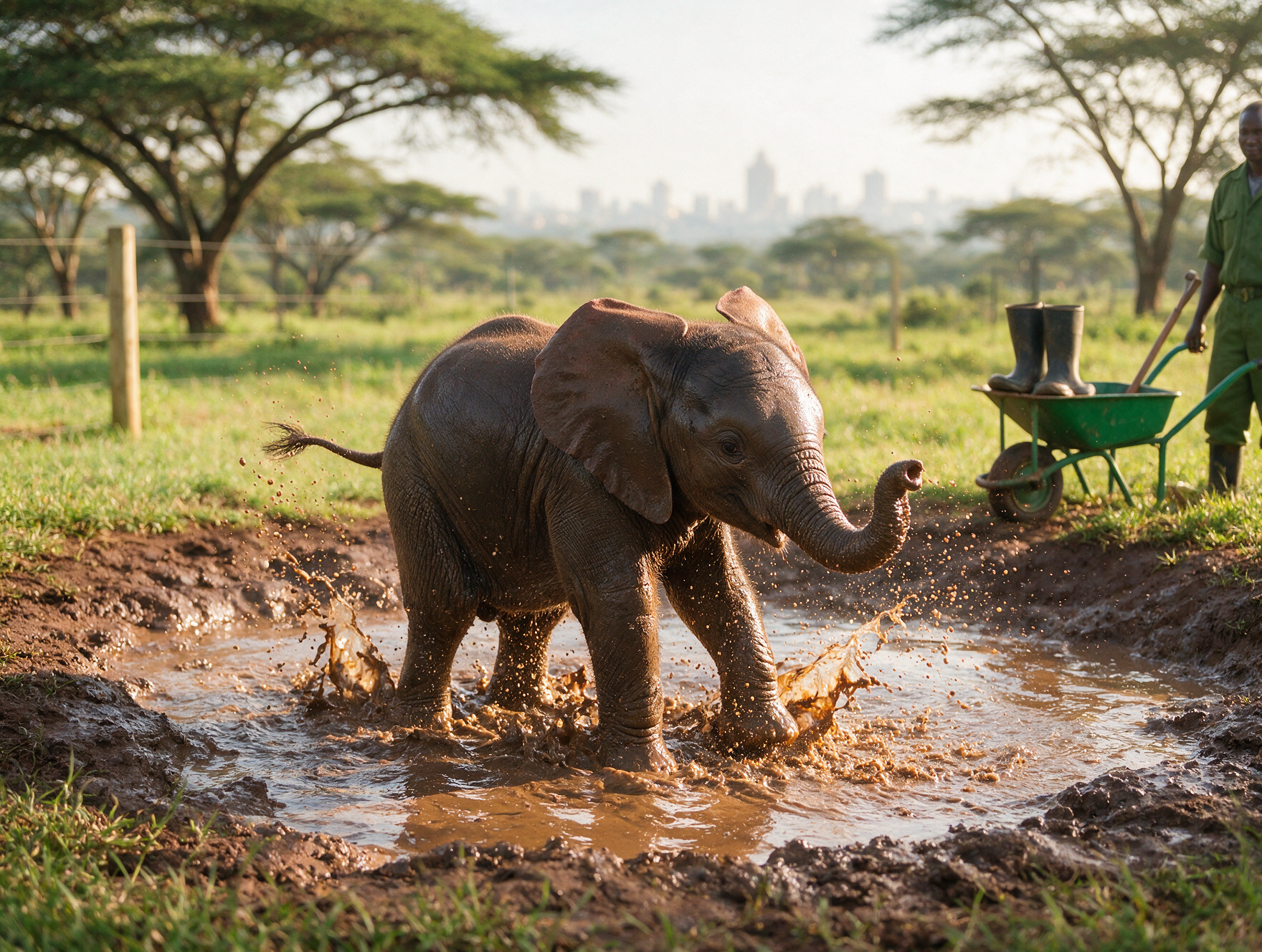
The elephant orphanage at the Sheldrick Wildlife Trust runs a public visiting hour every morning from 11 AM, but the keepers arrive with the calves around 7 AM for their mud bath and feed if you’ve booked a Keeper for a Day experience. Standard public visits run KES 3,500 (roughly ₹2,200) per person. You’ll watch juvenile elephants — some just a few months old — play, charge each other, and inhale milk through their trunks while their human keepers narrate each one’s rescue story. It’s the kind of thing you’ll still be talking about three days into your safari. Book online in advance at sheldrickwildlifetrust.org — walk-ins are available but the first session can fill.
Giraffe Centre (9:30–11:00 AM)
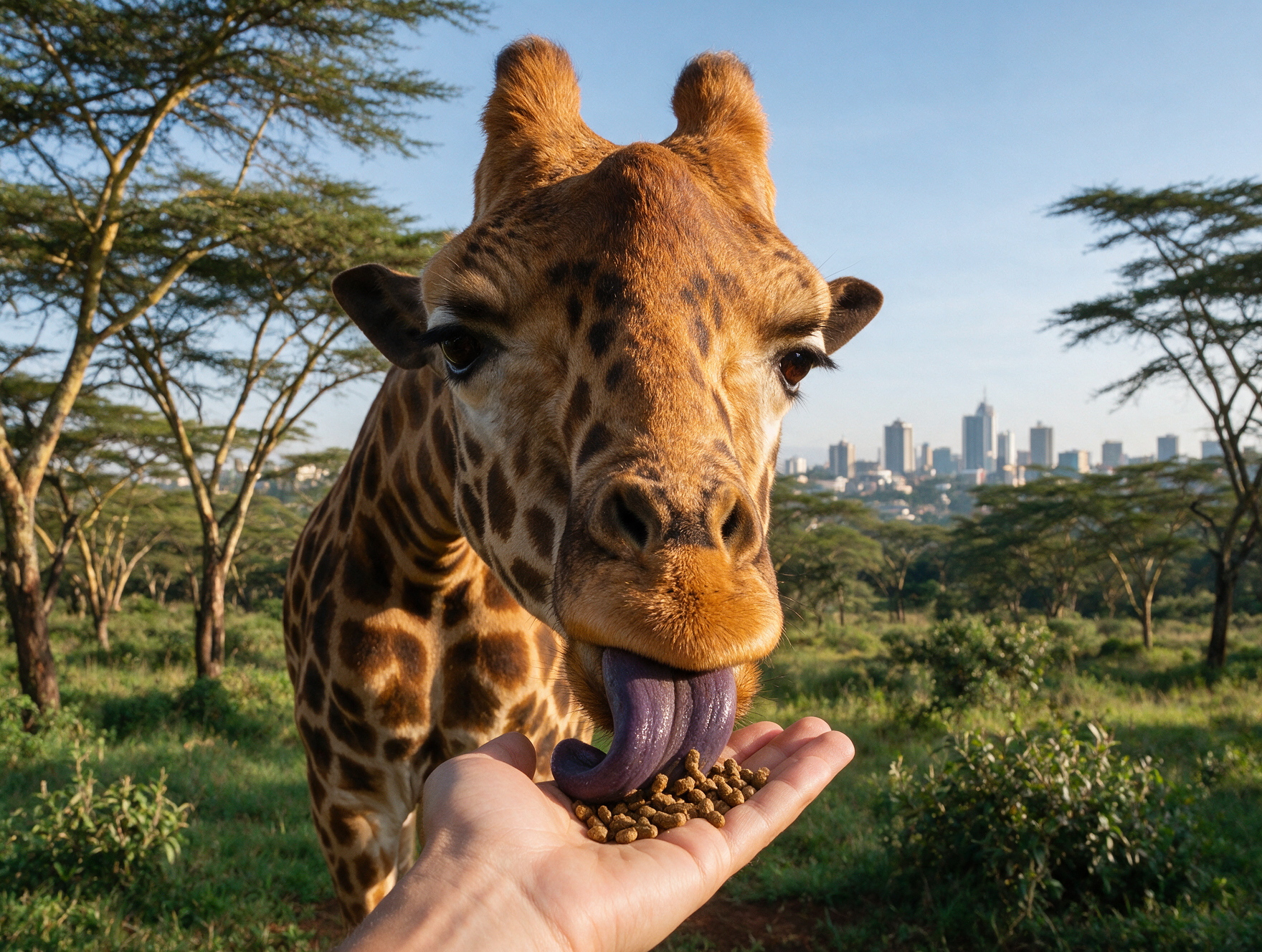
A fifteen-minute drive from Sheldrick puts you at the African Fund for Endangered Wildlife’s Giraffe Centre, where Rothschild giraffes — one of the rarest subspecies, with under 800 remaining in the wild — lean in from a raised platform to take pellets from your palm. The giraffe’s tongue is dark purple and roughly 50 cm long. You will get slobbered on. Everyone does, and everyone takes a photo of it. Entry is around KES 2,000 (₹1,250) for adults.
A caveat on timing: both spots are popular with school groups and tour buses by 10 AM. Go as early as each allows.
11:00 AM – Midday: Karen, Coffee, and Craft Markets
Karen Blixen Museum (11:30 AM)
The suburb of Karen is named after Karen Blixen, Danish author of “Out of Africa,” who farmed here in the early twentieth century. Her farmhouse is now a museum — the Danish government restored it before Kenyan independence — and the rooms are kept largely as they were when she lived in them. It’s a quiet, unhurried stop, nothing too elaborate, but the garden is genuinely beautiful and the context (colonialism, conservation, Kenyan land history) gives depth to the game parks you’ll visit later. Entry around KES 500 (₹320).
Lunch at Talisman Restaurant
A five-minute drive from the museum, Talisman has been a Karen institution for decades. Sit in the garden under the Acacia trees and order the pepper-crusted beef tenderloin or the grilled tilapia. Mid-range prices by Nairobi standards — a good main and drink will run you KES 3,000–5,000 (₹1,900–₹3,200). If you want something more casual, head to Karen Road for a Kenyan street lunch: nyama choma (charcoal-grilled meat) with ugali (maize porridge) at one of the roadside joints is honest, filling, and costs a fraction of the price.
Maasai Market
The Maasai Market moves around Nairobi’s neighborhoods on a rotating schedule — it’s at the Village Market on Fridays and at the Junction Mall parking lot on Saturdays, among other locations. It’s the best place in the city to pick up hand-beaded Maasai jewelry, soapstone carvings, kikoy fabric, and genuine wooden hand-carvings rather than factory-produced versions. Bargain hard — the opening ask is typically two to three times the real price — and walk away if a seller won’t budge. They usually will.
2:00 PM – Afternoon: National Museum and City Centre
National Museum of Kenya (2:00–4:00 PM)
The National Museum on Museum Hill has strong fossil and palaeontology collections (Kenya’s Rift Valley has yielded some of the world’s most important early hominid fossils), a Hall of Kenya’s Birds with 900-plus specimens, and decent rotating cultural exhibitions. The garden outside the main building has a memorial to Joy Adamson (of “Born Free” fame) and a medicinal plant walk. Entry KES 1,500 (₹950) for non-residents.
If you’d rather skip the museum, use this window for Nairobi National Park instead — the world’s only national park within a capital city’s boundaries. The southern boundary sits eleven kilometres from the CBD; you can see city skyscrapers in the distance while watching lions and buffalo in the foreground. Day entry is USD 52 per adult. A shared game drive vehicle can be arranged through your hotel or you can hire a guide at the park gate. The park is smaller than Maasai Mara but the wildlife density is surprisingly high, and if your Kenya itinerary doesn’t include multiple safari days, it’s worth the afternoon.
6:00 PM – Evening: Rooftop Sundowners and Nyama Choma
Sundowners: The Alchemist or The Sankara
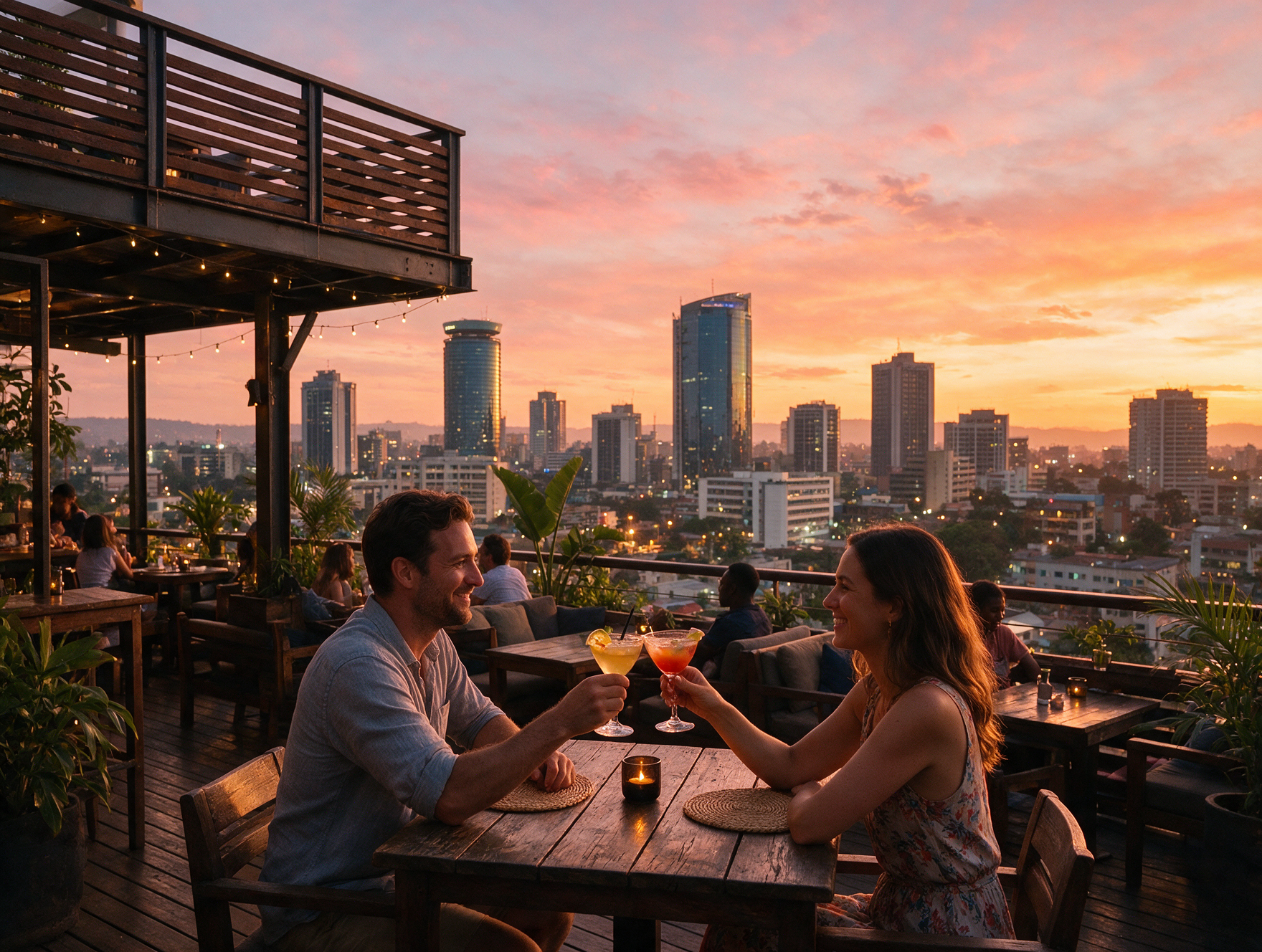
By 6 PM, trade the parks for the city’s increasingly good bar scene. The Alchemist in Westlands is an outdoor multi-vendor space with cocktails, craft beer, and street food — casual, mixed crowd, always lively on weekday evenings. If you’re after something more polished, the rooftop bar at the Sankara Nairobi in Westlands gives you unobstructed city views and a strong list of Kenyan and imported spirits.
Dinner: Carnivore Restaurant
Carnivore is a Nairobi institution that opened in 1980 and has been serving fire-roasted meats — including game (crocodile, ostrich, camel) when available — on cast-iron spears at the table ever since. It’s unapologetically carnivorous. The experience is all-you-can-eat for meats, and they keep bringing new skewers until you surrender (quite literally — you lower a white flag to signal you’re done). For Indian travelers who eat non-veg, it’s one of the more memorable dining experiences you’ll have in East Africa. Vegetarian options exist but are limited. Book ahead, particularly on weekends.
For something more local and less theatrical, head to the nyama choma spots along Ngong Road — Westgate Nyama Choma in Karen district is a local favourite, with kilogram-priced goat and beef grilled over charcoal and served with kachumbari (a fresh tomato and onion salsa). Very little English spoken, point at what you want, and enjoy it.
Getting Around Nairobi
Use Uber or Bolt (both operate here and are considerably safer and more transparent on pricing than negotiating with street taxis). Your hotel can arrange a driver for a full day for USD 60–100, which makes sense if you’re hitting multiple wildlife sites that require a vehicle anyway. The city’s matatu minibuses are chaotic and not worth attempting on a single-day visit with luggage.
Traffic is genuinely bad during peak hours (7–9 AM and 5–8 PM). Plan your day to avoid being on the road during those windows if possible — it’s not unusual to spend 45 minutes covering five kilometres in central Nairobi at rush hour.
Where to Stay in Nairobi
Mid-range (USD 120–200/night): The Fairview Hotel in Upper Hill is well-located, has good gardens, and is a favourite among business travelers and returning safari-goers. Villa Rosa Kempinski Nairobi in Westlands is a step above, with strong room quality and reliable restaurant food.
Luxury (USD 300+/night): The Hemingways Nairobi in Karen is the clear choice if budget isn’t a constraint — twelve suites on five acres, butler service, and a location that means the Giraffe Centre and Sheldrick Trust are a ten-minute drive. It feels more like a high-end country house than a city hotel. Sankara Nairobi is the best city-centre luxury option for those who want walkable access to Westlands’ restaurants and bars.
Practical Tips for Indian Travelers
Visa: India is not in Kenya’s visa-free list, but the process is straightforward. Kenya has replaced its e-visa with an Electronic Travel Authorisation (eTA), applied for online at evisa.go.ke. Cost is USD 50 for a single entry (cost confirmed as of late 2025 — verify at the time of booking, as this can change). Processing typically takes 3–5 business days; apply at least a week before travel.
Currency: Kenyan Shillings (KES). Cards are widely accepted at hotels, upscale restaurants, and malls. Smaller places, matatus, and market vendors prefer cash. Carry KES 2,000–5,000 in small bills for tips and markets. Forex bureaus give better rates than airport counters; M-Pesa (Kenya’s mobile payment system) is widespread but requires a local SIM to use.
SIM/Data: Pick up a Safaricom SIM at the airport on arrival. It’s Kenya’s most reliable network, especially outside Nairobi. ID is required. Data bundles are very affordable — KES 500 (₹320) will cover a week of normal browsing.
Safety: Nairobi has a complicated reputation, some of which is deserved and some of which is dated. The areas tourists visit — Westlands, Karen, Upper Hill, the CBD around Uhuru Park — are generally safe during daylight hours. Stick to Uber/Bolt after dark, don’t walk with visible cameras or phones in crowded street areas, and you’re unlikely to have any problems. The Maasai Market can attract pickpockets in the crowd; keep valuables zipped away.
Vegetarian options: Indian food is widely available in Nairobi — the suburb of Westlands has several good Indian restaurants including Shri Devi and Haandi, which serve north Indian food to a largely Kenyan-Indian community. Most Kenyan restaurants offer vegetable stews and ugali. Communication can help — ask for “bila nyama” (without meat).
Frequently Asked Questions
Is one day enough for Nairobi?
For a taster, yes. You can comfortably hit the elephant orphanage, Giraffe Centre, and one good dinner in a full day. A second day lets you add Nairobi National Park properly and explore Karen’s market scene more leisurely.
When is the best time to visit Nairobi?
Nairobi’s altitude (1,660 m) means it’s pleasantly cool year-round — daytime temperatures sit between 20–26°C in most months. The long rains run March–May; the short rains October–December. January–February and June–September are the driest, most predictable windows. For wildlife in the parks, July–October aligns with the Great Migration crossing in Maasai Mara.
Is Nairobi safe for solo Indian women travelers?
With the precautions listed above (Uber, not walking alone at night, keeping valuables discreet), Nairobi is manageable for solo women travelers. Stick to the neighbourhoods mentioned in this guide — Westlands, Karen, Upper Hill — rather than venturing into less touristed parts of the CBD alone.
What is the currency exchange rate from INR to KES?
Roughly 1 INR = 1.6–1.7 KES as of late 2025, though this fluctuates. USD is the more practical hard-currency reference for travel budgeting. Exchange at forex bureaus in Westlands or the larger malls, not at Jomo Kenyatta International Airport.
Do Indian tourists need vaccinations for Nairobi?
Yellow fever vaccination is required if you’re arriving from a yellow fever endemic country (several countries in India’s neighbourhood qualify — check your specific routing). A Yellow Fever certificate issued 10 days prior to entry is mandatory. Typhoid, hepatitis A/B, and malaria prophylaxis are recommended; consult a travel health clinic at least 4–6 weeks before departure.
How do I get from Jomo Kenyatta International Airport to Nairobi city?
The airport is about 18 km from the CBD. Uber/Bolt take 30–45 minutes in normal traffic (longer during rush hours). A pre-arranged hotel transfer gives you the most peace of mind on arrival. The standard rate for a private car is USD 25–40 depending on drop point.
Conclusion
Nairobi doesn’t ask you to love it — it doesn’t do the tourist-charm routine. But it has elephants before breakfast, serious food, and a creative energy that’s moved well beyond the city’s difficult 1990s reputation. One day here, done right, is the kind of city experience that sets the tone for everything that follows in Kenya. The safari days in Maasai Mara will feel different if you’ve met the orphaned elephants who might one day return to those grasslands.
If you’re planning a Kenya safari itinerary and want help putting Nairobi, the Mara, and the coast together into something that actually works logistically, Get Tripped’s Kenya packages are a good starting point — custom Kenya trips from India are our specialty, and we’ve done the groundwork on what takes how long and what’s actually worth the detour.