Six a.m. on a game drive in the Masai Mara, and I’m wearing every layer I packed, including the fleece I almost left behind because “Kenya is hot, right?” Mara mornings in July can sit at 8-12°C before sunrise, and in an open-sided vehicle moving at speed, it feels colder still. Nobody warns first-time safari-goers about this part. They obsess over sunscreen and forget they’ll be shivering before the sun clears the acacia trees. That’s really why a packing list matters more here than almost anywhere else — Kenya’s seasons and altitude swing hard, and figuring out the best time to visit Kenya is only half the planning. What’s in your bag decides whether you actually enjoy the trip once you’re there.
This guide breaks Kenya down by season and by trip component, because a safari bag, a beach bag, and a mountain bag are three different things — and most generic packing lists pretend they’re one.
In This Guide
- Kenya’s seasons explained — dry, wet, and the migration window
- What to pack for the dry season (June-October and January-February)
- What to pack for the rainy months (the long rains and short rains)
- The complete safari packing list — clothing, optics, and camera gear
- Diani Beach packing essentials
- Mount Kenya trekking gear
- Bush flight luggage rules you cannot ignore
- Sun, malaria, and health prep before you fly
- Frequently asked questions
Kenya’s Seasons, Explained
Kenya doesn’t really run on four seasons. It runs on two dry stretches and two wet ones, and which one you land in changes your packing list more than the destination itself does.
The long dry season runs roughly June through October, with the Great Migration’s river crossings in the Masai Mara peaking around July to September. This is the window most people actually mean when they search for the Great Migration Kenya best time — skies are clear, grass is cropped low from grazing, and game viewing is at its sharpest. It’s also the busiest and priciest stretch, so camps fill up early. The short dry season covers January and February: quieter, just as dry, and increasingly popular with travelers planning Kenya trips December to April around the coast and the southern parks.
The long rains fall March through May. This is the wettest, muddiest window — some camps close entirely, tracks turn to soup, and a few lodges drop their rates by 30-40%, which is honestly when a lot of repeat visitors prefer to go. The short rains arrive around October and November, usually as short, heavy afternoon showers rather than all-day washouts. Kenya’s Meteorological Department has pointed to a wetter-than-usual short rains season for parts of the country toward the end of 2026, so if you’re traveling in that window, build a few buffer days into any itinerary that depends on road transfers.
None of this accounts for altitude, and that’s the part almost every first-timer misses. Nairobi sits at roughly 1,795 meters and feels like a mild spring most of the year, not the tropical heat people expect from an “African” city. The Masai Mara sits at a similar elevation, which is exactly why those pre-dawn game drives feel like a different country than the 2 p.m. safari. Diani Beach, on the coast, is sea level and genuinely tropical — hot, humid, and sticky year-round regardless of rain. Mount Kenya has its own climate stacked in layers as you climb, and above 4,000 meters you’re dealing with near-freezing nights no matter what the calendar says about “dry season.”
The single biggest mental shift before you pack: you’re not packing for “Kenya.” You’re packing for two or three different climates on one trip, sometimes in the same week.
What to Pack for Kenya’s Dry Season (June-October and January-February)
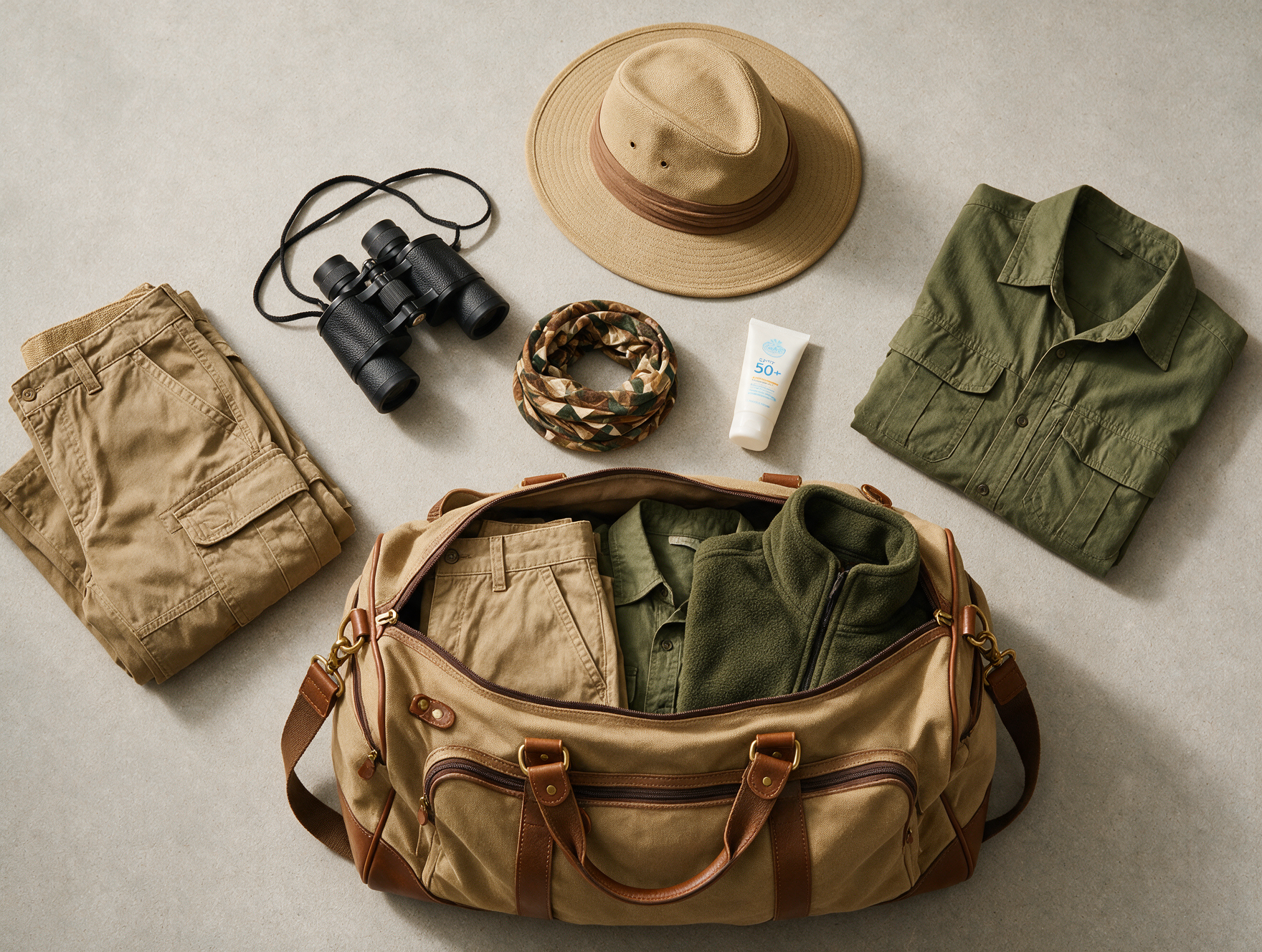
Dry season days are warm, often climbing into the high 20s°C by midday, but the dust is relentless and the mornings are genuinely cold. Pack for both extremes, not the average.
- A warm layer you can strip off fast — a fleece or a packable down jacket for 6 a.m. game drives, light enough to stuff in a daypack by 9 a.m.
- A buff or light scarf for dust — unpaved tracks in conservancies like Naboisho and Mara North kick up a lot of it, and a scarf over the nose and mouth beats coughing through a game drive.
- Broken-in closed shoes, not brand-new ones. Dry season dust finds every seam of a stiff new boot.
- A wide-brim hat with a chin strap — open vehicles move fast enough that a loose hat becomes a lost hat.
- Lip balm with SPF. The combination of dry air, altitude, and wind on game drives chaps lips faster than most people expect.
If your trip overlaps the river-crossing peak in July to September, add one more thing: patience-friendly layers. You may sit at a crossing point for two or three hours waiting for wildebeest to commit, and the temperature can swing 15 degrees between arrival and departure.
What to Pack for Kenya’s Rainy Months
The long rains (March-May) and short rains (around October-November) don’t mean constant downpour — they mean short, intense bursts, usually in the afternoon, with sun in between. The packing shift is less about staying dry and more about staying mobile.
- A proper rain shell, not a cheap poncho. Ponchos flap and snag on vehicle doors and camera straps. A packable waterproof jacket with a hood does the job without getting in your way.
- Waterproof bag covers for cameras and binoculars — a sudden shower on an open vehicle gives you under a minute to react.
- Quick-dry trousers over anything cotton. Cotton stays wet and heavy for hours in humid conditions; synthetic or merino blends dry overnight.
- A second pair of shoes. Mud season means one pair is always drying by the fire while you wear the other.
- A dry bag for electronics if your itinerary includes any boat transfer, including trips out to the reef off the coast.
Here’s the honest trade-off: rainy season light is spectacular for photography — dramatic skies, saturated green landscapes, fewer vehicles at every sighting — but you’ll spend more time adjusting plans around weather than in the dry months. If flexibility isn’t your thing, this isn’t your season.
The Complete Safari Packing List
Clothing: Why Earth Tones Aren’t Just a Look
Khaki, olive, and tan aren’t a safari cliché for no reason. There’s a real, slightly uncomfortable reason behind it: tsetse flies hunt by sight, not scent, and they’re drawn hardest to dark blue and black because those colors create the sharpest contrast against dry grass and pale soil. Tsetse control programs actually dye their traps blue and black on purpose, because that combination pulls flies in from a wide area. Bring that color into the bush yourself and you become the trap.
Stick to khaki, beige, light olive, or soft gray. Skip bright white too — it shows dust fast and can spook wildlife at close range, which matters more than it sounds like it should when you’re twenty feet from an elephant.
Layering for Mornings That Don’t Match the Afternoon
The single most useful packing principle for a Kenya safari: three thin layers beat one thick one. A breathable base layer, a fleece or light sweater, and a windproof outer shell let you adjust every hour instead of overheating by 10 a.m. or freezing at sunrise. Add a pair of light gloves if you run cold — camera dials get fiddly with numb fingers.
Optics and Camera Gear
- Binoculars, 8×42 or 10×42. Don’t rely on the guide’s pair or your phone zoom — a lion half a kilometer away looks like a smudge without your own glass.
- A dust-proof camera bag and a few extra memory cards. Dust gets into everything on unpaved roads, and you will take more photos than you expect.
- A beanbag or small tripod support for resting a long lens on the vehicle’s door frame — handheld shots at 400mm from a moving jeep rarely come out sharp.
- Spare batteries and a portable charger. Many tented camps run generators on a schedule, not around the clock.
One more thing nobody mentions: bring a basic plug adapter. Kenya uses the UK-style three-pin plug (Type G), which surprises a lot of travelers from India who assume it’s the same as home.
A Mistake Worth Avoiding
The single most common packing mistake on a Kenya safari isn’t a clothing color — it’s the suitcase itself. Hard-sided luggage gets turned away at the gate for small bush flights, full stop. More on that below, because it affects everything else you pack.
Diani Beach Packing List (A Completely Different Bag)
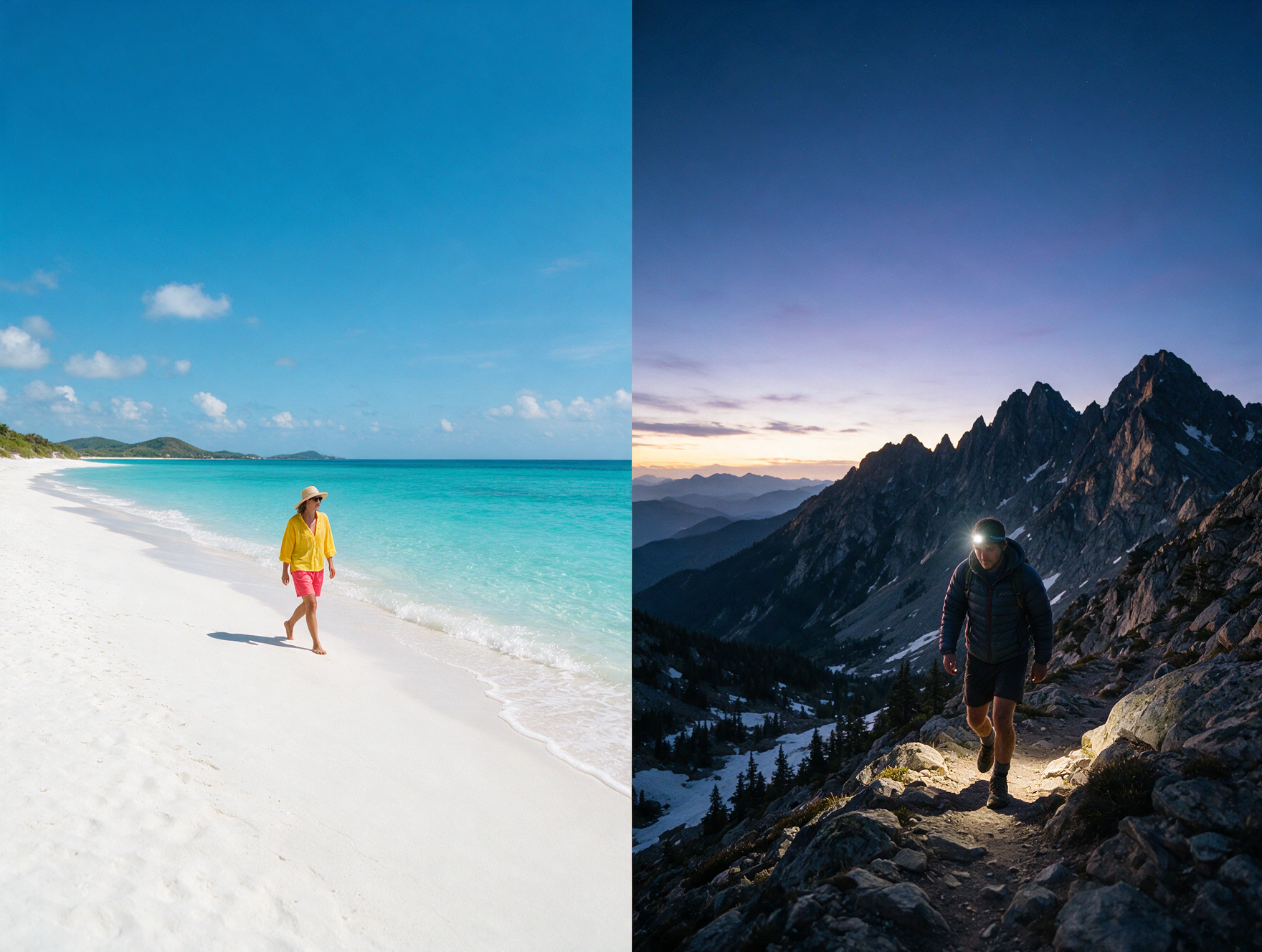
If your trip pairs a Masai Mara safari with a few days unwinding on the coast, don’t just pack more of the same clothes. Diani sits at sea level on the Indian Ocean, and it’s hot and humid year-round — the earth-tone safari rules don’t apply here at all.
- Breathable, light cotton or linen — bright colors and prints are completely fine on the coast; there’s no tsetse concern at Diani.
- Reef-safe sunscreen, ideally mineral-based, especially if you’re snorkeling or visiting the Wasini Island marine park.
- Water shoes or sandals with grip — Diani’s reef flats can be sharp underfoot at low tide.
- A light cover-up or sarong for the walk between the beach and town, where swimwear alone isn’t considered appropriate dress.
- A dry bag for phones and cameras on any dhow sailing trip or kitesurfing session — Diani is one of East Africa’s better-known kitesurfing spots, and spray gets everywhere.
- Insect repellent with DEET for evenings — the coast has a higher mosquito presence than the highland safari circuit.
Pack this section separately in your bag, or better yet, in a separate smaller duffel, so you’re not digging through safari khakis to find beachwear on arrival day.
Mount Kenya Trekking Gear
If Mount Kenya is on your itinerary — even just the lower routes toward Point Lenana rather than a technical summit attempt — pack as if you’re doing a multi-day alpine trek, because you are. Temperatures can swing from warm rainforest at the base to well below freezing at altitude, often within the same 48 hours.
- A four-season sleeping bag rated well below freezing, even if camp huts provide bedding — ask your operator exactly what’s supplied before assuming.
- Waterproof hiking boots, broken in well before the trip. This is not the place to test new boots.
- A proper down jacket, not just a fleece — summit mornings on Point Lenana start in the dark, well below zero.
- Trekking poles, especially for the descent, which is harder on knees than most people expect.
- Headlamp with spare batteries for a pre-dawn summit push.
- Altitude awareness — Point Lenana sits at 4,985 meters. Mild altitude symptoms are common even on the shorter routes, and they’re worth discussing with a doctor before you go, not managing on the mountain.
This is where Get Tripped’s luxury-leaning clients often ask the same question: is it worth it? Honestly, only if you genuinely want a trek. It’s a serious physical undertaking bolted onto a safari holiday, not a casual add-on day trip. If multi-day hiking isn’t your idea of a good time, the view from a lodge veranda at Mount Kenya’s base is a fine substitute.
Bush Flight Luggage Rules You Cannot Ignore
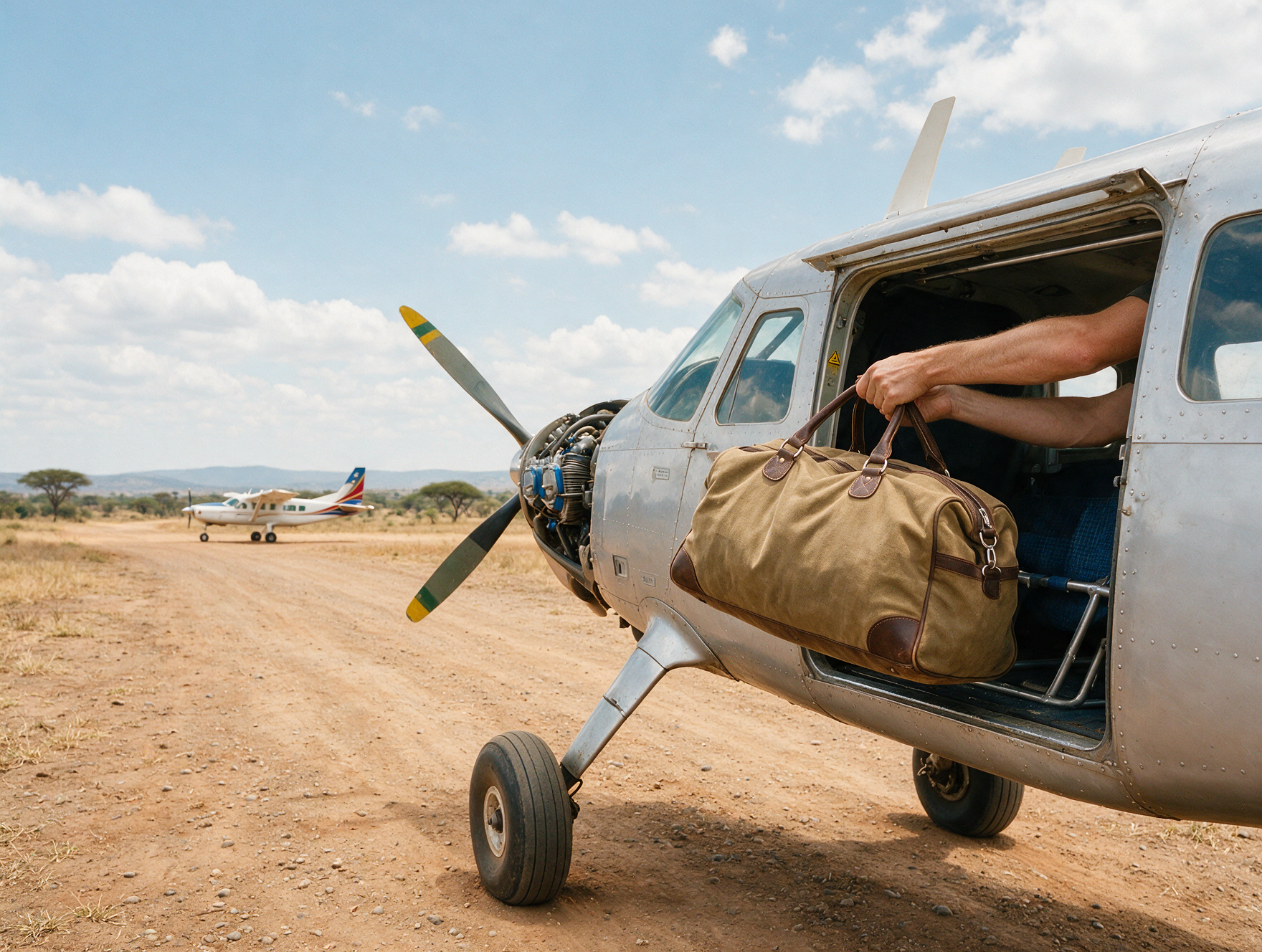
This is the single most overlooked part of Kenya packing, and it can genuinely derail a trip. Most safari circuits, especially routes into the Masai Mara, Amboseli, or Samburu, use small aircraft operated by carriers like Safarilink or AirKenya rather than road transfers. These planes have tiny, irregularly shaped cargo holds, and the rules reflect that.
- Soft-sided duffel bags only. Hard-shell suitcases are routinely refused at check-in because they don’t flex to fit the hold.
- Weight limits around 15 kg per person, often including hand luggage and camera gear combined — this varies slightly by operator, so confirm the exact allowance before you fly.
- Excess luggage can usually be stored at a Nairobi hotel or the operator’s office and collected on your way back, so you don’t need to cram everything into one small bag for the whole trip.
Pack your main safari and beach gear into one soft duffel under the weight limit, and leave anything bulky — the second pair of shoes, overflow toiletries, gifts you’ve picked up — in a separate bag you only touch on the Nairobi legs of the trip.
Sun, Malaria, and Health Prep Before You Fly
Kenya sits near the equator, and UV exposure is intense even on overcast days, especially at altitude in the Mara or on Mount Kenya. Pack a high-SPF sunscreen, reapply more often than feels necessary, and don’t skip sun protection just because a morning game drive starts out cold — that’s exactly the setup for the worst sunburns, because people forget they’re still exposed.
Most of Kenya, including the Masai Mara, Amboseli, and the coast around Diani, falls within a malaria risk zone. This is genuinely important to plan for, and it deserves a real conversation rather than a packing-list bullet point: speak with a doctor or a travel health clinic well before departure about antimalarial options suited to your health history, your itinerary, and how long you’ll be in-country. Pack repellent with DEET or picaridin regardless, along with a few lightweight long-sleeve layers for dusk, when mosquito activity picks up.
It’s also worth checking current entry and vaccination guidance before you travel, since requirements and recommendations can change. The CDC’s Kenya traveler health page is a reliable place to check current recommendations, and your own travel clinic can advise on anything specific to your health situation.
Frequently Asked Questions
What is the best time to visit Kenya for a first safari?
For most first-time visitors, the long dry season from June to October is the easiest entry point — predictable weather, excellent visibility, and the Great Migration’s river crossings peaking from July to September. If you’d rather skip the crowds and the peak-season prices, January and February offer similarly dry conditions with a noticeably quieter Mara.
When exactly does the Great Migration cross the Mara River?
There’s no fixed date — the herds move based on rainfall and grazing, not a calendar. That said, the heaviest crossing activity in the Masai Mara typically falls between July and September, with some variation year to year. A good operator tracks herd movement in real time and can adjust your camp location accordingly.
Do I need to take malaria tablets for Kenya?
Most of Kenya’s safari circuit and coast sit within malaria risk areas, and antimalarial medication is commonly recommended for travelers. This decision depends on your health history and itinerary, so it’s genuinely worth a consultation with a doctor or travel clinic before you go, rather than relying on general advice.
What colors should I avoid packing for a Kenya safari?
Skip dark blue and black — both attract tsetse flies, which hunt by sight and are drawn to high-contrast dark colors against the savanna. Stick to khaki, tan, olive, and soft gray, and avoid bright white as well, since it shows dust quickly and can draw unwanted attention from wildlife at close range.
How much luggage can I bring on a small-aircraft safari flight?
Most bush flight operators in Kenya cap luggage around 15 kg per person, often including hand luggage, and require soft-sided duffel bags rather than hard suitcases. Confirm the exact limit with your specific operator, since it varies, and plan to store any excess baggage in Nairobi rather than carrying it onto the small plane.
Is it cold on Kenya safari mornings, even in dry season?
Yes, often surprisingly so. Mara mornings in the dry season can sit between 8-12°C before sunrise, and wind chill on a moving open vehicle makes it feel colder still. Pack real layers, not just a light jacket, even if you’re traveling in what’s technically the hot season.
What’s different about packing for Diani Beach versus a safari?
Diani is tropical, humid, and at sea level, so the earth-tone safari rules don’t apply — bright colors and prints are fine. Focus instead on breathable fabrics, reef-safe sunscreen, water shoes for the reef flats, and a dry bag if you’re sailing, snorkeling, or kitesurfing.
When is the best time for Kenya trips from India between December and April?
December through February is dry, warm, and increasingly popular for travelers planning Kenya trips from India in that window, with good game viewing and pleasant coastal weather at Diani. March brings the start of the long rains, so if your trip runs into April, expect more variable weather and build some flexibility into road-dependent plans.
Getting the Bag Right Matters More Than Most People Think
A good Kenya packing list isn’t really about a checklist — it’s about understanding that you’re moving through two or three climates in one trip, often in the same week, and sometimes in the same day. Pack for the cold 6 a.m. game drive and the hot 2 p.m. one. Pack earth tones for the bush and bright cotton for the coast. Pack a soft bag because the plane that gets you to the Mara simply won’t take a hard one.
None of this is complicated once you know it. Most of it just isn’t obvious until someone tells you, usually while you’re shivering in a Land Cruiser at dawn wondering why nobody mentioned the fleece.
If you’d rather hand the planning over entirely — the right camps for migration season, the right coastal add-on, the right internal flight logistics — explore Get Tripped’s Kenya travel guide for a sense of how the pieces fit together, or go straight to our luxury Kenya safari packages to see curated itineraries built around the exact season you’re traveling in. We put together Kenya safari packages from India and Kenya tour packages from India that handle the bush flights, the camp selection, and the coastal add-ons, so the only thing left for you to get right is the packing list above. Ready to see what fits your dates? Book your Kenya safari holiday with our team and we’ll help you plan around the season that suits you best.