The first time one of our travelers nearly missed her Nairobi flight, it had nothing to do with wildlife or weather. It was a blank white screen on a government payment page, four days before departure, with a Masai Mara lodge booking she couldn’t cancel. That’s the real story of the Kenya visa for Indians process in 2026 — not that it’s hard, but that a few small, fixable things catch people out if nobody warns you first. Kenya doesn’t issue a traditional stamped visa to Indian passport holders anymore. It runs on an Electronic Travel Authorization, or eTA, and getting it right is a 15-minute job once you know what the form actually wants.
This guide walks through the current eTA process end to end — cost, documents, processing time, the yellow fever rule almost nobody explains correctly, and what actually happens when you land at Jomo Kenyatta International Airport. We update it against the official portal, not old blog posts, because Kenya’s entry rules have changed twice in two years and most of what ranks on Google is still describing the old system.
In This Guide
- What the Kenya eTA actually is (and why it replaced the old eVisa)
- Step-by-step application process
- Documents, fees, and processing time
- Passport validity rules
- The yellow fever catch that catches Indian travelers specifically
- What to expect at Nairobi airport immigration
- Common mistakes that delay approval
- Flights from India to Nairobi
- Is Kenya safe for Indian tourists
- Currency, cards, and M-Pesa
- FAQs

What Changed: eTA Replacing the Old Kenya eVisa
In December 2023, Kenya’s government announced it would become “visa-free” for all travelers starting January 2024. That phrase did a lot of damage, honestly, because it isn’t accurate. What actually launched was the eTA — Electronic Travel Authorization — which replaced both the old eVisa (evisa.go.ke) and visa-on-arrival. You still apply in advance, you still pay a fee, and you still need approval before you fly. It’s digitized paperwork with better branding, not a free pass. Call it what it is and the process stops feeling like a trick.
The upside is real, though: the new eTA is cheaper and usually faster than the old eVisa, which charged up to USD 101 for multiple entry and took up to a week. Kenya’s immigration department runs the eTA through its own portal, and it’s the only route in for Indian citizens now — visa-on-arrival is gone entirely, and airlines can and do deny boarding to passengers without an approved eTA.
How to Apply for the Kenya eTA, Step by Step
You apply online at etakenya.go.ke, the official portal run by Kenya’s Ministry of Interior and National Administration. Avoid any third-party site that looks similar and charges a “service fee” on top — there’s no reason to pay a markup for a form you can fill yourself in under 20 minutes.
- Create an account with your email and phone number on the official portal.
- Fill in passport and personal details exactly as they appear on your passport — a mismatched middle name is a common reason for a flagged application.
- Upload your documents: passport bio page, a passport-style photo, and your travel/accommodation details.
- Answer the purpose-of-travel questions. Tourism is the most common category and the simplest to process; business, medical, or family-visit categories ask for extra supporting letters.
- Pay the fee by credit or debit card.
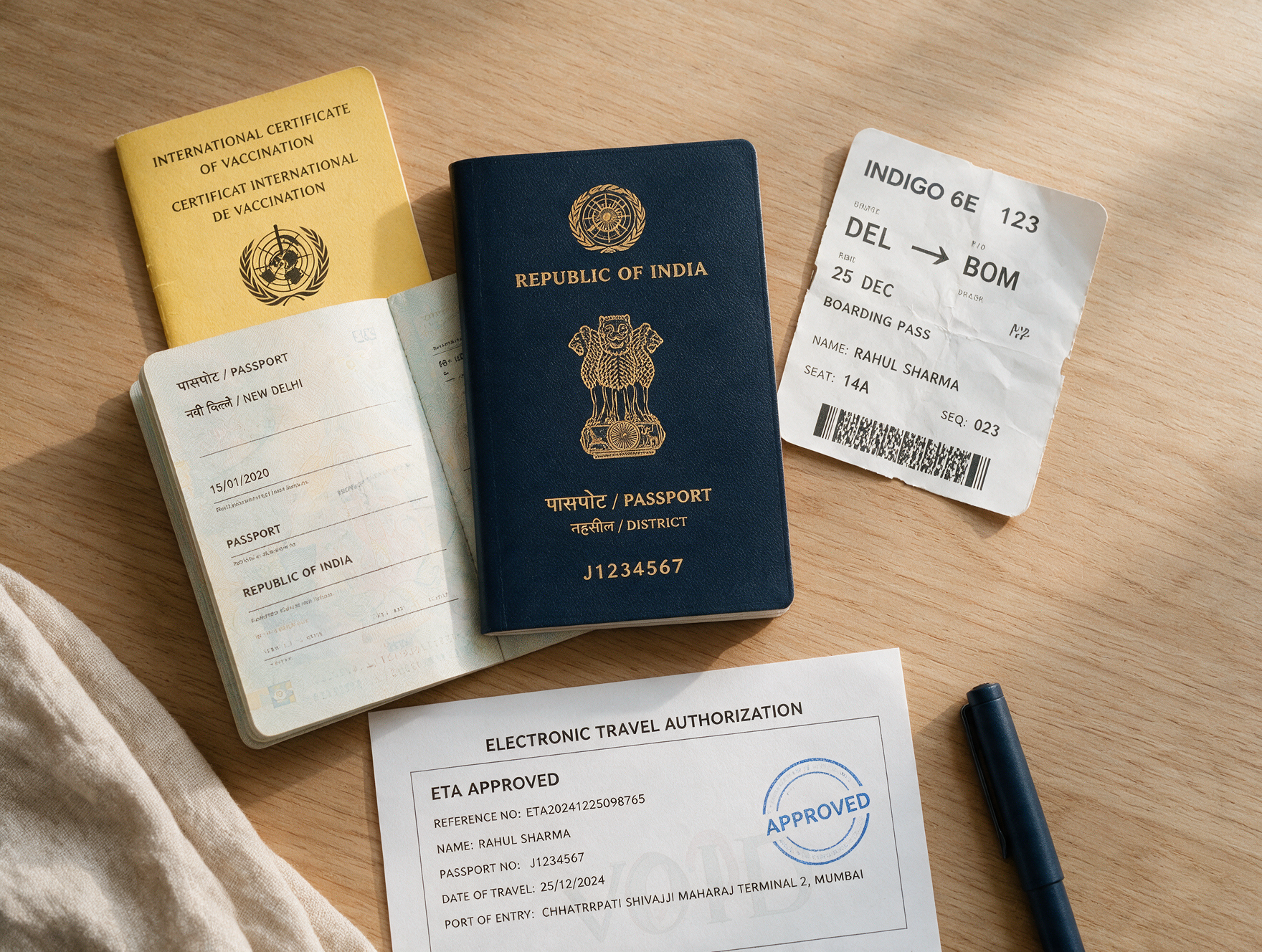
- Wait for approval, which arrives by email as a PDF. Download it, save it offline, and carry a printed copy in addition to the digital one — Nairobi airport WiFi is not something to bet a connecting flight on.
One genuinely useful thing the portal states outright: an approved eTA is not the final word on entry. The immigration officer at the border still decides admissibility. In practice this almost never becomes an issue for a tourist with a return ticket and a hotel or safari booking, but it’s worth knowing the eTA is a pre-clearance, not a guarantee.
Documents You Need Before You Start
Have these ready before you open the application — it saves you from restarting halfway through:
- Passport valid for at least six months beyond your arrival date in Kenya, with one blank page
- A recent passport-style color photo (2×2 inches, taken within the last six months)
- A working email address and phone number
- Flight itinerary, both arrival and departure
- Confirmed accommodation booking (hotel, lodge, or safari camp)
- A credit or debit card for payment
If you’re traveling for anything other than tourism, add the relevant supporting document — an invitation letter and company registration for business trips, a hospital referral for medical travel, a conference invitation for delegates. Tourist applications rarely need more than the basics above.
Kenya eTA Fees and Processing Time
The standard single-entry eTA costs USD 30 on the official portal, which works out to roughly ₹2,600–2,800 depending on the day’s exchange rate and your card’s foreign transaction fee — budget a little extra, since some travelers report a final charge closer to USD 34 once bank fees are added. There’s also an expedited option at an additional USD 100 that processes immediately, which is a reasonable insurance policy if you’re applying later than you’d planned, but not something you need if you give yourself two weeks.
Standard processing takes up to three business days (72 hours), though plenty of applications clear faster. The eTA website itself recommends applying at least two weeks before travel, and you can submit up to three months ahead. A single-entry eTA stays valid for 90 days from the date it’s approved — meaning you have a 90-day window to actually use it for entry — and once you’re in the country, you can stay up to 30 days per visit. Frequent visitors can apply for a multiple-entry eTA, valid for up to five years, allowing stays of up to 90 days per visit. For most leisure travelers booking a one- or two-week trip, the standard single-entry option is all you need.
Passport Validity Rules
Your passport needs at least six months of validity left from your date of arrival in Kenya, plus a minimum of one completely blank page for the entry stamp. This is stricter than it sounds for travelers whose passports are getting close to renewal — check the expiry date before you even start the eTA form, not after approval. A rejected or revoked eTA because of passport validity is far more annoying to fix than renewing a passport two months earlier than planned.
The Yellow Fever Rule Most Blogs Get Backwards
This is the part that trips up Indian travelers specifically, and it’s almost never explained correctly online. Kenya does not require a yellow fever vaccination certificate for travelers arriving directly from India, because India isn’t on Kenya’s list of yellow-fever-risk countries. If your flight is Mumbai to Nairobi with no long layover in a risk country, you don’t need the certificate to enter Kenya.
The twist is on your way home. India treats Kenya, along with Uganda, Ethiopia, Chad, and Gabon, as a yellow-fever-risk country. That means when you fly back to India from Kenya, immigration can require a valid yellow fever certificate — and if you don’t have one, you can be held in quarantine for up to six days, or until the certificate becomes valid. The certificate only counts as valid ten days after the shot, so getting vaccinated the week before you fly doesn’t help you on re-entry. If there’s one mistake-to-avoid in this entire guide, it’s this one: get the yellow fever shot at least 10 days before you leave India, keep the original certificate (not a photo of it) with your passport, and you’ll never think about this rule again. Skip it, and it’s the one thing that can genuinely derail your trip after the fact.
Also worth knowing if your routing includes a long layover: Addis Ababa and Entebbe, two common connection points for flights from India, are themselves yellow-fever-risk zones. A transit under 12 hours generally doesn’t trigger a requirement, but check your specific layover length against current guidance before you book a long stopover.
What Happens at Nairobi Airport Immigration
Jomo Kenyatta International Airport’s immigration counters check your eTA approval, passport, and sometimes your return ticket or accommodation proof — have the printed eTA handy even if you also have it on your phone, since queues move faster when you’re not fumbling for signal. Evening arrivals from the Gulf and East African hubs tend to land in clusters, so the hall can get busy around 6–9pm; if you have a choice of flight times, a mid-morning arrival is noticeably calmer.
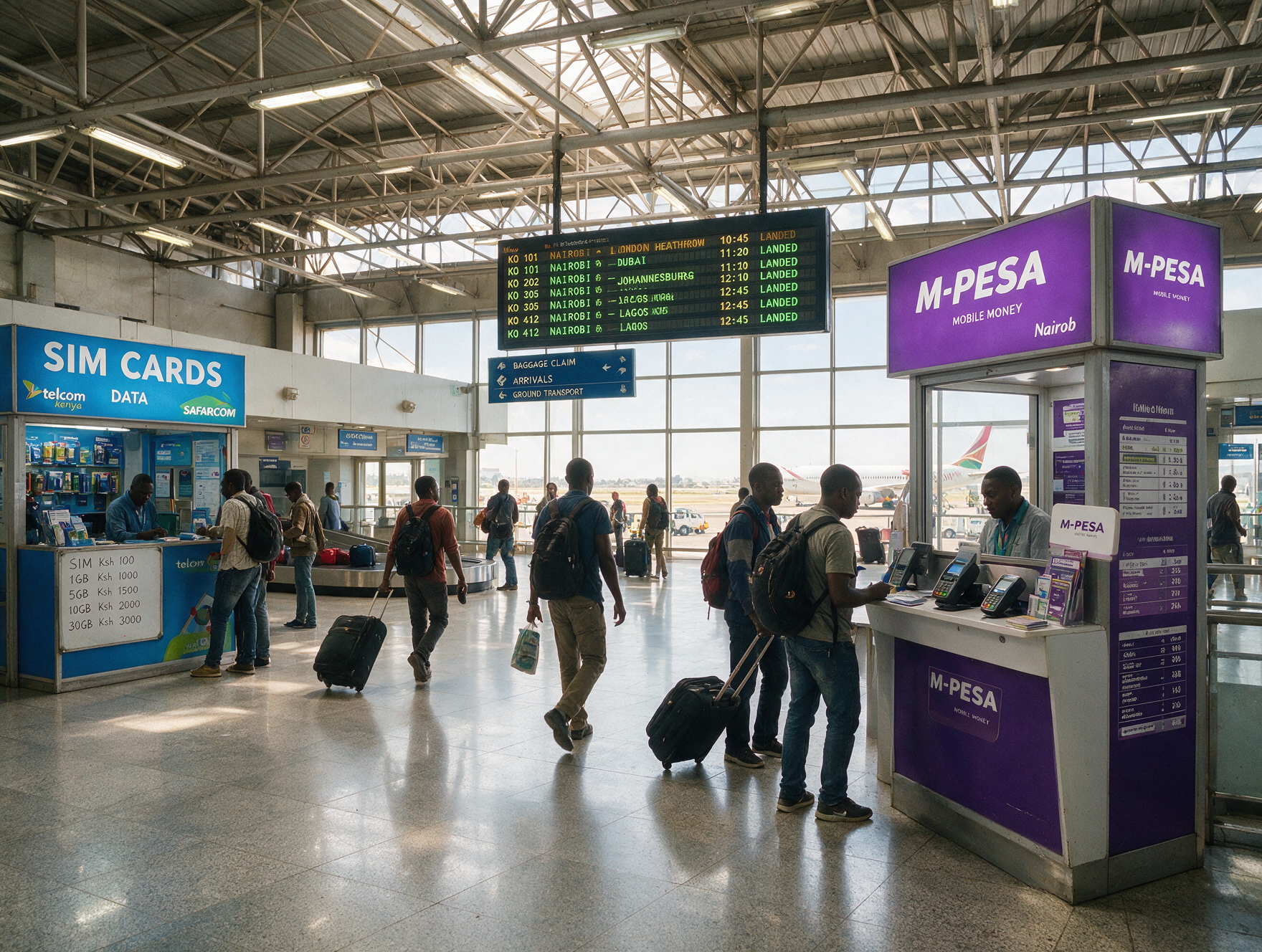
One small, genuinely useful tip: Safaricom and Airtel counters sit just past the arrivals hall, and picking up a local SIM or eSIM takes five minutes and makes the rest of the trip easier — M-Pesa-linked numbers are useful even if you’re not setting up mobile money yourself, since drivers, guides, and lodges often quote and confirm things over WhatsApp on local numbers. It’s a small thing, but it’s the kind of detail that makes the first hour in a new country feel manageable instead of overwhelming.
Common Mistakes That Delay Your eTA
- Uploading a multi-page PDF instead of a single photo. The portal wants your passport bio page and photo as a clean image file, not a scanned bundle. Several travelers on forums report the same stuck-upload loop until they switched to a single JPEG.
- Applying too close to departure. Three business days is the stated window, but verification can take longer if anything looks incomplete. Two weeks of buffer avoids the stress entirely.
- Assuming “visa-free” means no paperwork. It doesn’t. The eTA functions like a visa with a different name, and skipping it because of the 2023 announcement is the single most common and most avoidable error.
- Forgetting the yellow fever certificate for the return leg. Covered above, but worth repeating — it’s the mistake with the worst consequence (quarantine) for the least effort to avoid (one vaccination, ten days ahead).
- Letting the payment page’s blank-screen glitch panic you. It’s a known, reported issue. Use Chrome, disable pop-up blockers, and if the screen goes blank after payment, wait 15–20 minutes before trying again rather than repeating the charge.
Flights from India to Nairobi
Mumbai has the most direct option: Kenya Airways flies nonstop from Mumbai to Nairobi in about six hours and fifteen minutes, which is genuinely the easiest way in if you’re based anywhere near western India. Delhi lost its nonstop Air India service some years back, so travelers from Delhi, Bengaluru, and most other Indian cities connect through a Gulf hub (Dubai, Doha, Abu Dhabi) or through Addis Ababa on Ethiopian Airlines, with total journey times usually landing somewhere between 8 and 12 hours depending on the layover. If your dates are flexible, a Mumbai departure genuinely saves you a layover’s worth of fatigue before you’re straight into a 6am game drive.
Is Kenya Safe for Indian Tourists?
Yes, with the same big-city common sense you’d use anywhere. Nairobi’s main tourist zones, safari lodges, and conservancies are well-run and see a steady flow of international travelers without incident. The usual precautions apply in the city itself: skip flashing phones or jewellery in Nairobi’s CBD after dark, book airport and hotel transfers through your lodge or a licensed app like Uber or Bolt rather than hailing an unmarked taxi, and keep your passport and the printed eTA copy somewhere secure rather than in an outer bag pocket.
The one scam pattern worth flagging: unofficial “visa agents” advertising Kenya eTA help at a markup, sometimes significant, for a form that takes you 15 minutes directly on the government site. If an agency or a random website is quoting you double the USD 30 fee to “process” your eTA, that’s the markup, not a different or faster service. Beyond that, once you’re on safari — Masai Mara, Amboseli, Lake Nakuru — the experience is genuinely low-risk; lodges and conservancies are gated, staffed, and used to international guests. Even in Nairobi itself, a day built around the giraffe centre, the elephant orphanage, and a proper Kenyan coffee stop is a low-stress way to fill the gap before or after a safari — genuinely one of the better things to do in Nairobi if you’ve got a free afternoon either side of your flight.
Currency, Cards, and M-Pesa
Kenya’s currency is the Kenyan Shilling (KES). Cards are widely accepted at hotels, lodges, and city restaurants, and Indian-issued Visa and Mastercard generally work fine, though it’s worth informing your bank before you travel to avoid a flagged transaction on your first swipe. M-Pesa, Kenya’s mobile money system, is how most everyday local transactions actually happen — markets, small cafes, matatus — and while you don’t need to set it up as a short-term tourist, it explains why some smaller vendors prefer a phone number over a card machine. Carry some shilling cash for tips, park fees, and rural stops where card readers are patchy, and use ATMs in Nairobi rather than the airport currency counters, which tend to mark up the exchange rate noticeably.
A Fun Fact Worth Knowing Before You Book
If your trip is timed around the Great Migration, here’s the number that makes it click: roughly 1.5 million wildebeest, alongside hundreds of thousands of zebra and gazelle, move in a loop between the Serengeti and the Masai Mara every year, with the dramatic Mara River crossings typically peaking between July and October. That window also happens to be peak season for Masai Mara tour packages, so if a migration crossing is the whole point of your trip, this is the best time to visit Kenya and it’s worth locking in lodge availability early. If anyone asks when the great migration in Kenya is at its best, July through October is the honest answer, not “anytime.”
Who This Trip Suits
Couples planning a Kenya honeymoon tend to do best in the smaller tented camps around the Mara, where a private game drive and a dinner under the acacias feel earned rather than packaged. Families looking at Kenya family holiday packages should know the eTA is required for every traveler, infants included, and it’s worth a pre-trip visit to a travel doctor for malaria prophylaxis advice specific to your itinerary and the ages involved, since requirements vary by region and season. Luxury seekers chasing a fully private, guided Kenya trip should still budget normal time for the eTA process — paying for expedited processing speeds up the paperwork, not the immigration queue at JKIA, so it doesn’t buy you a shortcut at the airport itself.
Frequently Asked Questions
Do Indians need a visa for Kenya in 2026, or is it actually visa-free?
Indians need an approved eTA before departure — Kenya markets this as “visa-free,” but functionally it’s a visa by a different name. There’s no visa-on-arrival and no way around applying online first.
How much does the Kenya eTA cost for Indian travelers?
The standard single-entry eTA is USD 30 on the official portal, roughly ₹2,600–2,800 depending on your card’s exchange rate and fees. An optional expedited service costs an additional USD 100 for immediate processing.
How long does the Kenya eTA take to process?
Officially up to three business days (72 hours), though many applications clear sooner. The portal recommends applying at least two weeks before travel to leave room for any follow-up requests.
Do I need a yellow fever vaccine to visit Kenya from India?
Not to enter Kenya directly from India — India isn’t on Kenya’s risk list. But India considers Kenya a yellow-fever-risk country, so you may need a valid certificate (at least 10 days old) to avoid quarantine when you fly back into India.
Can I still get a Kenya visa on arrival as an Indian citizen?
No. Visa-on-arrival was discontinued when the eTA system launched. Airlines can deny boarding without an approved eTA, so this isn’t something to leave for the airport.
What documents do I need to apply for the Kenya eTA?
A passport valid six-plus months beyond arrival with a blank page, a recent passport-style photo, your flight itinerary, confirmed accommodation details, and a card for payment. Non-tourism trips need an extra supporting letter.
Is Kenya safe for solo Indian women travelers?
Generally yes within established tourist circuits and reputable lodges or tour operators, with the same precautions you’d take in any major city after dark. Booking transfers and safaris through a known operator rather than arranging everything ad hoc on the ground is the simplest way to remove most of the uncertainty.
Can children and infants travel on a Kenya eTA?
Yes, every traveler needs an individually approved eTA regardless of age, including infants. Parents typically apply on the child’s behalf using the child’s own passport details.
Getting the paperwork right for Kenya really is the easy part once you know the actual current rules instead of a 2023 headline about “visa-free Africa.” Apply a couple of weeks out, get the yellow fever shot sorted before you leave rather than after you arrive, and the rest of the trip — the Mara at dawn, the coffee country around Nyeri, the first M-Pesa payment you watch a stranger make at a fruit stall — is the part that actually stays with you.
If you’d rather hand the logistics to someone who tracks every rule change the day it happens, that’s genuinely what we’re here for. Get Tripped’s Kenya tour packages from India and Kenya safari packages handle the eTA guidance, flight routing from your home city, and lodge bookings as one package — from a classic Masai Mara circuit to a custom Kenya safari itinerary built around your dates and the Great Migration calendar. Tell us what you’re picturing and we’ll build the rest around it.