Mara River Crossings in September 2026: Where the Great Migration Is Right Now
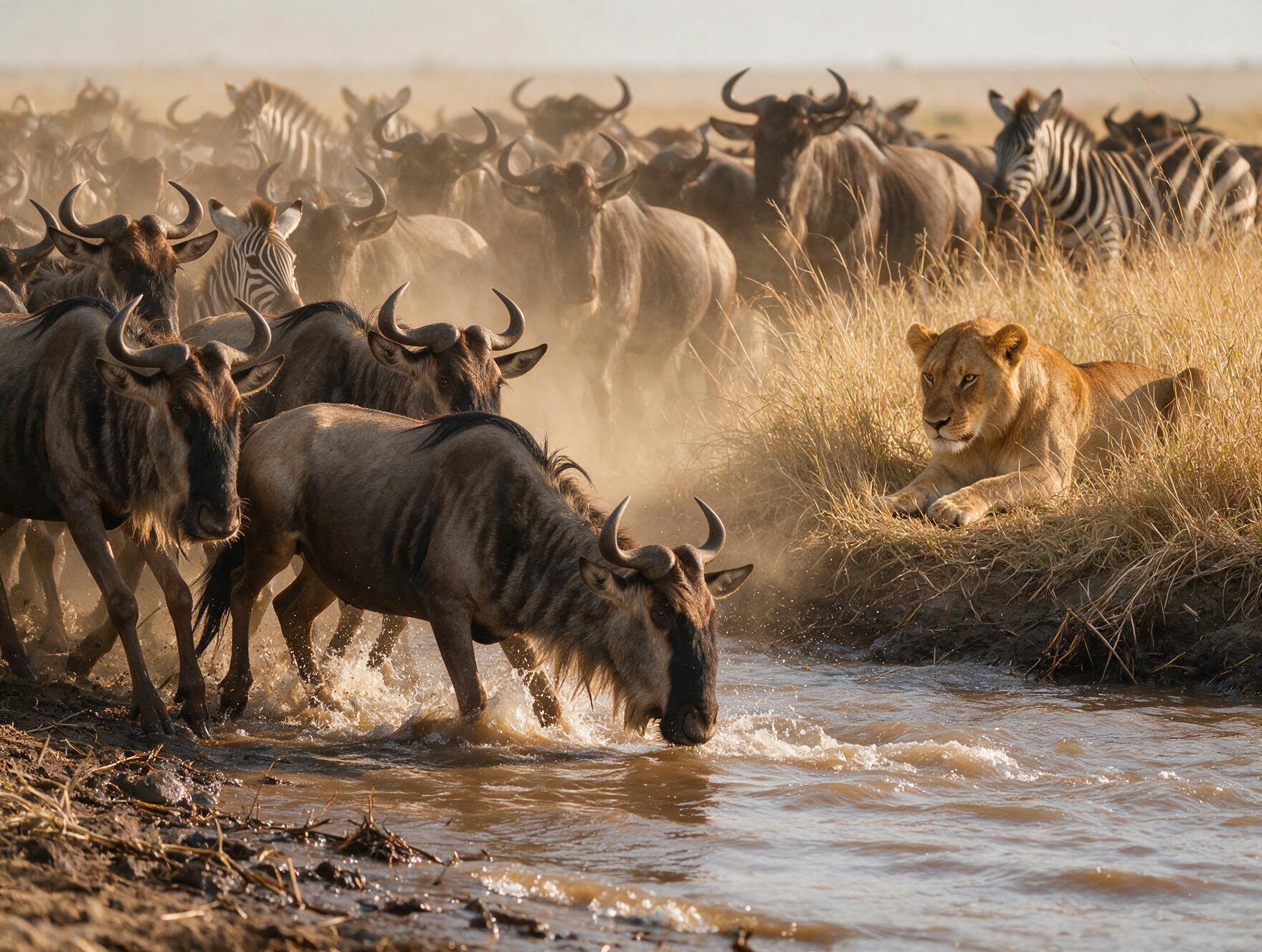
On the last morning of August, a guide from a camp on the Mara Triangle radioed his colleagues at 7:40 a.m.: a column of wildebeest was massing at Crossing Point 4, about two kilometres from Serena. Twenty minutes later, three thousand animals went into the water at once, dust rising off the far bank like smoke. This is not a rare event in September. It happens most weeks, sometimes most days, at one crossing point or another along the Mara River — and if you’ve been putting off booking a Kenya safari because you assumed the migration “already happened,” September is actually one of the better-kept-secret windows to go.
Here’s the honest version of the timing, because half the safari content online gets this wrong or leaves it vague: the frenzy of the migration peaks in August, when the largest herds first push north out of the Serengeti and the crossings are at their most chaotic and crowded. By September, the mass arrival is over, but the herds don’t leave — they spread out and graze across the Maasai Mara and its private conservancies, moving back and forth across the river as they follow fresh grass. That back-and-forth movement means crossings keep happening through September and into October, just less predictably and with fewer vehicles jammed at the obvious viewpoints. Come October, the animals start drifting south again to catch the first rains in the central Serengeti. So this month is genuinely a live window, not a “just missed it” one — but it also isn’t a guarantee, and any operator who promises you’ll see a crossing on a specific day is overselling it.
Quick Overview
- Why now: what’s actually happening with the migration this September
- Kenya or Tanzania — which side of the border to book
- Best time to go and how the window shifts year to year
- Flights from Mumbai, Delhi, and Bengaluru, plus Kenya’s e-visa (eTA) process
- Where to stay: conservancies and lodges by price tier
- What a typical 4-day Mara trip looks like
- Costs: flights, stays, park fees, and the hot air balloon safari
- Food, safety, and malaria precautions
- Photography tips for river crossings
- An insider tip most first-timers miss
- A mistake to avoid
- Packing list and currency/SIM notes
- FAQs
Why now: what’s actually happening with the migration this September
The Great Migration isn’t a single event — it’s roughly 1.5 million wildebeest and 200,000 zebra moving in a continuous, weather-driven loop through the Serengeti-Mara ecosystem, covering close to 800 kilometres a year. There’s no fixed calendar. The herds go where the rain has recently fallen and the grass is newest, which is why “the migration is in Kenya” or “the migration is in Tanzania” is really a September-through-October question with a shifting answer, not a fixed one.
Right now, the bulk of the herds are settled across the Maasai Mara National Reserve and the neighbouring conservancies — Mara North, Naboisho, Olare Motorogi — after the big northward push in July and August. The Maasai Mara Wildlife Conservancies Association tracks vehicle-density limits and conservation status across these private conservancies if you want to compare them before choosing a camp. They’re not sitting still, though. Small and mid-sized groups cross the Mara River back and forth daily as they exhaust one section of grazing and move to the next, which is actually a better viewing pattern for most travelers than the August peak: fewer vehicles per sighting, more time to watch a crossing develop instead of scrambling for a parking spot.
This pattern isn’t guaranteed to repeat exactly the same way every year — rainfall timing shifts the whole migration earlier or later by two to four weeks depending on the season, and a dry September can push herds back into Tanzania faster than a wet one. If you want current, week-of information before you lock in an itinerary, a live tracker like Wildebeest Sightings’ HerdTracker is worth checking, and any decent operator on the ground will know within a day or two where the action is.
Kenya or Tanzania — which side of the border to book
For this specific September window, Kenya’s Maasai Mara is the stronger bet. The herds are concentrated there right now, the crossing points are well known and accessible from a cluster of excellent conservancies, and Nairobi is a far easier flight from India than Tanzania’s northern circuit. Tanzania’s Serengeti will matter more from November through June, when the migration works its way south through the central and southern plains and eventually calves in the Ndutu area — that’s its own trip, worth planning separately rather than bolting onto a September Kenya safari.
That said, some operators run cross-border itineraries that combine a few nights in the Mara with a hop over to the northern Serengeti’s Kogatende area, since the two ecosystems are contiguous and crossings can happen on either side of the (unmarked, from an animal’s perspective) border. If your dates are flexible and you have 8-9 days rather than 5-6, it’s worth asking a specialist whether a combined itinerary makes sense this season.
Best time to go — and how the window can shift
Typically: July through October covers the crossing season, with August the peak-volume month and September-October offering calmer, more spread-out viewing. Late September into early October tends to bring slightly cooler mornings, occasional short rain showers, and grass that’s been grazed down enough to make animals easier to spot than in the lush, tall-grass months earlier in the year. Game drives run early (6:00-6:30 a.m. departure is normal) to catch the cooler hours when animals are most active, with a midday break and a second drive from around 4 p.m. to sunset.
Because the migration is rainfall-driven, not calendar-driven, treat any month-by-month guide — including this one — as a strong pattern rather than a fixed schedule. A camp manager who’s been on the ground for a decade is a better real-time source than any blog post written months in advance.
How to get there from India
Flights to Nairobi
Kenya Airways runs a daily direct flight from Mumbai to Nairobi, roughly 6 hours 15 minutes, landing you close enough to the Mara that you can be on a bush flight the same afternoon if you land early. Economy round-trip fares from Mumbai start in the low-to-mid ₹40,000s in shoulder season, though safari-season pricing (July-October) runs higher — budget more and book several months out if you can. From Delhi and Bengaluru, there’s no current nonstop; the practical options are one-stop connections via Doha (Qatar Airways), Dubai (Emirates), or Addis Ababa (Ethiopian Airlines), all of which run multiple daily flights into Nairobi’s Jomo Kenyatta International Airport (JKIA) and add roughly 2-4 hours of layover time depending on the connection.
Nairobi to the Mara
Skip the 5-6 hour road transfer if you can. Safarilink, AirKenya, and a handful of smaller operators fly multiple daily light-aircraft services from Nairobi’s Wilson Airport straight into Mara airstrips — Olkiombo, Kichwa Tembo, Mara Serena, and others depending on which camp you’re booked into. It’s a 45-minute to 1-hour hop, runs roughly $150-230 one-way per person, and turns a full travel day into about 90 minutes door-to-door from Nairobi. Most premium camps arrange the transfer as part of your booking.
Visa: Kenya’s Electronic Travel Authorization (eTA)
Kenya replaced its old visa-on-arrival and e-visa system with an Electronic Travel Authorization (eTA), which every Indian traveler now needs before flying in. Apply at the official eTA Kenya portal — not a third-party site — using your passport details, a recent photo, and your accommodation and itinerary details. Standard processing costs around $30 and is typically cleared within 72 hours; there’s an expedited option (roughly another $100) if you’re applying last-minute. Apply at least a week ahead to avoid the rush fee, and keep a printed or downloaded copy of your approval to show on arrival.
If you’re adding Tanzania
Tanzania’s e-visa for Indian passport holders costs $50, is valid for single entry within 90 days of issue, and takes roughly 3-10 business days to process through the official Tanzania immigration e-visa portal. If you’re combining a Mara stay with a Serengeti extension, apply for both travel authorizations well before your trip — don’t assume one covers entry into both countries, since Kenya and Tanzania run entirely separate systems.
Where to stay: conservancies and camps by price tier
Skip the budget campsites inside the main reserve gates — Get Tripped’s recommendation for this trip is almost always a private conservancy over the public reserve, for one simple reason: conservancies cap the number of vehicles allowed at a sighting, which on a migration trip is the difference between watching a crossing in near-silence and watching it through six rows of Land Cruisers.
Mid-range (roughly $350-550 per person per night, most costs included)
Look at smaller lodges and tented camps in Mara North or Ol Kinyei conservancy — Kicheche Bush Camp and similar properties offer proper en-suite tents, solid guiding, and conservancy access without the price tag of the ultra-luxury end. Rates typically include full board and two daily game drives; conservancy fees (roughly $80-150 per person per night) are usually already folded into the nightly rate rather than billed separately.
Upscale to luxury ($600-1,200+ per person per night)
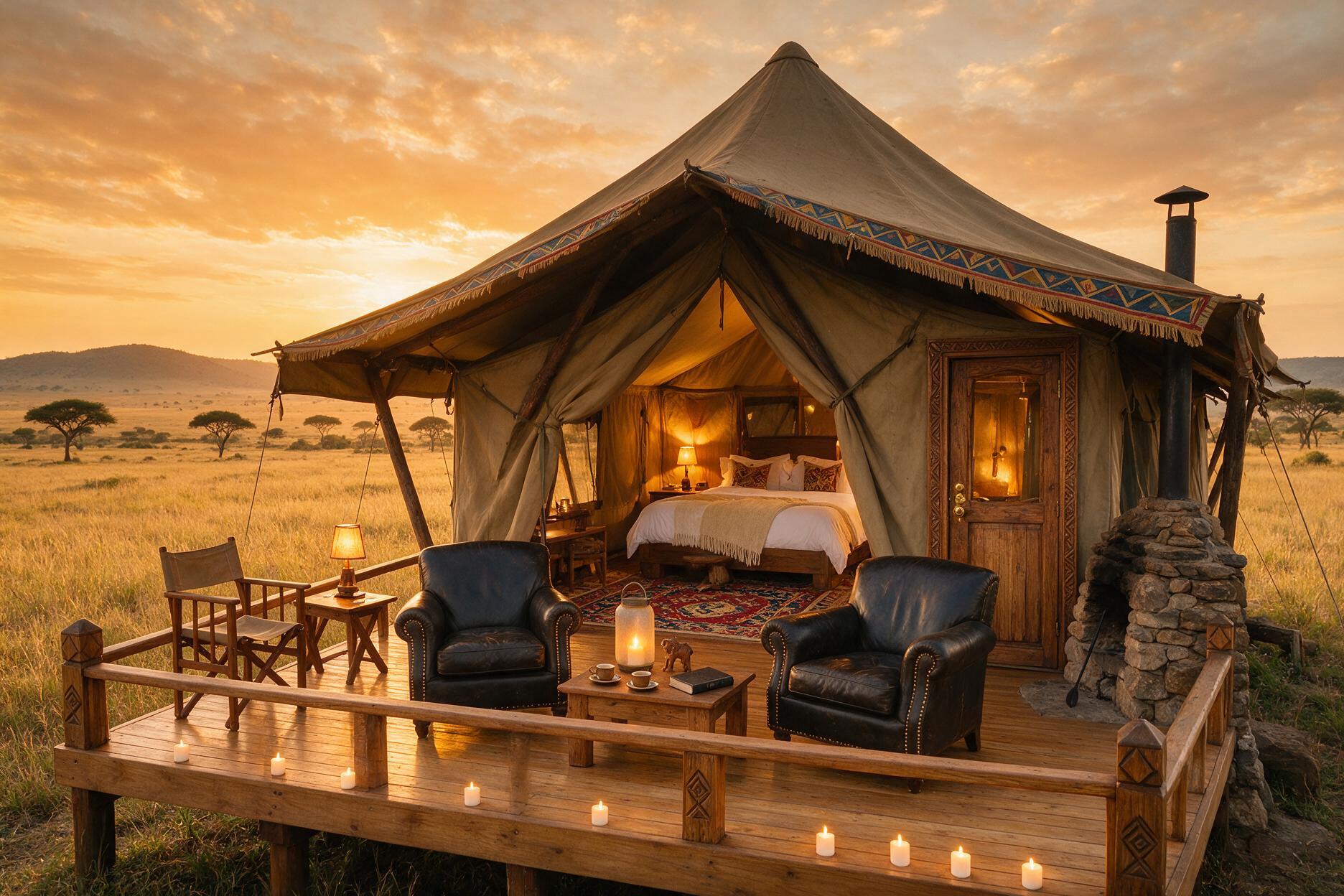
Olare Motorogi Conservancy has the lowest camp density in the entire Mara ecosystem — around 95 beds spread across eight camps on 33,000 acres, which works out to roughly one vehicle per 2,100 acres. Properties here and in Naboisho run at a genuinely different pace: private sundowners, walking safaris with a Maasai guide, and game drives where you might not see another vehicle for an hour. This is where Get Tripped typically places couples and first-time luxury safari travelers who want the “we had the whole plain to ourselves” experience rather than a photo of ten jeeps at one crossing point.
A quieter alternative
Ol Kinyei Conservancy has just two camps operating across its entire 18,500 acres — genuinely one of the most exclusive stretches of the ecosystem if solitude matters more to you than being at the absolute epicentre of crossing activity.
What a typical few days looks like
Day 1: Morning flight from Mumbai or a connection via Doha/Dubai lands you in Nairobi by early afternoon. If timing allows, a same-day bush flight gets you into camp before dark for a sundowner and dinner briefing on the next day’s plan.
Day 2: Dawn game drive (out by 6:15 a.m., back for a late breakfast), rest through the heat of the day, second drive from 4 p.m. This is usually when your guide, who’s in radio contact with a network of other guides across the conservancy, redirects you toward wherever herds are massing near the river.
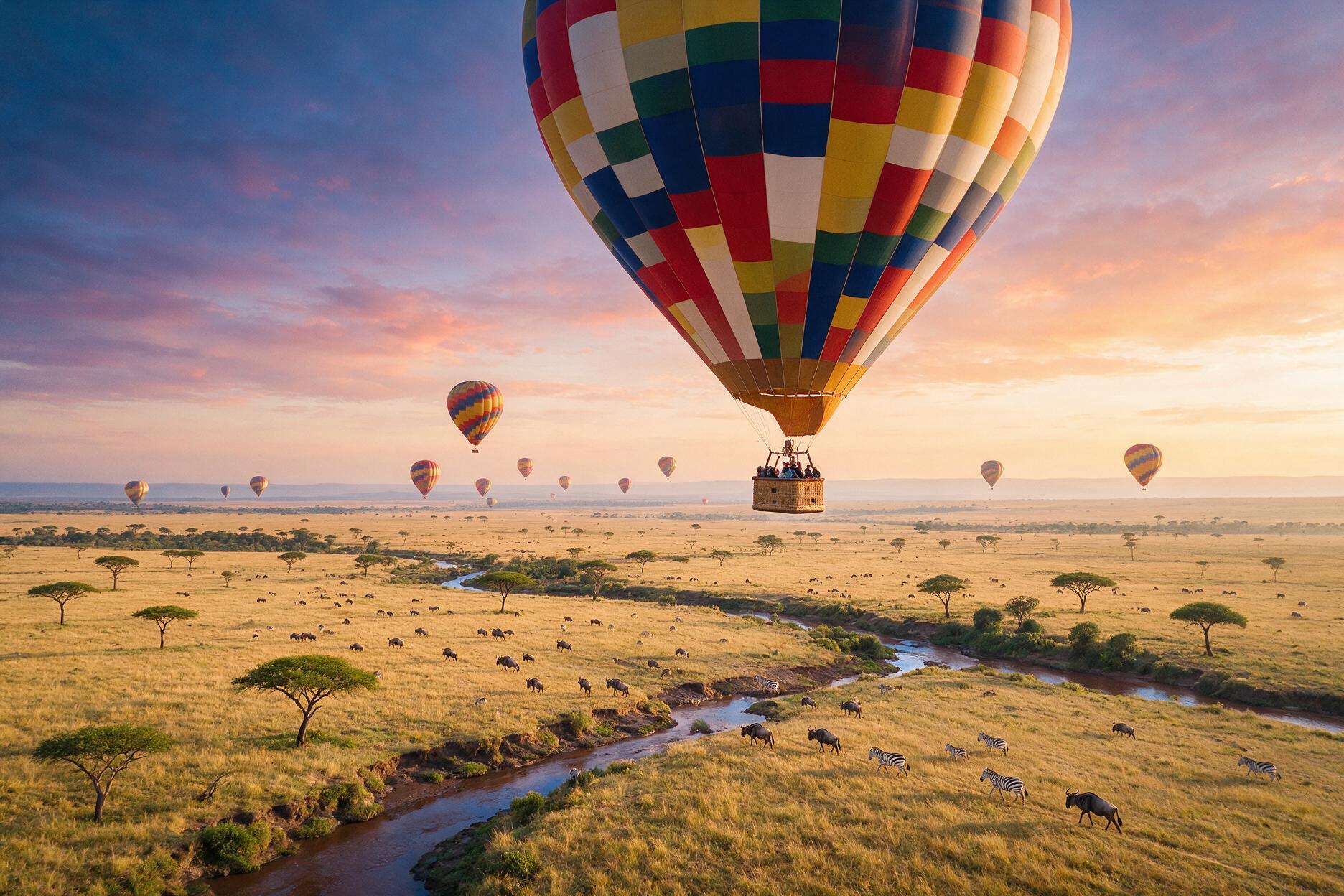
Day 3: Full-day option — pack a lunch and stay out near a known crossing point, since the herds can take hours to actually commit to the water once they’ve gathered on the bank. Alternatively, a dawn hot air balloon safari followed by a bush breakfast is a genuinely worthwhile splurge on this exact trip (more below).
Day 4: Final morning drive, then a midday bush flight back to Nairobi connecting onward, or an overnight in Nairobi if your flight home departs the next day.
Four nights in-camp is a comfortable minimum for a real shot at seeing a crossing without feeling rushed; five to six nights, ideally split across two conservancies, gives your guide more room to chase the movement of the herds.
Costs
- Flights (Mumbai-Nairobi round trip): roughly ₹40,000-70,000 economy in safari season, higher via one-stop routings from Delhi/Bengaluru
- Bush flights (Nairobi-Mara return): approximately $290-550 per person
- Camp rates: $350-550/night mid-range; $600-1,200+/night upscale-luxury, generally full board with two daily drives
- Maasai Mara National Reserve entry: around $130 per person per 24-hour period for non-resident adults (often waived or reduced if you’re staying exclusively in a private conservancy and not entering the main reserve)
- Hot air balloon safari: $450-500 per person for a roughly 90-minute flight, including a champagne bush breakfast and camp transfers
- Kenya eTA: $30 standard (about 72-hour processing) or ~$130 expedited
A realistic all-in budget for a comfortable 5-night Mara trip for two, flights included, lands somewhere in the $6,000-10,000 range depending on camp tier — this is not a budget destination, and trying to make it one usually means giving up the conservancy access that makes the trip worth taking in the first place.
Food
Camp food across the Mara’s mid-to-luxury tier is better than most first-timers expect — three-course dinners built around fresh vegetables flown or driven in regularly, grilled meats, and increasingly good wine lists at the upper end. Bush breakfasts and sundowner setups (a folding table, a gin and tonic, the plains going orange) are a genuine highlight, not a gimmick. Nairobi itself, if you have a layover, has a strong restaurant scene worth a night — Karen and Westlands both have well-regarded spots for Kenyan-Swahili coastal cooking and good grilled nyama choma.
Safety and health notes
Kenya is a well-established safari destination with experienced guides, good radio networks between camps, and — at the upper end where Get Tripped books — reliable medical evacuation cover as part of your trip. A few practical notes rather than alarmist ones:
- Malaria: The Mara is a malaria-risk area. Start anti-malarial medication before you travel, continue it for the recommended period after you return, and use repellent plus long sleeves in the evenings when mosquitoes are most active. Talk to a travel clinic 2-3 weeks before departure rather than the week before — the CDC’s Kenya travel health guidance is a good starting reference for current recommendations.
- Yellow fever: Not required to enter Kenya unless you’re arriving from a country with yellow fever risk. It does matter for onward travel, though — several countries, including some you might visit later, require proof of vaccination if you’ve recently been in East Africa, so check requirements for wherever you’re headed after Kenya.
- Water: Stick to bottled or filtered water at camp; most lodges provide it as standard.
- Travel insurance: Get a policy that explicitly covers medical evacuation — camps are remote, and the Amref Flying Doctors emergency network that most operators use is genuinely good, but it’s not free.
Photography tips for river crossings
A crossing can take anywhere from ten minutes to over an hour to actually happen once the herd gathers on the bank — the animals mill, retreat, and regroup multiple times before the first ones commit, so patience matters more than gear. A telephoto in the 200-400mm range covers most crossing shots from a vehicle; a wider lens is worth having ready too, for the wide “thousands of animals and dust” shot that a tight telephoto crop can’t capture. Shoot in shutter priority or manual with a fast shutter (1/1000s or faster) to freeze splashing water and stampede motion, and don’t just point at the crossing itself — some of the best frames come from watching the bank for predators (crocodiles, and occasionally lions) positioning before the herd commits.
An insider tip
Most first-time visitors fixate on the handful of famous, numbered crossing points inside the main reserve near Serena and the Mara Triangle — which is exactly where every other vehicle in the park is also headed. Ask your guide about crossings on the Talek or Sand River tributaries instead, or crossing points along the western edge of Mara North Conservancy where the Mara River itself runs through private land. These are smaller crossings, often just a few hundred animals rather than thousands, but you’ll frequently have them entirely to yourself — no engine noise, no other vehicles in your frame, and a guide who can actually explain what you’re watching instead of jockeying for position.
A mistake to avoid
Don’t book a single-camp, two-night “migration safari” and expect to see a crossing on demand. Crossings are weather- and herd-movement-dependent, not scheduled, and cramming the trip into 48 hours dramatically cuts your odds. Give yourself at least 4 nights, ideally with a guide who can move you between vantage points as radio reports come in from other camps — that flexibility matters far more than which specific camp you book.
Packing notes
- Neutral-coloured clothing (khaki, olive, sand) — avoid bright colours and pure white, which shows dust
- A warm layer for early-morning drives; it’s genuinely cold at 6 a.m. even though the afternoons are warm
- Binoculars — most camps have a pair to share, but your own means you’re not waiting your turn
- A dust-proof bag or cover for camera gear
- Comfortable closed shoes for walking safaris and camp paths at night
- A basic med kit with anti-malarials, rehydration salts, and any personal medication — pharmacies are not nearby once you’re in camp
Currency, payments, and SIM/eSIM
The Kenyan Shilling (KES) is the local currency, though most camps and safari-linked services quote and accept payment in US dollars for room rates and bigger-ticket items. Cards are widely accepted at lodges; carry some cash (small USD notes work well) for tips, curio shops, and incidentals. M-Pesa, Kenya’s mobile money system, is everywhere locally but isn’t something a short-stay visitor typically needs to set up. For connectivity, an eSIM (Airalo and similar providers cover Kenya) activated before you land is the easiest option — camp Wi-Fi tends to be functional but slow, useful for messages rather than video calls.
A fact worth knowing
The scale of this migration is hard to grasp until you’ve actually seen it: roughly 1.5 million wildebeest and 200,000 zebra move through the ecosystem each year, with around 250,000 wildebeest and 30,000 zebra dying annually along the way from exhaustion, predation, and drowning during crossings — brutal, but also the reason the Mara-Serengeti ecosystem stays as productive as it is, recycling that much biomass back into the grassland every year. It’s not a gentle nature-documentary event up close; it’s genuinely dramatic, and the river crossings are the sharpest, most visible part of that cycle.
FAQs
Will I definitely see a river crossing if I go in September?
No operator can honestly promise that — crossings depend on where the herds are grazing and when they decide to move, not a fixed schedule. September gives you good odds because the herds are actively present in the Mara ecosystem and crossing back and forth regularly, but a 3-4 night stay with a guide who tracks radio reports from across the conservancy network gives you the best realistic chance.
Is September or August better for the migration?
August usually has the largest, most dramatic crossings but also the most vehicles at each sighting. September offers calmer, more spread-out viewing with smaller crowds, at the cost of slightly less predictable timing. If quieter conservancy viewing matters more to you than sheer scale, September is arguably the better trip.
Do I need a visa to visit Kenya from India?
Yes — Kenya now requires all travelers, including Indians, to apply for an Electronic Travel Authorization (eTA) before arrival, through the official government portal. It costs around $30 for standard processing (about 72 hours) and replaces the older visa-on-arrival system.
Is it safe to go on safari with young children or older parents?
Many premium camps welcome families and can arrange private vehicles and flexible drive timings, which is generally more comfortable for older travelers or younger kids than a shared game-drive schedule. Malaria precautions and evacuation-inclusive travel insurance matter more for these groups, so flag ages and any health considerations to your travel specialist when booking so the itinerary and camp choice account for it.
Should I do Kenya, Tanzania, or both?
For this September window specifically, Kenya’s Maasai Mara is the stronger single-destination choice, since that’s where the herds are currently concentrated and it’s the more direct trip from India. Tanzania’s Serengeti and Ngorongoro are worth their own dedicated trip, ideally timed for the calving season (roughly January-March) or the migration’s push through the western corridor, rather than tacked onto a short Kenya visit.
How many days do I actually need?
Four nights in one conservancy is a reasonable minimum. Five to six nights split across two properties (for example, a few nights in Mara North followed by a few in Naboisho or Olare Motorogi) gives more flexibility to chase herd movement and a change of scenery without adding much travel time.
Is malaria a serious risk?
The Mara is a malaria-risk region, so precautions are genuinely necessary — anti-malarial medication, repellent, and covering up in the evenings — but it’s a manageable, well-understood risk that doesn’t need to be a source of anxiety. Talk to a travel clinic a few weeks before you go rather than treating it as an afterthought.
What’s the best way to get from Nairobi to the Mara?
Fly. A light-aircraft transfer from Nairobi’s Wilson Airport takes about 45 minutes to an hour and costs roughly $150-230 one-way, versus a 5-6 hour road transfer. Most camps at the mid-range tier and above arrange this as part of your booking.
Get Tripped’s take
The Great Migration doesn’t wrap up in August the way a lot of travel content implies — this month is a real, live window, and arguably a better one for travelers who’d rather watch a crossing in near-silence from a private conservancy than jostle for position with a dozen other vehicles. What actually matters is picking the right conservancy for your budget, giving yourself enough nights that the trip doesn’t hinge on one lucky afternoon, and having someone on the ground who knows where the herds are this week, not last season.
Get Tripped’s travel specialists can build a private Mara (or combined Mara-Serengeti) itinerary around this exact window — the right conservancy, the right camp tier, flights and eTA sorted end to end. Reach out to start planning, or browse more Get Tripped destinations if you’re still comparing options.