On June 15, 2026, Air India put a Boeing 787-8 on the tarmac at Chhatrapati Shivaji Maharaj International Airport, pointed it at Tokyo Haneda, and closed a gap that has quietly annoyed Mumbai-based travelers for years: there was no direct way from India’s financial capital to Japan. You either routed through Delhi, or you connected through Bangkok, Hong Kong or Singapore and lost half a day to a layover lounge. That’s gone now. Four times a week, AI’s Dreamliner leaves Mumbai at 16:50 and lands at Haneda a little before 5am the next morning — roughly eight and a half hours in the air, no stopover, no wasted vacation day.
The timing matters more than it might look. This flight opened for bookings right as Japan’s 2026 autumn foliage season — koyo, the annual wave of red maple and gold ginkgo that moves down the country from Hokkaido to Kyushu — is entering its planning window. Ryokan with good foliage views in Kyoto and Hakone book out months ahead for late October and November, and airfares on new routes tend to be at their most reasonable in the first few months before demand catches up with capacity. If a Japan trip has been sitting on your list, late August through September 2026 is a genuinely good moment to move on it, not just a marketing line.
This isn’t a generic “best of Japan” roundup. It’s built around two specific facts — the new Mumbai-Tokyo route and the 2026 foliage calendar — and then walks through what it actually takes to plan the trip: visa, cost, where to stay, what to eat, and where the crowds thin out.
Table of Contents
- Why Now: The Direct Mumbai-Tokyo Flight
- Best Time to Visit: Japan’s Autumn 2026 Foliage Forecast
- Japan Visa for Indian Travelers
- Getting There: Routes and Flight Costs
- A 9-Day Autumn Itinerary
- Where to Stay
- What It Actually Costs
- What to Eat in Autumn
- Two Spots Worth the Detour
- A Mistake to Avoid
- Safety and Practical Notes
- Frequently Asked Questions
Why Now: The Direct Mumbai-Tokyo Flight
Air India’s Mumbai-Haneda service runs four times weekly on the Boeing 787-8 — outbound Monday, Wednesday, Friday and Sunday, return Monday, Tuesday, Thursday and Saturday. The schedule is built for a full night’s sleep on board: Mumbai departure at 16:50, Haneda arrival at 04:55 local time the next day. The return leaves Tokyo at 08:50 and lands back in Mumbai by 14:20 the same day, which means you can fly home and still catch the back half of a working day if you need to. Haneda itself is the better airport to land at — it’s closer to central Tokyo than Narita, so the monorail into the city takes about 30 minutes instead of the hour-plus from Narita.

The route also comes with a codeshare that extends its usefulness past Tokyo. Air India has an active codeshare with ANA (All Nippon Airways), a fellow Star Alliance member, covering onward connections from Haneda to six other Japanese cities: Osaka, Nagoya, Fukuoka, Sapporo, Hiroshima and Okinawa. That’s useful if your trip isn’t Tokyo-Kyoto only — you can book Mumbai to Osaka or Mumbai to Sapporo on a single AI-coded itinerary and let ANA handle the domestic leg, rather than booking two separate tickets.
Worth saying plainly: this is a brand-new route, launched barely two months before this piece is being written, so fare data is thinner than it is for an established corridor. Air India hasn’t published route-specific pricing, and early-route fares can move around as the airline finds its demand curve. Treat the cost figures further down as a planning range, not a quote, and check live fares before you commit.
Best Time to Visit: Japan’s Autumn 2026 Foliage Forecast
Japan tracks its autumn leaf change with the same seriousness it tracks cherry blossoms — there’s a “momiji zensen,” or autumn leaf front, that moves from Hokkaido in the north down to Kyushu over roughly six to eight weeks, the mirror image of the sakura front that moves north in spring. The official 2026 forecast from Japan’s meteorological data providers won’t be locked until early September, but based on how the season has trended over the last two years, here’s the planning range:
- Tokyo (city parks, Meiji Jingu Gaien, Rikugien): mid-November into early December, with the safest viewing window running from around November 18 through the first week of December.
- Kyoto (Arashiyama, Tofuku-ji, Kiyomizu-dera): late November through early December — noticeably later than the “mid-November” dates you’ll see quoted in older guidebooks. Kyoto’s peak has been drifting later most years as autumns run warmer.
- Nikko and Oku-Nikko (Ryuzu Falls, Lake Chuzenji, Kegon Falls): early to mid-October at the higher elevations around the lake and waterfalls, with the town center itself — which is mostly evergreen, so don’t expect much color there — not really turning until late November.
- Hakone: early through late November, with the Gora Park and Hakone Tozan “Maple Corridor” light-up running the full month of November.
- Hokkaido: mid-September into late October, the earliest color in the country and a good option if you’re traveling before the Kanto/Kansai peak.
The honest caveat: this window has been unreliable lately. In 2024, Tokyo’s maples didn’t hit peak red until December 5 — almost two weeks past what used to be the safe bet. That’s not a one-off; both 2024 and 2025 ran late by one to two weeks against historical averages. Book your flights and anchor hotels now, but hold off on locking a rigid day-by-day itinerary until the early-September forecast update, and build a couple of flexible days into whichever city you’re ending your trip in, so you can chase the color if it’s running late.
Japan Visa for Indian Travelers
Indian passport holders need a visa for Japan for any purpose of travel — there’s no visa-free entry and no visa-on-arrival, and that hasn’t changed with the new flight route. What has changed is the process: Japan’s eVISA system went live for Indian applicants on April 1, 2024, and as of April 20, 2026, the Consulate-General of Japan in Mumbai has handed the entire application process to VFS Global, so walk-in applications directly at the consulate are no longer accepted — everything routes through VFS.
What you need to know:
- Visa types: single-entry and multiple-entry tourist visas are the relevant ones for a leisure trip. Transit visas have been discontinued.
- Fee: as of the July 2026–March 2027 fee schedule, both single and multiple-entry visas cost just ₹500 at the embassy/consulate rate for Indian nationals — a preferential rate well below what non-Indian applicants pay. VFS adds its own service charge on top, so budget for that separately.
- Processing time: the consulate states a minimum of 5 working days from receipt of a complete application, though it can run longer and can’t be expedited for individual travelers. Applications can be submitted up to 3 months before your travel date.
- Documents: valid passport, application form with photo, a day-by-day itinerary, proof of accommodation and return flights, and financial documents (bank statements, ITR). Requirements are broadly consistent across VFS centers, but check the exact checklist for your jurisdiction before you go in, since it’s occasionally updated.
Given foliage-season demand, October and November are also peak visa-application months, so the “5 working days minimum” can stretch. If you’re aiming for a late-October departure, get your VFS appointment booked by early September at the latest.
Getting There: Routes and Flight Costs
Mumbai now has one nonstop option: Air India’s BOM-HND service described above. If you’re flying from Delhi, Air India also runs a direct Delhi-Haneda service (launched in March 2025), and ANA flies Delhi-Tokyo nonstop as well, mostly into Narita. Bengaluru has no direct Japan service currently — you’re routing through Delhi, Mumbai, or a one-stop connection via Bangkok, Singapore or Hong Kong on Thai Airways, Singapore Airlines or Cathay Pacific.
On rough cost: established Delhi-Tokyo direct fares (Air India and ANA) run about ₹85,000–₹1,30,000 round trip in economy during regular months, with a premium of 25–60% during the October-November peak. One-stop options through Southeast Asian or Hong Kong hubs tend to undercut that by 15–35%, at the cost of half a travel day each way. Mumbai-Haneda fares should land in a similar band once the route settles, though as a brand-new service there isn’t yet a reliable multi-month price history to point to — check live fares on Air India’s site rather than trusting any number (including this one) as fixed. Business class on the 787-8’s 18 lie-flat seats is worth considering if you’re traveling for a short window and want to land ready to walk around Tokyo rather than sleep off jet lag.
Smart-spending tip: if your itinerary covers multiple regions (Tokyo, Kyoto, Nikko, Hakone) inside a roughly 2-week window, the 7-day Japan Rail Pass at ¥50,000 (about ₹28,000 at current rates) usually pays for itself against individual shinkansen tickets. But there’s a deadline hiding in that number: prices for overseas agency purchases rise to ¥53,000 from October 1, 2026, while the official JR Pass website is expected to hold the lower rate a bit longer. If you’re traveling in the back half of the foliage season, buy through the official channel before that date. And if you’re staying inside Tokyo and one nearby day trip (say, just Nikko), skip the national pass entirely — a regional pass or IC card top-ups will be cheaper.
A 9-Day Autumn Itinerary
This assumes you land at Haneda early morning and fly out of Haneda or Kansai (Osaka) at the end — adjust by a day or two if you want to slow down.
- Days 1-3, Tokyo: recover from the overnight flight on day one with something low-key — Yanaka’s old-town backstreets rather than Shibuya crossing on zero sleep. Day two, Meiji Jingu Gaien’s ginkgo avenue if the timing lines up, teamLab Borderless or Planets, and dinner in Shinjuku’s Omoide Yokocho. Day three, a day trip north.
- Day 4, Nikko day trip (or overnight): UNESCO shrine complex at Toshogu in the morning, then up into Oku-Nikko for Ryuzu Falls and Lake Chuzenji in the early afternoon, when the higher-elevation maples are usually past peak red into deep orange — still striking, and with a fraction of the crowd density you’ll find in Kyoto in November.
- Days 5-6, Hakone: the Hakone Free Pass covers the funicular, ropeway and Lake Ashi cruise loop. Clear-day views of Fuji from the Owakudani ropeway are the payoff, though it’s genuinely hit-or-miss — go early morning for the best odds. This is also where you’d build in an onsen ryokan night.
- Days 7-9, Kyoto: shinkansen from Odawara (near Hakone) direct to Kyoto cuts out backtracking through Tokyo. Arashiyama’s bamboo grove at opening time before the tour buses arrive, Tofuku-ji’s valley of maples (better than fighting crowds at Kiyomizu-dera), and one night in a ryokan for the kaiseki dinner experience before flying out of Kansai International.
Where to Stay
Get Tripped works mid-range through luxury, so here’s that range specifically.
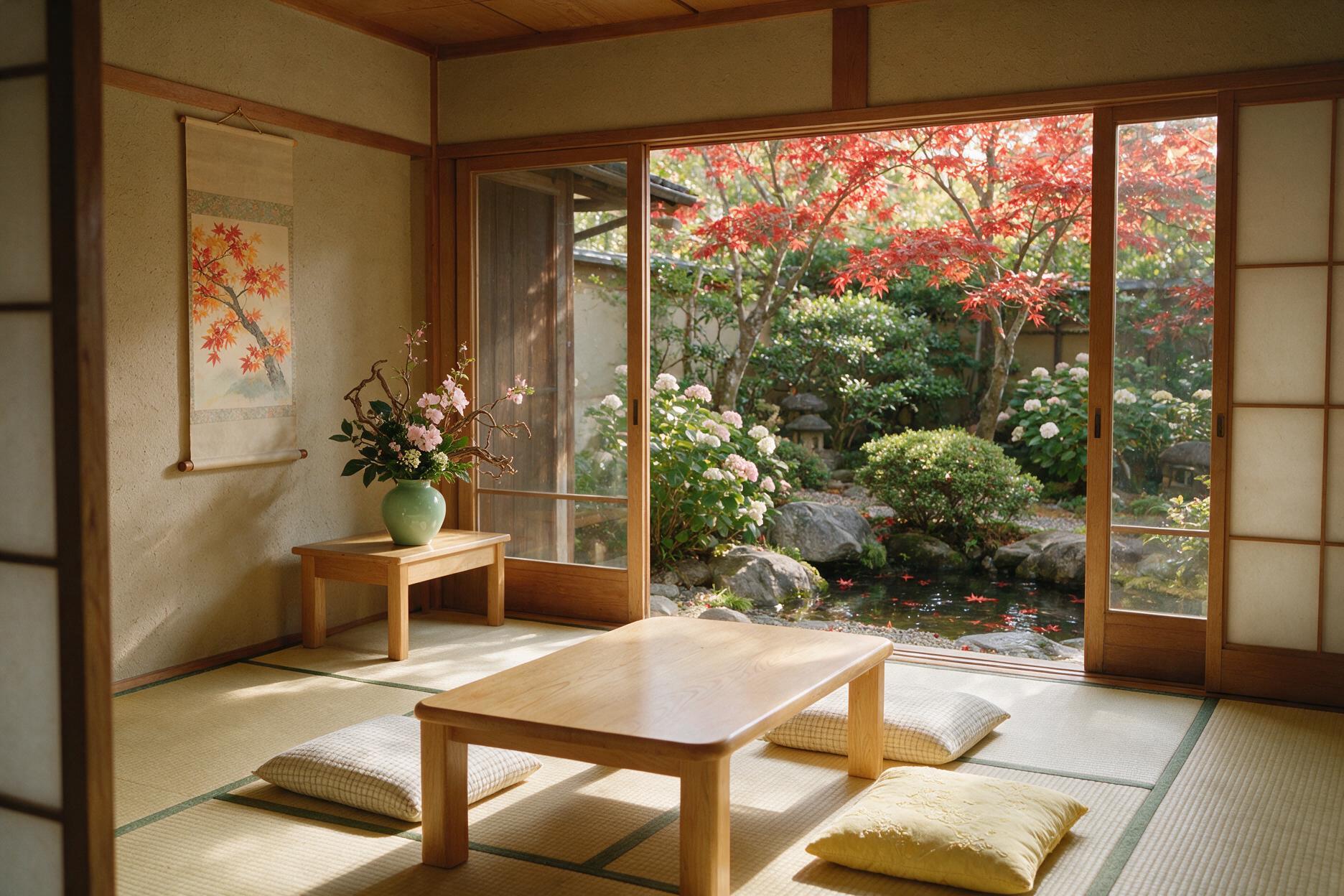
Tokyo: mid-range runs roughly ¥18,000–30,000 a night at properties like Mitsui Garden Hotels or Hotel Gracery, comfortable and well-located without ceremony. At the top end, the Park Hyatt Tokyo (the “Lost in Translation” hotel, still worth it for the view from the New York Bar) and the Mandarin Oriental start around ¥50,000 and run well past ¥250,000 for suites.
Kyoto: mid-range hotels like Mitsui Garden Hotel Kyoto Sanjo sit around ¥20,000–35,000. For couples or anyone treating this as a once-in-a-while trip, a ryokan is the better spend even at a premium — expect ¥25,000 to ¥150,000+ per person, which usually includes a multi-course kaiseki dinner and breakfast, and often a private or semi-private onsen bath. Arashiyama, on Kyoto’s quieter western edge along the Katsura river, is a good base if you want ryokan atmosphere without paying central-Kyoto rates for a room you’ll barely use during daylight hours — you’re still 15-20 minutes from Gion by taxi or train.
For families, look specifically for ryokan or hotels advertising family rooms with both a Western-style bed setup and a tatami area — standard ryokan futon-on-tatami rooms are less practical with small kids, but plenty of properties now offer a hybrid layout. For solo travelers, business hotel chains (APA, Toyoko Inn, Mitsui Garden) are well set up for one and genuinely comfortable, not a compromise the way a solo hostel bunk would be.
What It Actually Costs
Rough daily spend outside your hotel room, per person, mid-range to comfortable-luxury:
- Food: ¥4,000–10,000/day covers a decent range — a casual sushi lunch, a proper izakaya dinner, coffee and konbini snacks in between. A tasting-menu dinner at a well-regarded restaurant pushes well past that on the night you do it.
- Local transport: ¥1,500–3,000/day within a city using an IC card (Suica or Pasmo); intercity shinkansen fares are separate and covered above under the JR Pass math.
- Entry fees and experiences: most temples and shrines charge ¥300–600, museums more like ¥1,000–2,000; a private guided walking tour or a tea ceremony experience runs ¥5,000–15,000 per person.
Card acceptance has improved a lot in the last few years, but Japan is still more cash-reliant than most Indian travelers expect — small ryokan, some temples, and older restaurants outside the big cities can be cash-only. Carry yen, and know that 7-Eleven ATMs reliably accept international cards even when local bank ATMs don’t.
What to Eat in Autumn
Autumn is arguably Japan’s best eating season, not an afterthought to the foliage. Matsutake mushroom shows up on menus from September through November, usually as dobin-mushi — steamed in a small kettle with dashi and a squeeze of yuzu, and it’s expensive for a reason: wild matsutake is genuinely seasonal and can’t be farmed at scale. Sanma (Pacific saury), simply salt-grilled with grated daikon, is the other autumn staple worth ordering at any izakaya that has it on a chalkboard special. And on the street, yaki-imo — roasted sweet potato sold from carts, sometimes literally out of a converted truck with a wood-fired drum — is the closest thing Japan has to a seasonal comfort snack, and it’s the kind of thing worth stopping for even if you weren’t hungry a minute ago.
Two Spots Worth the Detour
The Oku-Nikko waterfalls mentioned in the itinerary are the first hidden gem, worth repeating here: because they peak two to three weeks before Kyoto and Tokyo, you can catch genuinely spectacular color at Ryuzu Falls or around Lake Chuzenji in early-to-mid October while everyone else is still waiting for their Kyoto trip to line up — and the crowd at 7am on a weekday morning there is a handful of photographers, not a queue.
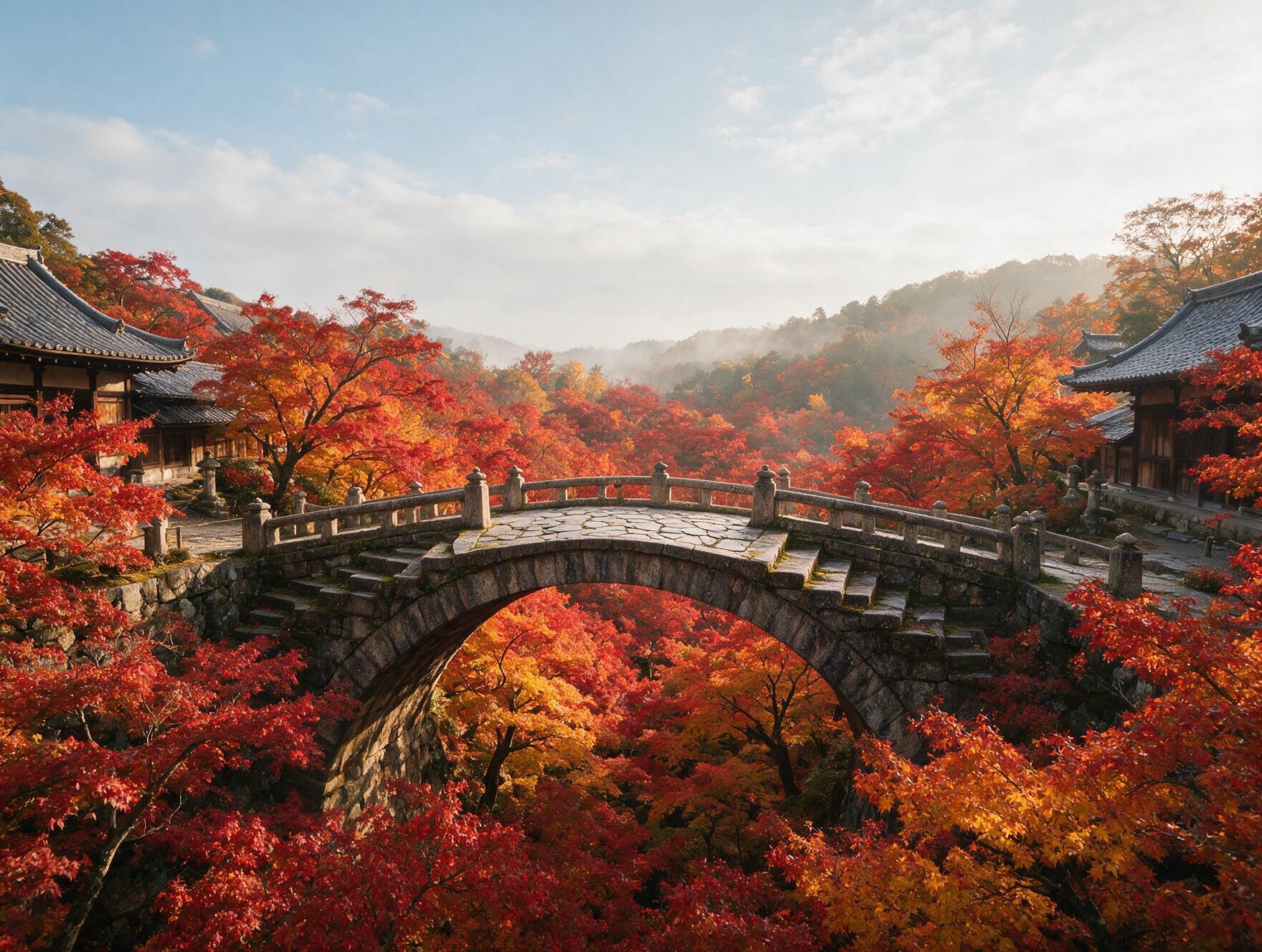
The second is Tofuku-ji in Kyoto over Kiyomizu-dera. Both have excellent maple viewing, but Kiyomizu-dera’s approach streets turn into a shuffling crowd during peak koyo weekends, while Tofuku-ji’s Tsutenkyo bridge, overlooking a valley that turns almost entirely red-orange in late November, draws a real crowd but rarely the same crush. Go at opening time on a weekday and you’ll get several minutes of the bridge close to empty — which is also, for what it’s worth, the best light for photos: soft and low, before the midday sun flattens the color out. If you only have one “must get the shot” stop on this trip, make it this one, early.
A Mistake to Avoid
The mistake we’d flag hardest: booking a tight, fixed day-by-day itinerary around textbook peak dates the moment this flight route makes planning feel urgent. Foliage timing has genuinely shifted later over the past two autumns, and locking a rigid schedule in August against dates that assume a “normal” year risks landing in Kyoto a week before the leaves actually turn. Book the flight and the anchor hotels now — that part of the urgency is real, since good ryokan rooms for late October and November do sell out. But leave the day-by-day regional order loosely sequenced until the early-September forecast update, and build one or two flex days into your Kyoto or Hakone leg so you can shift a day or two if the color is running late.
Safety and Practical Notes
Japan is about as low-risk a destination as exists for Indian travelers — petty crime is rare, and the standard precautions (watch your bag on crowded trains, don’t leave valuables visible) cover most of it. A few practical notes specific to this trip: pack for a temperature swing, since October-November days can run a mild 15-20°C while mornings and evenings, especially in Nikko and Hakone’s higher elevations, drop closer to 5-10°C — layers, a proper jacket, and decent walking shoes for uneven temple paths matter more than any single “statement” cold-weather item. If you have visible tattoos and want the full ryokan onsen experience, many properties now offer a private or reserved bath (kashikiri-buro) you can book by the hour specifically to work around the traditional tattoo restriction at communal baths — worth asking about when you book rather than discovering the policy at check-in. Get an eSIM or pick up a pocket wifi at the airport; both are simple and widely available, and Japan’s public wifi coverage, while improving, still isn’t something to plan a trip around.
Frequently Asked Questions
Is the Mumbai-Tokyo flight really nonstop, or does it technically stop somewhere?
It’s genuinely nonstop. Air India’s BOM-HND service flies Mumbai to Tokyo Haneda direct on a Boeing 787-8, four times a week, no scheduled stop.
How many days do I actually need for a first Japan trip?
Nine to eleven days is the sweet spot for covering Tokyo, one day-trip region (Nikko or Hakone), and Kyoto without feeling rushed. You can do a meaningful trip in seven, but you’ll be cutting either Tokyo’s depth or Kyoto’s, not both.
Is the JR Pass actually worth it, or is it a tourist habit at this point?
It depends on your route. If you’re doing Tokyo-Nikko-Hakone-Kyoto-Osaka in one loop, the math still favors the 7-day pass over individual shinkansen tickets. If you’re staying mostly in one region, it’s usually not worth it — price out both before you buy.
Do I need to speak Japanese to get around comfortably?
No. English signage on trains and in major stations is thorough, and translation apps handle menus and smaller interactions fine. It helps to learn a handful of polite phrases, but it’s not a barrier to a comfortable trip.
Will I actually see good foliage if I book now without knowing the exact peak dates?
Almost certainly yes, if you build in flexibility. The regions and rough windows are well established even before the September forecast update — the risk is a specific date being off by a week, not the season failing to happen. A loosely sequenced itinerary with a flex day or two protects against that.
Is Japan expensive right now for Indian travelers, given the exchange rate?
The yen has been weak against most major currencies for a couple of years, which has actually made Japan noticeably better value than it was a decade ago. It’s still not a budget destination at the mid-range to luxury level this piece covers, but the exchange rate is currently working in your favor, not against it.
Can I get a Japan visa faster if I’m booking last-minute?
Not really — the consulate is explicit that processing (minimum 5 working days, often longer) can’t be expedited for individual travelers regardless of how soon you’re flying. Apply as early as your 3-month window allows, especially for an October or November trip.
Is Bengaluru getting a direct Japan flight too?
Not currently. As of this writing, Mumbai and Delhi are the two Indian cities with nonstop Tokyo service; Bengaluru travelers are routing through one of those two cities or via a one-stop connection through Southeast Asia or Hong Kong.
Nine years ago, a Japan trip from Mumbai meant a layover almost no matter what you did. Now it means a 16:50 departure, a night’s sleep, and breakfast in Tokyo the next morning — timed, this year, to land right as the country turns red and gold. The flight route is new, the foliage window is real, and the two together are the actual reason this is worth moving on now rather than filing away for “someday.”
If you’d rather have someone else handle the visa timeline, the ryokan bookings, and the exact week to chase the leaves, that’s what Get Tripped does. Get in touch and we’ll build a mid-range to luxury Japan autumn itinerary around the new Mumbai-Tokyo route — flights, stays, and the regional order that actually matches how the season is shaping up this year.