Netherlands Food Trail: What to Eat in Amsterdam, Rotterdam, Utrecht & Beyond
Dutch food has an image problem it doesn’t entirely deserve. The clichés are real — raw herring eaten standing at a harbour stall, dense brown bread, potatoes turned several different ways — but they’re the surface layer. Underneath that is a city like Amsterdam that absorbed centuries of spice trade and colonialism, producing an Indonesian food culture so embedded in Dutch daily life that rijsttafel (rice table) is now as Dutch as stamppot. Rotterdam has one of Europe’s better street food scenes in Fenix Food Factory. Utrecht has the canal-level restaurant culture that Amsterdam wishes it still had. This Netherlands food trail covers all of it, city by city, from morning coffee to late-night bitterballen.
Table of Contents
- The Essentials: What to Know About Dutch Food
- Amsterdam Food Trail
- Rotterdam: The City with the Better Food Scene
- Utrecht: Eating at Canal Level
- Zaanse Schans: Cheese, Clogs & Village Food
- Giethoorn: Canalside Dining in a Village with No Roads
- Around Keukenhof: What to Eat in Lisse & Haarlem
- The Netherlands Food Bucket List: 12 Things to Try
- Late Night Eating & Dutch Snack Bars
- FAQs
The Essentials: What to Know About Dutch Food
The Netherlands is a small country with an outsized food influence. The Dutch East India Company (VOC) controlled the global spice trade for 200 years, and the culinary traces of that empire are visible everywhere — particularly in the Indonesian food that’s been absorbed so completely into Dutch culture that children grow up eating it for school lunch. Surinamese roti, Turkish doner, Moroccan harira: Amsterdam has absorbed wave after wave of immigrant cooking, and the best of the city’s restaurants reflect that layering.
The native Dutch food is honest and unfussy: dairy-heavy, bread-based, prone to meat. But Dutch cheese (Gouda, Edam, Beemster) is genuinely excellent, the baked goods are underrated, and the herring — nieuwe haring, eaten raw with raw onion — is an acquired taste worth acquiring.
One practical note: tipping in the Netherlands is optional. Service is included in restaurant bills, and a 5–10% tip is a genuine gesture rather than an expected transaction. Card is widely accepted, including at market stalls.
Amsterdam Food Trail
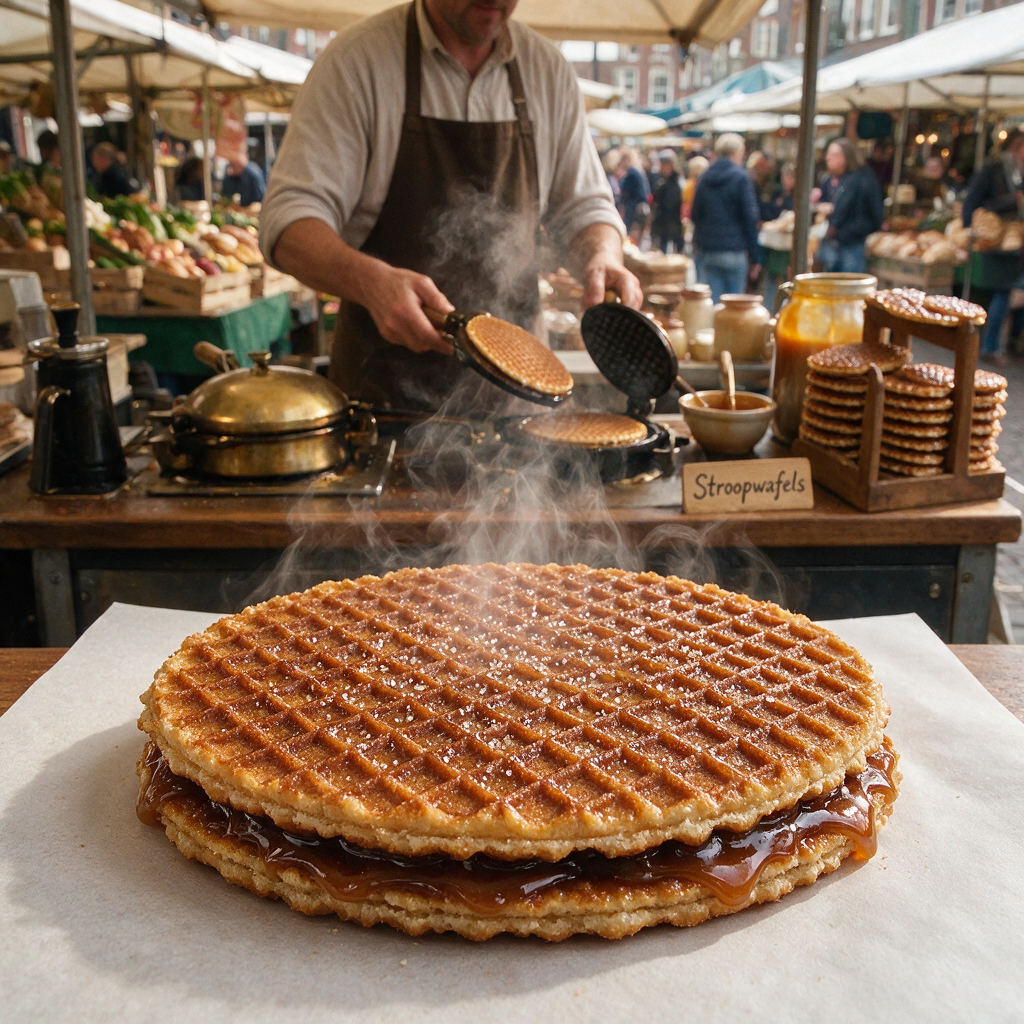
Morning: Start at Café ‘t Smalle on Egelantiersgracht in the Jordaan, which has been serving coffee and Dutch apple tart since the 18th century. The canal-facing terrace is one of Amsterdam’s better morning spots. For something lighter, the Albert Cuyp Market in De Pijp (open Tuesday–Sunday until 5pm) has fresh stroopwafels from stalls that make them on site — buy one when it’s hot, while the caramel is still liquid.
Lunch: Try Blauw in De Pijp for Indonesian food done seriously — it’s a 50-year-old institution with a rijsttafel that leans hard into the original Javanese recipes rather than the Europeanised version. For something quicker, Wil Graanstra Friteshuis on Westermarkt serves what many Amsterdammers consider the city’s best frites: thick-cut, double-fried, eaten with mayonnaise from a cone. It looks like a shed. It almost always has a queue.
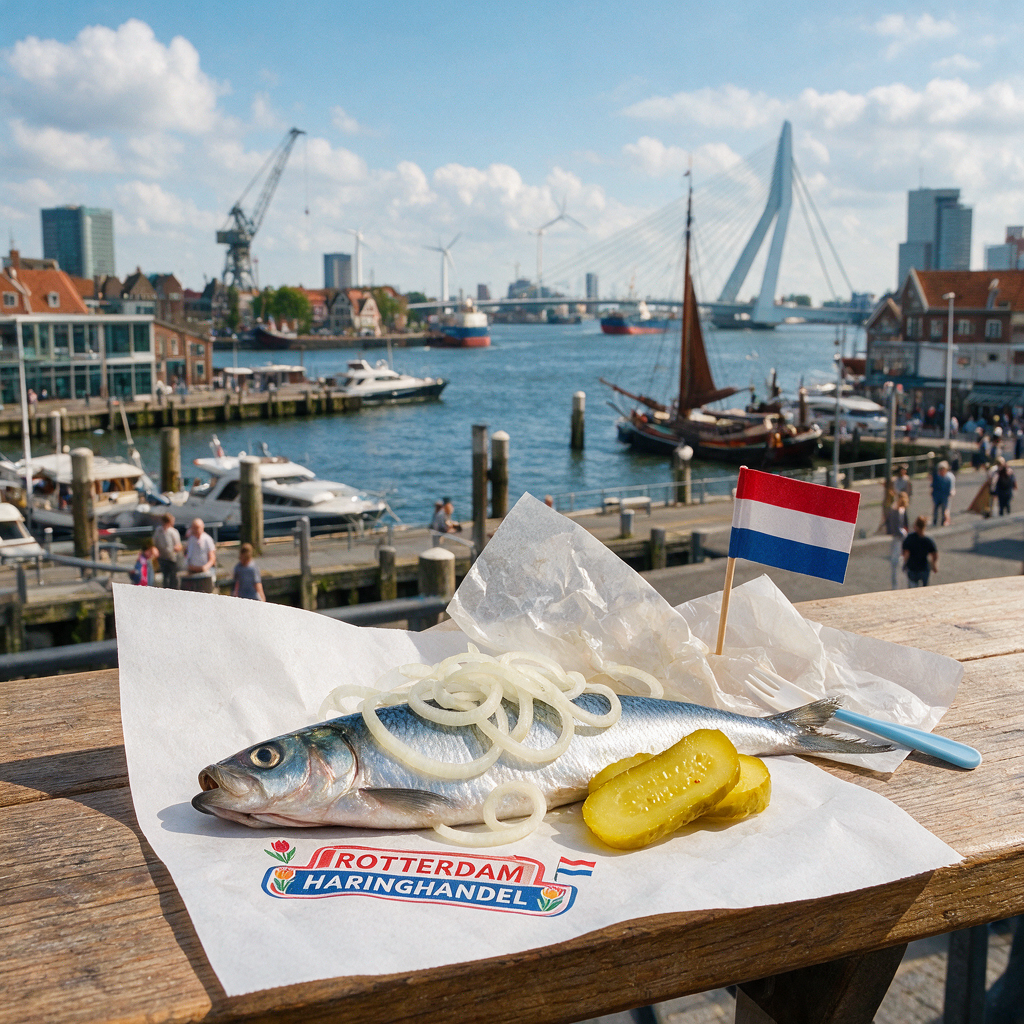
Afternoon snack: A cone of raw herring (haring) from De Vishandel fish stall near the Singel canal. Herring season runs late May through August; outside that window the fish has been frozen. New herring (nieuwe haring) is the fresh catch of the year — milder, fattier, worth the different price. Order with onion and gherkin, hold the bread if you want to eat it the way Dutch people do.
Dinner: De Belhamel on Brouwersgracht does Art Nouveau-meets-French-brasserie with canal views — rack of lamb, Dutch asparagus in season, excellent wine list. Book a week ahead in summer. For a less formal version, Café Papeneiland on Prinsengracht is a traditional bruine kroeg (brown café) with apple tart and jenever (Dutch gin) that has barely changed since it opened in 1642.
Late night: Vlaams Friteshuis Vleminckx on Voetboogstraat (near the flower market) operates until midnight on weekends and serves Amsterdam’s best late-night frites in a narrow alley. Cash only, perpetual queue, worth both things.
Rotterdam: The City with the Better Food Scene
Rotterdam has arguably overtaken Amsterdam for food in the last decade. The city is younger, less touristy, and has been willing to experiment in ways that Amsterdam — where premium real estate goes to tourist-facing restaurants — can’t always afford to. If you have one food-focused day in the Netherlands, Rotterdam is where to spend it.
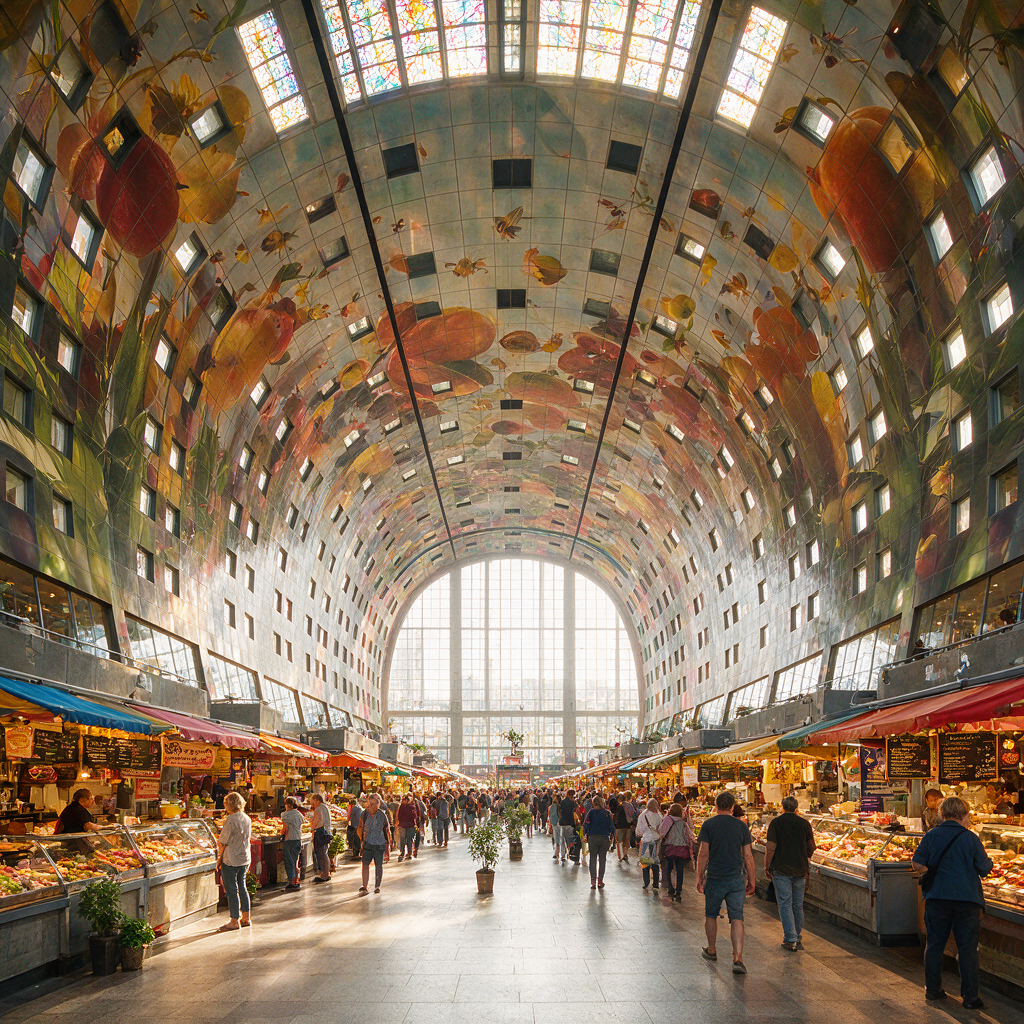
Markthal: The horseshoe-shaped indoor food market on Blaak is the obvious starting point. Open from 10am. The Indonesian stalls (Warung Mini, Toko Fijne Mie) are better than the tourist-facing Dutch options. Buy some Beemster kaas (Beemster is a PDO-protected cheese from the polder region north of Amsterdam — nuttier and creamier than regular Gouda) and eat it at the bar. The market hall itself is worth 20 minutes just for the ceiling mural.
Fenix Food Factory in Katendrecht (a 15-minute walk south from Markthal, or tram 25 to Katendrecht) is a collection of Rotterdam producers in a converted warehouse on the Maas waterfront. Kaapse Brouwers craft beer is brewed here and poured at the bar. Hartog’s Volkoren bakery makes excellent rye bread. The Indonesian stall Warung Mini Fenix is run by the same family as the Markthal operation and is arguably better. This is where Rotterdam actually eats on weekends.
Dinner: Hotel New York’s restaurant on the Wilhelminapier has the best waterfront setting in Rotterdam — the former Holland America Line terminal building, Art Nouveau interior, good Dutch seafood. For something more local, try Joelia on Kruiskade, which has held two Michelin stars and does contemporary Dutch with seasonal produce.
Utrecht: Eating at Canal Level
Utrecht’s food scene is defined by the Oudegracht’s canal-level cellars, which have been converted into restaurants, wine bars, and café terraces that sit at water level rather than street level. It’s genuinely different from anywhere else — you’re dining in 12th-century stone vaults with the canal a metre from your table.
Café Olivier on Achter Clarenburg is a Belgian beer bar in a deconsecrated church — 40+ beers on tap, reasonable food, and the moral satisfaction of eating nachos in a Gothic nave. For something more serious, Restaurant Karel V in the Grand Hotel Karel V cloister (a converted 14th-century religious complex) does Dutch nouvelle cuisine with medieval architecture as the backdrop.
The Neude square area has Utrecht’s highest density of good independent cafés. For coffee, Koffie Leute on Voorstraat is the local favourite — proper espresso, no tourist prices. For a late afternoon drink, the canal terraces between Oudegracht and Drift fill up on warm evenings with Utrecht’s student population, which keeps the atmosphere genuinely local.
Zaanse Schans: Cheese, Clogs & Village Food
Zaanse Schans is primarily a windmill village, but it has a decent food infrastructure built around its open-air museum tourism. The Catharina Hoeve cheese farm does free cheese tastings and sells aged Gouda direct — the 2-year aged Gouda at room temperature is a different product from the supermarket version. The Zaanse Schans Bakery Museum has a working windmill-powered bakery where you can watch bread being made before buying a loaf to take away.
The clog workshop (Klompenmakerij) sells stroopwafels made on site, and the small café on the main path serves adequate coffee and Dutch pancakes (pannenkoeken). For a better lunch, the Restaurant De Hoop op d’Swarte Walvis on the Zaan river (a 10-minute walk from the main Zaanse Schans area) is an 18th-century warehouse converted to a restaurant with good Dutch cooking and one of the better lunch menus in the region.
Giethoorn: Canalside Dining in a Village with No Roads
Giethoorn doesn’t have much restaurant choice, but what it has is scenic in a way that offsets average cooking. Restaurant Fanfare on De Jonge Schoolstraat is the most-visited option — Dutch staples (erwtensoep pea soup, uitsmijter open-faced egg sandwich) at a canal table. Restaurant De Lindenhof on Beulakerweg is more serious — one Michelin star, modern Dutch tasting menus, set among the thatched farmhouses that make Giethoorn photogenic. It requires advance booking and is notably more expensive than anything else in the village.
The ice cream in Giethoorn is worth mentioning specifically: there are two artisan shops near the main boat rental area, and the quality (proper Italian gelato, not the reconstituted powder version) is better than you’d expect in a village of 2,600 people. Get a cone and eat it on a bridge over the canal.
Around Keukenhof: What to Eat in Lisse & Haarlem
Keukenhof’s in-garden cafés are functional rather than memorable — sandwiches, soup, coffee, eaten standing between two million tulips. Fine for what it is. If you want a proper meal, hold out for Haarlem, 20 minutes away by bus or car.
Haarlem’s Grote Markt (main market square) has a ring of restaurants and café terraces around the St. Bavo Church. Jacobus Pieck on Warmoesstraat is a neighbourhood favourite for lunch — Dutch sandwiches done properly with local bread and house-made fillings. For dinner, ML Restaurant in the centre does contemporary Dutch with a focus on regional ingredients and has a more ambitious kitchen than anything you’ll find in Lisse itself.
Haarlem also has several good independent coffee shops (in the non-cannabis sense) — Caffènation on Lange Begijnestraat is run by specialty coffee obsessives and worth seeking out if you care about extraction ratios and single-origin beans.
The Netherlands Food Bucket List: 12 Things to Try
1. Nieuwe haring: Raw herring eaten standing at a harbour stall. Non-negotiable. Try it once before deciding it’s not for you.
2. Stroopwafel from a market: Not the packaged version from Schiphol. A fresh one, warm, from Albert Cuyp Market or Zaanse Schans.
3. Rijsttafel: The Indonesian rice table — 15–20 small dishes eaten together — is Dutch-Indonesian history served on a plate. Budget restaurants do adequate versions; Blauw in Amsterdam does the serious one.
4. Bitterballen: Crunchy-fried beef ragout balls served with mustard. Available in every Dutch bar from 5pm. Not subtle; deeply satisfying.
5. Dutch pancakes (pannenkoeken): Thinner than American pancakes, larger than French crêpes, eaten sweet or savoury. The version with Dutch bacon and aged Gouda is better than it sounds.
6. Jenever: Dutch gin, drunk neat, slightly warm. Older than British gin, with a malted grain base that makes it softer. Try the aged (oud) version at a traditional brown café.
7. Gouda from a farm: The Catharina Hoeve in Zaanse Schans lets you taste different ages — young, medium, old, extra-old. The 2-year version has a crumbly texture and intense flavour that the supermarket export version doesn’t hint at.
8. Erwtensoep: A thick, grey-green split pea soup with smoked sausage, served in winter primarily. The Dutch call it snert and eat it after ice-skating. It looks unpromising; it’s very good.
9. Patatje oorlog: Frites with mayonnaise, peanut sauce (satay), and raw onion. “War fries.” Served from snack bars. More coherent than it sounds.
10. Kroketten from a muurautomaat: A muurautomaat is a vending machine in the wall of a snack bar, heated, dispensing croquettes (kroket) through coin-operated windows. FEBO in Amsterdam is the famous version. The kroket inside — beef ragout, crunchy shell — is hot, greasy, and perfect at 1am.
11. Dutch craft beer: The Netherlands had a beer culture limited to Heineken and Grolsch for decades. The last 15 years have produced a serious craft scene — Brouwerij ‘t IJ in Amsterdam (in a windmill), Kaapse Brouwers in Rotterdam, and Utrecht’s Oproer Brewery are the ones worth seeking out specifically.
12. Oliebollen: Dutch doughnuts — round, dusted with powdered sugar, eaten from paper bags at outdoor stands December through January. Only available in winter. If your trip falls in that window, buy a bag.
Late Night Eating & Dutch Snack Bars
Dutch snack bar culture (the snackbar or cafetaria) operates late and takes its job seriously. FEBO in Amsterdam has muurautomaat (wall-vending) kroketten and frikandellen available until 2am. Vleminckx Friteshuis near the Singel flower market is the late-night frites standard. In Rotterdam, the Nieuwe Binnenweg strip has several snack bars and döner shops open past midnight.
The Dutch equivalent of a nightcap is a small glass of jenever or a biertje (beer) at a bruine kroeg — a brown café, named for decades of nicotine-stained wooden interiors. These are neighbourhood institutions, not bars in the tourist sense, and they close when the last regular leaves rather than at a fixed hour.
Frequently Asked Questions
Is Dutch food good?
Native Dutch food (stamppot, herring, bitterballen) is honest, filling and worth trying in context. What makes the Netherlands genuinely exciting for food is the Indonesian influence — rijsttafel in Amsterdam is some of the best Indonesian cooking in the world outside Indonesia itself — and the recent craft food and drink scene in Rotterdam.
What should vegetarians eat in the Netherlands?
Vegetarians eat well in the Netherlands. Most Dutch restaurants now have dedicated vegetarian mains, Amsterdam has dozens of vegetarian and vegan-specific restaurants, and even the traditional snack bar usually has kaassoufflé (deep-fried cheese pastry) as a vegetarian option. Indonesian food is also naturally vegetable-forward; many rijsttafel dishes are vegetarian by default.
Is Dutch food spicy?
Native Dutch food is not spicy. Mustard is the main condiment. The Indonesian food that’s embedded in Dutch culture can be spicy — sambal, a chilli paste, comes on the side of most Indonesian dishes and can be intense. The decision to add it is yours.
What is rijsttafel and is it worth the cost?
Rijsttafel (rice table) is an Indonesian dining format invented by Dutch colonisers in the East Indies — multiple small dishes served simultaneously around a central bowl of rice. At a good restaurant (Blauw or Tempo Doeloe in Amsterdam), it costs €35–50 per person and delivers 15–25 dishes. It’s worth the price at least once.
What’s the best market in Amsterdam for food?
Albert Cuyp Market in De Pijp is the largest daily market (Tuesday–Sunday) and has the best combination of Dutch and international food. Noordermarkt near the Jordaan is smaller and better-curated for artisan produce (Saturdays). IJ-hallen, Amsterdam’s flea market on the north side of the IJ, runs monthly and has surprisingly good street food alongside the vintage market.
Are restaurants expensive in the Netherlands?
Amsterdam is genuinely expensive — a sit-down dinner with drinks is €50–80 per person at a mid-range restaurant. Rotterdam and Utrecht are slightly cheaper. Street food and market food run €4–12 per item and are often better value than restaurants. If you’re budget-conscious, the Albert Heijn supermarket chain has prepared food (bitterballen, sushi, sandwiches) at reasonable prices, and eating half your meals from there is a reasonable strategy.
Food First, Then Flights
The Netherlands rewards food explorers willing to go beyond Amsterdam’s tourist-centre restaurants. The best meals are usually off the main drags — a Surinamese roti shop on a Rotterdam side street, a tiny Indonesian place run by a second-generation family in Utrecht’s student quarter, a cheese farm where someone lets you taste the 4-year aged Gouda from the back of the cellar. Those discoveries are what get remembered.
If you want a trip where the food is built into the itinerary from the start — specific restaurants, market visits, cooking class, the works — Get Tripped’s Netherlands packages can be tailored around a food-first itinerary. Explore Netherlands food and culture trips from India and let us know what kind of traveler you are.