Vegetarian and Vegan Food Guide to Netherlands for Indian Travelers
Here’s something the Netherlands doesn’t advertise loudly enough: Amsterdam and Utrecht consistently rank among Europe’s most vegan-friendly cities. Amsterdam alone had over 50 dedicated vegan restaurants at last count, not including the hundreds more with strong vegetarian menus. The Indonesian food culture that runs through Dutch cuisine — where tofu, tempeh, coconut milk, and spiced vegetables are central, not afterthoughts — is a godsend for Indian travelers who’d otherwise face a week of side salads in European cities.
This guide covers 1–2 concrete restaurant recommendations in each of the six Netherlands cities on Get Tripped’s destination page — Amsterdam, Rotterdam, Giethoorn, Zaanse Schans, Utrecht, and Keukenhof — plus practical tips for navigating Dutch menus and what to look for at markets.
Table of Contents
- Amsterdam
- Rotterdam
- Utrecht
- Giethoorn
- Zaanse Schans
- Keukenhof Area (Lisse)
- Navigating Dutch Menus as a Vegetarian
- Markets Worth Knowing
- FAQs
Amsterdam
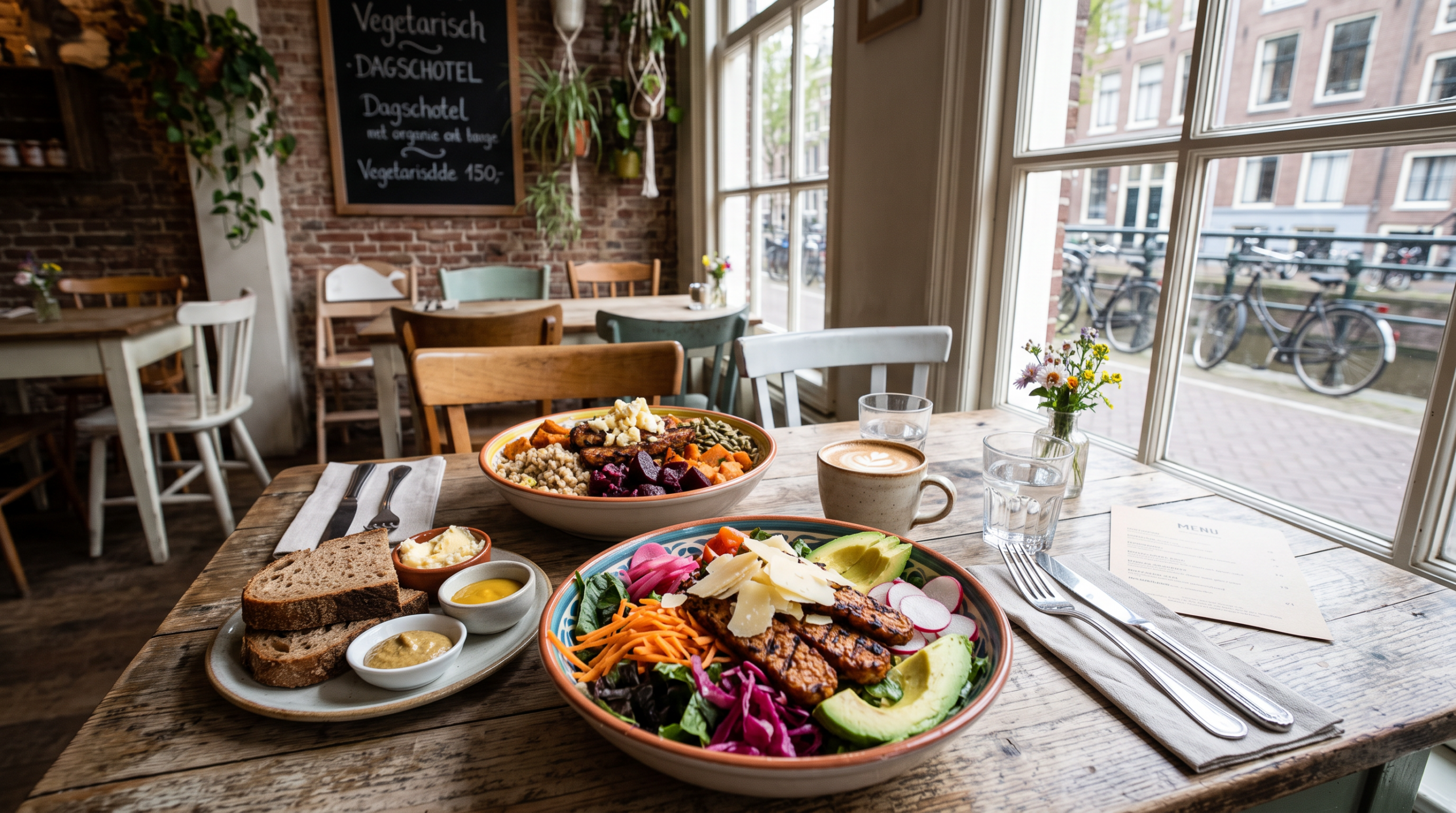
Amsterdam is probably the easiest city in continental Europe for vegetarian and vegan travelers. The concentration of plant-based cafés and restaurants in neighborhoods like the Jordaan, De Pijp, and Oud-West is genuinely impressive, and you don’t need to seek them out — they’re just part of the normal food landscape here.
Bonboon (Jordaan)
What it is: Vegan fine dining, five courses, seasonal menu that changes every two months.
What to order: There’s no à la carte — it’s a fixed menu, and the kitchen decides what you’re eating based on what’s seasonal. Expect delicate preparations with Dutch and French influences: fermented vegetables, plant-based umami-forward sauces, beautifully plated desserts.
Practical: Book well in advance — this is a proper restaurant with a small dining room. Not for every night, but excellent for a special dinner.
Address: Tweede Tuindwarsstraat, Jordaan
TerraZen Centre (City Center)
What it is: A family-run vegan café serving Caribbean and Japanese-influenced dishes — jackfruit karaage, vegan ramen, coconut curries.
What to order: The jackfruit karaage bowl. The flavor profile is closer to what an Indian palate expects from a full-flavored meal than most European vegetarian restaurants manage.
Practical: Cash-friendly, casual, usually has walk-in space at lunch. Good value for central Amsterdam.
Address: Kloveniersburgwal, near Nieuwmarkt
Quick finds for Indian travelers
Albert Cuypmarkt: The Saturday vegetable stalls and food vendors include Indonesian vegetable dishes and fresh Dutch produce. Dappermarkt (Amsterdam Oost) has Surinamese and Indonesian vegetarian street food stalls open on weekday mornings — tempe (fermented soybean cake, a Dutch-Indonesian staple) is often available here, both cooked and raw.
Rotterdam
Rotterdam’s food diversity means vegetarian options are rarely a problem — the city’s Surinamese, Indonesian, and Turkish communities have all contributed food cultures where meat-free dishes are central rather than an accommodation.
Spirit Rotterdam (City Center)
What it is: A long-running vegetarian buffet — over 50 dishes prepared daily from organic, seasonal ingredients.
What to order: At a buffet this size, it’s better to think of it as a sampler. Expect Dutch-style stamppot (mashed potato with vegetables) in a vegetarian version, Indonesian-influenced rice dishes, and seasonal vegetable preparations. The volume of choice makes it unusually well-suited to group travel.
Practical: Good value — you pay by weight. Central location and lunch/dinner hours.
Address: Westblaak area, central Rotterdam
Markthal Vegetarian Options
The Markthal food hall has several vendors worth knowing: the Leaf Vegetarian stall does Asian vegetarian dishes with mock meats (tofu, tempeh, faux-shrimp preparations). If you’re after just cheese and bread, the cheese vendors here carry excellent aged Gouda — perfectly vegetarian and a great picnic base. The Indonesian rijsttafel stall near the center of the Markthal typically has two or three vegetable-only curry options as part of the standard spread.
Utrecht
Utrecht has the best vegetarian restaurant density outside Amsterdam, partly because of its large university population and partly because the city has had a strong food-consciousness culture since at least the 1990s. Amsterdam and Utrecht were specifically cited by the Vegan Society as two of Europe’s most vegan-friendly cities.
Gys (City Center)
What it is: Entirely vegan and gluten-free. Seasonal menu, organic produce, lunch and dinner service.
What to order: The kitchen changes the menu frequently based on what’s available — ask the server what’s been on the menu this week. The preparations here are more delicate than a typical vegan café; this is serious cooking, not just salads and grain bowls.
Practical: Small dining room; book ahead for dinner.
Address: Springweg, Utrecht city center
BROEI (Oudegracht Wharf)
What it is: A waterfront plant-based restaurant on the canal wharf level — breakfast, lunch, dinner, and weekend four-course vegan dinners.
What to order: The weekend brunch spread is strong — multiple warm dishes, fresh bread, Dutch dairy-free cheese alternatives, and seasonal sides. During weekday lunch, the bowl meals are good value.
Practical: The wharf-level location is exceptional — you’re eating below street level with the canal above. Book for the weekend dinners; walk-in is usually fine for weekday lunch.
Address: Oudegracht wharf, Utrecht
Giethoorn
Giethoorn is a small village with a handful of restaurants — it’s not a place with multiple vegetarian-specific options. The village’s food culture centers on traditional Dutch cooking (smoked fish, dairy, meat-based soups), so vegetarian travelers need to navigate with a bit of care.
Best approach: Most of the canal-side cafés in Giethoorn (including Restaurant de Harmonie and ‘t Fanfare) offer Dutch cheese plates, bread, and egg-based dishes that are vegetarian. The Giethoorn farm shops along the walking paths sell local dairy, honey, and seasonal preserves — putting together a picnic from these shops (local cheese, bread, seasonal fruit) and eating on the boat or by the water is genuinely the best food option here for vegetarians. The ambiance beats any restaurant.
Important note for vegans: Giethoorn has very limited options beyond dairy and eggs. If you’re strictly vegan, plan to eat a good meal in Zwolle (the nearest city, 30 minutes away) before or after your Giethoorn visit — Zwolle has a growing plant-based café scene and is large enough to have real options.
Zaanse Schans
Like Giethoorn, Zaanse Schans is a tourist site rather than a real town — its food options are limited to the restaurants within the open-air museum complex. These are functional but not places to build a food experience around.
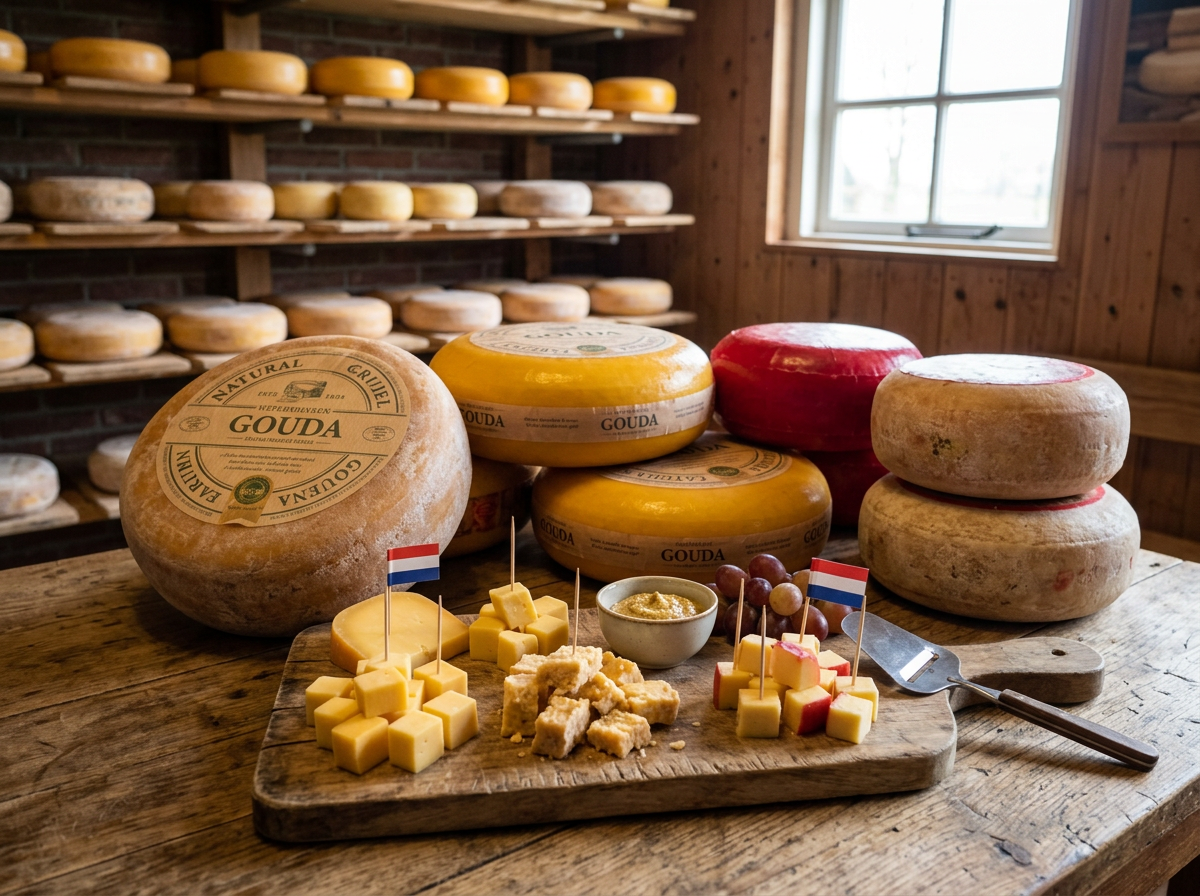
Best option for vegetarians: The De Catharina Hoeve cheese farm at Zaanse Schans offers free tastings of young and aged Gouda and Edam — both vegetarian. Buy a wedge and combine it with bread from the small bakery stall and mustard from the De Huisman mustard mill for a DIY riverside lunch. This is the better food experience at Zaanse Schans regardless of dietary preference, honestly.
For vegans: The central restaurant area at Zaanse Schans has limited dairy-free options. Pack a lunch from Amsterdam (about 20 minutes away by train) before heading out — it’s a half-day trip, so this is manageable.
Keukenhof Area (Lisse)
Keukenhof’s three internal restaurants are mainly fast-food cafeteria style — they cater to volume and the vegetarian options are there but limited to sandwiches and a pasta option. The better strategy for vegetarian travelers:
Pancake House De Smulpot in Lisse (5-minute walk from Keukenhof) does Dutch pannenkoeken (pancakes) in sweet and savory vegetarian versions — apple with cinnamon and powdered sugar, cheese with mushrooms, or a simple butter version with fresh fruit. Dutch pancakes are typically made with eggs and milk — not vegan, but vegetarian. For a dairy-free pancake, call ahead to confirm what the kitchen can accommodate.
Haarlem alternative: If you’re combining Keukenhof with a stop in Haarlem (20 minutes away), Haarlem has a proper café scene. Café 1900 near the Grote Markt has good vegetarian Dutch lunch options. The city’s Saturday market also has a strong vegetable and cheese presence.
Navigating Dutch Menus as a Vegetarian
Useful Dutch vocabulary:
- Vegetarisch: Vegetarian
- Veganistisch: Vegan
- Zonder vlees: Without meat
- Zonder vis: Without fish
- Lactosevrij: Lactose-free
- Glutenvrij: Gluten-free
Most Amsterdam restaurants speak English fluently, so asking “is this vegetarian?” or “can this be made vegan?” is easy. In smaller towns (Giethoorn, Lisse), it’s worth asking about meat-based stocks in soups — Dutch erwtensoep (pea soup) is traditionally made with pork, for example.
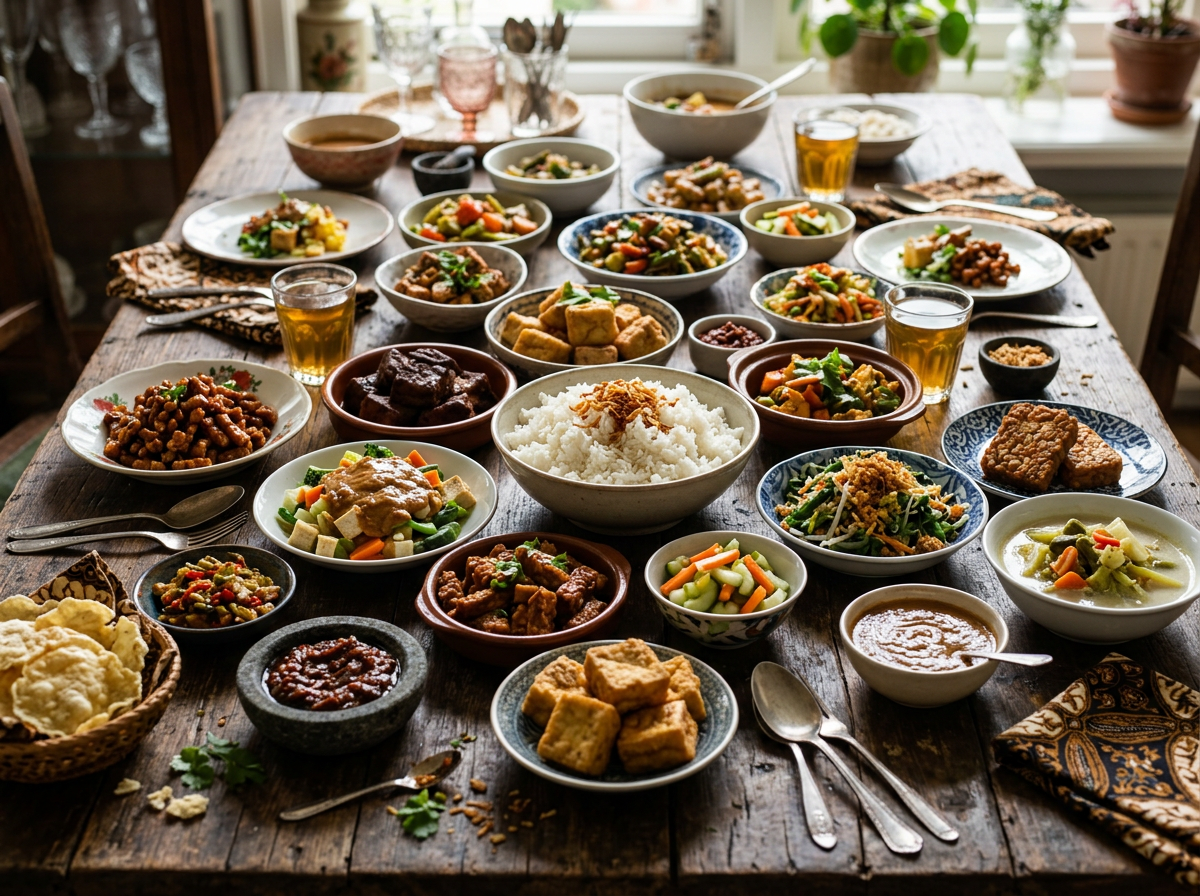
Indonesian food in the Netherlands is worth understanding for Indian vegetarians: dishes like nasi goreng (fried rice), gado gado (vegetables in peanut sauce), and tempeh goreng (fried fermented soybean) are often vegetarian or can be made so. Tempeh itself — fermented soybean cake — is nutritionally excellent and genuinely tasty, particularly the versions from Indonesian-owned restaurants rather than the pale supermarket version.
Markets Worth Knowing
- Albert Cuyp Market, Amsterdam: Tuesdays–Saturdays, De Pijp. Excellent cheese, fresh vegetables, Indonesian snack stalls with vegetarian options.
- Noordermarkt, Amsterdam: Saturdays. Organic produce market — the best quality fresh fruit and vegetables in Amsterdam. Small artisan cheese and honey vendors.
- Vredenburg Market, Utrecht: Saturdays. Large outdoor market with a strong cheese section and seasonal produce vendors.
- Markthal, Rotterdam: Daily. Covered market — the vegetarian buffet and Asian stalls are reliable options.
Frequently Asked Questions
Is the Netherlands generally good for Indian vegetarians?
Yes — particularly in Amsterdam and Utrecht. The Indonesian food tradition means spiced vegetarian dishes are genuinely present on menus, not just token additions. Indian vegetarians will find the protein variety (tempeh, tofu, paneer-adjacent Dutch cheeses) better than in most European countries. The main challenge is in smaller tourist sites like Zaanse Schans and Giethoorn, where options are limited.
Can I find Indian food in the Netherlands?
Yes, particularly in Amsterdam (the Jordaan area and Amsterdam Oost have several Indian restaurants). Quality varies — ask at your hotel for recommendations rather than relying on the closest result. That said, Indonesian food is genuinely a good substitute for Indian cravings: the spice profile, the use of coconut milk, the rice-based meals — it’s a related culinary tradition and the Dutch-Indonesian version is very well developed.
What is tempeh and is it widely available?
Tempeh is fermented soybean cake — a traditional Javanese food that became central to Dutch-Indonesian cuisine. It’s firm, nutty, and protein-dense, and it’s available in every Dutch supermarket as well as Indonesian restaurants. For Indian travelers who want a familiar protein texture in an unfamiliar place, tempeh goreng (fried tempeh with sweet soy sauce) is worth trying.
Are Dutch supermarkets good for vegetarian/vegan shopping?
Very good. Albert Heijn (the main Dutch supermarket chain) has an entire plant-based range called AH Terra, including dairy alternatives, plant-based meats, and ready meals. Jumbo (the second major chain) has similarly strong options. Both are in every major city and most towns.
Planning a Netherlands trip and want vegetarian-friendly experiences built into your itinerary? Get Tripped’s Netherlands packages include curated food experiences across all six key destinations. Message us on WhatsApp to discuss your trip.