Netherlands Packing Guide by Season: What to Bring for Spring, Summer, Autumn & Winter
Dutch weather is genuinely variable in ways that catch people out. The Netherlands sits on the North Sea coast, which means even in July you can have a cold grey afternoon followed by bright sunshine and back to rain within the same day. The Dutch don’t really complain about this — they’re prepared for it. The phrase “there’s no bad weather, only bad clothing” could have been coined here. The practical result for Indian travelers is that packing light isn’t the right strategy, particularly in spring and autumn: layering and a reliable rain layer matter more than total weight.
This guide covers what to pack for each of the four seasons, with specific notes for the major activities: cycling, tulip season at Keukenhof, boat trips in Giethoorn, walking Zaanse Schans, and urban exploring in Amsterdam.
Table of Contents
- Spring Packing (March–May): Tulip Season
- Summer Packing (June–August)
- Autumn Packing (September–November)
- Winter Packing (December–February): Christmas Markets
- Year-Round Essentials
- What Not to Bring
- FAQs
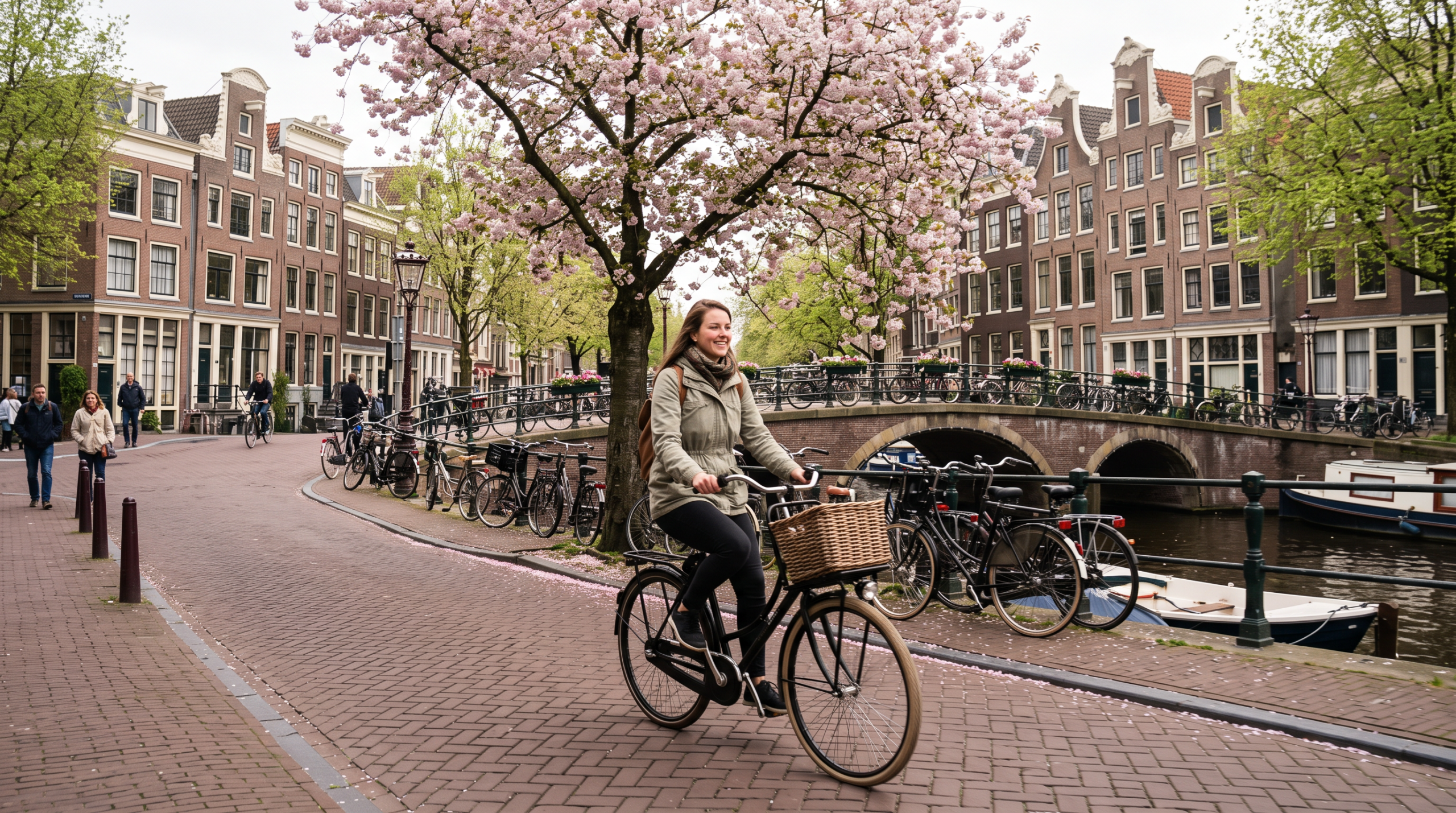
Spring Packing (March–May): Tulip Season
Spring is peak season for the Netherlands and the most popular time for Indian travelers visiting Keukenhof. It’s also the trickiest season to pack for: March averages 8–12°C, May reaches 15–20°C, and rain is frequent across all three months. The famous tulip photographs are shot in soft spring light — which often arrives between showers.
Clothing
- Waterproof outer layer: This is non-negotiable. A proper rain jacket (not a packable ultralight — something that actually keeps shoulders and back dry while walking or cycling) is the most important item in your bag for spring Netherlands. A windproof quality matters here because the North Sea coast gets sustained winds, not just rain. Avoid fashion rain jackets — the Netherlands spring weather tests them and finds them wanting quickly.
- Mid-layer fleece or light wool sweater: For mornings and evenings, which stay cold through April.
- Long-sleeve base layers: 2–3 pieces. The Netherlands doesn’t do extreme cold in spring, but layering works better than single thick items.
- Jeans or heavier trousers: At least one pair. Lightweight travel trousers are fine for warmer days in May but feel inadequate in March winds.
- Comfortable walking shoes: Waterproof or at minimum water-resistant. You will walk on wet cobblestones, wet cycling paths, and wet grass at Keukenhof. Canvas shoes or thin trainers are the wrong choice in March–April.
- Light scarf and beanie: For early mornings and Giethoorn boat trips — being on the water is significantly colder than being on land.
For Keukenhof specifically
The garden paths at Keukenhof are paved but surrounded by grass and wet flower beds. Bring waterproof shoes and the rain jacket — the garden visit often includes a period of walking through light rain, and the experience is still worth it, particularly for the indoor display halls. A compact umbrella is useful; it doesn’t interfere with photography the way a hood does.
For Giethoorn boat trips in spring
Whisper boats are open — no cover. Bring the warmest layer you have for a 2–3 hour boat rental. Spring mornings on the water are genuinely cold. The Dutch rent boats regardless of the weather, and it’s fine once you’re moving, but an extra sweater makes the difference between enjoyment and discomfort.
Summer Packing (June–August)
Dutch summers are mild rather than hot: June–August averages 18–24°C on good days, with occasional warmer periods. Amsterdam in July is pleasant for outdoor exploration. The catch is that “good days” alternate with overcast and occasionally rainy days, and an unforecast afternoon shower in July is still fully possible. Packing for summer Netherlands means bringing more than you would for Mediterranean summer.
Clothing
- Light rain jacket: Still needed. A packable rain jacket is fine for summer — weight matters less than having something for the afternoon shower.
- Light layers: T-shirts, a light long-sleeve or linen shirt, and one light sweater for evenings. Evening restaurant temperatures often warrant a layer even in July.
- Shorts and light trousers: Both. Shorts work on good summer days; long trousers for cooler days and museum visits.
- Comfortable walking shoes: Trainers are fine for summer — waterproofing is less critical. Bring shoes you can walk 10–15km in, because Amsterdam rewards walking.
- Sandals: Useful for hotel rooms, beach areas (the North Sea coast is accessible from Amsterdam), and warm afternoons. Not suitable as primary walking shoes on cobblestones.
- Light scarf: Evenings by the canal are cooler than afternoons, and a light scarf or pashmina bridges the gap without needing a full extra layer.
Summer-specific additions
- Sunscreen: The Netherlands is farther north than most Indian travelers realize — the sun is strong in summer despite the mild temperatures. UV exposure is significant especially during outdoor cycling and market visits.
- Sunglasses: More useful in summer Netherlands than many expect — the low sun angle and water reflections off canals create strong glare, especially in the morning.
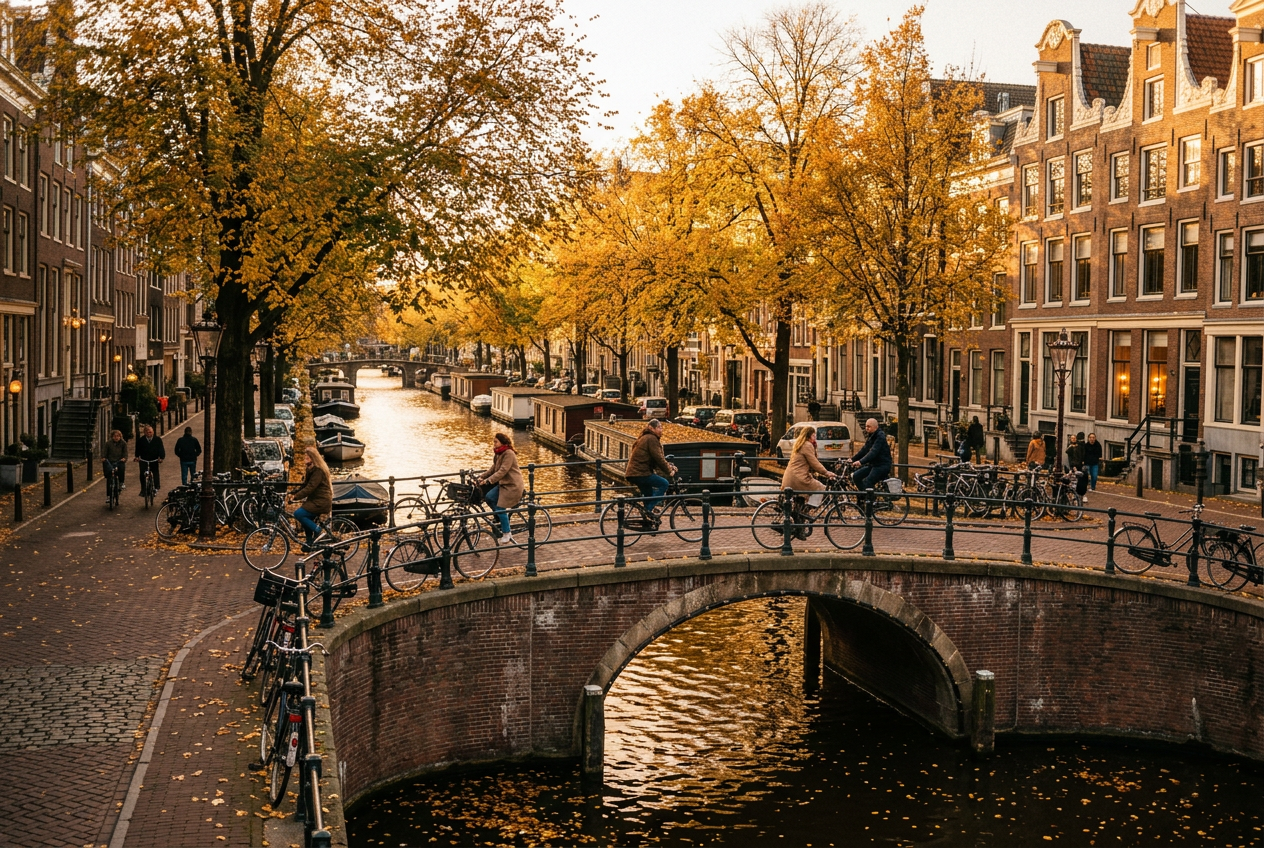
Autumn Packing (September–November)
September in the Netherlands is often one of the better months to visit: fewer tourists than summer, lower hotel prices, warm afternoon light on the canal belt, and the trees beginning to turn. October brings increasing rain and wind; November is genuinely cold. Autumn packing is similar to spring but with a heavier emphasis on warmth for October–November.
Clothing
- Waterproof outer layer: Required. October and November in particular see sustained rain. A proper waterproof jacket rather than a fashion option.
- Medium-weight wool or fleece sweater: 2 pieces for October–November.
- Long trousers: Multiple pairs. Shorts are rarely useful after September.
- Waterproof shoes or ankle boots: By October, proper waterproofing on footwear matters. Leather ankle boots or waterproofed walking shoes work better than trainers in autumn wet.
- Warm hat and gloves: From October onwards. November cycling in Amsterdam without gloves is unpleasant.
- Scarf: Useful daily from October through the end of the trip.
Autumn light photography note
The golden autumn light in Amsterdam — particularly the late afternoon glow on the canal belt from October onwards — is photogenic in a way the summer flat light isn’t. The leaves on the elm trees lining the canals turn yellow-gold in October. If photography is a priority, pack accordingly: mornings are crisp and clear before the overcast rolls in most days.
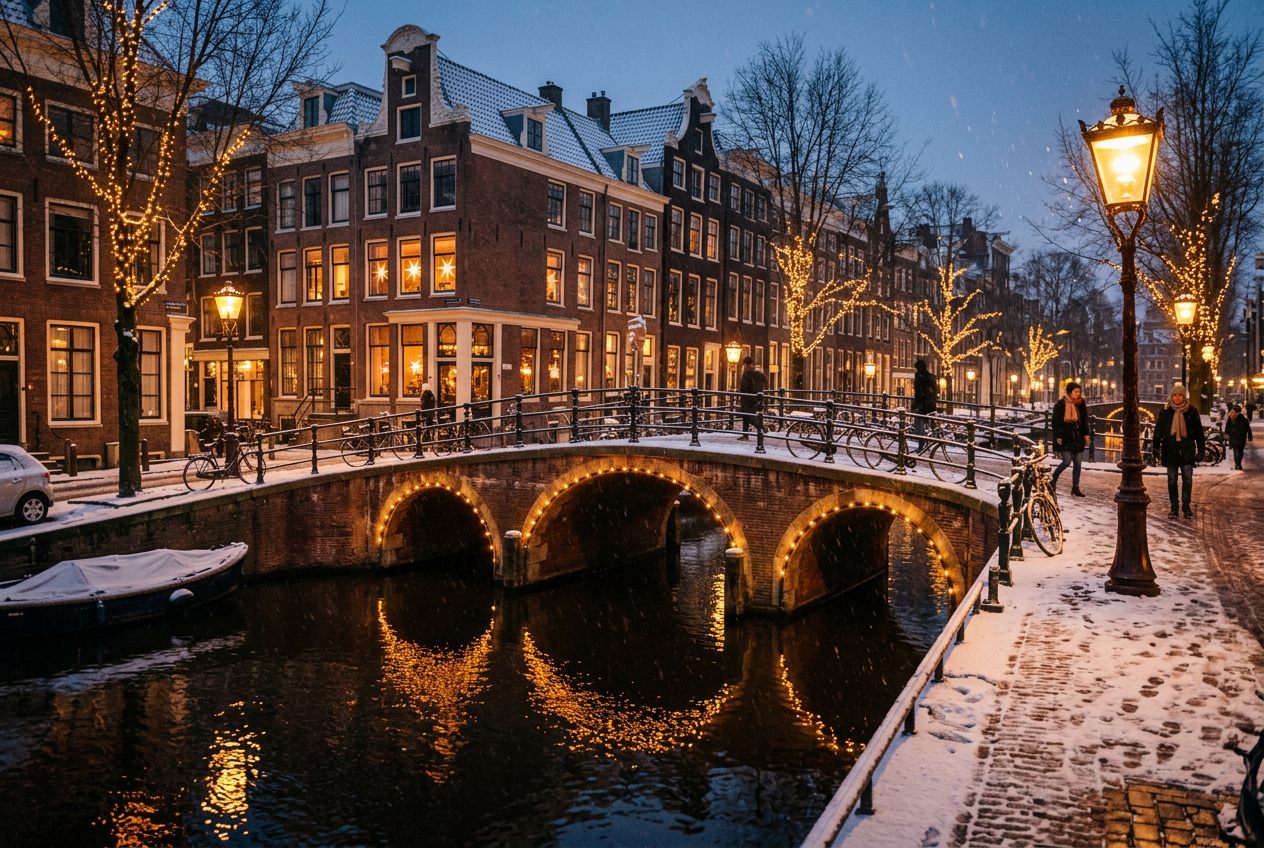
Winter Packing (December–February): Christmas Markets
The Netherlands in winter is cold, wet, and occasionally icy. Amsterdam has an excellent Christmas market atmosphere in December (the light displays on the canals, the ice skating at Museumplein), and it’s significantly less crowded than summer. But packing for December–February Netherlands is real cold-weather packing: 2–7°C average, North Sea wind chill, and rain that’s often horizontal.
Clothing
- Proper winter coat: Down jacket or heavy wool coat rated for below-zero with wind. A fashion coat won’t cut it. This is the main item where under-packing hurts.
- Thermal base layers: Top and bottom. The Netherlands’ cold is damp cold — it penetrates more than dry mountain cold.
- Mid-layers: Wool or fleece sweaters, 2–3 pieces for layering under the coat.
- Waterproof boots: This is the season where shoe choice makes or breaks daily comfort. Waterproof insulated ankle boots or duck boots are the right option. Leather shoes or fashion boots without waterproofing will be soaked within an hour.
- Warm hat, gloves, thick scarf: Non-negotiable from December through February. The ear/neck area is where the wind chill is felt most.
- Thermal socks: Wool socks rated for cold. Multiple pairs — wet socks at 3°C is a genuine misery.
Winter activities consideration
Amsterdam’s ice skating at Museumplein (when conditions allow) provides rental skates. If visiting in winter, any ice weather (below -3°C sustained) may create natural skating on the canals — a rare but famous Amsterdam experience. Dress warmly for this: canal skating involves sustained outdoor cold for 1–2 hours.
Year-Round Essentials
These items are useful regardless of when you’re visiting:
- Power adapter: The Netherlands uses Type C/F plugs (two round pins, 230V). Indian plugs require an adapter. Many hotels provide adapters but don’t assume it — bring one.
- Compact day bag: For day trips to Zaanse Schans, Keukenhof, and Giethoorn. A 15–20L backpack that fits a rain layer, water bottle, and a picnic.
- Portable phone charger: The NS app, Google Maps, and GVB transit apps are all navigation-critical; keeping your phone charged through a full day of transit and walking matters.
- Reusable water bottle: Amsterdam tap water is excellent — consistently rated among the best in Europe. Refill freely throughout the city.
- Good walking shoes with insoles: Amsterdam’s cobblestones are uneven and hard underfoot. If you’re prone to foot fatigue, aftermarket insoles in your walking shoes make a real difference over a week.
- A small cash supply: Most restaurants and large shops accept cards. Some smaller cafés, markets, and traditional Dutch establishments are cash-preferred or cash-only. Carrying €50–100 in cash handles these situations without requiring an ATM run at the moment you need it.
- Thin packable bag: For market purchases, cheese from Zaanse Schans, mustard jars — things you buy that need carrying back to the hotel without paying tourist-shop bag fees.
What Not to Bring
Formal clothing: The Netherlands is relaxed about dress. Smart casual works for fine dining in Amsterdam; black-tie events exist but you’d know if you were attending one. Packing a suit or formal dress adds weight without benefit for tourism.
Bulky rain gear: A full-length rain poncho is unnecessary and impractical for cycling, which is often the best way to move around. A good jacket is more versatile.
Expensive jewelry or visible luxury items: Amsterdam is generally safe, but Centraal Station and the main tourist areas have pickpockets. Wearing expensive visible items in those zones isn’t advisable.
Too many shoes: One pair of waterproof walking shoes handles 90% of Netherlands travel. A second pair (lighter or dressier depending on the season) is the maximum most people need. Cobblestone streets are harder on shoes than expected — bring shoes you don’t mind scuffing.
Frequently Asked Questions
What’s the weather like in the Netherlands in April?
April averages 9–15°C, with significant day-to-day variation. Keukenhof season peaks in mid-to-late April — typically the best tulip bloom. Expect cold mornings (around 8°C), occasional warm afternoons (up to 18°C on sunny days), and regular rain showers. April is the month that most rewards proper rain gear.
Is it cold enough to need a heavy coat in summer?
Not a heavy winter coat. But a light insulating layer (fleece or light down jacket) for evenings in June and September is worth packing. Even peak summer (July–August) has evenings cool enough to need something over a t-shirt, particularly near the water or after 9pm.
Can I buy missing items in Amsterdam if I’ve underpacked?
Yes — Amsterdam has extensive shopping. The Kalverstraat and Nieuwendijk streets near Dam Square have high-street clothing shops including H&M, Uniqlo, and Zara if you need basics. For outdoor gear, Bever Sport near Leidseplein sells quality rain jackets and walking shoes. Prices are European (slightly higher than India for imported brands). Don’t rely on buying gear on arrival, but underpacking isn’t a disaster.
How do I pack for visiting both Amsterdam (urban) and Giethoorn (outdoor)?
The same packing works for both — good walking shoes double as boat trip shoes, and a rain jacket is needed in both settings. The main addition for Giethoorn is an extra warm mid-layer if visiting in spring or autumn, since being on the water in an open boat is colder than city walking.
Is there a dress code for Dutch restaurants or attractions?
No formal dress code at most Amsterdam restaurants — smart casual (neat jeans and a collared shirt or similar) is appropriate even at higher-end places. Fine dining restaurants like Bonboon or Rijksmuseum’s Michelin-starred restaurant appreciate smart casual over beachwear but don’t enforce a code. Museums have no dress requirements.
Planning a Netherlands trip and want someone to take care of the details? Get Tripped’s Netherlands packages include practical advice and curated itineraries for every season. Message us on WhatsApp to start planning your trip.