Most New Zealand itineraries you’ll find online are built for ten to fourteen days, and for good reason — the distances here are bigger than they look on a map, and the two islands don’t talk to each other quickly. But not every traveller gets two weeks off, and a tight, well-sequenced seven nights still gets you Auckland’s harbour, Rotorua’s geothermal strangeness, and the Queenstown-to-Mount Cook stretch that’s on every “why New Zealand” photo you’ve ever scrolled past. The trade-off is honest: you’re skipping Wellington and the full South Island loop, and some days involve more driving or flying than a leisurely trip would. If that’s a dealbreaker, add three or four days. If seven nights is what you’ve got, this route doesn’t waste any of them.
Get Tripped builds custom New Zealand itineraries for Indian travellers, and this 7 nights / 8 days route is the one we come back to most often for a first trip that needs to work hard in a short window — a mix of North Island culture and South Island scenery, without six connecting flights.
In This Guide
- Route Overview
- Day 1: Arrive Auckland
- Day 2: Auckland City and Harbour
- Day 3: Rotorua — Geothermal Country
- Day 4: Fly to Queenstown
- Day 5: Queenstown Adventure Day
- Day 6: Milford Sound
- Day 7: Lake Tekapo and Aoraki/Mount Cook
- Day 8: Departure
- What This Costs
- Booking and Packing Notes
- FAQs
Route Overview
This itinerary runs Auckland → Rotorua → Queenstown, using one domestic flight to jump islands (there’s no road or rail shortcut between the North and South Islands — it’s flight or the Interislander ferry via Wellington, and the ferry route would eat a full extra day you don’t have). From Queenstown, two full-day excursions — Milford Sound and the Lake Tekapo/Mount Cook run — cover the South Island’s best-known scenery without needing to pack up and move hotels every night.
Day 1: Arrive Auckland
Flights from India connect through Singapore, Kuala Lumpur, Hong Kong, or an Australian city, and by the time you clear immigration in Auckland you’ll have been travelling for the better part of a day. Don’t schedule anything for this afternoon beyond checking in and finding food. If you land with energy left, Wynyard Quarter is a flat ten-minute walk from most central hotels and has enough waterfront bars and casual dinner spots to ease into the time difference without committing to a full day out.
Day 2: Auckland City and Harbour
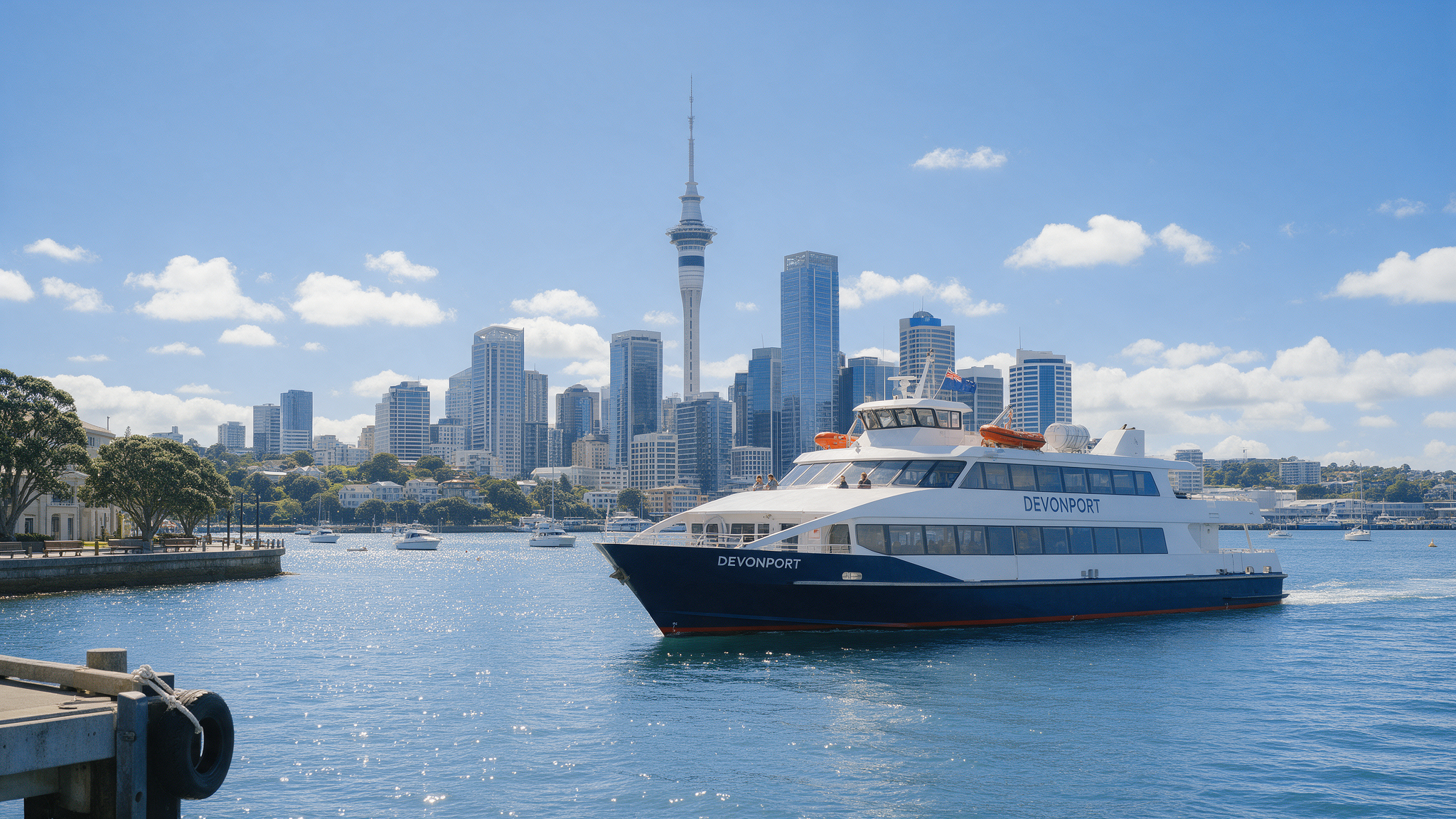
Start at the Sky Tower for an orientation view — on a clear day you can see out to the Hauraki Gulf islands — then walk down to the Viaduct Harbour for lunch by the water. Mid-afternoon, take the short ferry across to Devonport: it’s twelve minutes on the water and lands you in a village of Victorian villas and a volcanic cone (Mount Victoria) you can walk up in twenty minutes for a proper harbour panorama that most day-trippers skip because they never leave the CBD. Come back for dinner in Ponsonby, which has the city’s best concentration of good restaurants within walking distance of each other.
Local tip: the Auckland Domain’s Wintergardens are free, five minutes from the museum, and almost always empty — a better midday breather than another café.
Day 3: Rotorua — Geothermal Country
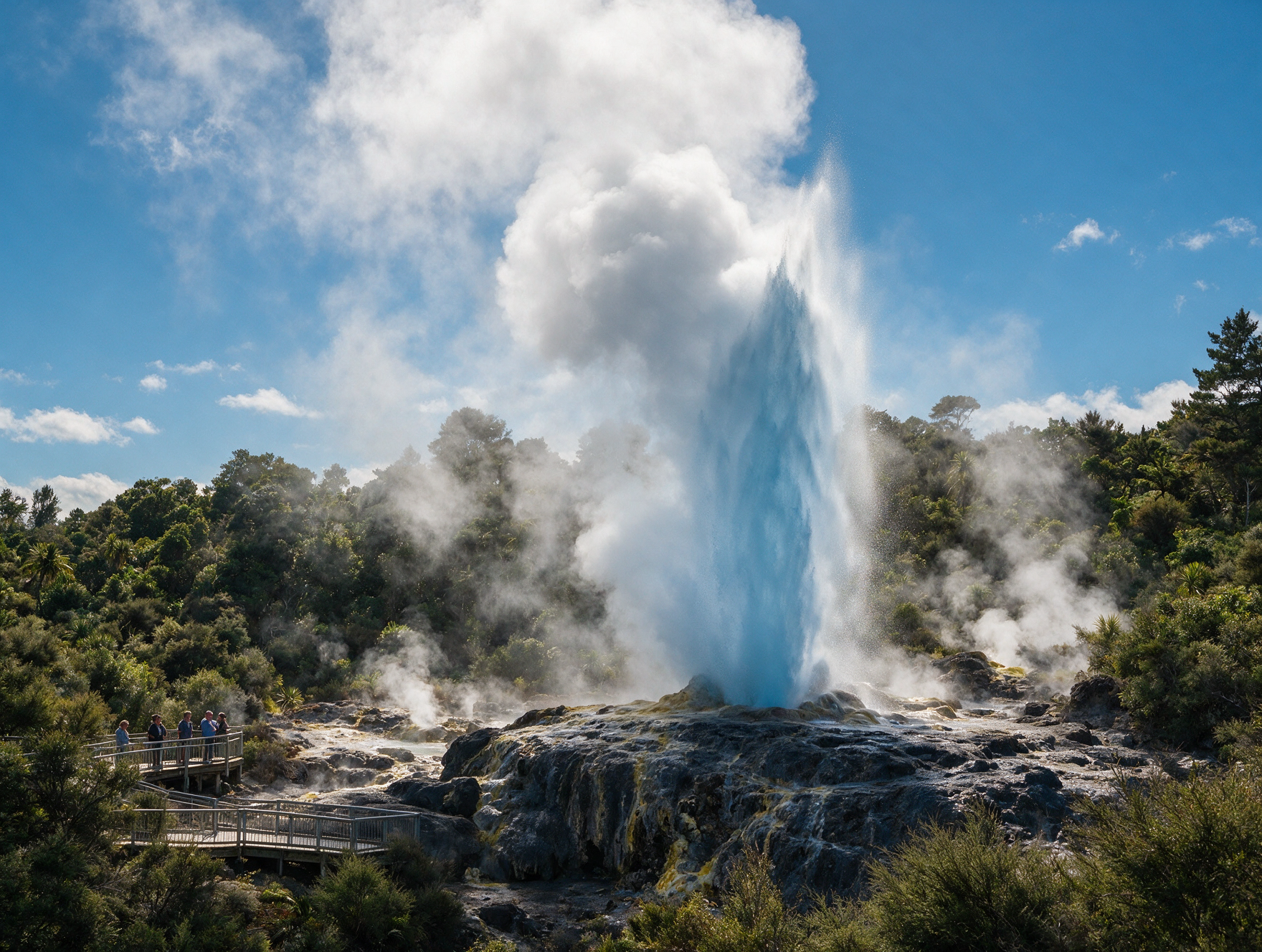
Rotorua is roughly a three-hour drive or a short flight from Auckland; most Get Tripped itineraries use a private transfer or a short domestic hop to save the day for the geothermal park rather than the road. Te Puia combines the Pōhutu Geyser — it erupts up to 20 times a day, usually to around 30 metres — with a working Māori arts and crafts school, so you’re not just looking at hot mud, you’re watching carvers and weavers working the same techniques taught here for decades.
Honest caveat: Rotorua genuinely smells like sulphur in patches near the geothermal areas — it fades once you’re away from the vents, but nobody mentions it in the brochure photos, so don’t be alarmed on arrival.
In the evening, a Māori cultural performance and hāngī dinner (food cooked in an earth oven) at a venue like Tamaki Māori Village rounds the day off properly — book this ahead, since the better-regarded venues sell out on peak nights.
Day 4: Fly to Queenstown
This is a travel day by design. Fly back through Auckland or Christchurch to Queenstown — Air New Zealand runs the most frequent domestic connections — and treat the afternoon as arrival time rather than itinerary time. Queenstown’s airport sits right on Lake Wakatipu, and the approach alone, dropping between the Remarkables mountain range, is worth looking out the window for. Settle into your hotel and walk the lakefront in the evening; the Skyline Gondola’s restaurant above town is a good first-night dinner if you want the view without a full activity day.
Day 5: Queenstown Adventure Day
This is the day to spend on whichever adrenaline activity brought you to Queenstown in the first place — bungee jumping at the original Kawarau Bridge site, jet boating on the Shotover River, or paragliding off the Skyline ridge. If thrill rides aren’t your thing, a Lake Wakatipu cruise on the vintage steamship TSS Earnslaw to Walter Peak High Country Farm covers the scenery at a gentler pace, with a farm tour and afternoon tea included on most sailings.
A fun fact worth knowing before you go: Queenstown markets itself as the “Adventure Capital of the World” for a reason — modern commercial bungee jumping was invented here in 1988, and the original site still operates tours today.
Day 6: Milford Sound
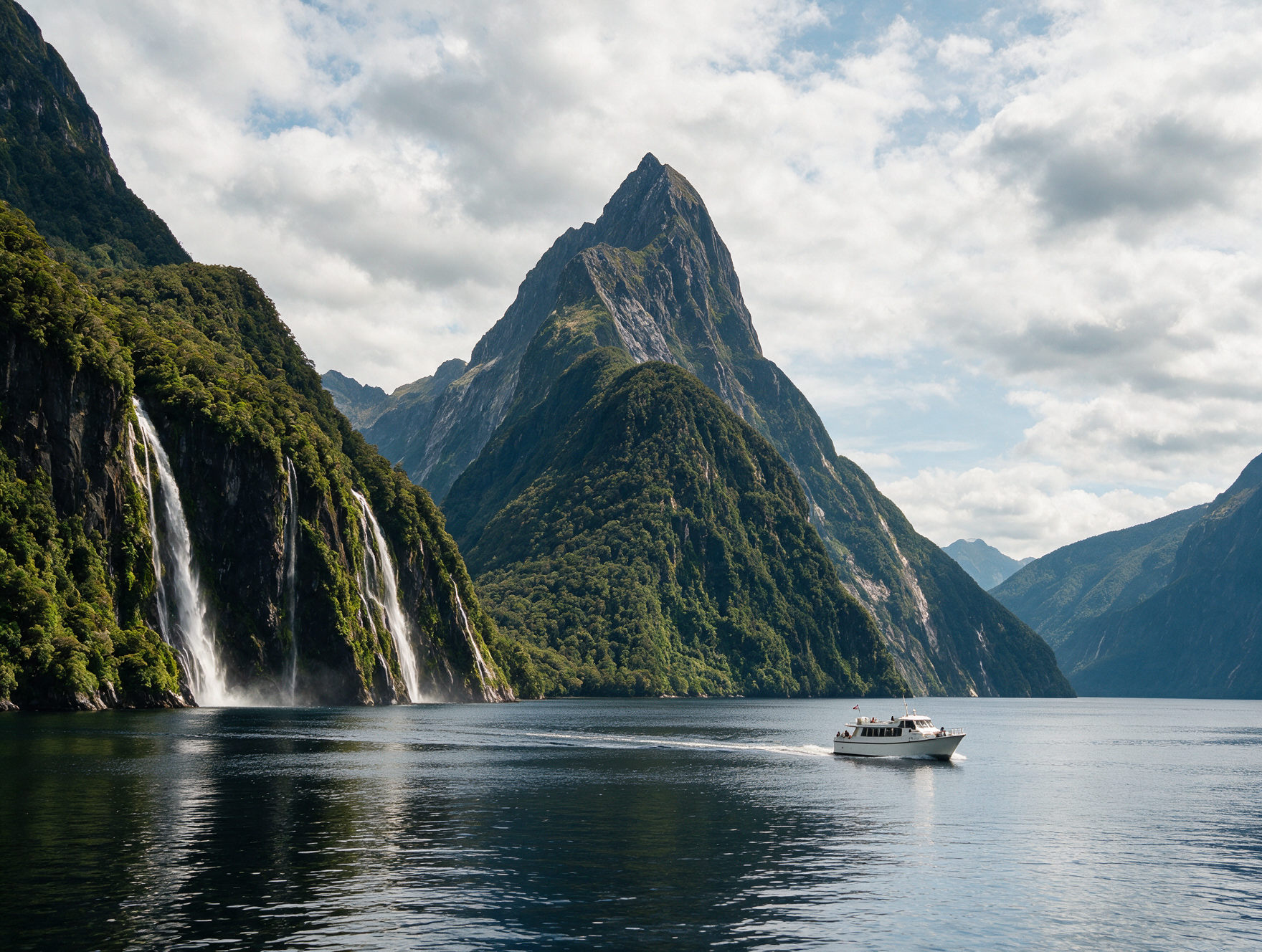
Milford Sound is roughly four to five hours each way from Queenstown by road, so this is a full-day commitment — most visitors book a coach-and-cruise package that handles the driving and includes a two-hour boat cruise through the fiord, under Mitre Peak, past resident fur seal colonies. A flight-and-cruise option exists and saves most of the driving time if your budget allows it, landing you in Milford in under an hour each way with mountain views the whole flight.
Honest caveat: Milford Sound gets some of the highest rainfall in the country, and locals will tell you it’s genuinely at its most dramatic in the rain — waterfalls appear off the cliff faces that aren’t there on a dry day. Don’t cancel for weather; pack a proper rain jacket instead.
Day 7: Lake Tekapo and Aoraki/Mount Cook
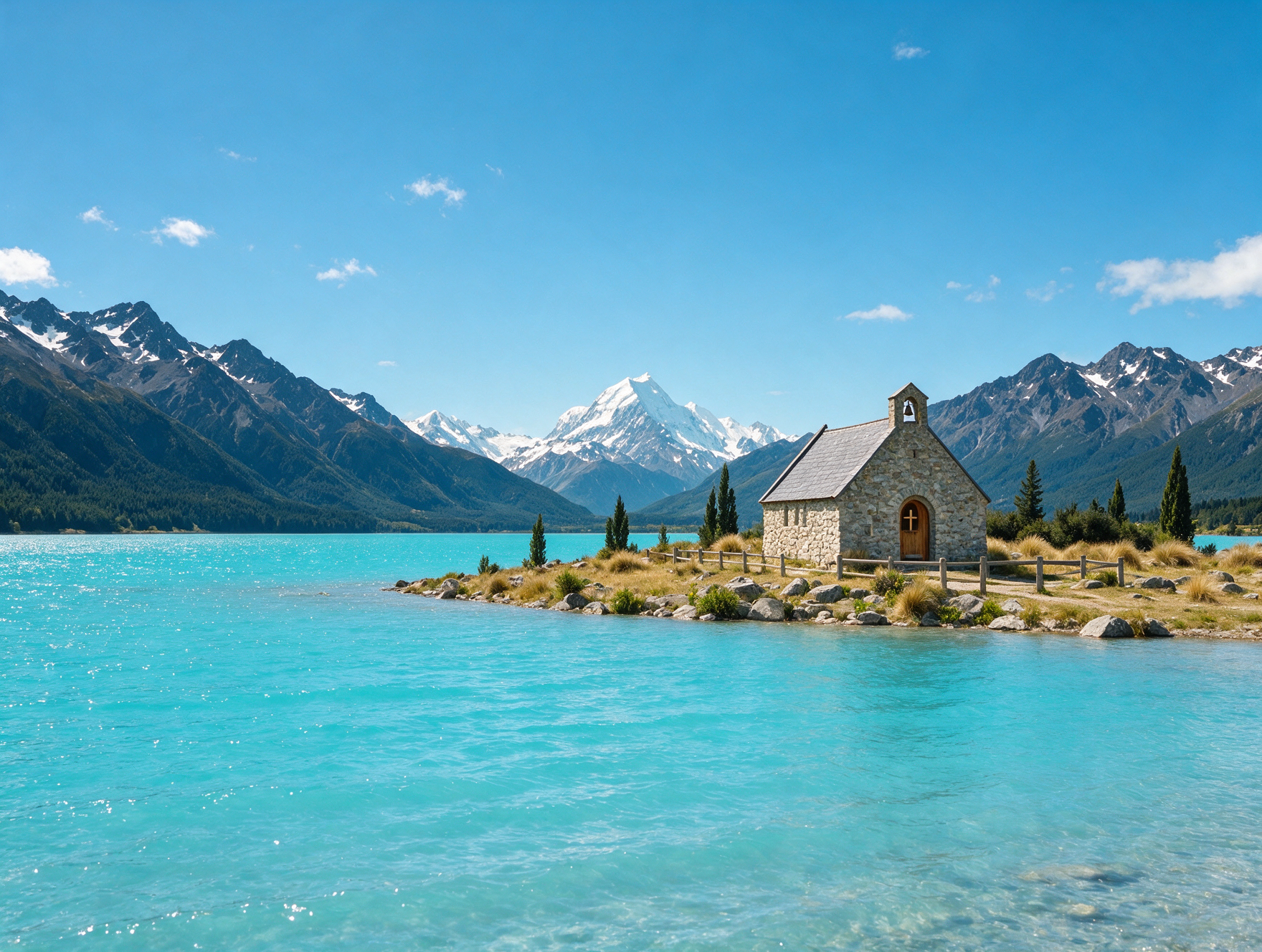
This is the longest driving day of the trip — Lake Tekapo is around two and a half to three hours from Queenstown via Wānaka and the Lindis Pass, and Aoraki/Mount Cook Village sits another hour or so beyond that — so most travellers do this as a guided small-group day tour rather than self-driving both legs and a late-night return. The reward is the turquoise glacial water at Lake Tekapo, the tiny Church of the Good Shepherd on its shore, and the valley road into Aoraki/Mount Cook National Park with New Zealand’s tallest peak filling the windscreen for the last half hour.
A mistake to avoid: don’t schedule this as a rushed add-on to another activity day. The driving alone is six-plus hours round trip; treat it as its own full day and build in a late return to Queenstown.
Day 8: Departure
Fly out of Queenstown, usually connecting back through Auckland or Christchurch to your international leg home. If your flight is in the afternoon, there’s time for one more lakefront breakfast and a last look at the Remarkables before you head to the airport.
What This Costs
New Zealand isn’t a cheap add-on to a Southeast Asia trip, and it’s worth setting expectations on New Zealand trip cost from India before you book. Mid-range travellers should plan on roughly NZD 250-400 per day per person covering a comfortable hotel, meals at sit-down restaurants, and one or two paid activities; that climbs well past NZD 500 a day once you’re adding guided day tours like Milford Sound or a Mount Cook small-group trip, lodge-style accommodation, or a scenic flight. None of this is framed around doing New Zealand cheaply — it’s a premium, scenery-driven destination, and the honest move is to budget for the activities that are actually worth doing (Milford Sound, a proper geothermal experience in Rotorua) rather than cutting them to save on a trip you’ll only take once.
Booking and Packing Notes
Book the Queenstown domestic flight and the Milford Sound coach-cruise combo well ahead, especially in New Zealand’s summer (December-February), when both sell out weeks in advance. Check our New Zealand Visa Guide for Indian Travelers before you lock any dates — visa processing timing should drive your booking calendar, not the other way round. For what to actually pack across this route’s climate swings (Auckland’s humidity versus Mount Cook’s alpine chill), our packing guide by season covers it layer by layer.
FAQs
Is 7 nights enough for New Zealand?
It’s enough to see a genuinely well-rounded slice of both islands if the route is tight, like this one. It’s not enough to also add Wellington, the Abel Tasman coast, or a slower pace — if those matter to you, extend to 10-14 days.
Should I fly or take the ferry between the North and South Islands?
For a 7-night trip, fly. The Interislander ferry between Wellington and Picton is a scenic three-and-a-half-hour crossing, but it only makes sense if Wellington is already on your route, and this itinerary doesn’t have the spare day for it.
Can I do Milford Sound and Mount Cook on the same day?
No — treat them as two separate full days. Both involve several hours of driving each way, and combining them would mean a Milford Sound visit rushed into darkness or a Mount Cook stop with no real time at the national park.
What’s the best time of year to do this specific route?
November to March gives the most reliable weather for Milford Sound and Mount Cook and the longest daylight for the driving days, though it’s also New Zealand’s peak domestic travel season, so book flights and tours early.
Do I need a car for this itinerary?
Not necessarily — Auckland and Queenstown are both walkable for in-town days, the Rotorua and Queenstown excursions are easily done as guided day tours, and the domestic flight covers the one leg a car couldn’t help with anyway.
Seven nights won’t get you all of New Zealand, but this route gets you the version of it that actually changes how people talk about the trip afterward — geothermal Rotorua, Milford Sound in the rain, Mount Cook filling the windscreen. Get Tripped puts together custom New Zealand itineraries that can stretch this route longer, add Wellington, or rebuild it around your own dates and pace. Talk to our New Zealand travel specialists about a custom itinerary built around how much time you’ve actually got.