Best Sunset & Golden-Hour Spots in Mount Cook, New Zealand
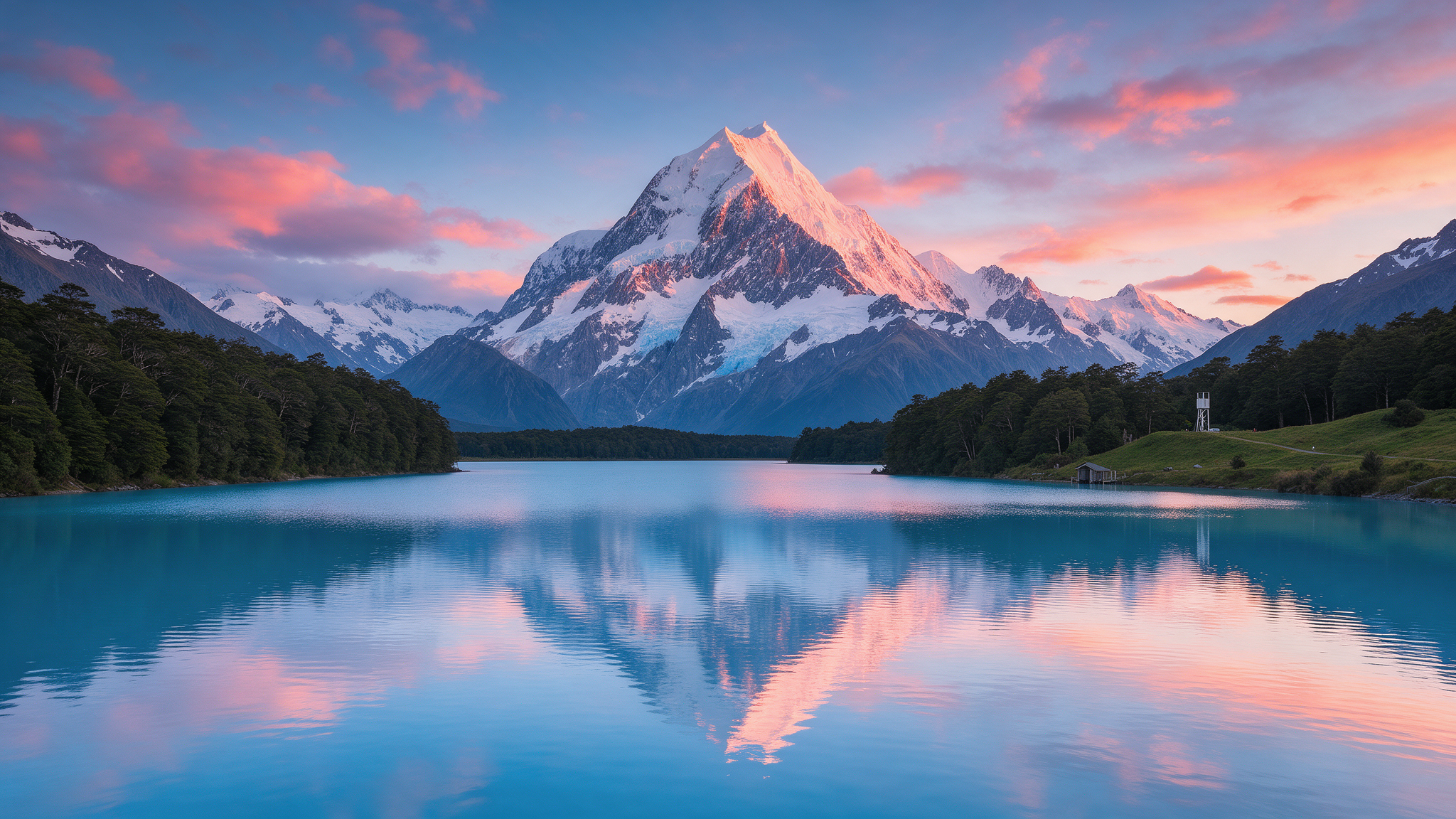
Aoraki/Mount Cook doesn’t do subtle sunsets. At 3,724 metres, it’s New Zealand’s highest peak, and when the evening light hits the ice on its upper slopes, the whole massif turns shades of pink and gold that genuinely don’t photograph as well as they look in person — the human eye handles that range of light better than most cameras do. Most visitors plan their Mount Cook day around the classic sunrise walk, but the evening version, with fewer people and a slower unwind into the dark sky reserve’s famous stargazing, is arguably the better experience.
This guide is built for travellers who want to make the most of the golden hour and the hours just after, whether as a standalone stop or part of a longer New Zealand South Island itinerary.
In This Guide
- Why evening is the underrated time to be here
- Hooker Valley Track at golden hour
- The Hermitage viewing areas
- After sunset: the dark sky reserve
- Practical details for the Hooker Valley Track
- Where to stay for an evening at Aoraki
- Packing for an alpine evening
- A photography note
- A fun fact worth knowing
- Best time to visit and how long to stay
- A mistake to avoid
- Visa, costs, and getting around
- FAQs
Why evening is the underrated time to be here
Most Mount Cook content fixates on sunrise, and for good reason — the classic shot is the sun rising behind Aoraki, lighting the peak before the valley floor catches any light at all. But that means the crowds concentrate in the early morning, and the evening is noticeably quieter. You also get something sunrise can’t offer: a direct transition from alpenglow into one of the best stargazing spots on the planet, since Aoraki Mackenzie is a certified Dark Sky Reserve. One visit, two very different kinds of spectacle.
Hooker Valley Track at golden hour
The Hooker Valley Track is the single best way to get close to the mountain on foot without technical climbing experience. It’s about 10km round trip, roughly three hours, with a gentle elevation gain of around 124 metres — genuinely accessible for most fitness levels. The track starts at the White Horse Hill Campground car park at the end of Hooker Valley Road, off State Highway 80, about five minutes’ drive from The Hermitage.
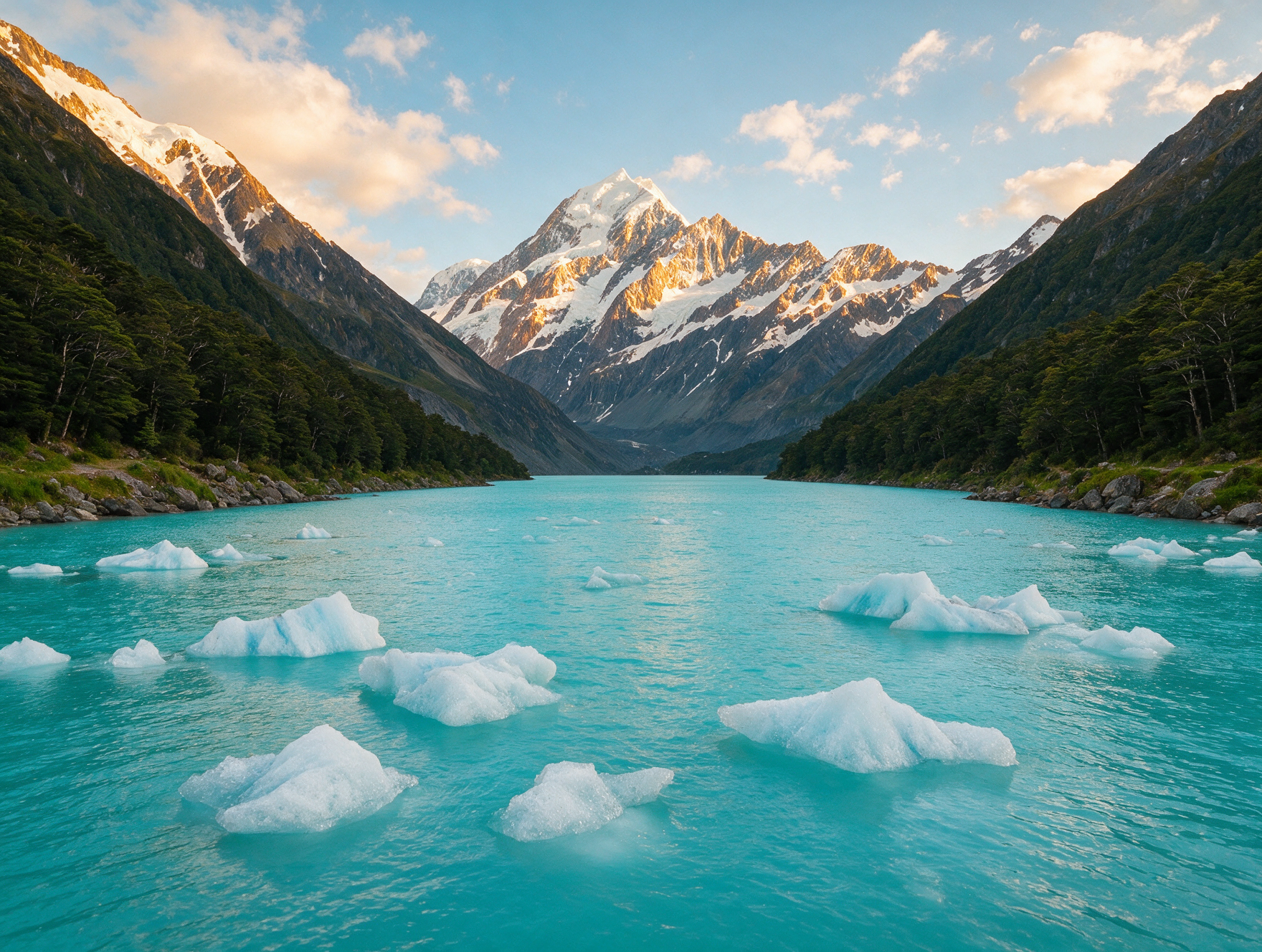
Walking it in the hour or two before sunset gives you open grassland early on, a lookout over Mueller Lake around 700 metres in, and three swing bridges crossing glacier-fed water, with Mount Sefton close enough that you’ll occasionally hear small avalanches in the distance. The track ends at Hooker Lake, where icebergs sometimes drift in the glacial water and Aoraki itself fills the view directly ahead — exactly the angle you want as the light starts turning gold.
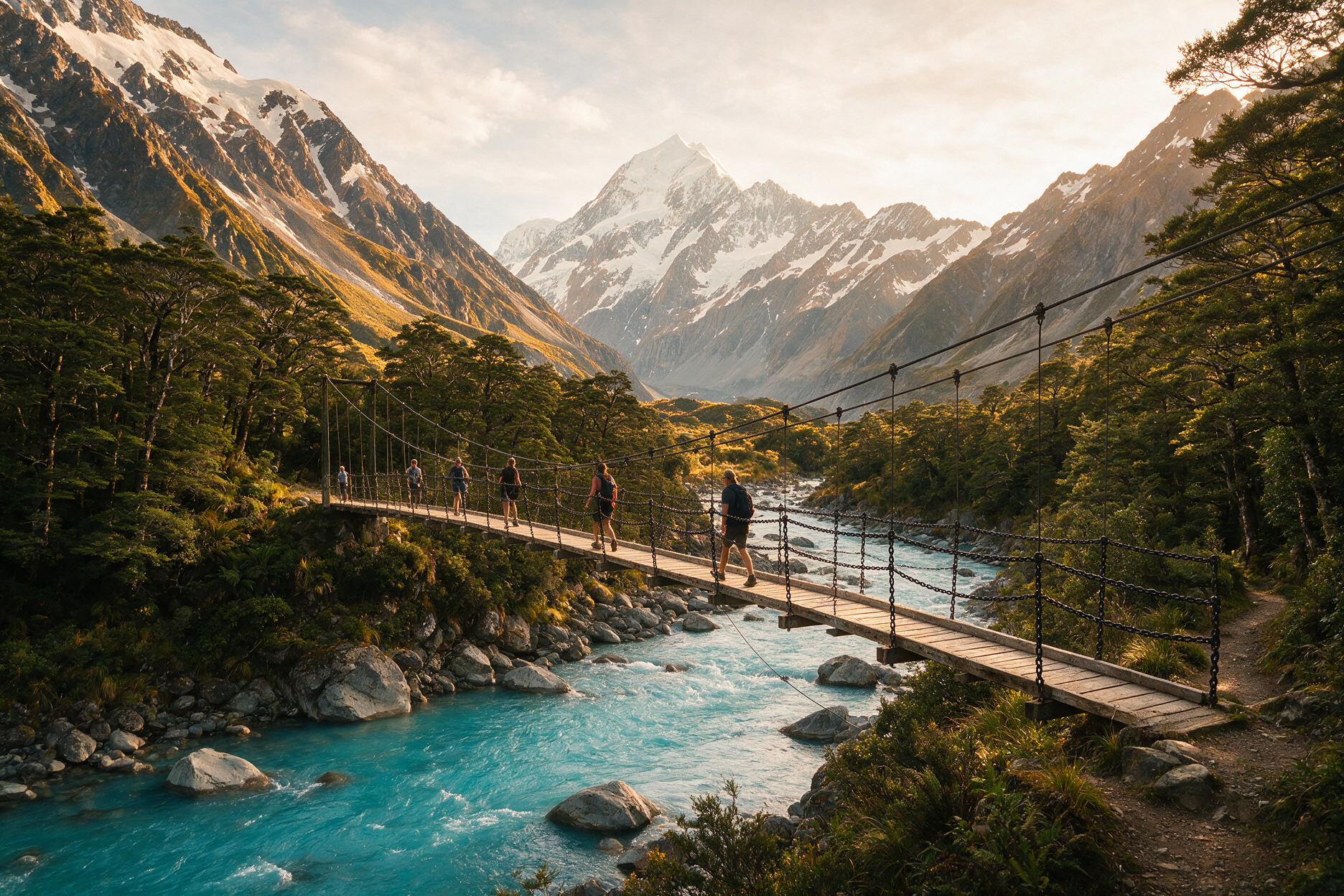
One honest caveat: at the time of writing, the track is closed before the second swing bridge, with reopening planned for autumn 2026 — check the Department of Conservation website before you commit to the full walk, since the partial route still offers decent views even if the lake itself isn’t reachable.
The Hermitage viewing areas
If a three-hour round-trip walk right before sunset feels like cutting it close, The Hermitage Hotel’s own viewing areas and the short approach via Kea Track (about 3km) give you a reliable, lower-effort alpenglow view without committing to the full Hooker Valley distance. It’s the sensible choice if you’re travelling with anyone who’d rather not rush a hike against a sunset deadline.
After sunset: the dark sky reserve
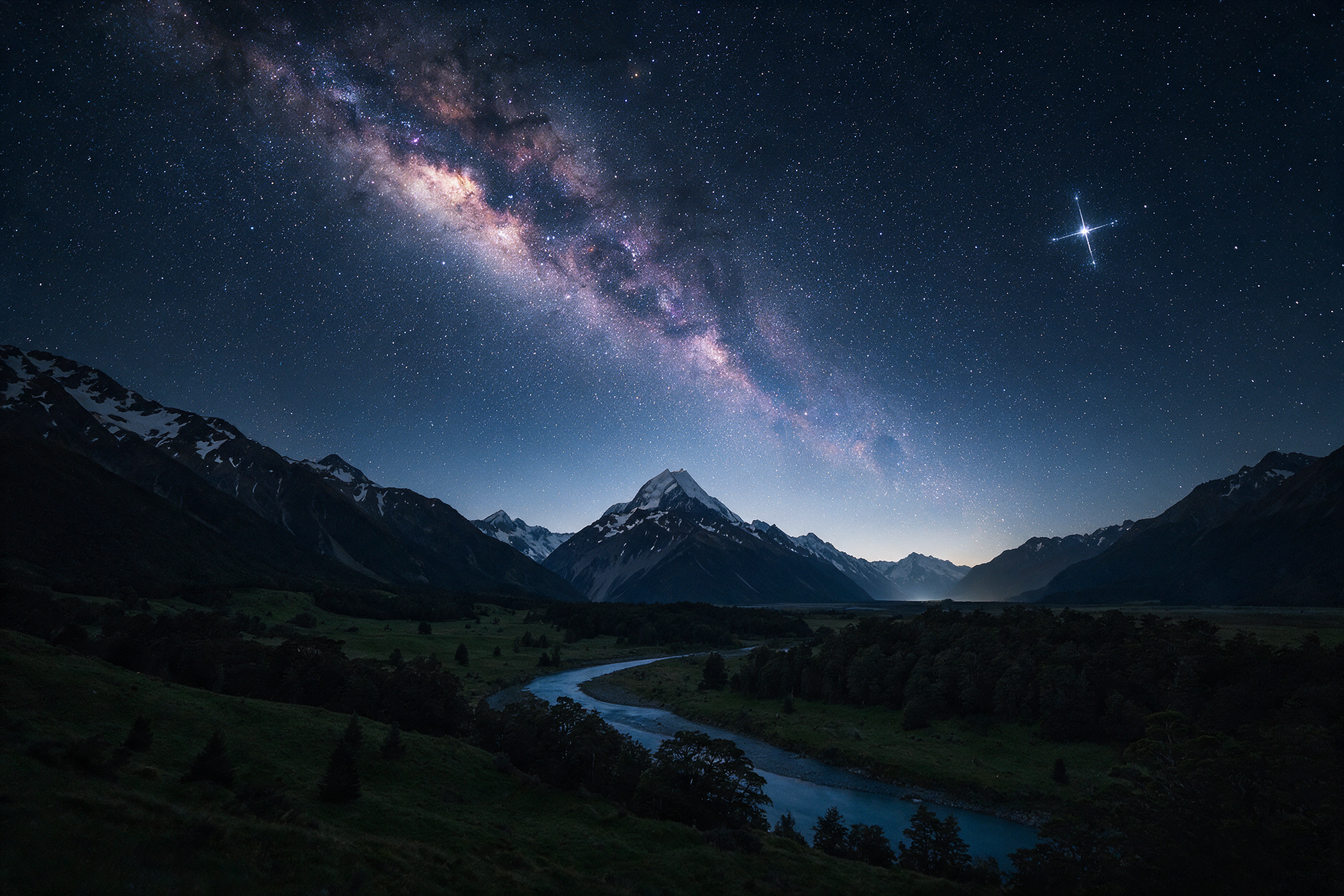
Once the alpenglow fades, don’t rush back to the room. Aoraki Mackenzie Dark Sky Reserve has some of the lowest light pollution in the world, and the transition from sunset colour to full star field happens faster here than most travellers expect. Aurora Australis is possible between April and September if conditions align, though it’s never guaranteed. For a more structured experience, nearby Lake Tekapo’s Mount John Observatory runs guided night tours with serious telescopes, about an hour’s drive away, and pairs naturally with an evening spent at Mount Cook if you’re staying in the wider Mackenzie Basin.
Practical details for the Hooker Valley Track
Weather in the alpine zone changes quickly regardless of season, so carry sunscreen and a rain jacket even on a clear evening. The second swing bridge can close in strong wind, which happens more often than first-time visitors expect at this altitude. Pack snacks and water — the Sir Edmund Hillary Café at The Hermitage can prepare a takeaway lunch or early dinner to bring with you, and there are picnic benches and flat rocks near the lake itself. Carry out everything you bring in; there’s no rubbish collection on the track.
Where to stay for an evening at Aoraki
The Hermitage Hotel is the obvious choice if you want to walk out your door and be on the Hooker Valley Track approach within minutes — it’s the only full-service hotel actually inside Mount Cook Village, and its own viewing lounge is genuinely one of the better fallback options if weather turns. Mount Cook Lodge and the village’s motels are more budget-conscious alternatives with similar proximity. If you’d rather base yourself in the wider Mackenzie Basin and treat Mount Cook as a day (or evening) excursion, Lake Tekapo, about an hour away, makes a reasonable alternative base with more dining options.
Packing for an alpine evening
Temperatures drop fast once the sun goes down here, even in summer — a warm layer, a windproof outer shell, and proper closed shoes are non-negotiable for the Hooker Valley Track at golden hour. If you’re staying for the stargazing afterward, add a beanie and gloves to that list regardless of season; standing still to look at stars is a very different experience from walking, temperature-wise, and the cold catches people out more than the walk itself does.
A photography note
Alpenglow is a narrow window — often just ten to fifteen minutes of the best colour — so have your camera or phone settings sorted before you reach Hooker Lake, not after. A tripod or a steady rock to brace against helps more than you’d expect once the light drops low enough that longer exposures come into play. For the stargazing afterward, give your eyes at least fifteen minutes to adjust to the dark before judging how much you can actually see; it’s a slower reveal than most people expect.
A fun fact worth knowing
Aoraki/Mount Cook’s height has officially changed more than once in living memory — a significant rock and ice avalanche in 1991 shaved around ten metres off its summit overnight. The mountain is still New Zealand’s tallest by a wide margin, but it’s a useful reminder that this landscape isn’t static scenery; it’s still actively shifting, which is part of why the Department of Conservation keeps such a close eye on track conditions here.
Best time to visit and how long to stay
Summer (December to February) gives the longest evenings and the most reliable clear-sky odds, though it also means starting the walk earlier to beat both the crowds and the fading light. Shoulder months (March–April and October–November) offer a reasonable trade-off: fewer people, still-manageable weather, and a decent shot at clear skies for stargazing afterward. Winter requires more caution — the track can still be walked under snow by reasonably fit visitors, but conditions change fast and some sections may close. One night at Mount Cook Village is the minimum to catch both an evening walk and the stargazing properly; two nights gives you a buffer if weather doesn’t cooperate on the first.
A mistake to avoid
Don’t start the Hooker Valley Track too close to sunset assuming you’ll “catch the light on the way back.” The three-hour round trip means you need to begin with real margin, especially since the track isn’t a loop — if you time it wrong, you’re walking the return leg in the dark without having actually seen Aoraki lit up. Check the Hermitage webcams before you set out and build in a buffer.
Visa, costs, and getting around
Indian passport holders need New Zealand’s standard Visitor Visa, applied for online in advance, with fees starting from NZD 441 and typical processing of roughly two weeks, though delays occur, especially during the Indian festive season and Christmas–New Year rush when application volumes spike. A rental car is close to essential here — Mount Cook Village sits well off the main South Island routes, and there’s no meaningful public transport once you arrive.
Frequently Asked Questions
Is sunset or sunrise better at Mount Cook?
Both are worthwhile; sunset has the advantage of flowing straight into stargazing under a Dark Sky Reserve, and tends to be less crowded than the popular sunrise walk.
How long does the Hooker Valley Track take?
Around three hours for the roughly 10km round trip, with gentle elevation gain suitable for most fitness levels.
Is the Hooker Valley Track currently open all the way to Hooker Lake?
As of this writing, it’s closed before the second swing bridge, with reopening planned for autumn 2026 — check the Department of Conservation site before your visit.
Do I need a car to visit Mount Cook?
Yes, effectively. There’s no meaningful public transport to or within Mount Cook Village, so a rental car (or a tour that includes transport) is close to essential.
Can I see the Southern Lights (Aurora Australis) from Mount Cook?
It’s possible between April and September under the right conditions, though never guaranteed — treat it as a bonus, not the main reason to visit.
What visa do Indian travellers need to visit Mount Cook?
The same national Visitor Visa required throughout New Zealand, applied for online well ahead of your trip.
Is Mount Cook suitable for a family with children?
The Hermitage viewing areas and the shorter Kea Track approach work well for families; the full Hooker Valley Track is manageable for most older children but is a genuine three-hour commitment.
Where’s the best place to stay for an evening at Mount Cook?
The Hermitage Hotel, inside Mount Cook Village itself, puts you closest to the Hooker Valley Track start. Lake Tekapo, about an hour away, is a solid alternative base with more dining choices.
What should I pack for a sunset walk and stargazing?
A warm, windproof layer and proper shoes for the walk, plus a beanie and gloves if you’re staying out afterward for stargazing — temperatures drop quickly once you stop moving.
Can I combine Mount Cook with Lake Tekapo in one trip?
Easily — they’re about an hour apart, and many travellers base themselves in one and day-trip to the other, or spend a night at each for a fuller Mackenzie Basin experience.
Is cell phone signal reliable at Mount Cook Village?
Coverage is patchy compared to the main cities — don’t rely on it for navigation or bookings once you’re there, and download anything you need (maps, DOC track updates) before you arrive.
Where the Mountain Puts On Its Best Show
Aoraki/Mount Cook’s evening hour — alpenglow sliding into a sky genuinely dark enough to show the Milky Way — is one of the most underrated windows in New Zealand travel. Time it right, and you get two spectacles for one trip.
Planning a South Island route that gives Mount Cook its proper evening? Get Tripped Travels builds custom New Zealand itineraries around moments like this one — get in touch to start planning.