Your Guide to Being a Local in Auckland, New Zealand
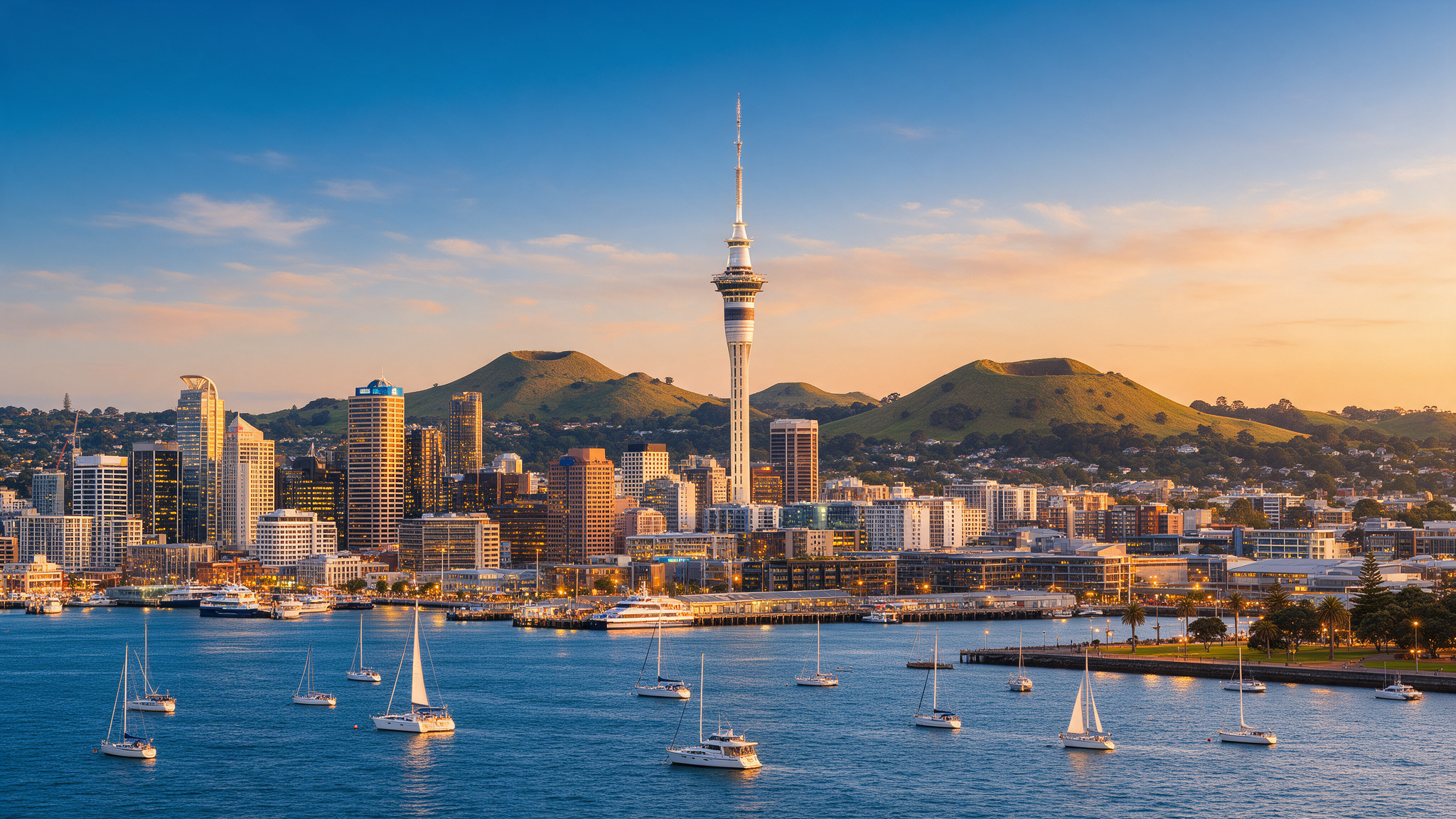
The first thing that threw me about Auckland was how much water there is. Not just the harbour you see in every brochure shot of the Sky Tower, but the fact that you’re never more than a short drive from a beach, a marina, or a volcanic cone with the whole city spread out below it. Aucklanders plan weekends around tides and swell forecasts the way other cities plan around traffic. That’s the real texture of the place, and it’s a useful thing to know before you start building a New Zealand itinerary that treats Auckland as just an airport with a city attached.
Most New Zealand tour packages from India route travellers straight through Auckland on the way to Queenstown or Rotorua, and I understand the instinct — the South Island photographs better. But Auckland rewards people who slow down for a day or two, because its character isn’t in a single monument. It’s in the coffee queue, the ferry commute, the way neighbourhoods have their own distinct personality within fifteen minutes of each other. This guide is for travellers who want to spend a day or two living like someone who actually lives there, not just checking the Sky Tower off a list.
In This Guide
- Why Auckland rewards a slower visit
- Start with neighbourhoods, not landmarks
- Auckland runs on coffee — here’s where locals actually go
- The harbour life: ferries, beaches, and weekend rituals
- Eating like someone who lives there
- Getting around without a rental car
- Best time to visit and how many days to give it
- A mistake to avoid
- Visa, money, and connectivity notes
- FAQs
Why Auckland rewards a slower visit
Auckland sits on an isthmus between two harbours, built across roughly 50 extinct volcanic cones, which is why you’ll keep seeing these oddly symmetrical green hills poking up between suburbs. Locals climb them in the evening the way other cities go to the gym. Mount Eden (Maungawhau) and One Tree Hill (Maungakiekie) are both a short drive or bus ride from the centre, and both are free, which matters if you’re trying to get a feel for the city without spending on a single attraction.
The honest caveat: Auckland’s “sights” in the traditional sense are modest. The Sky Tower is worth the lift ride once, mostly for orientation, but it’s not why people fall for this city. They fall for it because of the light on the water at 6pm, the smell of someone’s barbecue drifting over a fence, the ferries crisscrossing the harbour like it’s the most normal commute in the world. If you come expecting a dense list of must-see monuments, you’ll be mildly disappointed. If you come wanting to understand how 1.6 million New Zealanders actually spend a Saturday, you’ll get exactly what you came for.
Start with neighbourhoods, not landmarks
Ponsonby is the neighbourhood most visitors gravitate to first, and it deserves the reputation — Ponsonby Road is lined with restored Victorian villas turned into wine bars and boutiques, and it’s a genuinely pleasant place to walk for an afternoon. But Aucklanders will tell you, often unprompted, that Ponsonby has gotten a bit polished for its own good.
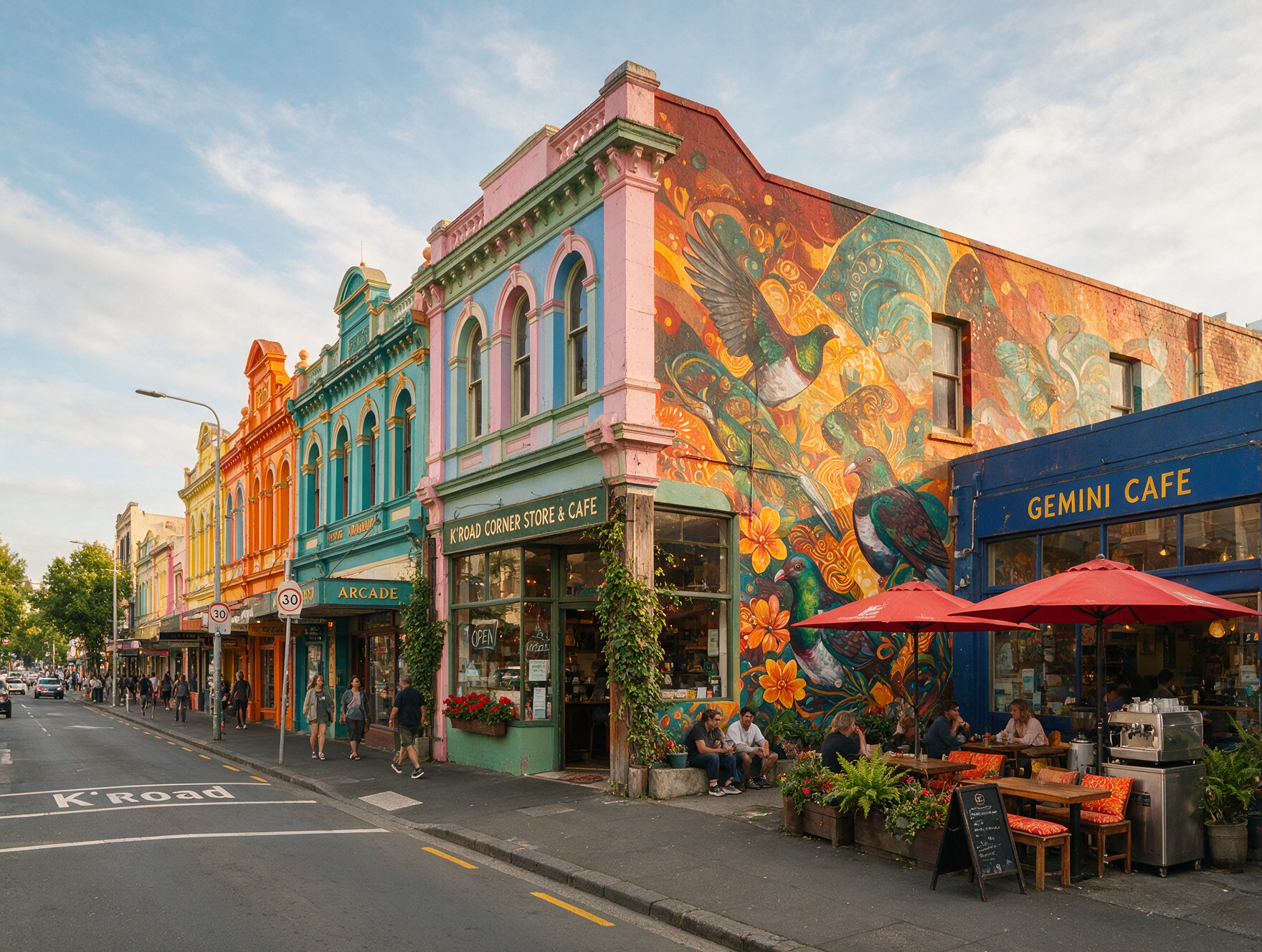
Karangahape Road, known locally as K’Road, is the grittier, more interesting counterpart just up the hill. It’s where the city’s queer community, its live music venues, its tattoo parlours, and its best vintage stores have historically clustered, and it still has an edge that Ponsonby has mostly sanded off. Walk it in daylight for the shopping and street art, and come back in the evening for the bars.
Britomart, down near the waterfront, is the newest of the lot — a precinct of restored heritage warehouse buildings now full of designer stores and the kind of café where people bring laptops and stay for three hours. It’s polished in a different way: new money rather than old charm, but it’s where a lot of the city’s professional class actually spends its lunch breaks.
Auckland runs on coffee — here’s where locals actually go
New Zealand, along with Australia, basically invented the flat white as the world knows it, and Aucklanders have strong, quietly argued opinions about where to get a good one. In Britomart, Amano is the one everyone points you to first — good coffee, a serious pastry cabinet, and a breakfast menu that justifies the wait. A few doors down, Daily Bread does handcrafted sourdough and seasonal pastries out of a converted heritage building, and it’s as much a bakery as a café.
Up on K’Road, Fort Greene is a tiny space that takes its coffee and its French pastries seriously without making a production of it — the kind of place a regular just nods at the barista and gets handed their order. Over in Freemans Bay, Allpress Roastery is a working roastery you can actually walk into, buy beans from, and sit in the middle of the operation while you drink your coffee — it’s less a café experience and more a chance to see where Auckland’s coffee scene actually gets made.
If you only have time for one coffee stop, make it Britomart in the morning — you’ll get the coffee, the architecture, and a decent read on how the city’s professionals start their day, all within a five-minute walk.
The harbour life: ferries, beaches, and weekend rituals
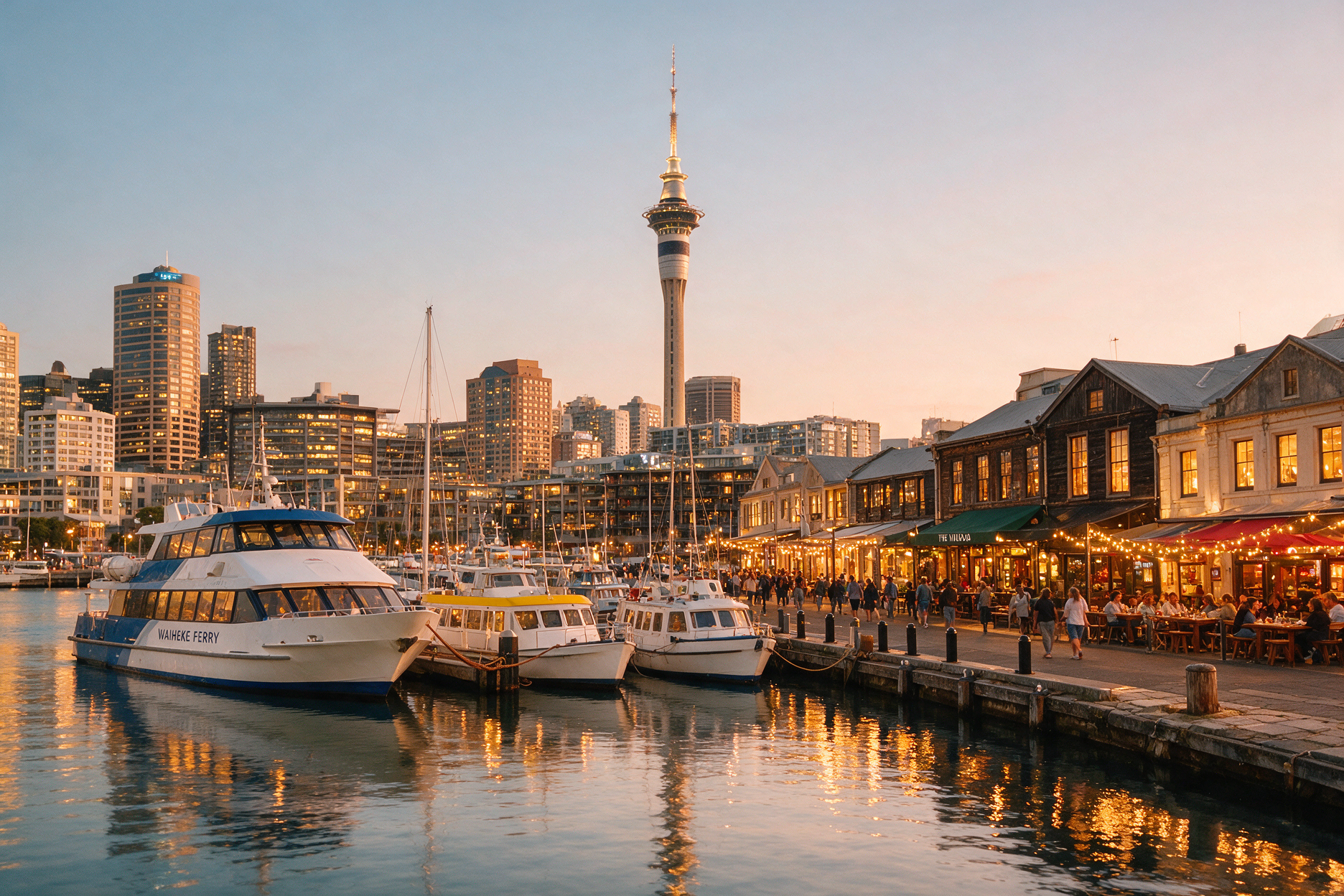
This is the part of “being a local” that’s hardest to fake on a one-day visit, but worth trying anyway. Take the ferry from the downtown terminal to Devonport — it’s a twelve-minute ride across the harbour, costs about the same as a bus fare, and drops you in a village of Victorian houses, a volcanic cone (Mount Victoria) with a free 360-degree view, and a genuinely good local bakery scene. Locals use this ferry route the way other cities use a subway line, except the subway line has dolphins in it occasionally.
On a warm weekend, Aucklanders head to the city beaches — Mission Bay for ice cream and a walkable waterfront, or further out to the black-sand surf beaches on the west coast like Piha, which is wilder, more dramatic, and has a genuinely dangerous rip current that catches tourists out most summers. Respect the flags and the lifeguards there; it’s not a gentle beach.
Eating like someone who lives there
Auckland’s food scene reflects its demographics better than almost anything else in the city — it has one of the most ethnically diverse populations in the Pacific, and that shows up directly on the plate. Dominion Road through Mount Roskill and Balmoral is the city’s unofficial Asian food strip, with excellent Chinese, Korean, and Malaysian options that locals drive across town for, not just the nearest neighbourhood. For Indian travellers craving something familiar, Sandringham Road (“Little India”) has a solid cluster of South Indian and Punjabi restaurants and sweet shops.
A mistake worth naming here: don’t assume the touristy waterfront restaurants represent the city’s food scene. They’re fine, but the better, cheaper, more interesting food is a short Uber ride inland, in the suburbs where people actually cook for their own communities rather than for visitors with a harbour view to sell.
Getting around without a rental car
Auckland’s public transport has a mixed reputation among locals — it’s serviceable in the central city and genuinely good for ferries, less reliable the further out you go. The AT HOP card works across buses, trains, and ferries and is worth getting on day one rather than paying cash fares each time. For a short visit focused on the central city, Devonport, and Ponsonby/K’Road, you can realistically skip a rental car entirely and rely on walking, the ferry, and the odd Uber.
Best time to visit and how many days to give it
New Zealand’s summer runs December through February, and that’s peak season for Auckland too — warm, long days, but also when accommodation prices climb and the city feels fullest. Many New Zealand holidays December to February packages lean into this window deliberately, and it’s a fair trade if you want beach weather. Personally, I’d point curious travellers toward March to May (autumn): the crowds thin out, the light turns gold earlier in the evening, and it’s still mild enough to enjoy the harbour without fighting for a table.
Two full days is the realistic minimum to get past the “airport city” impression — one for the central neighbourhoods and coffee circuit, one for Devonport and a beach. If you’re building a longer New Zealand travel itinerary with Rotorua, Queenstown, and the South Island, Auckland works well as either your arrival buffer (adjust to the time difference before you start moving fast) or your final unwind before the flight home.
A mistake to avoid
Don’t book a hotel right by the airport thinking it’ll save time — Auckland’s airport is a good 40 minutes from the central city in reasonable traffic, and if you’re only in town for a day or two, staying centrally (Britomart, Viaduct, or Ponsonby) gets you far more of the actual city experience than saving ten minutes on the transfer the next morning.
Visa, money, and connectivity notes
Indian passport holders need a Visitor Visa for New Zealand, not just the online NZeTA that some nationalities use — this applies across the whole country, Auckland included, so sort it well before booking non-refundable flights. From 1 October 2026, applications moved to Immigration New Zealand‘s upgraded online system; it’s a fully digital form-and-document process now, and the visa costs from NZD 441 (roughly ₹42,000 at recent rates). Processing is quoted at around 80% within two weeks, though that’s not guaranteed, and the agency explicitly warns against booking non-refundable travel before approval comes through — applications also pile up heavily over the Indian festive and Christmas–New Year season, so apply early if that’s your window.
Cards are accepted almost everywhere in Auckland, including small cafés, and contactless payment is the norm — carrying a lot of cash isn’t necessary. Prepaid tourist SIMs (Spark, One NZ, or 2degrees) are sold at the airport and in the city, and coverage in and around Auckland is reliably strong.
Frequently Asked Questions
Is Auckland worth visiting, or should I just fly through it?
It’s worth at least a day or two, especially if you want to understand New Zealand beyond its mountains and lakes. Auckland is where you see how New Zealanders actually live day to day.
How many days should I spend in Auckland on a New Zealand trip?
Two days is a sensible minimum for first-time visitors building a broader New Zealand vacation package. One day covers the central neighbourhoods; the second is best spent at Devonport or a beach.
Do I need a car to get around Auckland?
Not for the central city and inner suburbs. Ferries, buses, and the AT HOP card cover most visitor needs; a car becomes more useful if you’re heading further out to west coast beaches or wine regions.
What’s the best time of year to visit Auckland?
December to February is warmest and busiest. March to May (autumn) offers a quieter, still-pleasant alternative with fewer crowds and lower accommodation rates.
Is Auckland expensive compared to the rest of New Zealand?
Accommodation and dining in central Auckland run on the higher end for the country, though it’s comparable to Queenstown in peak season. Eating in the suburbs (Dominion Road, Sandringham Road) is noticeably cheaper than the waterfront.
Can I use UPI or need to carry cash in Auckland?
UPI isn’t accepted; carry an international debit or credit card instead. Cards are accepted virtually everywhere, including cafés and markets, so cash needs are minimal.
What visa do Indian travellers need for Auckland and New Zealand overall?
A Visitor Visa, applied for online, not a visa waiver or NZeTA-only entry. Budget for processing time and apply well ahead of travel, especially around the December holiday season.
A City Worth Slowing Down For
Auckland isn’t going to compete with Queenstown’s adrenaline or Rotorua’s geothermal drama, and it isn’t trying to. What it offers instead is a genuine look at how New Zealanders actually spend their days — the ferry commute, the coffee ritual, the volcanic cone climbed at sunset with a dog in tow. Give it the time it’s asking for, and it stops feeling like a stopover.
If you’re putting together a New Zealand trip from India and want Auckland built in properly rather than treated as a layover, Get Tripped Travels can design a custom itinerary that balances city time with the South Island’s big landscapes — get in touch to start planning.