New Zealand’s food scene doesn’t announce itself the way Thailand’s street stalls or Vietnam’s pho vendors do. There’s no single iconic dish tourists fly in for. What there is, instead, is some of the best raw material on the planet — lamb that’s actually grass-fed because the whole country is basically one giant paddock, seafood pulled out of cold, clean water that morning, and a coffee culture so serious that ordering “just a coffee” at a Wellington café will get you a polite but pointed follow-up question. The food trail here rewards people who slow down enough to notice it.
This guide runs through what to actually eat across the six places most Indian travellers build a New Zealand itinerary around — Auckland, Rotorua, Wellington, Queenstown, Mount Cook, and Lake Tekapo — plus the handful of dishes you’ll want to actively seek out no matter which city you’re in.
In This Guide
- Auckland: Night Markets and a Serious Brunch Scene
- Rotorua: Hāngī and Geothermal Cooking
- Wellington: New Zealand’s Coffee Capital
- Queenstown: Fergburger, Wine, and Alpine Comfort Food
- Mount Cook and Lake Tekapo: Dining With a View, By Necessity
- National Dishes Worth Seeking Out Everywhere
- Coffee Culture, Beyond Wellington
- Late-Night Eats
- Practical Food Notes
- FAQs
Auckland: Night Markets and a Serious Brunch Scene
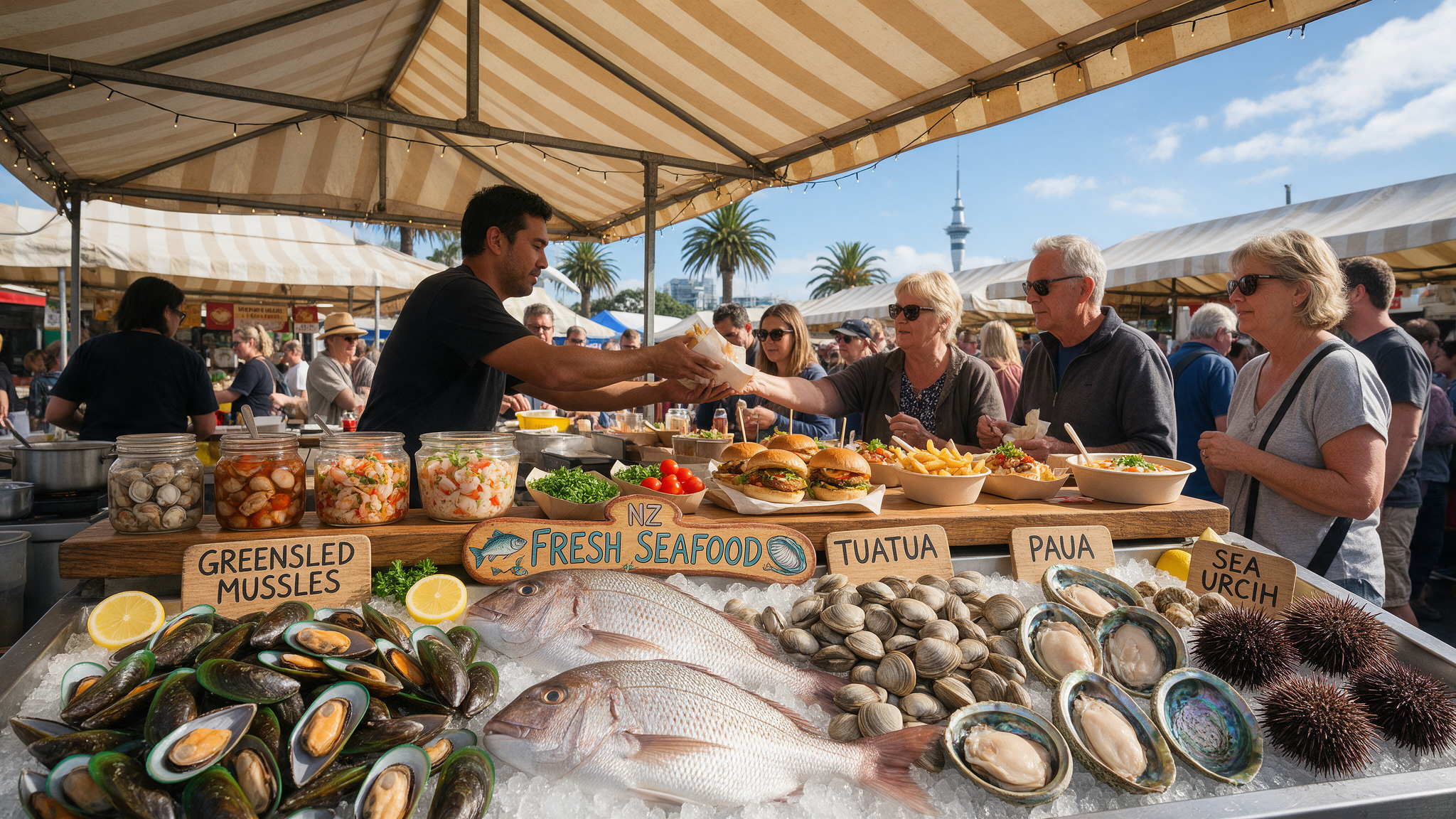
Auckland’s food identity is shaped by the Pacific — it has the largest Polynesian population of any city in the world, plus deep Asian immigrant communities, and that shows up on the plate more than any “New Zealand cuisine” label does. The city’s rotating night markets (check current schedules, since venues shift — Avondale and Henderson have both hosted long-running ones) are where you’ll find Tongan lu pulu, Samoan palusami, and Chinese hand-pulled noodles side by side, usually for less than a sit-down restaurant would charge for a starter.
Daytime, Auckland takes brunch seriously in a way that surprises first-time visitors — Ponsonby and Grey Lynn are full of cafés doing elaborate egg dishes and good coffee well past 11am, which is unusual by Indian café-timing standards where breakfast service typically ends by 10.
Local tip: skip the food court at the bottom of the Sky Tower and walk ten minutes to the Viaduct or Wynyard Quarter instead — same harbour views, considerably better food, and you’re not competing with every other tourist for a table.
Rotorua: Hāngī and Geothermal Cooking
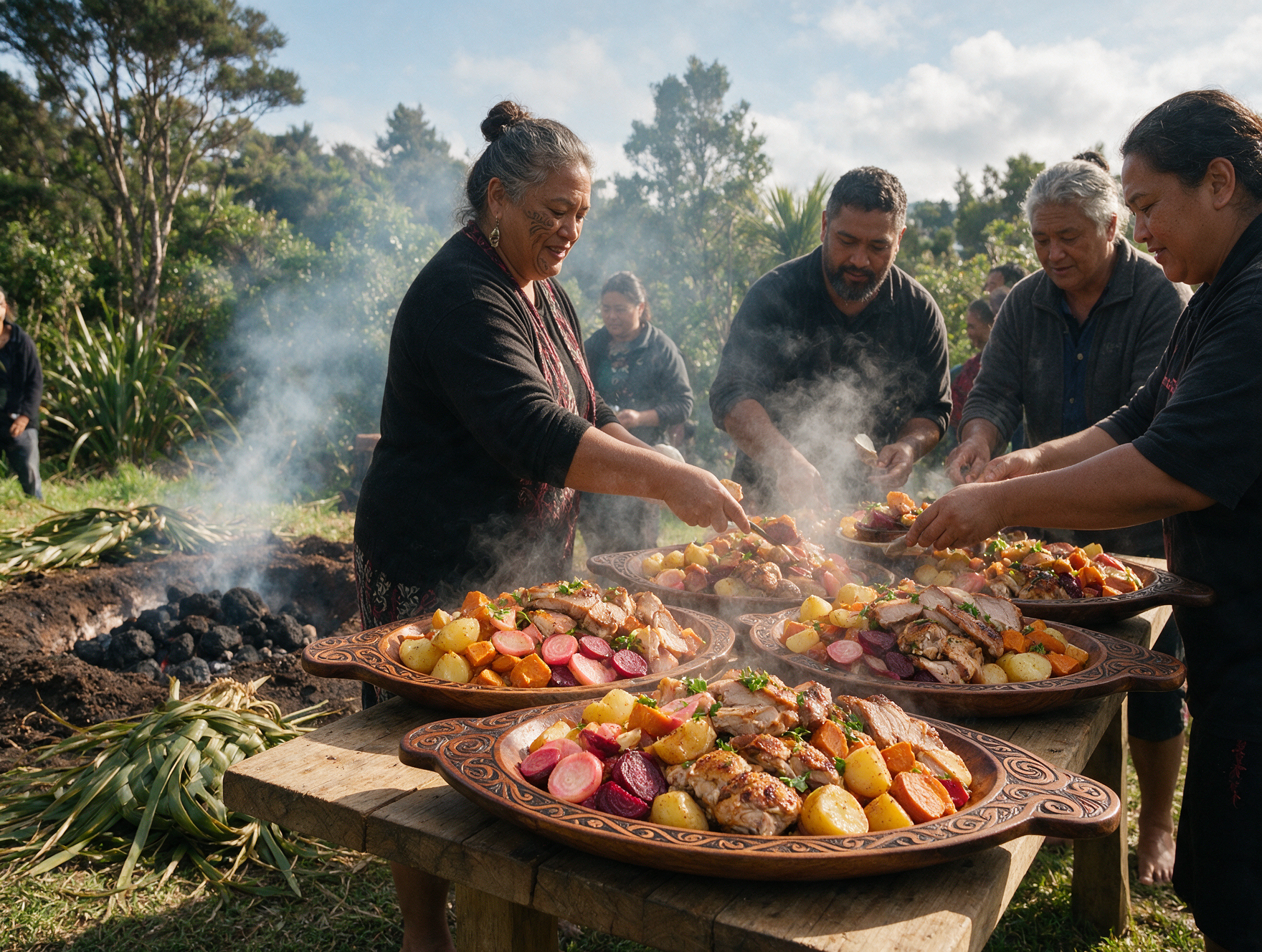
Rotorua is the one city on this list where the cooking method is as much the story as the food. A hāngī is food — usually lamb, chicken, kumara (sweet potato), and root vegetables — wrapped and lowered into a pit of heated volcanic stones, then covered with earth to steam slowly for hours. The result is smoky and tender in a way an oven can’t quite replicate, and the better cultural venues (Tamaki Māori Village is the best-known) pair it with a performance that explains the history rather than just serving dinner.
A fun fact worth knowing before you go: some Rotorua operators use the town’s natural geothermal heat directly to cook food in steam boxes called hāngī pits built over active vents — a few homes in the Māori village of Whakarewarewa still cook daily meals this way, using the ground itself as the stove.
A mistake to avoid: don’t schedule a hāngī dinner and then rush off — the better experiences run two to three hours with performance and storytelling built in, and treating it like a quick meal stop misses most of the point.
Wellington: New Zealand’s Coffee Capital
Wellington’s claim to being New Zealand’s coffee capital isn’t just civic pride — the city has one of the highest cafés-per-capita counts of any city its size worldwide, and locals are genuinely particular about it: ordering a “flat white” here gets you something specific (espresso with velvety steamed milk, a thin layer of microfoam) that’s different enough from a cappuccino that conflating the two will get a raised eyebrow from the barista. Cuba Street is the spine of the city’s food scene — a pedestrian strip packed with everything from Malaysian and vegetarian spots (more on those in our veg/vegan guide) to proper Wellington-style fish and chips.
Honest caveat: Wellington is famously windy — locals call a bad gust day being “Wellington’d” — and outdoor café seating on Cuba Street or the waterfront can turn into a battle for your napkins with zero warning. Choose indoor seating on a blustery day rather than fighting it.
Queenstown: Fergburger, Wine, and Alpine Comfort Food
Fergburger is the one food stop in Queenstown that’s genuinely earned its reputation rather than just coasted on tourist momentum — it’s a 24-hour burger joint on Shotover Street that regularly has a queue out the door, serving oversized burgers with names like “Sweet Bambi” (venison) alongside the classics. Go at an odd hour (mid-afternoon, or genuinely late) if you want to skip the worst of the line.
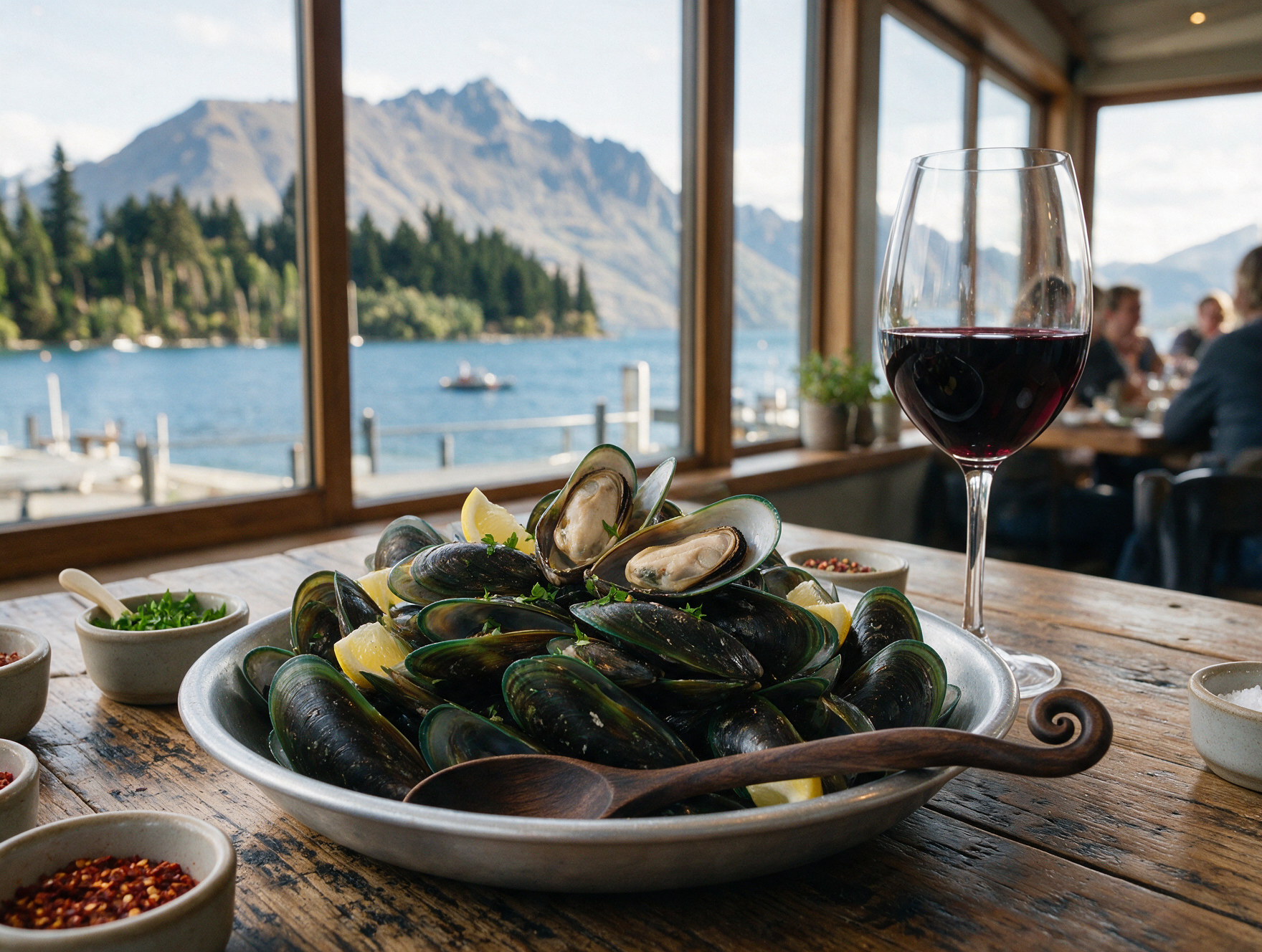
Beyond the burger, Queenstown sits in the middle of Central Otago wine country, one of the world’s southernmost commercial wine regions and known specifically for Pinot Noir grown at altitude in a cool climate — a half-day winery tour out to Gibbston Valley or Wanaka pairs well with a lakefront dinner of venison or lamb back in town.
Mount Cook and Lake Tekapo: Dining With a View, By Necessity
Don’t expect a food scene in the usual sense at either of these — they’re small alpine villages, and the dining options are genuinely limited in number, which locals will tell you upfront rather than oversell. What they lack in variety they make up for in setting: The Hermitage Hotel’s Alpine Restaurant in Mount Cook Village serves buffet-style meals with Aoraki/Mount Cook framed in the window from every seat, and its Panorama Room, open since 1969, has been quietly doing seasonal, locally-sourced menus for longer than most New Zealand restaurants have existed.
In Lake Tekapo, The Greedy Cow Café is the reliable daytime stop for a proper coffee and a hearty lunch before or after stargazing, and Mackenzie’s Bar & Grill covers dinner with straightforward Kiwi pub food — lamb shanks, burgers, a decent wine list — in a room that doesn’t try to be more than it needs to be.
Honest caveat: book dinner ahead in both villages during peak season (December-February and the ski season in July-August) — with so few restaurants, a walk-in on a busy night can mean a long wait or nothing at all.
National Dishes Worth Seeking Out Everywhere
A handful of foods show up across the whole country and are worth actively ordering rather than leaving to chance:
Pavlova — a meringue dessert with a crisp shell and marshmallowy centre, topped with cream and fruit (kiwifruit and passionfruit are classic). New Zealand and Australia have argued about who invented it for decades; order it in New Zealand and you’ll hear the local side of that argument from whoever serves it to you.
Whitebait fritters — tiny, almost-transparent juvenile fish bound together with egg batter and fried, a genuine seasonal delicacy (the whitebait season is tightly regulated) that’s pricier than it looks for how simple the dish seems.
Hokey Pokey ice cream — vanilla ice cream studded with chunks of honeycomb toffee, sold everywhere from petrol stations to proper ice cream parlours, and distinctly a New Zealand flavour rather than an international one.
L&L (L&P) — a lemon-and-paeroa flavoured soft drink that’s a genuine local institution, sweet and slightly tart, worth trying once even if you don’t finish the bottle.
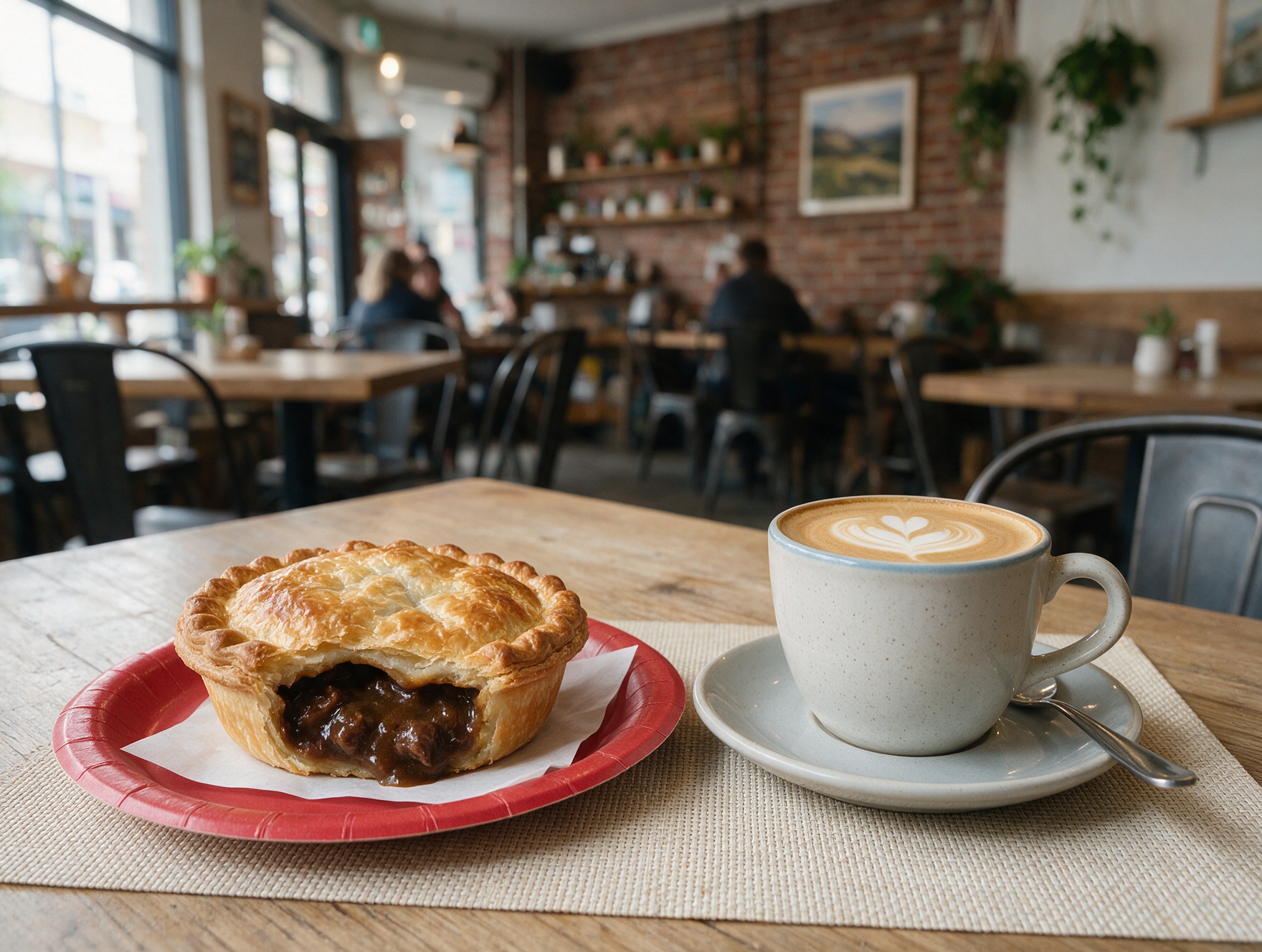
Meat pies — the New Zealand service-station meat pie is a legitimately good, flaky-pastry lunch option when you’re between towns on a long driving day, and locals have strong, specific opinions about which bakery does the best one in any given region.
Coffee Culture, Beyond Wellington
Even outside Wellington, New Zealand’s café culture runs deeper than most countries its size — a flat white, long black, or piccolo done properly is a baseline expectation in any town with more than a few thousand people, not a specialty-coffee-shop luxury. If you’re used to filter coffee or instant coffee being the default, budget a few minutes of adjustment time (and a slightly higher price point than you’d pay in India) and then enjoy genuinely good espresso basically everywhere you go, including the small-town cafés in Lake Tekapo and Mount Cook Village.
Late-Night Eats
Late-night eating in New Zealand is more limited than in a 24-hour Asian city, and it’s worth setting that expectation early. Fergburger in Queenstown is the standout exception, running 24 hours. In Auckland, Karangahape Road (“K’ Road”) keeps a reasonable late-night food scene going on weekends, with kebab and noodle spots open well past midnight. Outside the bigger cities, don’t count on finding much after 9 or 10pm — plan dinner earlier than you might in Bangkok or Mumbai, and treat a late-night Fergburger run in Queenstown as the exception rather than the rule.
Practical Food Notes
Card payment is the default almost everywhere in New Zealand, including small cafés in Lake Tekapo — carrying much cash isn’t necessary, and contactless tap-to-pay covers the vast majority of transactions. Tipping isn’t expected the way it is in the US; a genuinely great meal might prompt a small tip, but service charges aren’t built into menu prices and nobody will chase you for one. Lactose and gluten-free options are unusually well flagged on menus across the country, a byproduct of New Zealand’s large dairy and farming-adjacent population being proactive about dietary needs — useful to know if anyone in your group has restrictions.
A Note for Indian Travellers on Spice and Familiar Flavours
New Zealand food leans savoury-mild rather than spicy, and if a few days without heat starts to feel like a lot, every city on this route has at least one solid Indian restaurant — Auckland and Wellington both have real depth here, with Gujarati and South Indian options alongside the more common Punjabi-leaning menus, while Queenstown and Rotorua have a smaller but serviceable handful. Mount Cook and Lake Tekapo don’t have dedicated Indian restaurants, so if you’re travelling with someone who needs a spice fix on a strict schedule, plan around Queenstown or build in a stop back through a bigger town. Carrying a small stash of achaar or a packet of masala isn’t unusual among Indian travellers doing the South Island loop, and nobody at a Mount Cook Village café is going to blink at a thermos of chai either.
FAQs
What is the most famous New Zealand food to try?
There’s no single dish that dominates, but pavlova, hāngī-cooked meat and vegetables, whitebait fritters, and Hokey Pokey ice cream are the four most distinctly “New Zealand” things to seek out.
Is Queenstown’s Fergburger worth the queue?
Mostly, yes — it’s a genuinely good burger, not just hype, though going at an off-peak hour (mid-afternoon or very late) saves you the worst of the wait.
Can I find good coffee outside the main cities?
Yes — New Zealand’s café standard is high even in small towns, including Lake Tekapo and Mount Cook Village, which is unusual for places with populations in the hundreds.
What should I eat in Rotorua besides hāngī?
Rotorua’s food scene outside the cultural hāngī experiences is fairly ordinary café and pub fare — the hāngī and geothermal cooking demonstrations are genuinely the main event here.
Is tipping expected at New Zealand restaurants?
No — tipping isn’t a built-in expectation. A small tip for standout service is appreciated but not required, and prices on the menu are what you’ll generally pay.
What’s the best city for food variety on this route?
Auckland and Wellington both offer significantly more variety than Rotorua, Queenstown, or the alpine villages — if food diversity matters to your trip, weight more days toward those two.
New Zealand’s food trail isn’t about chasing one legendary dish — it’s lamb done right, seafood that was in the water that morning, a hāngī eaten slowly with a story attached, and coffee that’s better than you expected in towns with a few hundred people. Get Tripped can build a New Zealand itinerary around the food stops that matter to you, from a Central Otago wine afternoon to a proper Rotorua hāngī evening. Talk to our New Zealand travel specialists about working real food experiences into your custom trip.