Milford Sound gets close to a million visitors a year funnelled down a single road, for a fiord you’ll share with forty coach buses by 11am. That’s the New Zealand most people plan around — Queenstown’s adventure sports circuit, the Milford day trip, a stop in Rotorua for the geysers. It’s a good trip. It’s also the trip everyone takes, which means you’re mostly seeing New Zealand through someone else’s itinerary.
There’s another version of this country that doesn’t show up in the “Top 10 New Zealand” listicles, or it shows up as a rushed afternoon stop instead of the main event. Sperm whales feeding in a canyon deeper than the Grand Canyon, twenty minutes off Kaikoura’s main street. A fiord with the same cliffs and waterfalls as Milford Sound but a fraction of the boats. An island where 80% of the land is protected national park and kiwi walk the beach at dusk in daylight, because there are no predators left to hide from. This piece covers six of those places, specifically, with real operators and real numbers — not a location dump, but the places worth building actual days around.
Table of Contents
- Kaikoura: Skip the Wildlife Park, Watch Sperm Whales in Open Water
- Doubtful Sound: Skip Milford’s Bus Convoy, Cruise the Fiord Next Door
- The Catlins: Skip the Milford Road Rest Stops, Drive the Wild Southeast Coast
- Stewart Island (Rakiura): Skip Ulva Island’s Day-Trip Crowd, Stay the Night
- Golden Bay: Skip Abel Tasman’s Water Taxi Queue, Cross Takaka Hill
- Waiheke Island: Skip the Big-Bus Wine Circuit, Book a Small Cellar Door
- Best Time to Visit New Zealand
- Visa Requirements for Indian Passport Holders
- Getting There: Flights from India
- Getting Around New Zealand
- Where to Stay
- Costs
- Food and Where to Eat
- Safety Notes
- FAQs
Kaikoura: Skip the Wildlife Park, Watch Sperm Whales in Open Water
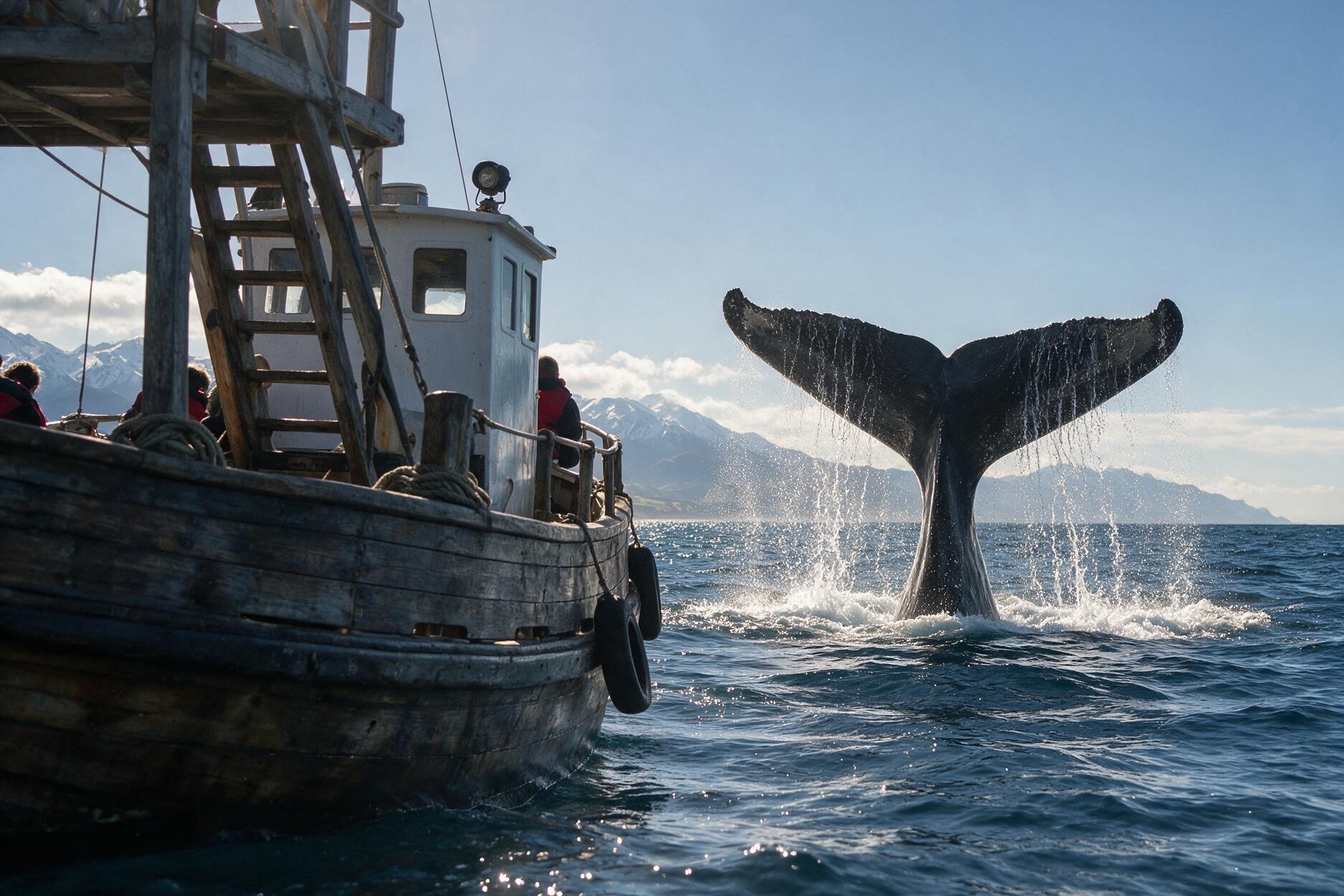
Kaikoura, a small fishing town on the northeast coast of the South Island, about two and a half hours’ drive from Christchurch, sits above the Kaikoura Canyon — a submarine trench deep enough that sperm whales feed there year-round, close enough to shore that a boat trip out takes twenty minutes, not two hours.
Whale Watch Kaikōura runs boat tours from Whaleway Station Road, and this is one of the few places anywhere you can reliably see sperm whales from a boat in every season, not just during a migration window. Tours run NZD 60–175 for a standard seat, with premium cabin and fly-whale-watch combo options running higher. Dusky dolphins — pods of hundreds — and New Zealand fur seals are common sightings on the same trip.
The honest caveat: whale sightings aren’t guaranteed, and rough weather cancels trips more often here than at calmer harbours. Book your Kaikoura stop with a buffer day if whale watching is the reason you’re going, and check the marine forecast before you lock in accommodation. Locals also walk the Kaikoura Peninsula Walkway at low tide instead of paying for a seal-viewing tour — the seal colony near the peninsula’s point is free to view on foot, and it’s where you’ll actually get close, quiet time with pups in early summer.
Fun fact: the Kaikoura Canyon plunges to around 1,200 metres just a few kilometres offshore — deeper, relative to how close it is to land, than most submarine canyons anywhere, which is exactly why the whales don’t need to migrate to feed here.
Doubtful Sound: Skip Milford’s Bus Convoy, Cruise the Fiord Next Door
Milford Sound is stunning and also the single most crowded thing in Fiordland — cruise boats stack up, the car park fills before 9am in peak season, and the two-hour drive in from Te Anau runs alongside a steady line of tour coaches. Doubtful Sound, one fiord south, gets a fraction of the visitors for a genuinely comparable landscape: sheer forested cliffs, waterfalls that appear after rain, resident bottlenose dolphins, and a real chance of total silence on the water.
The trade-off is access. There’s no road to Doubtful Sound — getting there means a boat across Lake Manapouri, a bus over Wilmot Pass, and then the fiord cruise itself, which RealNZ runs as both day and overnight cruises from Manapouri, near Te Anau. It’s a longer day (roughly nine hours door to door) and it costs more than Milford, but that inconvenience is exactly what keeps the crowds off it. If you only have time for one fiord and photos are the goal, do Milford. If you want to actually feel remote, do Doubtful Sound.
Segment tip — couples/honeymooners: the overnight cruise on Doubtful Sound, with a cabin, onboard dinner, and kayaking at dawn when the water is glass-still, is one of the more genuinely romantic nights available in New Zealand and doesn’t get booked out the way Milford’s evening cruises do.
The Catlins: Skip the Milford Road Rest Stops, Drive the Wild Southeast Coast
Most South Island road trips funnel travellers along the same corridor — Queenstown to Te Anau to Milford, then back up through Wanaka. The Catlins, the wild, forested southeastern coastline between Dunedin and Invercargill, barely registers on that route, which is the whole reason it’s worth the detour.
This is a coastline of waterfalls dropping straight into native bush, wide empty beaches, and a lighthouse at Nugget Point where seals and sometimes sea lions haul out on the rocks below. Purakaunui Falls — a tiered, three-step waterfall a short walk from the car park — is the most photographed spot in the Catlins and still sees a fraction of the foot traffic any Milford Road stop gets. Curio Bay, further south, has a fossilised forest visible in the rock platform at low tide, roughly 180 million years old, plus a resident colony of yellow-eyed penguins (hoiho) that come ashore most evenings.
Plan the Catlins as a slow half-day-to-full-day drive, not a straight-through route — the roads are narrow and unsealed in places, and there’s no real public transport through here; this is self-drive or nothing.
Mistake to avoid: don’t try to do the Catlins as a rushed add-on between Dunedin and Te Anau on the same day as another major activity. The coastal road is slower than the map suggests, and the payoff — penguins at dusk, an empty beach at golden hour — needs you to not be racing a sunset deadline somewhere else.
Stewart Island (Rakiura): Skip Ulva Island’s Day-Trip Crowd, Stay the Night
Stewart Island, New Zealand’s third main island, sits across Foveaux Strait from Bluff, at the very bottom of the country. Most visitors who make it this far do a rushed day trip to Ulva Island — a genuinely lovely predator-free bird sanctuary reachable by water taxi — and then head straight back. That’s a shame, because the island itself, Rakiura in Māori, is where the real experience is.
Getting there is a one-hour ferry from Bluff to Oban (from around NZD 145) or a 20-minute scenic flight from Invercargill. Rakiura National Park covers about 80% of the island, and Oban is the only real settlement — a few hundred people, one main street, and genuinely dark skies a short walk from town, which is why Stewart Island is an official Dark Sky Sanctuary. But the real reason to stay overnight rather than day-trip is the kiwi. Rakiura tokoeka, the local subspecies, are unusually active at dusk on the beaches near town — guided evening kiwi-spotting tours (from around NZD 269) have strong success rates specifically because of this, something that essentially doesn’t happen on the mainland.
Segment tip — solo travellers: Stewart Island is one of the easiest places in New Zealand to travel alone comfortably. Oban is small enough that you’ll run into the same handful of people at the pub and the general store within a day, and the guided kiwi tours are a natural way to meet other travellers without any effort.
Plan two to three nights if you can. A single night barely covers the ferry transition and one activity; the island rewards slowing down.
Golden Bay: Skip Abel Tasman’s Water Taxi Queue, Cross Takaka Hill
Abel Tasman National Park’s golden beaches are genuinely beautiful and also genuinely mobbed in summer — water taxis run on a schedule, kayak rental queues form early, and the main bays fill with day-trippers by mid-morning. Golden Bay sits on the other side of Abel Tasman, reached by driving over Takaka Hill from Nelson or Motueka — a slow, winding, roughly 45-minute-to-an-hour climb over the hill that acts as a natural filter. Fewer people bother making the drive, so the payoff on the other side feels earned rather than crowded.
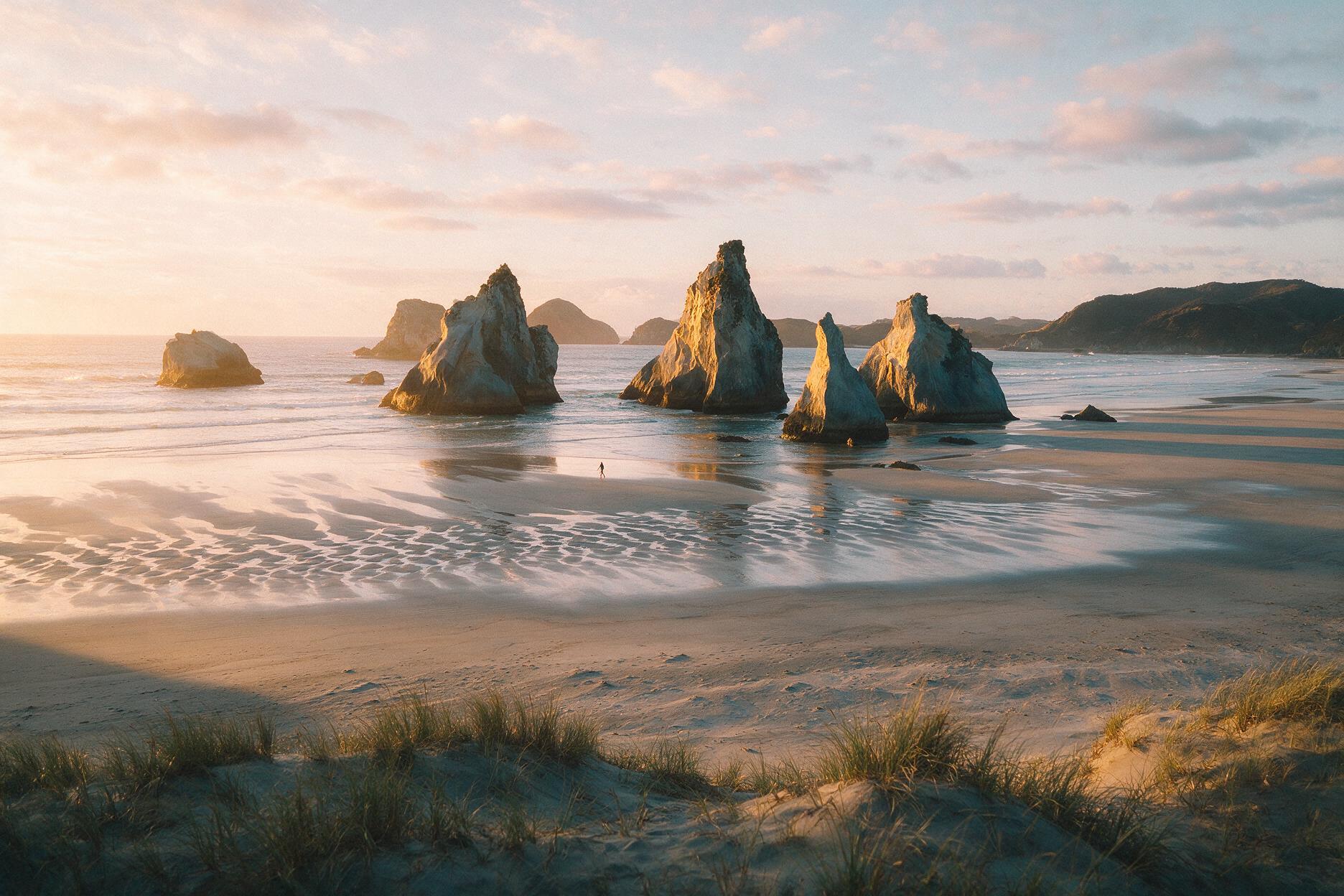
Golden Bay’s centrepiece is Wharariki Beach, a wild, wind-sculpted beach with limestone sea stacks rising out of the surf, reachable by a 20-minute walk across farmland — no road access, just the walk and the view. Nearby, Farewell Spit, a 26-kilometre sand spit curling into the Tasman Sea, is a wetland of international significance; guided tours run out onto the spit itself, since the outer sections are off-limits to independent walkers to protect nesting birds.
Honest caveat: Golden Bay is genuinely remote by New Zealand standards, and that’s the trade-off. Cell coverage is patchy in places, fuel stations are limited, and if the weather turns, Takaka Hill can close. Fill your tank, download offline maps, and don’t plan Golden Bay as a rushed overnight if you can help it — two nights lets you actually see Wharariki at both sunrise and sunset without racing the hill road in the dark.
Waiheke Island: Skip the Big-Bus Wine Circuit, Book a Small Cellar Door
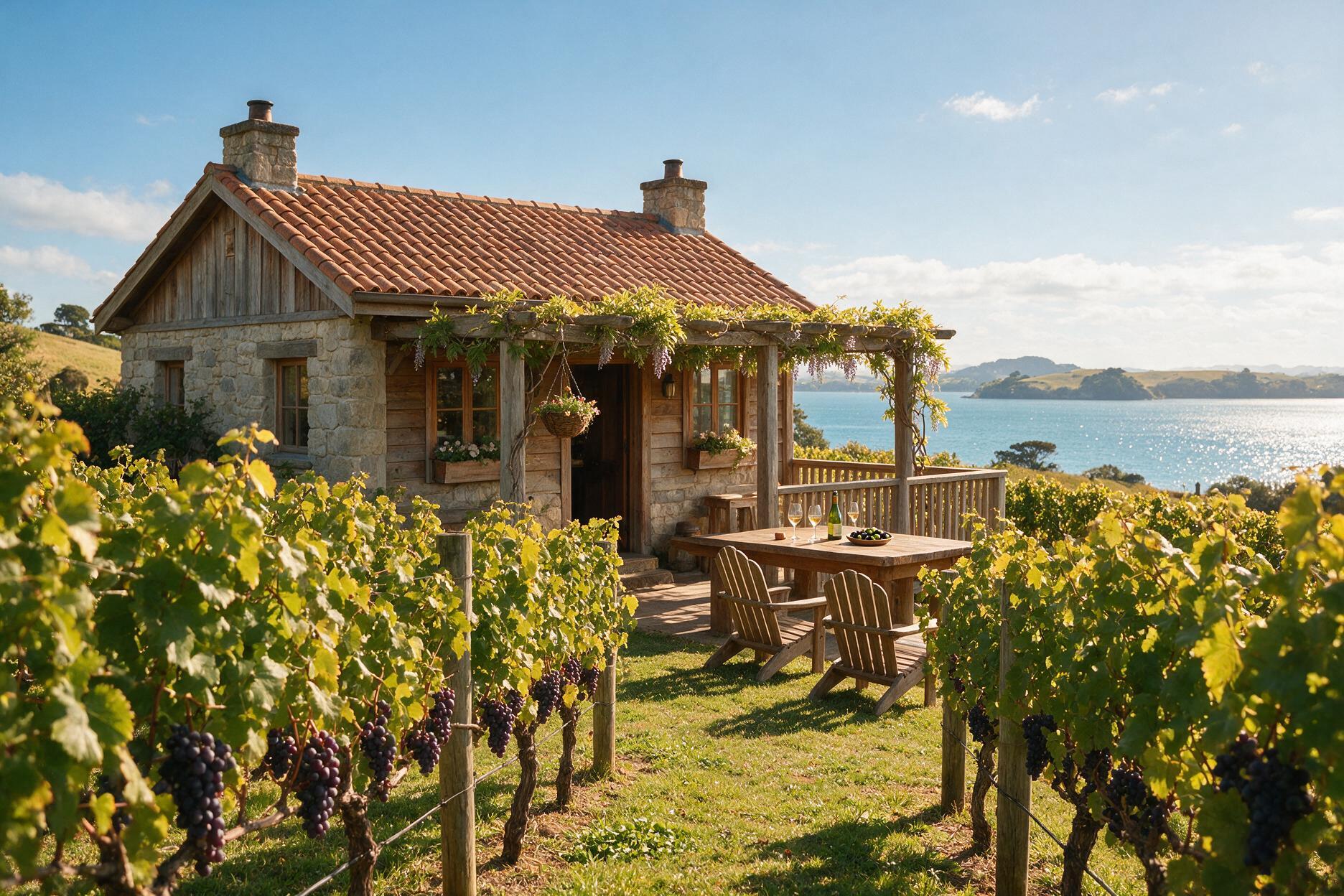
Waiheke Island, a 40-minute ferry from Auckland’s downtown terminal, isn’t exactly a secret, but most visitors experience it through the same handful of large-capacity wine tour buses hitting the five or six biggest, most Instagrammed vineyards in a single afternoon. The quieter version of Waiheke is a short drive away: small, family-run cellar doors that cap tastings at a handful of guests at a time, olive groves alongside the vines, and Hauraki Gulf views the bus-tour stops don’t bother stopping for.
The island’s warm, maritime microclimate produces excellent Bordeaux-style reds and rosé, and a growing number of boutique producers pour tastings by appointment rather than walk-in, which is precisely what keeps them off the mass-tour circuit. If you’re arranging wine tasting through Get Tripped, ask specifically for a small-group or private itinerary rather than a set day tour — the difference in experience, between an eleven-person minibus and a driver who’ll take you to a producer’s actual cellar, is significant for roughly the same half-day.
Segment tip — luxury travellers: Waiheke has a genuine boutique lodge scene — small, design-forward properties with vineyard or ocean views — that positions it well as a one- or two-night add-on at either end of a South Island trip, rather than a rushed day trip squeezed into an Auckland stopover.
Best Time to Visit New Zealand
New Zealand’s seasons run opposite to India’s, which trips up more first-time planners than almost anything else on this list. December to February is New Zealand’s summer — warm, long daylight hours, and the busiest and most expensive season, particularly around Christmas and New Year when New Zealanders themselves are on holiday. June to August is winter, cold in the South Island with snow in the mountains (good for skiing around Queenstown and Wanaka, less good for fiord cruises and coastal drives).
For most of the hidden-gem spots in this guide, the shoulder seasons work best. March to May (autumn) brings settled weather, thinner crowds, and turning colours in Central Otago and around Wanaka, without summer’s peak pricing. September to November (spring) is a close second — lambing season across the countryside, wildflowers, and whale activity around Kaikoura that’s consistent year-round anyway. If the Catlins’ yellow-eyed penguins or Stewart Island’s kiwi are the priority, dusk sightings happen across most of the year, so weather and crowd levels matter more than the specific month.
Visa Requirements for Indian Passport Holders
This is the detail that trips people up: Indian passport holders are not eligible for New Zealand’s NZeTA (Electronic Travel Authority) — that pathway is only for passport holders from visa-waiver countries, and India isn’t on that list. Indian travellers need to apply for a full Visitor Visa through Immigration New Zealand, either online via the RealMe portal or on paper.
As of current fees, the total cost is NZD 441 (roughly ₹24,000–25,000 at current exchange rates) — this includes both the visa application fee (NZD 341) and the mandatory International Visitor Conservation and Tourism Levy, or IVL (NZD 100), which funds conservation and tourism infrastructure and applies to most international visitors. Immigration New Zealand states 80% of visitor visa applications are decided within about two to three weeks, though third-party visa guides suggest budgeting closer to four to six weeks during peak seasons (roughly October through January), so apply well before booking non-refundable flights or activities.
You’ll need a passport valid at least three months beyond your planned departure from New Zealand, a recent passport photo, proof of onward/return travel, accommodation details, and evidence of sufficient funds for the trip (bank statements are standard). A visitor visa typically permits stays of up to nine months within an 18-month period, though most leisure trips will only need a few weeks of that.
Mistake to avoid: don’t assume New Zealand works like Southeast Asia or the Gulf, where an e-visa or visa-on-arrival is common for Indian passports. There’s no visa-on-arrival option here — apply, get approved, and only then lock in flights and non-refundable bookings.
Getting There: Flights from India
There are no direct commercial flights between India and New Zealand at the time of writing, though Air New Zealand has publicly discussed exploring a direct India route given rising demand — worth checking back on before you book. For now, every route from India connects through a hub.
The most common options from Delhi, Mumbai, and Bengaluru run via Singapore (Singapore Airlines, onward to Auckland or Christchurch), Hong Kong (Cathay Pacific), or through Australia (Sydney or Melbourne, on Qantas or Air New Zealand), with Gulf carriers like Emirates and Qatar Airways offering options via Dubai or Doha as well. Auckland is the main gateway with the most connections; Christchurch and Queenstown have fewer direct international links and often mean an additional domestic hop from Auckland.
One-way economy fares from Delhi to Auckland or Christchurch start from roughly ₹45,000–55,000 in off-peak periods, with round-trip economy typically landing in the ₹90,000–1,40,000 range depending on season, routing, and how far in advance you book — December–January and the New Zealand summer school holidays push prices noticeably higher. Total journey time, including a layover, generally runs 20–26 hours depending on the connection.
Getting Around New Zealand
Self-drive is the standard way to see the places in this guide — public transport thins out fast outside Auckland, Wellington, and Christchurch, and the Catlins and Golden Bay are essentially inaccessible without a car. New Zealand drives on the left, same as India, but roads are narrower and windier than most Indian highways, and speed limits are strictly enforced.
For longer stretches — Auckland to Wellington, or across to Christchurch — a domestic flight (Air New Zealand or Jetstar) saves a full day of driving. InterCity’s coach network is a non-driving alternative, though it won’t reach Wharariki Beach or the Catlins’ back roads. Campervan hire works well for a South Island loop covering Kaikoura, Doubtful Sound, and the Catlins in one trip.
Where to Stay
Kaikoura: mid-range options cluster along the Esplanade with sea views; a small number of boutique lodges just outside town offer a quieter, upscale base.
Fiordland (Te Anau, for Doubtful Sound access): Te Anau has the widest range, from lakeside mid-range hotels to a handful of higher-end lodges; the overnight Doubtful Sound cruise itself works well as your “stay” for one night.
The Catlins: sparse and mostly boutique — small lodges and farm-stays rather than hotel chains, which suits the slow-drive nature of the region. Book ahead; rooms are limited.
Stewart Island: Oban has comfortable guesthouses through to a couple of higher-end lodges with harbour views; there’s no large-hotel tier here by design.
Golden Bay: boutique lodges and beach houses around Takaka and Collingwood, from mid-range stays to a few standout luxury properties with private beach or bush access.
Waiheke Island: the widest luxury range on this list — design-forward boutique lodges and villas with vineyard or gulf views alongside solid mid-range guesthouses near the ferry terminal.
Costs
Rough per-day figures, per person, excluding flights and the visa: mid-range travel — comfortable hotels, a mix of self-catering and restaurant meals, rental car, and a couple of paid activities — runs approximately NZD 250–400 (₹14,000–22,500) per day. Luxury travel — boutique lodges, private tours, fine dining, and premium experiences like an overnight fiord cruise — runs from NZD 600 upward (₹34,000+) per day.
New Zealand isn’t cheap relative to most of Southeast Asia, and activities add up fast — a Doubtful Sound day cruise, a guided kiwi-spotting tour, and a whale watching trip together can easily run NZD 500–700 per person before accommodation or food is counted. Budget for activities deliberately rather than assuming they’re incidental.
Food and Where to Eat
New Zealand’s food culture leans heavily on what’s caught or grown locally — Kaikoura is one of the best places in the country for fresh crayfish (rock lobster), sold at roadside stalls as well as in restaurants. The Catlins and Southland are known for Bluff oysters in season (roughly March to August) and excellent lamb. Central Otago and Waiheke are wine country in different registers — Pinot Noir and Bordeaux-style reds and rosé respectively — and most cellar doors pair a tasting with a light lunch.
Vegetarian options are more limited outside the main cities than in India — smaller towns often have one or two restaurants total, worth checking ahead, particularly on Stewart Island or in the Catlins. Cafes are strong everywhere, even in small towns; a good flat white is rarely far away.
Safety Notes
New Zealand is consistently rated among the safer countries for travellers, with low rates of violent crime. The real risks here are environmental rather than criminal: weather changes fast in Fiordland, roads can be narrow with sheer drops (take the Milford Road and the Catlins’ coastal route seriously in a rental car you’re not used to), and wild beaches like Wharariki can carry strong rips — check conditions before swimming anywhere unpatrolled. Mobile coverage drops out in remote stretches (Golden Bay, the Catlins, Stewart Island), so download offline maps and share your plan for any longer hike. New Zealand’s government-run SafeTravel site carries current advisories worth checking before departure.
FAQs
Do Indian citizens need a visa for New Zealand, or can they use the NZeTA?
Indian passport holders need a full Visitor Visa, not the NZeTA — India isn’t on New Zealand’s visa-waiver list, so the NZeTA electronic authorisation isn’t available to Indian travellers. Apply through Immigration New Zealand online or on paper; total cost including the IVL is currently NZD 441.
Is Doubtful Sound actually better than Milford Sound?
Depends on priorities. Milford is more accessible by road with more cruise options at lower prices; Doubtful Sound needs a boat-and-bus transfer, costs more, and takes longer, but rewards the effort with far fewer boats on the water. Want easy logistics — Milford. Want solitude — Doubtful Sound.
How many days should I set aside for a South Island hidden-gems route covering Kaikoura, the Catlins, and Fiordland?
Realistically, ten to fourteen days lets you cover Kaikoura, drive down through Fiordland for Doubtful Sound, and loop through the Catlins without rushing. Add Stewart Island and you’re looking at closer to two weeks minimum, given the ferry crossing and the case for staying multiple nights there.
Can I see kiwi in the wild on Stewart Island without a guide?
Sightings happen, but a guided evening kiwi-spotting tour dramatically improves your odds, since guides know current activity patterns and lead small groups along the right stretches of beach at the right time. Independent sightings occur, particularly at dusk, but they’re closer to luck than a guided outing.
Is Golden Bay worth the drive over Takaka Hill, or is Abel Tasman enough on its own?
If you only have a day or two in the Nelson/Tasman region, Abel Tasman’s beaches deliver reliably beautiful scenery with much less effort. Golden Bay is worth the detour specifically if you want fewer people around you and don’t mind the winding hour-long drive — Wharariki Beach and Farewell Spit are a genuinely different, wilder experience from Abel Tasman’s calmer, more manicured bays.
What’s the best time of year to see whales in Kaikoura?
Sperm whales are resident year-round in the Kaikoura Canyon, which is what makes this spot unusual — unlike most whale-watching destinations tied to a migration season, Kaikoura offers reasonably consistent sightings across the calendar. Weather affects trip cancellations more than season does, so build in a spare day if possible.
Do I need a 4WD or campervan to reach these hidden gems, or is a normal rental car fine?
A standard rental car handles all six spots, including the Catlins’ back roads and the Takaka Hill crossing — none of these require 4WD. A campervan is a lifestyle choice more than a necessity, useful mainly for flexibility around weather on the Fiordland and Catlins legs.
How much should I budget per day for a New Zealand trip focused on these hidden gems rather than Queenstown’s adventure activities?
Expect mid-range travel to run roughly NZD 250–400 per person per day, and budget separately and generously for activities — a whale watching trip, a Doubtful Sound cruise, and a kiwi-spotting tour together can run NZD 500–700 per person, on top of daily accommodation and food costs.
Conclusion
Queenstown earns its reputation — the adventure sports, the lake, the mountains ringing the town are genuinely worth seeing. But treating Queenstown and Milford Sound as the whole of New Zealand means missing the country’s actual character: small towns where the whole economy is built around one extraordinary natural feature, coastlines nobody’s rushing to photograph for Instagram, and islands where the wildlife still runs the schedule. Kaikoura, Doubtful Sound, the Catlins, Stewart Island, Golden Bay, and Waiheke’s quieter wineries aren’t harder versions of the same trip — they’re the New Zealand that locals actually recommend to each other, once you ask past the standard list.
Planning a New Zealand trip that actually gets past Queenstown and Milford Sound takes more logistics than the standard package — visa timing, fewer flight connections, and routes that need a real itinerary rather than a template. That’s exactly what Get Tripped’s travel specialists build for a living. Get in touch and we’ll put together a New Zealand itinerary around the hidden gems that actually fit your dates, your pace, and who you’re travelling with.