A Day in Wellington, New Zealand: Hour by Hour
Wellington is small enough that locals genuinely complain about a ten-minute commute, and that compactness is exactly what makes it one of the easiest cities in New Zealand to do properly in a single day. It’s also famously windy — New Zealanders call it “Windy Wellington” without a trace of irony — so pack a layer you don’t mind the wind getting into. What you get in exchange for the gusts is a capital that feels more like a creative small town than a seat of government: a harbour ringed by hills, a historic cable car, and a food and coffee scene locals will argue is the best in the country.
This is a loose hour-by-hour structure rather than a rigid schedule — Wellington rewards wandering, and the plan below leaves room for that while still covering the city’s essentials for anyone slotting it into a wider New Zealand itinerary.
In This Guide
- Morning: coffee with a harbour view
- Late morning: the Cable Car and Zealandia
- Midday: Cuba Street
- Afternoon: Te Papa and the waterfront
- Evening: dinner, your way
- Where to stay for a walkable day
- If you have a second day: Martinborough
- Photography spots worth the detour
- A fun fact worth knowing
- What to pack
- Best time to visit and how many days
- A mistake to avoid
- Visa, weather, and getting around
- FAQs
Morning: coffee with a harbour view
Start the day the way Wellingtonians do — with a proper coffee, ideally somewhere with a water view. Maranui Café, overlooking Lyall Bay, is a favourite precisely because you can watch surfers paddling out while you eat breakfast, which feels improbable for a capital city. Closer to the centre, Swimsuit Café on Dixon Street and The Botanist are solid, less touristy alternatives if Lyall Bay is out of the way for your morning.
Wellington’s coffee culture isn’t an accident — this is a city with more cafés per capita than most places its size, and the baristas take it seriously without being precious about it. Give yourself a proper sit-down breakfast here rather than a grab-and-go; the next few hours involve a fair bit of walking.
Late morning: the Cable Car and Zealandia
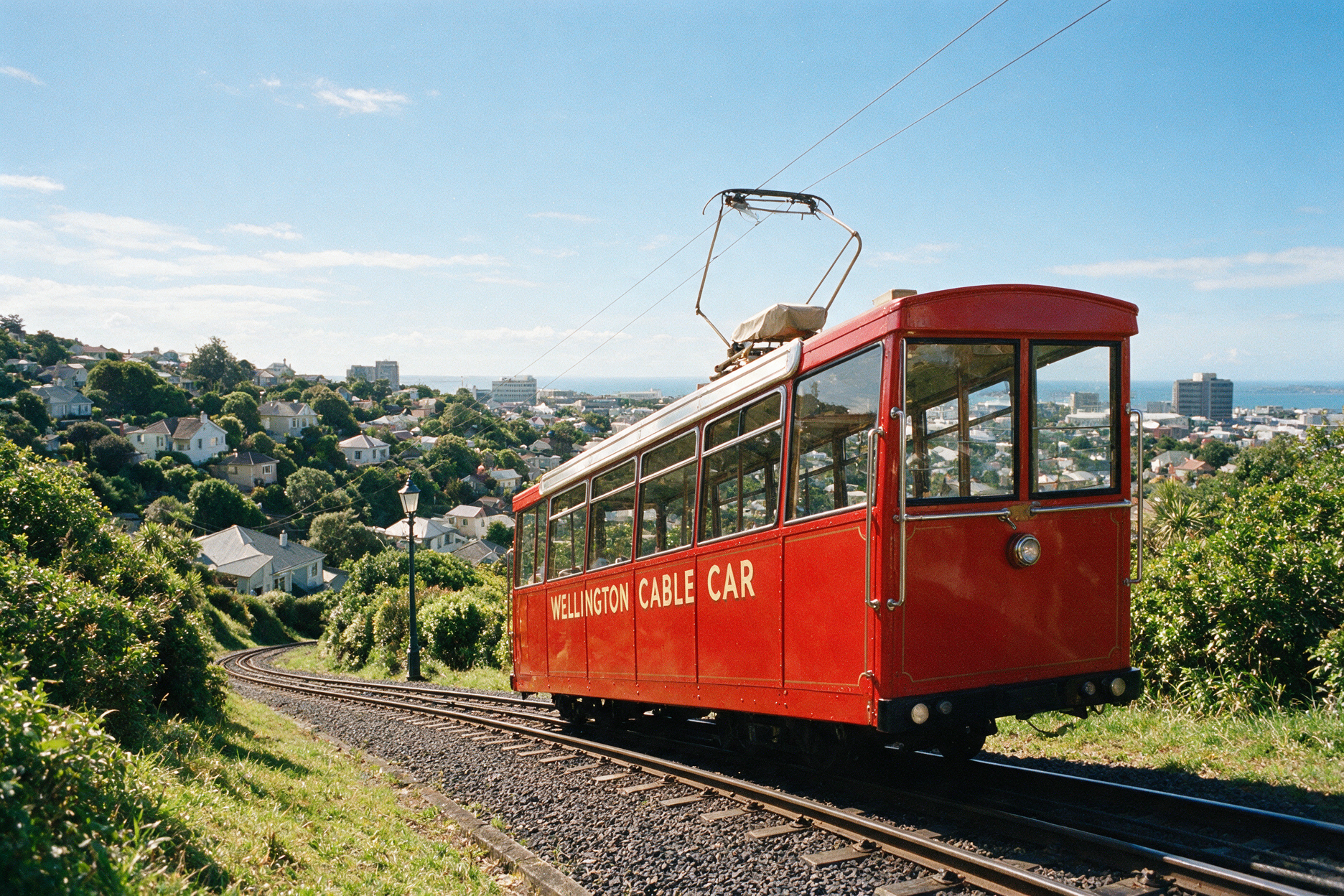
From Lambton Quay, the historic red Cable Car climbs up to Kelburn — it’s been running in some form since 1902, and the ride itself is short but genuinely scenic, with the city and harbour opening up behind you as you climb. Stay on to the top station for the best view, then decide between two good options: wander into the Wellington Botanic Gardens, which border the top station directly, or catch the free shuttle out to Zealandia, a predator-free ecosanctuary where you can see native birds like kākā and tūī in numbers you won’t encounter casually anywhere else in the country.
If you only have time for one, Zealandia is the more distinctive choice — there’s nowhere else on a typical New Zealand itinerary where you’ll get this close to the country’s native bird species in something close to their natural state.
Midday: Cuba Street
Walk (or bus) down into Cuba Street, Wellington’s pedestrian precinct and the closest thing the city has to a bohemian high street. The Bucket Fountain is the unofficial landmark — a slightly chaotic kinetic sculpture that’s been a meeting point for decades — and the laneways between Ghuznee and Dixon Streets, plus the quieter stretches on Egmont and Leeds Streets, hide some of the best small shops and cafés in the city.
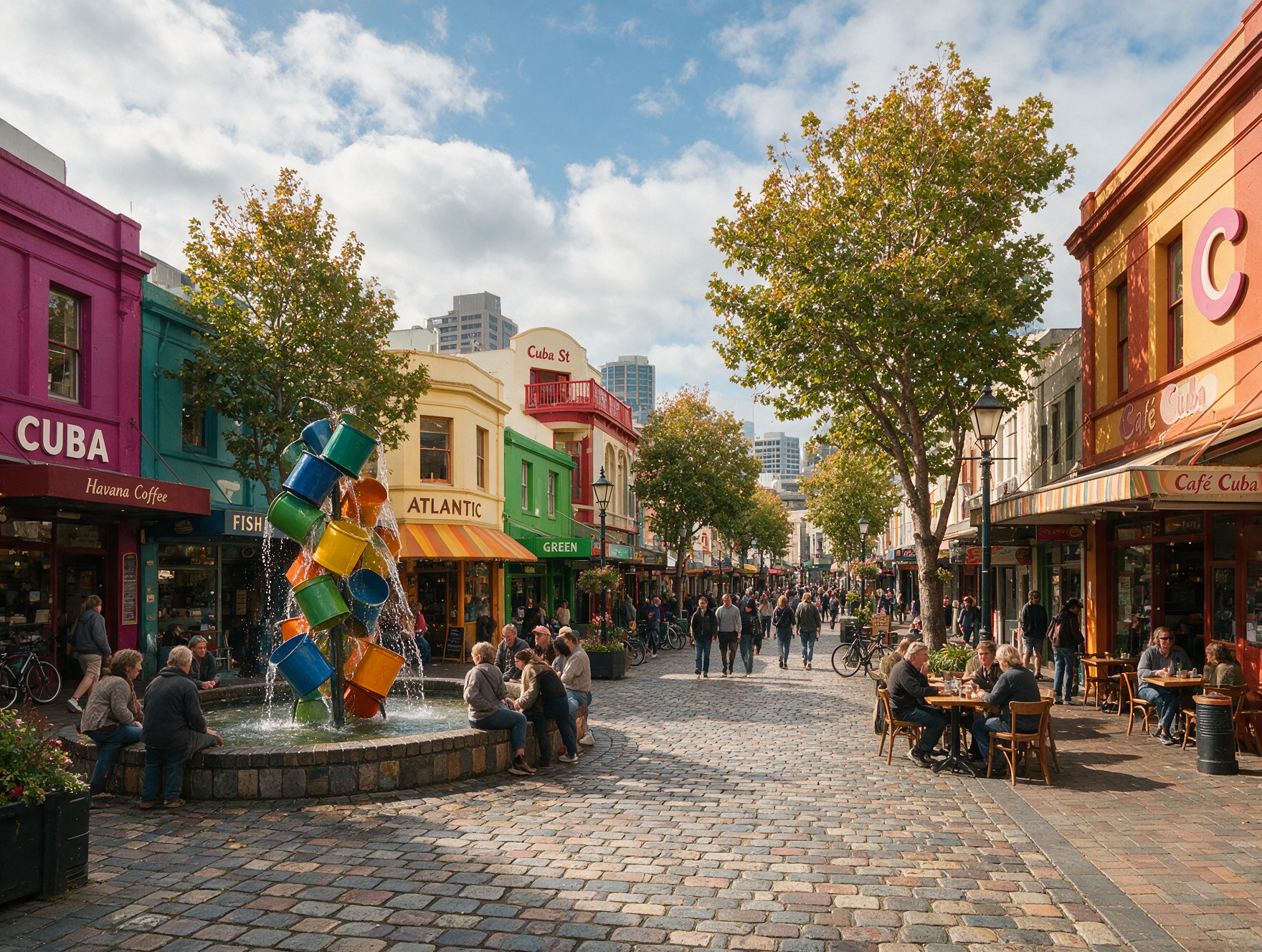
For lunch, Wellington Chocolate Factory is worth a stop if you want something sweet, and Pizza Pomodoro in Hannahs Courtyard is a reliable, quick option if you’d rather eat and keep moving. Cuba Street’s food scene genuinely spans the world — Malaysian, Italian, South American, Indian, and Japanese options all sit within a few minutes’ walk of each other, which says something about how international this small capital actually is.
Afternoon: Te Papa and the waterfront
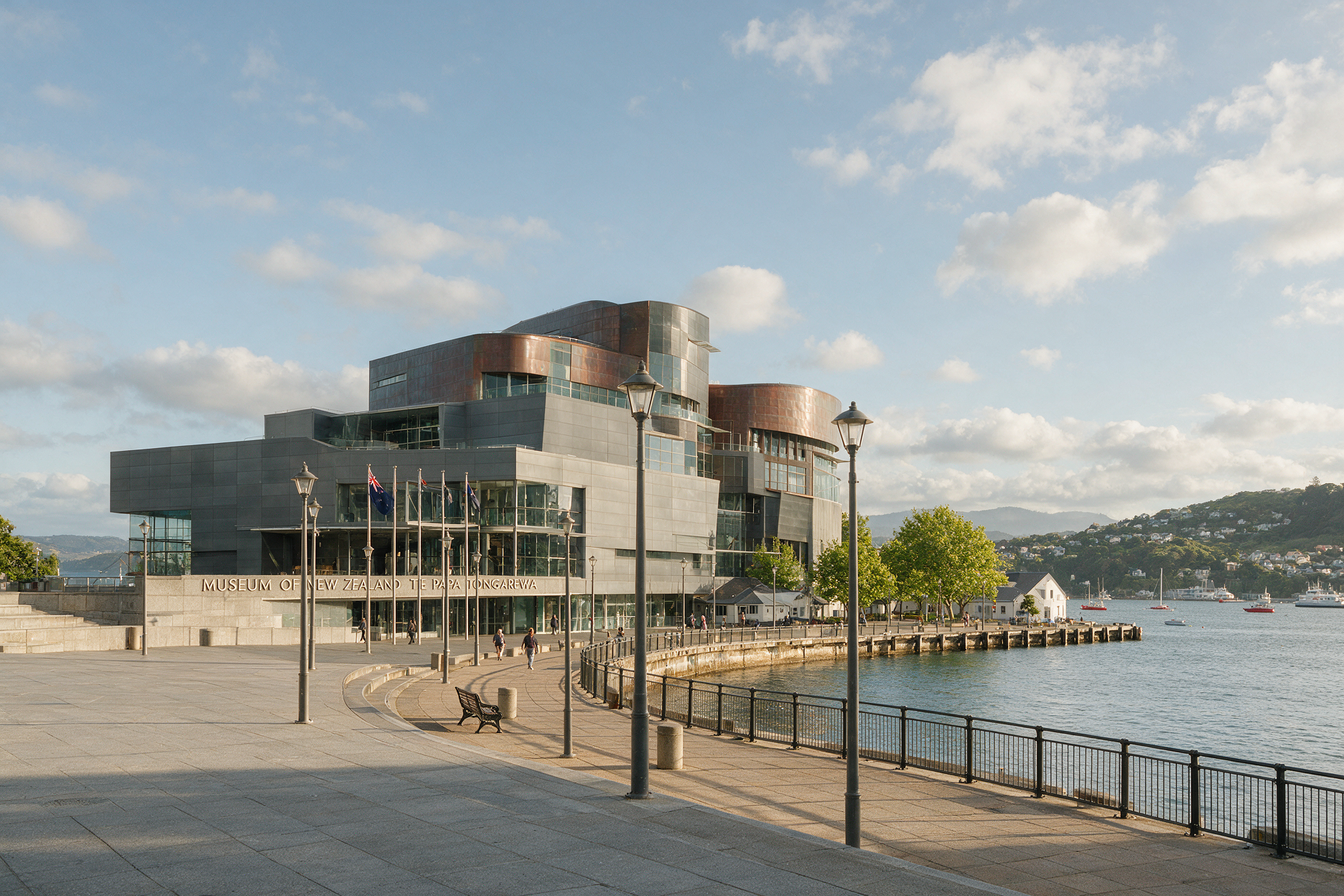
Head to the waterfront for Te Papa, New Zealand’s national museum, open every day except Christmas Day and free to enter for the main collection. It’s genuinely one of the better national museums in this part of the world — strong on Māori culture and history, natural history, and rotating exhibitions, and worth a solid two hours minimum. The building itself sits right on the harbour, which makes the walk there as pleasant as the museum itself.
Afterwards, it’s a short walk to Gelissimo Gelateria for something cold, or to Fork and Brewer, Choice Bros, or Heyday Beer Co if a beer sounds better than ice cream at this point in the afternoon.
Evening: dinner, your way
For something casual, Mr Go’s, 1154 Pastaria, or Burger Liquor all do the job well without ceremony. For a slightly more special dinner, Ortega Fish Shack or Highwater are the names locals mention first. Or loop back to Cuba Street and let its international food scene decide for you — on a cold, windy Wellington evening, a good curry or ramen does more good than a fancier sit-down meal might.
Where to stay for a walkable day
Wellington rewards staying centrally more than most New Zealand cities, simply because the whole day above is walkable from a hotel near Lambton Quay, the waterfront, or Cuba Street itself. Staying near the railway station is convenient if you’re arriving by train from the Hutt Valley or further north, while a waterfront hotel puts Te Papa and the harbour walk right on your doorstep. Avoid booking out near the airport unless your flight timing genuinely demands it — it adds an unnecessary bus or taxi ride to a city built for walking.
If you have a second day: Martinborough and the wine region
Wellington’s compactness means a single day covers the essentials, but a second day opens up Martinborough, a boutique wine region about an hour’s drive (or a scenic train-and-shuttle combination) across the Remutaka Range. It’s known for pinot noir in particular, and several cellar doors offer tastings in a genuinely relaxed, low-key setting compared to the more commercial wine tourism elsewhere in the country. It’s a good contrast to a day spent entirely in the capital’s café and museum circuit.
Photography spots worth the detour
Mount Victoria Lookout, a short drive or a steeper walk from the centre, gives a genuinely good 360-degree view over the harbour and the city — better, arguably, than the Cable Car’s Kelburn viewpoint, though it takes more effort to reach. Oriental Bay’s waterfront promenade is the spot locals themselves go for an evening walk and a decent photo of the city lights reflecting on calm water, especially in the hour just after sunset.
A fun fact worth knowing
Wellington’s nickname, “the windy city,” has actual meteorological backing: its position in the narrow Cook Strait, between the North and South Islands, funnels weather systems through a gap that accelerates wind speeds significantly compared to the surrounding region. Locals sometimes joke that the city has its own microclimate independent of the rest of New Zealand’s forecast, and on a day when Auckland is still and sunny, Wellington can genuinely be having a completely different kind of afternoon.
Best time to visit and how many days
Wellington is at its calmest and most photogenic in late summer and early autumn (February to April), when the wind eases slightly and the harbour light turns genuinely beautiful in the evenings. Winter (June–August) is cold and can be relentlessly windy, though the city doesn’t really slow down for it — the café and cultural scene runs year-round. One full day, structured roughly as above, covers Wellington’s essentials; two days lets you add a day trip to the wine region of Martinborough or further exploration of the museum and gallery scene.
What to pack
Layer for genuine unpredictability — a warm top, a windproof (not just water-resistant) jacket, and comfortable walking shoes cover most of what a Wellington day throws at you. Umbrellas are a losing battle against the wind; locals mostly give up on them entirely in favour of a hood.
A mistake to avoid
Don’t underestimate the wind when planning your day — a hat, loose scarf, or anything not firmly secured has a real chance of becoming Wellington Harbour’s problem rather than yours. Locals plan their outfits around it; visitors usually learn this the first time a gust catches them on Lambton Quay.
Visa, weather, and getting around
Indian travellers need New Zealand’s standard Visitor Visa, the same requirement across the whole country — apply online well ahead of time, with costs from NZD 441 and typical (though not guaranteed) processing of around two weeks for most applications. Wellington’s central city is compact and genuinely walkable; the Cable Car and local buses cover the rest. Cards are accepted everywhere, including small Cuba Street cafés, so carrying cash isn’t necessary.
Frequently Asked Questions
Is one day enough to see Wellington?
Yes, for the core highlights — the Cable Car, Cuba Street, and Te Papa can all be comfortably covered in a well-paced day, as outlined above.
Is Wellington worth visiting if I’m already doing Auckland and Queenstown?
Yes — Wellington has a distinct creative, compact-capital character that’s different from both, and it’s a natural stop between the North and South Islands if you’re taking the Interislander ferry.
How windy is Wellington really?
Genuinely windy, often enough that it’s a running local joke. It rarely disrupts a day of sightseeing, but dress for it.
Is Te Papa free to enter?
Yes, general entry to the main collection is free; some special touring exhibitions may charge separately.
What’s the best time of year to visit Wellington?
February to April offers calmer weather and good light. Winter is cold and windy but the city’s indoor culture and food scene run year-round regardless.
What visa do Indian travellers need for Wellington?
The same national Visitor Visa required throughout New Zealand — not a visa waiver — applied for online in advance of travel.
Is Martinborough worth a day trip from Wellington?
Yes, if you have a second day — it’s about an hour away and offers a relaxed, boutique wine-tasting experience that contrasts well with a city-focused first day.
Where’s the best photo spot in Wellington?
Mount Victoria Lookout for a full harbour panorama, or Oriental Bay in the evening for a calmer, reflective shot of the city lights.
Is Wellington connected to the South Island directly?
Yes — the Interislander and Bluebridge ferries cross Cook Strait from Wellington to Picton in around three to three-and-a-half hours, making it a natural link point if you’re travelling between the North and South Islands overland.
Is Wellington’s food scene really the best in New Zealand?
Locals will argue this firmly, and the city’s café density and genuinely international food options on Cuba Street make a strong case, though Auckland’s scale gives it more raw variety overall.
The Capital That Doesn’t Feel Like One
Wellington trades scale for character — a city small enough to walk end to end, with a cable car, a world-class free museum, and a food scene that punches well above its size. A single well-planned day gets you a genuine feel for it, which is more than most capitals can offer.
Weaving Wellington into a longer New Zealand trip? Get Tripped Travels builds custom North-to-South Island itineraries that give the capital its fair share of time — get in touch to plan yours.