Coron spends its days underwater — wreck diving, Kayangan Lake, Twin Lagoon, the whole reason most people fly to this corner of Palawan in the first place. By late afternoon, though, the boats head back to the harbor and the town shifts into something quieter and, honestly, just as worth planning around. These are the evening spots that make the second half of a Coron day as good as the first.
A quick orientation: Coron town itself is small and walkable at its core, built around a single main strip running up from the harbor, with Mt. Tapyas rising directly behind it. Everything on this list is either in town or a short tricycle ride away, which is part of why Coron’s evening scene works as well as it does — nothing requires the boat logistics that dominate the daytime activities.
Table of Contents
- Mt. Tapyas at Sunset
- Maquinit Hot Springs After Dark
- The Harbor Promenade and Dinner on the Water
- A Rooftop Drink Over the Bay
- The Night Market, If It’s Running
- Where to Stay for Easy Evening Access
- What to Bring for the Evening
- How the Evenings Fit Around the Days
- A Mistake to Avoid
- Practical Notes for the Evening
- Best Time to Visit
- Getting to Coron From India
- FAQs
Mt. Tapyas at Sunset
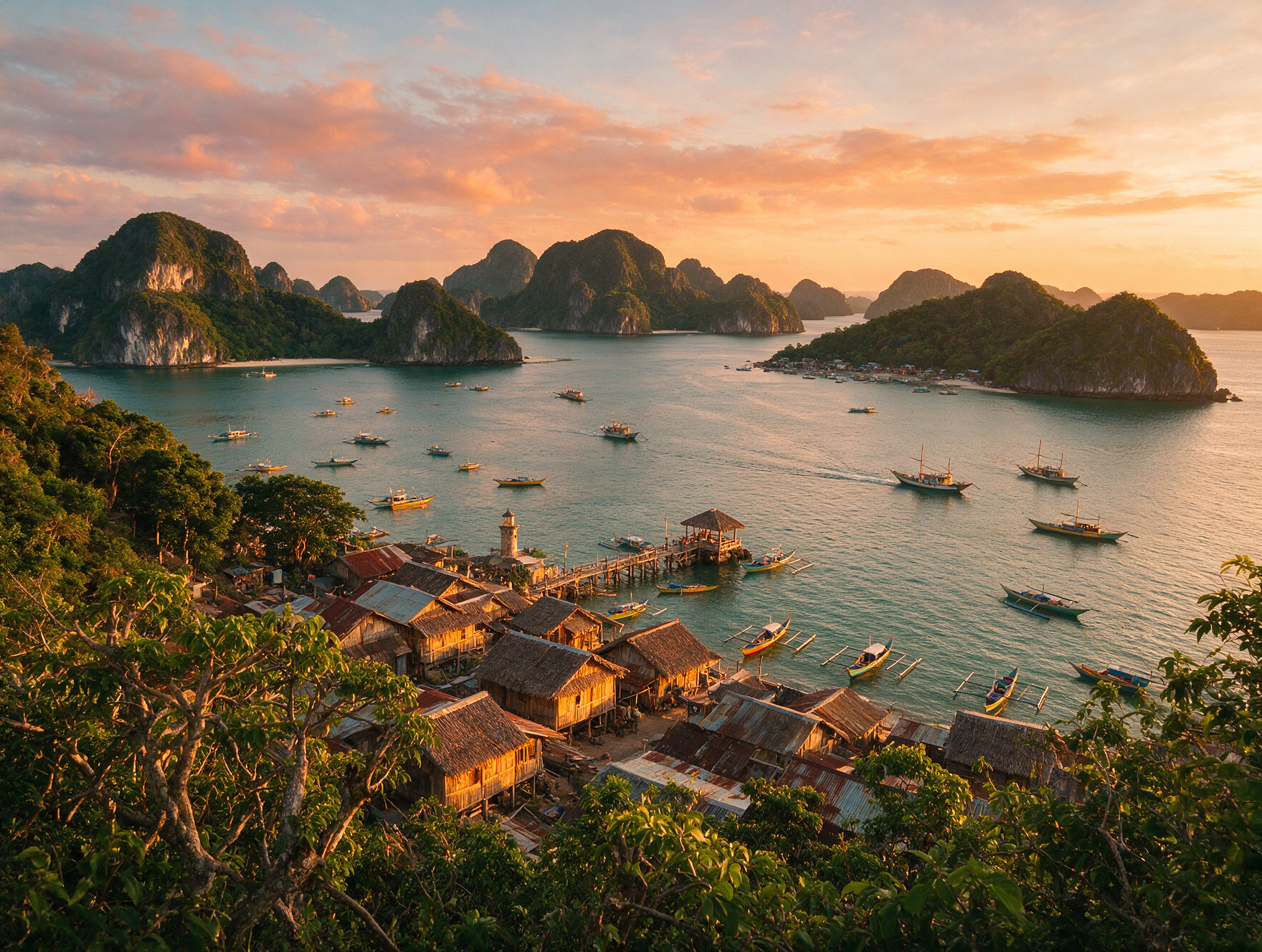
Mt. Tapyas is Coron’s signature evening activity, and for good reason: 742 concrete steps, roughly fifteen minutes of genuinely sweaty climbing, ending at a cross-topped viewpoint over the entire town, harbor, and surrounding islands. Time it to arrive twenty minutes before sunset, not right at it — the climb takes longer than people expect in the heat, and showing up breathless with the sun already down the horizon defeats the point. Bring a phone flashlight for the walk back down; the steps aren’t lit, and the stone gets slippery if there’s been any rain that day.
Honest caveat: it gets crowded in the final ten minutes before sunset, with everyone jockeying for the same handful of unobstructed photo spots. Claim your spot a bit early and you’ll have room to actually enjoy it rather than negotiate for a sightline.
Maquinit Hot Springs After Dark
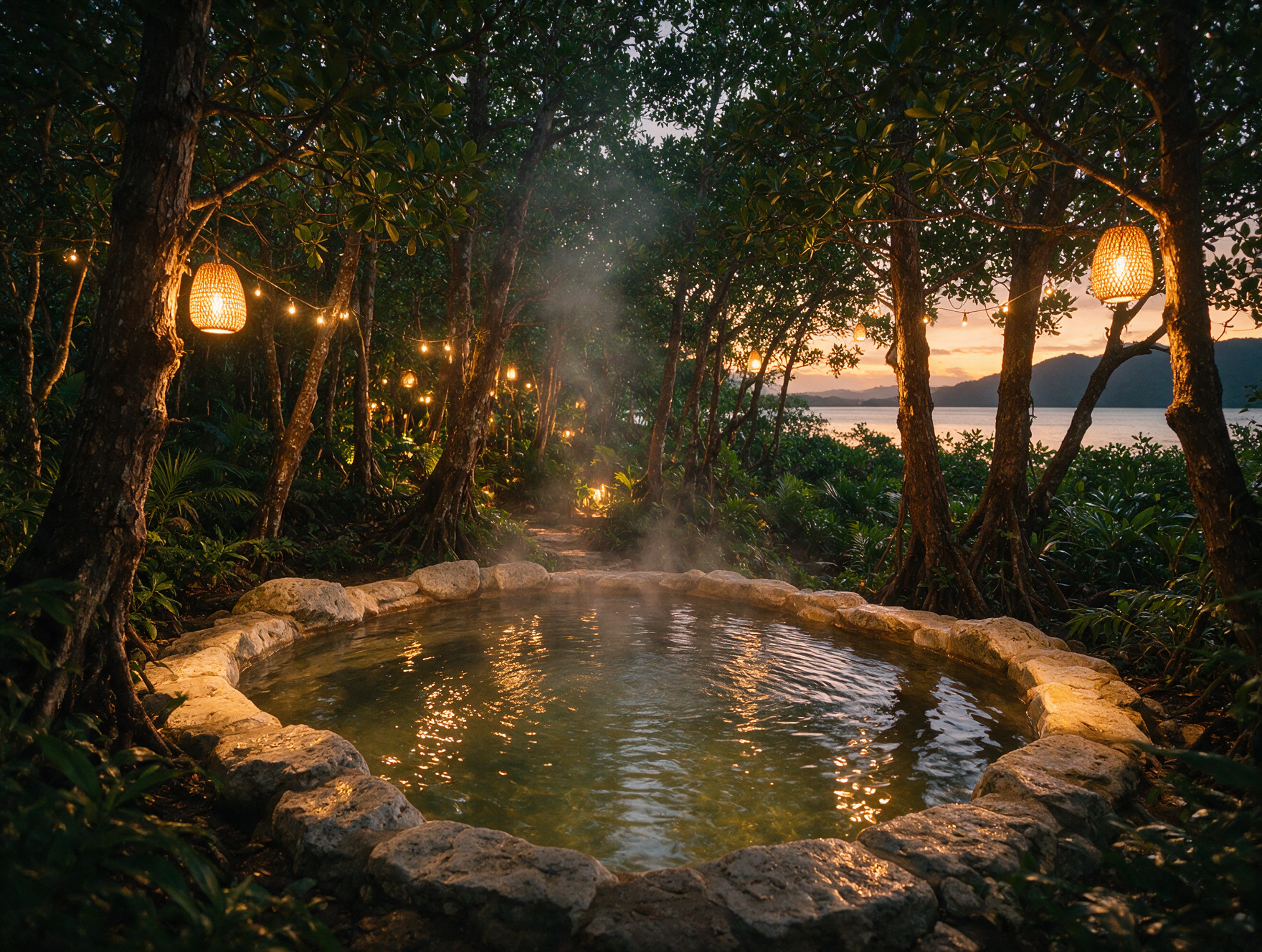
Maquinit, one of the few saltwater hot springs in the Philippines, stays open until 10pm and is noticeably better as an evening activity than a daytime one — the water sits around a genuinely warm 37-40°C, which feels wrong under a tropical midday sun and exactly right once the evening air cools down. It’s about a 20-minute, 300-peso roundtrip tricycle ride from town, with a modest entrance fee. Go after Mt. Tapyas, not before — your legs will thank you, and soaking tired muscles after the climb is a better sequence than the reverse.
The Harbor Promenade and Dinner on the Water
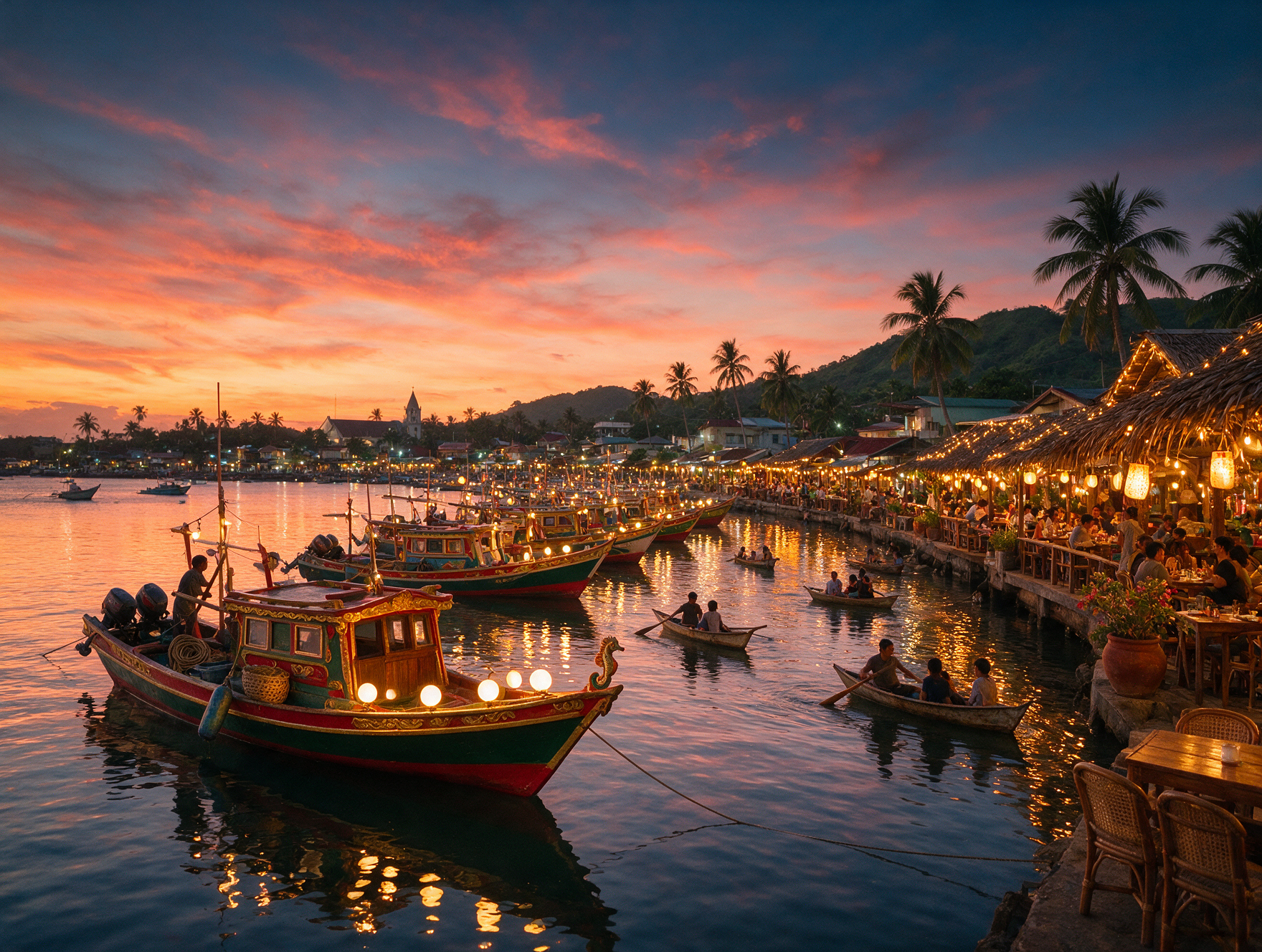
Coron town’s harbor front has quietly built up a decent run of restaurants over the last several years, several with seating right over the water. Fresh seafood is the obvious move here — much of it bought that same afternoon off the boats — grilled, simply seasoned, and served with garlic rice. Go for a table with a water view rather than the first open seat; the harbor at dusk, boats bobbing and lights starting to come on across the bay, is most of the reason to eat here rather than somewhere inland.
A fun fact that makes the harbor view land differently: many of the wrecks you likely dove that morning sit just offshore from this same stretch of water, sunk during a single September 1944 American air raid that caught a Japanese supply fleet at anchor. You’re eating dinner looking out at the same bay where that happened eight decades ago, which is a strange thing to sit with over a plate of grilled squid.
A Rooftop Drink Over the Bay
A handful of hotels along the main strip have added rooftop bars in recent years, and they’re worth a drink even if you’re not staying there — the elevation gets you a version of the bay view without the 742-step climb, which matters on a day you’ve already logged a lot of swimming and walking. It’s a quieter, more low-key evening option than Mt. Tapyas, better suited to a slow drink and conversation than a photo op.
Coron doesn’t have anything resembling Boracay’s bar scene, and that’s generally treated as a feature rather than a gap by the people who come here. If you want genuine nightlife, this isn’t the island for it; if you want a calm drink with a view before an early dive-boat departure the next morning, it’s close to ideal.
The Night Market, If It’s Running
Coron’s evening market setup varies by season and foot traffic, but when it’s running, it’s a solid, inexpensive way to sample a wider range of Filipino street food than any single restaurant offers — grilled skewers, fresh fruit, halo-halo, and the occasional stall doing a specifically Palaweño dish worth asking about. Ask your guesthouse whether it’s currently operating before planning an evening around it, since it isn’t a fixed nightly institution the way Mt. Tapyas or Maquinit are.
Where to Stay for Easy Evening Access
Coron town itself, rather than one of the resort islands further out, is the right base if your evenings matter as much as your dive days — it puts Mt. Tapyas, the harbor restaurants, and the tricycle ride to Maquinit all within easy reach. Two Seasons Coron Island Resort and Sangat Island Dive Resort are gorgeous if you want a private-island feel for the daytime diving, but both add a boat transfer to every single evening plan on this list, which defeats a lot of the point. A mid-range hotel directly in town — there are several solid options along the main strip — trades a bit of seclusion for genuinely easier evenings.
What to Bring for the Evening
Pack light for the Mt. Tapyas climb: a small bag with water, your phone, and a light jacket is plenty, since you don’t want extra weight on 742 steps in humid air. For Maquinit, bring a change of clothes — you’ll want to swap out of a damp swimsuit before the tricycle ride back, and the springs’ changing facilities are basic. A reusable water bottle is worth the small effort; Coron town has started pushing back against single-use plastic at several restaurants and shops, and refill stations are easy to find along the main strip.
How the Evenings Fit Around the Days
Most Coron itineraries front-load the big-ticket island-hopping — Kayangan Lake, Twin Lagoon, the wreck dives — into the morning and early afternoon, since boat traffic and glare both get worse later in the day. That leaves a genuinely free window from late afternoon onward, which is exactly why this town’s evening scene has developed the way it has. Treat the evening activities above as a rotation rather than a checklist to clear in one night: Tapyas one evening, Maquinit the next, a slow harbor dinner on a day you’d rather not do anything physical at all.
A Mistake to Avoid
Don’t schedule your Mt. Tapyas climb on the same evening as a long day of wreck diving or a full Kayangan Lake and Twin Lagoon island-hopping trip — both are physically tiring in ways that compound with a steep climb in humid heat. If your day was diving-heavy, swap to Maquinit or the harbor dinner instead and save Tapyas for an evening after a lighter day.
Practical Notes for the Evening
Tricycles are the standard way to move around Coron town after dark and are cheap and plentiful; agree the fare before getting in, as meters aren’t standard here. Cash is still the norm at smaller restaurants and the night market, though the better harbor-front restaurants and hotel bars increasingly take cards. Mosquito repellent is worth having for the Mt. Tapyas climb and especially for Maquinit, which sits near mangroves.
Best Time to Visit
Coron’s dry season, November through May, gives the most reliable sunsets and the calmest evening weather for all of the above; December through February is the most comfortable temperature-wise. The June-to-October wet season brings a real risk of a washed-out Mt. Tapyas evening and choppier conditions for the day’s island-hopping that usually precedes it.
Getting to Coron From India
There’s no direct flight from India to Coron. Connect through Manila (via Singapore, Hong Kong, or a Gulf hub from most Indian cities), then take a domestic flight into Busuanga (Francisco B. Reyes Airport), which serves Coron town via a roughly 45-minute van transfer. Build a buffer day into your itinerary for this leg — Busuanga’s flight schedule has fewer daily options than Manila’s main domestic routes, and weather delays aren’t rare in the wetter months.
FAQs
Do I need a visa to visit Coron as an Indian citizen?
Indian passport holders can currently enter the Philippines visa-free for up to 14 days for tourism, subject to conditions including a confirmed return ticket, proof of accommodation, and sufficient funds, plus the free eTravel registration at etravel.gov.ph before arrival. Confirm current rules with the Philippine Embassy in New Delhi before booking.
Is the Mt. Tapyas climb difficult?
It’s steep and will leave most people winded, but it doesn’t require any technical skill — just reasonable fitness and good shoes. Allow 15-20 minutes up at a comfortable pace, more if you stop to catch your breath.
Is Coron safe to walk around at night?
Yes, the main town area is generally safe and well-trafficked in the evening. Normal precautions apply, and a tricycle is the easier option over walking once you’re heading toward Maquinit or anywhere outside the compact town center.
How many evenings should I budget for Coron?
Three nights gives you room for one Mt. Tapyas sunset, one Maquinit evening, and one relaxed harbor dinner without rushing any of them, alongside the daytime wreck-diving and lagoon activities most people come for.
Is Maquinit Hot Springs worth it if I’m not big on hot springs generally?
Probably still yes — it’s mild rather than scalding, sits in a genuinely scenic mangrove setting, and works as much as a relaxed evening hangout as a “hot spring experience” in the spa sense.
Can I do Mt. Tapyas and Maquinit on the same evening?
Technically yes, but it’s a lot after a full diving or island-hopping day — most visitors who try both in one evening end up rushing the sunset to make the hot springs’ closing time. Spreading them across two evenings is the more relaxed version.
Are there ATMs in Coron town for evening cash needs?
A handful of ATMs exist along the main strip, but they’re known to run out of cash or go offline occasionally — withdraw what you need for the next day or two in advance rather than counting on one being available at 8pm.
Coron’s days belong to the wrecks and lagoons, but the evenings are worth their own plan. If you’re building a Palawan itinerary that gives Coron’s nights their due alongside the diving, our Philippines trip planning can map the pacing properly — get in touch and we’ll work out how many days each side of Coron actually needs.