Most people arrive in Davao by accident, on the way to climbing Mount Apo or heading further into Mindanao, and leave surprised they didn’t give it more time. Davao doesn’t have Boracay’s beaches or Palawan’s lagoons to sell itself on. What it has is durian carts on every other corner, the Philippine Eagle’s actual home, and a quiet, organized, genuinely livable feel that locals from Manila half-jokingly envy. Here’s one full day that gives the city a fair shot, hour by hour.
A practical note up front: Davao is the gateway to Mindanao, which occasionally gets painted with a broader security brush than the city itself deserves. Davao City has consistently ranked as one of the safest cities in the Philippines, with a long-running local ordinance culture (a citywide smoking ban, a liquor curfew) that makes it feel notably calmer after dark than Manila or Cebu.
Table of Contents
- 7:00 AM — Durian for Breakfast, Whether You’re Ready or Not
- 9:00 AM — The Philippine Eagle Center
- 11:30 AM — Eden Nature Park, Up in the Hills
- 1:30 PM — Lunch and the Durian Question, Round Two
- 3:00 PM — People’s Park and the City Center
- 5:30 PM — Jack’s Ridge for the View
- Where to Stay
- 7:30 PM — Penong’s and Dinner by the Grill
- If You Have More Than a Day: Mount Apo
- A Mistake to Avoid
- Getting Around and Practical Notes
- Getting to Davao From India
- FAQs
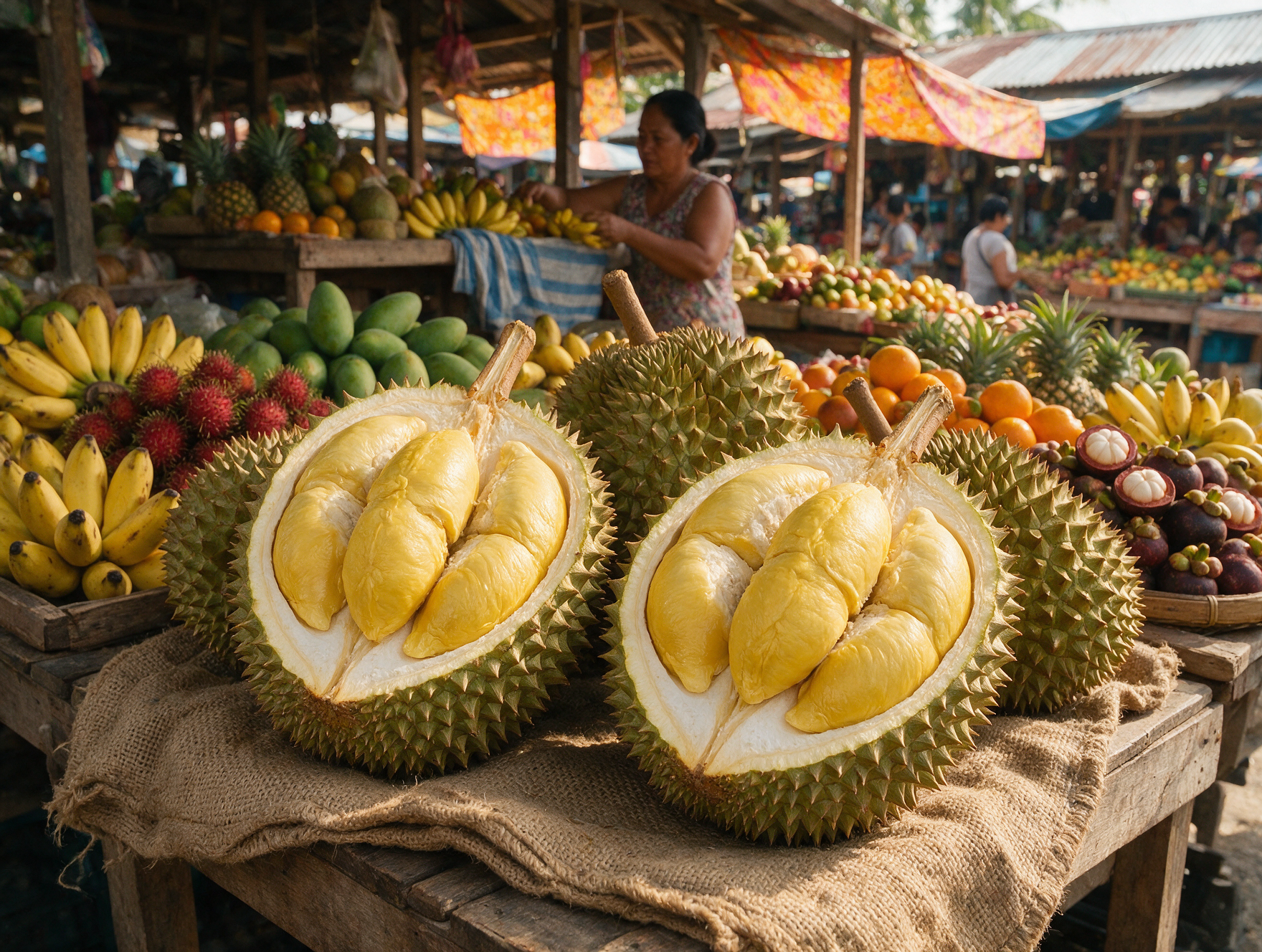
7:00 AM — Durian for Breakfast, Whether You’re Ready or Not
Start at Bankerohan Public Market or one of the durian stalls near Magallanes, where vendors crack open the spiky shells on request and will talk you through the varieties — Puyat is the famous one, firmer and less bitter than most, but ask what’s actually in season, since durian quality swings hard by month. If the smell gets to you (it gets to almost everyone the first time), pair it with a glass of fresh pomelo or mangosteen juice from the next stall over, both of which Davao also grows well. This is not a gentle introduction to the city, and that’s the point — you either get it by lunchtime or you don’t, but you tried it the way locals actually eat it, not as a tourist dare.
9:00 AM — The Philippine Eagle Center
A 30-40 minute drive out to Malagos brings you to the Philippine Eagle Center, home to the national bird and one of the largest raptors on Earth, critically endangered with maybe a few hundred breeding pairs left in the wild. The center runs a genuine conservation and captive-breeding program, not just a viewing deck, and the walk through the forested enclosures doubles as a decent introduction to Mindanao’s rainforest canopy. Go early — the birds are more active and the heat hasn’t built up yet under the tree cover.
Fun fact: the Philippine Eagle is sometimes called the “monkey-eating eagle,” a name that’s both inaccurate (it eats a wider diet, including flying lemurs and snakes) and a holdover from early 20th-century reports that overstated the monkey part. The Center itself prefers “Philippine Eagle” for exactly that reason.
Photography tip: the enclosures are netted for the birds’ protection, which can frustrate a clean shot. Shoot through the larger gaps in the mesh rather than trying to get the lens flush against it, and go for late-morning light before the midday sun flattens everything out. A couple of the resident eagles are famously more camera-comfortable than others and tend to perch closer to the viewing paths — ask the on-duty staff which ones are out that day.
11:30 AM — Eden Nature Park, Up in the Hills
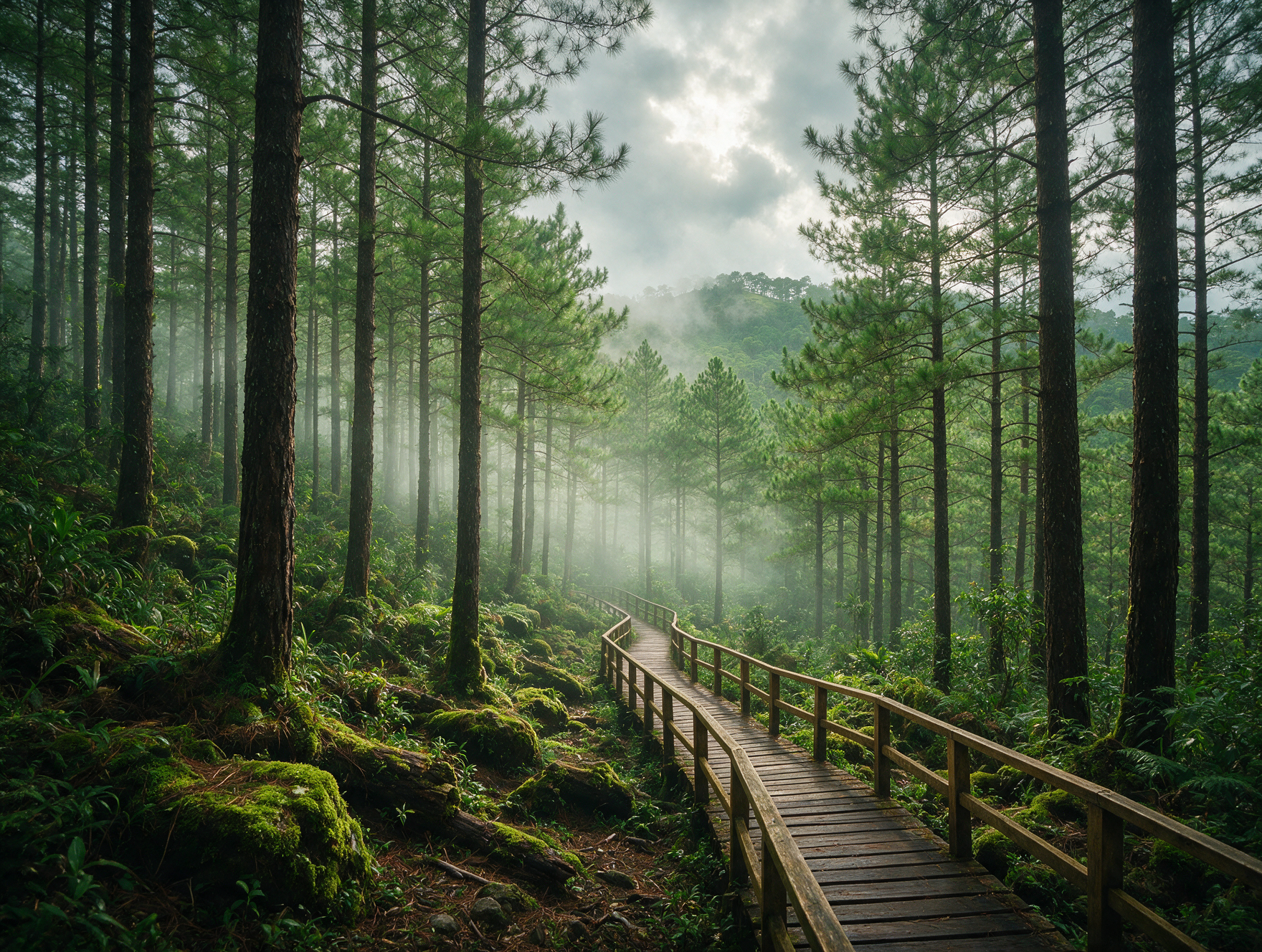
Eden Nature Park, up in the cooler hill air above the city, is part adventure park and part garden — a zipline and “skyrider” cable ride if you want the adrenaline angle, or just a slow walk through pine-covered grounds if you’d rather not. The buffet lunch here is solid and the salads, oddly, are a genuine highlight (the sun-dried tomato dressing gets singled out by regulars), which isn’t something you say about many buffet operations. The temperature drop from the city below is real enough that a light layer is worth packing even in a tropical destination.
1:30 PM — Lunch and the Durian Question, Round Two
If Eden’s buffet didn’t fill the lunch slot, Bluegre Café is a solid stop for Davao-grown coffee and a quieter sit-down meal back in the city — Davao’s coffee-growing areas around Mount Apo’s slopes produce a genuinely good, underrated bean that doesn’t get exported much outside Mindanao. Pair it with Foping’s Halo-Halo in Matina if you want the classic Filipino shaved-ice dessert to cut through the morning’s durian.
3:00 PM — People’s Park and the City Center
People’s Park is Davao’s central green space — manicured, shaded, and dotted with sculptures and a small aviary, a decent place to slow the pace down after a morning of driving between sights. From there, a walk through Pryce Business Park at Bajada gives you a sense of how deliberately planned modern Davao’s commercial core is; the city’s reputation for cleanliness and order (a legacy of decades of strict local ordinances) is obvious here in a way it isn’t in most Philippine city centers.
Honest caveat: People’s Park itself is pleasant but not a “must-see” in the way Eden or the Eagle Center are — treat it as a decompression stop between bigger activities, not a destination you’d plan a trip around.
5:30 PM — Jack’s Ridge for the View
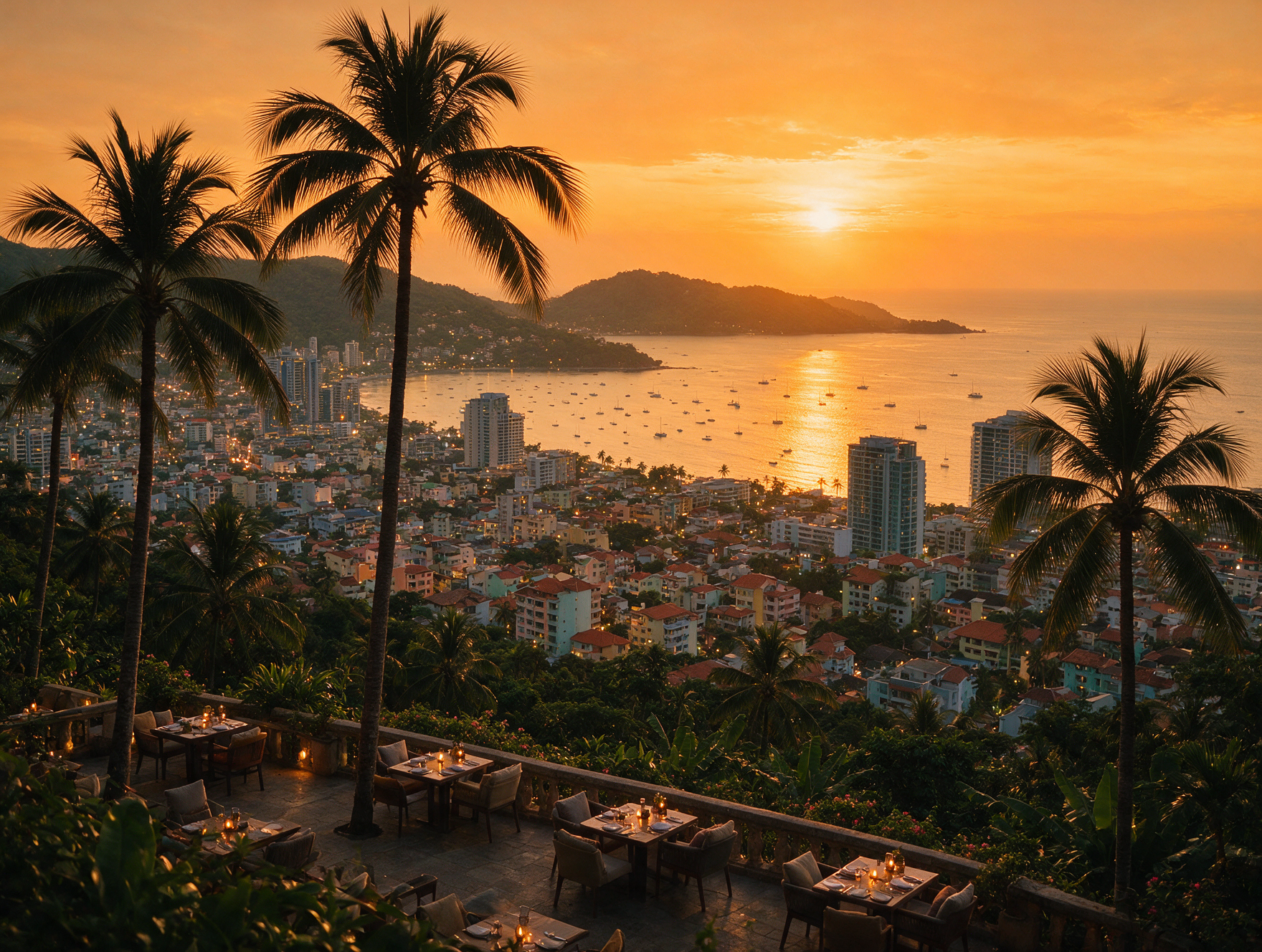
Jack’s Ridge is a cluster of restaurants built along a wartime Japanese military ridge overlooking the city, and it’s the spot locals actually take out-of-town guests for sunset. The view stretches over Davao’s sprawl toward the Gulf, and the restaurant row up top ranges from casual grill spots to something closer to date-night nice. Grab a table on the open-air side before 6pm if you want a seat with the view still lit.
7:30 PM — Penong’s and Dinner by the Grill
Close the day at Penong’s, Davao’s best-known barbecue institution — expect a genuine wait for a table on weekends, which tells you most of what you need to know about how locals rate it over flashier options. The chicken and pork barbecue skewers, grilled over charcoal right in front of you, are the move; come hungry and skip the smaller portions. It’s unpretentious, loud in a good way, and exactly the kind of place that doesn’t need a tourist-facing English menu to be excellent.
If You Have More Than a Day: Mount Apo
Mount Apo, the Philippines’ highest peak at roughly 2,954 meters, sits within reach of Davao and draws serious trekkers from across the country, but it is not a casual add-on to a city day — expect a multi-day guided climb with permits, a registered guide (mandatory), and genuine physical preparation. If climbing isn’t on your itinerary this trip, even viewing the mountain’s silhouette from Eden Nature Park or Jack’s Ridge on a clear day gives you a sense of why Davao treats it as the city’s defining landmark.
A Mistake to Avoid
Don’t try to cram Samal Island’s beaches into the same day as this itinerary — it’s a different pace entirely (a short ferry crossing, then beach-hopping and diving) and deserves its own half-day or full day rather than being bolted onto an already full city itinerary. Treat Davao City and Samal as two separate days if your schedule allows it.
Where to Stay
Marco Polo Davao and Seda Abreeza, both in the Poblacion/Abreeza area, are the two reliable upscale-to-upper-mid-range anchors, putting you close to the airport and a short Grab ride from everything on this itinerary. Seda in particular works well if you want a comfortable base without the full luxury price tag — expect roughly PHP 3,000-3,500 a night for a solid room, with the Marco Polo running higher for its rooftop pool and better breakfast spread. Both are a better fit for this itinerary than staying further out near Samal, since you’d be adding a ferry crossing to every single stop above.
Getting Around and Practical Notes
Grab works reliably in Davao City and is the easiest way to move between these stops without negotiating fares. Jeepneys and the newer modernized units cover the main routes for a fraction of the cost if you’re comfortable navigating them. The Philippine Peso is the currency; cards are accepted at malls and nicer restaurants, but markets and barbecue stalls are cash-only, so carry small bills. Davao’s famous smoking ban and firecracker/liquor ordinances are strictly enforced — don’t light up on the street assuming nobody will say anything; someone will.
Getting to Davao From India
There’s no direct flight from India to Davao. The practical route is a connection through Manila (via Singapore, Hong Kong, or a Gulf hub from most Indian cities), then a domestic leg on Philippine Airlines, Cebu Pacific, or AirAsia Philippines into Davao International Airport. If Philippine Airlines’ planned nonstop India-Manila service materializes as scheduled, it will shorten the first leg of this journey, though the Manila-Davao domestic hop stays the same either way.
FAQs
Is Davao City safe for tourists despite being in Mindanao?
Yes — Davao City itself has a long-standing reputation as one of the safest, best-governed cities in the Philippines, with strict local ordinances and a notably calm feel even at night. Broader travel advisories about parts of Mindanao generally don’t apply to the city and its immediate surroundings.
Do I need a visa to visit Davao as an Indian citizen?
Indian passport holders can currently enter the Philippines visa-free for up to 14 days for tourism, subject to conditions including a confirmed return ticket, proof of accommodation, and sufficient funds, plus the free eTravel registration at etravel.gov.ph before arrival. Confirm current rules with the Philippine Embassy in New Delhi before booking.
What’s the best time of year to visit Davao?
Davao sits mostly outside the typhoon belt that hits the rest of the Philippines, which makes it a relatively reliable year-round destination; the driest, most comfortable stretch still tends to run from roughly November through April.
Can I climb Mount Apo as a day trip from Davao?
No — a proper summit climb takes a minimum of two to three days with a mandatory registered guide and permits. It’s a serious trek, not a day hike, and needs to be planned as its own trip component well in advance.
Is durian really that intense?
Yes, honestly. The smell is the famous hurdle, often described as somewhere between custard and old socks — some people never get past it, others (plenty of Davaoeños included) build a genuine love for it. There’s no shame in trying a small piece and deciding it’s not for you.
How is Davao different from Cebu or Manila?
Davao is noticeably less dense and less chaotic than either — wider roads, stricter public-order rules, and a slower pace that locals from busier Philippine cities genuinely remark on. It trades some of Cebu’s old-world charm and Manila’s scale for a city that simply runs more smoothly day to day.
Can I combine Davao with Samal Island on the same trip?
Yes, and most visitors do — Samal is a short ferry ride from the city and makes a natural beach-and-diving add-on, but give it its own dedicated day rather than squeezing it into this city itinerary.
Davao rewards a slower, more deliberate day than most Philippine cities on the standard circuit. If you’re building a Mindanao stop into a bigger Philippines itinerary — alongside Cebu, Palawan, or the islands — get in touch and we’ll structure the days so Davao gets its proper due instead of getting rushed between flights.