Thailand Food Trail: What to Eat in Bangkok, Phuket, Krabi, Koh Samui, Koh Phi Phi & Pattaya
Thai food in India is a pale shadow of the real thing. The curry pastes, the fresh lemongrass, the fish sauce in quantities that would alarm a careful cook — these flavors become a reference point you didn’t know you needed. Once you’ve had actual pad thai from a wok on Yaowarat Road at midnight, the restaurant version back home stops making sense.
This guide runs through Thailand’s six key destinations — Bangkok, Phuket, Krabi, Koh Samui, Koh Phi Phi, and Pattaya — with what to eat, where to find it, and the late-night spots, coffee runs, and ice cream moments worth building time around.
Table of Contents
- Bangkok: Street Food Capital of Southeast Asia
- Phuket: Seafood, Dim Sum, and Chinese-Thai Heritage
- Krabi: Beach Cafés and Longtail Boat Lunches
- Koh Samui: Coconut Everything and Night Markets
- Koh Phi Phi: Casual Island Eats
- Pattaya: India-Friendly Flavors and Seafood Strips
- Essential Dishes You Need to Try
- Food Tips for Indian Travelers
- FAQs
Bangkok: Street Food Capital of Southeast Asia
Bangkok has more Michelin-starred restaurants than any other Southeast Asian city, and it also has more good 40-baht meals per square kilometer than almost anywhere on earth. You don’t have to choose between them — the real Bangkok food experience is both.
Yaowarat (Chinatown): Go for dinner, not lunch. The street stalls set up around 5 PM, and by 7 PM the lanes between Yaowarat Road and Charoen Krung are packed with vendors and the smoke from a hundred woks. Look for the roasted duck vendor with the queue snaking around the corner (every regular has their favourite but the one near Odeon Circle is reliably good), the fresh oyster omelette stalls (hoy tod — the crispy kind, not the soft), and the mango sticky rice carts with fresh-cut fruit.
Or Tor Kor Market: The upmarket local market near Chatuchak. Better quality produce and prepared food than the tourist-facing markets. The green curry paste sold in sealed packets here is as good as anything you’ll cook with at home. Open from early morning; the prepared food stalls wind down by early afternoon.
Sukhumvit Soi 38: This street food lane has been a Bangkok institution for decades, a bit more tourist-oriented than Chinatown but reliable and close to the hotel clusters. Good for pad thai, papaya salad, and late-night noodle soup.
Coffee culture: Bangkok has a serious specialty coffee scene, concentrated around the Ari neighbourhood and the Silom/Sathorn area. Cuppachino Bangkok in Ari, Roots Coffee at various branches, and Ceresia in the back lanes of Sukhumvit are all worth a detour. Cold brew with coconut milk is 80-120 baht and a recurring highlight for many India-based travelers who don’t expect this quality from Bangkok.
Ice cream: Thai rolled ice cream (i-tim pad) is a Bangkok invention — custard poured on a cold plate, worked with spatulas, and rolled into cylinders. It’s not just a tourist gimmick; the base flavors (taro, butterfly pea, mango) use local produce and the texture is genuinely different from scooped ice cream. Look for the stalls with the cold plates near MBK Center or Terminal 21 mall.
Must-try in Bangkok: Tom kha gai (coconut galangal chicken soup — milder than tom yum, deeply aromatic), khao man gai (Hainanese chicken rice — understated and excellent), massaman curry at any Thai restaurant that’s been open more than five years, and guay tiew (noodle soup) from a vendor who’s been running the same cart since the 1990s. You can spot them by the yellowed photos of the menu items and the regulars who eat there every day.
Phuket: Seafood, Dim Sum, and Chinese-Thai Heritage
Phuket’s food character comes from its Hokkien Chinese immigrant history. The Sino-Portuguese shophouses in Phuket Town still serve dim sum and Chinese pastries that have nothing to do with tourist Thailand — this is living heritage food. The dim sum at the old shophouses along Thalang Road is different from Bangkok’s; rice flour skins, filling ratios that lean toward the savoury, and fermented soybean accompaniments you won’t find elsewhere in Thailand.
Phuket’s Vegetarian Festival (October/November) transforms the island for nine days — the streets fill with yellow-flag vendors selling elaborate meatless dishes, and even non-vegetarians find this the best eating of the year in Phuket.
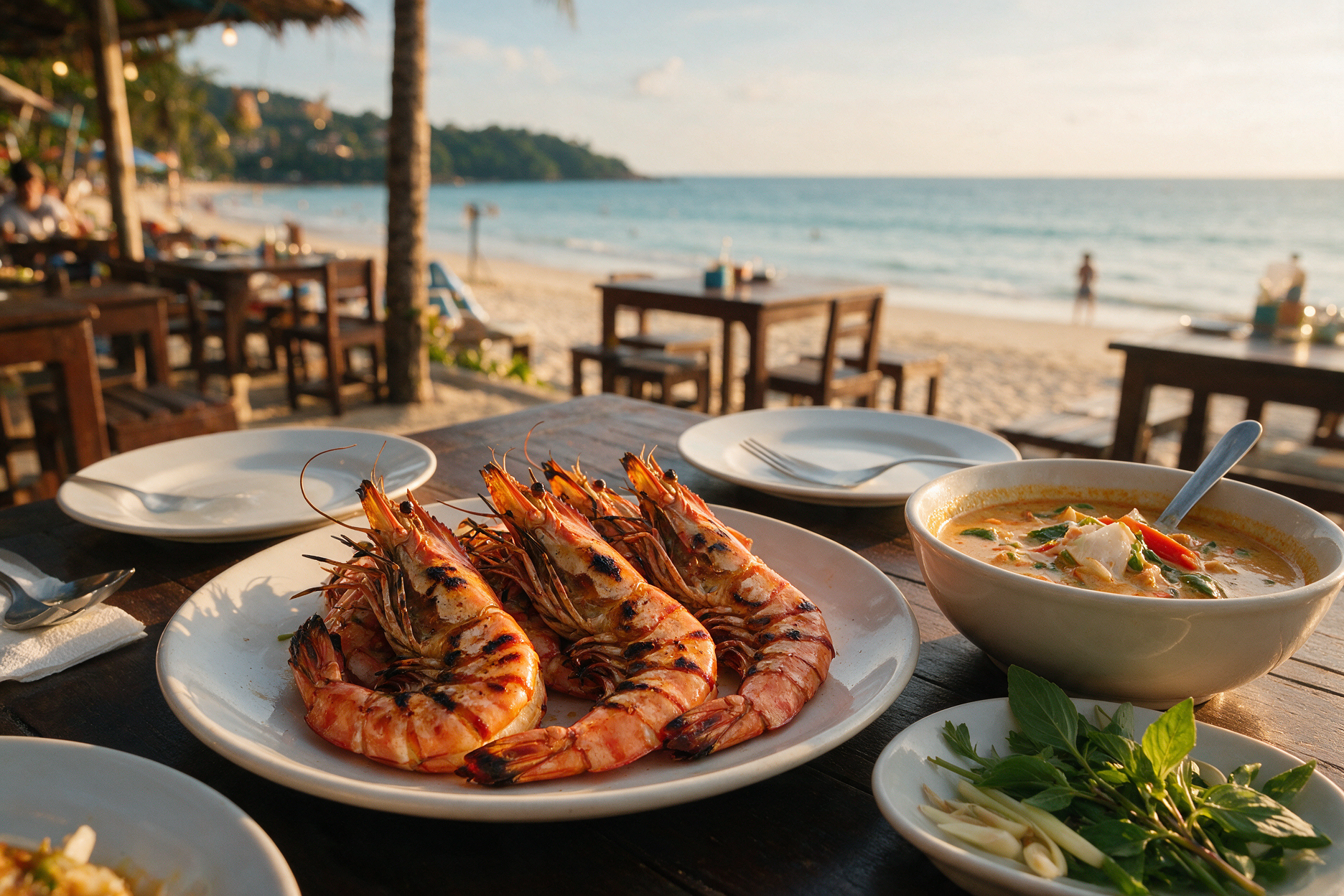
Seafood: Rawai Beach in south Phuket has a seafood market where fishing boats unload daily catch. You choose your fish or prawns from the stalls, take it to one of the adjacent restaurants, and they cook it to your specification. Tiger prawns grilled with salt and lime, barramundi steamed with ginger and chili, green lip mussels in a hot basil broth — the mark-up for the cooking is small and the freshness is non-negotiable. The best time to be here is 5-7 PM when the light is good and the crowd hasn’t hit yet.
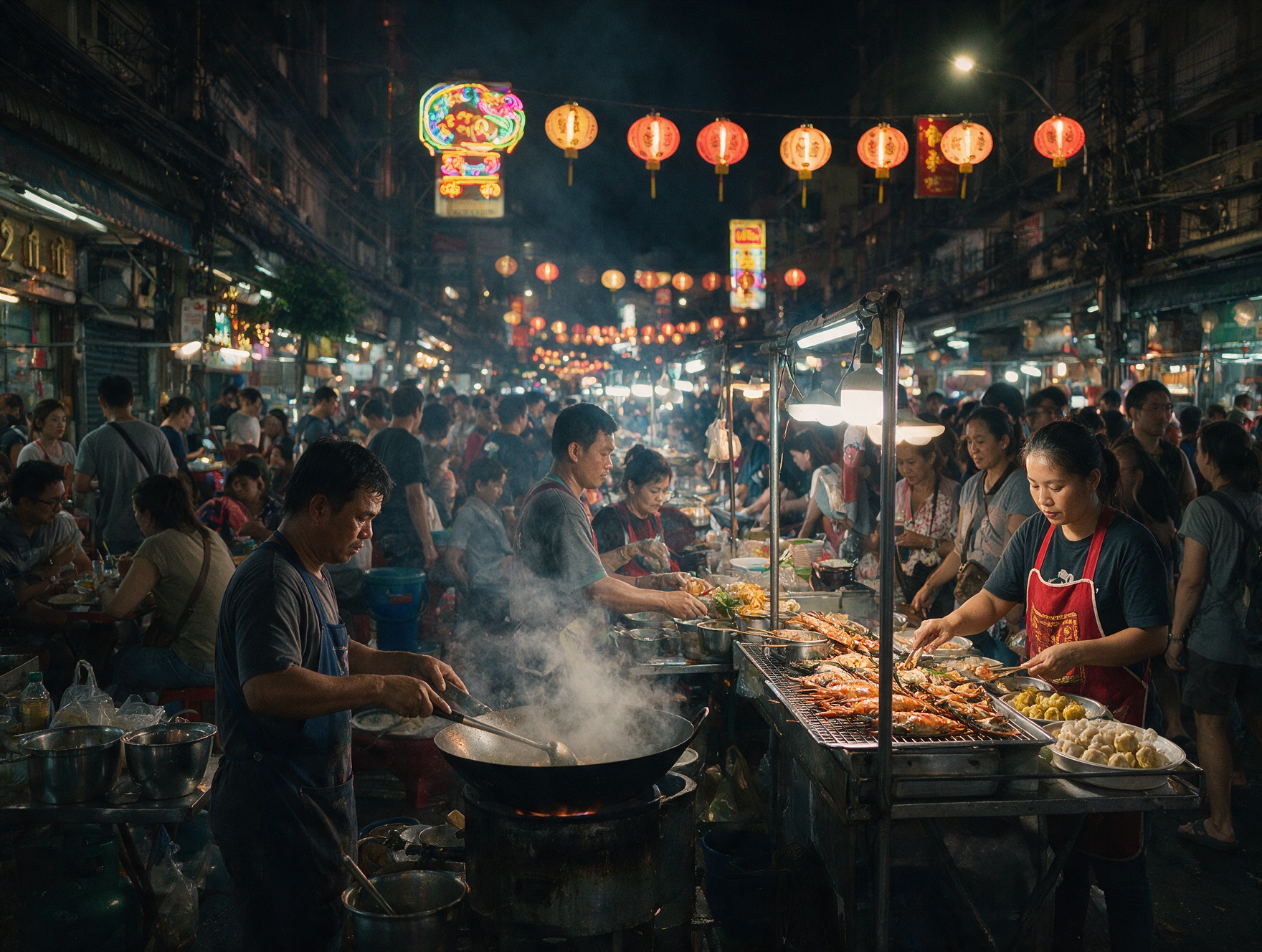
Late-night Phuket: The night market at Malin Plaza in Patong runs until midnight and has a good cross-section of Thai-style fast food. Not the most refined eating on the island but convenient if you’re in Patong late. Kata Rocks area has several rooftop restaurants worth a special dinner — the view and food justify the price point.
Krabi: Beach Cafés and Longtail Boat Lunches
Krabi eating is shaped by its geography: most of the good food exists near the beach, in the shade of palm trees, with your feet possibly still sandy. This is eating-as-experience in the most direct sense.
Ao Nang has several family-run Thai restaurants away from the main beach strip that serve the local dishes well and without the tourist-menu upcharge. Krabi Town, 20 minutes inland by songthaew, has a night market along the river that’s primarily local and runs four nights a week — better value and more variety than anything in Ao Nang.
On a day trip to Koh Poda or the Four Islands, the longtail boat operators usually pack a boxed lunch — grilled fish with rice, fresh coconut, sliced fruit. It’s not gourmet but eating on a boat in the middle of the Andaman Sea makes everything taste better.
Look for: gaeng lueang (yellow curry with fish), a southern Thai specialty; kanom jeen nam ya (rice noodles with fish curry sauce); and the very good pineapple fried rice served in hollowed-out pineapples. The pineapple version sounds like a tourist invention but in Krabi it’s done with local fresh pineapple and makes a real difference.
Koh Samui: Coconut Everything and Night Markets
Koh Samui produces the best coconuts in Thailand — locals will tell you this and they’re probably right. Coconut water fresh from the tree, coconut milk pressed on the spot for curry, coconut ice cream served in the shell. The coconut plantation in the middle of the island still processes and ships coconut products across Thailand, and you can visit and taste your way through the range.
Fisherman’s Village in Bophut is the most pleasant eating area on the island — a row of low wooden buildings along the beach with restaurants serving seafood caught in the Gulf of Thailand. The Friday night walking market here is particularly good, with dozens of food vendors setting up between 5 and 10 PM. Less crowded than the Chaweng night market, better quality.
Late-night eats on Koh Samui: Chaweng’s main strip runs food stalls and restaurants until 2 AM during high season. The rotating barbecue stalls — whole fish, corn, skewers — are your best bet after 11 PM when most sit-down restaurants start closing.
Koh Phi Phi: Casual Island Eats
Koh Phi Phi’s food scene is honestly less interesting than its scenery. This is a small island without much agricultural infrastructure, which means most ingredients are brought in by ferry and the prices reflect it. That said, some things are good here: the fresh-catch fish (because boats do still go out), the Thai coconut pancakes (roti with banana and condensed milk) from the vendors near the pier, and the fruit shakes blended to order at the small stalls on the Tonsai walking street.
The local Thai food at the handful of restaurants away from the main strip — particularly on the eastern side of Tonsai — is considerably better and cheaper than the places with the big English menus facing the beach. Look for the places where Thai workers eat. They’re usually 100-150 baht for a full meal versus 300+ on the waterfront.
Pattaya: India-Friendly Flavors and Seafood Strips
Pattaya has a large Indian community and an unusually high density of Indian restaurants, which makes it the most comfortable destination in Thailand for travelers who get homesick for familiar flavors. The stretch of restaurants around Soi 7 in North Pattaya and the area near Jomtien Beach has curry houses, dosa joints, and mithai shops that would not be out of place in South Delhi or Bandra.
This isn’t meant as a compliment in isolation — Pattaya also has good Thai food, particularly along the Naklua seafood strip where the restaurants catering to Thais serve excellent crab, clams, and squid at prices much lower than the tourist-facing places on Pattaya Beach Road.
Must-try in Pattaya: Pla pao (salt-crusted grilled fish) at any restaurant near Central Marina, the hoy malaeng phu (green lip mussels) sold on the beach around 6 PM, and the Thai iced tea from the cart vendors along Beach Road — the orange-red color comes from a specific tea blend and condensed milk combination that nobody in India has quite replicated.
Essential Dishes You Need to Try
Across all six destinations, these are the dishes that define Thailand’s food identity:
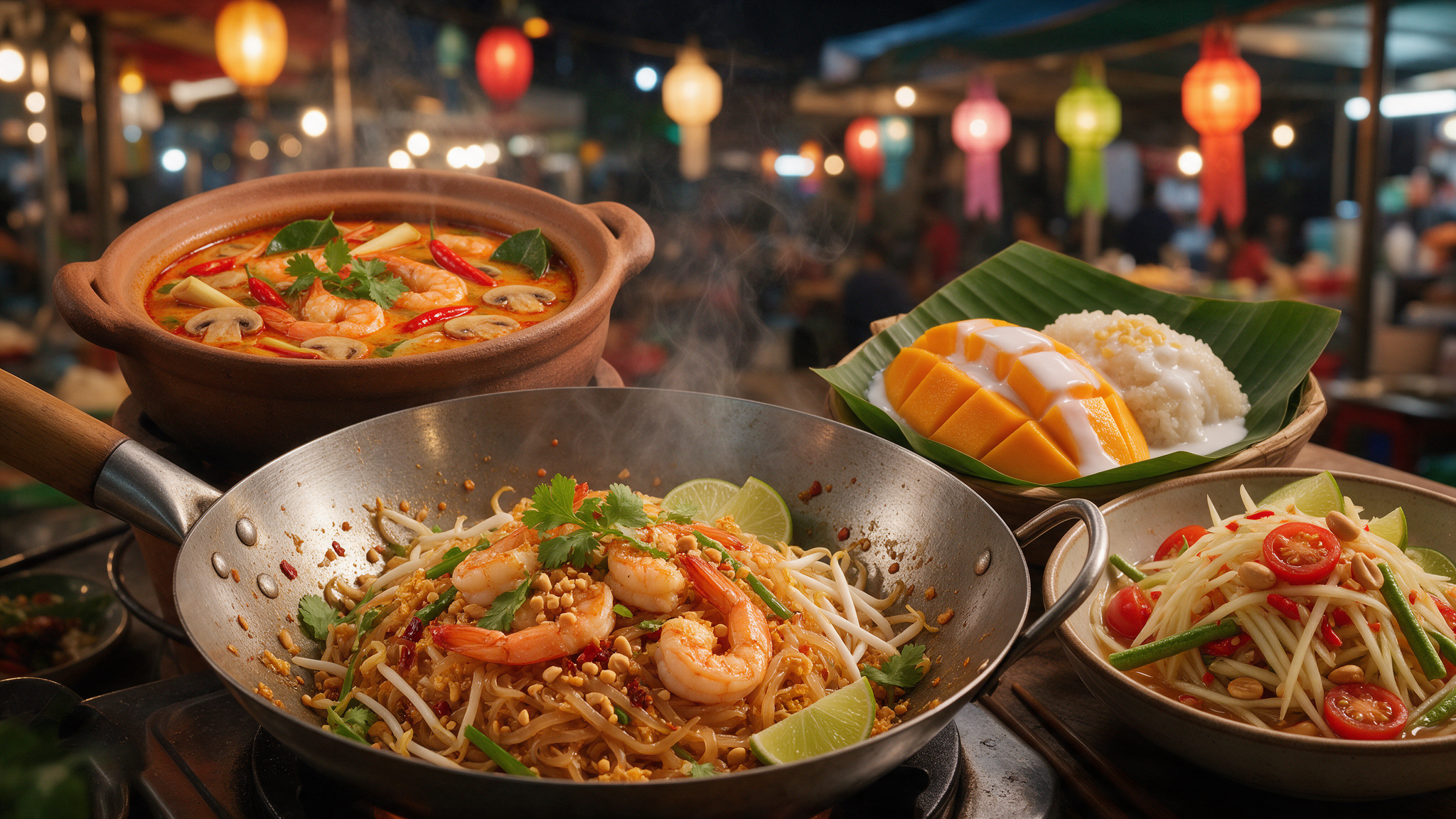
- Tom yum goong: Prawn hot and sour soup with lemongrass, kaffir lime leaves, galangal. The definitive Thai flavour.
- Pad thai: Stir-fried rice noodles with egg, bean sprouts, peanuts, and your choice of protein. Best from a street wok, not a hotel restaurant.
- Som tam: Green papaya salad — sour, spicy, crunchy. Common across all regions but the southern version adds dried shrimp that deepens the umami.
- Khao pad sapparod: Pineapple fried rice — standard tourist menu item that is actually good when made with fresh local pineapple.
- Mango sticky rice: Fresh mango with glutinous rice and sweet coconut milk. Seasonal: best March to June when mangoes peak.
- Guay tiew: Rice noodle soup — the quiet backbone of Thai daily eating. Different everywhere you try it.
- Khao man gai: Poached chicken with rice cooked in chicken broth, served with a thick ginger-soy sauce. Simple, excellent.
Food Tips for Indian Travelers
Fish sauce is in almost everything in Thai cooking. If you’re vegetarian, ask specifically about this (see the vegetarian guide for Thai phrases and restaurant recommendations). Most Indian vegetarians find Thai food more challenging than Vietnamese or Japanese cuisine for this reason.
Spice level: Thai food can be genuinely very spicy. “Mai phet” (not spicy) at a street stall gets you a dish that most Indians would still consider medium-spicy. “Phet nit noi” (a little spicy) is a better calibration if you want actual flavor without pain. Ask your hotel staff how to say it with the right tone — Thai is a tonal language and the same syllables mean different things at different pitches.
Water: Tap water is not safe to drink in Thailand. Bottled water is sold everywhere at 7-12 baht for a 600ml bottle. All restaurants serve filtered water in carafes — this is safe but filtered, not boiled. For stomach-sensitive travelers, stick to sealed bottles initially.
Ice: The ice at established restaurants and all 7-Eleven cups is factory-made from purified water. Street stall ice that comes in a plastic bag (sometimes rounded cylinders with a hole through the middle) is also purified — this is different from countries where street stall ice is from tap water.
FAQs
Is Thai food very spicy for Indian palates?
Thai food can be spicier than many Indian dishes. The “not spicy” version at street stalls is usually still mildly hot. Use “mai phet” to ask for no spice, or “phet nit noi” for a little spice.
Where is the best street food in Bangkok?
Yaowarat (Chinatown) for the widest variety and authentic experience. Sukhumvit Soi 38 for convenience if you’re staying in that area. Or Tor Kor Market for quality prepared Thai food.
Can Indian travelers find familiar food in Thailand?
Pattaya has the highest concentration of Indian restaurants in Thailand. Phuket and Bangkok also have multiple Indian restaurants. Most areas have at least one option.
Is mango sticky rice available year-round?
It’s available year-round but the quality peaks March-June when Thai mangoes are in season. Off-season versions use either stored fruit or imported mangoes and aren’t nearly as good.
What’s the best food market in Thailand?
For tourists with limited time: Yaowarat in Bangkok. For a local experience: Warorot Market in Chiang Mai (outside this itinerary) or Krabi Town night market.
Eat Your Way Through Thailand
The Thailand food experience is genuinely hard to replicate at home, which is part of what makes the trip worth making. Budget extra time at meals — not because service is slow, but because the food invites lingering in a way that convenience eating doesn’t.
View Get Tripped’s Thailand tour packages to see how we build food experiences into our curated itineraries — the best Bangkok night market tour, the Phuket seafood dinner, the morning market visit in Krabi. Food is part of the trip, not an afterthought.