Vegetarian & Vegan Food Guide to Thailand for Indian Travelers: Bangkok, Phuket, Krabi & More
Thailand’s food reputation is built on fish sauce and shrimp paste, which creates a real challenge for vegetarian Indian travelers. The good news is that the challenge is manageable, the options have improved dramatically over the past five years, and Thailand’s Buddhist tradition has created a parallel vegetarian food culture — the Jay (เจ) system — that runs through markets and street stalls across the country.
This guide covers what vegetarian and vegan Indian travelers can eat in Bangkok, Phuket, Krabi, Koh Samui, Koh Phi Phi, and Pattaya, with specific restaurant recommendations and practical Thai phrases to navigate kitchens that default to meat-based seasoning.
Table of Contents
- Understanding Thai Vegetarian Options
- Useful Thai Phrases for Vegetarian Travelers
- Bangkok
- Phuket
- Krabi
- Koh Samui
- Koh Phi Phi
- Pattaya
- Dishes That Are Naturally Vegetarian
- Tips for Jain Travelers
- FAQs
Understanding Thai Vegetarian Options
Thai cuisine uses fish sauce (nam pla) and oyster sauce as foundational flavoring agents in the same way Indian cooking uses salt. They’re in curries, stir-fries, pad thai, and many soups, often without being mentioned on menus. This is the primary challenge.
The Jay food system is Thailand’s answer: a strict Buddhist-inspired vegetarian tradition that excludes meat, seafood, eggs, and the five pungent spices (garlic, onion, shallots, leeks, and chives). Jay restaurants display a yellow flag with red characters. During the annual Vegetarian Festival (October/November, based on the Chinese lunar calendar), these yellow flags multiply dramatically across Thai towns, particularly in Phuket which has the country’s largest celebration.
For most Indian vegetarians (who eat garlic and onion), Jay food is the strictest option — you can eat there but some dishes may taste under-flavored to your palate. A more practical approach is to find restaurants that offer non-Jay vegetarian options with full seasoning, substituting fish sauce with soy sauce and mushroom sauce on request.
Useful Thai Phrases for Vegetarian Travelers
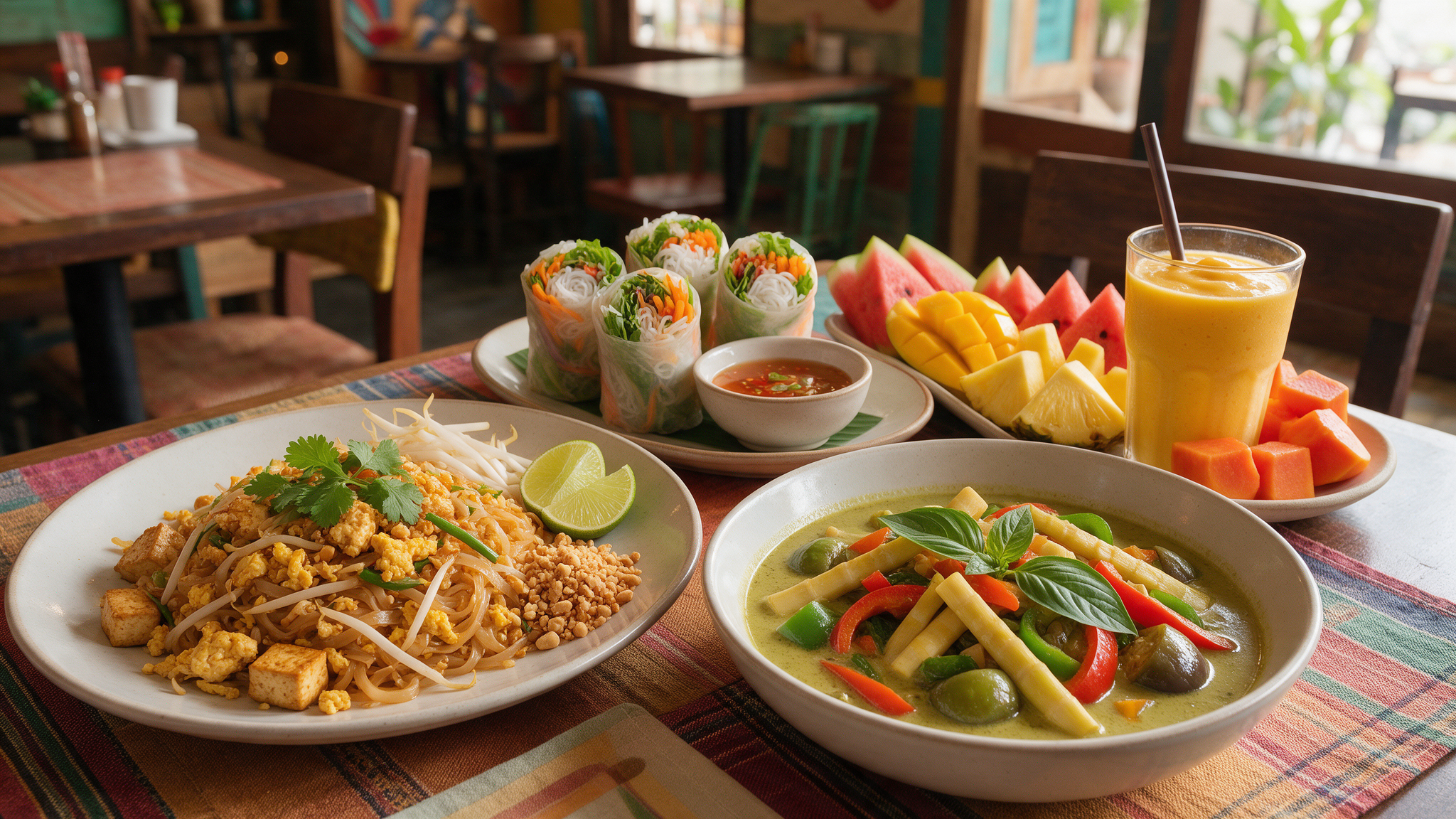
- “Gin jay” (กินเจ) — I eat Jay (strict Buddhist vegetarian, no eggs)
- “Mai gin neua sat” (ไม่กินเนื้อสัตว์) — I don’t eat meat
- “Mai gin pla, mai gin kung” — I don’t eat fish or prawns
- “Mai sai nam pla” (ไม่ใส่น้ำปลา) — No fish sauce
- “Chai tofu thaen” — Use tofu instead [of meat]
- “Gin khai dai mai?” — Can I eat eggs? (useful to confirm what “vegetarian” means to them)
Show the Thai text to kitchen staff rather than relying on pronunciation — Thai is tonal and mispronouncing a word changes its meaning entirely.
Bangkok
Bangkok has the most developed vegetarian and vegan restaurant scene in Thailand, concentrated in the Silom, Sukhumvit, and Ari neighbourhoods.
Rasayana Retreat (Sukhumvit Soi 39): Raw vegan café that pioneered this style in Bangkok. Cold-pressed juices, raw pad thai, cashew cheese. Expensive by Thai standards (350-600 baht per dish) but the quality is consistent. A good option for travelers with strict requirements.
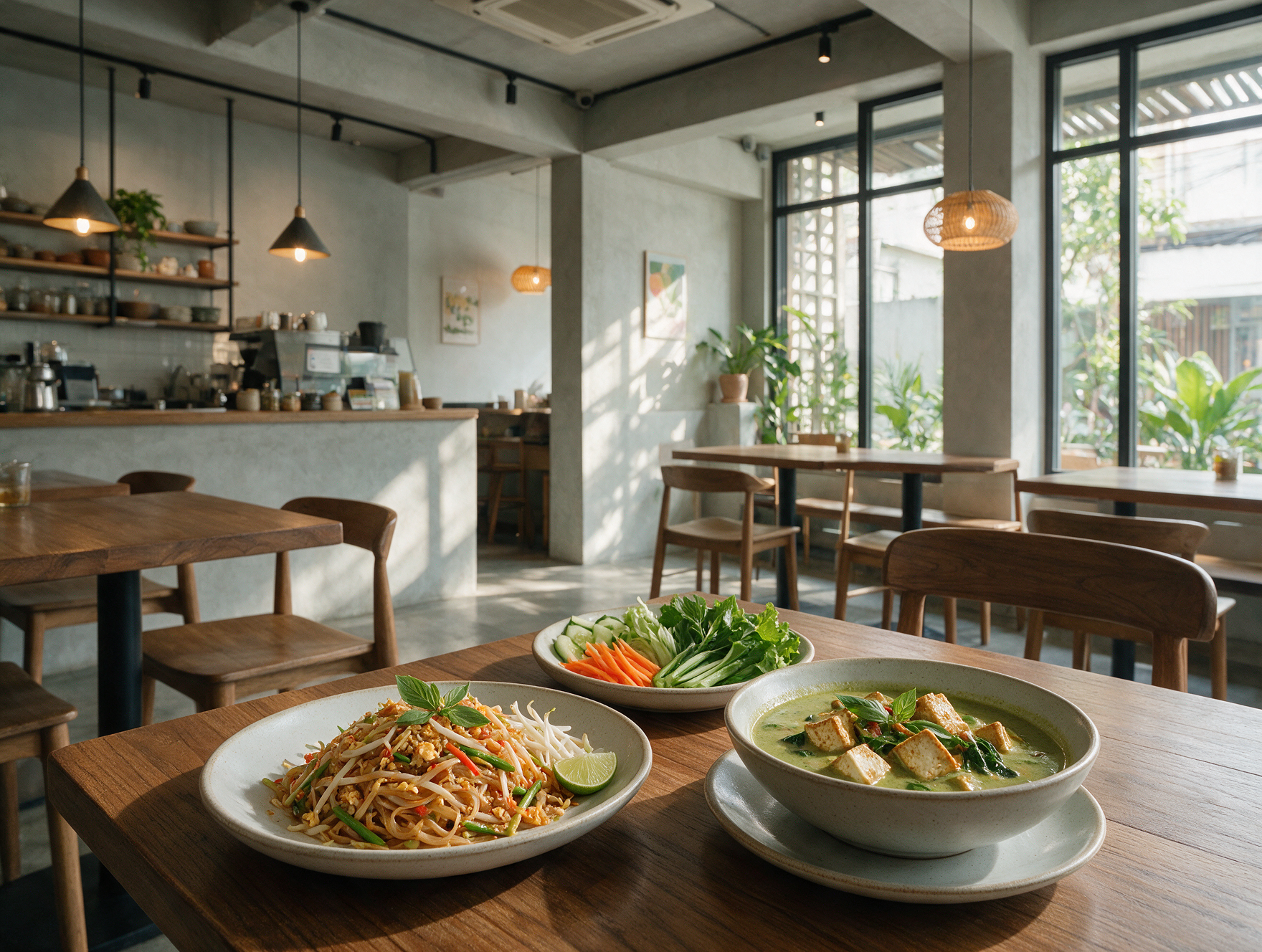
Broccoli Revolution (multiple locations, Sukhumvit and Silom): More casual than Rasayana, with plant-based burgers, bowls, and Thai dishes made without animal products. The green curry with tofu is excellent — they use coconut aminos instead of fish sauce and the depth is surprisingly good.
May Veggie Home (Sukhumvit Soi 55): A long-running Thai vegetarian restaurant that’s been reliable for over a decade. Stir-fried morning glory, tofu basil, pad see ew made with egg-free options on request. Around 80-150 baht per dish.
Jay food at Yaowarat: During evenings in Chinatown, several vendors display yellow Jay flags. These stalls serve mock-meat dishes (made from wheat gluten) in various preparations. The mushroom version of pad thai is better than it has any right to be.
Phuket
Phuket’s Vegetarian Festival in October/November turns the entire island into a vegetarian’s paradise, with hundreds of Jay stalls and restaurants operating for nine days. Outside festival season, Phuket Town is better for vegetarian eating than Patong.
Tunk-Ka Café (Phuket Town, Rang Hill): A hillside restaurant with city views and a menu that prominently features vegetarian options made with local produce. The red curry with jackfruit is the standout. Pricier than street stalls but the setting is exceptional.
Ka-Jok-See (Phuket Town): A Thai-fusion restaurant in a heritage Sino-Portuguese shophouse. Not strictly vegetarian, but they accommodate requests well and the tofu preparations here are some of the best in Phuket. Book ahead — it fills up on weekends.
Street option: The vegetarian stall at Malin Plaza market in Patong sets up from 5 PM. Jay signage (yellow flag). Good for budget vegetarian eating if you’re based in Patong.
Krabi
Ao Nang Vegan (Ao Nang): A small café near the beachfront that does solid plant-based versions of Thai standards — green curry with tofu and Thai eggplant, spring rolls without egg wrapper. Limited menu, but everything on it is genuinely vegan. Around 120-200 baht per dish.
Krabi Town Night Market: The river market in Krabi Town (accessible by songthaew from Ao Nang) has two or three Jay vendors consistently present. The stir-fried vegetables with holy basil are particularly good. Lower prices than anything at the tourist beaches.
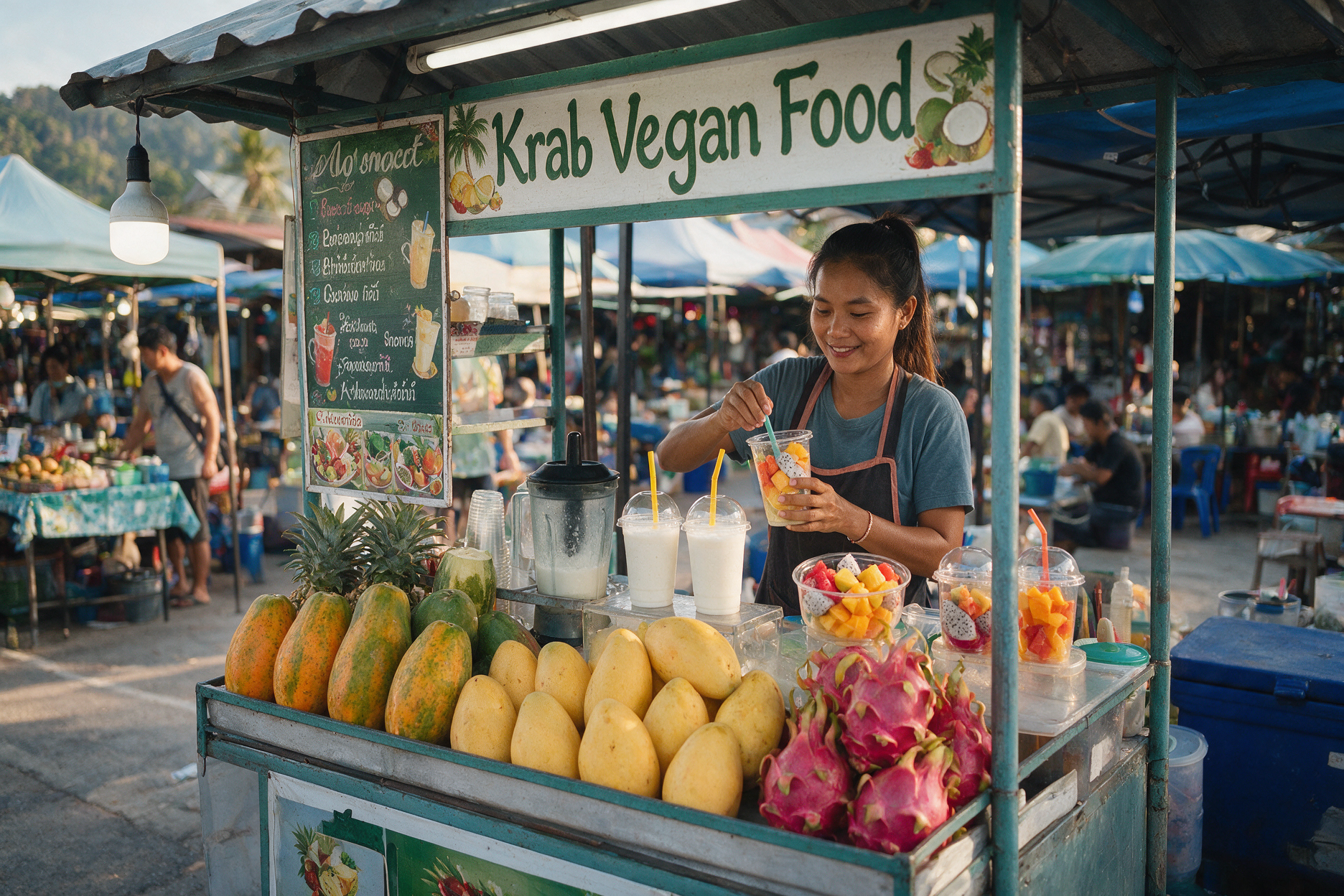
Krabi is honestly the most difficult destination on this list for strict vegans who want variety. Beach restaurants lean heavily toward seafood. The practical strategy is to eat more fruit, use the café at your resort, and save the more adventurous eating for Bangkok.
Koh Samui
Veggie Paradise (Chaweng area): A dedicated vegetarian restaurant that’s been catering to the island’s health-conscious visitors for several years. Mock meat preparations, fresh juices, and a Thai menu that’s largely adapted for plant-based eating. Around 150-250 baht per main.
The Larder (Bophut): A café that does excellent vegetarian brunch dishes alongside its coffee program. The avocado toast with local chili and lime sounds generic but the quality of local produce elevates it. Weekend mornings are best.
Fisherman’s Village in Bophut has several restaurants with at least a few vegetarian options — ask specifically for “mai sai nam pla” and most places will work around it. The green mango salad without dried shrimp is almost universally available and is one of the better naturally vegetarian dishes on any menu.
Koh Phi Phi
Phi Phi is challenging for vegetarians. The island’s small size and supply constraints mean most restaurants focus on what sells — seafood and tourist-friendly pad thai. The best approach:
Papaya Restaurant (Tonsai Bay main strip): A long-running spot with clear vegetarian labeling on their menu. The vegetarian pad thai (marked “V”) is made with egg and soy sauce instead of fish sauce — acceptable for most vegetarians. Around 150-200 baht.
Fruit carts and smoothie stalls: A practical backup for any meal. Phi Phi has excellent quality fresh fruit from the daily ferry deliveries. Mixed fruit plates, banana shakes, and fresh coconut make for a nutritious light meal when restaurant options feel limiting.
Pattaya
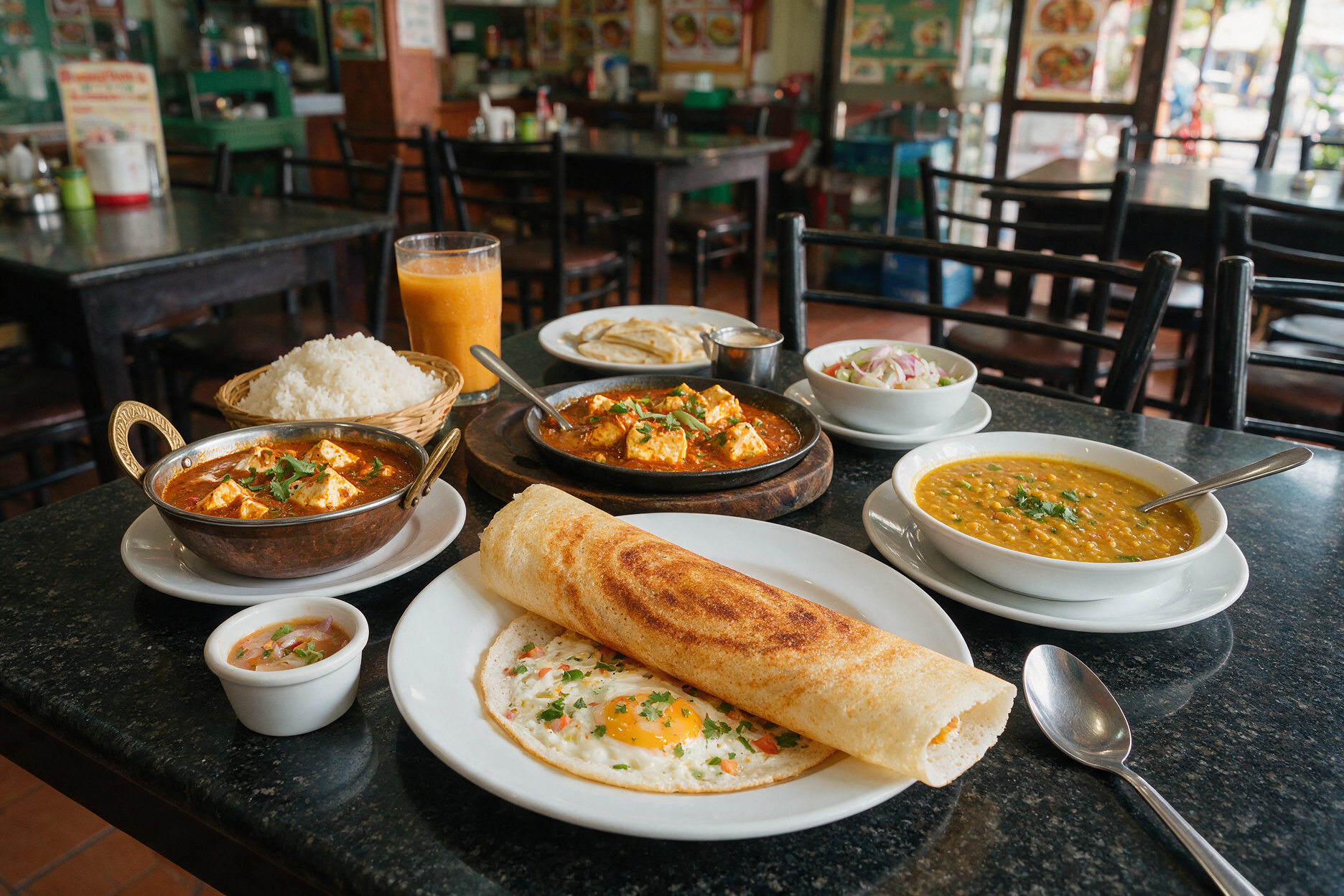
Pattaya has the easiest vegetarian situation outside Bangkok, primarily because of its large Indian community and the corresponding restaurant infrastructure.
Punjab Indian Restaurant (Pattaya Beach Road, near Central Pattaya): Full Indian vegetarian menu — dal makhani, paneer dishes, dosa, idli, naan. A genuine comfort stop for Indian travelers who want recognizable food. The lassi is particularly good.
Vagabond Indian Restaurant (Jomtien area): A well-regarded option with broader vegetarian menu than some of Pattaya’s Indian restaurants. The paneer tikka masala and rajma are consistently good.
Jomtien Beach area has several more Indian restaurants aimed at the domestic Indian tourism market — worth walking along the strip to compare menus.
Dishes That Are Naturally Vegetarian (or Easily Adapted)
- Khao pad (fried rice with egg): Order “khao pad kai” and specify no sauce upgrades. Widely available.
- Som tam (green papaya salad): Can be made without dried shrimp on request (“mai sai kung haeng”). Ask specifically.
- Pad pak ruam (stir-fried mixed vegetables): Usually made with oyster sauce — ask for soy sauce substitute.
- Khao tom (rice porridge/congee): Plain version is vegetarian, often available at breakfast.
- Tofu soups: “Gaeng tofu” — clear soup with tofu and vegetables. Common at Jay restaurants.
- Roti with banana: The sweet crepe-style roti sold at market stalls (Thai-Muslim dessert tradition) is made without animal products except butter/margarine and condensed milk.
Tips for Jain Travelers
Strict Jain dietary requirements (no root vegetables, no eating after sunset, no garlic or onion even in Jay food) make Thailand significantly more challenging. Jain travelers generally find these strategies most useful:
- Self-cater for at least one meal daily using supermarket produce. Big C and Lotus’s (formerly Tesco Lotus) have wide produce sections in most Thai cities.
- The Jay vegetarian system excludes garlic and onions but does include root vegetables — so Jay food resolves the garlic/onion issue but not the root vegetable restriction.
- Indian restaurants in Pattaya, Bangkok (Pahurat textile district), and Phuket’s Indian community areas are the most reliable for Jain meals — they understand the requirements from Indian guests.
- Carry ready-to-eat snacks from India: roasted chana, energy bars, rice crackers. Thai supermarkets have limited equivalent options.
FAQs
Is Thailand vegetarian-friendly for Indian travelers?
More so than its reputation suggests, but it requires some navigation. Bangkok has excellent plant-based options. Coastal areas are more challenging. Pattaya is the easiest outside Bangkok due to Indian restaurants.
What does “Jay” food mean in Thailand?
Jay (เจ) is strict Buddhist vegetarian food — no meat, seafood, eggs, dairy, or the five pungent vegetables (garlic, onion, shallots, leeks, chives). Look for yellow flags with red characters to identify Jay vendors.
Is fish sauce in everything in Thai food?
It’s in most savoury Thai dishes as a default seasoning. Always specify “mai sai nam pla” (no fish sauce) and ask them to use soy sauce instead. Most kitchens will accommodate this.
Where can Indian vegetarians eat most easily in Thailand?
Pattaya (Indian restaurants), Bangkok (dedicated vegan and vegetarian restaurants), and during the Phuket Vegetarian Festival period.
Are there vegan restaurants in Koh Phi Phi?
Few dedicated vegan options. Fruit plates and smoothies are a practical alternative. Plan for limited options on the island and eat more adventurously in Bangkok.
Eat Well, Travel Well
Thailand rewards the prepared vegetarian traveler. Download HappyCow before you leave (the app maps vegetarian and vegan restaurants globally, with good Thailand coverage), save the Jay phrase card on your phone, and build a mix of dedicated vegetarian restaurants and local street food into your days.
For a fully managed Thailand experience where dietary requirements are communicated to hotels and restaurants in advance, explore Get Tripped’s Thailand packages — we handle the pre-trip coordination so you arrive knowing your options at each destination.