On the night of November 11, 2025, an X5.1 solar flare was strong enough to push the aurora as far south as parts of central Europe — well outside its usual Arctic range. That single event is the reason every aurora operator is talking about 2026 the way they are. Solar Cycle 25 technically peaked in October 2024, which means we’re now in the “declining phase” on paper. In practice, some of the most dramatic individual displays in a solar cycle tend to show up in exactly this window, one to two years after the official peak. Tromsø, a small city 350 km north of the Arctic Circle, sits under the auroral oval more reliably than almost anywhere else on the planet reachable by scheduled flights — which is why it’s the obvious answer if you’re planning an aurora trip from India this season.
This guide covers what’s actually verified for 2026-27: the real viewing window, current Schengen visa rules for Indian passport holders (including a genuine, recent change that makes repeat European trips easier), how to actually fly there from Delhi, Mumbai or Bengaluru, what a proper trip costs, and a handful of things locals do that don’t show up in the standard tour brochure.
Table of Contents
- Why Tromsø, and Why 2026-27 Specifically
- Best Time to Visit: The Aurora Season Window
- How Many Days You Actually Need
- Visa Requirements for Indian Passport Holders
- Getting There: Flights from India
- Getting Around Tromsø
- Where to Stay
- Best Aurora Experiences and Tours
- A Few Places Locals Actually Go
- Weather and What to Pack
- Food and Where to Eat
- What a Premium Aurora Trip Costs
- Money, SIM Cards and Practical Details
- Culture, Etiquette and Safety
- Tromsø for Every Kind of Traveller
- Frequently Asked Questions
- Final Word
Why Tromsø, and Why 2026-27 Specifically
Every aurora forecaster will tell you the lights aren’t a switch you can flip — they depend on solar wind hitting Earth’s magnetic field at the right angle, on a clear sky, and on being somewhere dark enough to actually see it. Tromsø solves two of those three reliably. It sits almost directly under the auroral oval, the ring around the magnetic pole where displays are most consistent, so on a clear night through the season, seeing something is closer to the norm than the exception.
What makes this particular season worth flagging is the solar activity itself. NASA and NOAA jointly confirmed Solar Cycle 25’s maximum happened around October 2024, and cycles typically get quieter after that point — fewer sunspots, fewer coronal mass ejections overall. But “fewer” doesn’t mean “none,” and history backs this up: Solar Cycle 23 produced an estimated X40-class flare, one of the strongest ever recorded, years into its own declining phase. 2025 saw only four X-class flares above X2.0 (against more than 20 in 2024), but the strongest of them, that X5.1 in November, was enough to light up skies as far south as parts of Europe. The honest caveat here: nobody can promise you 2026 will beat 2024’s peak. What the data supports is that strong individual displays remain a real possibility, and Tromsø’s geography means you don’t need a historic solar storm to see something worthwhile — an ordinary moderate night up here usually delivers.
Best Time to Visit: The Aurora Season Window
The season above the Arctic Circle runs roughly late August through early April, but the month you pick changes the trip more than most people expect.
- Late August–September: Nights are just dark enough for the first sightings, and this is when the autumn equinox falls — a period when Earth’s magnetic field lines up in a way that tends to produce more geomagnetic activity. Weather is less predictable than deeper winter, but you still get some daylight for hiking and fjord views.
- October: Genuinely underrated. Cooler, darker, and this is also when whales start following herring into the fjords near Tromsø, so you can pair aurora chasing with a whale-watching cruise.
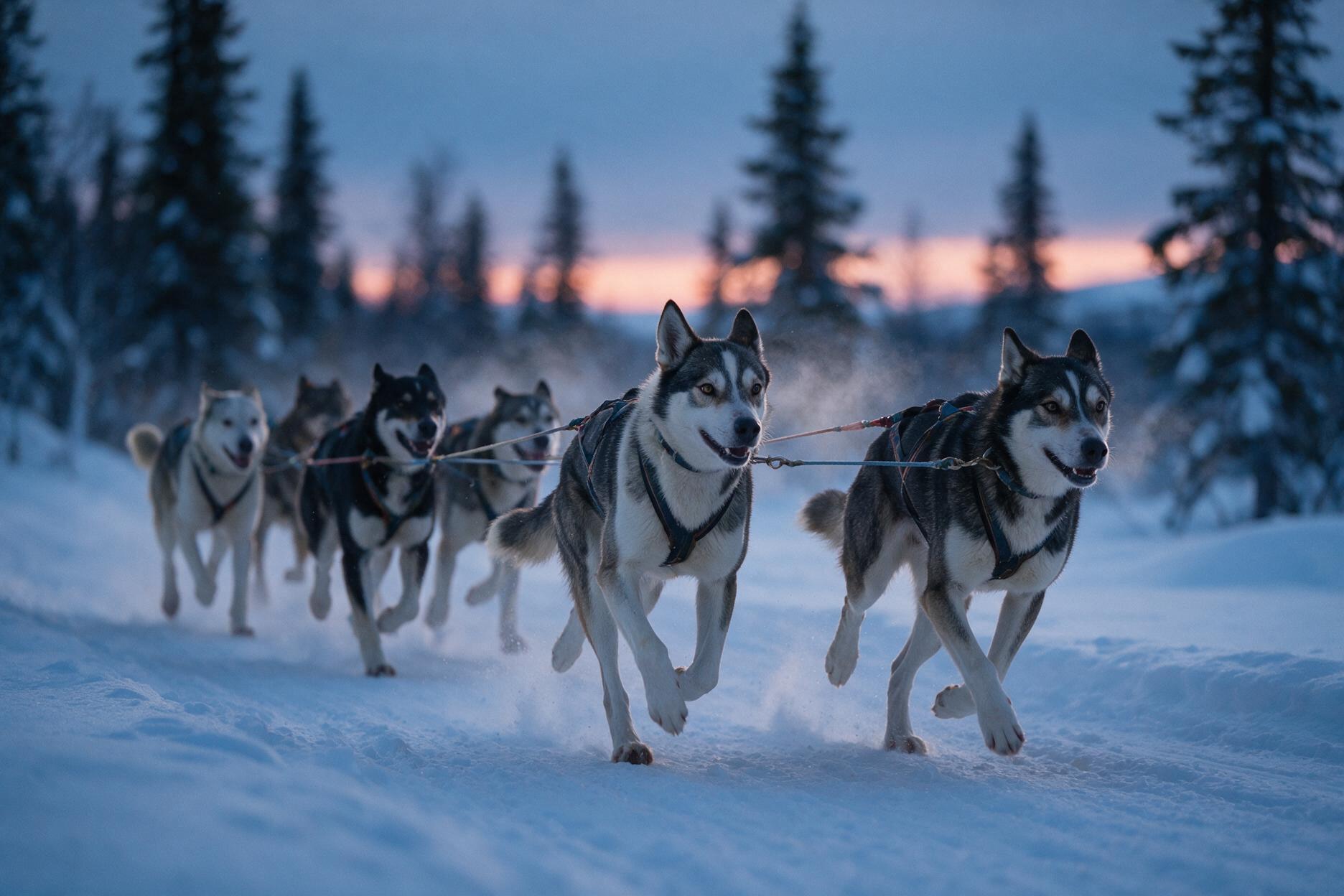
- November–February: The core of the season, and the darkest. Tromsø sits in polar night from November 28 to January 14 — the sun physically doesn’t rise above the horizon. That sounds bleak on paper, but it means you get aurora-viewing conditions for most of the day, not just after 9pm, and snow cover is usually excellent for dog sledding.
- March–April: The locals’ favourite window. Days are lengthening again, skies tend to be calmer and drier than midwinter, there’s still deep snow, and crowds thin out compared to the December–January peak.
For pure odds, aim for the darkest, clearest stretches: mid-October to late March. For a first trip with reasonable weather risk and fewer crowds, late August/September or March are worth serious consideration over the peak-season squeeze. Aurora forecasts (KP-index and cloud-cover apps) are only reliable 3-7 days out, so book the destination and season with confidence, then chase the exact clear-sky night once you’re there.
How Many Days You Actually Need
Plan for a minimum of 4 nights, ideally 5-6, in the Tromsø area specifically. This is the part first-time planners underestimate: clouds can block the sky for two or three consecutive nights even in peak season, and a single-night stopover gives you almost no buffer. Four nights gives your tour operator room to reposition you if the forecast shifts — most fjord-side lodges and chase-tour companies build this flexibility in, but only if you’ve given them the nights to work with.
Visa Requirements for Indian Passport Holders
Norway is part of the Schengen Area, so Indian passport holders need a Schengen Type C short-stay visa — there’s no visa-free or visa-on-arrival option. A few things worth knowing before you apply:
- Cost: The visa fee is EUR 90 (roughly ₹8,100) for adults, plus a VFS Global service charge of around ₹2,200, bringing the total to roughly ₹10,300 per adult. Children aged 6-11 pay half; under-6s go free.
- Where to apply: Through VFS Global’s Norway visa centres in India, on behalf of the Royal Norwegian Embassy in New Delhi.
- Processing time: Standard processing is 15 working days, though it can stretch to 45 in complex cases. Apply 4-6 weeks before travel to give yourself margin — earlier if you’re travelling over December-January, which is peak season for Schengen applications generally.
- Documents: Valid passport with 2 blank pages and 3+ months validity beyond your return date, proof of funds (roughly NOK 500/day, about ₹3,800), confirmed accommodation, return flight reservation, travel insurance with minimum EUR 30,000 medical coverage valid across the Schengen area, and standard employment/income proof.
- Approval odds: Indian applicants had a refusal rate of roughly 12.8% in 2024 — notably lower than several other nationalities’ Schengen refusal rates.
A genuine 2026 change worth knowing about: the EU adopted a more favourable “cascade” visa regime for frequent Indian travellers, where applicants who’ve obtained and properly used two Schengen visas within the past three years become eligible for a 2-year multi-entry visa, and after that, potentially a 5-year one (subject to passport validity). If you’ve done a Schengen trip or two recently — we covered the mechanics of this in more detail in an earlier Get Tripped piece on the Schengen visa cascade regime — it’s worth applying for the longer validity rather than a single-entry visa, even if Norway is your only planned stop this time.
One more system change to know about: the EU’s Entry/Exit System (EES), a biometric border-tracking system, became fully operational at Schengen borders in April 2026. If you’re applying for a Schengen visa, your fingerprints are already collected during the visa process, so EES won’t ask for them again at the Norway border — but do expect slightly longer immigration queues at Oslo as the system beds in, especially in the first year.
Getting There: Flights from India
There are no direct flights from India to Norway, so every route from Delhi, Mumbai or Bengaluru involves at least one stop — usually two legs if Tromsø is your final stop rather than Oslo.
The typical routing: fly into Oslo (OSL) via a Gulf or European hub — Qatar Airways via Doha, Turkish Airlines via Istanbul, or Finnair via Helsinki are the most commonly used — then take a domestic connection north. From Oslo, SAS, Norwegian and Widerøe all fly to Tromsø, a roughly 2-hour hop with several daily departures. Total door-to-door travel time typically runs 12-16 hours depending on layover length.
A routing worth flagging specifically: Finnair via Helsinki is often the more efficient option if Tromsø, not Oslo, is your priority — Norwegian operates a direct Helsinki–Tromsø flight (about 1 hour 50 minutes) that skips the Oslo detour entirely.
Rough costs: Economy round-trip fares from Delhi, Mumbai or Bengaluru to Oslo/Tromsø generally range from roughly ₹65,000 to ₹1,10,000 depending on season and how far ahead you book, with business class running considerably higher. Fares fluctuate constantly on these routes, so treat this as a planning range rather than a quote — Get Tripped can pull current fares and flag the better-value routing at the time you’re ready to book.
Getting Around Tromsø
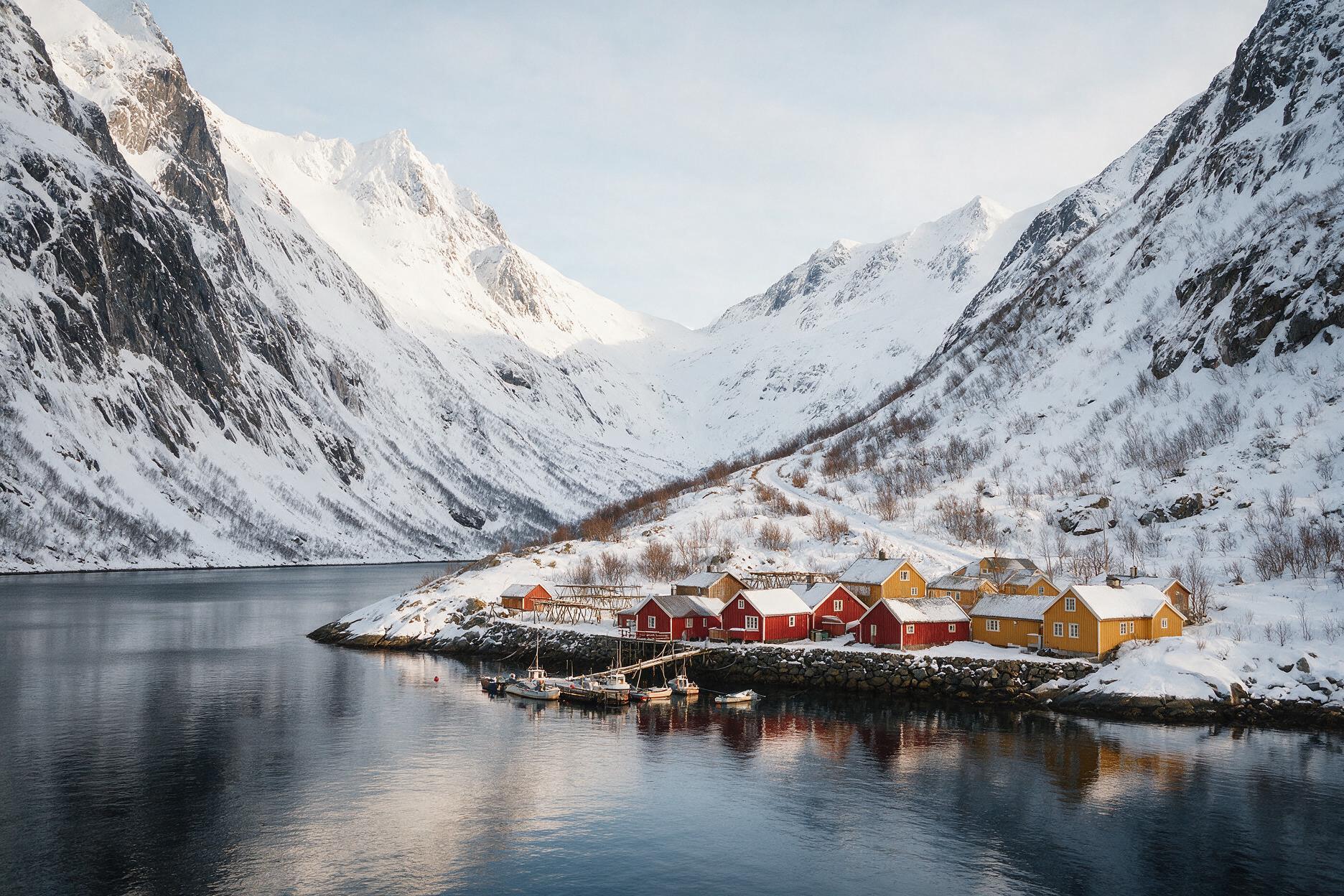
Central Tromsø is compact and walkable, but most serious aurora viewing happens outside the city, away from streetlights and the persistent cloud that can sit over the peninsula. Tour operators handle transport for organised aurora chases, fjord cruises and dog-sledding trips — minivans or small coaches typically collect guests from central hotels. If you want independence to explore the Lyngen Alps or outlying villages like Ersfjordbotn at your own pace, renting a car is worth it, though winter driving in the Arctic takes some getting used to (studded tyres are standard and expected).
Where to Stay
Options span from city-centre comfort to genuinely memorable stays purpose-built for aurora viewing:
- City hotels (mid-range): Central Tromsø hotels put you close to restaurants, the cable car, and the harbour, with easy access to organised tours. Good base if you don’t want to manage your own transport.
- Glass-roof apartments: A handful of properties in Tromsø itself have glass-ceiling living rooms overlooking the mountains and sea, from around €150/night — a good middle ground between city convenience and sky views.
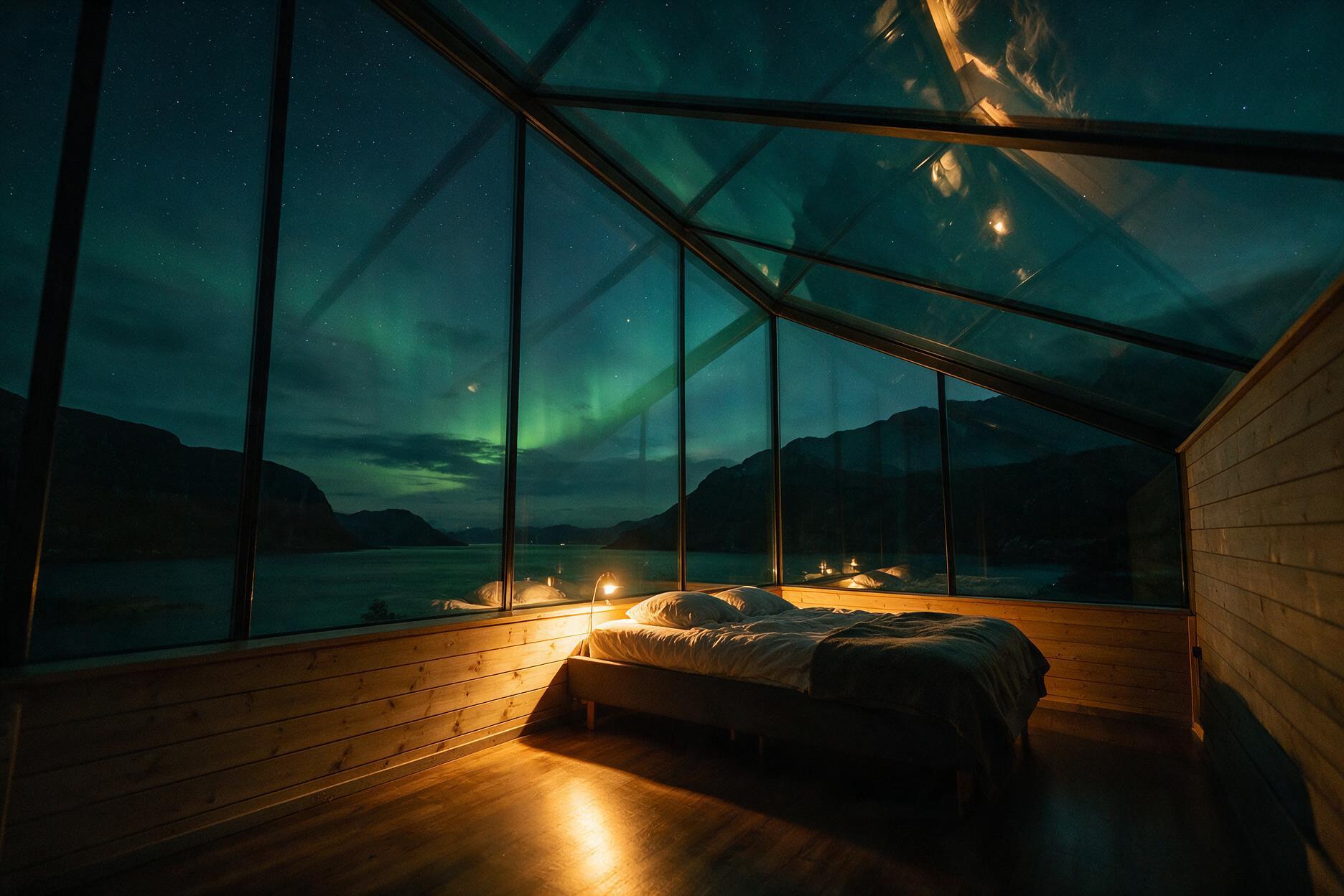
- Aurora cabins and glass igloos (Lyngen Alps/Lyngseidet): Self-catering cabins with floor-to-ceiling windows facing the fjord, roughly 80 minutes from Tromsø airport, from around €365/night. This is genuinely dark-sky territory.
- Luxury heated-tent camps: Purpose-built aurora camps around 40 minutes from Tromsø, combining lodge-style comfort with unobstructed sky views, from around €528/night including breakfast and a traditional dinner.
For the best odds of an unobstructed view without leaving your bed, an aurora cabin outside the city genuinely outperforms a city hotel — but factor in the extra transport time and, if you’re not driving, tour-dependent flexibility.
Best Aurora Experiences and Tours
- Fjord cruise / whale safari: From late October to mid-January, whales follow herring shoals into the fjords near Tromsø, so a daytime fjord cruise can double as a whale-watching trip. Standard-season adult fares run around NOK 1,995 (roughly ₹18,000), rising to about NOK 2,255 over the December 13–January 4 peak. Trips typically run 7-8 hours round trip.
- Aurora camp and dog sledding: An overnight package combining a husky-yard visit, roughly 45 minutes of dog sledding, and a stay in a traditional lavvu (Sami-style shelter) with a Sami-influenced dinner — think bacalao (salted cod) and bidos, a reindeer stew. Starts from around NOK 4,290 per person (about ₹38,000), with a private lavvu upgrade available.
- Fjellheisen cable car: A quick way up above the city’s light pollution for a wide view over Tromsø and the surrounding fjords — useful even on a night you’re not on an organised chase tour.
- Guided aurora chase tours: Small-group minivan tours that reposition based on the night’s cloud forecast, usually the best option if you don’t have a rental car and want maximum odds on a given night.
A Few Places Locals Actually Go
Skip the standard souvenir-shop crawl for at least one evening and try these instead:
- Backbeat Kaffe & Vinyl — a café co-owned by a former film festival director that doubles as a record shop, and functions as the kind of low-key local hangout that doesn’t show up on typical tourist lists.
- Sørstien Trail — locals hiking up from the Fjellheisen cable car base tend to take this route instead of the crowded Sherpa Steps; similar mountain views, noticeably fewer people.
- Ersfjordbotn and Eide Handel — about an hour outside the city by bus, this fjord-end village has two hiking routes and a small deli-shop, Eide Handel, that serves local dishes and pizza to a mostly local crowd rather than a tourist one.
- Fjellstua Café — at the top of the cable car, worth the trip for freshly made waffles after a hike, something most visitors skip in their rush back down for the aurora tour pickup.
Weather and What to Pack
Average temperatures across the season, in Celsius (low/high):
| Month | Low | High |
|---|---|---|
| September | 5°C | 11°C |
| October | 1°C | 6°C |
| November | -2°C | 3°C |
| December | -4°C | 1°C |
| January | -5°C | 0°C |
| February | -6°C | -1°C |
| March | -4°C | 1°C |
Layering matters more than any single “warmest jacket.” A thermal base layer, a fleece or wool mid-layer, and a proper windproof/waterproof outer shell will do more for you than one very thick coat — you’re often standing still outdoors for an hour or two waiting for the sky to do something, and standing-still cold hits differently than walking cold. Most aurora tour operators provide thermal overalls and boots as part of overnight packages, which is worth confirming when you book so you don’t over-pack.
Food and Where to Eat
Tromsø’s food scene leans into what the Arctic actually produces: cod, king crab, reindeer, and Arctic char show up on most menus, alongside Sami dishes like bidos (reindeer stew) at cultural experiences and some restaurants. Bacalao — salted cod cooked with tomato, garlic, chilli and olives — is a genuine local staple, not a tourist invention, and worth ordering at least once. Vegetarian options exist in central Tromsø restaurants but are more limited outside the city; if you’re travelling with strict dietary needs, it’s worth flagging this to your tour operator in advance, especially for overnight camp packages where meals are set menus.
What a Premium Aurora Trip Costs
For a mid-range to premium 6-night Tromsø trip (excluding international flights), budget roughly:
- Mid-range: ₹18,000-25,000 per person per day, covering a comfortable hotel or glass apartment, one or two organised tours (fjord cruise or dog sledding), meals, and local transport.
- Luxury: ₹35,000-55,000+ per person per day, covering an aurora cabin or Lyngen Alps lodge, private chase tours with a photographer, and higher-end dining.
This is a premium destination by nature — Norway is one of the more expensive countries in Europe for both food and activities — so this isn’t a trip to plan around finding the cheapest version of everything. It’s worth budgeting properly rather than cutting corners on the aurora-specific tours, since those are the experiences you’re actually here for.
Money, SIM Cards and Practical Details
- Currency: Norwegian Krone (NOK). Carry minimal cash — Norway is one of the most card-dependent countries in Europe, and contactless payment is accepted almost everywhere, including small cafés and taxis.
- Cards vs cash: A good international debit/credit card or a forex card covers nearly everything. UPI is not usable in Norway, so don’t rely on it as backup.
- SIM/eSIM: An eSIM (through providers like Airalo or a local Norwegian carrier such as Telenor or Telia) activated before you land is the simplest option — connectivity is strong even in fairly remote fjord areas, which matters if you’re relying on aurora-forecast apps.
Culture, Etiquette and Safety
Norway ranks among the safest countries for travellers in general — violent crime is rare, and the practical risks are more mundane: icy pavements (proper grip-soled boots matter more than people expect), driving on unfamiliar winter roads, and underestimating how quickly cold sets in when you’re standing still for aurora photography.
Sami culture is genuinely present in this region, not a costume performance staged for tourists — reindeer herding and the lavvu-based camps you might stay in during a dog-sledding trip are living traditions. Basic respect applies: ask before photographing individuals, and treat cultural experiences (the meals, the shelter, the stories) as something you’re a guest to, not a photo backdrop.
Tromsø for Every Kind of Traveller
Couples: An aurora cabin or glass-roof stay in the Lyngen Alps, paired with a private chase tour, is about as reliably romantic as winter travel gets — floor-to-ceiling windows mean you don’t even have to get out of bed if the sky lights up at 2am.
Families: September or March work better than deep polar night if you’re travelling with young kids, since you get some daylight for downtime between tours. Dog sledding is genuinely a hit with children old enough to sit through a 45-minute ride, and most operators set minimum ages clearly on booking.
Solo travellers: Small-group chase tours are an easy way to meet other travellers, and Tromsø is comfortable and safe for solo exploration, including for women travelling alone — well-lit central areas, reliable public transport, and a low-crime environment.
Luxury travellers: This is where a private aurora photographer, a Lyngen Alps lodge, and a tailored multi-night chase itinerary (rather than a single group tour) genuinely change the experience — worth discussing directly with Get Tripped’s travel designers if this is the trip you’re planning.
Frequently Asked Questions
Is 2026-27 actually a good year to see the Northern Lights in Tromsø?
Yes, with a fair caveat. Solar Cycle 25 peaked in October 2024, so overall solar activity is declining, but strong individual flares — like the X5.1 event in November 2025 that pushed aurora sightings into central Europe — remain a real possibility through 2026 and likely into 2027. Tromsø’s location under the auroral oval means even a moderate night here usually delivers something visible, cycle timing aside.
Do Indian passport holders need a visa for Norway?
Yes. Norway is in the Schengen Area, so Indian citizens need a Schengen Type C short-stay visa — there’s no visa-free entry or visa-on-arrival. Apply through VFS Global on behalf of the Royal Norwegian Embassy, ideally 4-6 weeks before travel.
What’s the best month to see the Northern Lights in Tromsø?
There’s no single “best” month — it’s a trade-off. Peak darkness runs November to February, October offers whale watching alongside aurora chances, and March gives calmer, drier weather with fewer crowds. For first-timers balancing weather risk and crowd levels, October or March are worth serious consideration.
How many nights should I plan in Tromsø?
A minimum of 4 nights, ideally 5-6. Clouds can block the sky for consecutive nights even in peak season, and a short stay leaves no buffer for your tour operator to reposition you for a clearer night.
Can I fly direct from India to Tromsø or Oslo?
No direct flights exist from India to Norway. The typical routing is via Doha (Qatar Airways), Istanbul (Turkish Airlines) or Helsinki (Finnair), connecting either into Oslo and then a domestic flight to Tromsø, or in Finnair’s case, sometimes directly from Helsinki to Tromsø.
Is Tromsø expensive to visit?
Yes, relative to many destinations — Norway is one of the pricier countries in Western Europe for food, activities and accommodation. Budget roughly ₹18,000-25,000 per person per day for a comfortable mid-range trip, and ₹35,000-55,000+ for a luxury one, before international flights.
Do I need to leave the city to see the aurora, or can I see it from Tromsø itself?
You can occasionally catch it from central Tromsø on a strong, clear night, but light pollution and the peninsula’s frequent cloud cover mean most serious viewing happens outside the city — on a fjord cruise, at an aurora cabin, or on a guided chase tour that repositions based on that night’s forecast.
What should I pack for an aurora trip to Tromsø?
Layer rather than rely on one heavy coat: thermal base layer, a fleece or wool mid-layer, and a windproof/waterproof outer shell, plus grip-soled winter boots. Many overnight tour packages include thermal overalls and boots, so check what’s provided before you over-pack.
Final Word
The mistake most first-time aurora travellers make isn’t picking the wrong season — it’s picking too short a trip and expecting the lights to show up on cue from a city-centre hotel window. Give yourself enough nights, get out past the streetlights at least once, and 2026’s still-unpredictable solar activity does the rest. Get Tripped’s travel designers can build the visa timeline, flight routing and cabin-versus-city-hotel decision around your dates — reach out and we’ll put together a Tromsø itinerary that actually accounts for cloud-cover contingency, not just a fixed day-by-day plan.