The first time I understood Cebu, it wasn’t at Magellan’s Cross or the Basilica. It was at a plastic table on Larsian Street at 9pm, watching a woman fan a grill of pork belly with a woven palm leaf while a jeepney idled two feet away, horn going, radio blasting a Visayan pop song I didn’t recognize. Nobody around me was a tourist. They were just having dinner. That’s the Cebu this guide is about — not the postcard version, but the one you get when you stop sightseeing for an afternoon and just live there for a bit.
Cebu City is the Philippines’ second-biggest urban center and the unofficial capital of the Visayas, but it doesn’t feel like a “second city” once you’re in it — it feels like its own country, with its own language (Cebuano, or Bisaya, not Tagalog), its own food obsessions, and a rhythm that’s noticeably less frantic than Manila’s. If you’re building a Philippines trip around Cebu, Boracay, and Palawan, Cebu is usually where you land, and it deserves more than a layover.
Table of Contents
- Getting Your Bearings
- Lechon: The Dish Cebu Will Not Let You Forget
- Carbon Market and Taboan: Where Cebu Actually Shops
- Getting Around Like a Local: Jeepneys, Habal-Habal, and Grab
- Larsian and the Street-Food Circuit
- Sinulog: If You’re Here in January
- A Few Words of Bisaya That Actually Help
- Where to Stay
- A Mistake Worth Avoiding
- Money, SIM Cards, and Other Practical Bits
- FAQs
Getting Your Bearings
Cebu City proper is compact and genuinely walkable in the old downtown core — Magellan’s Cross, the Basilica Minore del Santo Niño, and Fort San Pedro all sit within a ten-minute walk of each other, which is unusual for a Philippine city this size. Everything else — the malls, the business districts of Cebu IT Park and Cebu Business Park, the uptown restaurant strip — is spread out enough that you’ll want wheels.
Locals orient themselves by landmark, not by street name half the time. Ask for directions and you’ll get “diretso lang, beside the Jollibee” rather than a road number. Lean into that. It works better than Google Maps more often than you’d think, especially in the older barangays where alleys don’t always show up on satellite view.
Lechon: The Dish Cebu Will Not Let You Forget
Every region of the Philippines makes lechon — whole roasted pig — but Cebuanos will tell you, without a flicker of doubt, that theirs is the best, and there’s a reasonable case for it. Cebu lechon is stuffed with a blend of lemongrass, onions, garlic, and spices instead of being basted in sauce, which means the skin comes out lacquer-crisp and the meat doesn’t need the sweet liver sauce other regions pour over theirs. Anthony Bourdain once called it “the best pig ever” on television, and Cebuanos have not let anyone forget that sentence since.
Zubuchon is the famous export-brand version and genuinely good, with multiple branches including one at the airport if you’re desperate on your way out. But for a more local, less air-conditioned experience, CnT Lechon (Carcar branch, in particular) and the countless unbranded carinderias selling lechon by the kilo in the public markets are where Cebuanos actually eat it. Order it “by the kilo,” ask for a mix of skin and meat, and eat it with plain rice and a splash of the vinegar-chili sawsawan on the table — not the sweet sauce tourists get steered toward.
Honest caveat: lechon is rich, salty, and fatty by design, and a plate at lunch will make you sleepy by 3pm. Pace yourself if you’re also planning an afternoon of walking.
Carbon Market and Taboan: Where Cebu Actually Shops
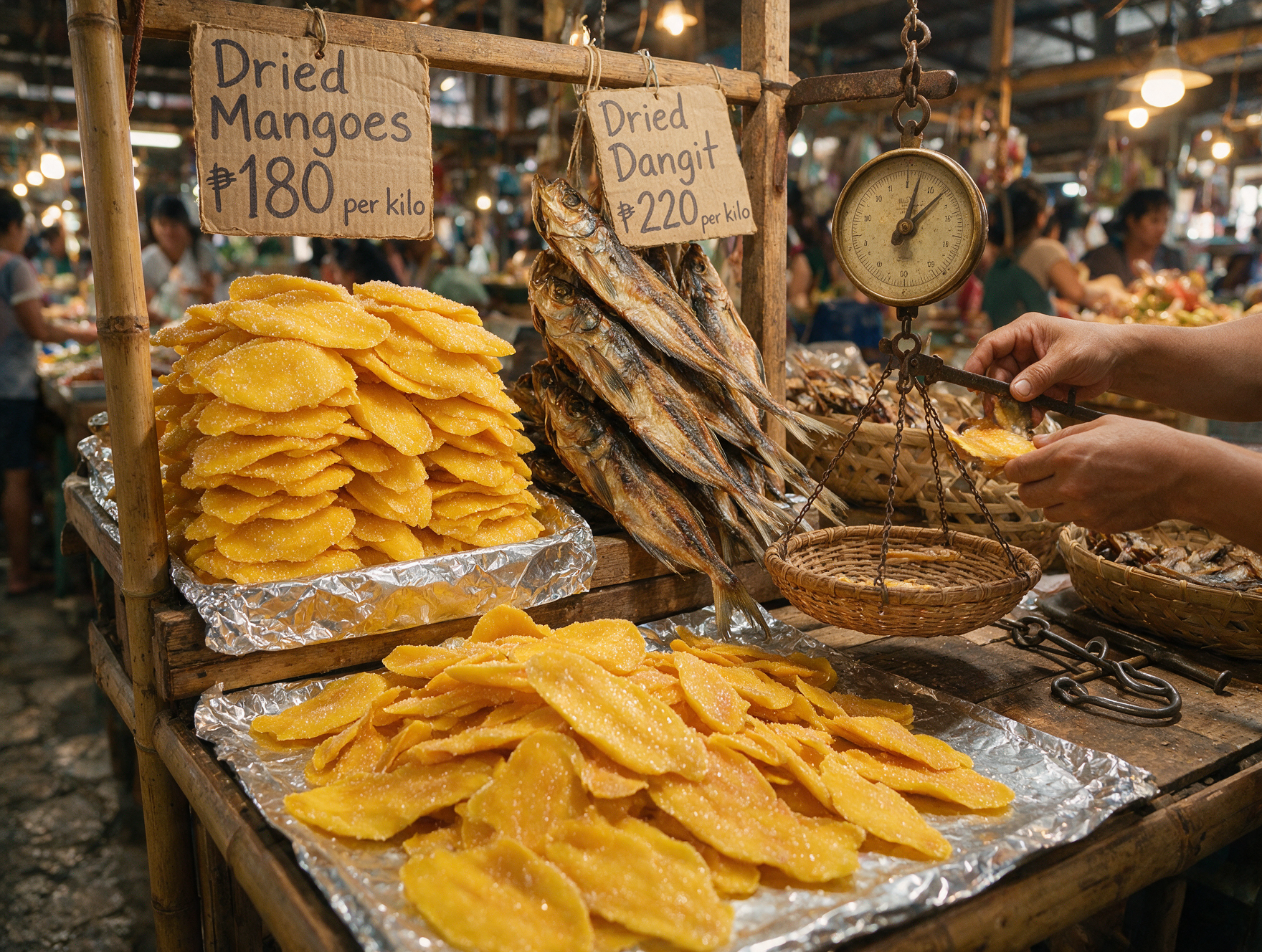
Carbon Market (officially Freedom Park Market) is Cebu’s oldest and largest public market, named for the coal depot that used to sit there in the Spanish era. It is loud, crowded, slightly chaotic, and one of the most honest places to see how the city actually eats — mountains of mangoes, dried fish stalls, flower vendors doing a brisk trade for Sto. Niño devotions, and vegetable sellers who’ve had the same stall for three generations. Go in the morning when the produce is freshest and the heat hasn’t peaked yet. Keep your bag in front of you; it’s not dangerous, just dense.
A few minutes away, Taboan Market is the place for Cebu’s famous dried mangoes and dried fish (danggit) to bring home — bargaining is expected and friendly, and vendors will vacuum-seal mangoes for the flight if you ask. A kilo of good danggit, fried with garlic rice and a fried egg, is a Cebuano breakfast institution worth trying at least once, even if you don’t love the smell of drying fish in the market itself.
Getting Around Like a Local: Jeepneys, Habal-Habal, and Grab
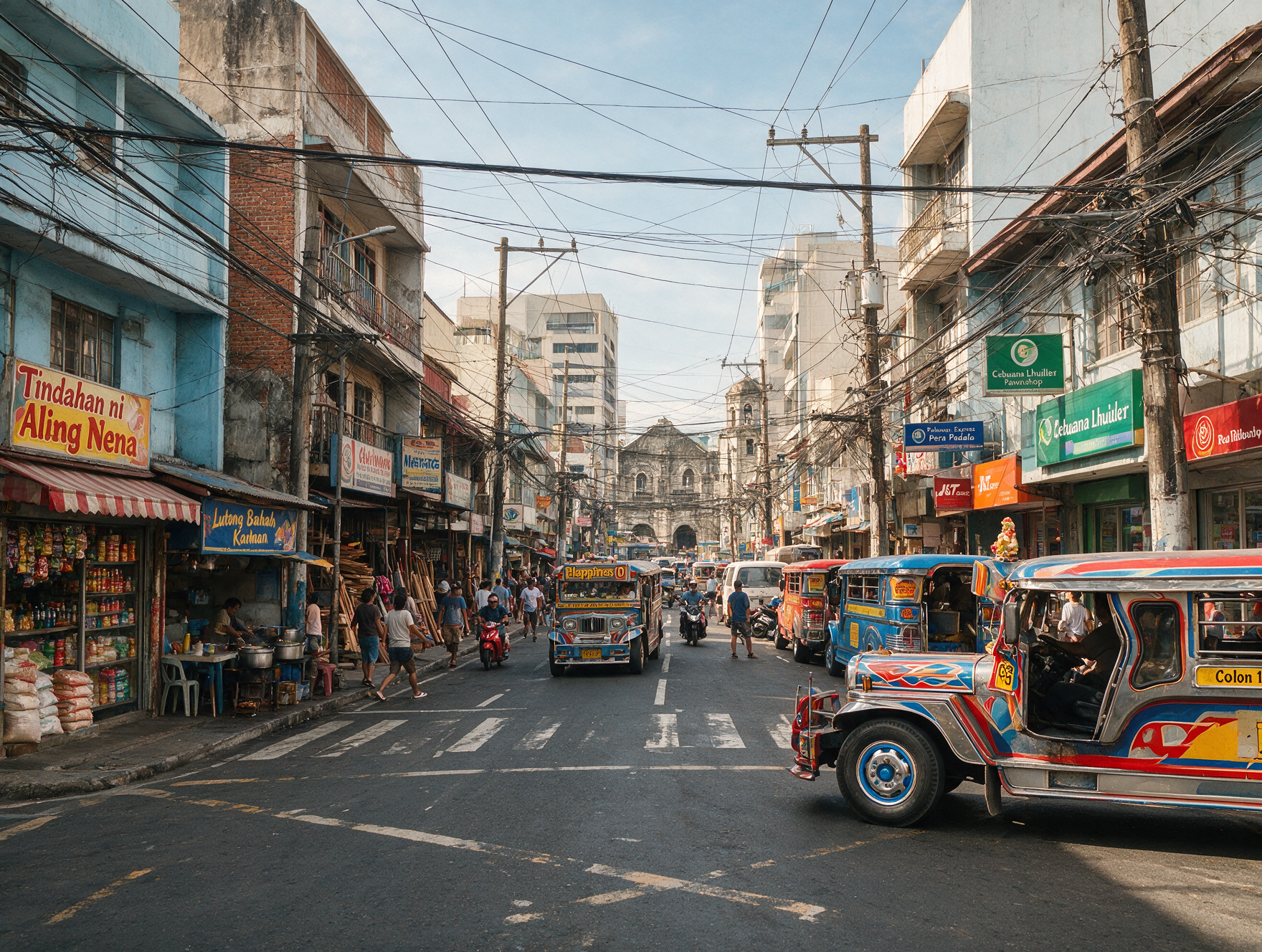
The jeepney is still the backbone of Cebu transport, even as modern “modernized” jeepneys slowly replace the old WWII-surplus-jeep-bodied originals. Routes are marked by number and destination on a signboard above the windshield, fares start around PHP 13 for the first few kilometers, and you pay by passing coins forward or calling out “Bayad!” (payment) when you want to get off, followed by “Para!” (stop). It takes one ride to get comfortable with the rhythm.
For anything off a main jeepney route, a habal-habal (motorcycle taxi) is the faster local option, usually negotiated on the spot rather than metered — ask a local what a fair price sounds like before you agree, since tourist pricing creeps up fast in the more visited barangays. Grab (the Southeast Asian ride-hailing app) works well in Cebu City and is the easiest option if you don’t want to negotiate anything, though surge pricing during rain or rush hour is real.
Mistake to avoid: don’t assume every jeepney goes “toward downtown” just because it’s heading in that general direction — routes branch in ways that aren’t obvious from outside. If you’re unsure, ask the driver your destination before boarding; Cebuano drivers are used to the question and will wave you off if it’s the wrong route rather than let you ride it out.
Larsian and the Street-Food Circuit
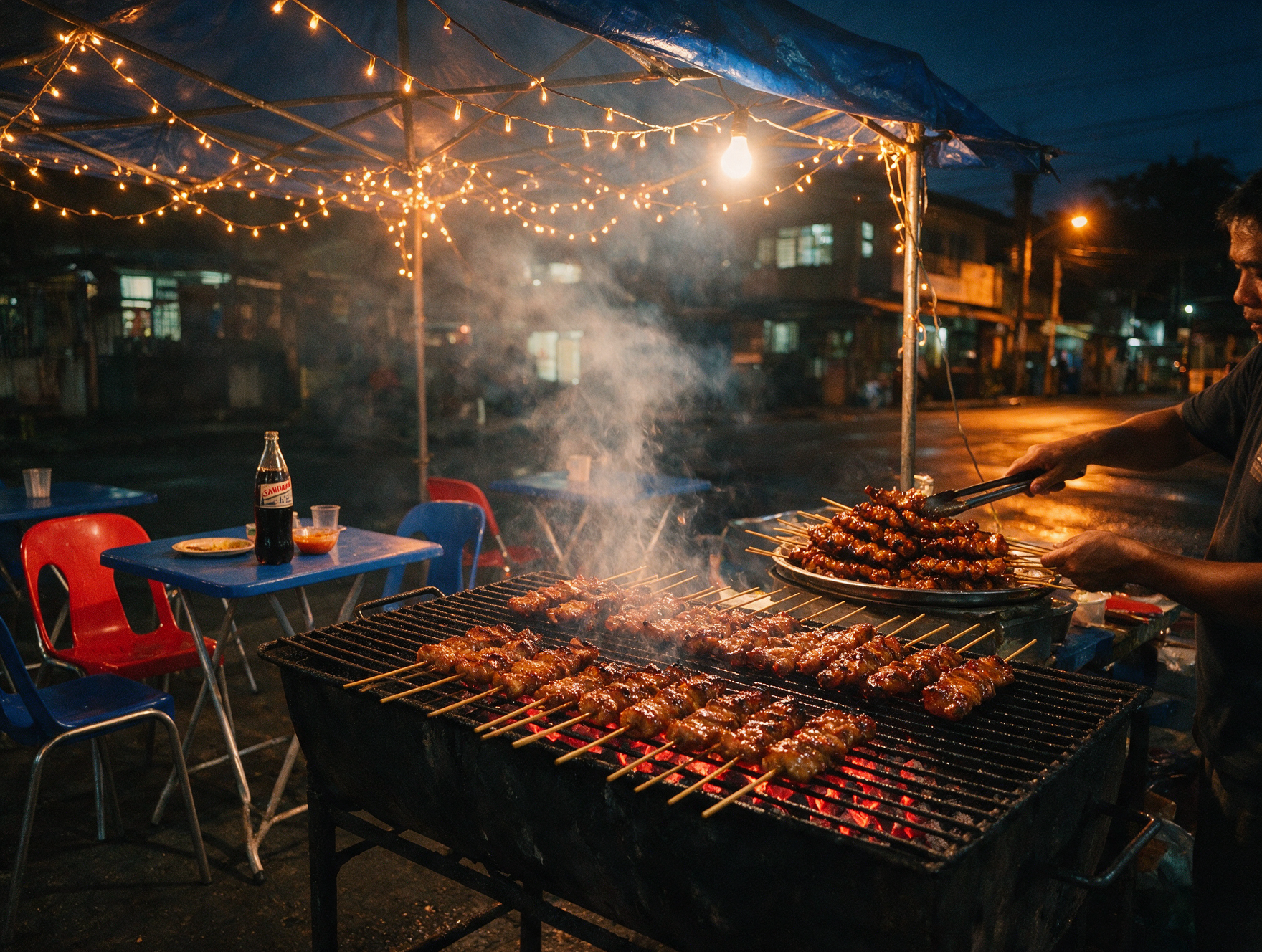
Larsian, on Fuente Osmeña Circle, is Cebu’s best-known barbecue alley — a row of stalls grilling pork barbecue, chicken, isaw (grilled intestine skewers), and the Cebuano specialty “ngohiong” (a deep-fried spring roll with a distinct five-spice flavor you won’t find much outside the Visayas). You order your skewers, grab a plastic chair, and eat with your hands under string lights while the whole street smells like char and soy marinade. Go after 7pm when it’s in full swing. It is not a sit-down restaurant experience, and that’s the entire point.
If you want a quieter version of the same idea, the food stalls around Mango Avenue and the newer night market setups near IT Park serve a similar range of grilled skewers with less tourist traffic. Either way, bring small bills — most stalls don’t break anything larger than a 500-peso note easily after dark.
Sinulog: If You’re Here in January
If your trip lines up with the third Sunday of January, you’ll land in the middle of Sinulog — Cebu’s biggest festival, a week-plus of street dancing, drumming, and a massive Sunday parade honoring the Santo Niño, with roots going back to the city’s earliest Christian conversion in 1521. It’s genuinely one of the best festivals in the country to experience as a visitor: loud, colorful, and welcoming to outsiders rather than closed-off. Hotels book out and prices spike well in advance, so if Sinulog dates fall inside your trip, lock in accommodation months ahead, not weeks.
A Few Words of Bisaya That Actually Help
English and Tagalog both work in Cebu, but a handful of Bisaya phrases change how people respond to you, in a good way. “Palihug” (please), “Salamat kaayo” (thank you very much), and “Tagpila ni?” (how much is this?) will get you a warmer reaction in a market than Tagalog will, since Cebuanos have a long-running, mostly good-natured rivalry with Manila and genuinely appreciate the effort. You don’t need more than that — nobody expects fluency, and the attempt is the whole gesture.
Where to Stay
For a first visit, base yourself in Cebu IT Park or Cebu Business Park — both have a cluster of well-reviewed mid-range and upscale hotels, are close to good restaurants, and put you a short Grab ride from both the historic downtown core and the airport. Radisson Blu Cebu and Seda Ayala Center are solid upscale anchors in that zone; Quest Hotel and similar mid-range properties nearby do the job well without the price jump. If your focus is the old city and markets, a boutique property near Fuente Osmeña Circle trims the commute to Larsian and Carbon Market down to a few minutes.
A Mistake Worth Avoiding
Don’t try to “see Cebu” in a single rushed day squeezed between an airport arrival and an onward island-hopping boat — it’s the single most common regret I hear from travelers using Cebu purely as a gateway to Bohol or the southern islands. Give it at least one full evening for Larsian and the old town walk. The city rewards slowing down far more than its reputation as “just a layover city” suggests.
Money, SIM Cards, and Other Practical Bits
The currency is the Philippine Peso (PHP). Cash still rules in markets, jeepneys, and most street-food stalls, though cards and GCash (the dominant local e-wallet) are widely accepted in malls, hotels, and sit-down restaurants. ATMs are easy to find in IT Park and the malls; withdraw in reasonably large amounts to avoid repeated foreign-transaction fees.
Globe and Smart are the two major Filipino telecoms, and both sell tourist SIM packs at the airport with decent data allowances; an eSIM bought in advance (Airalo and similar providers cover the Philippines well) is the less fiddly option if your phone supports it, since airport SIM counters can have long queues on busier arrival banks.
FAQs
Is Cebu City safe for Indian tourists?
Yes, for the areas most visitors spend time in — IT Park, Business Park, the airport, and the old downtown core during daylight. Use normal city precautions at night, keep valuables out of sight in markets, and use Grab or a known taxi rather than flagging unmarked vehicles after dark.
Do I need a visa to visit Cebu as an Indian citizen?
Indian passport holders can currently enter the Philippines visa-free for stays of up to 14 days for tourism, provided you meet conditions including a passport valid for at least six months beyond your stay, a confirmed return or onward ticket, proof of accommodation, and sufficient funds. You’ll also need to complete the free eTravel registration at the official etravel.gov.ph portal within 72 hours of arrival. Rules can change, so confirm current requirements with the Philippine Embassy in New Delhi before you book.
How many days should I spend in Cebu City itself?
Two full days covers the historic core, a market morning, and one proper Larsian evening, before you head on to the islands, diving, or whale-shark trips most people come to the broader Cebu province for.
Is Cebu lechon different from Manila lechon?
Yes — Cebu lechon is seasoned and stuffed before roasting rather than sauced afterward, which is exactly the distinction locals will explain to you, unprompted, the moment you order the wrong sauce.
What’s the best way to get from Cebu City to the airport?
Mactan-Cebu International Airport is on a separate island connected by two bridges, roughly 30-45 minutes from downtown depending on traffic; Grab or a hotel-arranged transfer is simpler than negotiating a taxi fare at the terminal.
Getting Here From India
There’s no nonstop flight from India to Cebu yet, so most Indian travelers route through Manila, Singapore, or Hong Kong before a short connecting hop (Cebu Pacific and Philippine Airlines both run frequent domestic Manila-Cebu legs). Philippine Airlines has been working to restore direct India service on the Delhi-Manila and Mumbai-Manila routes, and IndiGo has separately sought approval for direct India-Philippines routes — worth checking closer to your travel dates, since a direct Manila leg would cut a layover out of the Cebu journey entirely.
Cebu is the kind of city that works better as something you build time around rather than squeeze in. If you’d like a Philippines itinerary that actually gives Cebu its own proper day or two instead of treating it as a layover, get in touch and we’ll build it around the lechon, the markets, and whatever island-hopping you’re adding on after.