Filipino food doesn’t get the global reputation Thai or Vietnamese food does, and that’s genuinely a shame, because the best version of it — the lechon that’s been slow-roasted over coconut husk charcoal for six hours, the barako coffee so strong it needs no explanation for why farmers drink it before a day in the fields, the halo-halo that somehow makes shaved ice, beans, and leche flan work together — is some of the most distinctive food in Southeast Asia. This trail moves through six places: Cebu, Boracay, Davao, Palawan (Puerto Princesa specifically), El Nido, and Coron, and in each one, it points at something specific rather than a generic “try the local food” shrug.
Table of Contents
- Cebu: lechon and the coffee culture nobody mentions
- Boracay: beachfront dining beyond the resort buffet
- Davao: durian, and the fruit stands that aren’t a gimmick
- Palawan (Puerto Princesa): tamilok and the market food scene
- El Nido: the café culture built for boat-tour recovery
- Coron: seafood straight off the wreck-diving boats
- Dishes to try at least once
- What to drink, beyond coffee
- Eating etiquette worth knowing
- FAQs
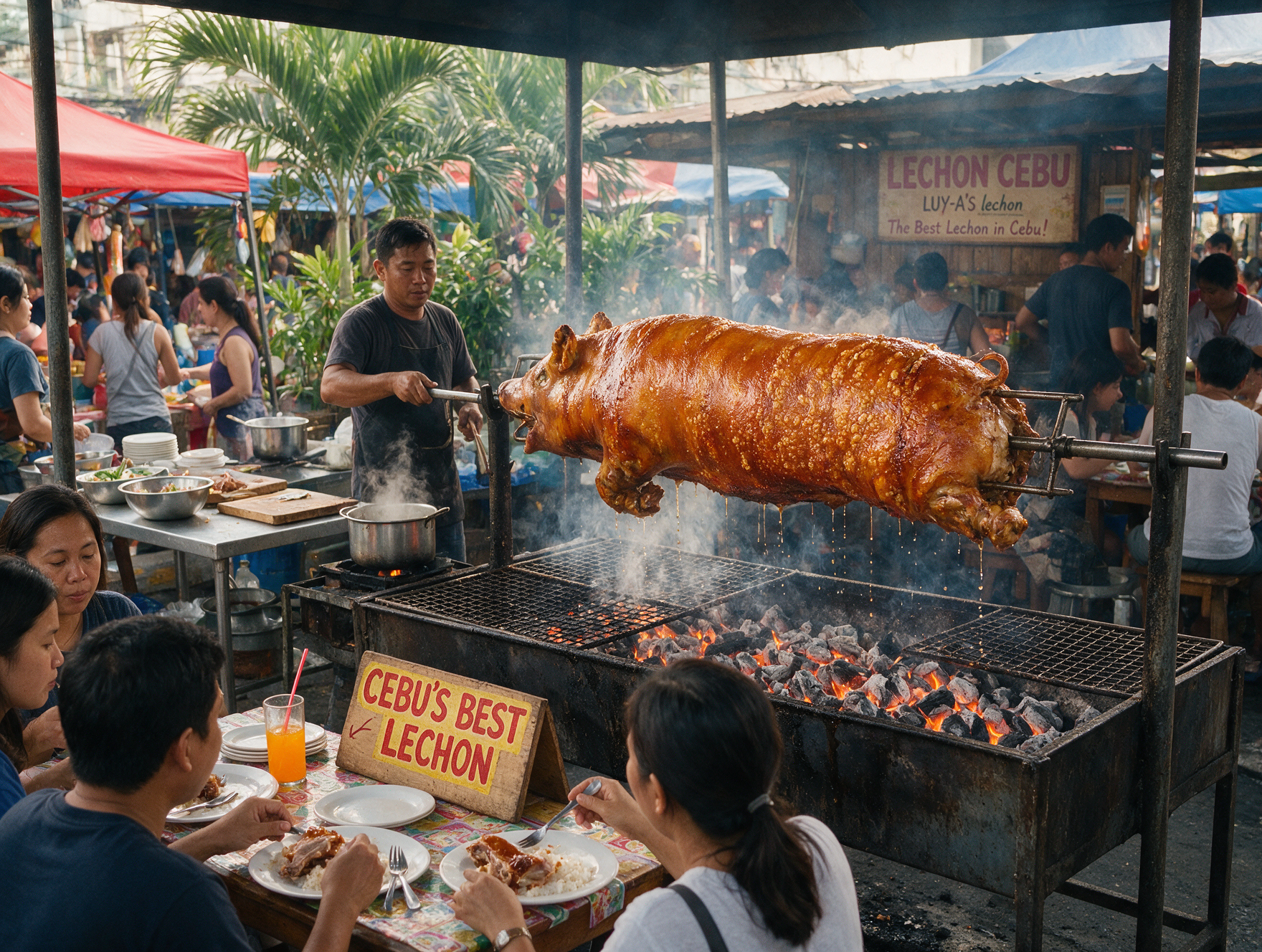
Cebu: lechon and the coffee culture nobody mentions
Cebu’s lechon has a national reputation — Anthony Bourdain called it “the best pig ever” on television, and it stuck as a local point of pride, so expect any Cebuano to have a strong opinion about which carinderia does it best. Larsian is the famous open-air food court for it, loud and a little chaotic, which is part of the appeal. For a quieter version, the newer restaurants around IT Park plate it with more composure but less theater.
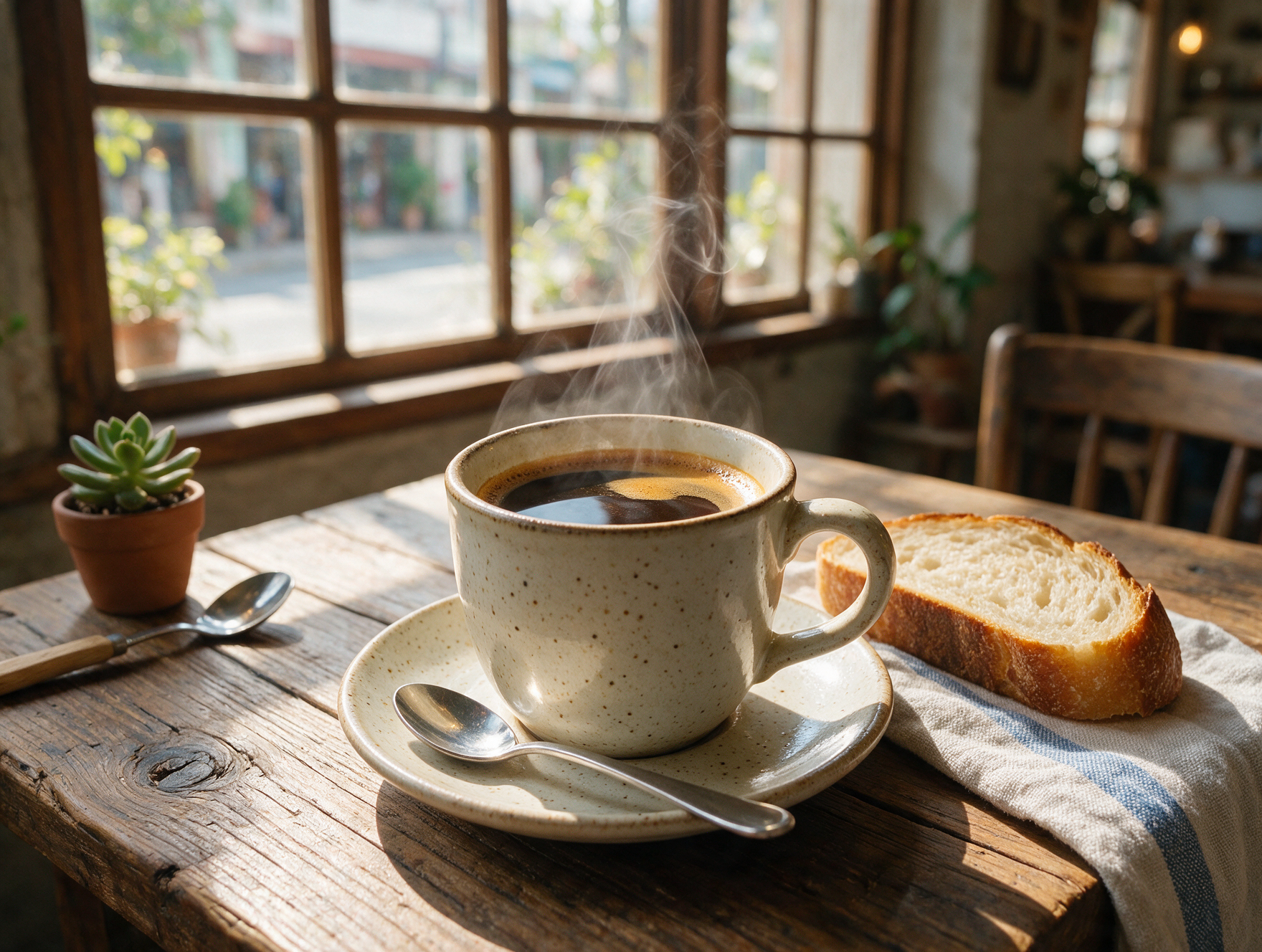
The part visitors miss: Cebu has a genuine late-morning coffee culture built around small, independently run cafés in the Capitol Site and Banilad areas, not just chain coffee shops. Order a Filipino-style barako blend if a menu offers one — it’s a robusta varietal, bitter and strong in a way that holds up against the heat and humidity far better than a flat white does.
Boracay: beachfront dining beyond the resort buffet
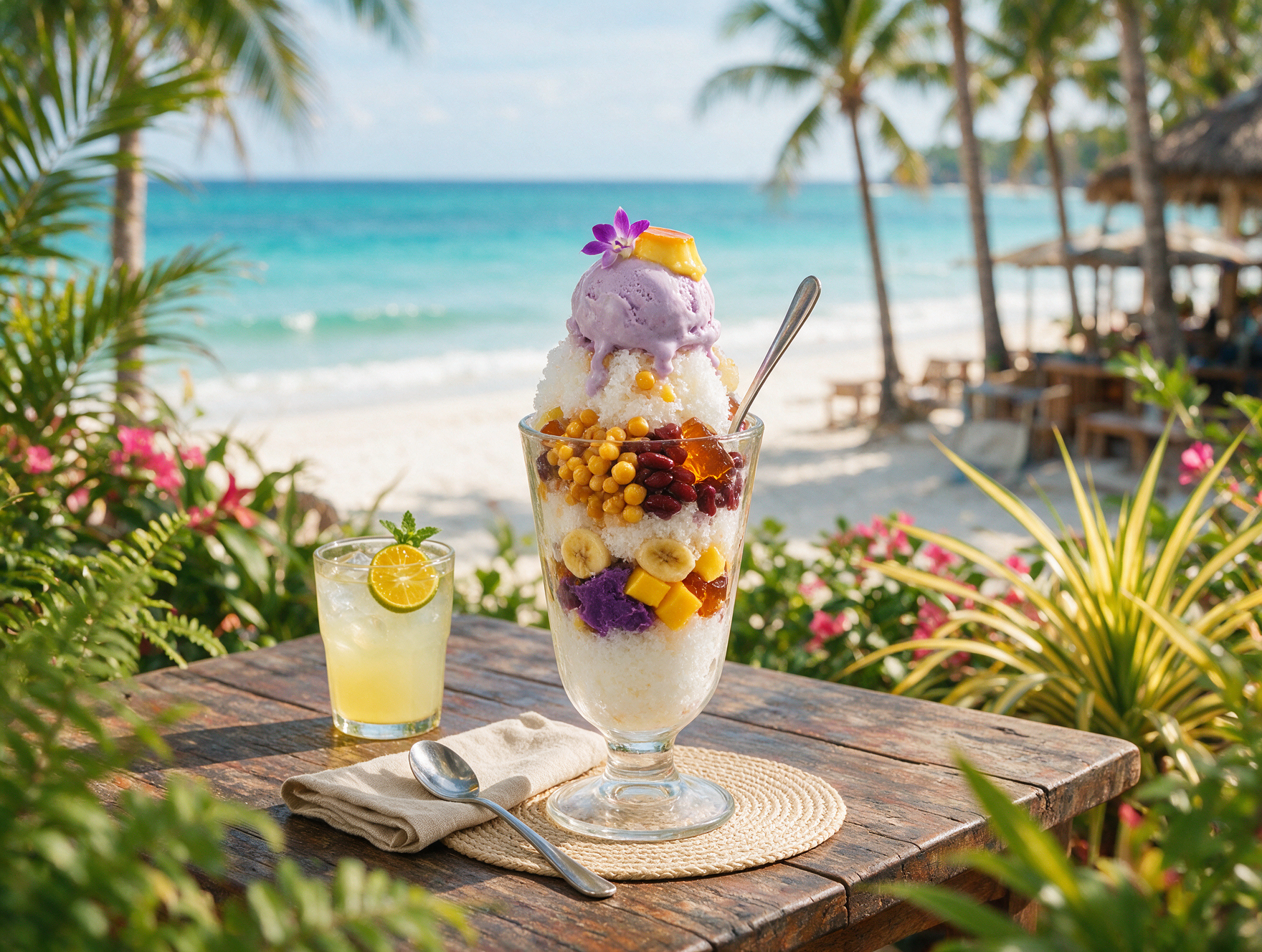
Station 1 along White Beach is where most of the postcard sunset dinners happen, and it’s genuinely pretty, but it’s also where prices run highest for food that’s merely fine. D’Mall in Station 2 is the better food hunting ground — a dense strip of restaurants ranging from Filipino comfort food to solid international options, priced more reasonably because it’s not selling the direct beachfront view. For dessert, Boracay’s small ice cream and halo-halo stalls along the beach path are worth the detour over a resort’s in-house version almost every time — smaller batches, fresher shave.
Davao: durian, and the fruit stands that aren’t a gimmick
Davao grows roughly 80% of the Philippines’ durian, and the city treats it accordingly — there’s an actual Kadayawan Festival partly built around the fruit, and roadside durian stands along Magsaysay Avenue let you try it fresh-cut rather than committing to a whole fruit. If the smell alone rules it out for you, that’s a normal reaction, not a failure of nerve — go for marang or mangosteen instead, both abundant here and both far more universally approachable. Davao’s food scene is also genuinely quieter and less touristed than Cebu’s or Boracay’s, which means better odds of eating where locals actually eat rather than where tour buses stop.
Palawan (Puerto Princesa): tamilok and the market food scene
Puerto Princesa’s public market is the place to understand Palawan food the way locals do — tamilok (woodworm, served like ceviche, genuinely better than it sounds and worth trying once) sits a few stalls from fresh-caught tanigue and blue marlin, priced by weight and grilled to order. It’s not a polished food-hall experience, and that’s the appeal; it’s closer to how the city actually eats than any restaurant menu.
El Nido: the café culture built for boat-tour recovery
El Nido’s food scene has shifted noticeably in the last few years toward smoothie bowls, flatbreads, and plant-forward cafés clustered in the town center — a direct response to a steady stream of travelers coming off a full day of island-hopping tours and wanting something lighter than another plate of grilled seafood. It works: after six hours on a boat in the sun, a bowl of fresh mango and granola genuinely hits differently than it would at home. For dinner, the grilled seafood stalls along the town’s main strip are a reliable, inexpensive option if you want something heartier.
Coron: seafood straight off the wreck-diving boats
Coron’s food scene runs on proximity to the water in the most literal sense — several of the town’s better seafood restaurants source directly from boats that come in that same morning. Grilled squid, tuna belly, and blue marlin steak are the things to order, and they’re noticeably fresher here than the same dishes elsewhere in the country simply because the supply chain is three hours shorter.
Dishes to try at least once, across the whole trip
- Lechon — whole roast pig, crisp skin, best in Cebu
- Halo-halo — shaved ice, sweet beans, jackfruit, leche flan, ube ice cream on top
- Kinilaw — the Filipino answer to ceviche, usually tuna or tanigue, with vinegar and calamansi
- Adobo — the closest thing to a national dish, though every region and honestly every household makes it slightly differently
- Barako coffee — strong, bitter, usually from Batangas or Cavite beans, found in independent cafés more than chains
- Sisig — sizzling chopped pork (sometimes with chicken or tofu versions available), seasoned with calamansi and chili, a Pampanga specialty that’s spread nationwide
- Pancit — stir-fried noodles, dozens of regional variations, almost always built on a meat or seafood stock unless you specifically ask for a vegetarian version
- Tamilok — woodworm ceviche, a Palawan specialty genuinely worth trying once for the story alone, even if you don’t finish the plate
What to drink, beyond coffee
San Miguel beer is the default across the country, cheap and widely available, and genuinely fine as a hot-day beach beer even if it’s not going to win any craft-brewing awards. More interesting is buko juice — fresh coconut water served straight from the shell, sold everywhere from Boracay’s beach stalls to Davao’s roadside stands, and a better hydration choice after a day of island-hopping than anything bottled. Calamansi juice, made from the Philippines’ small, intensely sour local citrus, shows up both as a standalone drink and as the base for countless dipping sauces — it’s worth asking for it unsweetened at least once to understand why Filipino cooks reach for it the way other cuisines reach for lemon or lime. If you’re near a real distillery tour, Tanduay rum is a well-regarded domestic spirit worth a taste, though it’s more of a Manila-area experience than something built into most island-hopping itineraries.
Eating etiquette worth knowing
Filipino meals are often eaten with a spoon and fork rather than chopsticks or hands-only, with the fork used mainly to push food onto the spoon rather than to pierce it directly — a small habit that’s easy to pick up after a meal or two of watching. Sharing dishes family-style is the norm rather than individually plated courses, especially at a lechon-centered meal, so don’t be surprised if ordering “for the table” is the default assumption at a group dinner. Tipping isn’t as deeply embedded a custom as in the US, but it’s increasingly appreciated at sit-down restaurants in tourist-heavy areas like Boracay and El Nido — rounding up or adding 10% at a restaurant without a visible service charge is a reasonable, welcomed gesture rather than an expectation.
Markets and food events worth planning around
Beyond the day-to-day eating covered above, a few food-specific events are worth checking against your travel dates. Davao’s Kadayawan Festival, held in August, turns the city’s durian obsession into a genuine citywide celebration with food stalls, street dancing, and fruit displays that go well beyond the roadside stands you’d find on an ordinary visit — if your trip lines up with it, it’s worth building a day around rather than treating Davao as a quick stopover. Cebu’s Sinulog Festival in January draws huge crowds for its religious procession, and the food stalls that spring up around it are a genuinely good (if chaotic) way to sample a wide range of Cebuano street food in one place, though it’s also the single most crowded week of the year to be in the city, which cuts both ways depending on what you’re after.
Outside of festival timing, both Puerto Princesa’s and Coron’s public markets are genuinely busiest and freshest in the early morning — arriving by 7 or 8am gets you the best selection of just-landed seafood, before the midday heat and the day’s tour groups thin out what’s on display.
FAQs
Is street food in the Philippines safe for tourists?
Generally yes at busy stalls with high turnover — food sitting out for hours at a quiet stall is the bigger risk than the format of street food itself. Stick to places with a visible queue of locals.
Is Filipino food very spicy?
No, not as a baseline — it leans more toward sour (vinegar, calamansi) and savory than chili-forward. Spice is usually added at the table via sawsawan (dipping sauces) rather than cooked in.
What should vegetarians know before this food trail?
Filipino cooking is meat- and seafood-heavy by default, including stock bases in dishes that look vegetable-forward — see our dedicated vegetarian and vegan guide to the Philippines for city-by-city restaurant picks that work around this.
A Mistake to Avoid
Don’t skip the public markets because they look less polished than a restaurant. Puerto Princesa’s market and Davao’s fruit stands are where the most honest, least tourist-priced food in the country actually is — a restaurant menu is frequently a translated, marked-up version of what’s available fifty meters away. It’s also worth not treating every meal on this trip as a discovery mission — after four or five days of island-hopping and new dishes, a familiar, unambitious dinner (and the Philippines has plenty of decent international and Filipino-comfort options for exactly this) is a perfectly reasonable choice, not a failure of commitment to the food trail.
Cooking classes and food experiences worth booking
If you want to go beyond eating and actually understand how a few of these dishes come together, a handful of operators in Cebu and El Nido run half-day cooking classes built around adobo, sinigang, and a few regional specialties — genuinely worth the few hours if your schedule has room, both for the recipes and for the kitchen-level detail you don’t get from a restaurant table (how much vinegar actually goes into an adobo, for instance, is a more contested question among Filipino home cooks than any restaurant menu lets on). In Davao, a few tour operators run durian farm visits that combine the fruit-tasting with a short orchard walk, a better way to understand the fruit’s reputation than a roadside stall alone.
For a more informal version of the same idea, striking up a conversation with a market vendor in Puerto Princesa or Coron about how they’d cook what they’re selling tends to produce better, more specific recommendations than anything written down in a guide — including this one.
Craving a trip built around actually eating your way through the Philippines rather than rushing between checklist sights? Get Tripped’s custom Philippines itineraries can route you through food-forward stops in each city on this list. Talk to us about a Philippines food-focused trip.