The Philippines is an archipelago of roughly 7,600 islands, which means “getting around” here isn’t really one topic — it’s three: domestic flights between regions, boats between islands within a region, and road transport (jeepneys, tricycles, Grab) within a single city or town. Most guides lump all three together and the result is confusing. This one keeps them separate, because the planning decisions for each are genuinely different.
Table of Contents
- Domestic flights: the backbone of any multi-region trip
- Inter-island ferries and boats
- Jeepneys: the classic, confusing, cheap option
- Tricycles: the last-mile workhorse
- Grab: when it works and where it doesn’t
- Private transfers and when they’re worth it
- Getting around Manila specifically, if you transit through it
- What transport actually costs
- Practical tips
- FAQs

Domestic flights: the backbone of any multi-region trip
If your trip spans more than one region — Cebu and Palawan, say, or Boracay and Davao — you’re flying, not driving or taking a long boat, and that’s a normal and expected part of Philippines travel rather than a sign you’ve planned poorly. Cebu Pacific and its regional subsidiary Cebgo, along with Philippine Airlines and its budget arm PAL Express, cover most of the routes Indian travelers need: Manila, Cebu, Boracay (via Kalibo or Caticlan), Palawan (Puerto Princesa, El Nido, and Coron’s Busuanga airport each have their own airstrip), and Davao. Routes change — Cebgo only added a direct Cebu-El Nido flight in October 2025, which previously meant routing through Manila — so check current connections when you book rather than assuming last year’s routing still applies.
Book domestic flights 4-6 weeks out where possible; smaller airports like El Nido and Coron have limited daily capacity, and prices climb fast as seats fill, especially in the December-to-April dry season.
Inter-island ferries and boats
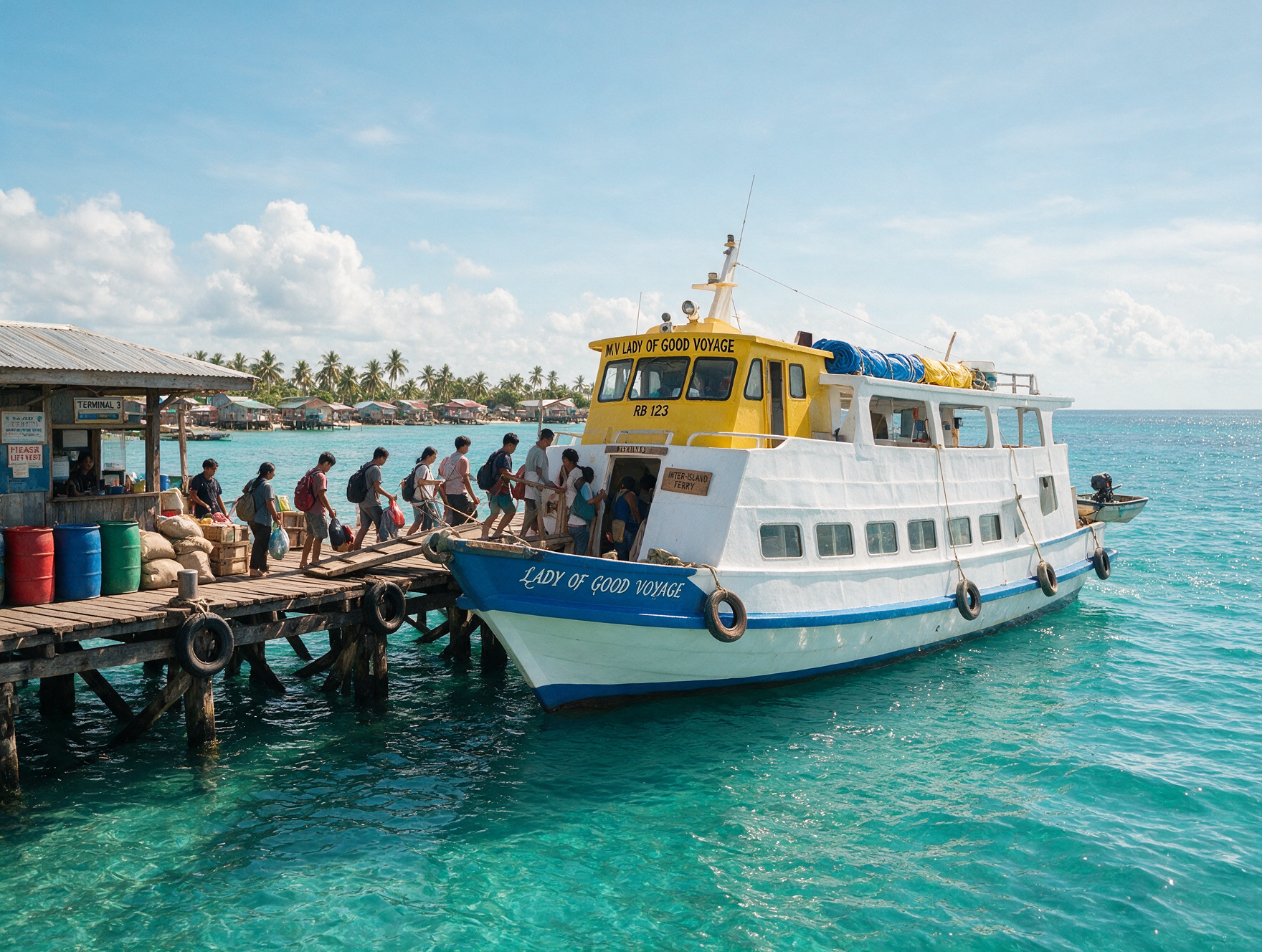
Within Palawan specifically, boats connect Puerto Princesa, El Nido, and Coron on routes that don’t always have a flight alternative — the El Nido-to-Coron crossing, for instance, is a roughly 4-hour boat journey with no direct flight equivalent. 2GO Travel runs some of the larger inter-island ferry routes nationally, while smaller tourist-boat operators handle the Palawan-specific crossings. These boats are open to sea conditions in a way flights aren’t, so build a buffer day around any boat transfer that precedes a flight home — rough seas occasionally delay or cancel departures, and you don’t want that colliding with an international connection.
Within a single bay or group of islands — El Nido’s lagoon tours, Coron’s wreck and lake circuit — you’re on small outrigger bancas booked through your hotel or a local tour cooperative, priced per boat or per tour package rather than per route.
Jeepneys: the classic, confusing, cheap option
Jeepneys — the elaborately decorated, repurposed-military-jeep buses that are as much a cultural symbol as a transport mode — run fixed routes within cities like Cebu and Davao for a genuinely small fare, often under ₹20 equivalent. They don’t have posted schedules or always-clear route maps for a first-time visitor, which is the honest catch: you flag one down, tell the driver or conductor where you’re headed, and either they confirm it’s on the route or they don’t. It’s a great way to experience how locals actually move through a city, and a slightly inefficient way to get somewhere specific and time-sensitive on your first day. Use Grab or a tricycle for anything where timing matters, and save jeepneys for when you have slack in the day and want the texture of it.
Tricycles: the last-mile workhorse
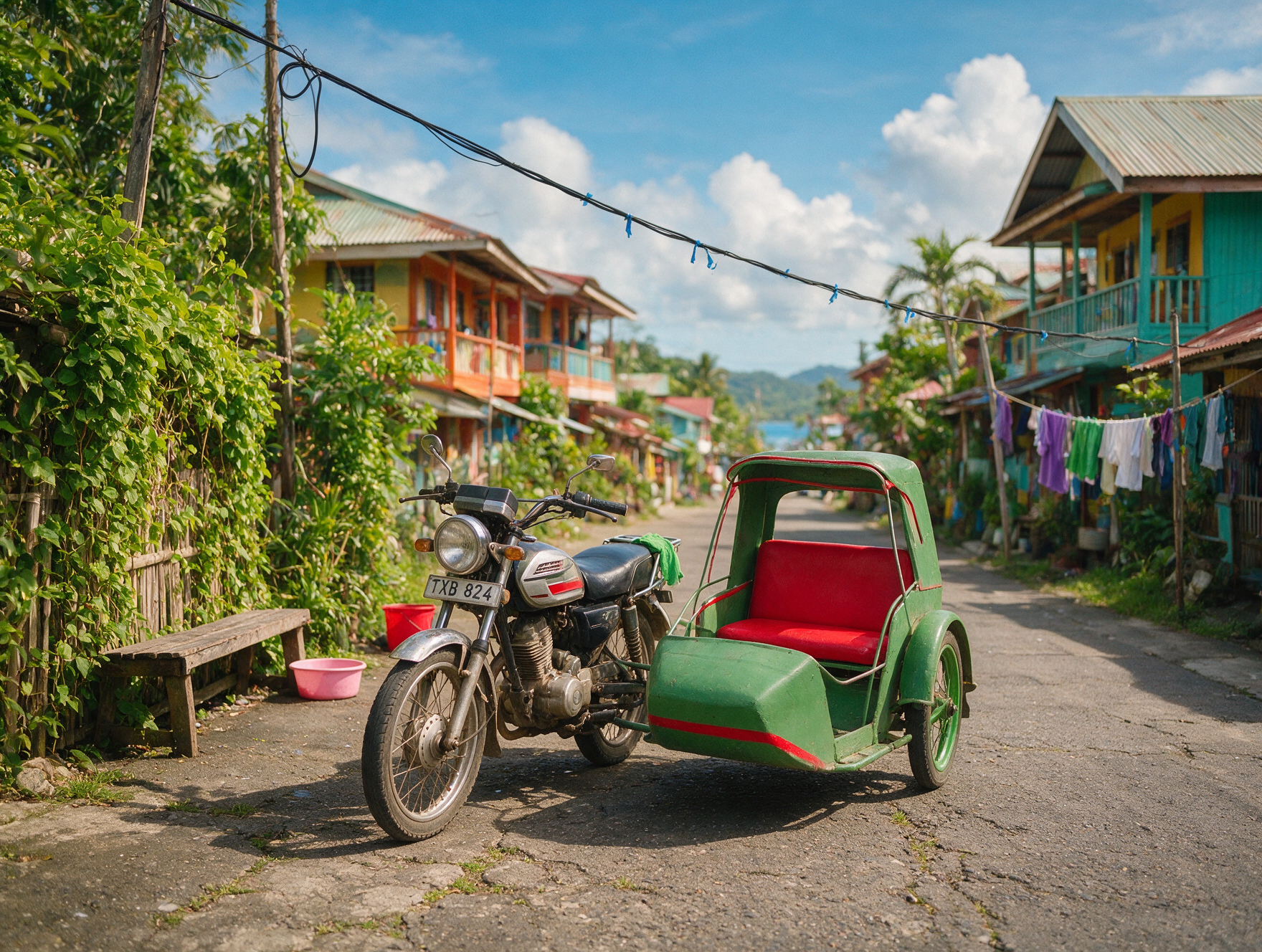
The sidecar-motorcycle tricycle is the default short-hop transport in smaller towns like El Nido and Coron, where Grab barely operates. Agree on the fare before getting in — most short hops within a town center run small, flat amounts, but tourist-facing drivers sometimes quote a higher opening number to visitors, and a quick confirmation upfront avoids an argument on arrival. In El Nido, tricycles are also the standard way to reach Nacpan Beach, about 20 minutes from the town center.
Grab: when it works and where it doesn’t
Grab (the ride-hailing app that covers most of Southeast Asia) works reliably in Cebu City, Davao City, and Manila, and it’s genuinely the easiest way to move around those cities without the fare negotiation that comes with jeepneys or tricycles. It does not meaningfully operate in El Nido or Coron, where the road network and town size don’t support it — tricycles and arranged transfers fill that gap instead. Download Grab before you land and link an international card if you can; it saves a setup step you don’t want to be doing on patchy airport Wi-Fi.
Private transfers and when they’re worth it
For airport transfers in smaller towns, and for any trip involving luggage, young children, or a tight flight connection, a pre-arranged private transfer (through your hotel or Get Tripped, if you’re booking through us) is worth the modest extra cost over a shared tricycle or jeepney, purely for the certainty of a driver who knows you’re coming and when.
Getting around Manila specifically, if you transit through it
Most itineraries touch Manila at least once, usually just for a connecting flight, but if you have a longer layover or a night there, the LRT and MRT light rail lines are a genuinely useful way to cross the city without sitting in Manila’s notorious road traffic, provided your route lies along one of their lines — they don’t cover everything, but they cover the EDSA corridor well, which is where a lot of connecting travelers find themselves. For anything off the rail lines, Grab is the easier option over a street-hailed taxi, partly for the fixed upfront pricing and partly because metered taxis in Manila have a mixed reputation among tourists for meter tampering, an issue that’s much rarer with Grab.
What transport actually costs
None of this is expensive by the standards of a trip that’s otherwise paying for boutique hotels and private boat tours, but it’s useful to know roughly what to expect so a driver’s quote doesn’t feel arbitrary. A short jeepney ride within a city runs the equivalent of a few rupees, genuinely one of the cheapest transport options anywhere in Southeast Asia. A tricycle hop within a small town like El Nido or Coron typically runs somewhere in the ₹40-₹100 range depending on distance and your negotiating position as a visibly foreign tourist. Grab rides in Cebu or Davao price similarly to what you’d expect from any Southeast Asian ride-hailing app — reasonable, metered, no surprises. Domestic flights are the real cost driver, running anywhere from ₹3,000 to ₹10,000+ per leg depending on route, airline, and how far ahead you book, and the El Nido-Coron boat crossing typically runs in a similar mid-range band per person, priced as a transfer rather than a scheduled ferry ticket.
Practical tips
- Carry small-denomination peso notes for jeepneys and tricycles — drivers frequently can’t break a large bill
- Google Maps’ public transit layer is improving in Philippine cities but still inconsistent outside Manila and Cebu — don’t rely on it completely in smaller towns
- Island-hopping boat tours are typically sold as a fixed package (boat, guide, lunch, entrance fees) rather than point-to-point transport, so they’re really a tour booking, not a transit option, even though they function like one
- Keep your luggage light and soft-sided if your route includes small aircraft on regional routes to El Nido or Coron — baggage allowances on these smaller planes run noticeably lower than on major jet routes, sometimes as low as 10-15kg in economy
- Domestic terminals in Manila and Cebu are often physically separate from international terminals, sometimes requiring a shuttle or a short taxi ride between them — never assume a tight connection will work the way it would at a single-terminal airport
Booking tickets and transfers in advance versus on arrival
Domestic flights and the El Nido-Coron boat crossing are worth booking ahead, for the capacity reasons already covered. Almost everything else on this list — jeepneys, tricycles, Grab rides, local island-hopping boat tours — is better arranged on the ground, a day or two ahead at most, since schedules and operator availability shift with weather and demand in ways that are hard to predict from India weeks out. The one exception is peak season (Christmas through New Year, and Easter week), when even island-hopping tour slots in El Nido and Coron can sell out a few days ahead — if your trip falls in either window, book those specific tours slightly earlier than you otherwise would.
A safety note on transport specifically
Tricycles and jeepneys don’t have seatbelts in the way a car does, and boat tours vary in how strictly they enforce life jacket use — ask for one directly if it’s not offered, especially for the longer open-water crossings like El Nido to Coron. Road conditions on some of the more rural stretches of Palawan are rougher than Cebu’s or Davao’s city roads, so a private transfer with a driver who knows the specific route is worth the modest extra cost on longer overland legs, rather than a shared van with an unfamiliar driver.
Luggage handling across multiple transport modes
A trip that mixes flights, boats, and tricycles in the same week puts more wear on luggage than a single-destination hotel stay would, and it’s worth packing accordingly. A hard-shell suitcase handles airport conveyor belts fine but becomes awkward on a tricycle’s small rear rack or a boat’s narrow gangplank; a soft duffel with sturdy straps is easier for a boat crew or tricycle driver to handle without you having to supervise every transfer personally. If you’re checking a bag on the smaller regional flights to El Nido or Coron, tag it clearly and keep anything genuinely essential — medication, your eTravel printout, a change of clothes — in your carry-on, since smaller regional airports have occasionally misrouted checked luggage during the connection through Manila or Cebu, more so than you’d expect from a major international carrier.
Staying connected between transport legs
Signal coverage genuinely drops during several of the transfers covered above — the El Nido-Coron boat crossing, long tricycle rides between towns, and some domestic flight routes over open water. Download offline maps for each town before you leave an area with reliable signal, and let whoever’s expecting you (a hotel, a tour operator, a family member tracking your trip) know your rough transfer schedule in advance, since you may not be reachable for a few hours at a time on travel days.
FAQs
Is Grab available in El Nido or Coron?
No, not meaningfully. Use tricycles or arrange transfers through your hotel in both towns.
How far ahead should I book domestic flights within the Philippines?
4-6 weeks is a reasonable target, especially for smaller airports like El Nido and Coron, where capacity is limited and prices rise faster as seats fill.
Is the El Nido to Coron boat crossing safe?
Generally yes with a reputable operator, but it’s weather-dependent, and departures are sometimes delayed or cancelled in rough seas. Build buffer time around it if you have a flight shortly after.
A Mistake to Avoid
Don’t schedule your El Nido-to-Coron boat transfer for the same day as an onward international flight connection. If the crossing is delayed by weather, you have no recovery time. Give yourself at least one buffer day, or route home via a flight instead on that specific leg if your schedule is genuinely tight.
Trying to sequence flights, boats, and transfers across multiple Philippine regions without the back-and-forth of booking each separately? Get Tripped handles the full routing as part of a custom Philippines itinerary. Get your transfers and routing sorted with Get Tripped.